




Likes
2
Share


@EtnoGrow
Follow
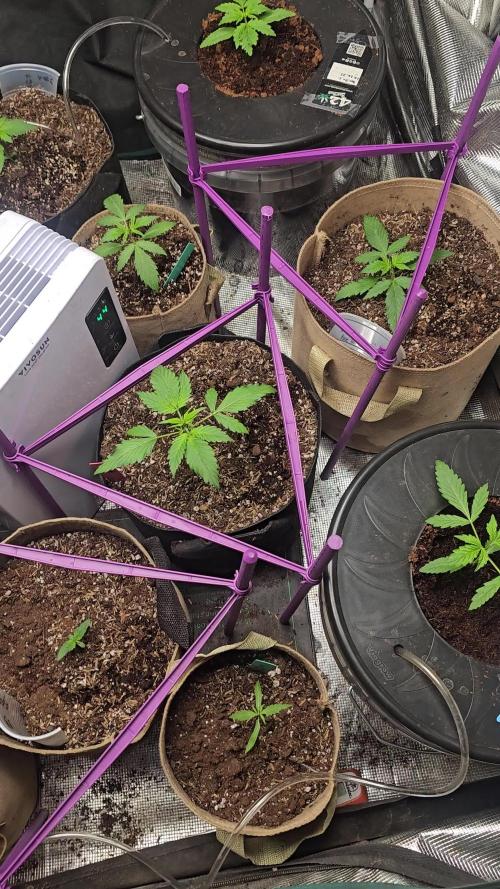
here already a little more grown and applying the techniques lst apical pizzicato experimenting, Seeing how the techniques are manifested, some were done poorly, so their results were somewhat strange or curious, if they did, you judge, errors such as not cutting the apical trying to do the pruning, poe error from fmi and only cut the tiny growing leaves that's why you will see those rare leaves
Likes
Comments
Share


Likes
422
Share


@Crashoverite
Follow
Hi all,
Welcome to my🍌💜👊 week update
Thank you so much for all support on this bananas journey. Much appreciate all your likes, follows and comments. 🙏💚❤️💜
Week 14
Jan 15- Jan 21
Flushing and preparation for harvest 😁 on Jan 15 feed girls for the last time with nutrients. It was reduced dose by 60% 5ltr no runoff. Following morning topped up with 6ltr of ph down and only fish shit. Runoffs PH 6.2. Second watering Jan 18 6tr and 7ltr on Jan 21. It was last watering. Week went very well. No white pistils hairs on Athena for a good while and barely few left on Xena. Many buds have different shapes and colours but all of them are equally hard as rocks, sticky and smelling so deliciously. This week trichomes development was just like I wish for. Just milky and amber in play Status on Jan 22. Mostly of buds 20-50% amber. It's just perfect for my needs🤤 On Jan 21 lights were on for the last time and girls will be harvested after 48 or 72h of darkness.
Stay tuned for the final week update!
Peace and love brothers and sisters ✌️💚👨🌾
Links
https://2fast4buds.com/seeds/banana-purple-punch-auto
https://plagron.com
https://www.biobizz.com/
https://fishheadfarms.com/
Likes
6
Share


@Arcadium
Follow
Another cold wet week. Witnessed the spiderlings band together for a few days, web making at night. Then one day the wind picked up and they all disbanded, stretched out their silk and flew away all over my yard. It was such an incredible experience to watch! I should have an army of Orb weavers come flower time.
Did another top dress of compost mixed with 70/30 Gaia Green AP/PB, maybe 20Tbsp. When I pulled back the mulch I got to see all the soil creatures and roots consuming the material, this really does help build extra root zone over time.
Minor defoliating, I'm keeping nodes 1, removing 2 and final top at 3 (next week) to keep her spaced, then let her stretch and trellis. Should all help fill in the canopy.

Processing
Likes
14
Share


@Okie4
Follow
Good week so far !! On to my last strength of nutrients !! Then the flush begins. Girls are starting to bulk up. Had to purchase a dehumidifier to keep the humidity down this week. Wish I knew exactly how long this strain went.. any idea ?


Likes
2
Share


@regionallystoned420
Follow
8 weeks into flower , white pistels still forming but thricombes are ready .
Likes
53
Share


@DogDoctorOfficial
Follow
Greetings, fellow cultivators! Week 4 unfolds like a horticultural saga, and my Blackberry Auto stands tall, embracing the essence of growth with an unrivaled fervor. Join me in this chapter of lush greenery, where every leaf and branch tells a tale of meticulous care and bountiful development.
Blackberry Auto continues her magnificent journey, reaching impressive heights. The AutoPot Aquavalve, now a trusted ally, facilitates her insatiable thirst as she drinks with an enthusiasm that mirrors the vitality within. It's a spectacle of growth, a testament to the plant dictating her hydration destiny.
The foliage has evolved into a lush expanse of enormous leaves, each a work of botanical art. These mammoth leaves, reminiscent of a thriving aquatic canopy, are not just solar panels; they are the powerhouse of photosynthesis, fueling the plant's vigor.
A choreography of low-stress training unfolds as I gently bend branches, coaxing them to open their arms to the light. This ballet isn't just about shaping the plant; it's a dance with nature, enhancing light penetration and encouraging lateral growth. The result is a structured beauty that maximizes the potential for robust bud development.
Blackberry Auto, now an arboreal masterpiece, orchestrates a symphony of green. The leaves, like musical notes, dance in the breeze, capturing the essence of the plant's vitality. It's not merely a cultivation effort; it's a collaboration with nature, where each element harmonizes to create a living work of art.
As we traverse into the fourth week, I can't help but anticipate the berry bounty that lies ahead. The plant's stature, the size of the leaves, and the orchestrated branch structure all point towards a promising yield. Blackberry Auto, with each passing day, unravels the potential for a bountiful harvest.
A heartfelt thank you to @fastbuds_official for gifting us this horticultural marvel. To my sponsors, your support is the driving force behind this green journey. Kudos to Grow Diaries for providing the platform to show this botanical saga, and a shoutout to the community for the shared passion that adds depth to our collective cultivation narrative.
As the saga continues, I invite you to witness the unfolding chapters of Blackberry Auto's odyssey. Together, we cultivate not just plants but a shared love for the botanical realm. Stay tuned for the upcoming adventures in this GreenThumb Symphony!
Genetics Blackberry Auto @Fast_Buds
Food - @aptusholland @aptus_world
As always thank you all for stopping by, for the love and for it all , this journey of mine wold just not be the same without you guys, the love and support is very much appreciated and i fell honored and blessed with you all in my life
Likes
6
Share

@GoodTimesOrganics
Follow
Hi liebe Community and Welcome Back! 💚
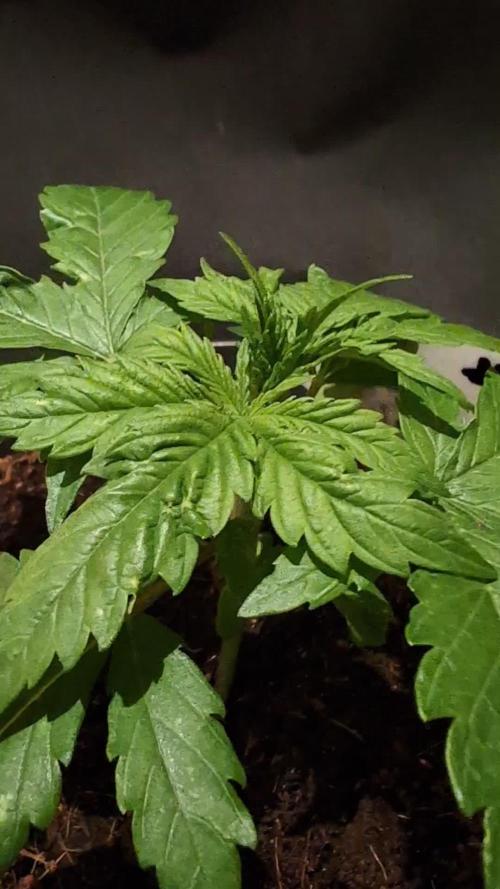
Nach der dritten Wachstumswochen entwickelt sich die Orange Bud solide. An den Blättern sind ein paar Macken feststellbar, jedoch nimmt das auf die Entwicklung aktuell keinen Einfluss.
Die neuen Blätter sehen sehr Gesund aus und insgesammt hat sich die Pflanze gut erholt.
Die Umgebungsgegebenheiten sind aktuell gut:
—————
🌞 Temp: 21
🌚 Temp: 18°C bis 19°C
💨 RH: 48%
VPD: 1,00 kPa
💡ppfd: 330 mpm
—————
Viele Grüße 👋


Likes
3
Share


@iluMiGrower
Follow
Hello fellow growers and welcome to Week 5
Not much to say besides enjoying the view while they grow 😍
Defoliated one of the oldest leafs at the bottom and flushed her with 5.5L of ph water at 6.2 - 6.4.
The buds are fattening up each day and the trichomes are starting to show up 😍
Stay tuned for more 👋

Likes
3
Share


@Joaka
Follow
pido disculpas por esta semana de seguimiento. estuve de vacaciones lo que no me permitio realizar un buen seguimiento. disculpas otras vez :c

Likes
4
Share


@Based_Buds
Follow
Good week, did some LST and some defoliation. Everything’s growing so good.
Likes
16
Share


@Bread_n_Buds
Follow
He who stops is lost, as an old saying goes
I don't know exactly what the origins are, so here's a new Zamnesia season.
We are in the middle of winter and despite growing in an area that isn't the warmest in Europe, it's really cold now. It's 16-18 degrees Celsius in the house and we need to bring the temperature of the propagator growbox between 20 and 25 degrees Celsius.
So we first placed a layer of those 1 cm thick "rubberized" floors that are used for gyms, they are easily found on Amazon and are very useful for insulation.
Then a heated resistance mat and then the closed propagator on top. Inside with our seedlings and the light on at minimum 20% we reached 24 degrees, not bad in fact the germination is proceeding very well.
100% opening of the seeds in water and almost all of them are opening in our biodegradable peat pots.
----- Our Green Cure F1 Hybrid Auto are growing fast at the time of the photos one was born now it seems that the second one is coming out. We need some CBD in our diet, we overdo it a bit with THC we use it to not go too crazy and not have the symptoms of excessive use of THC. We really like the genetic line and the fact that they are f1, let's go!
It is a CBD Sativa Dominant strain that will probably be sent to our friends at AWC for the CBD category, let's see how it comes out...
WARNING: Placenta Problems ---- ALWAYS look very carefully at the seedlings, if the seed or the placenta prevent the opening of the cotyledon leaves the plant dies after a while. Remove it delicately as if it were a condom or almost. I apologize for the example but it gives the idea, remove slowly and delicately please.
WARNING: If you choose biodegradable pots, choose the largest ones possible and not paper/cardboard ones, they are made of peat which is the main component of most of the soils we use.
If you want to avoid transmitting vibrations to your neighbors, I recommend installing one of these gym floors under your growboxes, I did it and I also feel safer not to disturb. They are easily found on Amazon in different thicknesses, I took a gym model that is assembled like a puzzle, they are also found in children's shops, they are those floors that are assembled to make children play safely, or to train and to avoid vibrations from equipment or of any kind.
Everything will be grown with Plagron Pro Mix with 100% fertilizers, let's start with Power Roots 1 Ml/l
Plagron fertilizers are available on Zamnesia in convenient Pack formats for all growing styles. I used this one with a simple search you can find the other products.
---- https://www.zamnesia.io/en/12119-plagron-top-grow-box-100-natural.html
Try a seed of this strain that drives us crazy...
---- https://www.zamnesia.io/en/10672-zamnesia-seeds-green-cure-cbd-f1-automatic.html
Zamnesia Description // Zamnesia's breeding team has harnessed F1 genetics to bring you Green Cure CBD F1 Automatic. This autoflowering cultivar is easy to grow, accessible and reliable for all levels of experience. Ready in just 11 weeks, growers can expect impressive yields of tasty buds with a clear-headed effect that's ideal for meditative moments.
Growbox and Air System - Secret Jardin DS120w + fans + Exhaust fans and filters DF16 kit
Light - Viparspectra P2000 https://www.viparspectra.com/products/viparspectra%C2%AE-2024-updated-p2000-200w-led-grow-light-with-daisy-chain-function
---- www.zamnesia.com

Likes
11
Share

@GreenEldritchGardens
Follow
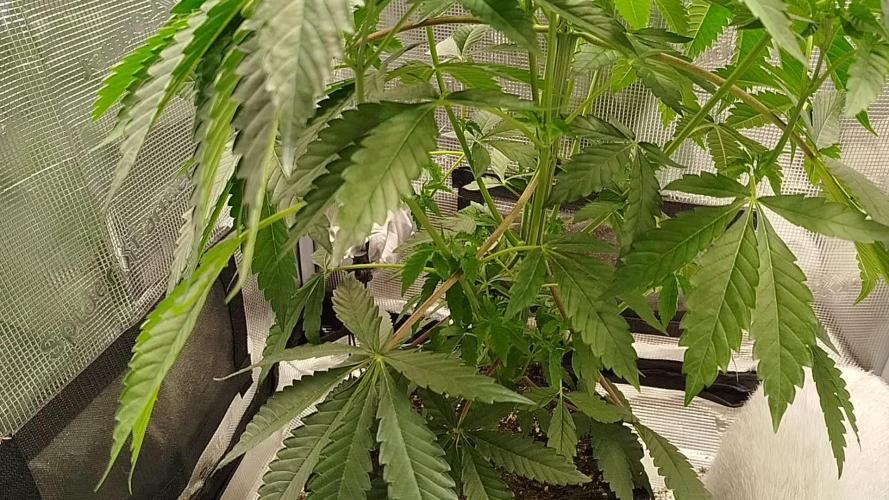
Roots were asking for more space so now she is upgraded to a 12,5l air pot, should be bigger but that the size I have atm. Some root damage was inevitable because of its size specially downwards.
One more week and she will go to a scrog and flower!

Likes
9
Share


@Dark_Shadow_420
Follow
Fue una exelente cosecha, esta planta en un principio se tuvo en imddor y posteriormente sacada al exterior. Es mi primera experiencia plantando en suelo.
La planta llego a un gran tamaño de la cual se cosechó una gran cantidad superando la cantidad promedio.

Likes
9
Share


@SkunkyDog420
Follow
Hallo zusammen 🤙.
Sie wächst sehr schön und macht keine Probleme.
Rabattcode für den BIOTABS-Webshop https://biotabs.nl/en/shop/ GDBT420, damit erhalten Sie 15 Prozent

Likes
5
Share


@Bluethum94
Follow
I topped all but one the one I didn’t too hasn’t had a happy life but I’m getting it there
Likes
4
Share


@The_Projexx
Follow
Welcome to week 5 of flower for this lovely project! The ladies should start to put on some serious weight over the coming weeks as I've noticed most plants are done their stretch now (except macmelonz). We got lots of crazy smells coming from these plants some are harder to tell then others but some are extremely pleasing smelling already. Banana Smoothie is really putting off that banana cream smell accompanied by berries as an undertone. Creamy Cereal Crunch smells like Fruit loops and milk , its very unique and very pleasing if your into cereal anyways haha. Over all excited to see what this week will bring!
Huge shout out to @MarsHydroLED for making such cool lights and tents that really make growing a breeze.
Huge shout out to all my followers and people who stop into the diary alike , keep on inspiring to grow!
-The Projexx
Day#29F Ladies are starting to display some bulking up.
Day#30F Pictures N/A. Plants seem to be stretching a bit more but concentrating on bulking up flowers. Some really nice smells coming out.
Day#31F Macmelonz is still stretching along but stacking hard and the rest are starting to put on noticeable weight.
Day#32F Ladies are grooving along nicely, going to look to trim up some of the middle allow for more air flow to the plants.
Day#33F Banana Smoothie #1 and #4 are really starting to put out Banana Cream aromas its quite intense now.
Day#34F The canopy deff needs a light defoliation. Going to defoliate slowly but surely over the coming weeks.
Day#35F Pictures N/A. Ladies are really thirsty going to be upping the water next feed. Flowers are bulking like crazy!
Recap: Things have gone really well this week, everyone's bulking like crazy and macmelonz who stretching out is still stacking like crazy. Lots of interesting and exciting aromas from the plants, I hope they taste as good as they smell! Over all very pleased with the performance of the plants its going to be exciting to watch them grow over the coming weeks!
Likes
6
Share


@gottagrowsometime
Follow
Is drying atm 4 days now and is doing well
Temp is higher than I'd like at 22c and too low at night 19 but it's still fairly wet. No bush whack smell. Nor do I think I'll get It
RH needs to be lowered every 12 hrs or so for 30m
She's hang drying behind my 100cm2 tent the grow room is blocked from sun light as best as I can.
Cut nutrients the last 4 days and heavy water feeds with some enzymes and it riped up super nice. Got even more purple.