


Processing
Likes
Comments
Share


@CBD_Sweden
Follow
2018-04-02. Week 3 day 1. It was time too upgrade the 0.1 liter pot too the 1 liter.
Did the transplant today.
They are a little bit overwatered but i will let them dry out now.
This is the newest release from DinaFem seeds.
And i will veg her under a Apollo 10 led and flower her in Growroom Nr2 under a 600 w Hps on a light mover.
Its a organic grow and i will be using BioBizz nutrients.
Strain information.
Purps #1 is a feminized indica dominant strain with outstanding parents, high THC content and with very beautiful flowering. It is the result of crossing between Blueberry and PAK.
The plant demonstrates purple and autumn-like colours and produces very intense fruity aromas during blooming. It develops a typically indica structure with wide leaves. It grows up to 1.3-1.5 m tall. The harvest comes after 7 weeks and brings 500 gr/m2 indoor and 600-800gr/plant outdoor.
The smoke provides a pleasant feeling of relaxation and very unique bouquet of flavors. The amazing mix of fruits and berries with pineapple notes brings unforgettable senses.
Gender Feminised
Genes Mostly indica
Genetics Blueberry x PAK
Harvest 500 gr/m2
Flowering 9 weeks


Likes
67
Share


@Clutch
Follow
Hello everyone
A good week here but not that great weather.
The plant spend 4 days inside my garden house with an open door for fresh air
Outside so much rain that I just didn't want to take the risk.
Also a higher humidity in morning so better safe than sorry
She did receive enough light but it's not perfect, I know
Some buds are a bit closer together and that's the only minor thing so far.
Not problematic but I keep a close eye
They are really bulking up now and starting to produce a bigger smell 😄
One feeding this week and one time neem oil watering.
I think I'm gonna give one or two good feedings and then it's flushtime
Last year i harvested in middle of August and I think it's gonna be pretty much the same this year.
Will look more after the the trichomes this year.
So far so good
Fingers crossed for the last 3 weeks (I think 😁)
Happy growing 🙏
Update : made a shelter, not perfect yet but it does the job 😄

Likes
7
Share


@XoticGROW666
Follow
( RUNTZ X F1DURB X GUSHERS )🍬🌈🍨🍧
PURP KICKIN INN END #WEEK4
CANT WAIT TILL THE BUDS SWELL UPP!!
SUPA INTENSE CANDY TERPS THIS ROUND
NOT BIG BUDS BUT SUPA HIGH IN BRIXX LEVEL WITH ALL THE ORGANIC CARBON INPUTS!! PPM 900/1200 1.2 max
(Face Off OG x Watermelon Zkittlez) X (Runtz x F1 Durb x Gushers) 🍉🍬🌈🍧🍨🍦
LIL PRUPLE TINT WIT MOUTH WATERING SUGARY TERPS KICK INN END #WEEK4 BY WEEK 7/8 SHE WILL BE PURPLE PURPLE WIT SUPER INTENSE CANDY MOUTH WATERING TERPS CANT WAIT TILL SEE THEM BUDS SWELL UPP!! PHENO A/B
NOT BIG BUDS BUT SUPA HIGH IN BRIXX LEVEL WITH ALL THE ORGANIC CARBON INPUTS!! PPM 900/1200 1.2 max

Likes
119
Share


@Rangaku
Follow
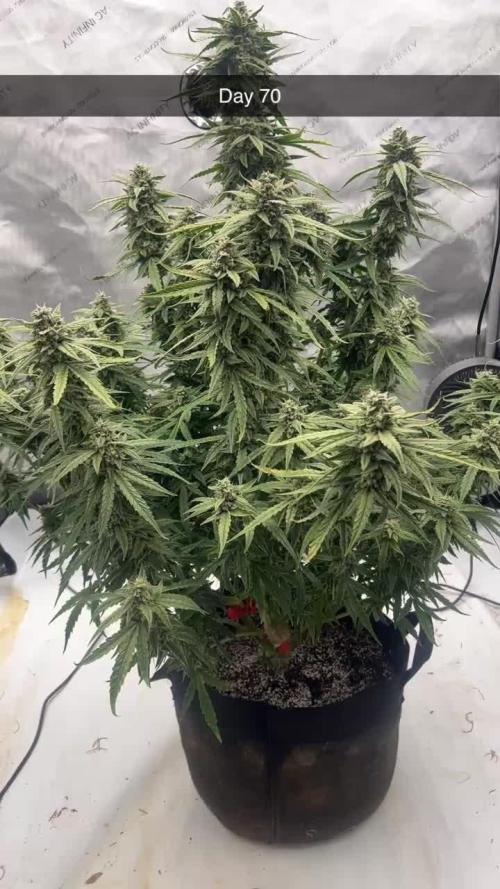
70 days in for these girls and they are progressing the way they should be and getting fatter , there are a few dried up taco leaves from a bit of heat pumping out of the HPS so I changed the air flow to be more directly blowing the cold air up and the hot away from the buds and out the exhaust.
I had to recalibrate the ph meter also , luckily I did as it was about .8 out of calibration but I haven’t seen any signs of abuse on the plant yet hopefully I caught it in time .
I harvested a top bud off one of the smaller bud arms off the pineapple as we haven’t had fresh bud in over a year and honestly you can’t even tell where it’s missing , weighed 12g wet so hopefully we get an eighth or something to chop up .
Maybe two weeks left for the pineapple and 4 for the GZ .

Likes
26
Share


@BlackDragon22
Follow
Tutto procede bene, ultima settimana per le ultime 2: gorilla skittles e gorilla punch.
Ho tagliato la prima g. Skittles ed è a seccare, flush flush flush.

Likes
19
Share


Likes
13
Share

@HydroLab-Germany
Follow
*english version below*
HydroLab – Woche „0“: Der Startschuss zur Blütephase
„Bitte anschnallen – die Versuchspflanzen betreten jetzt die reproduktive Phase.“
Willkommen zurück im HydroLab, wo Photosynthese auf Wissenschaft trifft und die Pflanzen mittlerweile besser trainiert sind als mein Rücken.
Diese Woche war ein echter System-Meilenstein: Letzte Vegi-Woche, Lichtwechsel, Wasserrevolution, Myko-Spa und Stretchvorbereitungen.
🌞 Licht: Die Blaulichter gehen, die Rotlicht-Ära beginnt
Seit Donnerstag herrscht im Zelt 12/12 – offiziell Blütezeit.
Die blauen Add-Lites wurden verfahrenstechnisch termininiert und durch rote ersetzt.
Die neuen IR-AddLites haben außerdem eine Schlüsselfunktion:
Sie laufen in den letzten 15 Minuten wie ein botanisches Sonnenuntergangs-Erlebnis für fortgeschrittene Pflanzenpsychologie.
Kurz gesagt:
👉 Die Mädels werden jetzt schlafen geschickt wie Royalität.
💧 Wasserchemie: Die Vollentsalzungsanlage ist online
Mission abgeschlossen: Die VE-Anlage wurde installiert, kalibriert und erfolgreich mit Triumphmusik eingeschaltet.
Seitdem fließt durch das System:
➡️ EC-neutrales Laborwasser
➡️ pH-Perfect arbeitet wie befreit
➡️ Keine Ca/Mg-Überschüsse, keine Schwankungen
Das HydroLab ist nun offiziell ISO-zertifiziert für Wasserreinheit, die selbst Kaffee-Nerds neidisch machen würde.
Nährstoffversorgung aufgestockt – die Blüte beginnt ernst zu werden
Der EC wurde moderat auf 1,5 angehoben, passend zum Stretch-Start.
Zusätzlich zu Micro/Grow/Bloom, B52, Bud Candy und Great White gab es diese Woche:🔥 Bud Blood von Advanced Nutrients
Ein kaliumreicher Booster, der laut Hersteller „die Blüte früh zündet“.
Im Labor beschreiben wir es anders:
👉 „Molekulare Überzeugungsarbeit, damit die Pflanzen endlich tun, was wir wollen.“
Und es funktioniert.
Die ersten Vorblüten sind bereits in der Planungsschleife.
🌱 Wurzelstatus – Mykos am Werk
Die Wurzeln sehen aus wie:
wuschelig
cremig
üppig
voller Mykorrhiza
Ein gesundes Myko-Netz ist immer ein gutes Zeichen – gerade beim Living-RDWC, wo die symbiotischen Organismen jetzt richtig Gas geben.
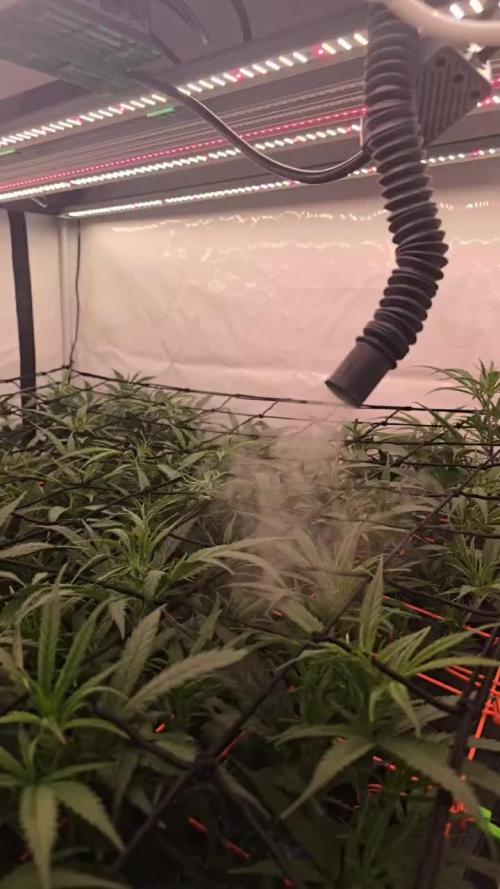
🕸️ Training: Zweites Netz installiert
Das zweite Scrog-Netz wurde feierlich eingezogen.
Da wir es hier mit einem fast rein sativischen Stretch-Monster zu tun haben, wird das Netz bald nicht nur genutzt,
sondern ausgereizt.
Die Spitzen schießen bereits motiviert durch das Gitter.
Man könnte sagen:
👉 „Das botanische Volleyballfeld ist eröffnet.“
🎬 Fazit der Woche
Vegi erfolgreich beendet
Blüte eingeleitet
Licht optimiert
Wasser perfektioniert
Nährstoffe erweitert
Wurzeln traumhaft
Stretch: „Hold my beer…“
Das HydroLab ist startklar für eine der spannendsten Phasen überhaupt.
Wenn diese SLH so weiter macht, wird das Netz in wenigen Tagen aussehen wie ein explodierter Kräuterteppich.
-----------------------------------------------
HydroLab – Week 0: Initiating Bloom Protocol
“Please fasten your lab coats — the test subjects have entered reproductive mode.”
Welcome back to the HydroLab, where plants are trained with more precision than Olympic athletes and the line between botany and madness gets thinner by the day.
This week marks a major milestone: the final veg week, the light flip, a water revolution, microbial spa treatments, and preparations for the incoming stretch.
🌞 Lighting Update: Goodbye Blue, Hello Bloom Mode
As of Thursday, the system is officially running 12/12 — bloom phase initiated.
The blue add-on lights have been politely removed from service, replaced with red spectrum units.
Also new: IR AddLites, running during the final 15 minutes of the day to simulate a luxurious sunset for plants that take their circadian rhythm very seriously.
In short:
👉 The ladies are now being tucked in like royalty.
💧 Water Chemistry Upgrade: The Deionization Unit Is Online
This week, the HydroLab achieved a new level of hydration enlightenment:
The deionized water system is fully installed and operational.
It now feeds the entire RDWC with:
EC-neutral lab-grade water
perfectly predictable pH behavior
zero unwanted minerals
zero drift chaos
The HydroLab is now officially certified for water purity that would make a barista weep.
Nutrient Program Enhanced — Bloom Mode Engaged
The EC was raised moderately to 1.5, just enough to fuel the stretch without cooking the roots.
On top of the standard AN trio (Micro / Grow / Bloom) plus B52, Bud Candy, and Great White, the lineup now includes:
🔥 Advanced Nutrients – Bud Blood
A bloom initiator designed to say:
“Stop messing around and start flowering.”
Laboratory interpretation:
👉 “Early-phase hormonal persuasion via potassium-rich diplomacy.”
Early pistils are already in preflight mode.
🌱 Root Status Report – Mykos Doing Myko Things
The roots look glorious:
fluffy
creamy
vigorous
thoroughly colonized by mycorrhiza
Living RDWC in full effect — the symbiotic crew is thriving.
🕸️ Training Update: Second Scrog Net Installed
The second screen is now in place.
Given how sativa-dominant this strain is, the stretch is expected to fill the remaining space very quickly.
The tops are already pushing upward with purpose.
It looks less like a canopy and more like we’re preparing a botanical trampoline.
🎬 Weekly Conclusion
Veg phase complete
Bloom officially initiated
Lighting optimized
Water chemistry perfected
Nutrients upgraded
Roots looking elite
Stretch incoming
The HydroLab is entering one of the most exciting phases of the run.
If this Super Lemon Haze keeps going like this, the scrog will look like an exploding herbal carpet within days.

Likes
25
Share


@PrairieFrostGrow
Follow
****Week 16 growth – March 20 to 26, 2021 – Week 7 flower ******
We are in flush now until the end😃 Its nice to be past toxicity and deficiency issues and will just watch them finish and swell up.
Flushing agent used this week to assist with getting all the nutrients out.
These girls are different from each other but doing well overall. CL1 is fox tailing more than the other but CL2 is finishing nicer than CL1 in her fade.
Little more detail…..
Mar 20/21, Day 43
- plain watering today
- 4L given to each girl at 26ppm and 6.0pH
- turned the light down more today to 410 watts
Mar 21/21, Day 44
- dry out day
Mar 22/21, Day 45
- finishing agent watering today
- typhoon given today for flush at 2ml/l
- 425ppm and 6.0pH
- 4L for each girl.
- a couple of the girls are a little dark so going to use a flushing agent.
Mar 23/21, Day 46
- plain watering
- watering again after the flushing agent
- 4L for each girl and gave a good runoff
Mar 24/21, Day 47
- dry out day
- fade coming out now
Mar 25/21, Day 48
- plain watering with tap water.
- 280ppm and 6.1pH
- 4L each girl again
Mar 26/21, Day 49
- dry out day
- will be drying out the pots more now before the next waterings.
Through week 7 and heading into week 8. Not a lot of action in the final weeks as far as grower maintenance.......love the end when you can just enjoy😃 Very nice ETS💪🙏


Likes
73
Share


@MisterZ
Follow
Bonjour les amis,
Bonne année à tous, qu'elle soit propice à la culture !
La floraison se poursuit, le stretch est limité par les températures un peu basses. De nombreuses branches se sont développées et les têtes apparaissent. La plante se porte plutôt bien.
À bientôt, M.


Processing
Likes
1
Share


Likes
19
Share


@sirstickyfingers
Follow
Day 39 flower!!
Not a whole lot to report, just watering every 2-3 days ph 6.5 tap water
Top dressed with gaia green bloom 284 with about 2 tablespoons per gallon and then about 2 cups of worm castings. I didnt use All purpose this time around as Im trying to taper off the nitrogen. Hopefully that doesnt come back to bite me
Hopefully the girls are done come May is what im hoping for


Likes
13
Share


@Sadhus
Follow
983 gramme sec sur 10 clones en table a marée EBB and flow de 1 M2 sous une lampe a 750 watt ce qui donne 1,31 gramme par watt par mètre carré 😯👌😁


Likes
4
Share


Likes
6
Share


@Heybuddy
Follow
Super proud of the way the manifold is turning out. So symmetrical!
Between now and the next update I’ll be doing some defoliating. Get rid of some of the lower fans, create some airflow up top, and possibly remove the lowest set of growth tips on each of my main stems.
Plant is flourishing and healthy but those leaves could maybe be more vibrant. Might be time to start introducing nutes to the reservoir.
Edit: Added a video of the plant after defoliating. Ended up removing the bottom 2 nodes of growth except for the outer fan leaf on the top one. Also moved the soft ties up one node and adjusted where they’re anchored so they pull the stems apart more. Can’t wait to see what she looks like in a week!

Likes
49
Share


@masterofsmeagol
Follow
7/25 Did two videos this morning. One where I was only going to water the 3 gallons I had mixed up but it's going to be very hot this week. Didn't want to make the same mistake as last time so I watered everything AT LEAST A GALLON. I need to bump up the volume during these really hot, humid days abd it doesn't get worse then this. Things are getting dusty. Found an inch worm and some minor pest damage. Once it cools down ill spray something. Also noticing small nitrogen deficiency that takes a leaf and moves up the plant a little bit. I'm going to need to start nutes this week. I'll keep this updated. Went back over around one and everything was looking fantastic! Took a few pictures and defoliated a few leaves.
UPDATE: I GOT A MESSAGE FROM DAD SAYING MY PLANTS LOOKED DROOPY. I HADNT MADE IT OVER FOR MY NIGHTLY INSPECTION BUT HAVING WATERED YESTERDAY I WAS THINKIBG OF SKIPPING IT. GOT THERE AND SAW THE FIRST 10TH PLANET DROOPY. ALL THE TENTH PLANETS LOOK RELATIVELY THE SAME BUT ONE OF THEM IS MY "CANARY IM A COAL MINE" AS IT DROOPS WAY BEFORE THE OTHERS. THE TWO BLUE CHEESES IN 20S THAT DRY OUT FASTER GOT TWO GALLONS AS DID MY 10TH PLANET CANARY AND MY BIG BLUE IN THE 50. ITS BEEN 90S AND SUNSHINE AND ITS ONLY GOING TO GET HOTTER. I HAVE THINGS GOING ON IN THE MORNING SO I WONT HE ABLE TO WATER. I NOTICED MORE NITROGEN DEFICIENCY RISING IN THE BLUECHEESE THAT DRINKS ALL THE WATER. OBVIOUSLY ILL NEED TO ADD NUTES SOONER THAB LATER CONSIDERING IM IN FLOWER BUT THE PLANTS ARE STILL A NICE GREEN AMD ONLY LOSING VERY FEW LEAVES. I ACTUALLY SAW A COUPKE BURNT LEAF TIPS ON A COUPKE PLANTS AFTER I WATERED WITH THE KELP ME/YOU. THIS SOIL IS AWESOME. WHAT IS THIS? WEEK 16 AND STILL GOING STRONG. WHEN I DO DECIDE TO START NUTES ILL TEST IT ON THAT BLUE CHEESE THATS FURTHER IN SENESCENCE. I TOOK A QUICK VIDEO ILL UPLOAD TOMORROW.
7/26 Had a bear come around my cage and getting into out bird feeders. Bent the iron shelerds hook all the way to the ground! Getting AMMONIA now to try and keep him away. Bags were heavy this morning but it's going to be really hot again. It'll be on the 90s the next few days so I need to be very careful. After we get through this I'll do an app of BT. Garden looks fantastic!
UPDATE: ANOTHER SCORCHER OF A DAY WENT BACK TO THE GARDEN. NOTHING WAS DROOPING SAVE FOR MY CANARY. THAT AND ANOTHER WERE BONE DRY. THE TWO PLANTS IN THE MIDDLE OF THE CAGE ARE SURROUNDED ON ALL SIDES SO I ASSUME THATS WHY THEY DONT SRY OUT AS QUICK. I GAVE EVERYTHING IN THE GARDEN ONE GALLON EXCEPT THE 10 GALLON PURPLE PUNCH, AND THE TWO IN THE MIDDLE. ONE TENTH PLANET ONE BLUEBERRY CHEESE. I ONLY GAVE THOSE 1/2 TO 3/4 GALLON. THE TWNTH PLANET IN THE MIDDLE IN THE THIRTY LOOKED HAPPY AND WAS STILL HEAVY TOO. I GAVE THAT A HEARTY HALF GALLON AND I WOULDNT EVEN HAVE DONE THAT IF TOMORROW AND FRIDAY WERENT GOING TO BE THE HOTTEST DAYS OF THE WEEK. I DEFOLIATED SOME. I NEED TO DO MORE BUT I HAD TO BEAR PROOF. I SOAKED THE BOTTOM BOARDS OF THE CAGE IN BLEECH. VERY CAREFUL NOT TO GET ANY ON THE PALLETS OR GROW BAGS OR ANYWHERE IT COULD GET TO PLANTS. I TACKED DRIER SHEETS TO THE CAGE. I CUT A COUPLE PILL CASES IN HALF AND SOAKED THEM IN BLEECH AND DROVE THEM IN BY THE WOODS WHERE HE WNTERED AND BY THE FEEDERS HE EMPTIED. PUT UP ANOTHER CAMERA FACING THE OPPOSITE DRECTION SO I CAN SEE HIM NO MATTER WHAT. I WOULD STAY AWAY MR. BEAR.
7/27 Plants are looking FANTASTIC this morning. Soil is still damp this morning and bags are heavy as hell. They look super happy. Obviously my watering situation depends on the weather. Today and tomorrow are supposed to be the hottest days so I wanted to make sure the plants had sufficient water before this. I'll let them dry out totally before watering again. There's another four lined plant big somewhere that sat there and destroyed another leaf. I'm AT LEAST spraying with BT after this heat wave. Supposed to rain a little today with thunderstorms. I haven't got my supports up yet but if i need to I coukd throw my tarps up real quick. Don't think I'll need to though. These are some tough freaking plants and I am super proud of how they've turned out thus far.
UPDATE: WENT BACK OVER AND RE APPLIED BLEECH TO THE RAGS AND ON THE PERIMETER OF MY CAGE. I TACKED A FEW MORE DRYER SHEETS UP. REASON I DID THIS WAS BECAUSE WEVE BEEN GETTING HORRIBLE THUNDER STORMS WITH TORRENTIAL RAIN. THE WEATHER MAN HAD BEEN WRONG SEVERAL TIMES WARNING OF THUNDER STORMS AND WE WOULDNT GET SHIT. THIS TIME IT WAS PRETTY BAD. TOOK A SHORT VIDEO. IT WAS SUPPOSED TO BE THE HOTTEST DAYS TODAY AND TOMORROW. I DIDNT NOTICE ANY BREAKAGE AND I DONT SEE ANY ON MY CAMS. IM SURE ITS NOT THAT MUCH RAIN AND THOSE NAHS WILL DRY OUT SOON. I NEED TO GET MORE PH DOWN AND DECIDE WHAT IT IS IM GOING TO DO FOR NUTES IN FLOWER AND MAKE UP MY MIND.
7/28 Huge thunderstorms all day yesterday and through the night with high wonds. Plants made it through unscathed despite the lack of a trellis. Today is supposed to be the hottest of these days. I think the hear wave ends today. I really need to get my supports up. I'm super lucky to not have had any breaks during the storm. I have a couple of videos I did but I didn't upload them earlier and now that I'm back in the woods I doubt they'll upload now. I'll give it a shot. If not I'll put them up tomorrow. OH! I found that four lined plant bug that had been fucking up my leaves and squished him. Well I hope it was him. If not I killed a sibling at least.
UPDATE: JUST WOW. This morning all drooped over from the storm went over at 4 and its still 90 and they seem to have grown sic inches and jumped forward WAY more into flower. I am amazed. I'll upload a photo or two but I took a video I'll put up tomorrow. Super stoked. Oh and you can give me a red smile face for not using nutes every week @growdiaries but you point out the deficiency then I'll fix it.
7/29 Plants looking fantastic this morning.
UPDATE: PLANNED ON NOT GOING TO THECGROW TOMOGHT SEEING THAT IT HAD RAINED SO HARD AMD THAT WE ARE SUPPOSED TO GET RAIN TONIGHT. I GET THERE AT ABOUT FIVE AND MY CANARY AND A FEWCOTHERS WERE DROOPING! IT WAS IN THE 80S ALL DAY. I GAVE EACH PLANT A GALLON OF WATER. THE GROW BAGS ON THE TEO WORST PLANTS WERE SUBSTANTIALLY LIGHTER THAN THE REST. I HOPE IM NOT OVERWATERING. THE PLANTS SEEMED TO PICK BACK UP AFTER WATERING BUT ILL HAVE TO WAIT UNTIL TOMORROW TO UPLOAD MY PICTURES AND VIDEOS. I NEEDED TO ADD TEMPORARY SUPPORTS TO A COUPLE DIFFERENT PLANTS. IM CERTAINLY GLAD I GOT THE URGE TO GO OVER. WHAT A CHANGE IN A FEW HOURS
7/30 Plants are really growing fast and transitioning quick to flower. We got almost no rain so I'm glad I watered like I was supposed to even though the bags had some heft to them. I'm noticing more pest damage. I'm thinking a bt spray tonight might be beneficial. I'll look through what I've got on hand. I may just give them an application of spinosid but we'll see. I still need to move things and put my supports up. Medical problems have slowed me down.
UPDATE: Went to check the plants around 3 and they looked great. Bags were still heavy and a little bit moist. I think with the added rain some of the plants may have been overwatered. I should have only watered tue bags that felt light. There is only one plant now that looks a little overwatered and even that is looking good. I found some more minor pest damage. Winds were fairly high. I wondered about my trellis netting but it hadn't been sanitized and my plants are very healthy so I decided to wait. I watched them dance like willows in the wind. I know it won't be like that with big ol colas on them but for right now it's working out just fine. Goal for next week is to move the front row back and move things around to better utilize space, possibly spray for pest and add supports for final flowering after I get the plants situated how I want them. If I do it right I may be able to lst some. Also took a 2 minute video but I cant upload until tomorrow.
7/31 I'm wondering about my watering habits. This morning I watered a couple blue cheese and purple punch plants with just a half gallon as they were light and looked drooping. I'm wonderingvif I'm overwatering. Some plants still seem heavy while others are light? I think the plants may have been overwatered due to the torrential rain and my taking less time hand watering. Hopefully I won't come home from this doctors appointment to wilted plants but I really doubt it. 10th planet requires far less water than the two other strains. Even specific phenos require more water and its difficult with the different size containers but im working with what ive got. I need more ph down and I've gotta get these plants supported. These are some massive plants. Store was closed. Dispensary was opened. Showed my buddy the video then it started raining. By the time I got there the plants looked horrible. Everything was droopy but a couple were really bad. A few weren't bad at all. Actually the one in the ten needed it. I think I just need to give more water at a time and document how I water each plant individually. I also need to take into consideration the weather. Hard to do when it's so unpredictable. I'll wait for them to dry out and then I plan to start low doses of big bloom and grow big but I need to wait for them to dry out first. Then next watering they'll get some nutes. It's sunny now so I may go check my plants. I may also put a fan out for a while on the bags. That might help them out.


Likes
7
Share


@NorthernFrostCannabis
Follow
Day 51, Its looking good. The leaves are turning yellow and purple and lot of buds are turning blue. Very colorful, you can tell the bag appeal is going to be a 10/10 as its frosting up very nice as well. Only issue I'm having is the buds weight so much their falling everywhere, I'll do my best to tie them down and hold up the branches best as possible with what I have. Tuesday I'll get more stakes.
Tomorrow will be my last day feeding MagnifiCal and I'll start giving them a lighter solution right till the end as I don't flush unless my PPM runoff is very high. You can't take nutrients out of plants after its taken it in. Your flushing your medium. I did want to run it to 70 days, but with everything already falling over and the fall colors. Its looking like 65 days. Any questions please don't hesitate. I'll add more pics right after lights out.