Processing
Likes
4
Share
Likes
21
Share
@J4kpvp
Follow
Hello:) This week was easy again, watered them twice, kept the tops under the net for a few more days and then I just let them grow. I also had to raise the wasabi again, it stopped stretching like a week ago. The sangrias are also developing nicely, they are almost done stretching now. I didn‘t add any nutrients this week, a friend of mine who uses biotabs for years said I should be very careful with adding bio pk 5-8 because he had problems with over fertilizing even when using a very small dose. Since the leaves still look perfect, I‘ll wait a bit. Also the bugs are back, they seem to come in waves but nothing my sticky tape can‘t handle:) Looking forward to next week, the wasabi is small but already starting to pack some nice buds:)
Likes
23
Share
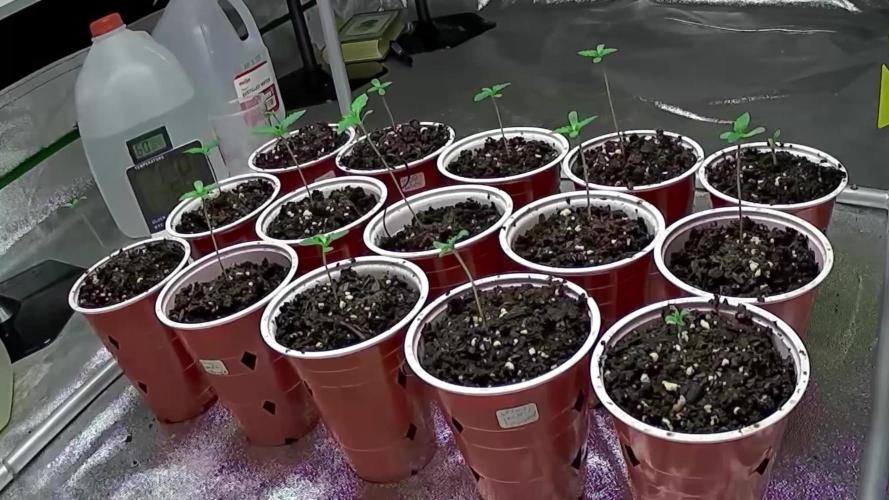
Germinated wiithin 12 hours 2 down 1 more to go! Check out my Cannabis Community, please👇like👇, follow, comment, and subscribe to my YouTube channel👇. ❄️🌱🍻 https://www.youtube.com/@DutchF4rmer Join our discord community for weekly giveaways 👌 (Join the patreon for help advice and mentoring) https://www.patreon.com/DutchFarmer (Discord Server) https://discord.gg/VMu6rH4a7V IG https://www.instagram.com/dutchfarmer1/ It will be appreciated! ❤️ Happy Growing 🌱🌱🌱
Likes
8
Share
Days 92 - 98 (from sprout) 8/23/24 - 8/29/24 Loompa's Headband x TK fading hard this week - checking trichome color through a 15x loupe, needs more time The Good Shit drinking a gallon of water a day but slowly backed off near end of week - my guess would be a 14-week flowering period for this genotype before harvest quality I'm pretty much watering daily a 1/4 gallon to Blue Nose Pit or less to keep mulch layer from drying out Sweet 16 S1 takes the win for most trichome coverage out of the garden, has the most up-front aroma out of the geno hunt PAR is all over the place on this one and totally messed up, after this week I'll raise the light and focus on the appropriate PAR for canopy of The Good Shit Pest Management slipping too, fungus gnats are repopulating and it seems the ecosystem has encountered a serious imbalance of beneficials and predators that normally kept soil/mulch in-check Plan on short-term remedying this with a top-dress of remaining compost + em bokashi and a moderate drench of EM5 following with repeated treatments of enzymes (tweetmint) Long term solution may need a predator/beneficials kit and/or higher quality vermicompost after knocking them back with enzymes
Likes
33
Share
@Viridios
Follow
The time has come to start my flush,wil be doing a week to a week and half of pure water flush. The smell coming from the plants are beautiful..very sweet fruity flavors.. !!! 💚💚 Lady's now slipping into there sexy purple outfits..😁😁💚
Likes
6
Share
July 12: looking good. Starting force flowering which is 12 h of darkness at same time each night for 2-3 weeks to initiate flowering. Doing ten hours of darkness (9:30 pm to 7:30 am) plus a ‘bonus’ two hours by using the far red light for a few seconds before dark which causes the plant to go into dark mode about two hours faster. So, it’s like having a 26 h day with 12 h of dark. This is a great trick if you have daily access to your plants. July 15: doing fine. July 18: Mimosa Shot has finally caught up in height to the other plant in the wagon (Sunday Punch EV).
Likes
12
Share
Harvest time for amnesia lemon haze. Intense lemon smell, tall stretchy girl with big sticky buds! While her height almost became an issue, she managed to finish with minimal light stress and just a few signs of foxtailing. Will update in 7-10 days with initial smoke and dry weight. Thanks for tuning in to this grow 👽🌳🔥💚 Update - 79 grams dried, minus a couple grams for the smoke test. Buds have a lemon smell and a lemon fruit flavor when smoked.
Likes
12
Share
We are at 21 days from these girls breaking the surface and they are making progress. I noticed at the beginning of the week that they were a little overdosed on nitrogen so I added 2 gallons of tap water to the reservoir and adjusted the ph to 6. They are still looking a little heavy on N but their growth rate is going great so I think it should balance out by the end of next week. I dont plan on doing a water change until I flower them. I left the plants alone most of the week. Tied most of them down to spread them out on day 20. The branches on most of these plants are thick and solid already. They don't budge easily. Bananasicle is looking pretty funky with uneven branch and node growth but we are just going to push forward. Still pumping nutrients and beaming light 24 hours a day. I'm thinking day 28 we will switch them to flower and see if any of these ladies can bring some❄️🔥💨
Processing
Likes
2
Share
Checked the two unsexed bagseeds again this week. I was correct, I had one male and one female. I have moved all the younger flowering females into the larger 4x2 tent and moved the male plant and the older purple trainwreck plant into the smaller 3x2 tent. I am hoping to isolate the male and minimize pollination of my girls. This is an end grow, I want both bud and seeds. My plan now is to minimize pollination through isolation and pruning. I want to pollinate a single branch on each of the females, this way I only have a few seeds from each plant and still have quality bud. The male has been trimmed back some already and the pollen sacs have not burst yet. The older purple trainwreck plant is adding weight now to the buds and should be done in approximately 2-3 weeks depending on trichomes. In the larger tent, the back left corner is Pineapple Express. It is the tallest plant in the tent. The front left plant is white widow. The middle front plant is also white widow. The middle back plant is a bagseed, I suspect berry white still for this plant. The far right plant is the younger purple trainwreck plant. Currently feeding the younger plants every 5 days or every third watering depending on the plant. The older flowering PT plant will get its last feeding this week and will start a flush after that. Happy growing 👩‍🌾🏼
Likes
14
Share
6/29 the past 3 days were 112, 115, and then 118 degree days. The plants held up fine but this one had some heat damaged leaves because of it. Also top dressed with a cup of one shot 7/3 watered with slf-100 and recharge
Likes
7
Share
Final week, had issues with PH. Lacked Nitrogen in the beginning of flower due to incorrect PH levels.. Oh well, still finishing this weekend.. 🌱🤔
Likes
16
Share
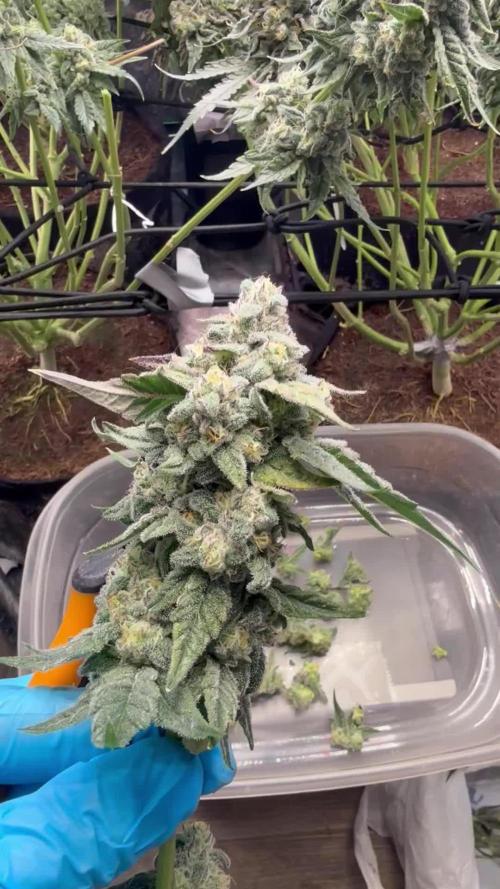
Day 91 - The buds are frosty and getting more denser every week.
Likes
25
Share
ANTHOCYANIN production is primarily controlled by the Cryptochrome (CR1) Photoreceptor ( !! UV and Blue Spectrums are primary drivers in the production of the pigment that replaces chlorophyll, isn't that awesome! 1. Diverse photoreceptors in plants Many civilizations, including the sun god of ancient Egypt, thought that the blessings of sunlight were the source of life. In fact, the survival of all life, including humans, is supported by the photosynthesis of plants that capture solar energy. Plants that perform photosynthesis have no means of transportation except for some algae. Therefore, it is necessary to monitor various changes in the external environment and respond appropriately to the place to survive. Among various environmental information, light is especially important information for plants that perform photosynthesis. In the process of evolution, plants acquired phytochrome, which mainly receives light in the red light region, and multiple blue light receptors, including his hytropin and phototropin, in order to sense the light environment. .. In addition to these, an ultraviolet light receptor named UVR8 was recently discovered. The latest image of the molecular structure and function of these various plant photoreceptors (Fig. 1), focusing on phytochrome and phototropin. Figure 1 Ultraviolet-visible absorption spectra of phytochrome, cryptochrome, phototropin, and UVR8. The dashed line represents each bioactive absorption spectrum. 2. Phytochrome; red-far red photoreversible molecular switch What is phytochrome? Phytochrome is a photochromic photoreceptor, and has two absorption types, a red light absorption type Pr (absorption maximum wavelength of about 665 nm) and a far-red light absorption type Pfr (730 nm). Reversible light conversion between the two by red light and far-red light, respectively(Fig. 1A, solid line and broken line). In general, Pfr is the active form that causes a physiological response. With some exceptions, phytochrome can be said to function as a photoreversible molecular switch. The background of the discovery is as follows. There are some types of plants that require light for germination (light seed germination). From that study, it was found that germination was induced by red light, the effect was inhibited by subsequent far-red light irradiation, and this could be repeated, and the existence of photoreceptors that reversibly photoconvert was predicted. In 1959, its existence was confirmed by the absorption spectrum measurement of the yellow sprout tissue, and it was named phytochrome. Why does the plant have a sensor to distinguish between such red light and far-red light? There is no big difference between the red and far-red light regions in the open-field spectrum of sunlight, but the proportion of red light is greatly reduced due to the absorption of chloroplasts in the shade of plants. Similar changes in light quality occur in the evening sunlight. Plants perceive this difference in light quality as the ratio of Pr and Pfr, recognize the light environment, and respond to it. Subsequent studies have revealed that it is responsible for various photomorphogenic reactions such as photoperiodic flowering induction, shade repellent, and deyellowing (greening). Furthermore, with the introduction of the model plant Arabidopsis thaliana (At) and the development of molecular biological analysis methods, research has progressed dramatically, and his five types of phytochromes (phyA-E) are present in Arabidopsis thaliana. all right. With the progress of the genome project, Fi’s tochrome-like photoreceptors were found in cyanobacteria, a photosynthetic prokaryotes other than plants. Furthermore, in non-photosynthetic bacteria, a homologue molecule called bacteriophytochrome photoreceptor (BphP) was found in Pseudomonas aeruginosa (Pa) and radiation-resistant bacteria (Deinococcus radiodurans, Dr). Domain structure of phytochrome molecule Phytochrome molecule can be roughly divided into N-terminal side and C-terminal side region. PAS (Per / Arndt / Sim: blue), GAF (cGMP phosphodiesterase / adenylyl cyclase / FhlA: green), PHY (phyto-chrome: purple) 3 in the N-terminal region of plant phytochrome (Fig. 2A) There are two domains and an N-terminal extension region (NTE: dark blue), and phytochromobilin (PΦB), which is one of the ring-opening tetrapyrroles, is thioether-bonded to the system stored in GAF as a chromophore. ing. PAS is a domain involved in the interaction between signal transduction-related proteins, and PHY is a phytochrome-specific domain. There are two PASs and her histidine kinase-related (HKR) domain (red) in the C-terminal region, but the histidine essential for kinase activity is not conserved. 3. Phototropin; photosynthetic efficiency optimized blue light receptor What is phototropin? Charles Darwin, who is famous for his theory of evolution, wrote in his book “The power of move-ment in plants” published in 1882 that plants bend toward blue light. Approximately 100 years later, the protein nph1 (nonphoto-tropic hypocotyl 1) encoded by one of the causative genes of Arabidopsis mutants causing phototropic abnormalities was identified as a blue photoreceptor. Later, another isotype npl1 was found and renamed phototropin 1 (phot1) and 2 (phot2), respectively. In addition to phototropism, phototropin is damaged by chloroplast photolocalization (chloroplasts move through the epidermal cells of the leaves and gather on the cell surface under appropriate light intensity for photosynthesis. As a photoreceptor for reactions such as escaping to the side of cells under dangerous strong light) and stomata (reactions that open stomata to optimize the uptake of carbon dioxide, which is the rate-determining process of photosynthetic reactions). It became clear that it worked. In this way, phototropin can be said to be a blue light receptor responsible for optimizing photosynthetic efficiency. Domain structure and LOV photoreaction of phototropin molecule Phototropin molecule has two photoreceptive domains (LOV1 and LOV2) called LOV (Light-Oxygen-Voltage sensing) on the N-terminal side, and serine / on the C-terminal side. It is a protein kinase that forms threonine kinase (STK) (Fig. 4Aa) and whose activity is regulated by light. LOV is one molecule as a chromophore, he binds FMN (flavin mononucleotide) non-covalently. The LOV forms an α/βfold, and the FMN is located on a β-sheet consisting of five antiparallel β-strands (Fig. 4B). The FMN in the ground state LOV shows the absorption spectrum of a typical oxidized flavin protein with a triplet oscillation structure and an absorption maximum wavelength of 450 nm, and is called D450 (Fig. 1C and Fig. 4E). After being excited to the singlet excited state by blue light, the FMN shifts to the triplet excited state (L660t *) due to intersystem crossing, and then the C4 (Fig. 4C) of the isoaroxazine ring of the FMN is conserved in the vicinity. It forms a transient accretionary prism with the tain (red part in Fig. 4B Eα) (S390I). When this cysteine is replaced with alanine (C / A substitution), the addition reaction does not occur. The effect of adduct formation propagates to the protein moiety, causing kinase activation (S390II). After that, the formed cysteine-flavin adduct spontaneously dissociates and returns to the original D450 (Fig. 4E, dark regression reaction). Phototropin kinase activity control mechanism by LOV2 Why does phototropin have two LOVs? Atphot1 was found as a protein that is rapidly autophosphorylated when irradiated with blue light. The effect of the above C / A substitution on this self-phosphorylation reaction and phototropism was investigated, and LOV2 is the main photomolecular switch in both self-phosphorylation and phototropism. It turns out that it functions as. After that, from experiments using artificial substrates, STK has a constitutive activity, LOV2 functions as an inhibitory domain of this activity, and the inhibition is eliminated by photoreaction, while LOV1 is kinase light. It was shown to modify the photosensitivity of the activation reaction. In addition to this, LOV1 was found to act as a dimerization site from the crystal structure and his SAXS. What kind of molecular mechanism does LOV2 use to photoregulate kinase activity? The following two modules play important roles in this intramolecular signal transduction. Figure 4 (A) Domain structure of LOV photoreceptors. a: Phototropin b: Neochrome c: FKF1 family protein d: Aureochrome (B) Crystal structure of auto barley phot1 LOV2. (C) Structure of FMN isoaroxazine ring. (D) Schematic diagram of the functional domain and module of Arabidopsis thaliana phot1. L, A’α, and Jα represent linker, A’α helix, and Jα helix, respectively. (E) LOV photoreaction. (F) Molecular structure model (mesh) of the LOV2-STK sample (black line) containing A’α of phot2 obtained based on SAXS under dark (top) and under bright (bottom). The yellow, red, and green space-filled models represent the crystal structures of LOV2-Jα, protein kinase A N-lobe, and C-robe, respectively, and black represents FMN. See the text for details. 1) Jα. LOV2 C of oat phot1-to α immediately after the terminus Rix (Jα) is present (Fig. 4D), which interacts with the β-sheet (Fig. 4B) that forms the FMN-bound scaffold of LOV2 in the dark, but unfolds and dissociates from the β-sheet with photoreaction. It was shown by NMR that it does. According to the crystal structure of LOV2-Jα, this Jα is located on the back surface of the β sheet and mainly has a hydrophobic interaction. The formation of S390II causes twisting of the isoaroxazine ring and protonation of N5 (Fig. 4C). As a result, the glutamine side chain present on his Iβ strand (Fig. 4B) in the β-sheet rotates to form a hydrogen bond with this protonated N5. Jα interacts with this his Iβ strand, and these changes are thought to cause the unfold-ing of Jα and dissociation from the β-sheet described above. Experiments such as amino acid substitution of Iβ strands revealed that kinases exhibit constitutive activity when this interaction is eliminated, and that Jα plays an important role in photoactivation of kinases. 2) A’α / Aβ gap. Recently, several results have been reported showing the involvement of amino acids near the A’α helix (Fig. 4D) located upstream of the N-terminal of LOV2 in kinase photoactivation. Therefore, he investigated the role of this A’α and its neighboring amino acids in kinase photoactivation, photoreaction, and Jα structural change for Atphot1. The LOV2-STK polypeptide (Fig. 4D, underlined in black) was used as a photocontrollable kinase for kinase activity analysis. As a result, it was found that the photoactivation of the kinase was abolished when amino acid substitution was introduced into the A’α / Aβ gap between A’α and Aβ of the LOV2 core. Interestingly, he had no effect on the structural changes in Jα examined on the peptide map due to the photoreaction of LOV2 or trypsin degradation. Therefore, the A’α / Aβ gap is considered to play an important role in intramolecular signal transduction after Jα. Structural changes detected by SAXS Structural changes of Jα have been detected by various biophysical methods other than NMR, but structural information on samples including up to STK is reported only by his results to his SAXS. Not. The SAXS measurement of the Atphot2 LOV2-STK polypeptide showed that the radius of inertia increased from 32.4 Å to 34.8 Å, and the molecular model (Fig. 4F) obtained by the ab initio modeling software GASBOR is that of LOV2 and STK. It was shown that the N lobes and C lobes lined up in tandem, and the relative position of LOV2 with respect to STK shifted by about 13 Å under light irradiation. The difference in the molecular model between the two is considered to reflect the structural changes that occur in the Jα and A’α / Aβ gaps mentioned above. Two phototropins with different photosensitivity In the phototropic reaction of Arabidopsis Arabidopsis, Arabidopsis responds to a very wide range of light intensities from 10–4 to 102 μmol photon / sec / m2. At that time, phot1 functions as an optical sensor in a wide range from low light to strong light, while phot2 reacts with light stronger than 1 μmol photon / sec / m2. What is the origin of these differences? As is well known, animal photoreceptors have a high photosensitivity due to the abundance of rhodopsin and the presence of biochemical amplification mechanisms. The exact abundance of phot1 and phot2 in vivo is unknown, but interesting results have been obtained in terms of amplification. The light intensity dependence of the photoactivation of the LOV2-STK polypeptide used in the above kinase analysis was investigated. It was found that phot1 was about 10 times more photosensitive than phot2. On the other hand, when the photochemical reactions of both were examined, it was found that the rate of the dark return reaction of phot1 was about 10 times slower than that of phot2. This result indicates that the longer the lifetime of S390II, which is in the kinase-activated state, the higher the photosensitivity of kinase activation. This correlation was further confirmed by extending the lifespan of her S390II with amino acid substitutions. This alone cannot explain the widespread differences in photosensitivity between phot1 and phot2, but it may explain some of them. Furthermore, it is necessary to investigate in detail protein modifications such as phosphorylation and the effects of phot interacting factors on photosensitivity. Other LOV photoreceptors Among fern plants and green algae, phytochrome ɾphotosensory module (PSM) on the N-terminal side and chimera photoreceptor with full-length phototropin on the C-terminal side, neochrome (Fig. There are types with 4Ab). It has been reported that some neochromes play a role in chloroplast photolocalization as a red light receiver. It is considered that fern plants have such a chimera photoreceptor in order to survive in a habitat such as undergrowth in a jungle where only red light reaches. In addition to this, plants have only one LOV domain, and three proteins involved in the degradation of photomorphogenesis-related proteins, FKF1 (Flavin-binding, Kelch repeat, F-box 1, ZTL (ZEITLUPE)), LKP2 ( There are LOV Kelch Protein2) (Fig. 4Ac) and aureochrome (Fig. 4Ad), which has a bZip domain on the N-terminal side of LOV and functions as a gene transcription factor. 4. Cryptochrome and UVR8 Cryptochrome is one of the blue photoreceptors and forms a superfamily with the DNA photoreceptor photolyase. It has FAD (flavin adenine dinucle-otide) as a chromophore and tetrahydrofolic acid, which is a condensing pigment. The ground state of FAD is considered to be the oxidized type, and the radical type (broken line in Fig. 1B) generated by blue light irradiation is considered to be the signaling state. The radical type also absorbs in the green to orange light region, and may widen the wavelength region of the plant morphogenesis reaction spectrum. Cryptochrome uses blue light to control physiological functions similar to phytochrome. It was identified as a photoreceptor from one of the causative genes of UVR8 Arabidopsis thaliana, and the chromophore is absorbed in the UVB region by a Trp triad consisting of three tryptophans (Fig. 1D). It is involved in the biosynthesis of flavonoids and anthocyanins that function as UV scavengers in plants. Conclusion It is thought that plants have acquired various photoreceptors necessary for their survival during a long evolutionary process. The photoreceptors that cover the existing far-red light to UVB mentioned here are considered to be some of them. More and more diverse photoreceptor genes are conserved in cyanobacteria and marine plankton. By examining these, it is thought that the understanding of plant photoreceptors will be further deepened.
Likes
22
Share
🌸 The White OG – Week 2 Flower Strain: TheWhite OG by Seedsman Seeds Stage: 2nd Week Flower / Week 13 from Germination Grower: DogDoctor Pot: 30L Fabric Medium: PRO-MIX HP Mycorrhizae Lighting: FOG LED Controlled by: TrolMaster Environment: 🌿 🔆 Light Schedule: 11/13 (Light/Dark) 💧 pH: 6.0 ⚡ EC: 1.26 🌡️ Water Temp: 18.6°C ⸻ 💥 Let the Bloom Begin We’ve officially entered Week 2 of Flower—and you can see the shift. ✨ The canopy is full ✨ The stretch is slowing ✨ And the first signs of flowers are popping up! Tiny clusters forming, her energy turning inward to begin building her crown. This is a foundational moment. What we do now will shape the rest of her flowering cycle. And for White OG, it’s looking like she’s going to be a big mama, just as we’d hoped. 🌿 ⸻ Feeding: The Aptus Clean Program with Breakout Powder This week’s feeding is a carefully balanced clean recipe—precision, not excess. 💧 Order of Mix 1. Regulator – Strength and cell structure 2. System Clean – Sanitation and oxygen boost 3. RO Water Conditioner – Unlocks nutrient uptake 4. All-in-One Liquid – Balanced base nutrients 5. Breakout Powder – The flower kickstarter 🌸 Why Breakout Now? Week 2 of flower is when we want to nudge the girl gently into full reproductive mode. Breakout powder provides the phosphorus and potassium bump needed to stimulate early bud formation and drive more focused energy into flower sites. Not too early. Not too late. This timing is just right. 🧠 ⸻ 📈 Metrics That Matter • Final pH after mix: 6.0 – ideal absorption • EC: 1.26 – strong but not heavy • Water Temp: 18.6°C – slightly cool, but within range This is a recipe that’s been tried, tested, and it’s clearly working. Her leaves are loving it, and her roots are thriving. ⸻ 🌿 Canopy Goals She’s taking to the Scrog beautifully—spreading, reaching, stacking. You can feel her momentum building. The defoliation we did earlier paid off. She’s getting light where she needs it and airflow is perfect. You can already feel her presence. She’s not just growing—she’s preparing for bloom with intention. ⸻ ❤️ Thank You to the Dream Team • Seedsman Seeds – for giving us these genetics to explore • Aptus Holland – for their clean and powerful feeding philosophy • FOG LEDs & TrolMaster – for total environmental control • GrowDiaries – for the platform to share, learn, connect • To the community—friends, haters, lovers, fellow growers—you are all part of the rhythm • And of course, to Instagram, where we keep the vibes flowing daily 🌈 👉 Come join the journey at [@DogDoctorOfficial] 🎉 Don’t miss the Dognabis Cup - 1st Edition now open! ⸻ 🌙 Final Thoughts This week, we don’t rush her—we guide her. White OG is stepping into her flower phase with grace and strength. The roots are fed, the canopy is full, and the energy is shifting. One week closer to the magic. Let’s trust the process, respect the plant, and enjoy the ride. 🚀 With Growers Love, DogDoctor 🐾💚 As always thank you all for stopping by, for the love and for it all , this journey of mine wold just not be the same without you guys, the love and support is very much appreciated and i fell honored and so joyful with you all in my life 🙏
 With true love comes happiness 💚🙏 Always believe in your self and always do things expecting nothing and with an open heart , be a giver and the universe will give back to you in ways you could not even imagine so 💚

 Friendly reminder all you see here is pure research and for educational purposes only 💚Growers Love To you All and remember to keep that smile big and alive 💚
Likes
19
Share
Nice start to the week, enjoying the growth on these so far. The Carl #2 seems to be a triploid mutant, should be fun to grow. Been experimenting with time lapses over the last little while and think I may finally have it down at this point. /Updates as they happen/ -Carl is more than a triploid, both seeds have four-leaf node sets -Had to support UKBS 2 with some garden ties as it got too leggy and started falling over -Watered with plain water, the seedlings are suffering under the low humidity but growth remains steady
Likes
27
Share
Week 3 of veg. In the books and they’re all motoring along nicely. The Alaskan Thunderfuck looks to be sorting itself out so we should have 4 plants for the chopping eventually. Just gotta get em there first. They’re showing no adverse reactions to the heavier nute feed at this stage of development which is yet another feather in the cap for Druid Berkana. I’m immensely impressed with this nute line. Just another boring week of veg. In the books. Can’t wait to see transition take over👍. Background Just a fem run we were able to sneak in to the dutchy cabinet for some extra bud stock. Strain details as follows: QCS: this actually a strain of Alaskan Thunderfuck (Not AK47 as advertised). GD doesn’t have that info up yet. We’ve had it before but never grown it. I remember it being a decent and somewhat sedative indica. Blimburn: This chocolopez strain is very interesting. We’ve been waiting at least 5 years to grow something reminiscent of a chocolate Thai. This one should fit the bill there nicely. AMS: Their Borderliner strain caught my eye so we naturally had to… give it try! No matter how it turns out, this seed co. Has been nothing short of stellar to work with. We’ve got a whole bunch more of their stuff in the hopper for testing on the next cycle🤟. Smiling Tiger: This is an S1 of my buddies cross called Holy Surfer. Still haven’t seen it bud out in pollinated yet but the structure is classic skunk with a big primary cola, tight node spacing and exceptionally vigorous leaf production. The smoke should be interesting and the terp profile is very pungent and sweet.
Likes
67
Share
Crazy smells i already smoke 💨 this strains so I know what to expect from those buds and they are getting bigger👌😋