


Likes
Comments
Share


@Mrg7667
Follow
Decent week, noticed some pregnant buds so i have temoved the little ones that i see and any other hermies i missed but not much. Buds are starting to get unique smells and traits as far as bud structure just added new light today

Likes
229
Share


@OrganicNature420
Follow
Germination date 🌱 12/07/2021
Day 8 22/07/2021
Strain 🍁 SinCity seeds Frosted Biscotti
(Biscotti Sundae x Whitenightmare)
THC% • Unknown
💡 Mars Hydro FC4800
• Power draw 480W + 5%
• Max coverage 5 x 5
• LED 2070pcsSamsungLM30B1&Osram660nm
• Max Yield 2.5g / watt
• Noise level 0 DB
• Removable Driver +2m cable
• Daisy chain (multiple lights)
https://marshydroled.co.uk/products/mars-hydro-fc-4800-led-grow-light-samsunglm301b-commercial-greenhouse-medical-indoor-kit 🇬🇧
https://www.mars-hydro.com/buy-fc-4800-480w-4x4-energy-saving-full-spectrum-commercial-led-grow-light-mars-hydro-for-sale 🇺🇸
PROMO CODE • (ORG420) DISCOUNT 👍🏻 marshydroled.com
⛺ Mars Hydro 120 x 120 x 200cm
📤📥 AC infinity 6inch
💧 10lt dehumidifier
❄️ 3.1kw air con system
💉 Nutrients GreenBuzzLiquids
Organic Grow Liquid • 1-4ml until 2wk flower
Organic Bloom Liquid • 2-4ml flower stage
Organic More PK • 2-4ml +wk3 of flower
Organic Calmag • 1-2ml/lt whole grow
Fast Plants Spray • first 3days at night lights off
More Roots • 2-5ml veg +2wks flower
Fast Buds • 5ml +wk2 of veg until 1wk flower
Humic Acid Plus • 2-5ml whole grow
Growzyme • 2-5ml whole grow
Big Fruits • 2-5ml flower stage
Clean Fruits • 5ml flush 1wk
Ph powder
Root Gel
Living Organics
https://greenbuzzliquids.com/
PROMO CODE • organicnature420 15% off ✌️🏼
🥥 Growing Media • Coco Coir
Notes 📝
Easy first week Plants look good and so does the mrs 😆 .. even better now the ac is in so one complete grow room. Lights doing it's job and Mars have kindly given me a promo code so if you want a cheeky discount use code (ORG420) 👍🏻Lowered it down to 70cm and will keep it there to get some stretch. New Nutrients I haven't had a problem with, the fast plant Spray is decent and I'm loving the pH powder. Gives you extra gains aswell being Organic. Thanks for all the love likes and comments and will update in a couple of days
Happy growing fam ❤️🌱🍁👍🏻

Likes
25
Share


@crystal_garden_0
Follow
Great week. Everything is going well. Fat stocky plants, buds starting. Lst and tucking the leaves. Should be nice plants. Still growing daily

Processing
Likes
10
Share


@mkrmkr
Follow
Completing the fourth week, pruning "topping" performed on 05/30/20, apparently the plants are fine.
Plant 1 - Completing the fifth week of life.
Plant 2 - Completing the fourth week of life.
Plant 3 - Completing the fourth week of life.
Plant 4 - Completing the third week of life.
Pot transplant and LST performed today 06/06/20, let's see how they will behave.
Likes
11
Share


@cannacat777
Follow
Here we go! Just sort of keeping an eye on the pistils and trichomes. Still need a little time. Won’t be a large harvest but smelling and looking amazing.
5/16. No joke these ladies smell so amazing. Fruity and sweet. Hopefully coming up on harvest shortly.
5/20- harvested one of the gals. So smol! But I love her. She smells like grape jelly. This time I am READY with my dry tent. I think I’ll give the other pot just a few more days…

Likes
5
Share

@Garden-of-weeden
Follow
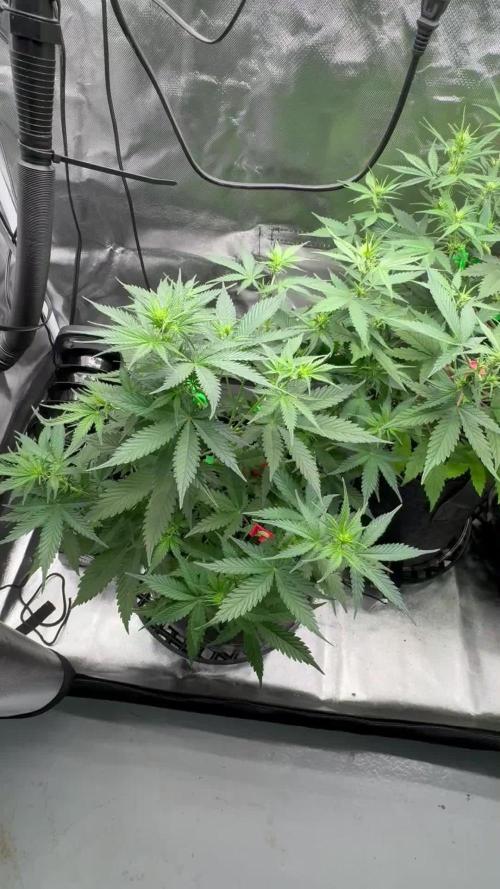
Continuing with bud clips trying to keep the canopy even. Still alternating top/bottom watering with 6.5ph tap water. Using growers choice recharge every 7-10 days. Really easy going so far. No issues that I see.
Day/night temps 81/78 degrees
Day/night humidity 65/64
PPFD 543
12 inch light distance
When I top water, I’m using half gallon per plant. Watering about every 3 days or when the pot feels very light. Starting to get a faint smell. I believe the forbidden Runtz is the smelly one. Can’t really smell the Apple strudel yet.
Likes
9
Share


@I_Identify_As_A_Dan
Follow
Week 6 for Black Lebanon by SSSC,
Like i mentioned on the previous Sunday update, she was transplanted a day after the post. I was planning on not giving water for the first week to let the roots do some growing.... the rain gods had a different plan 😂 Its been storming rain ever since day after transplant now 5 days i think 😂😂 So that didn't go to plan but hoping no rain next week fingers crossed.
I also think i topped her again some point last week. Cant wait for her roots to get moving in the new home.


Likes
43
Share


@Hashy
Follow
********************************************
Week 9 flowering (flower week 3)
********************************************
Light cycle=12/12
Light Power=180w 75%
Extractor controller settings
High temp= Day 26c, Night 20c
Low temp= c
Temp step=0c
High Rh= Day 50%, Night 55%
Low Rh= %
Rh step=0%
Speed max=10
Speed min=2
Smart controller settings (during lights on).
Lights on=9.00am
Top fan on=+22.5c
Top fan off=-22.0c
Dehumidifier on=+50% and -26c
Dehumidifier off=-50% or +26c
Smart controller settings (during lights off).
Lights off=9.00pm
Dehumidifier on=+55% and -20c
Dehumidifier off=-55% or +20c
VPD aim=0.6-1.6
DLI aim=30-45
EC aim=0.2-2.0
PH aim=6.0-6.5
NPK(14.3/7.2/25)
💧💧💧💧💧💧💧💧💧💧💧💧💧💧💧💧
Method= Autofeed 6 drippers.
Feed=Flower Nutes.
Neutralise=0.1ml/L
Bloom=4.0ml/L
Roots=0.2ml/L
Silicon=1.0ml/L
Calmag=0.5ml/L
Boost=2.0ml/L
Volume=12L
Easy Ph down= 0.125ml/L
Ec=1.75 PH=6.4/6.4
Runs=17
Run times=4min (276ml each)
Gap times=16min
Total runtime=68mins (5.0L each)
Total flowrate= 138ml/min (69ml/min each)
Auto start time=10.00am
Auto stop time=3.24pm
💧💧💧💧💧💧💧💧💧💧💧💧💧💧💧💧
********************************************
********************************************
📅14/7/24 Sunday (day 57, day 15 flower)
📋H=89cm D=17cm Dli=83.1 Ppfd=1925 12/12
Raised light. Lowered power to 180w
H=89cm D=23cm Dli=50.1 Ppfd=1161 12/12
📅15/7/24 Monday (day 58, day 16 flower)
📋 its getting warm again.
📅16/7/24 Tuesday (day 59, day 17 flower)
📋 Small defoliation lower growth.
💧
Method= automatic
Feed=Nutes flower
Volume=12L
Ec=1.75 PH=6.4/6.4
Volume left=3.5L
Volume used=8.5L (125ml/min)
Volume each=4.25L (62.5ml/min)
Runoff.
Total runoff=0.2L
Ec=2.6 PH=/6.4
Feed=manually @4.50pm
Run time=4 mins
Feed=manually @6.00pm
Run time=4 mins
Feed manually @7.00pm
Run time=4mins.
Volume left=1.5L
Volume used=10.5L (142ml/min)
Volume each=5.25L (71ml/min)
Runoff.
Extra runoff=0.35L
Ec=3.0 PH=/6.5
💧
📅17/7/24 Wednesday (day 60, day 18 flower)
📋 H=94cm D=18cm Dli=70.2 Ppfd=1625 12/12
HST
📅18/7/24 Thursday (day 61, day 19 flower)
📋 HST defoliate.
📅19/7/24 Friday (day 62, day 20 flower)
📋H=94cm D=20cm Dli=66.1 Ppfd=1531 12/12
Reduced power to 155w
H=94cm D=20cm Dli=57.0 Ppfd=1319 12/12
Went away
💧
Method= automatic
Feed=Nutes flower (next weeks feed)
Volume=12L
Ec=2.1 PH=6.7/6.8
Volume left=3L
Volume used=9L (125ml/min)
Volume each=4.5L (62.5ml/min)
Runoff.
Total runoff=0L
Ec= PH=/
Feed=manually @4.30pm
1.5L
Runoff.
Extra runoff=2L
Ec=4.3 PH=/5.9
💧
📅20/7/24 Saturday (day 63, day 21 flower)
📋 away
********************************************
Weekly roundup.
📋 she stretched a further 8cm this week and I had to apply Hst because of the limited height in the tent, the light is about 1cm away from the roof of the tent. This one is a champion. I was a bit rushed going away as its last minute so 🤞 my automated stuff works.
Take it easy.
Back soon.
********************************************
Likes
14
Share


@4F1M6
Follow
Oh my! Fast version indeed! These ladies are well stacked already. Just doing fantastic as they power their way through bloom. Definitely look like some whopper colas in the making! I'm fucking amped. Super healthy and super sexy. They are the furthest developed in this wave of flowering plants. Stead and speed baby!
They got treated with Dr zhymes as a preventative. That will basically wrap up their treatments ...possibly once more with lost coast.
Upped the pk intake as they are blooming strong now. Gotta keep those engines well fuelled. Response was stellar. Happy happy happy ladies.
Until next update. Happy growing and stay lit fam.


Likes
229
Share

@OrganicNature420
Follow
Germination date 🌱 12/07/2021
Day 50 02/09/2021
Strain 🍁 SinCity seeds Frosted Biscotti
(Biscotti Sundae x Whitenightmare)
THC% • Unknown
💡 Mars Hydro FC4800
• Power draw 480W + 5%
• Max coverage 5 x 5
• LED 2070pcsSamsungLM30B1&Osram660nm
• Max Yield 2.5g / watt
• Noise level 0 DB
• Removable Driver +2m cable
• Daisy chain (multiple lights)
https://marshydroled.co.uk/products/mars-hydro-fc-4800-led-grow-light-samsunglm301b-commercial-greenhouse-medical-indoor-kit 🇬🇧
https://www.mars-hydro.com/buy-fc-4800-480w-4x4-energy-saving-full-spectrum-commercial-led-grow-light-mars-hydro-for-sale 🇺🇸
PROMO CODE • (ORG420) DISCOUNT 👍🏻 marshydroled.com
⛺ Mars Hydro 120 x 120 x 200cm
📤📥 AC infinity 6inch
💧 10lt dehumidifier
❄️ 3.1kw air con system
💉 Nutrients GreenBuzzLiquids
Organic Grow Liquid • 1-4ml until 2wk flower
Organic Bloom Liquid • 2-4ml flower stage
Organic More PK • 2-4ml +wk3 of flower
Organic Calmag • 1-2ml/lt whole grow
Fast Plants Spray • first 3days at night lights off
More Roots • 2-5ml veg +2wks flower
Fast Buds • 5ml +wk2 of veg until 1wk flower
Humic Acid Plus • 2-5ml whole grow
Growzyme • 2-5ml whole grow
Big Fruits • 2-5ml flower stage
Clean Fruits • 5ml flush 1wk
Ph powder
Root Gel
Living Organics
https://greenbuzzliquids.com/
PROMO CODE • organicnature420 15% off ✌️🏼
🥥 Growing Media • Coco Coir
Notes 📝
Plants have had a trim up. Not done a full job but all the undergrowth has gone. Given them a top feed of wormcastings as they are now on flower. Look forward to results with both Mars Hydro and GreenBuzzLiquids 💡💚 really can't fault these company's 🙌🏻
Happy growing fam ❤️🌱🍁👍🏻
Discount codes in bio for Mars and GreenBuzzLiquids 👍🏻
Likes
73
Share


@PEAKYPLANTERS
Follow
Hello everyone ,
masters and beginners .....
my Dutch daughter has been able to satisfy me great!
autoflowering with maximum yields and rock-solid buds!
the smoke of her? sweet, tropical and beautiful powerful!
From true Dutch thoroughbred can give a lot of highs

Likes
2
Share


@Saintvicious
Follow
Going strong. Biggest seed in pack and she's showing. Bout to be Lst time.


Likes
3
Share


@mr_smooke
Follow
harvest was 4 days ago. she ended in 107 days of life of that 57 days in flowering. This girl grew some big and beautiful buds, the biggest buds of the tent. She grew stocky and short and smelling on forest fruit and of course that dank cannabis smell. buds will be in a dry box for 5-7 days. and then I will know the result of wight and taste. other info will update in a few days whit dry buds


Likes
13
Share

@TheBulldozerSicily
Follow
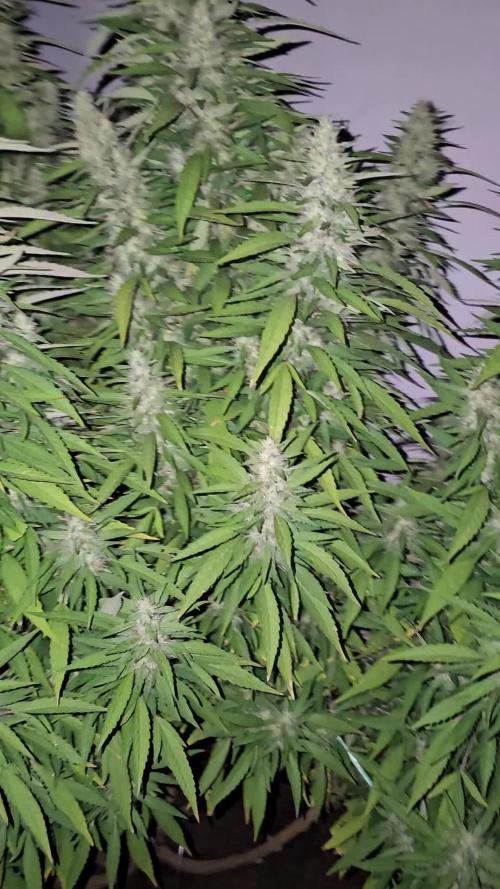
Eccoci arrivati a fine ciclo, raccoglierò dopo le ultime foto fatte la mattina
