


Processing
Likes
Comments
Share


@StunFlower
Follow
D49
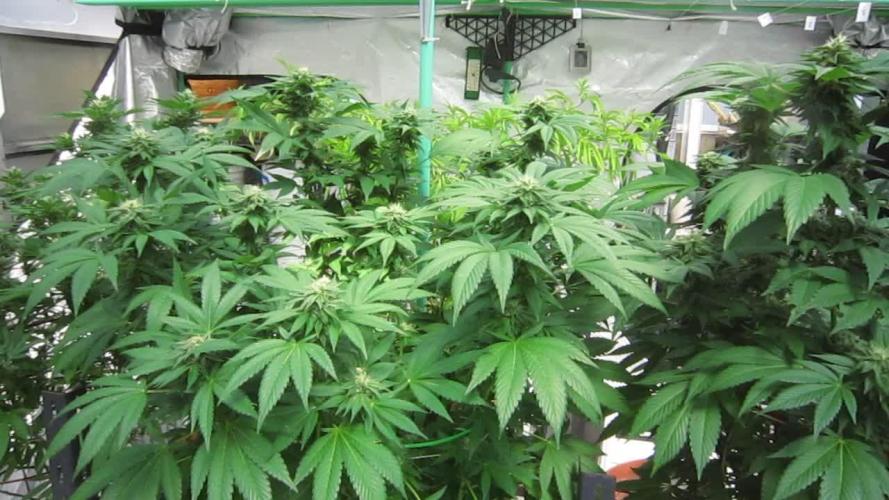
The Purps is rocking. I hope she's near done with the stretch as she's now approaching 40" tall. She's got a ton of bud sites and they're all plumping up and getting frosty.
She's been pretty hungry and thirsty, demanding 3 litres of water almost every day. Her PPMs have been running in the low 900s with stable PH. She's due for a rez change and will get one tomorrow after 2-weeks of top-ups.
Super happy with the way she is growing and she may actually finish within her 6-7 week advertised harvest time. 🤞
Thanks for tuning in ✌️


Likes
17
Share

@Chucky324
Follow
Hello. This is the end of week 5 and the beginning of week 6 of flowering.
Man what a marathon. Did a big harvest last week and didn't want to stop till it was done... So I didn't report last week.
Since I was finished the harvest... I vacuumed in here, and brought the 3 plants from the northside of this greenhouse, and put them in here.
This plant is growing well and looking good. It's got a few thrips marks on some of the lower leaves.
Still thinking about harvesting around Sept 1 or so, unless there's a problem with pests or mold.
OK. Keep Growing Straight.
Chuck.
Likes
8
Share

@Chucky324
Follow
Hello. This is the end of week 13 and the beginning of week 14 of veg.
Didn't report last week because I was still harvesting the 13 plants of Captain Future. Just put the last plant into the curing bags last night.
Each plant is getting 2 gallons of rainwater every 4 days or so. Did some branch topping and light defoliation this week.
OK ... Ready for flowering ... Going to turn them over to flowering tonight or tomorrow. Take out the lights and close up the tent at 8 pm.
Open it back up at 8 am and repeat. Found a couple of seams that need stitching in a few places to make it totally dark. I'll do that tomorrow.
There's a 15 gallon reservoir in the tent too. I'll fill it on Sun with flowering nutrient and if I spray a couple of minutes a day, it lasts a week.
Then on the seventh day I clean it up and make more nutrient for the coming week. I'll hand water when the pots seem dry.
Works good ... last year I got about 2K from 6 plants ... so ... We'll see how it goes this year.
Plant #1 smells wonderful. Soft Lemon with some sweet Papaya in there too, and is sticky when I'm working with it. Nice Plant.
OK. Keep Growing Straight.
Chuck.


Likes
21
Share


@BudXs
Follow
This plant was a breeze to grow, finished quickly, and yielded a decent amount of colorful, fruity and rock hard nugs. A crowd pleaser, this smoke goes down easy and hits hard. More indica leaning than sativa, use this flower before bed for a nice heavy sleep. Great bag appeal and taste. Excellent work by Fastbuds once again.
Grow this plant with one topping early and LST as required to open the buds up to Jah.
Thank you for following, thank you for liking. Thank you to the GrowDiaries team for continuing to deliver an awesome platform for us to document our work

Likes
2
Share

@Bear_Grows_Green
Follow
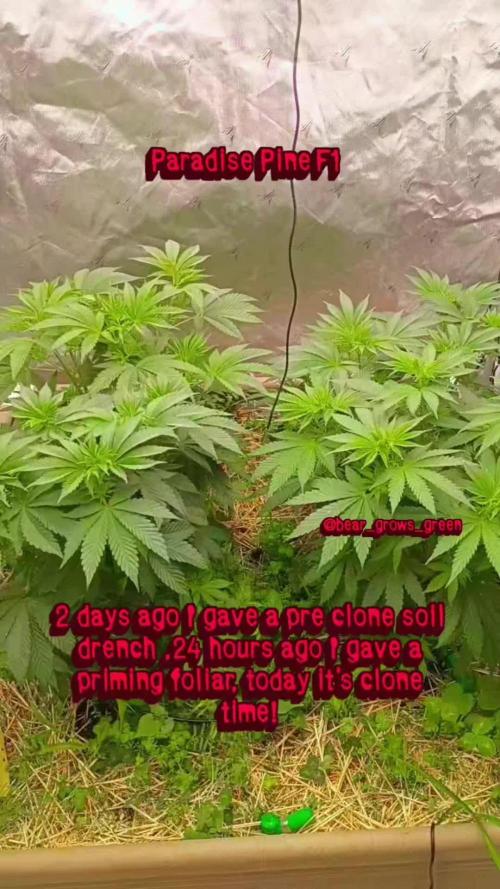
12/25 Merry Xmas. The ladies got a priming light feed this morning to get ready to clone in 2 days. Watered on 3 gallons plain water and 3 gallons of the mix the bed was thirsty
12/26 got a priming foliar feed. Very light.
12/27 took all the tops as cuttings for clones
12/29 watered in 3 gallons plain water and 3 gallons of full supplemental feed.
Likes
23
Share

@eldruida_lamota
Follow
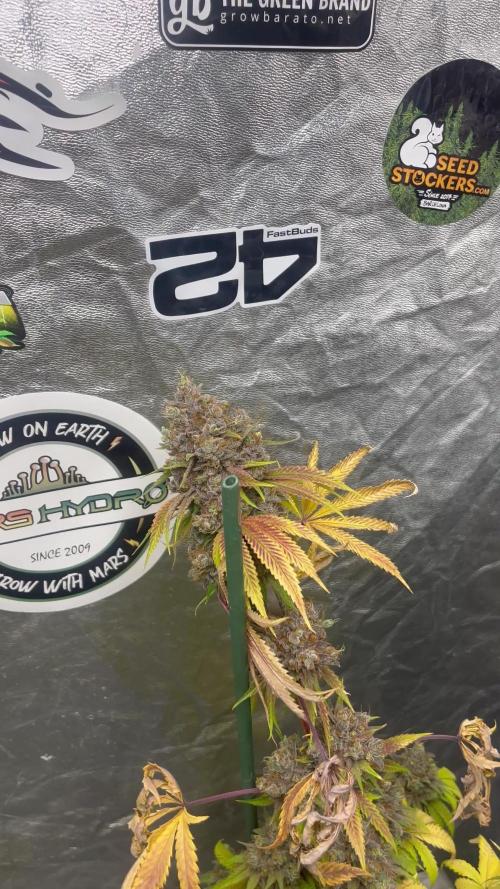
Vamos familia, actualizamos la décima y última semana de floración de estas Lemon Cherry Runtz de FastBuds.
La temperatura que estuvo entre los 23-24 grados y humedad entorno al 40% están dentro de los rangos correctos.
En cuanto a las plantas las veo muy bien, estiraron guay y ensancharon bien.
Ya van 2 semanas solo agua para limpiar bien las plantas.
Hay que reivindicar que en este indoor no tengo ni plagas ni problemas.
Las flores han madurado y explotado bien, por el momento todo correcto.
Tienen un aroma cítrico y veo una resinada bastante seria, creo que si no es la mejor del cultivo estará entre las mejores.
- os dejo por aquí un CÓDIGO: Eldruida
Descuento para la tienda de MARS HYDRO.
https://www.mars-hydro.com
Hasta aquí todo, Buenos humos 💨💨💨
Likes
8
Share


@HighOhioAn
Follow
Growth is outstanding I overwater a little on its first water and its final pot so it is slowly but surely coming along truly in an outstanding genetic handle stress amazingly going to start low stress training today might wait till next week just to let her recover a little from the overwatering🔥
Likes
28
Share


@MadeInGermany
Follow
Flowering day 65
since time change
to 12/12
Hey guys :-) .
It is nearly time .
Harvest next week :-) .
Watering would be done twice this week with 1 l each (nutrients see table above)
Otherwise it was checked and everything was cleaned.
Have fun and stay healthy 💚🙏🏻
👇🏼👇🏼👇🏼👇🏼👇🏼👇🏼👇🏼👇🏼👇🏼👇🏼👇🏼👇🏼
You can buy this Nutrients at :
https://greenbuzzliquids.com/en/shop/
With the discount code: Made_in_Germany you get a discount of 15% on all products from an order value of 100 euros.
👇🏼👇🏼👇🏼👇🏼👇🏼👇🏼👇🏼👇🏼👇🏼👇🏼👇🏼👇🏼
Water 💧 💧💧
Osmosis water mixed with normal water (24 hours stale that the chlorine evaporates) to 0.2 EC. Add Cal / Mag to 0.4 Ec Ph with Organic Ph - to 5.8 - 6.4
MadeInGermany

Likes
10
Share


@Budking420
Follow
This wonderful lady is finishing off strong. At this stage I'm not sure if the nugs are swelling or if they are just ripening. The frost on these nugs is insane and the smell of the buds is extremely strong! Overall she is very vigorous but I'm definetly looking forward to chopping it within a few weeks hopefully! Check back next week to see just how fast she buds & dont forget its 4:20 somewhere so it is 4:20 everywhere!!!!!
Likes
81
Share


@m0use
Follow
SPONSORED DIARY===SPONSORED DIARY===SPONSORED DIARY
TRANSPLANT #2 THIS WEEK!!!!
This week was a great one, lots of sun and gave the plants their 2nd transplant of the cycle. only one left to go in a few weeks, the plan was to do 3gal but I feel it would be best to go upto 4gal a 1extra gallon will not be all that much extra root space to expand into. Will have to check if they even make them in 4. I have a feeling its only 1,2,3.
Root wise they are looking similar but not identical. I would say the Dynomyco treated plant has a thicker rootball and more of them. but not by a massive amount. More white on the Dynomyco treated plant as well. added in some more Acti-Sol into the transplant medium. same mix as before. Then watered in with some LAB Serum. should do the plants well. I did not add in anymore of the MIIM microbial mass product as I thought it might alter the results of the grow. so we will see how they do now with out it. I'm really liking how well the plants are bushing up. I might have to take some clones and try them indoors as well. I think I prefer to grow more indica leaning strain for their growth habits.
SPONSORED DIARY===SPONSORED DIARY===SPONSORED DIARY
This is my diary entry into the Dynomyco Show Us What You Got Contest!
#DynomycoShowUsWhatYouGot!
@DynomycoShowUsWhatYouGot!
@Dynomyco
Big Shoutout to @Dynomyco for picking me in their contest. Happy to be involved and as a user of Dynomyco I am curious to see this side by side with my own eyes. I will be honest I am a little skeptical it will show any major differences. but we will see what happens. Some disclaimers, I am still using LABS serum I made, This is also beneficial to the root mass however it's a bacteria based product and not fungal or mycorrhizae like Dynomyco.
https://growdiaries.com/giveaways/DYNOMYCO_Show_Us_What_You_Got
Likes
5
Share


@Strangelet
Follow
Day 70 Almost there. Last week of feeding. Water next week. Then flush. 2 more weeks should be done.
Likes
2
Share


@Grownewgenetics
Follow
We love the testing of these American strains, i can just recommend the 2 FAST 4 BUD'S Genetics, the auto Strains haven't for the price and the quantity the other's seedbank in test behind and they stay on first place together with sweetseeds, but like i say , testing isn't finish jet
Likes
1
Share


@BruWeed
Follow
Se secaron rápido. Los cocos son pegajosos y tienen aroma muy fuerte.
En humedo me dio 150g en total. Tengo que esperar que se sequen para ya saber el resultado final.

Likes
1
Share


@2Stones1Bird
Follow
Start of week 5 - days 9 to 15 April
9/4/2020 - She's reacting better to LST
12/4/2020 - After 6 days I gave her 1L RO water with:
GHE Terra Aquatics Cal -Mag - 60 PPM
Biobizz Acti-Vera - 30 PPM
Biobizz Heaven - 30 PPM
Biobizz Top-Max - 10 PPM
Biobizz Grow - 10 PPM
Biobizz Bloom - 10 PPM
Biobizz PH Up
RO Water - 4 PPM
About 154 PPM
PH 6.6
15/4/2020 - Raised the Light to 60cm she reacted positively, also turned on the oscilating fan.

Likes
6
Share


@pzwags420
Follow
Week 5 flower is progressing well. bud sites are getting bigger with more pistils and trichs on leaves everyday. This will not be a 8 week strain I'm thinking 10 but will calibrate if necessary to get the full potential of this genetic as I can see she is a special one already!

Processing
Likes
6
Share


@Shellshocked
Follow
Experiment is going well we got pollen sacs way more on the og kush than there are on the gg#4 got clear plastic trays on the top of the pot to catch some pollen as I wanna pollinate a few strains with the og kush might have to do another pollen run as I wanna cross 5 different strains with the og

Likes
19
Share


@green_impression
Follow
Very fun to grow. Perfect strain for good bud structure and top smoke!


