


Likes
Comments
Share


@Heregrowsnothing
Follow
So this week I have had to split the plants, one is really some way behind so I've managed to sweet talk the wife into letting me get another tent 😉 this plant may be behind but it's fucking massive compared to the others, plenty of decent bud sites so now she has all the space she needs. I have to feed her by hand now rather than the wilma but that's no real problem. Can't wait to see what next week brings already. If your running something similar or even if your not give me a follow and I'll follow you back ✌️🏻

Likes
27
Share


@Piquillo
Follow
Well, I reckon the girls have reached the end and it's time to chop. Trichomes are mostly milky (some amber), so now it's a matter of getting some free time and cut them down. Thanks to all those who follow me on this journey. It won't be long til I start a new experiment in Piquillo's Lil Lab. Of course I will updated before putting them in jars. Happy growing! 😉

Likes
22
Share

@MyLittleGarden
Follow
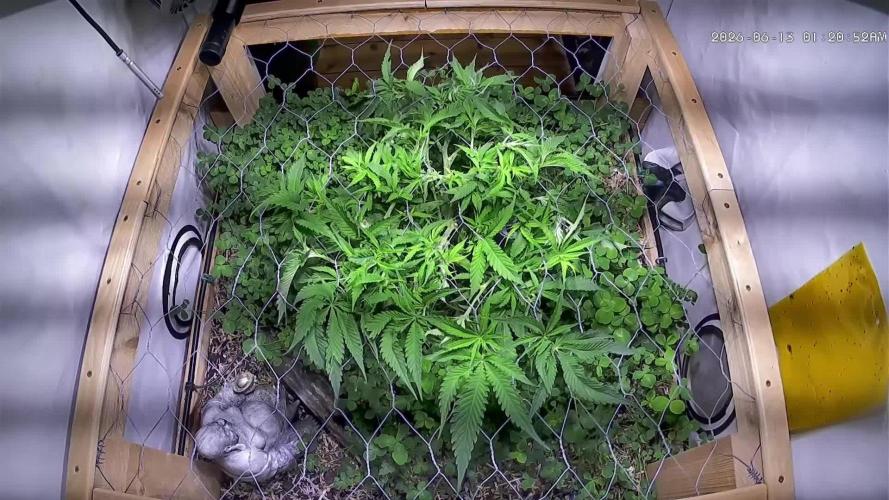
Vegetationswoche 10 - 12.06. – 19.06.2026
Diese Woche lief alles wie gewohnt weiter. Ich habe die Triebe weiter unter dem Netz verteilt, hier und da etwas entlaubt und das Klee-Cover-Crop erneut gestutzt. Ansonsten gab es nichts Besonderes zu tun.
Die Utopia Haze wächst weiterhin gesund und füllt die Fläche langsam immer weiter aus. Im Vergleich zu meinem letzten Grow mit der King Juice fällt mir allerdings auf, dass die Utopia etwas langsamer wächst. Die Triebe sind stärker verzweigt, etwas steifer und lassen sich nicht ganz so leicht über die Fläche ziehen. Dadurch dauert das Füllen des Netzes etwas länger als gewohnt.
Ansonsten sieht die Pflanze weiterhin topfit aus und entwickelt sich genau in die Richtung, die ich mir vorgestellt habe. Jetzt heißt es weiter wachsen lassen und beobachten.


Likes
5
Share


@AustinRon
Follow
TH 1Q2025 - Week 9 - Flower 6
(ON Haze X Original Haze) X Northern Lights #2
“Todd’s Haze”
Objective
- 8 Female Plants, Topped ONCE @ Flip, 12” when topped
- Modified Sea of Green
Seeds Wet: 1139PM, 28.2.2025
Germinated: 2.3.2025
Flip: 21.3.2025
Harvest: 77 Days, DATE: 6.6.2025
_________________________________________
OBSERVATIONS
A B C D
E F G H
(Convert to Plant ID)
A - Moderate - Double Top
B - Tall - Single Top
C - Tall - Single Top
D - REALLY TALL - Single Top
E - Tall - Single Top
F - Moderate - Double Top
G - Moderate - Single Top
H - Midget - Single Top
__
Fri May 2, 2025
TH 1Q25 43:F:6:1
Harvest Dehu
Amount: [ 4.5, gal]
Runoff: [ 0.6, gal], [ 2.9, mS/cm]
Res was empty. 2 Gal, there was a LITTLE Sol’n in the bottom of the res BUT Chiller Pump DRY. Chiller pump wouldn’t work for a couple of hours. After it cooled down and was re-submerged, it started cranking. These little Synchro/magnetic pumps are pretty resilient. The Little Giant as Feed Pump is awesome and pumps from the bottom 1/4”. The Synchro needs 2“ of water to submerge, with is 1/2 - 1 Gal, sitting around for ballast.
Refresh Reservoir
Amount: [ 2, gal]
Primer A&B: [ 24.4, ml]
EC: [ 1.9, mS/cm]
4 Gallon Refresh
Amount: [ 4, gal]
Primer A&B: [ 48.8, ml]
Silica Skin: [ 24.4, ml]
REVEG


Noted Revegging. Attribute it to HIGH EC (We ran up to 2.4 before bringing back down…)
Dropped LightCycle to 11/13.
- Looking to STAY COOLER ( 80°F)
- Let’s reduce SUB-CANOPY Lighting to 50% (Dimmer @ 25%, lights for a 4x4)
__
Sat May 3, 2025
TH 1Q25 44:F:6:2
Runoff
Amount: [ , gal]
EC: [ , mS/cm]
We’re in reveg in earnest.


__
Sun May 4, 2025
TH 1Q25 45:F:6:3
Harvested Dehu: [ 3, gal]
No Refresh
No Pictures
Bummed re: Reveg Today - Back to work tomorrow.
__
Mon May 5, 2025
TH 1Q25 46:F:6:4
Only one thing to do - is to continue. Checked for Light Leaks. Re-adjusted Top Left Side Vent.
Harvest Dehu: [ 1000, mll]
Runoff
Amount: [ 1, l]
EC: [ 2.5, mS/cm]
Refresh Reservoir
- [x] EC: [ 1.8, mS/cm]
- [x] SLF-100: [ 30, ml]
- [x] Primer A&B: [ 40, ml]
- [x] 3 Gallons (Dehu)
Cleaned Manifold Filter: Silica Skin (White/Flake/Film) is clogging 2µ filter
Need more stable Drip Rings - have to make my own, again. ;-}
__
Tue May 6, 2025
TH 1Q25 47:F:6:5
Harvest Dehu
- [ ] Amount: [ , ml]
Runoff
Amount: [ , ml]
EC: [ , mS/cm]
IF Runoff is 2 Liters:
- Increase fertigation time to 3 minutes
- Add Event 9 (9th HF Fertigation)
- [ ] Consider reducing light Intensity, Main and Sub-Canopy
__
Wed May 7, 2025
TH 1Q25 48:F:6:6
__
Thu May 8, 2025
TH 1Q25 49:F:6:7
- [x] Harvest Dehu: [ 3.5, gal]
- [x] Dump & Clean Reservoir (Clean with H2O2). # No Silica ;-(
- [x] Refresh Reservoir:
- [x] 5 Gallons
- [x] EC: 1.8 mS/cm
- [x] Primer A & B: [ 67.7, ml]
- [x] SLF-100: [ 25, ml]
Our silica is creating a silica film in the irrigation manifold’s 2µ Filter. We’ll supplement separately, bi-weekly.

Likes
5
Share

@CannDy420
Follow
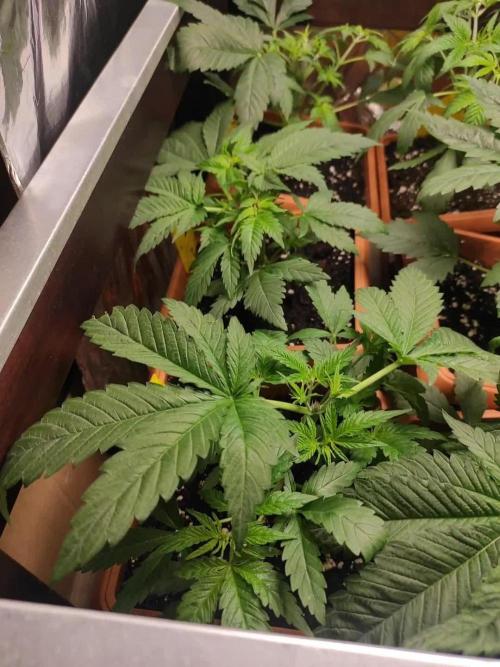
In der Woche zuvor habe ich überdüngt und dann die Erde der Pflanzen einmal durchgespüllt als sie sich dann wieder erholt haben habe ich sie einmal getoppt . Aus den Spitzen habe ich Stecklinge gemacht die ich in Honig und Zimt gedipt habe und dann in chiffies habe .

Likes
3
Share


@Dungeonbeard
Follow
Dealing with humidity issues with the amount of green in the tent. I really don't want to defoliate too much more. Around 62% rh with tent closed. Added another fan to keep air moving. I have a small dehumidifier arriving tomorrow, so that should help. Smell is becoming pretty strong.
Likes
28
Share


@OrganicPower
Follow
Week 6 flower, half way there! Buds are starting to fill in now and getting some decent frost. A couple of tops are getting more light than others, and fattening a bit more and looking real nice. It looks like there is some purple starting to come out at the tops. Also spotted some discolouration on a few leaves closest to the light, so I turned the one light down to 60-75%, no need to push it at this point and burn her up! She will go as fast as the soil and environmental conditions will allow her to. Hand watered in Gaia Green Soluble Seaweed Extract 0-0-17, otherwise water drip is running on same schedule. Just using straight tap water that sits in a 30 gallon reservoir with a submergible water pump running 24/7 breaking surface and aerating water. Water comes out the tap @ 7ph and less than 15ppm. So I don’t do nothing to it, I drink it:) Thanks for the view 🤜 Have a great week!

Likes
41
Share


@CannaTrope
Follow
I was selected to test some of Fastbuds new genetics. Seeds germinated and 4 days later it broke ground and is looking great.
This grow is in my 4x4ft grow space located in an uninsulated shed. Each plant has a dedicated 150-200w LED from Viparspectra or Mars. Winter Temps in my area spike to -15C or more in Jan and Feb, so this will be an interesting and challenging grow. The grow room is 20-30C above ambient temperature, so there is a little manual and auto manipulation of grow Temps. See my video
Lights 50-75%, 30 inches, 75-120w per plant
Soil temp: 21-25C
Light cycle: 5:1
Air temp: 18-27C

Likes
11
Share


@eldruida_lamota
Follow
Que pasa familia, vamos con la cosecha de estas Gorilla cookies Auto de FastBuds.
Por dónde empezar, es una autofloreciente que es muy fácil de cultivar, tiene un periodo corto de crecimiento y de floración igual no es largo.
En cuanto a la alimentación , pues la aplique una vez por semana y a sido suficiente, se a comportado muy bien en interior, la flor pues no es muy prieta porque no deja de ser una autofloreciente, pero es una flor que está bien explotada y que va repleta de tricomas.
El periodo de luz pues de principio a fin a 18 horas, fue sucficiente para completar el ciclo de vida como esperaba.
Mars hydro:
Code discount: EL420
https://www.mars-hydro.com/
Agrobeta:
https://www.agrobeta.com/agrobetatiendaonline/36-abonos-canamo
Hasta aquí todo, Buenos humos 💨💨💨
Likes
30
Share


@CanadianFillmore
Follow
Another week in the books, one maybe 2 more to go, if the weather holds and humidity doesn't go crazy. Since grow diaries doesn't support more than 32 weeks, it's a bit of a pain to track the rest of this grow. Still I will post updates.

Likes
12
Share


@MicroHidroGrow
Follow
Después de una mudanza, volví a armar el hydro, pero con piezas nuevas que conseguí dentro de todo barato. Aún así le falta mucho para lo que me gustaría armar con más espacio y un poco más de presupuesto. Pero estoy urgido de poner las plantas porque ya enraizaron.
Las plantas son 10 esquejes de Green Tiger del banco BSF. Tienen entre 5 y 8cm. de altura. Parece una planta muy frondosa, dado que la madre me permitió cortar un total de 24 esquejes en 48 días, creciendo en hidroponia DWC. Los pequeños van a crecer por unos 15/20 días y luego pasarán a floración.
Mañana veré que tal anduvo el trasplante. Hoy ya por lo menos está andando. Ya lo iré poniendo más cómodo.

Likes
4
Share


@knnabisgrower
Follow
En la 6ta semana de vegetación hicimos una poda de bajos y desfoliación en general para potenciar el crecimiento de los brotes superiores, mejorando la iluminación y ventilación en el cultivo. También hicimos unos cuantos amarres (lst).


Likes
36
Share


@gottagrowsometime
Follow
Week 14 Day 101 Flower Day 51, she's just about there. Going to apply Terra Powers finisher later during the week. She still has a lot of mycelium left on top and throughout her, I really dialed in the enzymes on this grow. My charts aren't updated properly I'll finish it this week, and will be showing root shots and hopefully we will be seeing a covered pot in roots and not just compacted soil. There's been a lot of fungi and mycelium, that is partly down to Terry Power mixing well with organic soil, it works well as a great soil conditioner. But it takes a while, I constantly fed this girl enzymes. And man O man, look at them buds. The colas are huge in length, and that's down to poor mainline practices and uneven energy distribution. As for left and right been similar, well, put it this way, you'd struggle to actually make something that's more uneven energy wise than this, there's nodes growing over nodes, nothing is even, really terrible mainline it the way it's meant to be done, the purpose was totally ditched here and it was very lazy. And to be honest, unknowingly is an understatement. And the fact I had such failures on my 2nd round with germination, I got to focusing the last few weeks, and pult it all back together and I've hit l got 2 pretty darn good looking phenos, (with no clones taken, another rookie mistake, if you find a pheno you should always have a clone tent and a few weeks into flowering if it's no good or hermies than ditch them, but if you get one like my SLH dwc with very low leaf to calyx ratio if you just have 1-2 clones, you are golden. So currently I have 5 different photos running and I'm pheno hunting. Anyways back to this grow. So, she's nice and fat, but nothing you'd really want to clone, there's nothing special about it. Medium-calyx ratio and good frosty bud. I'm happy with it. Thankfully I'm running a few of the New Green House Unreleased Strains for testing also for barneys so I think photos have stolen my attention.
Keeping the RH between 40-45 temp is more stable atm at 28c not really getting low temperature as we are in the height of summer. But I don't care, I have the winter coming to do terpness. I've got 1 SLH left, I just hope she's a good pheno. The buds on this are monsters, and really happy with them. Lots of mycelium left so there's food left and then later in the week I'll apply the finsher. Just a low dose.
D103 Sadly my mycelium got hit with some mold. Only 2 small spots, 90% most of the mycelium went through the norm, it degraded as organic matter and made for some heavy buds, she is struggling to hold herself up altogether now, am going to have to brace her to get the best out of the last 10days. She is done, but because of ALL the heavy minerals, that aren't organic, it has HAS to be flushed. Now I was on the ropes the last few weeks about flushing but I've been flushing both my SLH for the last 4 days and when you walk into my tent now, wow, the bang of 🍋 is so strong. I'm so glad I flushed these, As I was like, this is a multiple award winner, so I was like, its not from the smell of the bud as it stands but wow, its like she's at to been doing a 10k run and is sweating, the smell is so beautiful. Wow, wow, wow. I haven't been this excited to try some weed, ever. About the mold, its never a good thing. But as it started on actually fungus I'm not too worried about it. Now, if it had of just been there, I'd be like shit wtf, so I dug through some soil and scraped away the 2 bits of mold, DISCARDED, and mixed up the remaining mycelium into the soil with the spoon I use to mix my soil on top to help dry a little if over watered. Also it help let air into your plant, as your soil dries o2 gets sucked into your substrate and that.
COUPON FOR MARSHYDRO
use code GGS for discount at any mars site.
Big thanks to my sponsors terra power nutrients and marshydro and to the 2 reps who I dealt with.
Thanks for reading,
Drop a like if you'd like me to visit your grows, either way thanks for dropping by.

Likes
9
Share


@Wenz004
Follow
experiment explanation see week1
No1 Gelato auto did well this week...nice stretch...exactly what No2 and No3 (living soil) dont...i think they have not enough phosphorus for stretching...a lot of work with living soil and compost tea etc...and less reward...
No1 one so far is the best...still plagron and aptus using
plagron
Sugar royal 1 ml/l
Power buds 1 ml/l
alga grow 4 ml/l
aptus
All purpose 1 ml/l
Regulator 3 drops/l
Calmag 1 ml/l
Likes
2
Share


@JoExotic
Follow
Week 10 - Buds are looking insane very dense extremely frosty. Easily one of the best smelling plants I’ve ever seen in my life. Strawberry gorilla is no joke I’m hoping to harvest next week !
Likes
56
Share


@guerilla
Follow
Day 1. I feel this week will be the last week for veg. I have roughly 80% of the net filled.
Day 2. Increased base nutrients by 50%
Day 3. Stretching and tucking under the net.
Day 4. I spent most of the day telling these lovely ladys how beautiful they look..
Day 5. All good in the hood..
Day 6. NOT GOOD! I am 100% certain they have nutrient burn!
I went away and let a family member fill the res. PPM was read wrong and resulted in the girls getting 1200 PPM for 2 days.
As recomended by Autopots i empty the entire Res. Washed it out. And filled it with 5.8 PH water..
I removed the bad leaves..
see pics of burn on leaves
Day 7. PH 5.8 water in res. They seem to be ok. I dont think theres any new burn on leaves..
Peace.

Likes
4
Share

@bkickstand
Follow
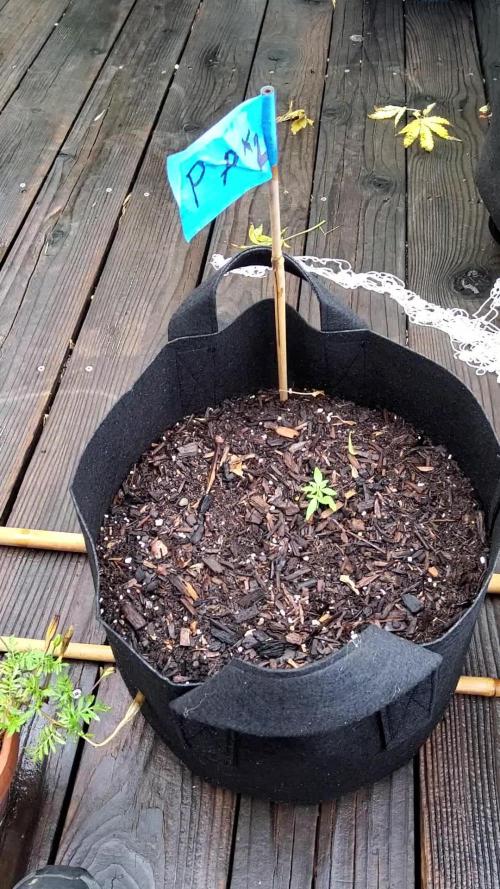
Week 4 Journal Update: New Autoflower Batch (NL1, NL2, & PPX2)
* Overview: The second round of autoflowers—planted directly into 5-gallon fabric bags at the start of July—is hitting week four with distinct variations in growth speed across the trio.
* NL1 (Northern Lights 1): Showing strong, healthy vigor with lush green fan leaves developing nicely and a sturdy stem established in its 5-gallon container.
* NL2 (Northern Lights 2): Sitting under the trellis remnants, this seedling is a bit smaller and taking its time establishing early vegetative growth compared to its sibling.
* PPX2 (Strawberry Nugget x Pink Panama): Marked clearly with its blue flag, this autoflower is showing steady early leaf development and settling into its deck routine.

Likes
39
Share


@BlackDragon22
Follow
È veramente un mostro a parere mio. Cresce a vista d'occhio ogni giorno, ho dovuto rivedere il baldacchino, non smette di crescere.. Quindi ho eseguito ancora Lst. Tra qualche settimana sarà solo lei nella tenda.. Non vedo l'ora perché si è presa già tutto lo spazio
Likes
2
Share

@MrWeeedWorld
Follow
Wenn eine Autoflower beschließt, alle Regeln neu zu schreiben
Ich glaube langsam, diese Mango Cherry Runtz hat die Anleitung für Autoflower einfach übersprungen.
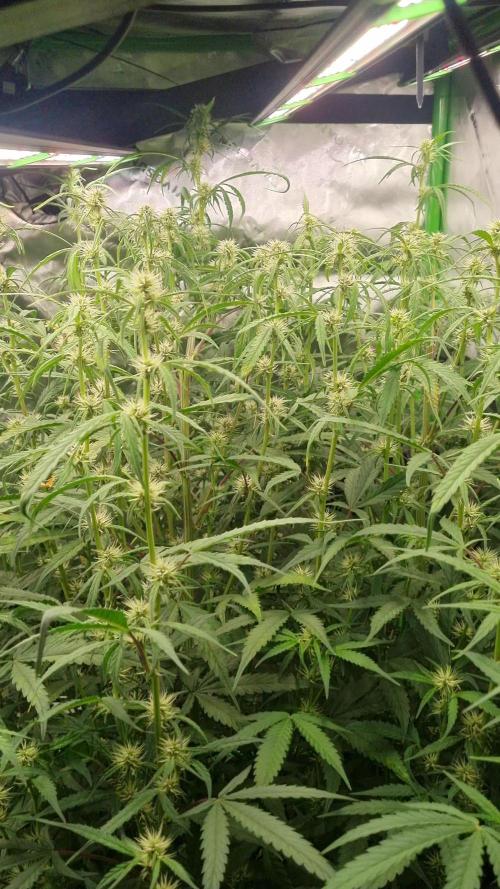
Was hier Woche für Woche passiert, ist selbst für mich beeindruckend. Der Stretch scheint inzwischen sein Ende zu finden, doch genau in diesem Moment beginnt die Pflanze erst richtig zu zeigen, wozu sie fähig ist.
Aus nahezu jedem Internodium entwickeln sich kräftige Blütenstände. Überall schießen frische weiße Blütenfäden hervor und die ersten Buds beginnen langsam miteinander zu verschmelzen. Aus den einzelnen Blütenansätzen entsteht Stück für Stück eine zusammenhängende Cola-Struktur.
Besonders begeistert mich die Architektur dieser Pflanze. Trotz ihrer enormen Höhe bleibt sie erstaunlich offen aufgebaut. Licht erreicht selbst tiefere Bereiche der Pflanze und die Luft kann problemlos durch das gesamte Blätterdach zirkulieren. Genau diese Kombination aus Größe, Struktur und Vitalität macht den Unterschied.
Im RDWC-System scheint sie sich absolut wohlzufühlen. Das kräftige Wachstum, die vitalen Blätter und die enorme Anzahl an Blütenansätzen zeigen eindrucksvoll, wie gut Genetik und Hydroponik zusammenarbeiten können.
Ehrlich gesagt fällt es schwer, sich immer wieder daran zu erinnern, dass es sich hier um eine Autoflower handelt. Die Pflanze entwickelt sich eher wie eine riesige photoperiodische Sativa mit endloser Energie.
Wenn die Blüten in den nächsten Wochen anfangen richtig Masse aufzubauen, könnte das etwas ganz Besonderes werden.
FastBuds hat hier offensichtlich nicht einfach nur eine weitere Sorte entwickelt.
Sie haben eine Genetik geschaffen, die eindrucksvoll zeigt, welches Potenzial moderne Autoflower heute besitzen können.
Ich freue mich riesig auf die kommenden Wochen.
--------------------------------------------------------------------------------------------------------------------------------------------------------------------
When an Autoflower Decides to Rewrite the Rules
At this point, I honestly think this Mango Cherry Runtz never read the rulebook for autoflowers.
Week after week she continues to surprise me. The stretch now appears to be coming to an end, but instead of slowing down, she's entering the stage where her true potential starts to unfold.
Almost every single node is producing vigorous flower sites. Fresh white pistils are appearing everywhere, and the individual bud sites are beginning to connect into long, continuous colas stretching across the branches.
One thing I absolutely love is her plant structure. Despite her incredible size, she remains surprisingly open. Light penetrates deep into the canopy while airflow moves freely throughout the entire plant—exactly the kind of architecture every grower hopes for.
She clearly feels at home in the RDWC system. The explosive growth, vibrant foliage, and incredible number of flower sites perfectly demonstrate what happens when outstanding genetics meet an optimized hydroponic environment.
To be honest, it's becoming difficult to remember that this is actually an autoflower. She behaves more like a giant photoperiod sativa with endless energy than what most people would expect from an automatic variety.
If the flowers begin stacking serious weight over the coming weeks, this plant has the potential to become something truly spectacular.
FastBuds didn't simply release another autoflower with this one.
They created a cultivar that showcases just how far modern autoflower genetics have evolved.
I genuinely can't wait to see what she'll look like a few weeks from now. 🌱💚