


Processing
Likes
Comments
Share


@Ganjagrandaddy
Follow
Day 63 Flowering: Well folks we have reached that point where it has all been focused on.
The Fft#9 has been a great performer from seed to finish amd i cannot fault the genetics at all. She has responded to all the training with no issues at all. Easy to work with and hardy enough to take some punishment with supercropping ect... Buds smell fruity with a hint of diesel to them and are so sticky icky now too. Her trichs are all cloudy and she has a nice proportion of emerging Amber's so tonight she will goninto 48 hrs dark before inhanf her for drying alongside the FFT@10 who has had a week hanging in approx 4°C and 18°C as the outside temps drop. She is still a waybof dry and will possibly be another week if I leave her in this position in the roof space. Once I hang the FFT#9 in the tent and begin her drying , I will move the fft10 too. I could not be happier with these twontesters as they have performed excellently. brilliant job fast buds. roll on harvest time.

Likes
5
Share


@vilahaze
Follow
muy buena variedad , en las fotos de los cogollos se ve claramente que hay dos fenotipos bastante diferenciados el mas espigado para mi era el mas rico en cuanto a terpenos

Likes
27
Share


@Jens_420
Follow
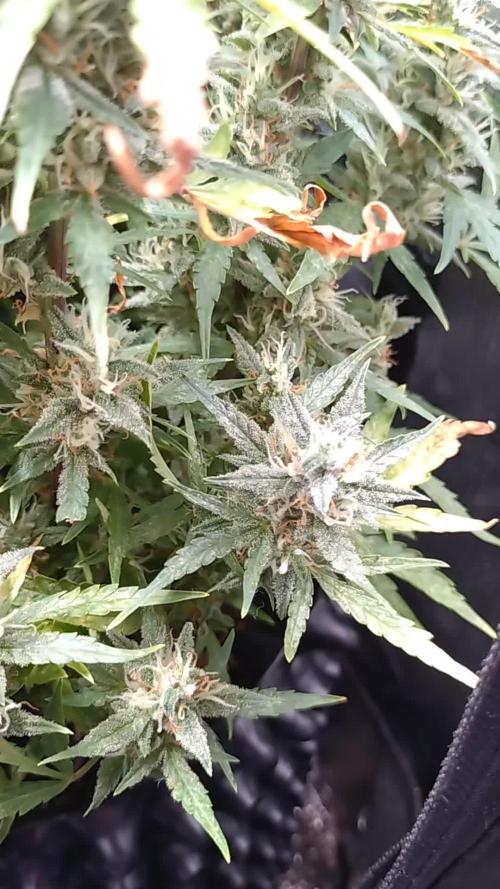
Wir schreiben die 9. Woche. Die Blüten sind auf jeden Fall gut gewachsen. Was mich wundert, dass die Pflanze kaum riecht. Ich habe 2 Bluematics, die Eine von denen hat schon in der Vegi Phase leicht gerochen und ihr könnt euch sicher vorstellen wie sie jetzt riecht. Die Bluematic 2 riecht so krass stark, aber ist nicht mal annähernd so weit wie diese Bluematic hier, also von den Blüten her.
Vom Geruch her kann ich echt sagen, was mich wirklich beeindruckt hat, dass die 2. von meinen Bluematics leicht etwas beeriges hat, also wenn man an der riecht denkt man schon so an saure frische aus dem Wald gepflückte Blaubeeren.
Viel Erfolg an jeden anderen, der das hier liest ✌️

Likes
3
Share

@PhinolaGreen
Follow
10. Woche
Sieht soweit gut aus, ich habe das Problem mit dem Düngen mittlerweile im Griff würde ich sagen, da sie wieder Sattgrün aussieht 😊🤔

Likes
6
Share

@Kominest
Follow
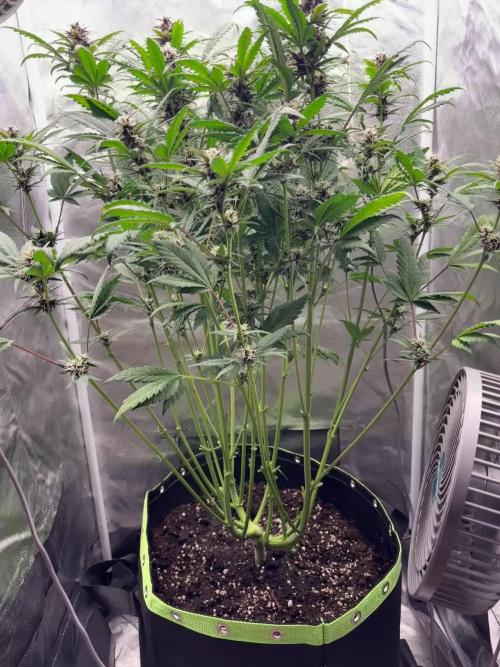
Did some defoliation and lollipopping but Iam sick since some days so I didn’t do perfect but still something . Watered on day 9 with calmag and biogrow(for some nitrogen) . Had the dli to high on 55 and turns down to 45. Some small signs of calmag deficiency on upper leaves . A light fruity smell is slowly introducing himself
Likes
71
Share


@DogDoctorOfficial
Follow
Hello, friends! It's been an exciting second week of flowering in the Anesia run, and I can't wait to share all the amazing progress with you.
Our lovely ladies are well into their flowering stage, and the changes are spectacular! The transition from vegetative growth to blooming is always thrilling, and this week has been no exception.
We've adjusted the nutrient mix to support their flowering needs. Here’s what’s been on the menu:
Regulator: Keeps plants stress-free and promotes healthy growth.
CalMag Boost: Ensures they get enough calcium and magnesium for robust bud development.
Top Booster: Enhances flower production and increases the number of bud sites.
P Boost: Provides the phosphorus needed for energy transfer and flowering.
Watering pH: Maintained at 5.8 to ensure optimal nutrient uptake.
TDS: Held steady at 420, giving them the perfect balance of nutrients.
The Anesia Beauties 🌟
Each plant is showing unique characteristics, and it's fascinating to watch them develop their own personalities. The buds are starting to form nicely, and the aroma is beginning to fill the air.
Future #1: This strain is living up to its hype, with dense bud formation and a vibrant green color.
Zoomiez: Looking strong with vigorous growth and promising flower sites.
Apricot Oreo: Developing beautifully with a sweet fragrance that’s already noticeable.
Red Banana Pudding: The solo survivor is a true champion, showing great resilience and structure.
Training Techniques
This week, I focused on some light defoliation and training to ensure optimal light penetration and air circulation. These techniques are crucial for maximizing yield and preventing mold or mildew.
Maintaining the perfect environment is key. Temperature is kept at a steady 25°C, ensuring the plants are comfortable and stress-free. Humidity levels are carefully monitored to avoid any issues during the flowering stage.
I've captured some stunning shots of the girls in full bloom, which I'll be sharing on Instagram. The sight of those trichome-covered buds is truly a feast for the eyes.
A huge thank you to:
Anesia Seeds for these amazing genetics.
Aptus Holland for providing top-notch organic nutrients.
Future of Grow LED for the incredible lighting that keeps our garden thriving.
Grow Diaries for the platform to document and share our journey.
The Grow Diaries Community for your constant support and inspiration.
Stay tuned for more updates, and don’t forget to check out the latest episode of Welcome to the Green Oasis on YouTube, where I dive deeper into the garden's progress and share more tips and tricks.
Keep growing, keep glowing!
Genetics Red Banana Pudding = RBP
Apricot Oreoz = AO
Zoomiez = Z
Future#1 = F
https://anesiaseeds.com/
Plant nutrition - Aptus Holland - https://aptus-holland.com
LED Photons - Future of Grow - https://www.thefuturofgrow.com/
Controls - Trol Master - https://www.trolmaster.eu/
Watering - Autopot - https://autopot.co.uk/
Tent - Mars Hydro - https://marshydro.eu/
Love and attention - Me, myself and i
As always thank you all for stopping by, for the love and for it all , this journey of mine wold just not be the same without you guys, the love and support is very much appreciated and i fell honored and blessed with you all in my life, With true love comes happiness. Always believe in your self and always do things expecting nothing and with an open heart , be a giver and the universe will give back to you in ways you could not even imagine so
More info, the ocasional give-away and exclusive updates from all my adventures can be found - links in the profile description
Friendly reminder all you see here is pure research and for educational purposes only
Growers Love To you Al

Likes
36
Share


@Hempface86
Follow
Today is day 28th so we are at the end of week 4 and as you can see she is showing sex so I imagine next week will be the start of flower.. I've added one picture along with the video and I'm hoping and praying that the video uploads if for some reason it doesn't I'll be back to add more pictures.. I will say Zamnesia Seeds has some great genetics and the people over there are amazing.. hope everyone is having a great week and their plans you're doing great and if you need some seeds in the future check out Zamnesia Seeds for all your seeds head shop and mushroom needs.. happy growing everyone ✌️😎💨
https://www.zamnesia.com/us/authentication?SubmitCreate=1&ref=j1up85x0
day 32 I added a couple pictures and another video to show just how good she's doing.. I hope everyone's doing well as you can see this girl is.. have a great day a great week God bless and happy growing ✌️

Likes
21
Share


@Staffedition
Follow
Привет друзья. Моей растихе сегодня 34 дня.
Начал применять LST технику на 19 дне и продалжаю применять её через день, а 18 августа добавил ДЕФОЛИЗАЦИЮ
С 20.08 ДЕФОЛИЗАЦИЮ делаю каждые 3,4 дня
С 20.08 LST технику делаю каждые 4.6 дней
На сегодняшний день влажность 70%
Чувствуется по листьям много влажности.
Буду что решать с этим вопросом, ведь впереди цветение.
Не смотря на высокую влажность растение растёт хорошо. генетика радует.
Всем мира и добра!
#Smail_Seeds

Processing
Likes
7
Share


@CityFarmer
Follow
Hello everyone,
Been busy this week working around the house so not much I can say. Heres a little video of there growing...
See you guys next week

Likes
124
Share


@Still_Smoq
Follow
📆 Week 12, 7-12 July 2024 Harvest
8 July - Turned light power down to 25%. Changed nutrient solution to RO water to begin flush.
11 July - Harvest
12 July - Begin curing time.
📑 Harvest time! She is ripe, danky, sticky, full of resin, solid, and I am pleasently suprised at the yield. This is not your ordinary Auto Afghan variety. She produces heavy buds and a lot of them. This is also the first auto I have grown using DWC in 12 weeks without manipulation - 18 hours straight from start to finish. I pushed her to the limit.
Now she will hang in the closet at 50-55% RH and 70 degrees F, for about 7-10 days curing. Then she will trimmed and put into one quart glass mason jars, with 62% Boveda TurpShield and burped until 62% RH is maintained. The full potency potential and terp profile will be reached in about 30-45 days.
📆 19 July 2024
The Smoq Report:
After 7 days of hanging, she was ready to cut. I trim and shape each individual bud, removing unwanted leaf and stem. It’s a process but worth it if you smoke bud.
Her potency is evident. It will take the experienced smoker to a satisfying high and keep you there for a good hour or more before you want another hit. The smell and taste is of a typical Afghan.
I was expecting a heavier yield, but in the end I guess we all hope for a little more! Maybe next grow!
🍶 Nutrient solution changed to RO water
💧 Using reverse osmosis water with EC/TDS at 0
🔆 Light power at 25%, DLI 20 canopy coverage at 18hrs
😤 Using PYPABL, Air Pump, 400GPH
That is it for this grow. Thanks for following, reading and stopping by.

Likes
5
Share

@PlantMike
Follow
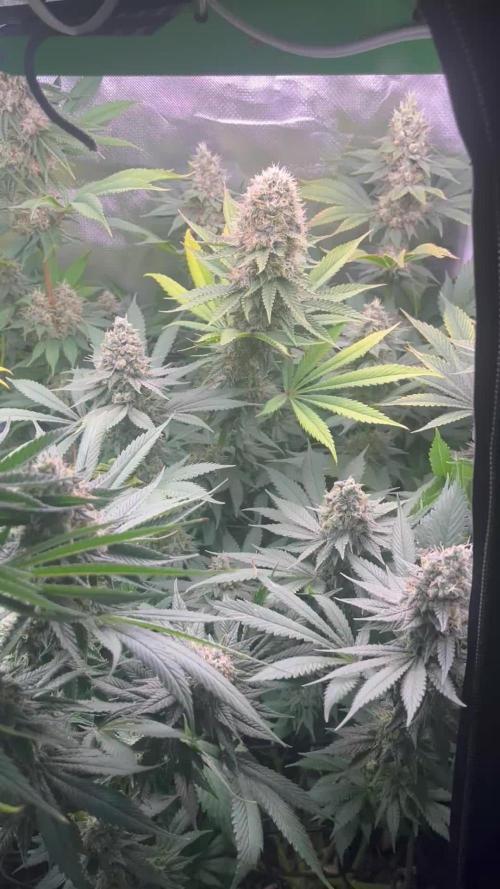
The BMR sisters have started to fade quickly in the last couple days. Been feeding plain cold water to usher shut down in the plants. The buds are beautiful the chemical grape smell still remains and the trichomes are just about 90% milky with very few amber so far. The plants have a strong base and with the double layer scrog I don't have to worry about branches toppling so we'll just ride out this last week and harvest when the time is right!


Likes
22
Share


@Greenwolvesfarmer
Follow
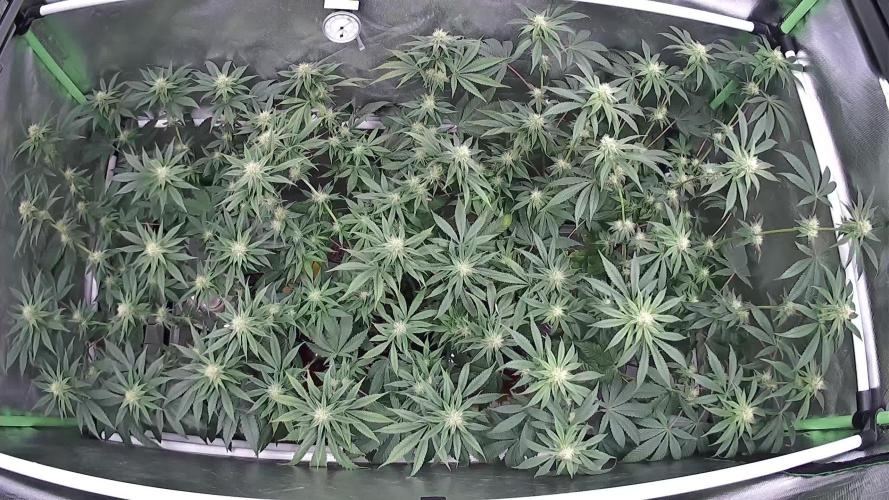
Ha reaccionado bien a sus estímulos , agua , CO2 , luz y amor...
Esta semana le daré solo agüita para que descanse de los fertilizantes , de todas maneras , todo depende de la planta misma ...esperando no maissss


Likes
9
Share


@EVD420
Follow
Hello everyone!
🌱 Today, I'm excited to introduce our new product – a test plant grow light from the GrowMAMO project. This lamp is the result of hard work by our team, and as an experienced grower and breeder, I will start testing it. Let's take a closer look at what makes this light unique.
Technical Specifications:
Power: 60W
Main Spectrum: White light 4000K using Samsung LM301H EVO LEDs, which are 15% more efficient than the previous generation.
Additional Spectra: Red spectrum 660nm (Samsung LH351H) and ultraviolet ranges 367nm, 385nm, 395nm, and 405nm (Seoul).
Why these spectra are important:
White Spectrum 4000K: Ideal for general plant lighting, it promotes photosynthesis and ensures steady growth.
Red Spectrum 660nm: Stimulates flowering and fruiting, increasing yield.
Ultraviolet Spectra: Enhance the production of protective compounds in plants, such as flavonoids and anthocyanins, improving their resilience and quality.
Testing:
We will be testing the light on seeds provided by my friends at Doctor's Choice. The strain is Diesel Fast F1 BX Regular. 🌿 You can find all the test results and more detailed information on my Grow Diaries page.
I will regularly share updates and impressions with you, so stay tuned! I welcome your questions and comments. Let's make growing even better together! 🌟

Likes
27
Share

@Hempcules
Follow
WEEK 9
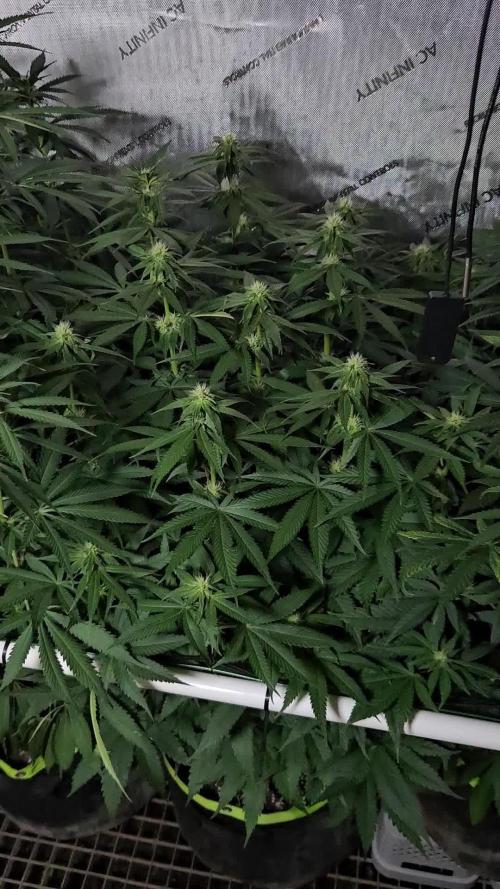
The first week of flowering went very well for my plant. So far, it has stretched strong and is slowly beginning to add fullness to the buds.
I’m quite happy with the plant’s overall shape — it has developed a fairly even canopy with many strong shoots. The leaves have a rich, deep green, and overall the plant appears to be very healthy. All in all, another truly great week.
PPFD: 800µmol/m²/s
Water: 2x water, 2x nutrient solution


Likes
21
Share


@OGTrauma
Follow
Ok Niggas this can be the first month of the plants since germination - and the start of the fourth vegging week, plants overall growth is savage, even for the plants that still presents Ca Mg carencies , as they tend to have a pale green colour compared to their siblings. The lack of green makes that one plant highlight a purple hue prominent on the leaves & stem, it can be confused with cold through . But i'm discarding that reason as .cl winter is finishing and temperatures are above 0°c.
Did a Barrier spray on the mix, just with CaMg on soil to attend the previous urge, as this substrate is very light, yet i can still fuck it up and misdiagnose a nutrient block if i go too heavy. Plus that i found a munched leaf and that barrier has a moderate nutrient amount besides try to half the pest advances.
I want to finish this week to count 30 officially days and probably do a topping cut , and try to get on the level of the net on day 45 / finishing on 6 week in order to fill the space, as if this strain is stable it stretch and node space should be on the short side, but nod that some og kush relatives can be stretchy because there'sslight sativas phenotypes as well.
Finishing this text wall homies, as plants has the same age, i can notice that this substrate is fast to colonize as the one that stay on 'pot on pot' are way smaller that the ones that are on its final containers.
I will consider lollypop too, as i want to try to check before signals that vertical growth light reinforcement with the fan shaped bulbs is viable on all growty , as if i saw that they underdevelop just on veg stage should be a big no & discard that stupid idea. But at the moment is going fine. Just having a nice cri to inspectionate the plants is a good advantage to be assimilated on frankenstein's indoor setup. 🦄
Big gas Leakz !!! & Big dick Energy!!!


Likes
12
Share


@Luke_Lee
Follow
-05.09.2024
The twelfth week if you count the seedling phase has begun.
The plants look good and are getting nice and frosty.
The pistils are mostly amber-colored. The small trichomes are observed once a day with a jeweler's loupe.
So far most of them are still quite transparent for me, occasionally you can see milky and amber colored trichomes. But I think this will be the last week for the ladies.
They are only watered with clear water. The lamp is running at 75% (225 watts) the PPFD value according to the Photone app is around 900.
-07.09.2024
A few of the popcorn buds were removed today.
Trichomes also look good, but they can still do a bit.
The plants were watered with 750ml of water per plant. (water without nutrients)
I think it was the last time watering but let's see what the days bring.
The light intensity has also been reduced again to about 65% (195 watts).
The DLi value is about 50, PPfd about 800

Likes
15
Share


@OutdoorRebelGenetics
Follow
She be coming back from the past at this rate she's not exactly been a perfect start but I thing in the end she will give abundant amount of tricomes
