


Likes
Comments
Share


@RSAFirstOrganicGrow
Follow
4 days of cloudy weather, hoping for more sun this week! So far so good, very tiny plant, probably just genetics? Flowering pretty fast!

Likes
1
Share


@ChitownCannaChica
Follow
What can I saw? I did this plant dirty with the multiple plant dwc set up. Beautiful colors

Likes
3
Share


@MotasKush
Follow
Sunset Sherbet x Purple Punch from Ripper seeds. 👑🔥Low stress training 🙌😁, happy healthy plants... . Grow Your Own! 💚🍁💚 Love Cali strains, purple buds And trichomcity. 💜🤩😍

Likes
23
Share


@GrowGuy97
Follow
Wish the buds would have got a little bigger but feel like that’s particularly my fault for a short Veg but overall I am blow away by the outcome for all the seeds to just be random bag seeds! 2 of the plants are drying now 3rd one will be cut tomorrow & the other 2 got probably 2 more weeks! Will do a taste & smoke report and also give a weight as soon as they dry & cure a little bit but honestly couldn’t be happier with my first grow! Thanks for all the support & help along the way & happy growing friends!🤙🏼✌️🏼🌱
Update on 1st plant - dry weight 42g, still smelled pretty Earthy when I put it in the jar but the smell is definitely coming out now, extremely sticky & frosty buds❄️: 1:🏼🙏🏼
Update - plant 2 Dry weight was 40 grams! Extremely happy with the out come this is honestly some of the best bud I have ever smoked! Amazing to me this came from a random bag seed, it has a very citrusy flavor, smells & smokes amazing! Honestly a 10/10 in my book, wish I could knew what strain this was so I could grow it again!😫❄️✌️🏼🌱
Update - plant 3 Dry weight 34g, smells & look phenomenal, the buds are much smaller & had the smallest yield so far but this is by far the best smelling so far! Will have a smoke update on this one soon, stay tuned friends & happy growing!✌️🏼🌱
Update - plant 5 dry weight was 52g it dried a little faster than plant 4 which I will probably jar tomorrow! Will update again with a smoke report soon, this plant brought my total so far up to 168 off 4 plants👍🏼 Thanks for following friends & happy growing! Also the butter I made from the trim was 🔥🔥
Likes
12
Share


@ZzTooRightOGzZ
Follow
Week 3 going well.
Topped her and doing a bit of lst to her as well hope everything goes well.
Week 4 fead her with 25ml off grow auto from living Soils.
Likes
4
Share

@Emerald_Gardens
Follow
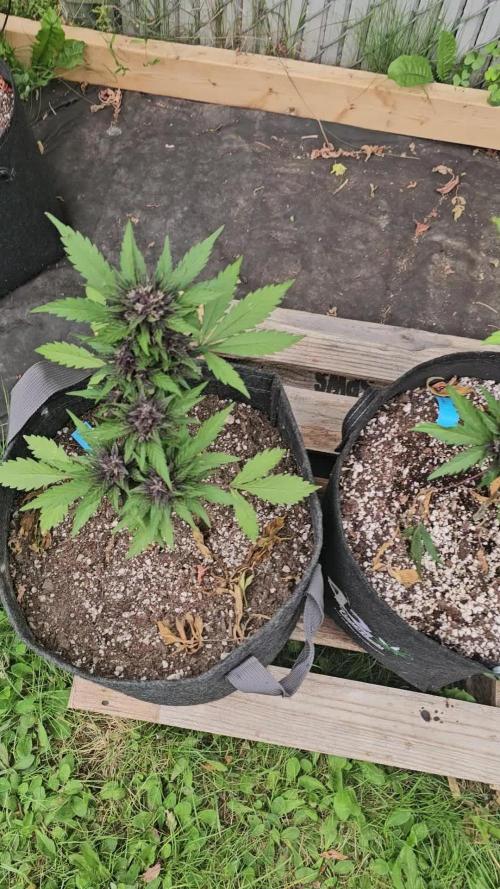
Couple new nutrients added to the grow this week. Rezing and massive bloom from green planet. A couple lst sessions turned into hst :( snapped a frw branches including the main cola. But using grafting tape makes short work to the recovery. Smell is absolutely amazing. Overall the grow has been pretty hands off other than mixing nutrients and bending a few branches. I do not notice a difference in smell or size between the organic vs green planet purple lemonade grow. The fast buds og kush is now in flower and is much larger than the purple lemonade. Not sure if its due to genetics or if it just blunced back better from the early on stress of being uprooted a few times due to my dog. Looking forward to see the buds start to stack!!


Likes
4
Share

@TrippyFreeman
Follow
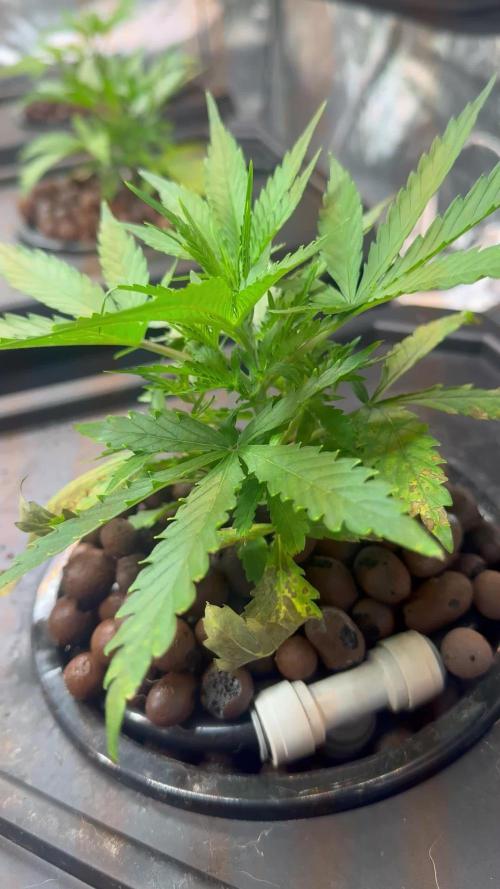
Started the grow out trying to do an organic run with foop nutes, was never able to stabilize the ph and started notice problems in the leaves. Got on Amazon and bought the ph perfect line from advanced nutrie

Likes
13
Share


@RFarm21
Follow
Semana 8 abril - 14 abril
Algumas folhas estão um pouco vermelho-escuro , então aumentei as doses de bloom para corrigir a possível deficiência.
12 abril - feeding day (1.5L):
Calmag 1.2ml; bio bloom 4.25ml; topmax 4.25ml; bio heaven 5ml; alg-a-mic 4ml; acti-vera 5ml; bio grow 3.5ml pH 6.3
Likes
5
Share

@ThatsmyGrow
Follow
Another week of flower is over for the Permanent Marker, and both plants are continuing to develop nicely.
The LST has definitely paid off. The plants have a nice, open structure with the branches spread out well, giving the developing flower sites plenty of room and light.
Both plants are looking healthy and are settling nicely into flowering. I'm really happy with how the training turned out, and now I'm just looking forward to watching the flowers develop.
I'm very curious to see what these two will look like by the end of the run.

Likes
15
Share


@SmokyPinball
Follow
2/2/24. Great week for Bud site development. The pic with droopy leaves was a surprise. About an hour after watering without NUTES, both of them started drooping. Then they both bounced back within 4 hours. Strangest thing. They're doing great now.
2/4/24. Super excited! Received new batch of seeds from RQS. Got feminized Royal Gorilla, Royal Cookies, OG Kush, and autoflower F1 Orion. Oooooh, it's gonna be a good year!

Likes
97
Share


@AsNoriu
Follow
Day 106. Trim jaiiiiiilllllllll !!!!
First done, think it could reach my record 240. Insane quality. 4 rows of solid buds hanging ....
Next one ....
Both finally finished and honestly, that's my plants to be proud of !!!
Day 114. All is done, no doubts its my best grow.
Happy Growing !!!
Likes
6
Share


@420Undergrow
Follow
Noch keine Ideen. Es gibt aber einige Gedanken und Erfahrungswerte, die definitiv folgen werden.
Einige Dinge haben mich sehr enttäuscht und in zwischen weiß ich auch warum.

Likes
6
Share


@SecretC8keSociety
Follow
Today July 2nd will mark Day 36 in flower. Took the defoliating real well. Now looking forward to see what it do with Open Seasme from FoxFarm. Didn’t use the Lotus. But other water feeding . I just use pure water but PH now 6.5 . No longer in Veg. Time to boom boom bloom . Let go growmies!!! :)
Likes
Comments
Share


@UrbanBoer
Follow
Since the remain plants have revegged, I will be pampering them with nutrients how 125ml once a week, I’ll be harvesting this baby in January or end of January. Loving the bud sizes… all I need is for them firm up and finish this reveg phase, I do not mind her adding more development on the existing.
Likes
18
Share


@ButterfliesLittleFarm
Follow
Hello Diary.
The second week of flowering is behind me. I did a little defoliation this week, I honestly didn’t dare remove more leaves and branches, I didn’t know how they would react to it. Maybe I needed more?
The temperature is still high, sometimes rising to 29, 30 degrees, but mostly around 28. Humidity in the air is an average of about 55% but sometimes rises to 60%. The problem is frequent rains this summer which creates high humidity in the air and this affects the humidity in the box as well. But plants tolerate these conditions very well.
The flowers are developing nicely, and they have started to smell as well, but let the pictures speak for themselves.
Green Gelato is twice as small compared to her roommates, but there is still a big crowd in the box. Gelato grew with very dense branches and spread more than it grew in height. The 120 x 60 box size is perhaps too small for three plants (two Hulkberries and one Green Gelato), so the real jungle is in the box.
Due to the height of the Hulkberry in the box, and the spreading branches, it has become difficult to take them out every week for photography, but I am extremely careful with them.
The Green Gelato has grown to 48 cm and does not look like it will grow much in height. Probably due to the excessive distance from the light, which I had to raise because of the Hulkberry which reached a height of 1m.
18/07/2020. - Day 30.
Defoliation. I removed the leaves at the very bottom of the plant to make it easier for me to water them, after that I watered the plants but this time I didn’t put BioBizz, I just watered them with clean water.
21/07/2020. - Day 33.
Watering. This time I gave them BioBizz, on schedule for the second week of flowering. I also added CalMag 1.5ml / L, preventively. While they don’t show they’re missing anything, I’ll keep adding CalMag.
23/07/2020. - Day 35.
Photography and height measurement.
Green Gelato Auto - Day 35. - 48cm
That’s all for this week, see you soon.
Likes
2
Share

@DanisgrowD
Follow
Hi Growmies!
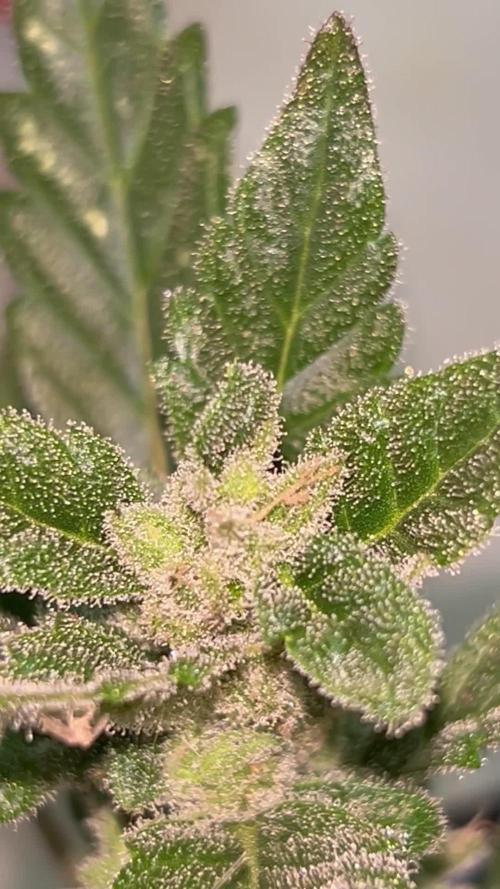
This two lil ones look like ready to me, im bout to harvest them and probably in a couple of weeks ill share my review with u, them and probably las papaya alive is thriving, but im still a lil concerned about those low branch buds, they look less ready than the center. What you guys think?
💨🏻
Likes
15
Share


@Shizzlemanizzle
Follow
Now tent is here ! plants are exploding:) little one starts to catch up ! Trust in the process👍🏽

Likes
16
Share


@GutterHoe
Follow
Tons of fresh small growth is sprouting on the top canopy. Like a whole bush worth is starting fresh! It's going to be big by 10 weeks.


Likes
58
Share


@pifflestikkz
Follow
Day 99
Day 49 Flower
09/08/24 Friday (Morning)
FLUSH- de-chlorinated tap water pH 6 with flawless finish. She's taken a full 5L with 1L run off, I shall continue to do this daily or every 1.5 days when top soil dries out.
Starting her flush this week, seeing those trichomes maturing, and pistils now forming 50-60% red.
Flush for 10-14 days depending on trichomes.
Day 100
Day 50 Flower
10/08/24 Saturday (Evening)
FLUSH- de-chlorinated tap water pH 6 with flawless finish.
Another 5L and seeing about 10-15% run off. Not quite the 1L.
Day 101
Day 51
11/08/24 Sunday (morning)
FLUSH- de-chlorinated tap water pH 6 with flawless finish. 5L run off 10%
Majority of pistils now maturing, trichomes flooded with cloudy , barely seen clear anymore, spotting a few amber's.
Day 102
Day 52 Flower
12/08/24 Monday (Morning)
FLUSH- de-chlorinated tap water pH 6 with flawless finish. 5L again with run off 10%
Day 103
Day 53 Flower
13/08/24 Tuesday (Evening)
FLUSH- de-chlorinated tap water pH 6 today again with flawless finish.
Full 5L again with 10% run off.
All fans starting to fade now, tops all bending under the weight 🤩
Euphoric sweet lemon zest smell with a gassy slap.
Video and pictures ✌️💚
Day 105
Day 55 Flower
15/08/24 Thursday (end of week)
Final FLUSH- de-chlorinated tap water pH 6 with flawless finish. Full 5L again little run.
Finally!!! The FLUSH has finished!!
She has developed beautifully 😍
All buds are solid as rocks.
She is now entering her 2 day dark period from 10am today till 10am Saturday morning ✌️💚
