Likes
Comments
Share


@DogDoctorOfficial
Follow
let's see what will this week bring me , so far all going as planed, they are on the final stretch days , if they stretch anything else lol 😇
The super glue is back on the run but verry delayed in comparation with the others .😜
p I'm Putting all my love on them and hoping for the best 😍
Loving this LED Tec 😍
Girls:
1-BlueBerry
2-Alaskan Purple
3-Poyote Gorilla
4-Hindu Kush
5-Whitw Mango
6-Super Glue
7-Badazz Cookies
8-S.A.D.
tent -8x8 / 2.4x2.4 but i'm only using 1/2 so 4x4 / 1.2x1.2
Led - Lumatek 465w Compact Pro at 100%
All i Grow is medicine for myself,
Stay safe, stay tuned and B Happy
Peace out
D



Likes
17
Share


@Elpicor
Follow
The harvest is coming soon also for Strawberry Gorilla and Orange Sherbet, news this week the strawberry pie has grown, who knows if it will make buds full of resin or seeds, maybe both? We will see! the story continues...

Likes
1
Share

@pakalol
Follow
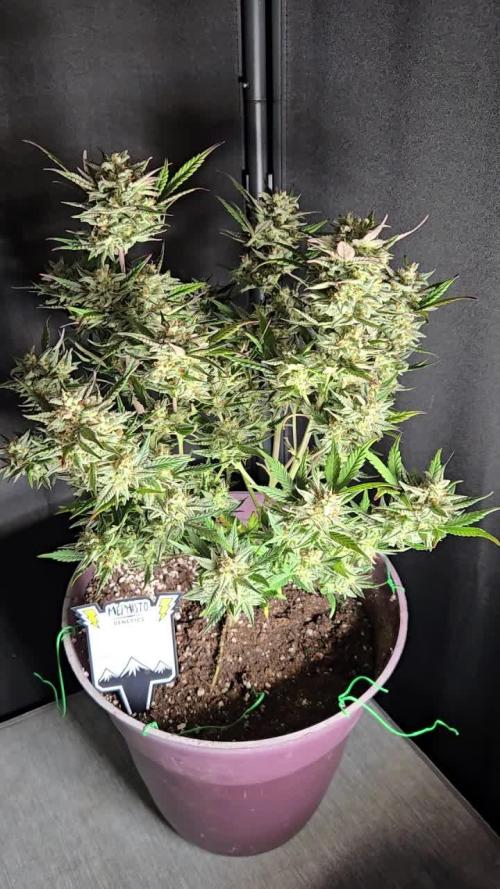
I love the Jolly Jay. Just pungent and beautiful all around. The cure has been phenomenal! Just a great flowers overall

Likes
2
Share


@Franco123
Follow
this week the plants have started flowering and I notice that the two that previously were more leafy are yellowing I try to increase the fertilizer slightly and see if they settle but everything else seems fine to me

Likes
29
Share


@EXZELENS
Follow
1st of November, HARVEST, D91
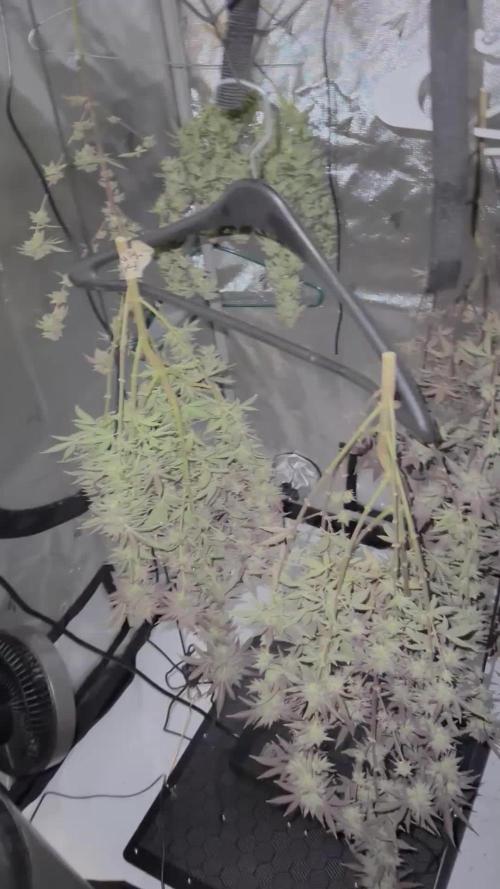
So, after the 24 hours of darkness, she is now beautiful and ready. After chopping her, I hung her for some hours – I had some stuff to do – and after that I did wet trimming since I find it more convenient and I don´t like to trim dry buds. I guess the best way for me would be to leave it drying for some days, do the trimming, then leave it drying some more, but, I sincerely don´t have patience lol.
When I was in the last stock to trim (which was the main btw) the top bud looked strange to me so I opened it and it was starting to rot.. I got really sad but what can I do except for trying to save it, right? So I took all the rotten parts out of the top bud and tore it to pieces to watch it closely and keep it from getting any more mold.
D94
Today I weighed the half part of the top bud that was already dry and it remained without any mold: 3.6 grams.
D97
Everything is dry and now curing, the total weight is 68.6, 65 of the whole plant and 3.6 of what I saved from the rotten bud. I´m really happy with the results, the buds aren´t much dense but they look beautiful.
D111
Today is the 14th day of curing.
D120
Today I´ll be doing the smoke report, it´s been curing for 3 weeks and the smells is quite good already, I know it can be better but the taste is good already so I´ll be doing it today.
More info on growing in the previous weeks and a summary of growing and also the smoke report are on the top at the strain review. Thank you very much for reading my diary!


Likes
80
Share


@Mrs_Larimar
Follow
May 1st.
breeders Information says, 10-12 Weeks of Flower
iam very courious, how they go on
Atm the 2 Phenos developing a lot of Flowermass
The shorter/ denser Pheno has fistsized Buds, starting to get denser
The other Pheno is still stacling up, and then budding around, very funny
They smell fantastic,,,
very courious how this Legend ary Strain goes on
Stay tuneD!!!

Likes
7
Share

@MrLahey
Follow
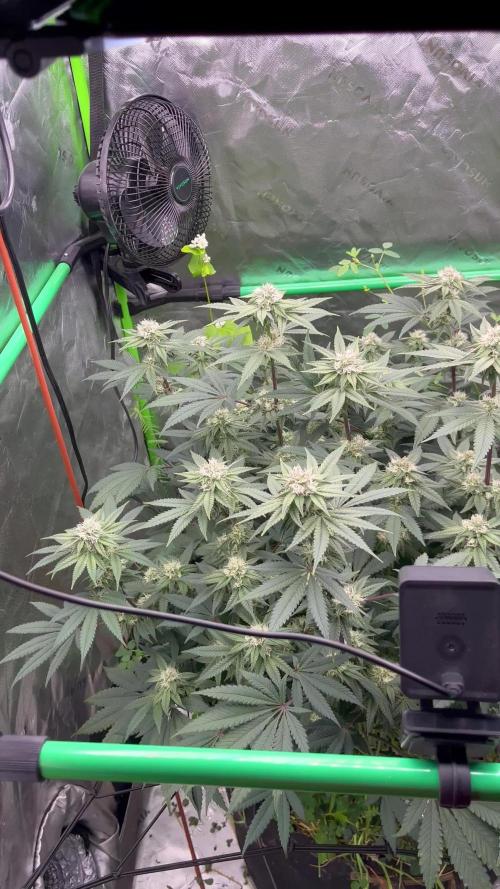
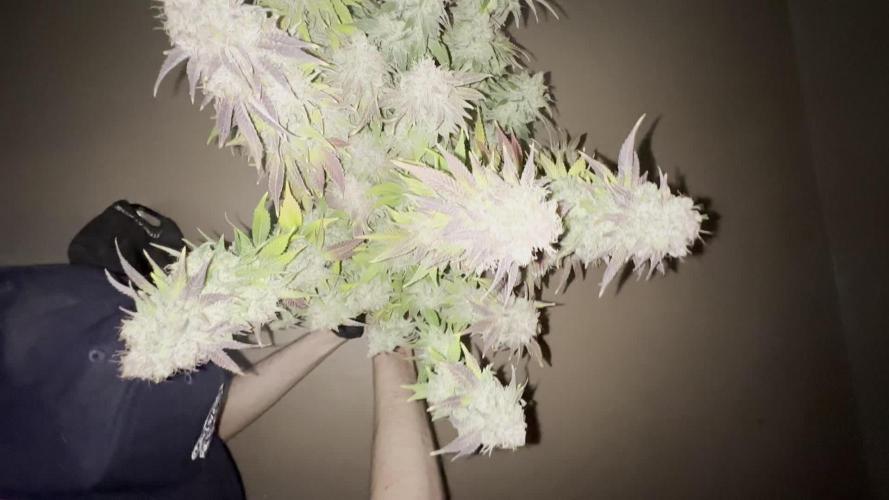
Day 30 of flower and so far things remain smooth sailing. Stretch ended day 26 or even day 27 I think. The smell is absolutely wonderful. It seems like in the past couple days the syrup smell has intensified a lot but now the butter element of the syrup is a lot more pronounced and recognizable/distinct.
I’m so excited for the next month if the smells are already this powerful!





Likes
5
Share


@pzwags420
Follow
Cantaloupe haze needed a good flush brought runoff from 2000 ppm to 1100ppm will continue to monitor.

Likes
59
Share


@JeyGanesha
Follow
Gente!amici contadini eccoci arrivati all'ottava settimana di fioritura 💪 tutto procede come deve. La lotta biologica che sto facendogli con le mie care amiche coccinelle 🐞 funziona Super bene...fossero state tutte larve di coccinelle 🐞 era ancora meglio.si perché la voracità che ha la larva di coccis è incomparabile....poi le larve non volano aggirro. Stanno sulle foglie e mangiano tutto. Uova ragni rossi ecc....

Likes
4
Share


@DmbTexasRanger
Follow
Outdoor harvest smells and looks better than indoor. AN bloom boosters (full lineup) made a huge duffe

Likes
7
Share

@DogDoctorOfficial
Follow
🌱 Week 3 – Transplant Time, Studio Vibes & Root Dreams
Grower’s Journal – BlueBerry by Zamnesia Seeds | Entry 004
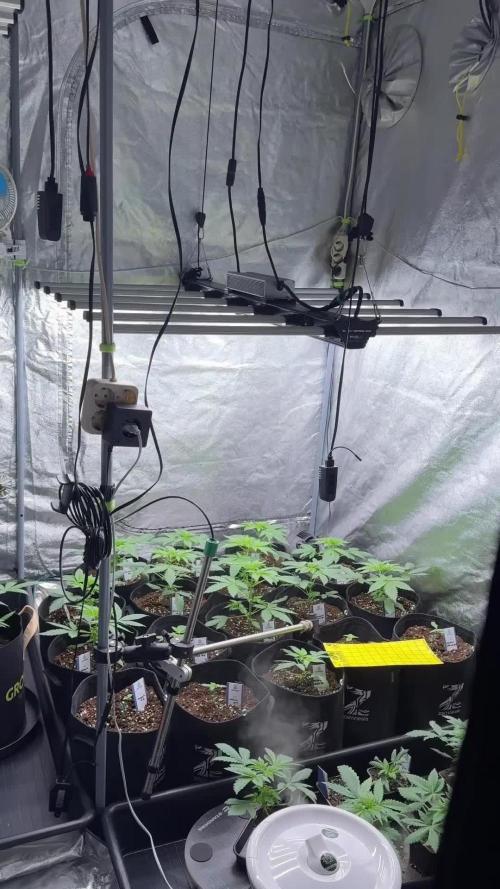
This week marks a major milestone in our BlueBerry journey, transplant time. Our three beautiful girls have been thriving, and after careful observation, we’ve selected Pheno #1 and Pheno #2 to move forward into their new homes and toward the flowering stage.
⸻
Transplanting into Fabric Pots – Why & How
We’ve moved the selected girls into 11L Amnesia fabric pots, and here’s why fabric pots are a grower’s best friend:
• Air Pruning: Fabric pots naturally prune roots when they hit the edges, encouraging a dense, fibrous root ball with no circling.
• Oxygenation: They allow more airflow to the root zone, supporting microbial activity and preventing anaerobic pockets.
• Drainage: Overwatering is much harder—excess water simply flows through.
• Temperature Regulation: Fabric helps prevent root overheating, especially important under powerful grow lights.
🧡 These pots create an environment where roots can breathe, explore, and flourish. And that’s the heart of healthy, vigorous growth.
⸻
🌿 Roots & Selection – What We Saw
Before transplanting, we gently lifted the plants to check their roots, and they were absolutely gorgeous. White, fuzzy, and lively, signaling that they were ready to stretch into something bigger.
While all three seedlings looked fantastic, BlueBerry #1 and BlueBerry #2 stood out with stronger symmetry, tighter nodes, and a more expressive posture.
BlueBerry #3 will stay behind—for now—a backup, just in case. 💫
⸻
Soil Mix & Nutrient Support
We prepped the new pots with a focused super soil mix blended with Aptus Holland amendments:
Transplant Mix Includes:
• 🌱 Super soil base (organic, airy, compost-rich)
• Aptus Mycor-Mix – inoculates roots with powerful mycorrhizal fungi
• 🌿 Aptus Micro-Mix – delivers beneficial bacteria to balance the root zone
• ⚖️ Aptus Substrate Buffer Powder – stabilizes pH & improves nutrient exchange
First Watering Feed Mix (per liter):
• Aptus Regulator – 0.15 ml
Strengthens cell walls, improves nutrient flow, and boosts stress resistance (especially post-transplant).
• Aptus CalMag Boost – 0.25 ml
Helps develop strong structure and leaf formation.
• 💧 Aptus All-in-One Liquid – 1 ml
Balanced macro and micronutrients for baseline support.
• 🌾 Aptus Start Booster – 2 ml
Stimulates root expansion and early vegetative energy.
Water Stats:
• pH: 5.83
• EC: 1.01
• Water Temp: 18.5°C
⸻
🌬️ Environment & Gear Overview
Our setup is getting tighter every day:
• Lighting: Black Series 600 LED by Future of Grow, full-spectrum, clean white light, perfect for compact, healthy growth.
• Ventilation:
• 6” Spider Farmer inline fan + (carbon filtered) – controlled by Spider Farmer GGS Controller
• 6” TrolMaster AeroFan + (carbon filtered) – linked to the TrolMaster Ecosystem
• Why carbon filters? Even at this stage, clean air = clean grow. Carbon filters reduce smells, but more importantly, they help purify the incoming and outgoing air.
• Environmental Conditions:
• Temp: ~27°C
• Humidity: ~57.4%
• CO₂: ~632 ppm
• Airflow: Gentle, consistent, and perfectly balanced
⚙️ We’re gradually dialing in the TrolMaster system, automating parts of the grow environment, like extraction, CO₂ management, and eventually irrigation. For now, everything is still done by hand-watering, feeding, and loving every single leaf.
⸻
📸 Studio Time – A Celebration of Beauty
This week, the girls got a special treat: a trip to the studio. Their energy, their posture, their color, it all deserved to be captured.
Their presence under the soft lights was stunning. These won’t be the last photos we take, we’ll be back again before they outgrow their portability. But for now, these are moments to remember. 💙📷
⸻
🔮 What to Expect After Transplant
In the next few days:
• Some slower above-ground growth is normal, roots are stretching first.
• Expect to see a new flush of leaves and stronger stems midweek.
• No training yet, just letting them adapt and settle.
🙅♂️ What NOT to Expect
• No explosive height jumps yet
• No flowering signs
• No topping until they’re fully recovered
This week is about integration, expansion, and ease.
⸻
🎥 Series Continues – Follow the Rhythm
As always, this is part of our ongoing Grow Series, an open diary of everything we do and why. Whether you’re a new grower or just here for the vibes, you’re invited to come along.
📲 Don’t forget to Subscribe and follow me on Instagram and YouTube @DogDoctorOfficial for exclusive content, real-time updates, and behind-the-scenes magic. We’ve got so much more coming, including transplanting and all the amazing techniques that go along with it. You won’t want to miss it.
• GrowDiaries Journal: https://growdiaries.com/grower/dogdoctorofficial
• Instagram: https://www.instagram.com/dogdoctorofficial/
• YouTube: https://www.youtube.com/@dogdoctorofficial
⸻
Explore the Gear that Powers My Grow
If you’re curious about the tech I’m using, check out these links:
• Genetics, gear, nutrients, and more – Zamnesia: https://www.zamnesia.com/
• Environmental control & automation – TrolMaster: https://www.trolmaster.eu/
• Advanced LED lighting – Future of Grow: https://www.futureofgrow.com/
• Root and growth nutrition – Aptus Holland: https://aptus-holland.com/
• Nutrient systems & boosters – Plagron: https://plagron.com/en/
• Soil & substrate excellence – PRO-MIX BX: https://www.pthorticulture.com/en-us/products/pro-mix-bx-mycorrhizae
• Curing and storage – Grove Bags: https://grovebags.com/
⸻
We’ve got much more coming as we move through the grow cycles. Trust me, you won’t want to miss the next steps, let’s push the boundaries of indoor horticulture together!
As always, this is shared for educational purposes, aiming to spread understanding and appreciation for this plant. Let’s celebrate it responsibly and continue to learn and grow together.
With true love comes happiness. Always believe in yourself, and always do things expecting nothing and with an open heart. Be a giver, and the universe will give back in ways you could never imagine.
💚 Growers love to all 💚
Likes
10
Share


@mutantfarmer
Follow
😎Shalom brothers! Another week has passed and I am glad to share the results with you again. This week I continued to do all sorts of experiments testing my girl for strength. We survived lst, defoliation and cloning. And I also added 30 watts of red light with a wavelength of 630nm, using Samsung 351LH diodes.This spectrum enhances flowering, and helps the plant to form internodes with shorter distances, which will give more growth points for future buds.
👌Let's start with nutrition. I changed the frequency of watering, now my plant is watered 6 times for 20 minutes during daylight hours, every 3 hours.
This week I made a nutrient solution with the following recipe:
Water 183 ppm, 8l
Silicon 4ml
Сalmag 1.5ml
GHE Flora: Gro 7.5 Micro 5 Bloom 2.5
pH down 5.5 ml
Total 669 ppm, 5.6 pH
💪About training. Let's start with LST:
Low stress training, abbreviated as LST (LowStressTrainig), is similar to the art of bonsai except for cannabis plants. This is a special technique of bending and tying plants to give them the desired shape.
LST will also help you get a lot of massive buds by leveling the crown of your plant so that the lighting is more effective on it. Using LST will help you increase your yield and is surprisingly fun.
😈The following I did defoliation:
Pruning leaves or defoliation is an old Japanese technique that has been kept secret for a long time. The main goal is the intensive development of the tree, that is, in one year the tree goes through a two-year growth cycle.
This method consists in partial removal of leaves. Classically, only deciduous trees are subjected to such an operation. But, it is quite possible to do this with some tropical plants and not only, in order to bring them out of a prolonged period of dormancy.
Defoliation leads to a decrease in the size of leaves and an increase in their number. As a side or positive effect, the rejuvenation of the crown can be considered, that is, new and fresh foliage appears, which will be better preserved and will have a more attractive appearance and bright color.
👊And as promised, I'll tell you about stimulants:
GHE Root Booster - a natural supplement for the growth of the root system; promotes the growth and development of a rich, healthy root system. The preparation contains vitamins, enzymes, organic and humic acids that stimulate root growth without synthetic additives.
GHE Fulvic - Soluble humates (humic and fulvic acids) contain a huge amount of natural components that stimulate plant growth, as well as enhance nutritional ingredients. Fulvic acid is the substance that does all the hard work: converting nutrients into a form readily available to plants, which increases the efficiency of the nutrients.
RasTea Bio-Energy SPELL is a universal 100% organic stimulant for improving metabolism based on highly concentrated and highly purified humic and fulvic acids in combination with vitamins, amino acids, polysaccharides, extracts and extracts from plants, ensures better absorption of nutrients by plants. The unique formula activates the natural potential of plants, which has a beneficial effect on all stages of development, increasing stress resistance, growth intensity and yield.
I give all three stimulants one sheet at a time, and since they are somewhat similar, I give them in turn.
👽Well, see you next week. This will be the last week of the growing season, we will go through another workout, take a break from stress and go to the bloom.
Likes
9
Share


@En_Eff_Tee
Follow
Disaster this week, my feed pump got air locked for 12 hours and the front 2 plants wilted heavily because of it. They to have recovered but it’s pissed them off...yield will be affected. Started the swell and supa sticky from CYCO their weight gain and resin builder products. 3-4 weeks left and they have a lot of work left to do!
Likes
29
Share


@CannbellFarms
Follow
Was such a pleasant harvest from start to finish, no issues at all. A tip for next time would be to have the SCRoG lower as I couldn’t really tuck any node sights this time round, smells absofuckinglutely amazing from 3RD week bloom onwards!
Likes
44
Share


@Aedaone
Follow
The temperatures, humidity, height, and watering volume(if measured) in grow conditions are all averaged for the week. The pH is soil pH. Any watering done by me is well water which is 7.6 pH and 50° F. Coop Poop, Feather Meal, and Soluble Kelp are ml/gallon of soil top dressed. Everything else listed in nutrients is ml/gallon of water fed to plants. Nutrient solution is not tested or adjusted for Ph.
Day 1 we had a high temperature of 78°F. Skies were overcast with all day rain and mist. It's about as bad of weather as u can get for cannabis in flower. Let's see how these fastbuds hold up to 💯 fu weather.
Day 2 we had a high temperature of 88°F with clear sunny skies. I watered about 5 gallons per pot with well water. I added 100 ml feather meal top dressed.
Day 3 we had a high temperature of 74°F with sunny skies. I watered about 5 gallons. These girls were still a little hungry
Day 4 we had a high temperature of 79°F with partly cloudy skies. Today I fed 5 gallons liquid feed mixture with 80ml of Agrothrive General Purpose 3-3-2 and 40ml of Biogreaux Molasses
1 - .5 - 5.. These are still a few days from mid flower so I didn't want to hit them with too much K.
Day 5 we had a high temperature of 85°F with sunny skies. I watered about 5 gallons of well water per pot.
Day 6 I didn't get photos but it was a normal day. Lots of sunshine highs about 80°F. I watered about 5 gallons.
Day 7 we had a high temperature of 79° F with sunny skies. I fed each a 5 gallon bucket of 120ml AgroThrive General Purpose 3-3-2 mixed in it. I treated with Growers Ally fungicide.
Overall this week was a success. Their growth height has been achieved. They are in full flower and kicking up a nice sweet floral smell.
Processing
Likes
15
Share


@GanjaFarmerGrow
Follow
Big Seedbank had delivered some great genetics..
She is going the best out of all the plants...
really long branches but a lot of pulp flowers already...
She still has easy a month to go and already she looks amazing...
Feeding as planned..
fingers crossed 🙏