Likes
18
Share


@deFharo
Follow
🖐️👨🌾 ¡Bienvenidos amantes de la Marihuana!
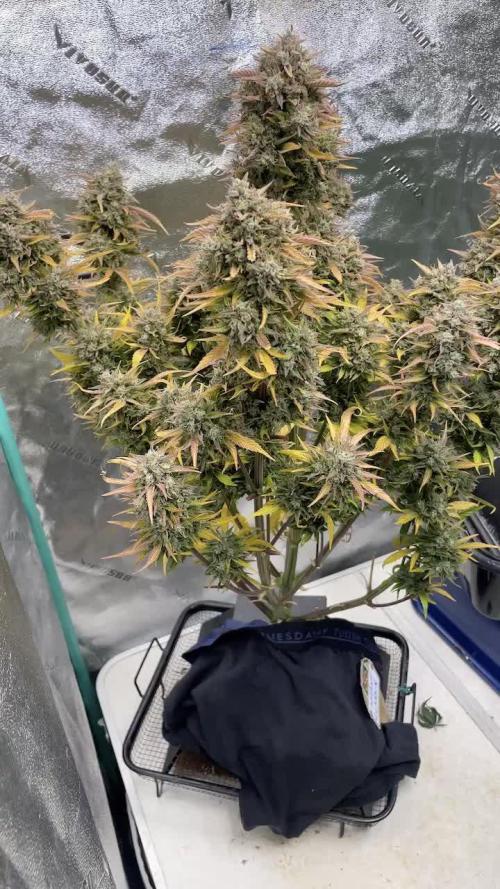
Después de unas semanas de descanso de la temporada anterior, comienzo este nuevo viaje con mi bodega de marihuana llena, muchas ganas y la esperanza de conseguir la mejor cosecha de mi historia.
Muy motivado y feliz por la oportunidad de cultivar esta sativa 90% colombiana de la vieja escuela cruzada con una índica afgani, promete producción y potencia... a jugar!
Esta temporada tengo varias plantas que comparten parentesco, en el caso de esta cepa comparte genes con otro de mis cultivos "Colombian Gold" otra sativa originaria de la Sierra de Santa Marta.
A los dos días de poner la semilla en una servilleta humedecida, ésta germinó, ahora pasa los primeros días de vida a la luz tamizada de una ventana, dentro de un par de días comenzaré con luces eléctricas para todas las plantas, esta temporada voy sin piedad con las luces, he montado dos COBS azules de 450nm para modificar desde el inicio la forma de la planta y hacerla lo más chaparra posible.
HASTA LA PRÓXIMA...
SALUDOS A TODOS
================================
Info de la cepa Pablo Escobar de Divine seeds: https://divineseeds.net/pablo-escobar-fem/
"Una variedad colombiana picante con una potencia extrema que tiene su origen en las montañas de Santa Marta, la región conocida por su extravagante marihuana Sativa." Divine Seeds
- Genética: Colombia x Afganistán
- 90% Sativa, 10% Índica
- Tiempo de Floración - 71 días
- Rendimiento en interior: 700 g/m²
- THC: 25%
- Aromas: Mango
================================

Likes
18
Share


@Growbabie
Follow
demorou mas está ai a primeira semente da 24k Gold auto da Cannabiorganics!
Dia 29/11/2021 - Para minha surpresa essa manhã outra semente da 24k gold auto germinou, ela aparentemente veio das profundezas do vaso de 7 litros ehehehehe essa vai ser forte. Falta somente uma delas germinar para 100% de sucesso. Estou molhando um pouco varias vezes ao dia.
Dia 30/11 - tudo normal, crescendo no seu tempo.
Dia 01/12/2021 - dia normal
Dia 02/12/2021 - dia normal, estou achando elas bem lenta mas é isso.
03/12/2021 - A 24kGold#1 parece estar adorando a luz, ehehe, reguei elas com 250ml de agua hoje e somente.
04/12/2021 - tudo ok
05/12/2021 - tudo certo tirando o fato da 24kgold#2 nao estar se desenvolvendo
iniciando a primeira semana oficialmente, vambora 🚀

Likes
2
Share


@Ultraviolet_
Follow
Remember that, however you are played, or by whom, your soul is in your keeping alone. Even though those who presume to play you be kings or men of power, when you stand before God, you cannot say, 'But I was told by others to do thus,' or that virtue was not convenient at the time. This will not suffice. Remember that.
Day:18
84°F and 65% RH (VPD) for the vegetative stage. Approximately 1.15kPa(assuming leaf temperature is about 2°F cooler than the air), which falls right into the ideal vegetative sweet spot (0.8kPa to 1.2kPa). At 1.15kPa, plants can draw water and nutrients efficiently without risking stress or wilting. It keeps the leaf pores (stomata) open, allowing for ideal carbon dioxide intake and maximizing vegetative growth. VPD is determined by the leaf's temperature, not just the ambient air. Because leaves usually run 1° to 3°F cooler than room air under bright grow lights, my actual VPD will be slightly lower, closer to the 1.0kPa mark. As she transitions from vegetative growth to flowering, one can gradually lower the humidity (to around 45–60%) and drop temperatures slightly to prevent disease from settling inside dense buds when they appear.
Night:6
At 70°F and 60% relative humidity, Vapor Pressure Deficit (VPD) is 0.86 kPa. This is right on the cusp of whats optimal for the vegetative stage. During the nighttime, plants generally close their stomata and undergo cellular respiration rather than photosynthesis. Transpiration slows to a near stop, making VPD less critical at night than during the day. However, maintaining a nighttime VPD between 0.8 and 1.0 kPa is highly beneficial in that it ensures the air is dry enough to prevent powdery mildew or bud rot, but moist enough to keep the plant from undergoing unnecessary stress. This range keeps the environment comfortable for cellular processes and prevents large atmospheric swings. Keeping it all flowing.
(Not pushing them yet, these are photoperiods)
The optimal soil (root zone) temperature for cellular root respiration and nutrient uptake in cannabis is between 68F & 72F This narrow range balances biological energy production (cellular respiration) with the dissolved oxygen levels in the soil, maximizing plant growth and health. Warmer soils hold significantly less dissolved oxygen. When soil temperature exceeds 74F oxygen depletion occurs, inhibiting cellular respiration almost entirely, At 68-72F root cells generate optimal adenosine triphosphate (ATP) via respiration to power root-tip elongation and the active transport of water and nutrients.
Too Hot (Above 78F) Root respiration increases, demanding more oxygen, while the water's oxygen-carrying capacity drops. This creates a prime environment for anaerobic pathogens and Pythium (root rot).
Too Cold (Below 60F) Root metabolism and cellular respiration slow to a crawl. This severely impairs nutrient and water absorption, leading to yellowing, wilting, and phosphorus deficiencies.
A lot depends on whether it's automatic or photoperiod; with photoperiod, there is not as much of a need to push "hard" as the real countdown only begins once the flower is initiated. Automatics, on the other hand, the chronological "clock" begins ticking the moment the seed germinates. It is of critical importance that the seedling growth gets off to the races, understanding that early growth is like compound interest, which will pay off come harvest. This reality is why getting autoflowers "off to the races" early on yields such exponential benefits. The "compound interest" is directly related to the surface area of the leaves. Larger, faster-growing seedlings process more light and build bigger root networks early on, which translates into an explosion of vertical and lateral growth during their short vegetative window.
The margins for error are so thin with autoflowers; this early-stage momentum depends on several critical practices. Seedlings exposed to increased atmospheric CO2 levels early in life will develop at an increased rate. To effectively "extend" or optimize the capacity of Photosystem II (PSII) for increased photosynthetic efficiency. In standard oxygenic photosynthesis, Photosystem II (PSII) is naturally limited to the red-light spectrum, peaking at 680nm. Extending its light-harvesting capacity past 700nm into the far-red region requires bypassing the natural limits of standard chlorophyll a. Adding 730 nm (far-red) LEDs alongside standard red/blue lights has been shown to increase canopy photosynthesis by 20–30% in several crops by acting synergistically with shorter wavelengths. However, the limitation is that excessive, pure IR/Far-red light (without accompanying red light) can trigger the "shade avoidance response," causing plants to grow tall, weak, and spindly rather than robust. Utilizing infrared light (specifically the 700-750 nm far-red range) is a viable method to boost photosynthetic efficiency. It acts as a bridge to allow PSII to utilize a broader spectrum of light, breaking the traditional 700 nm barrier. UVR8-mediated signaling (often in conjunction with CRY proteins) triggers protective mechanisms that maintain the stability of the photosynthetic apparatus (including LHCII and reaction center proteins), thus ensuring that the efficiency of Photosystem II remains higher in UV-B-exposed plants compared to plants lacking this receptor. ΦPSII indictates the rate of electron transfer from water to plastoquinone, which drives the production of ATP and NADPH. There is a close link between ΦPSII and the true rate of CO2 fixation (Φ*co2).
ETR stands for Electron Transport Rate. It measures the speed at which electrons are moved through the thylakoid membranes in a plant's chloroplasts during the light-dependent reactions of photosynthesis. Infrared light (particularly Near-Infrared or NIR) improves cellular energy by interacting directly with the electron transport chain (ETC) in mitochondria. This process boosts adenosine triphosphate production, which acts as a metabolic coefficient multiplier by accelerating enzyme activity dramatically.
Extend then multiply.
Far-Red photons interact with plant photoreceptors to accelerate the plant’s biological "clock" or trigger a shade-avoidance response. Autoflowers don't use the plant's biological clock, although the IR will initiate a shade avoidance and make them stretchy. You can just add equal measures of 660nm-680nm to negate the shade avoidance effect. Replacing nights' "darkness" with a combination of IR+ and 660nm. Because autoflowers don't require a dark period to flower, many growers just blast them with light. 18/6 24/0. However, this ignores the plant's metabolic rhythms, where daytime photosynthesis (light reactions) must be perfectly balanced with nighttime carbon fixation and assimilation (Calvin cycle) to avoid bottlenecking plant development. Cellular respiration is a 24/7 process, but it can only function while the plant has the free oxidative capacity to do so. A 100% photosynthetically active leaf cannot perform cellular respiration. The viral trend of defoliation of every leaf that isn't "getting enough light" is of great detriment overall, putting 100% of the cellular respiratory "workload" and responsibility on the 0/4/6 hours of darkness in sub-optimal conditions for enzymatic activity. Photosynthesis captures nearly 100% of the initial energy as carbon, while cellular respiration is the process that unlocks 90% of that captured energy into usable ATP so the plant can use it. Respiration is considered only roughly 30% to 40% efficient. It captures enough of the potential energy in glucose to synthesize around 30 to 38 ATP molecules per glucose molecule. The remaining 60% to 70% of the energy in the sugar is not captured in ATP; instead, it naturally escapes into the environment as heat, which helps regulate plant temperature. In plants, the primary enzymes of the Electron Transport Chain (ETC) and the ATP synthase complexes are typically adapted to function optimally in warmer temperatures (roughly 77°F to 95°F, depending on the specific plant strain). As temperatures rise within this physiological range, molecular collisions increase, speeding up respiration and ATP production. The cannabis plant has a branched respiratory pathway. During heat or cold stress, plants activate Alternative Oxidase (AOX). AOX burns sugars to dissipate energy as heat rather than coupling it to ATP production. This pathway actually functions optimally at elevated temperatures to help protect the cell from the damaging build-up of Reactive Oxygen Species (ROS) during heat stress. Enzyme activity generally scales with heat; there is a strict biological limit. If canopy temperatures in a grow room exceed 104°F, the enzymes and their supporting lipid membranes lose stability. Not saying you need to go crazy, just optimize nights the same as we optimize days.
Phosphorus is the driving force behind early seedling development. It acts as the "energy hub" of the plant, directly driving cell division, robust root growth, and the creation of DNA. Without an adequate, easily accessible supply early on, the plant's overall growth potential and final yield can suffer permanently.
Likes
8
Share


@Spliffi
Follow
Heya👍🤙👍🌱
Last feed for this Grow. Less is more and the Top Max will bump those buds.
Check out my Facebook profile:
https://www.facebook.com/share/v/H6PnoahTHrEzm63U/?mibextid=oFDknk
Big BIG BIG thank you to Sebastien, Heather from Fastbuds420. You guys are the best. Can't wait for the next live.
Even Bigger shout out to Hydroponic.co.za. My local Hydro Shop and Sponsor. Thank you Sir.
👍🤙👍🌱

Likes
38
Share


@Danger90946
Follow
Day 79 11/28/2021- Welcome to week four of flower. Today fed nutrients and did a defoliation to take off the smaller buds that won’t get enough light.
Day 81 11/30/2021- Just water her today.
Day 82 12/01/2021- Trying something new.
Day 83 12/02/2021- Water day for them. Also camera needed update but made it work. IOS/ANDRIOD PAR METER APP. It is very accurate highly recommended this for everyone.
https://apps.apple.com/us/app/photone-grow-light-meter/id1450079523
Day 84 12/03/2021- Last day of the week, and Wow the grow is amazing!


Likes
3
Share

@kdifiori_
Follow
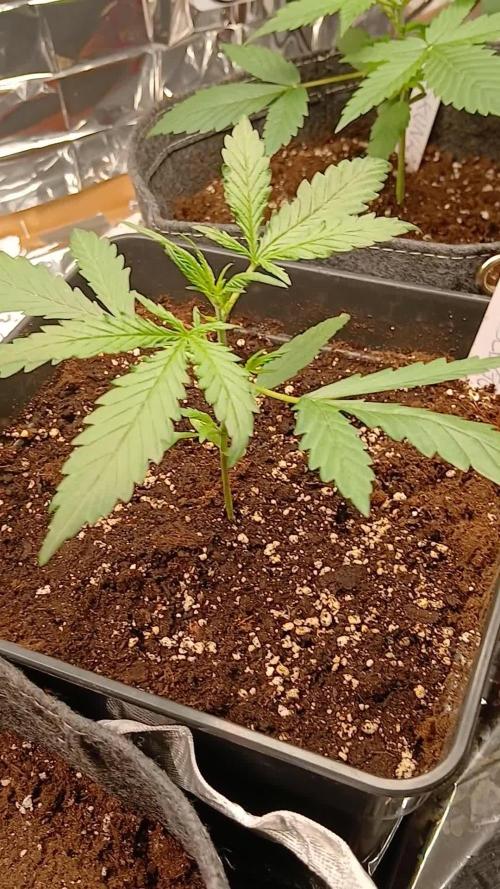
The girls are growing up and doing great, Pineapple and Cheese more than the others. I'm happy overall.


Likes
13
Share


@NordicClosetGrower
Follow
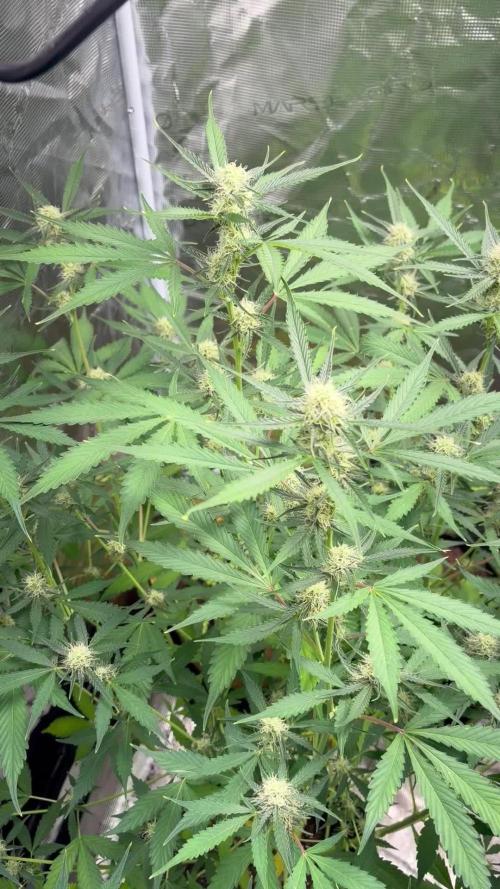
All quite steady overall. Would really like to have some internal ventilation going on in this cabinet.
No nutrient lock in site so far. Mayme time to start adding a bit more nutrients, the leafs are looking a bit discolored and on the yellow side in some spots.




Likes
6
Share


@StarSkream
Follow
Week 1 24 hours ethos popped and began to stretch
Temp 76 humidity domes on top 5 of 5 out going directly into pots and 24 hour lighting on day 3! gonna run 24/7 for 30 then switch over hopefully. Nothing added but FishShit and rootdrench to pop

Likes
7
Share


@Onlygrow99
Follow
Bien pues ya tenemos en marcha el 2º seguimiento del perfil...
Son 6 white truffles, 6 Apple&Bazzokies de GBSTRAINS y 5 GG4 de GBSEEDS que se empezaron a germinar el 15 de mayo por la tarde sobre las 19:00
Todas nutridas con BOOM nutrients jejeje
Todas las semanas iremos viendo los cambios y la evolución, los riegos y las flores que vendrán :)
El 16 de mayo del 23 sobre las 07:00 de la mañana pase las semillas del vaso con agua, a los tapers con servilleta. Ahí estuvieron 24 horas mas haciendo un total de 36 horas germinando para después,
pasarlas a las macetas de 1 litro.
22/05/23 actualizado, meto unas fotos mas de como van las semillas después de 7 días desde que se empezaron a germinar en el vaso de agua.
A día 22/05/23 llevamos 7 días desde que se empezaron a germinar.
ACTUALIZACION DE ESTADO:
30/05/23 Subo unas fotos después de 8 días.
Llevamos 15 días desde que se empezó a germinar las semillas en vaso de agua.
A partir de aquí, empiezo a contar semanas de crecimiento.
Trasplantaremos a maceta definitivas de 7L dentro de una semana o 2.

Likes
25
Share


@BudHaks
Follow
She is getting fat! What a great plant she is - again, little to no deficiencies, other than some light burn but I could not complain to have such strong genetics for my first ever grow! Trichomes are not too cloudy, so still a while to go but what an AUTO!

Likes
4
Share


@pzwags420
Follow
On day 1 I adjusted the reservoirs PH from 6.4 to 6.0. The tallest cola is 5.5" from the light. Lower colas are mostly 9"-10" from the light.
On day 2 the reservoirs PH is 6.1. The tallest cola is 5" from the light. Lower colas are mostly 9"-10" from the light.
On day 3 I adjusted the PH of the reservoir from 6.0 to 6.3. The tallest cola is 4.5" from the light. Lower colas are mostly 8"-10" from the light. I did my last major defoliation in order to bring more light and air flow deeper into the canopy. The plants are progressing as expected. No smell yet and the pistils are showing more each day.
On day 4 I adjusted the PH of the reservoir from 6.4 to 6.1. My mini dehumidifier was emptied after being 3/4 full after 5 days running. My tallest cola is 4" from the light. Lower colas are mostly 8"-10" from the light.
On day 5 I adjusted the PH of the reservoir from 6.0 to 6.3. My tallest cola is 3.5" from the light. Lower colas are mostly 8"to 10" from the light. The plants buds are growing in size with more pistils showing every day :)
On day 6 the PH of the reservoir is 6.2. My tallest cola is 3.5" from the light. Lower colas are mostly 7"-9" from the light. It looks like the stretch has finally stopped. I experienced a Runaway with my blumat on my right side plant. I reduced the flow of that blumat by 1 carrot and will monitor the situation going forward. After adding my carbon filter to my exhaust I realized it was drawing the heat from my box causing in proper heating. I will try to reduce the air flow of the carbon filter to make it easier to keep the heat in the grow box.
On day 7 the PH of the reservoir is 6.2. My tallest cola is 3.25" from the light. Lower colas are mostly 7"-9" from the light. I did one last major defoliation on day 21 of flower to improve airflow and light penetration keeping only the top leaves of each cola.





Likes
34
Share


@Bruno_The_Stoner
Follow
Welcome to the next week of great adventure with young gorillas. The beginning of the week I started with a small flush with tap water at pH 6.3. I intend to change the 150W HPS lamp to brand new 250w plantstar this week. In next few days gonna use pk 13/14 One love for everyone 🌱🐒🌱🐒🌱🐒 P.S: mobile application is terrible, it is very difficult to update something, it always gets stuck during the upload of photo, no upload percentage. Already twice made me mess up the whole week
EDIT: Additional HPS mounted 250w plantastar. Unfortunately, after purchasing the wattmeter, I discovered that my LED consumes only 220w of guaranteed 350w. I'm thinking about giving it back for a guarantee. The current energy consumption of the entire project is 810w / h
Likes
80
Share


@Fatnastyz
Follow
3-17
Photo bombs today 😂😂
Gave 4ml green sensation, 3ml cal/mag and 1 ml slf-100.
Run off ppm 1300 ph 7.0
Hope can get the ph down a bit.
3-21
1.5 grams game time, 3ml green sensation, 3ml cal/mag, 1ml Slf-100 ph 6.0 ppm 350
Runoff 1432 ph 6.9
Yo, dropped 1 💪🤘
See ya next week