


Processing
Likes
Comments
Share


@mrZot
Follow
Tras una nueva semanas las pequeñas avanzan mas o menos bien!
Creo q me pase en el ultimo riego y que alguna tiene alguna carencia pero estamos trabajando en ello.
Sobre las Burger Puch solo decir que una empezó a declararse por alguna razon y vi que era macho por lo cual se la di a un amigo a ver que pasa al final!!
Espero que en dos semanas mas ponerlas a florar ! También decir que nos han regalado una Red Hot de sweet seeds ya que una amiga no tenia mucho espacio !!!
A ver que tal la experiencia !!!


Likes
96
Share


@PapaNugs
Follow
Another great week for these girls! They look great! Yes, thats what they look like. No filters, just frosty buds. They have a very unique "sweet/candy" smell to them. It's very hard to pinpoint. I'll be so curious what the final product becomes.
This tent is doing wonderful compared to the disaster this week in the other tent. (A whole set of genetics hermed mid flower and another girl got aphids). So this is great to have such a wonderful tent here.
The trichomes are really coming through now. The amber is starting to show on one plant. I'm happy cuz the breeder says 55-63 days but I might pull the one in the middle at 49 days. We

Likes
96
Share


@CBD_Sweden
Follow
Euphoria is a superior blend of selective heredity between the popular cannabis strains of Royal Medic and Shark Shock. Royal Medic is a strain of cannabis that owes the majority of its genetics to the Juanita la Lagrimosa and is recognized as one of the high CBD strains and those genetics have been passed on to Euphoria.
THC: 9%
CBD: High
Yield Indoor : 450 - 500 gr/m2
Yield Outdoor: 450 - 500 gr/plant
Height Indoor: 60 - 100 cm
Height Outdoor: 120 - 150 cm
Flowering: 8 weeks
Harvest month: Early October
Genetic Background: Great White Shark x CBD dominant plant
Type: Sa 20% In 80% Ru 0%
Effect: A motivating and inspiring feeling
Climate: Mild
--------------------------------------------------------------------------------------------------
2017-10-16. Week 5, day 25 from germination.
This girl knows how to take it easy in the growing department, there is nothing more to say about her right now.
She is 11 cm tall.
Im waiting to be able to fim her and i hope she picks up the pace now. Added a couple of picks.
---------------------------------------------------------------------------------------------------------------
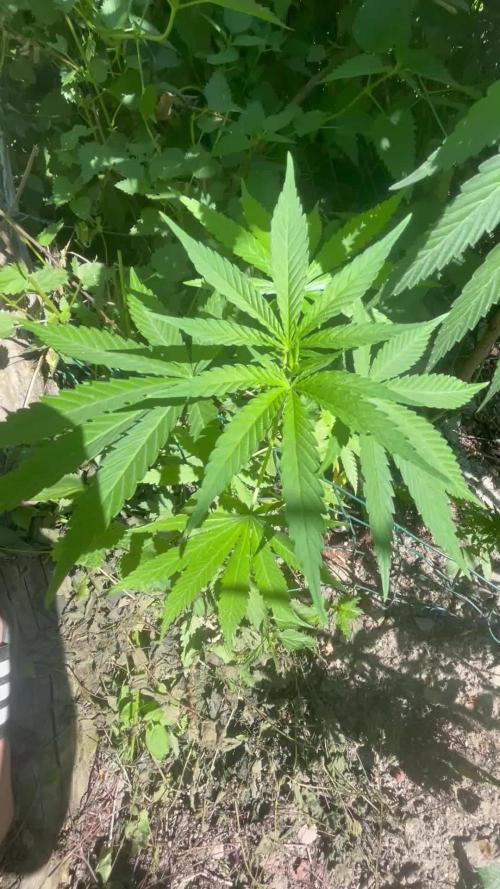
2017-10-20. Week 5 day 4. The girl are in the final 12 liters autopots and have moved into my newfixed second growroom with 5 other girls.. I have fimed her. Added video of new growroom.



Likes
58
Share


@Kynareth
Follow
Plant keep growing great.
As you can see at the leaves there are some of the tips of the leaves with bad color, thats because teh EC reached up to 1,8 so I added ph leveled plain water with 0,4 ec to lower the ec to 1,5 and the plant is responding really well, growing faster and with a healthy root system.
The temperature was high also (near 30 degrees celsius) so i moved the lamp upper and i will setup an 100mm fan for extraction. The led panel is really really hot
Likes
151
Share


@CANNASIM
Follow
------GENERAL COMMENT------
Flush time, within the end of this week is now flush time.
To summary this week i just kept on my feeding habits, Water with base > Water with boosters, alternating Recharge.
My led seams to be crashing a bit, the colors are not stable as is possible to see in the timelapse.
Trichomes are mostly cloudy, with a slight amber. 9 weeks flowering time will be exact, just need time to flush, they are maturing fast fast, hairs are getting orange in a blink.
------SM.BB COMMENT------
The buds are very imponent and bulky, with a lot of resin, the smell is sweet and fruty with a bit of pine.


Likes
48
Share


@Northern_Ent
Follow
Aug 24: cool and rainy lately but will warm up again in a couple days. Gorilla Cookies looks really good and is flowering nicely. Very nice strain. Added some soluble seaweed to the water mostly for the K.
Don’t take flash pics of photoperiods unless you’re immediately using a 730 nm light to put them into dark mode.
Using the far red light like this is known as phyto-forcing and it’s like getting an extra two hours of darkness making a 26 h day. This far north I think it moves flowering up by 3-4 weeks so obviously a huge trick. Easy and cheap if you have daily access at dusk.
Aug 26: it’s been a couple of weeks but I figured it was time for a lazy compost tea. I watered with it slightly diluted and the plants look almost immediately greener and more vigorous…amazing actually. 👍👍
Aug 27: this is definitely the fastest flowering of the four. Hopefully it stays sunny for a few more weeks. Thinned out the understory a bit as there were some small branches and bud sites that were not going to do anything.
Check out the birds sounds on the first video. The magpies thought I was too close to their nest in the tree or something…they’re usually not quite that annoying.
Aug 29: this is a great strain, and the manifold is working its magic.
Likes
11
Share


@Mikeyc420
Follow
Week 6 of flowering
Buds are looking fat and fell very dense with the THC shining
Producing An nice strong pungent smell
Ruffly 3week left untill harvest and I quite looking forward to the outcome for my first grow
Humidity 45%-50%
Temperature 23°c-26°c
Lighting 18hrs on 6hrs off
Shogun fertilizers and growth chart
And tips would be greatly appreciated


Likes
295
Share


@Ju_Bps
Follow
Hello growmies 👩🌾👨🌾🌲🌲,
👋 Buds start to bump and frosty, more and more, leaves turn to purple 💜
I start to check the trichromes, Harvest in 1 or 2 weeks I think 🤔
💪 Not too much work, just removed some leaves.
💧 Give water each 2/3 day
1.5 l Water + Roots + Ez plus
1.5 l Water + Roots + Bloom + Sugar Royal
PH @6
RQS - Easy Bloom Booster Tabs
1 tabs/5 l
RQS - Easy Grow Booster Tabs
1 tabs/5 l
RQS - Easy Micronutrients Plus
1 tabs/5 l (1 watering each 10 days.)
💡Mars Hydro - FC 3000
50% 45 cm.
Mars Hydro Fan kit
Setting 8, smeel a bit out
Have a good week and see you next week 👋
Thanks community for follow, likes, comments, always a pleasure 👩🌾👨🌾❤️🌲
Mars Hydro - Smart FC3000 300W Samsung LM301B LED Grow Light💡💡
https://www.mars-hydro.com/fc-3000-samsung-lm301b-led-grow-light
Mars Hydro - 6 Inch Inline Fan And Carbon Filter Combo With Thermostat Controller 💨💨
https://www.mars-hydro.com/6-inch-inline-duct-fan-and-carbon-filter-combo-with-thermostat-controller
RQS - Titan F1🌲🌲
https://www.royalqueenseeds.com/f1-hybrid-cannabis-seeds/624-titan-f1.html
Likes
16
Share


@OwnWayGoodWay
Follow
It was a very nice week.
She is growing fast and loves low stress training. There are still little flies but they are not a danger for the plant.
No problems, no deficiency, only pleasure.
Coco is ready for flowering stage 💪💪💪


Likes
8
Share


@DoMoNe
Follow
Following RQS auto guide : https://www.royalqueenseeds.com/blog-how-to-grow-autoflowering-cannabis-n83
WEEK 5: FLOWERING BEGINS#29 12.4. - #35 18.4.
#29 12.4.
-Opened new week with new pics and basic diary structure
-Noticed the temps have gone up to 29'c , raised lamps, will see if i can make the tent cooler by removing some instulations during this week, it should not go to subzero degrees outside anymore.
-Opened the side air intake hatch a bit to give more outside air directly in to tent, also took out the ventilation pipe so that the incoming air now comes in at plant height (not freezing temps anymore)
-Took out few fanleaves again
-Moved temp meter from soil level to middle of the pots
-Topped(or fimmed) the purplematic #2 which is non-LST, unlike the non-topped/fimmed purplematic #1 which is LSTd
-Should water now daily about liter / plant / 24h (with nutes) : Watered 2x 1,75liters with stated nutes
Mostly following https://www.royalqueenseeds.com/blog-how-to-grow-autoflowering-cannabis-n83 on waterings (1ltr/24h, so would mean 4-5liters in my tent)
#30 13.4.
-Opened 'side hatch' fully
-Didnt water, soil was moist
-Hopefully got the in-tent temp now lowered to steady 25'c, outdoors about 0-12'c daily for this week
#31 14.4.
-Once again removed all LST, the form of the plant still stays, might start ScrOG:n next week, possibly
-Added 1½liters Coke bottles to each pot, will see how much the water drains in a 24h, if it really doesn't, ill just lift the bottles tomorrow and let it run.
#32 15.4.
-Nothing here
#33 16.4.
-Removed bottles, added 1,5liters overall to pots and what was left of in each bottle to each pot
-Temps are keeping steady now, also Hum is what it says at the RQS's AF guide
-So far this week about 0,55liters/24h/plant, dunno if i should nor can increase the watering from current rhytm,
will see if i can draw a water line closer to tent so wont have to carry so much water, or get a 20liters containers or something
#34 17.4.
-Nothing here
#35 18.4.
-Water 1,5liter / plant (6liters in total) with normal nutes
-Nice grow after removing LST this week, will start ScrOGin next week
-Also have to defoliate next week way more as the plants are getting a bit too bushy
Likes
31
Share


@valiotoro
Follow
Beautiful buds super sticky✂️
Delicious smell something new to me!
Cant Wait the curing to taste this beauty
Likes
24
Share


@SkunkyDog
Follow
Hallo zusammen 🤙.
Sie wächst sehr schön und macht keine Probleme.
Rabattcode für den BIOTABS-Webshop https://biotabs.nl/en/shop/ GDBT420, damit erhalten Sie 15 Prozent


Likes
11
Share


@UrbanBoer
Follow
Monday’s Blue, it looks like she’s flowering but I am not sure but I will find out very soon with this coming week, the days are getting hotter and now an hour longer. I almost lost hope, the leaves were drying out, but with time knowledge is acquired and look at her now, she does show signs of going through trauma but now she healed ad growing like the rest.
Likes
51
Share


@eldruida_lamota
Follow
Esa familia, ya hemos vuelto fumetillas, ya estoy de nuevo activo para explicaros mis métodos para cultivar vuestra yerba.
Bueno contamos esta vez con una cookies gelato de royalqueenseeds, la verdad por oídas y lo que leí, que son una cepa bastante fuerte tiene bastante thc, veremos estas semanas cómo avanzan.
Si germinación 100%, 5/5 ejemplares germinados y preparados para brotar.
.
Hasta ahora el ph lo dejamos en 5.8 la temperatura ronda los 22/24 grados y la humedad está en torno al 80%.
.
Ahora en la alimentación, gama agrobeta.
0,5 ml x L Piramid , vía radicular.
0,5 ml x L Growth black line , vía radicular.
0,1 gr x L Cancerbero , vía radicular.
0,1 ml x L Tucán , vía radicular.
0.1 ml x L Flash Root , vía radicular.
0,4 ml x L Great Green , vía foliar.
.
Empezamos con muy buen pie, espero que no surjan muchos problemas en futuras semanas, buenos humos 💨💨💨.