Likes
Comments
Share
@GrowerGaz
Follow
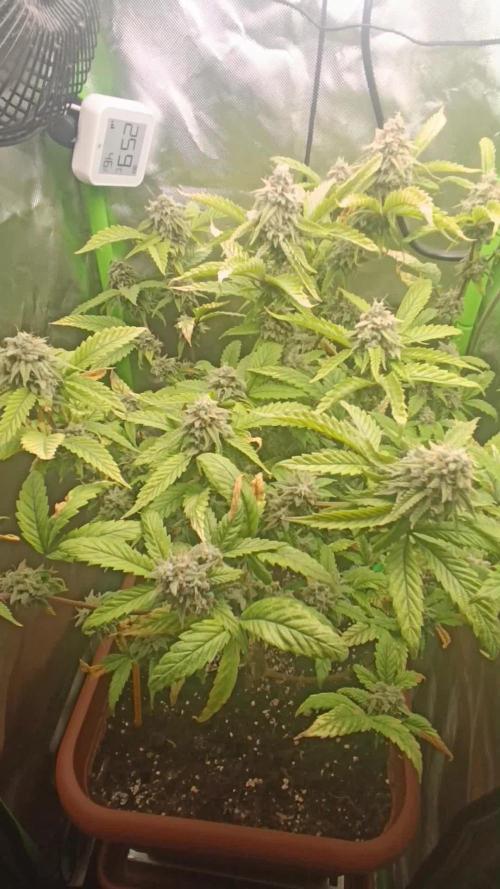
Started a new 4 plant 100w run. This time we have the spider farmer sf1000. Nicely built . Strains are Sensi double kush cake , blackberry gum, exodus cheese and Strawberry cheesecake
Likes
13
Share
Likes
11
Share
@Trinidad
Follow
Easy grow. Trim was not too bad. I had many laffy buds in the bottom. Next time I need to lilipop more.
Processing
Likes
7
Share
@x_grower
Follow
Last week I neglected the fertigation beyond the low humidity all that delayed the first topping and leaf burned the most thirsty girls, by the end of the week I had already recovered them and succed topping, they are looking very healthy.
Likes
3
Share
08 - 14 May 2023 - Germination Week 15 - 21 May 2023 - Veg week 1 22 - 28 May 2023 - Veg week 2 29 - 04 June 2023 - Veg week 3 05 - 11 June 2023 - Veg week 4 12 - 18 June 2023 - Veg week 5 - Final Veg 19 - 25 june 2023 - Flowering week 1 26 - 2 july 2023 - Flowering week 2
Likes
21
Share
@cadavxr
Follow
this week has just started but im anticipating serious growth with my tent and mars led when it arrives :D still need to buy proper nutes and a ph tester but update ( just wait till you see how much the mars ts 1000 has helped her
Likes
9
Share
Hey farmers, Week 12 was pretty chill compared to the previous one. My plant is starting to look and smell like the real deal with all that stickiness and aroma. The buds are getting bigger too, but I can't help but worry about the foliage. I think I might have let it grow too much, but it's too late to do anything about it now. On top of that, I'm pretty sure the leaf damage is from the LED light burn again. Unfortunately, I can't do much to fix it since I've already maxed out my vertical space. But hey, at least I know what the problem is, right? To try and counteract it, I decided to reduce the feed this week since I noticed some nutrient pooling. Hopefully, that will help prevent any more damage from happening. All in all, the plant seems to be doing well and I'm excited to see how she turns out in the end.
Likes
Comments
Share
Monday 29th!!! So this diary is again late and only allowed too add a few images which are mix match, How upsetting 👎 annoying at the least... I've been trying since repotting these girls on monday too upload yet constantly saying resizing photo no matter which folder I upload from so I appolagize. I will try too upload and update this week but if continues will create a new diary and try that way 🤷‍♂️ So as if it were monday 29th I transplanted all the fastbuds testers into their final pots and I have 2 of each whichever I'm very happy with and the other 3 seems slightly slower but still here 🌱 They are now being fed shogun nutrients and hopefully this week they settle in and get comfy ready too begin their vegative journey 👌 I will feed lightly and all girls will start some form of lst next week Hopefully I can update this week properly soon as I like too recap myself as it helps keeping log of what I've been doing 🙄 Shouts too aptus Holland nutrients I gained great roots ready for transplant using their startbooster & regulator which I'll be continuing too use too start of all my seeds/seedlings in future 💪 thank you aptus! 💚 Growers love, stay blessed 💚
Likes
2
Share
5. Woche Ja läuft gut 😃 👍🏻 Stimmt alles von den Werten, das Mainlining ist auch fast durch, finde sie sieht echt toll aus 😁
Likes
5
Share
Things are moving along. Just maintaining the environment, dropped the humidity and temps down. as these flowers bulk and starting to ripen up. Dropped temps to 74 during day and 68 during night and keeping humidity around 48% The aromas are developing and become very concentrated and more complex.
Likes
9
Share
@Eryan
Follow
Day 51 - Deficiencies have gotten a bit out of hand the previous few days. Looking at the leaves I was thinking maybe calcium and magnesium deficiency, but it doesn't really make sense to me because I had: 1. Given a decent feeding with the Aptus cal-mag solution. 2. Calcium was already in the soil (pre-fertilized) 3. There is more often too much calcium in soil than too little. 4. There is a not insignificant amount of calcium in the water I use (causes limescale in a lot of things) So my guess is instead of calcium deficiency, I'm seeing next to some magnesium deficiency, a deficiency of phosphorus. So a couple of days ago I gave the plant FloraBloom which has both phosphorus and magnesium but no nitrogen or calcium. Today (two days later), the leaves are now feeling a lot less dry / crunchy, which was a supposed symptom of phosphorus deficiency. I expect to need to wait about two more weeks before harvesting. Maybe around 10 days. The trichomes are still fairly glassy although there's some cloudiness. Pistils are still mainly white though, so I'm expecting some fattening to happen. I don't really like feeding the plants at this point (short before harvest), but the deficiencies were severe enough to me that I'll keep giving FloraBloom this week. Next week I might stop depending on where the trichomes are at. Smell is excellent, I definitely now understand where the 'mandarin' name comes from. Very similar to a mandarin smell now. Other than the phosphorus / magnesium issue, the plants seems to be doing well.
Likes
15
Share
Noticed some yellowing on sour kush a on Monday I do check ph and ppm overall smells nice critical purple finally taking off sticky buds on b and c
Likes
1
Share
Likes
69
Share
@Natrona
Follow
*****DIVINE SEEDS ***** *****FRACTAL***** SPONSORED GROW Week 3 Germination April 6. Week 1 water only Week 2 water only Week 3 added recharge and TPS1 increasing ppm to 570. This week 21-27 consisted of plain ph 6.4-6.7 water with recharge and TPS1. 4/24 updated my AC Infinity app and started using the advanced programming settings for early vegetation. This is keeping humidity in 70% with temps in 80 and my ladies are loving it. They are lush and green. They are however remaining quite short. 4/26 I did some LST and defoliation. Before and after pics above. Until the plants are big enough to go outside, I will be using my AC Infinity tent and equipment. Once outside, I will be watering with well water and recharge and any additional fertilizers or amendments will be determined at that time. Thank you @DivineSeeds As always, thank you friends and followers for stopping by, for your likes and comments. I truly appreciate all the plant love💚from you! Have fun & love what you grow 💚 Sending love and light 💫 💫Natrona 💫 ***FRACTAL*** Fractal is an especially psychedelic strain that Divine Seeds developed for esoteric and mystical experiences, meditation and creativity. A potent and vivid landrace variety from Southern India was crossed with a sticky leaning Indica (mostly Afghani), then Skunk #1 joined this company. Their progeny underwent multiple selection experiments, until its massive built, resin concentration and hypnotizing powers reached an ultimate level. The result is now known as Fractal – resinous, spicy and productive. Best choice for commercial growing: a compromise between bigger yields and fast ripening! A great source of hashish that has something incense-like to its musky smell. Indoors expect 170 сm height, out of doors plants grow up to 200 сm. Fractal fits for all types of growing environment: grow boxes, hydroponic or aeroponic setups, outdoor plantations, balconies, terraces and green houses. For more weight it is recommended to train Fractal plants to broaden their structure and limit their vertical growth. For that purpose use ScroG or SoG, LST, FIM or topping, supercropping or mainlining – there are no limitations for the strain itself, but certainly low-stress methods are recommended to smaller samples. Fractal has an inherent immunity to molds and insect pests, but since its colas are thick, protect your plants from stale air. Also, during rainy weeks your plantation may need to be covered. Ready for outdoor harvesting in October. Big and dense buds the color of olive, hunter green heavily coated with crystals. Whole Fractal buds smell hashy and earthy, while cedar and fruity hints are noticeable on breaking. Measure your portion carefully: the potency is above average! With Fractal you experience an overall stoning that either keeps you put or slows your motion down, also vertigo is possible. However, in moderate dosage the impact is described as a pleasant sensation of well-being and placidity. Perfect for spending a night by a bonfire without talking, therefore is more often enjoyed as a solo smoke. Efficiently relieves muscle spasms and seizures, inflammations, combats insomnia and increases your appetite. Up to 3 hours of altered state of mind can be expected. Best consumed at nighttime. Pots: 5gallon Air pots Soil Fox Farm Happy Frog Amended with worm castings, dolomite lime and mychorihiza Seeds provided by Divine Seeds Divine Seeds breeding company The link to Fractal Feminized Seeds Fractal - Divine Seeds breeding company The link to Fractal Auto Seeds Auto Fractal - Divine Seeds breeding company ================================= Equipment: AC Infinity CLOUDLAB 844 – Advance Grow Tent 48”x48”x80” CONTROLLER 69 PRO – Grow Tent Controller CLOUDLINE LITE 6 - Inline Fan 6" IONBOARD S44 – LED Grow Light Board 400W CLOUDRAY S6 – Oscillating Circulation Clip Fan Carbon Filter 6” Nutrients: Total Plant Solution TPS1 Canopy Signal
Likes
6
Share
12/18/21 2nd flush,3 more days of light. Then three days lights out. Cutting Saturday. Buds on the right AP are looking niceeee. Everything else is ok this time.
Likes
53
Share
Likes
45
Share
2nd net is up. Early bud formations are promising. holding up to the extremes pretty well, some leaves taking minor damage, but overall, she is holding up, gave her 1 night at 50F see how she would react, stressful. Not advised as it messes with her metabolism, but I want to see if it triggers any anthocyanin response. Love to see her purp up but no signs yet. My homework. Rubisco regeneration is intrinsically linked to nitrogen supply because Rubisco is a major sink for nitrogen in plants, typically accounting for 15% to over 25% of total leaf nitrogen. The regeneration phase itself consumes nitrogen through the synthesis of the Rubisco enzyme and associated proteins (like Rubisco activase), and overall nitrogen status heavily influences the efficiency of RuBP regeneration.Structural Component: Nitrogen is an essential building block for all proteins, and the sheer abundance of the Rubisco protein makes it the single largest storage of nitrogen in the leaf. Synthesis and Activity: Adequate nitrogen supply is crucial for the synthesis and maintenance of sufficient Rubisco enzyme and Rubisco activase (Rca), the regulatory protein responsible for maintaining Rubisco's active state. Nitrogen deficiency leads to a decrease in the content and activity of both Rubisco and Rca, which in turn limits the maximum carboxylation rate, Vmax, and the rate of RuBP regeneration Jmax, thus reducing overall photosynthetic capacity. Nitrogen Storage and Remobilization: Rubisco can act as a temporary nitrogen storage protein, which is degraded to remobilize nitrogen to other growing parts of the plant, especially under conditions of nitrogen deficiency or senescence. Nitrogen Use Efficiency (NUE): The allocation of nitrogen to Rubisco is a key determinant of a plant's photosynthetic nitrogen use efficiency (PNUE). In high-nitrogen conditions, plants may accumulate a surplus of Rubisco, which may not be fully activated, leading to a lower PNUE. Optimizing the amount and activity of Rubisco relative to nitrogen availability is a target for improving crop NUE. Photorespiration and Nitrogen Metabolism: Nitrogen metabolism is also linked to the photorespiration pathway (which competes with carboxylation at the Rubisco active site), particularly in the reassimilation of ammonia released during the process. To increase RuBisCO regeneration, which refers to the process of forming the CO2 acceptor molecule Ribulose-1,5-bisphosphate (RuBP) during photosynthesis, the primary methods involve optimizing the levels and activity of Rubisco activase (Rca) and enhancing the performance of other Calvin-Benson-Bassham (CBB) cycle enzymes. Biochemical and Environmental Approaches: Optimize Rubisco Activase (Rca) activity: Rca is a crucial chaperone protein that removes inhibitory sugar phosphates, such as CA1P (2-carboxy-D-arabinitol 1-phosphate), from the Rubisco active site, thus maintaining its catalytic competence. •Ensure optimal light conditions: Rca is light-activated via the chloroplast's redox status. Adequate light intensity ensures Rca can effectively maintain Rubisco in its active, carbamylated state. •Maintain optimal temperature: Rca is highly temperature-sensitive and can become unstable at moderately high temperatures (e.g., above 35°C/95F° in many C3 plants), which decreases its ability to activate Rubisco. Maintaining temperatures within the optimal range for a specific plant species is important. •Optimize Mg2+ concentration: Mg2+ is a key cofactor for both Rubisco carbamylation and Rca activity. In the light, Mg2+ concentration in the chloroplast stroma increases, promoting activation. •Manage ATP/ADP ratio: Rca activity depends on ATP hydrolysis and is inhibited by ADP. Conditions that maintain a high ATP/ADP ratio in the chloroplast stroma favor Rca activity. Enhance Calvin-Benson-Bassham (CBB) cycle enzyme activity: The overall rate of RuBP regeneration can be limited by other enzymes in the cycle. •Increase SBPase activity: Sedoheptulose-1,7-bisphosphatase (SBPase) is a key regulatory enzyme in the regeneration pathway, and increasing its activity can enhance RuBP regeneration and overall photosynthesis. •Optimize other enzymes: Overexpression of other CBB cycle enzymes such as fructose-1,6-bisphosphate aldolase (FBA) and triose phosphate isomerase (TPI) can also help to balance the metabolic flux and improve RuBP regeneration capacity. Magnesium ions, Mg2+, are specifically required for Rubisco activation because the cation plays a critical structural and chemical role in forming the active site: A specific lysine residue in the active site must be carbamylated by a CO2 molecule to activate the enzyme. The resulting negatively charged carbamyl group then facilitates the binding of the positively charged Mg2+ion. While other divalent metal ions like Mn2+ can bind to Rubisco, they alter the enzyme's substrate specificity and lead to dramatically lower activity or a higher rate of the non-productive oxygenation reaction compared to Mg2+, making them biologically unfavorable in the context of efficient carbon fixation. The concentration of Mg2+ in the chloroplast stroma naturally increases in the light due to ion potential balancing during ATP synthesis, providing a physiological mechanism to ensure the enzyme is activated when photosynthesis is possible. At the center of the porphyrin ring, nestled within its nitrogen atoms, is a Magnesium ion (Mg2+). This magnesium ion is crucial for the function of chlorophyll, and without it, the pigment cannot effectively capture and transfer light energy. Mg acts as a cofactor: Mg2+ binds to Rubisco after an activator CO2 molecule, forming a catalytically competent complex (Enzyme-CO2-Mg2+). High light + CO2) increases demand: Under high light (60 DLI is a very high intensity, potentially saturating) and high CO2, the plant's capacity for photosynthesis is high, and thus the demand for activated Rubisco and the necessary Mg2+ cofactor increases. Mg deficiency becomes limiting: If Mg2+ is deficient under these conditions, the higher levels of Rubisco and Rubisco activase produced cannot be fully activated, leading to lower photosynthetic rates and potential photo-oxidative damage. Optimal range: Studies show that adequate Mg2+ application can enhance Rubisco activation and stabilize net photosynthetic rates under stress conditions, but the required concentration is specific to the experimental setup. Monitoring is key: The most effective approach in a controlled environment is to monitor the plant's physiological responses e.g., leaf Mg2+ concentration, photosynthetic rate, Rubisco activation state, and adjust the nutrient solution/fertilizer to maintain adequate levels, rather than supplementing a fixed "extra" amount. In practice, this means ensuring that Mg2+ is not a limiting factor in the plant's standard nutrient solution when pushing the limits with high light and CO2. Applying Mg2+ through foliar spray is beneficial to Rubisco regeneration, particularly in alleviating the negative effects of magnesium (Mg) deficiency and high-temperature stress (HTS). While Mg can be leached from soil, within the plant it is considered a mobile nutrient, particularly in the phloem. Foliar-applied Mg is quickly absorbed by the leaves and can be translocate to other plant parts, including new growth and sink organs. Foliar application of: NATURES VERY OWN MgSO4 @ 15.0g L-1 in a spray bottle. Foliar sprays are often recommended as a rapid rescue measure for existing deficiencies or as a supplement during critical growth stages, when demand for Mg is high. Application in the early morning or late evening can improve absorption and prevent leaf burn. The starting point [of creativity] is curiosity: pondering why the default exists in the first place. We’re driven to question defaults when we experience vuja de, the opposite of déjà vu. Déjà vu occurs when we encounter something new, but it feels as if we’ve seen it before. Vuja de is the reverse—we face something familiar, but we see it with a fresh perspective that enables us to gain new insights into old problems. Come walk in the enchanted forest.
Likes
59
Share
@Hashy
Follow
Grow diary 11 Stage 2 Days 11-20 The light schedule was altered to 19/5 on day 11 and the 6 inch distance was maintained until she went into the main tent. Lights on 7pm off 2pm Day 12 was the 1st time she was watered/fed since day 6 when it was soaked for transplant. After day 12 she was fed 300ml every day and the run off checked to make sure everything was in range. Day 17 she was topped after the 2nd set of nodes. I'm thinking of removing the lowest set of nodes in a few days and doing a small mainlining project, Day 18 she was moved into my new main tent (gorilla shorty gt225). The light is my mars hydro TS1000 set at 50% power 20 inch above the canopy. The wilma system is just hydroton/clay balls, and the feeds are on at 8pm for 15mins and on at 12.30pm for 15mins. Day 20 she seems to be adjusting to the topping and the transplant. I'm happy with how the last 9/10 days have gone, its still been mega hot and i have managed to battle the heat quite well so the plants haven't suffered. At the moment all 4 strains are at about the same point in growth. Temp Max 27.8c Avg 23.8c Min 19.4c Humid Max 69.5% Avg 55.7% Min 45.4% VPD Max 1.98 Avg 1.32 Min 0.71 Hope to be back in 10 days without hitting any problems.