Likes
Comments
Share
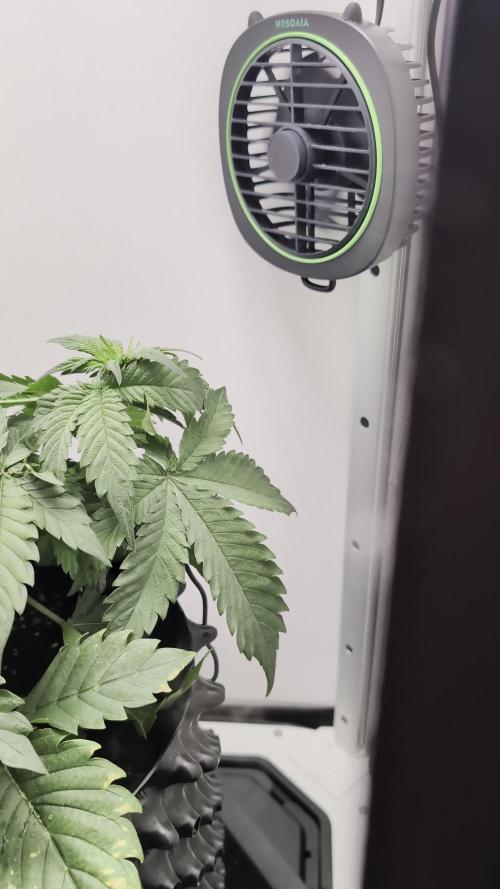
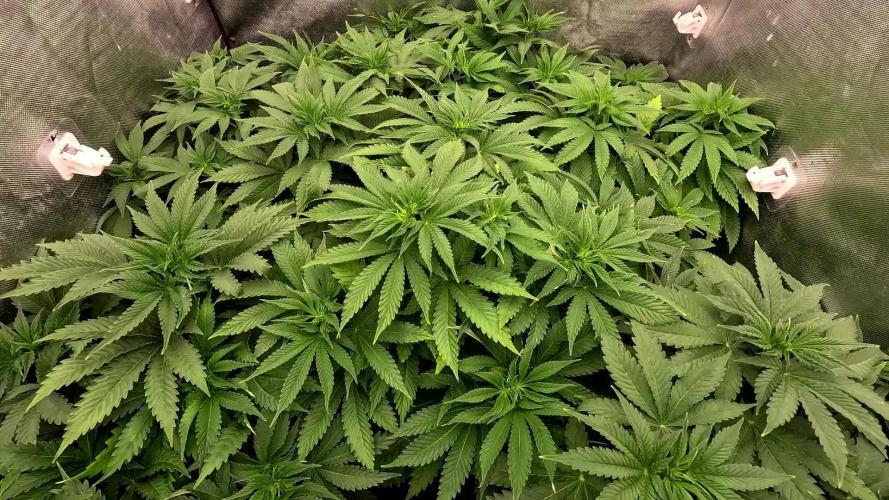
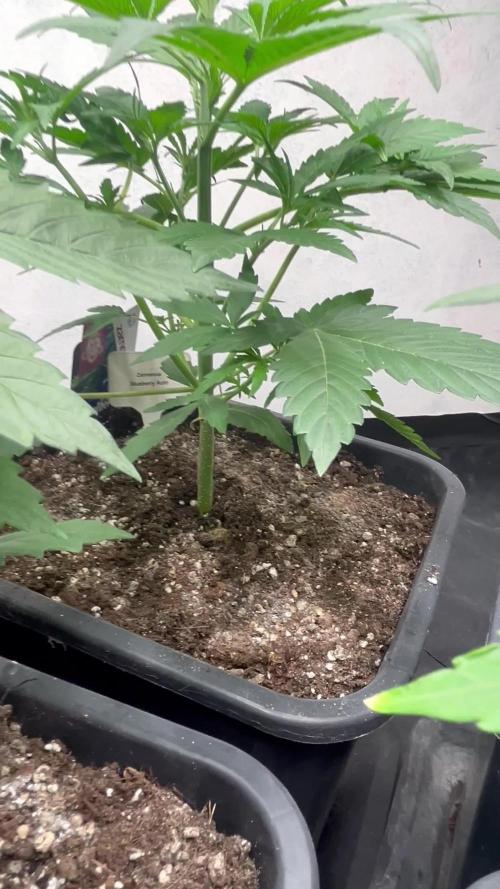
Starting my flush on this little beauty this week. #boom, I trimmed a few leafs around the stem area in the video I posted, check out the self LST on this girl so dam happy with this little project ✌️🌱✌️
Likes
5
Share
Jetzt entwickelt sie langsam ihr volles Profil. Der Wuchs ist richtig schΓΆn anzuschauen und erinnert mich ein wenig an die Pink Sunset von Silent Seeds. Nur die EinfΓ€rbung ist nicht so stark und bleibt eher im grΓΌnen Bereich πŸ˜„ Noch zwei Wochen bis zur Ernte. πŸ’šπŸ­πŸ‡
Likes
14
Share
She’s starting to stretch and flower nicely. I removed a few leaves for better light penetration. On day 29 another small defoliation day 34
Likes
12
Share
@Zsebi
Follow
Day 44 All the girls are blooming now. Today, I fertilized with bloom nutrients for the first time. Unfortunately, I’m currently traveling a lot, so there's less care. This weekend, I'll thin out the leaves again and train the branches. Day 48 Unfortunately, the girls have a small thrips problem. I will spray the plants with Coat Leaf from Biobizz over the next few days, and the issue should be resolved in about a week. Today, I also removed some leaves again to ensure more light reaches everywhere. Day 49 Today, they were watered again 2.5 liters per plant.
Processing
Likes
8
Share
Honestly got lost in some work these past few weeks, so sorry for the lack of posting. I have been super busy getting somethings together for a friends grow!
Processing
Likes
43
Share
START OF WEEK 4 FLOWERING. NUTRIENTS SAME 4 ML PER LITER RO WATER OF BOTH A & B. 2 ML PER LITER BIG BUD. MIXED UP 8 LITERS OF NUTRIENT SOLUTION --------------------------------------------------------------------------------------------------------- Day 64 April 18th - 2019 Both ladies had a little trim to get rid of thick interior. Day 64 April 18th - 2019 Both Jessica Rabbit & Elly May were fed 1.5 liters of nutrient mix. Day 64 April 18th - 2019 Temp in tent is @ 78.4Β° F. Day 64 April 18th - 2019 Humidity in tent is @ 51%. Day 64 April 18th - 2019 Jessica Rabbits Coco temp is @ 70.2Β° F. Day 64 April 18th - 2019 Elly Mays Coco temp is @ 70Β° F. --------------------------------------------------------------------------------------------------------- NOTE - Day 65 April 19th - 2019 The Lady in the coffee can is a clone from the Blue Cookies. The clone was 2 weeks old put in soil in the coffee can It was put in the tent straight to flower No Veg time at all the clump of leaves at the bottom was how tall it was. I have been feeding Her the same Nutrients I am using for Coco flowering with the Big Bud for Coco. --------------------------------------------------------------------------------------------------------- Day 65 April 19th - 2019 Both Ladies are looking good after their little trim. Day 65 April 19th - 2019 Temp in tent is @ 81.1Β° F. Day 65 April 19th - 2019 Humidity in tent is @ 55 %. Day 65 April 19th - 2019 Jessica Rabbits Coco temp is @ 71.8Β° F. Day 65 April 19th - 2019 Elly Mays Coco temp is @ 71.6Β° F. Day 66 April 20th - 2019 Ladies are looking good coming alone. Day 66 April 20th - 2019 Temp in tent is @ 79Β° F. Day 66 April 20th - 2019 Humidity in tent is @ 40 %. Day 66 April 20th - 2019 Jessica Rabbits Coco temp is @ 69.3Β° F. Day 66 April 20th - 2019 Elly Mays Coco temp is @ 69.4Β° F. --------------------------------------------------------------------------------------------------------- Day 67 April 21st - 2019 Both Ladies received 1 liter pre-mixed solution --------------------------------------------------------------------------------------------------------- Day 67 April 21st - 2019 The girls are looking fine. Day 67 April 21st - 2019 Temp in tent is @ 79Β° F. Day 67 April 21st - 2019 Humidity in tent is @ 47 %. Day 67 April 21st - 2019 Jessica Rabbits Coco temp is @ 70Β° F. Day 67 April 21st - 2019 Elly Mays Coco temp is @ 70Β° F. Day 68 April 22nd - 2019 Ladies are looking good no issues. Day 68 April 22nd - 2019 Temp in tent is @ 71.2Β° F. Day 68 April 22nd - 2019 Humidity in tent is @ 57 %. Day 68 April 22nd - 2019 Jessica Rabbits Coco temp is @ 67.6Β° F. Day 68 April 22nd - 2019 Elly Mays Coco temp is @ 66.6Β° F. Day 69 April 23rd - 2019 Both Ladies looking good. Day 69 April 23rd - 2019 Temp in tent is @ 69.4Β° F. Day 69 April 23rd - 2019 Humidity in tent is @ 61 %. Day 69 April 23rd - 2019 Jessica Rabbits Coco temp is @ 65.7Β° F. Day 69 April 23rd - 2019 Elly Mays Coco temp is @ 64.8Β° F. Day 70 April 24th - 2019 Both ladies are coming alone. Day 70 April 24th - 2019 Temp in tent is @ 67.1Β° F. Day 70 April 24th - 2019 Humidity in tent is @ 61 %. Day 70 April 24th - 2019 Jessica Rabbits Coco temp is @ 65.2Β° F Day 70 April 24th - 2019 Elly Mays Coco temp is @ 64.0Β° F.
Likes
6
Share
@KDcrew
Follow
In der 8 Woche schauen sie immer noch super aus die eine Gelato geht leicht ins lilaner aber denke mal so 2 Wochen noch wo ich sie KΓΆpfen kann
Likes
9
Share
Day 70 from seed Checked inside of some buds near the stem. Super compact and plump. No mold visible. Looked @ some trichomes. Some how the right one catched up, they both on track with like 10% ambers. Lower part of the plant is slightly behind, im waiting to chop so that part can develop a little more. Not gonna do a 48 hours darkness, the buds are way to dense to handle that humidity. 2 or 3 more days to chop suey! Also the blueberry autos are coming along well. When the Lemon Cherry Cookies are chopped i will start the blueberry diary. This time in autopot system with airdomes, coco + perlite (70/30) with living soil mix from Bionova. Got some new dry salts (powdered nutes) for these ladies that i want to try out in the late phase. Its gonna be fun!
Likes
2
Share
Blueberry Muffin – Pheno A Week 7 | Every Plant Has Its Own Pace Welcome back to another week of the 8Γ—8 Adventure! πŸ’šπŸŒ± If this is your first visit to the diary, welcome! This project follows twelve different cultivars growing together under exactly the same conditions. Every plant shares the same environment, lighting, irrigation system, nutrient solution and care. The only real variable is genetics, making this a fascinating opportunity to observe how each cultivar expresses itself when everything else remains constant. Blueberry Muffin Pheno A continues her journey under a strict 12/12 light schedule from seed, growing in a 15-litre AutoPot system beneath the Future of Grow Black Series LED, while being documented from germination through to harvest. One of the biggest lessons this project continues to teach is that no two plants read the same script. Some sprint ahead. Others take their time. Blueberry Muffin has clearly chosen the second option. ──────────────────────────── 🌸 Flower Development Flowering continues exactly as expected, although she remains one of the slower ladies in the room. The initial stretch is beginning to settle, while clusters of bright white pistils continue appearing across every flowering site. Buds are slowly beginning to define themselves, and although they aren't stacking aggressively yet, there is no doubt she has fully committed her energy to reproduction. At this stage I prefer to let the plants work without unnecessary interruptions. During the first two or three weeks of flowering they're busy redirecting energy from vegetative growth into flower production. Unless a plant truly needs intervention, I find it's often better to simply observe, let nature do its work and avoid creating unnecessary stress. Sometimes the best thing a grower can do... ...is nothing at all. ──────────────────────────── 🌿 Slowly Finding Her Colour Again Last week I mentioned that Blueberry Muffin was asking for a little more nutrition than some of her neighbours. That continues to be the case. She still isn't displaying the rich green colour I'd ultimately like to see, but the good news is that she's slowly responding. By the end of the week the foliage had noticeably improved, confirming that the adjustments are moving in the right direction. One of the challenges of running a room like this is that every plant shares the same reservoir. If this were a single-plant grow, I could tailor the nutrient solution specifically to her needs. But in a room containing twelve different genetics, the feeding programme has to serve the collective rather than the individual. Fortunately, the entire room reached the point where nutrient demand naturally increased this week, so the reservoir was adjusted accordingly. The increase wasn't made specifically for Blueberry Muffin, but it should help her continue recovering alongside the rest of the garden. Sometimes growing isn't about creating the perfect recipe for one plant. It's about finding the best balance for all of them. ──────────────────────────── 🌱 Structure & Personality Although she remains relatively compact compared to some of the other cultivars, Blueberry Muffin continues developing a very attractive structure. Her branches remain nicely spaced, the internodal distance is consistent, and light continues penetrating well throughout the canopy thanks to the gentle leaf management carried out during the vegetative stage. She's certainly not trying to be the biggest plant in the room. Instead, she's quietly building a neat framework that should support healthy flower development over the coming weeks. Not every champion announces themselves early. Some simply take a little longer to show what they're capable of. ──────────────────────────── 🌑️ Environment The flowering room continues running under stable conditions, allowing the plants to focus their energy on flower production. 🌑️ Day temperature: 29Β°C πŸŒ™ Night temperature: 25Β°C πŸ’§ Relative humidity: 60% πŸ₯₯ Root zone temperature: 21Β°C πŸ’¦ Nutrient solution temperature: 20.2Β°C βš—οΈ pH: 5.8 ⚑ EC: 1.95 mS/cm πŸ’¨ COβ‚‚: 693 ppm πŸ’‘ Light schedule: 12/12 Consistency remains one of the greatest allies during early flowering, and maintaining a stable environment helps every cultivar express its genetic potential as evenly as possible. ──────────────────────────── 🌱 Feeding The AutoPot system continues delivering fresh nutrient solution whenever required, allowing the root zone to remain consistently supplied throughout flowering. This week's reservoir consists of: Plagron Terra Bloom – 2 ml/L Plagron Sugar Royal – 1 ml/L Plagron Pure Zym – 1 ml/L Plagron Power Buds – 1 ml/L pH adjusted to 5.8 The increase to 2 ml/L of Terra Bloom reflects the overall nutritional demand of the room as flowering progresses. Blueberry Muffin appears to be benefiting from this adjustment, and I'll continue watching her closely over the coming weeks to see if her foliage continues returning to a deeper green. ──────────────────────────── πŸ“Έ Behind the Lens This week's photographs tell a story of patience. The flowers continue to develop steadily, fresh pistils cover every developing bud site, and the plant's elegant structure is becoming increasingly apparent. Perhaps the most interesting detail captured through the lens is the gradual improvement in leaf colour. It's subtle, but visible enough to suggest that she's beginning to settle into her new feeding regime. Photography often reveals progress that our eyes overlook during daily inspections. Looking back at previous weeks reminds me just how much can change in only a few days. ──────────────────────────── πŸ” Looking Ahead Over the next week I'll simply continue monitoring her progress without making unnecessary adjustments. I'm hoping to see the foliage continue regaining a richer green while the flowers begin putting more energy into stacking and bulking up. Blueberry Muffin may be taking her time... ...but that's perfectly fine. Every plant has its own rhythm, and one of the greatest lessons any grower can learn is knowing when to guideβ€”and when to simply let the plant write its own story. ──────────────────────────── πŸ’š Thank You As always, thank you so much to everyone following this journey. Whether you've been here since germination or have only recently discovered the diary, I truly appreciate every visit, every comment, every question and every shared experience. Watching these twelve cultivars grow side by side has become an incredible learning opportunity, and it's even more rewarding because it's shared with such an amazing community. A huge thank you to GrowDiaries for providing a platform where growers from around the world can document their experiences and continue learning together. To Zamnesia, thank you for the fantastic Blueberry Muffin genetics and for allowing us to explore how this cultivar expresses itself under a unique 12/12-from-seed approach. To Plagron, thank you for providing the nutrients and growing media that support these plants through every stage of their journey. And to Future of Grow LED, thank you for delivering the light that powers this entire project and helps every phenotype reveal its own unique character. Finally, thank you for being part of this adventure. Every photograph, every observation and every lesson becomes more meaningful because it's shared with this incredible community. Growers Love, and I'll see you all next week as Blueberry Muffin continues finding her own pace through flower. πŸ’šπŸŒ±
Likes
17
Share
@6ix6ix6ix
Follow
Week 6ix behind All week been struggling to solve the β€œmystery of yellow top” And β€œthe mystery of not flowering autos” Since both coco plants are not flowering in the same manner i ruled-out the possibility of them being genetically photos instead of autos. The possibility that i’d get 2 different strains to be with such a rare deviation is atomically small. For now have developed a plan and then decided to go a little sideways. First, reducing the EC to 1.3 stable instead of trying to push the plants to the limit. This means a little less that 1/2 of the recommended dosage by the producer. Second, going heavier on cal-mag Keep mimosa fed every day as she seems to devour everything and sit in a light pot. Another thought is iron deficiency but will see in due time if reducing EC and changing watering schedule doesnt help will go and find an iron supplement. And finally, if they dont flower i will switch them to 12/12 but this is last resort, i dont beleive they are photos. Thank you all for sharing your knowledge and beating your powerful minds with me to find a solution. Special thanks to @growinggrannie Stay tuned
Likes
13
Share
Today starting 1week flowering its seem all going in right way parameter its good Day 32 i think i have bug eat some leaf so i decide to use neem oil , i think i hace little bit nitrogen toxicity so tomorrow i will give only water Day 34 After i give only water plant its seem starting stay better,the nitrogen toxicity begins to decresce , the leaves beginsto look up and the Grow appears to accelerate Day 35 today i give only water again and ec output its fixing 1.7 so its not bad , next watering i will give half nute . Day 37 only water today again , plus i give vita race 5ml/l npk 0-5-8 for potsassium and phosporus by spray on leaves , i hope next one i will try give some nutes for flower stage
Likes
20
Share
I learned a bunch growing these plants and the harvest was well worth the effort it took. 300 watt actual power consumption for lights so I think I'll give this strain another run in the future. The smoke is smooth the smell is potent fruity with a touch of citrus. I dried to 67% then placed buds in a plastic bin for one week burping 4 times a day for 15 minutes then Jared at a humidity of 63% with 62% bΓ³veda packs for one week burping twice a day . After 10 days of I exchanged the 62% packs for 58% packs. Burns smooth and tastes great but I'm going to see what it tastes like in a couple more weeks.
Likes
8
Share
Hello everybody and welcome to my grow diaries. this week went really well I noticed with these new genetics that there are a lot hungry .so I started to feed them for their second feed 400 parts per million they seem to have reacted very well. I'm going to feed them every three days but today I will feed them 400 parts per million as well just to make sure that they're okay and they have adjusted well .I don't want to push them. Have learned from that . As I say things are going very well .I appreciate you looking at my diary there will be an update every week and you always have to keep in mind that is 420 somewhere πŸŒ±πŸ‘
Likes
3
Share
@Xabii
Follow
Plant was chugging in the last couple days as seen in raising EC and lowering PH but I found a single bud with mold in it so I removed it and and harvested on day 76 from sprout. One of the reasons I prefer longer stretched plants compared to small stubby ones is the bud size, they were grown so much in to one another that air flow was very restricted. Values are average of the day. DATE - EC(Β΅S/cm) 20250503 2002 20250504 2004 20250505 2062 20250506 2098 20250507 2149 20250508 2198 DATE - PH 20250503 5.59 20250504 5.71 20250505 5.65 20250506 5.57 20250507 5.49 20250508 5.42 DATE - ORP (mV) 20250503 104 20250504 90 20250505 75 20250506 70 20250507 68 20250508 67 DATE - Β°C - RH% (Tent Temp/RH) 20250503 24.2 53 20250504 22.6 55 20250505 22.2 56 20250506 22.6 57 20250507 22.3 55 20250508 22.1 52 DATE - Β°C (Reservoir) 20250503 22.2 20250504 20.8 20250505 20.0 20250506 20.4 20250507 20.3 20250508 20.0 DATE - CF 20250503 20.05 20250504 20.07 20250505 20.67 20250506 21.01 20250507 21.53 20250508 22.01
Likes
20
Share
You should smell it, that's the only thing I can't let you smell, otherwise I can show you the Do SI Dos F1 Hybrid from Zamnesia and you can see it with your own eyes. ** We remind you that we grew two plants per strain, one grown without the use of techniques (which you can find already harvested in the previous weeks) and this one worked with the main lining today. Technique Used // In this case we see the plant worked with the MAINLINING technique: we waited for the third internode and did TOPPING (you can also do it at the second to lengthen the vegetative phase in autoflowering plants, it's better); from this topping a MAINFOLDING was carried out by cleaning everything that was underneath in the underlying internodes and leaving only the two mini branches growing as a result of the first topping, the Mainfold precisely. We stole the two branches with the arches up to the third internode of each respective branch and we did TOPPING once again, from here the plant was left to grow directing it with LST as best we could. Better with the techniques or normal? It is a plant with a super low distance between internodes, this technique is not recommended, the plant is not very big but it has produced well anyway, the style is a bit bonsai but a bosai with nice flowers and a fair amount not really bonsai about 40-50 gr dry. Flower quality // The buds have resined really well you can see it in the macros at different distances there is a lot of resin well distributed. The flowers are also nice and hard and they look even a bit better than the plant left to grow straight. We washed the buds it is an essential thing this try to follow the guide of Zamnesia and you will see what flavor your buds! Check the article in your language // https://www.zamnesia.io/it/guida-coltivare-cannabis/333-lavaggio-delle-ceme Trichomes // Here we have an absolute majority of milky cloudy trichomes, still something transparent and something amber, it's not super ripe but that's fine for me. Feertilizers// I am very happy with how I managed to unload the plant that at a certain point before going flush was fed a few days only with additives and then went flush and we are discolored sufficiency. All the fertilizers and additives of Plagron in the green version / 100% organic have fully satisfied me. Choose your soil based on your style and calculate the sheet on the site www.plagron.com You can instead find the fertilizers in convenient all-inclusive packs on the Zamnesia site. Try a seed of this strain that drives us crazy.. ---- https://www.zamnesia.io/en/10664-zamnesia-seeds-do-si-dos-f1-automatic.html Zamnesia Description // By crossing Face Off OG and OG Kush Breath, Do-Si-Dos F1 Automatic was born. This autoflowering strain is extremely tasty and proves to be a very uniform and reliable plant in the grow room, suitable for beginners and experts alike. Designed to produce huge yields despite its small size, this is what Do-Si-Dos F1 Automatic has to offer. As mentioned, Do-Si-Dos F1 Automatic is an autoflowering strain that takes just 10 weeks to go from seed to harvest, requiring little care and attention. In addition to growing perfectly in the most diverse environments, Do-Si-Dos F1 Automatic has a high resistance to pests, diseases and other ailments. An excellent option for those who are still inexperienced with growing cannabis. Reaching heights of around 55–75cm, Do-Si-Dos F1 Automatic is perfect for growing in a small corner of a greenhouse, grow tent or as a guerrilla grow outdoors. The options are truly limitless with this strain. Once this plant is ready to harvest, growers will be looking at a harvest of around 550g/mΒ² indoors and 100–150g/plant outdoors. More than satisfactory yields for a strain that requires little maintenance, yet still provides great satisfaction. Music and Frequencies // For about 4/6 hours a day my plants listen to 432Hz frequencies made especially for their well-being and sometimes a bit of black music to give them those vibrations that only music can give. www.radionula.com All the best that mother nature has to offer is at ---- www.zamnesia.com
Likes
4
Share
RAW GROW is a tested blend of all 12 RAW Soluble plant nutrients, essential elements and supplements. This blend has been proven to be an optimal all-in-one base β€œGrow” horticultural fertilizer. RAW GROW is used through out the entire vegetative stage. Derived from: Plant protein hydrolysate, mono potassium phosphate, potassium sulfate, cane molasses, sodium borate, copper sulfate, iron DTPA, magnesium sulfate, manganese sulfate, zinc sulfate and azomite. Also contains non-plant food ingredients: Humic acids derived from leonardite and peat, kelp (ascophyllum nodosum), silicon dioxide derived from diatomite and yucca extract. When you overlap a copper wire to attract ions, it is called ion exchange. Copper wire is often used as a material for ion exchange because it has a high affinity for positively charged ions, such as copper, zinc, and nickel. When copper wire is overlapped or wound into a coil, it creates a surface area that attracts ions and allows them to bind to the wire or gather within the space. This process is used in various applications, such as electroplating, water treatment, chemical separation processes and cultivation. Electrolysis is a chemical process that involves passing an electric current through a liquid or solution containing ions. This process causes the ions to migrate towards the electrodes, where they undergo a chemical reaction. In the context of plant growth, electrolysis is used to increase the availability of your nutrient-rich solution that can be used to feed plants. Electrolysis and nutrient rich reservoirs work well together since your cannabis nutrients are salt based. The process involves passing an electric current through a solution of water and plant nutrients, which causes the water molecules to break down into their constituent parts, hydrogen, and oxygen. The hydrogen ions (H+) then combine with the nutrients in the solution to form a nutrient-rich substance that can be absorbed by the plant roots easier. This will only work in a nutrient rich solution as it requires the salt-based nutrients to engage. This process, known as hydrolysis, provides the plant with a continuous supply of nutrients and oxygen, which can help to increase plant growth and improve yields. By providing the plant with a more efficient method of absorbing nutrients, electrolysis can help to increase the uptake of essential elements such as nitrogen, phosphorus, and potassium. Additionally, electrolysis can help to maintain the pH balance of the growing medium, which is essential for optimal plant growth. One of the key advantages of using electrolysis to increase plant growth is that it allows for greater control over the growing system. This is exactly why this is generally a technique reserved for advanced hydroponics growers. By adjusting the voltage and current levels, cultivators can custom control the nutrient concentration and pH level of the solution, ensuring that the plant receives the optimal amount of nutrients sitting perfectly on potential hydrogen spectrum. Carotenoids absorb light in the blue-green range of the visible spectrum, complementing chlorophyll's absorption in the red range. Carotenoids protect photosynthetic machinery from excess light. They deactivate singlet oxygen, which is a harmful oxidant formed during photosynthesis. Carotenoids quench triplet chlorophyll, which can be harmful to photosynthesis. Carotenoids scavenge reactive oxygen species (ROS), which can damage cell membranes and proteins. Carotenoid derivatives signal plant development and responses to environmental cues. Carotenoids provide precursors for the biosynthesis of phytohormones like abscisic acid (ABA) and strigolactones (SLs). Carotenoids are pigments that give fruits and vegetables their orange, red, and yellow colors. They also act as free radical scavengers to protect plants during photosynthesis. Beta-carotene is the most common provitamin A carotenoid. It's found in orange and yellow fruits and vegetables like carrots, sweet potatoes, and mangos. Other carotenoids include lycopene, lutein, and zeaxanthin. These carotenoids have antioxidant and photoprotective properties. In plants, Vitamin A is found as carotenoids, which are pigments that give plants their color. Vitamin A is a fat-soluble vitamin. Vitamin B plays a vital role in plant growth and development. It acts as a coenzyme in many metabolic reactions, which are the basis for plant growth and maintenance. Vitamin B helps plants metabolize nutrients, which are essential for growth and development. Vitamin B helps plants respond to biotic and abiotic stress. Vitamin B can help plants grow new roots, which can reduce transplant shock. Vitamin B can help plants grow shoots, especially slow-growing plants. Vitamin B1 Also known as thiamine diphosphate, vitamin B1 is a key component of metabolic pathways like glycolysis and the tricarboxylic acid cycle. Vitamin B3 Also known as nicotinamide or niacin, vitamin B3 is a biostimulant that can improve plant growth and yield. Vitamin B6 Vitamin B6 acts as an antioxidant and cofactor, and is involved in plant stress responses. Vitamin C, also known as ascorbic acid, is a vital nutrient for plants that helps with growth and protects them from excess light. Vitamin C acts as a redox buffer, which is important for regulating photosynthesis. Vitamin C helps enzymes that regulate photosynthesis, hormone production, and regenerating antioxidants. Vitamin C is a coenzyme in the xanthophyll cycle, which converts excess energy into heat. This process helps plants protect themselves from too much light. seedlings to young plants can feed on 200-400 PPM, Teenage plants that have a maturing root zone can feed on 350-550 PPM and adults will feed 600-1000 PPM. The more you feed plants and watch them grow you'll get a feel for how much to give them. Less is more when trying to grasp this. High level of CEC in organic soil so I'm watering 5-gallon