Check the winners The Grow Awards 2026 🏆
Processing
Likes
Comments
Share
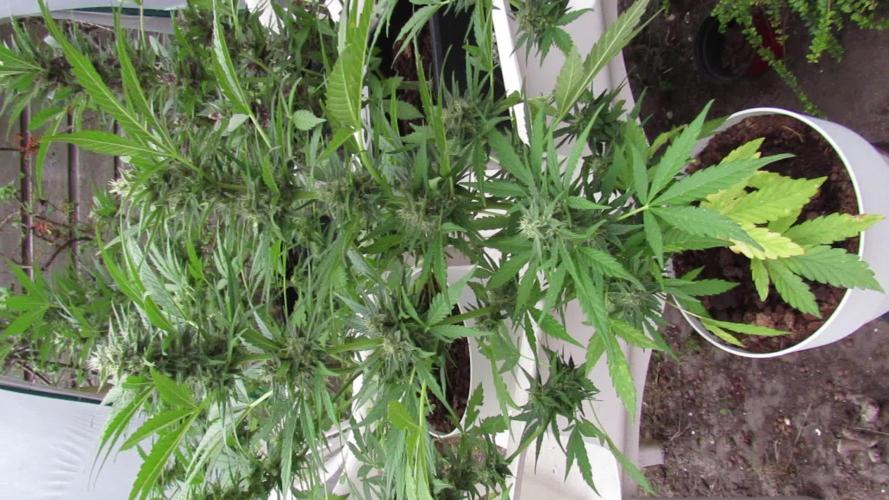
Desgraciadamente el cultivo se quedó estancado en altura y demás. Estoy decepcionado pero la próxima saldrá mejor, no haré tantas podas y quizás cultive automáticas para cosechar rápido
Likes
Comments
Share
Processing
Likes
76
Share
MY WEED SMELLS LIKE WEED. Filling the room, creeping through the apt, what a glorious time. No major smell worries where I am so I'm just enjoying the atmosphere. 😍 On to Backbuilding/Bud Tipping. (Shoot me any advice on this down below!) I experimented back mid-week with 3 tipped buds that had similar control buds side-by-side. After 4 days there is a noticeable difference in density and bud structure in the 3 tipped buds compared to the very fluffy and softer buds next to them. No overall size difference but the tipped buds are rock hard and filling in gaps down the cola compared to the untipped buds. A light squeeze on both a tipped bud and untipped will tell you the difference right there. Happy with the results after seeing them for myself and lucky enough to find this technique at the end of week 4, I tipped majority of the main colas on Danny and some larger buds on Arnold today. Which means I also get what OG growers call a "First Taste" once my tips dry out and cure for a few days. 😛 Other than tipping, I've just had to keep up with Arnold's feedings since lower leaves are still fading if I skip mineral nute feedings. Looks like they will be getting only PH Perfect and/or Molasses feedings until the final flush since they can't get enough food in the ProMix medium. I've still had constant defoliation during to avoid leaf overlap and light blockage. Since I'm now entering week 5 of flower I'll have to get it where I want in the next couple days and go hands off for the last month or so. Thanks for checking out my grow! Follow along as we're getting to the good part and I'll update again this week once the tipping sets in 💪 MID-WEEK UPDATE: Random Heat/Humidity wave in Southern Ontario so I'm keeping a close eye on the buds after dark periods. Keeping air moving well so far so hopefully I can avoid mold/mildew in last few weeks. Twins are looking good. Arnold still super hungry so I've upped the nutes a tad and skipped plain water feeding until the flush. Just fed them PH Perfect/Molasses cocktail. Big Arnold on the right is definitely rootbound by how the water is draining so I'm looking at a lower yield from the right plant. I get run off from small Danny during a regular feed but takes a lot more to get any from Arnold and I don't want to overwater in this random heat/humidity wave. The Backbuilding/BudTipping is working like a charm. The tipped buds are filling down and way more dense than the untipped. Popped the SoundLink in the tent today to give the twins some music while I go about my business. PLANT PLAYLIST: Vulfpeck - Mr Finish Line Anderson Paak - Ventura Prince - Purple Rain Remastered Unless anything crazy happens I'll update at start of week 6 flower. Thanks for stopping by, liking, following, what-have-you 😃
Likes
7
Share
Likes
47
Share
2nd net is up. Early bud formations are promising. holding up to the extremes pretty well, some leaves taking minor damage, but overall, she is holding up, gave her 1 night at 50F see how she would react, stressful. Not advised as it messes with her metabolism, but I want to see if it triggers any anthocyanin response. Love to see her purp up but no signs yet. Remember, For every molecule of glucose produced during photosynthesis, a plant needs to split six molecules of water. This process provides the hydrogen needed for synthesizing glucose and other organic compounds, while oxygen is released as a byproduct. Homework. If Rubisco activity is impaired and it cannot properly function or regenerate its substrate, the plant's leaves are likely to turn a pale green or lime green, a condition known as chlorosis. Essentially, Rubisco activity is highly regulated and susceptible to various environmental and metabolic factors that can cause it to become inhibited, leading to an apparent failure in RuBP regeneration due to a lack of consumption. Rubisco regeneration is intrinsically linked to nitrogen supply because Rubisco is a major sink for nitrogen in plants, typically accounting for 15% to over 25% of total leaf nitrogen. The regeneration phase itself consumes nitrogen through the synthesis of the Rubisco enzyme and associated proteins (like Rubisco activase), and overall nitrogen status heavily influences the efficiency of RuBP regeneration. RuBisCO is a very large enzyme that constitutes a significant proportion (up to 50%) of leaf soluble protein and requires large investments in nitrogen. Insufficient nitrogen supply limits the plant's ability to produce adequate amounts of RuBisCO, thereby limiting the overall capacity for photosynthesis and carbon fixation. Maintaining the optimal, slightly alkaline pH is crucial for the proper function and regeneration of Rubisco. Deviations in either direction (too high or too low) disrupt the enzyme's structure, activation state, and interaction with its substrates, leading to decreased activity and impaired RuBP regeneration. (Lime/yellowing) Structural Component: Nitrogen is an essential building block for all proteins, and the sheer abundance of the Rubisco protein makes it the single largest storage of nitrogen in the leaf. Synthesis and Activity: Adequate nitrogen supply is crucial for the synthesis and maintenance of sufficient Rubisco enzyme and Rubisco activase (Rca), the regulatory protein responsible for maintaining Rubisco's active state. Nitrogen deficiency leads to a decrease in the content and activity of both Rubisco and Rca, which in turn limits the maximum carboxylation rate, Vmax, and the rate of RuBP regeneration Jmax, thus reducing overall photosynthetic capacity. Nitrogen Storage and Remobilization: Rubisco can act as a temporary nitrogen storage protein, which is degraded to remobilize nitrogen to other growing parts of the plant, especially under conditions of nitrogen deficiency or senescence. Nitrogen Use Efficiency (NUE): The allocation of nitrogen to Rubisco is a key determinant of a plant's photosynthetic nitrogen use efficiency (PNUE). In high-nitrogen conditions, plants may accumulate a surplus of Rubisco, which may not be fully activated, leading to a lower PNUE. Optimizing the amount and activity of Rubisco relative to nitrogen availability is a target for improving crop NUE. Photorespiration and Nitrogen Metabolism: Nitrogen metabolism is also linked to the photorespiration pathway (which competes with carboxylation at the Rubisco active site), particularly in the reassimilation of ammonia released during the process. To increase RuBisCO regeneration, which refers to the process of forming the CO2 acceptor molecule Ribulose-1,5-bisphosphate (RuBP) during photosynthesis, the primary methods involve optimizing the levels and activity of Rubisco activase (Rca) and enhancing the performance of other Calvin-Benson-Bassham (CBB) cycle enzymes. Biochemical and Environmental Approaches: Optimize Rubisco Activase (Rca) activity: Rca is a crucial chaperone protein that removes inhibitory sugar phosphates, such as CA1P (2-carboxy-D-arabinitol 1-phosphate), from the Rubisco active site, thus maintaining its catalytic competence. •Ensure optimal light conditions: Rca is light-activated via the chloroplast's redox status. Adequate light intensity ensures Rca can effectively maintain Rubisco in its active, carbamylated state. •Maintain optimal temperature: Rca is highly temperature-sensitive and can become unstable at moderately high temperatures (e.g., above 35°C/95F° in many C3 plants), which decreases its ability to activate Rubisco. Maintaining temperatures within the optimal range for a specific plant species is important. •Optimize Mg2+ concentration: Mg2+ is a key cofactor for both Rubisco carbamylation and Rca activity. In the light, Mg2+ concentration in the chloroplast stroma increases, promoting activation. •Manage ATP/ADP ratio: Rca activity depends on ATP hydrolysis and is inhibited by ADP. Conditions that maintain a high ATP/ADP ratio in the chloroplast stroma favor Rca activity. Enhance Calvin-Benson-Bassham (CBB) cycle enzyme activity: The overall rate of RuBP regeneration can be limited by other enzymes in the cycle. •Increase SBPase activity: Sedoheptulose-1,7-bisphosphatase (SBPase) is a key regulatory enzyme in the regeneration pathway, and increasing its activity can enhance RuBP regeneration and overall photosynthesis. •Optimize other enzymes: Overexpression of other CBB cycle enzymes such as fructose-1,6-bisphosphate aldolase (FBA) and triose phosphate isomerase (TPI) can also help to balance the metabolic flux and improve RuBP regeneration capacity. Magnesium ions, Mg2+, are specifically required for Rubisco activation because the cation plays a critical structural and chemical role in forming the active site: A specific lysine residue in the active site must be carbamylated by a CO2 molecule to activate the enzyme. The resulting negatively charged carbamyl group then facilitates the binding of the positively charged Mg2+ion. While other divalent metal ions like Mn2+ can bind to Rubisco, they alter the enzyme's substrate specificity and lead to dramatically lower activity or a higher rate of the non-productive oxygenation reaction compared to Mg2+, making them biologically unfavorable in the context of efficient carbon fixation. The concentration of Mg2+ in the chloroplast stroma naturally increases in the light due to ion potential balancing during ATP synthesis, providing a physiological mechanism to ensure the enzyme is activated when photosynthesis is possible. At the center of the porphyrin ring, nestled within its nitrogen atoms, is a Magnesium ion (Mg2+). This magnesium ion is crucial for the function of chlorophyll, and without it, the pigment cannot effectively capture and transfer light energy. Mg acts as a cofactor: Mg2+ binds to Rubisco after an activator CO2 molecule, forming a catalytically competent complex (Enzyme-CO2-Mg2+). High light + CO2) increases demand: Under high light (60 DLI is a very high intensity, potentially saturating) and high CO2, the plant's capacity for photosynthesis is high, and thus the demand for activated Rubisco and the necessary Mg2+ cofactor increases. Mg deficiency becomes limiting: If Mg2+ is deficient under these conditions, the higher levels of Rubisco and Rubisco activase produced cannot be fully activated, leading to lower photosynthetic rates and potential photo-oxidative damage. Optimal range: Studies show that adequate Mg2+ application can enhance Rubisco activation and stabilize net photosynthetic rates under stress conditions, but the required concentration is specific to the experimental setup. Monitoring is key: The most effective approach in a controlled environment is to monitor the plant's physiological responses e.g., leaf Mg2+ concentration, photosynthetic rate, Rubisco activation state, and adjust the nutrient solution/fertilizer to maintain adequate levels, rather than supplementing a fixed "extra" amount. In practice, this means ensuring that Mg2+ is not a limiting factor in the plant's standard nutrient solution when pushing the limits with high light and CO2. Applying Mg2+ through foliar spray is beneficial to Rubisco regeneration, particularly in alleviating the negative effects of magnesium (Mg) deficiency and high-temperature stress (HTS). While Mg can be leached from soil, within the plant it is considered a mobile nutrient, particularly in the phloem. Foliar-applied Mg is quickly absorbed by the leaves and can be translocate to other plant parts, including new growth and sink organs. Foliar application of: NATURES VERY OWN MgSO4 @ 15.0g L-1 in a spray bottle. For those high-intensity workouts when 1 meal a day is just not enough! Foliar sprays are often recommended as a rapid rescue measure for existing deficiencies or as a supplement during critical growth stages, when demand for Mg is high. Application in the early morning or late evening can improve absorption and prevent leaf burn. The plant was getting a little limey yellow in the centre. Shortly thereafter, she was back in business, green mostly regenerated. The starting point [of creativity] is curiosity: pondering why the default exists in the first place. We’re driven to question defaults when we experience vuja de, the opposite of déjà vu. Déjà vu occurs when we encounter something new, but it feels as if we’ve seen it before. Vuja de is the reverse—we face something familiar, but we see it with a fresh perspective that enables us to gain new insights into old problems. Confidence is evidence... nothing more. You are confident because you have driven 10,000 times, you are confident because you have spoken 10,000 times. People think confidence is a feeling, but it's not. If you want more confidence, then you need to create evidence, take more shots, collect more data, build more experiences, take more risks; fail, confidence doesn't come first; it is the reward you get for doing the work. no one else wants to do.
Likes
23
Share
@Chi_K24
Follow
Hey folks, Late update this week due to a big rain store we had last Friday. It called for 5mm of rain which equated to about 3.6L of water for each plant! A bit much for young plants with a small root system, but the good news is that the smart fabric pots did thier job to help dry out the soil. Since our last update, I have topped and defoilaited the damaged leafs from my f$%# up last week. Girls are healthy and show no signs of slowing down. I also started some basic LST with 3D printed plastic clips! They work great and I will be modifying them a bit to provide me more angle selection. If you guys wanna know more about these clips please let me know. Other than rotating the pots and doing some regular maintenance, everything looks good, gnat traps are up and so far there are no signs of them which I credit keeping the topsoil dry. I have not water the plants and it is calling for rain tonight into Thursday, so it seems like mother nature is doing God's works of water my plants for me :). I hope you guys enjoy the update, see you on the next one!
Likes
7
Share
Autos transferred to 1gl pots.. Looking good so far.. Going into 4 weeks and soon ready for LST. 🌱🎋
Likes
3
Share
Finishing up this week. Started flush and will be chopping at 8.5 weeks. Had to tie up all the mains to keep from flopping over. Smells amazing.
Likes
13
Share
@Canadian
Follow
I will continue to update once they are dry and ready for cure . I have cut down in jar everything the wait was 114 grams please consider that when it comes to my weight I wait until the main stem breaks with a loud crunch and the buds are really dry to the touch reason for it I have a very busy life and at the end of the day this is just a hobby so I cannot be opening those jars many times a day at most one in the morning and one in the night so I want to avoid mold on them so I push in a Boveda pack to keep them nice . I will update with flavours and other details once I try it I've I have been smoking a different strain that I will review today . After 4 weeks curing in jars the smoke it is very smooth very nice taste like tropical citrusy with a hint of skunk buds are very smelly and hybrid density to them very enjoyable to have . thank you for reading have a happy grow
Likes
40
Share
Dear Growers , Welcome to Veg week 3 Day 19-28 from Kannabia Lemon Haze Auto . Whether you're a beginner or an expert, you are warmly invited to join, ask questions, and share your own experiences along the way! Project Setup & Conditions: • Brand/Manufacturer: Kannabia Seeds • Tent: 222cmx150cmx150cm • Light: 2x 720 Watt Full Spectrum • Humidity: 50% • Soil: Narcos Organix Mix • Nutrients: Narcos Products • pH Value: 6 If you want Germinitation results like mine , check out Kannabia Seeds with my link [https://www.kannabia.com/de?ref=61966] and grab the germination device or the strains I used . Trust me – it’s worth it for sure ! Get another 20% Discount at all products using the code [GGD] at the checkout. Congratulations on Your Own Projects! We celebrate your growth, your creativity, and the passion you bring to the table. It’s truly inspiring to witness at Each visit . Stay curious and keep up Growing —we look forward to welcoming you back for the next chapter soon!
Likes
47
Share
@Mz876
Follow
Week 6 since flipping to Flower 🌺
Likes
Comments
Share
@Comfrey
Follow
23.-30.07. Die Woche verging wie im Fluge. Strawberry Haze Auto duftet mittlerweile sehr fruchtig mit Zitrusnoten. Die Blüten schwellen nach einem krassen Stretch an. Das intensive LST und das Entfernen störender Blätter hat dazu geführt, dass die Blüten sehr gleichmäßig Sonnenlicht bekommen und später in der Blüte die Luft gut zirkulieren kann. Zwei Tage der Woche standen die Pflanzen unter der Markise, es hat über Stunden heftig geregnet. Das Gießen läuft wie gewohnt nach Gefühl. An heißen Sonnentagen bis zu 1,5 Liter.
Likes
8
Share
Pictures are from Day 91. Top Gun 2 is coming to the finish line, the whole tent reeks and starting to see good amounts of amber, although the buds aren’t as solid as I was hoping for. I could harvest as soon as today. This grow has been another great experience of learning about these awesome plants. Please also check out my gorilla cookies grow that went alongside these two topguns. Thanks!