





@The_Chef_420
Volgen
I can't believe how big she has gotten for surviving in just a solo cup! Kinda opens doors in my mind on ideas for gorilla grows at low cost (only takes 1gal to run vs 3+ in a normal dwc bucket). I'll be honest and admit I've made the biggest rookie mistake and overfed, I knew I was really pushing her and wanting to see how far I could actually take her and burnt her tips in the process. The new growth is still green at the tips by the buds which is promising. I lowered her nutrient uptake slightly by 1ml for each base nutrient and gave a little less than 1/8 tsp of bloom booster. She got pretty tall and therefore top heavy, so the one afternoon I checked her and she was tipped over but no breakages, which was awesome. I tied her to the ceiling of the tent and now she is going nowhere. Been removing lower leaves and small growth that isn't showing sex yet. Once the colas have pre-flowers I remove all lowers that don't to help send energy upwards. I'm still seeing evidence of what I believe is rust fungus, though its growth has become much less noticeable than a few weeks ago.


@m0use
Volgen
SPONSORED DIARY===SPONSORED DIARY===SPONSORED DIARY
TRANSPLANT #3 THIS WEEK!!!!
Big week, did the last transplant of the grow before she enters flower. I decided to skip out on the 3gal and upgraded to a 4.97 or 5gal container. The plastic is cheep and looks like it was going to break but its all the grow store had in stock at the time. Was talking to them about going from a 2gal to 3gal and how it did not do much for the plant but stress it out. They also gave me a free sample of a bokashi fertilizer, I divided that in between the two plants. It looks identical to the regular non fertilizer branded bokashi, and I feel its the same but with a mist of NPK on it or something.
Plants are doing well, Dynomyco had a slighter bigger root ball upon transplant and the plant its self is a tiny bit more robust. Given all the other soil boosters and microorganisms I have added into this, I don't feel I will see the true potential of just Dynomyco vs soil nothing else added. I just can't not add the others as it feel like a massive step backwards and end of day a big healthy plant is worth it. This diary may not have massive contrast in favour of Dynomyco but I will still use it none the less and I think its helps plus its not over just yet.
Would love to hear what y'all think about this, hit me up in the comments and I'd try and get back to yea as fast as I can.
I like how the dead Blue Cindy plant looks like a biophage, sifi like alien thing.
SPONSORED DIARY===SPONSORED DIARY===SPONSORED DIARY
This is my diary entry into the Dynomyco Show Us What You Got Contest!
#DynomycoShowUsWhatYouGot!
@DynomycoShowUsWhatYouGot!
@Dynomyco
Big Shoutout to @Dynomyco for picking me in their contest. Happy to be involved and as a user of Dynomyco I am curious to see this side by side with my own eyes. I will be honest I am a little skeptical it will show any major differences. but we will see what happens. Some disclaimers, I am still using LABS serum I made, This is also beneficial to the root mass however it's a bacteria based product and not fungal or mycorrhizae like Dynomyco.
https://growdiaries.com/giveaways/DYNOMYCO_Show_Us_What_You_Got


@Chumpkilla
Volgen
11/20/23 - Day 14 - Today the box flipped to Veg state. I made the decision in the software yesterday, its take effect the next day at the light on schedule.
The system will do a couple of things now that it's in Vegetative mode.
Lights will remain at 18Hrs On/6hours Off, however the intensity will slowly creep from 30% intensity to 100% within a couple of days.
Air Temp will remain the same at 79deg. F
Humidity will go down to 50%
Water temp and PH will remain the same, 64.5deg. F and 6.0Ph
Because I have it all hooked up for Auto water. It started the first video about 1 min after lights on. It drained the water, refilled it. After it refilled it, it turned on the air stone, started the water temp cool down, and it slowly over the next 30 minutes delivered nutes, and finished it off with balancing the PH. All of this was done on its own. I DID NOTHING. Other than verify because why not. I sat back and watched the system work.
This time around with everything hook up for auto I really am not doing much. The hardest part of this grow so far is not opening the door while the light is off.
the rest of the week I don't expect to do much. I will update daily with pictures and things that I am noticing.
This is an Auto strain. I am a little worried about growing an Auto in this box. usually, I can control the growth utilizing the lights because I'm space limited. This time the plants going to flip to flower on its own. I'll need to make sure I am training and cropping early on.
11/24/23 - Day 18 - Everything is starting to get aggressive in there. I say that because the new nodes are growing out of new nodes on the top. It's like its packed full of plant and it all wants to come out at the same time. The leaves have more serrated Leafs than I have seen on any of the other strains I have grown. Ill post a picture of the last time I grew this strain. I did it in Coco Coir. It will be cool to see the differences.
11/25/23 - Day 19 - The Leaves are all reaching up, and the plant is growing so fast! Its such a bushy plant.


@Oldwied
Volgen
18h in 0,5% H2O2.
Soil:
The living soil was from Dope soil.
The soil was used for one grow and
keep alive over 5 months.
1 month ago i gave some new compost (5L) a new mulch cover.
Compost tea 900 mL compost + 10 L rain water, brewed for 18h.


@alexb420
Volgen
probably won’t work with these for a bit. BUT was fun to grow something out and soon i’ll be able to try it out.


@Buddyman75
Volgen
They're fattening up pretty well.
I didn't do anything different than last week as far as nutrient levels.
They really like to eat.
I'm growing with 100w less light for this grow so the outer corner plants are suffering a little but still good. 💪🏾


@Saintvicious
Volgen
Flower stretch and bud sites are setting. Lots of tops from the lst. Fingers crossed.


@DogDoctorOfficial
Volgen
Greetings, fellow cultivators!
Week one in the flowering phase of the Pink Rozay journey, and let me tell you, the transition has been nothing short of spectacular. After a meticulous mass defoliation, our queen has officially entered the blooming stage, and I'm here to share the mesmerizing details.
The room underwent a dramatic transformation as I bid farewell to excess foliage, making way for the buds to bask in the full glory of the LED's captivating spectrum. The Future Of Grow 600W full spectrum LED continues to be a star performer, painting the room with hues that seem to coax the Pink Rozay into a rhythmic dance of flowering splendor. The spectrum's influence on the plant's reaction is truly a testament to the power of tailored light.
Adding another layer of TLC, I treated our budding beauty to a foliar spray of Aptus Holland's NutriSpray. This elixir, rich with organic surfactants and a symphony of microelements like Manganese, Sulphur, Zinc, and Iron, acted like a botanical spa day. It's amazing how a touch of NutriSpray can create an aura of vitality and ensure that the Pink Rozay is soaking up every bit of goodness.
As the floral orchestra began to play, it was time to fine-tune the nutrient symphony. I bid adieu to Startbooster and welcomed Topbooster to the stage. Topbooster, a delightful blend of bloom and maturation stimulation, is the secret ingredient to amplify the Pink Rozay's natural rhythms. 100% organic, it's like giving the plant a gentle nudge to produce larger, more resinous, and sweeter fruits. It's a sensory journey that promises not just quantity but a celebration of enhanced flavors and appearances.
In tandem with this transition, Aptus Holland's P-Boost joined the nutrient lineup. A phosphorus powerhouse that doesn't leave residues, P-Boost is a solubility maestro. Enriched with organic acids, it not only propels blooming processes but also acts as a pH harmonizer in the nutrient mix. It's an organo-mineral maestro, stimulating the production of proteins, plant hormones, and vitamins.
The Pink Rozay is now in the capable hands of these nutrient virtuosos, poised for a flourishing flower show. The dance has just begun, and I'm thrilled to witness the symphony of petals and fragrances unfold.
A heartfelt thanks to Aptus Holland for their nutrient mastery and to Future Of Grow for illuminating this flowering spectacle. The Pink Rozay saga continues, and I'm grateful to have you all on this journey.
As always, a massive shout-out to Aptus Holland for being the backbone of this green adventure, and to Future Of Grow for providing the perfect illumination for Pink Rozay's stage.
Stay tuned, fellow growers, as we venture into the enchanting world of flowering. The Pink Rozay saga continues, and I'm thrilled to have you all along for the ride.
Genetics -Pink Rozay @zamnesiaseeds
https://www.zamnesia.com/7646-zamnesia-seeds-pink-rozay.html
Nutrition - @aptusholland
https://aptus-holland.com/
Led Power @ F.O.G. Future Of Grow
https://www.thefuturofgrow.com/en/online-store/BLACK-SERIES-600-p489093171
As always thank you all for stopping by, for the love and for it all , this journey of mine wold just not be the same without you guys, the love and support is very much appreciated and i fell honored and blessed with you all in my life
With true love comes happiness Always believe in your self and always do things expecting nothing and with an open heart , be a giver and the universe will give back to you in ways you could not even imagine so <3 <3 <3
Friendly reminder all you see here is pure research and for educational purposes only
Growers Love To you All <3 <3 <3


@CaptainKurryKush
Volgen
Day 42 - I swapped the plant side and trained them a bit. I also did one last cleaning on the lower buds spots, which it wouldn't get enough light.
Day 43 - The plants were heavily defoliated, the one on the left side more than the other. I also watered them a bit more this week.


@Troll60x60
Volgen
Esta es la semana actual en la que me encuentro, con plantas recuperadas del súper cropping (cayos formados), se sigue utilizando en menor intensidad para mantener la altura del cultivo, el riego aumento en 300ml, raíces ya más fortificadas y cogollos más grandes, el crecimiento ya es mucho más notorio, seguimos aplicando floración B y engorde C.
Recordar la poda de hojas que obstaculizan la luz.


@coolesrat
Volgen
Still swelling but starting to slow down and swagger. It's kolas are becoming so large that it's really starting to weight down the plants small height and stature.
Trying to get away with not holding it up but I will see how the further biggest kola starts to lower more how it'll end.
I'm starting to lower the feed and get ready for the last 3-4 weeks I'll be giving these plants.
Some more foliage will be removed eventually in the coming weeks and also I'll start to change the feed up a little.
You can really see the difference in the two phenos. One's a lot like a leafy gelato and the other is OG all the way with great dense kolas. I'm expecting the Gelato type pheno to take 9-10 weeks and the OG one seems to be showing it's age more rapidly with it's pistil development and colour change beginning to start while the other seems untouched and continues to shoot newer whiter pistils!




@GREENPHOENIX6262
Volgen
06/13 - Flipped into flower - today will be "DAY 1" of flower (Pre-flower) - I will feed only clean water for about a week to remove any excess veg nuts and salt accumulation - I will introduce flower nutes in about 2 weeks starting with with low dosage flower fuel, phosphate and potassium, as the weeks progress I will add more nutrient components. Feeding program will continue on the Vivosun drip emitter and a Exhale C02 bag will be added to the tent as well.
06/15 - Day 2 of pre-flower so much going on - still just clean water feeds until next week - I would like to bring down with salt build up from the veg feeds and as well bring down the EC/PPM values just a bit before introducing the flower nutrients - I will be picking up the lights about 4 to 5 inches as it stands the out main colas are only about 4 inches away from the touching the light and I would like to negate li




@Ultraviolet_
Volgen
Topped once, turned off IR @ nights, slowed vertical growth back down, and took off both of the very lowest internodes on each plant.
Eisenia fetida
Stratiolaelaps scimitus
Armadillidium vulgare
Red wigglers (Eisenia fetida) are highly beneficial. They are considered an ideal choice for "no-till" or container-based organic growing because they live in the upper layers of soil, feeding on organic mulch rather than the plant's root system. Red wigglers accelerate the breakdown of organic amendments and produce high-quality, nutrient-dense worm castings directly in the root zone. Clover is another exceptional component of an organic rhizosphere, offering a sustainable, self-sustaining alternative to synthetic nitrogen fertilizers produced via the energy-intensive Haber-Bosch process. By forming a symbiotic relationship with Rhizobia bacteria, clover converts atmospheric nitrogen N2 into ammonium NH4, providing a steady, slow-release nutrient source that enhances soil health and reduces environmental impacts. Red clover offers superior nitrogen fixation and biomass production compared to white or yellow clover, making it the premier choice for maximum soil vitality, particularly for improving soil structure and providing a high-volume nitrogen credit for subsequent crops.
If it is fully functional and efficient soil, the rhizophagy cycle is superior long-term than any synthetic delivery when it comes to preventing deficiencies, not because it's "better," per se. The medium will require a very high CEC to make it to harvest without re-fertilization. The rhizosphere acts as a dynamic, interactive exchange where plants and soil microbes trade resources based on immediate needs. When a plant lacks a specific nutrient, it changes its physiology and releases specialized chemical cocktails—root exudates—into the surrounding soil. These exudates, which include sugars, amino acids, and organic acids, serve as a "shopping list" to attract specific microorganisms, which in turn return higher levels of desired nutrients. There is nothing in comparison when using synthetic delivery, which can cause plants to stop producing exudates, effectively "starving" the beneficial soil life, over time turning the soil barren and void of microbial life. Responsible use, applying the right amount at the right time, can minimize these negative effects. Relying solely on synthetic fertilizers without replenishing organic matter is what typically leads to exhausted soil. The use of synthetic fertilizers can utilize the Cation Exchange Capacity (CEC) of the soil, but without a robust rhizosphere and active microorganisms, the efficiency of this process is significantly reduced. This makes synthetic growing more difficult to prevent deficiencies overall compared to an efficient organic living soil with a robust rhizophagy cycle, as there is no "one size, fits all" when it comes to different nutrient profiles of strains/genetics, making it trickier to "guess" and prevent creeping deficiencies.
CEC does not contribute towards EC. Add more CEC using biochar, problem solved. If you keep pH between 6.3 and 6.7, hydrogen is exudated to cycle the medium's CEC for its needs. Keeping the pH between 6.3 and 6.7 creates an environment where plants release H+ to displace positively charged nutrients (like Ca2+, Mg2+, K+ held on soil particles or within artificial media this cycle through nutrients via the medium's Cation Exchange Capacity (CEC)
Microorganisms generate a stable potential of approximately 0.5 V EC. The rhizosphere creates its own food, similarly to chelation, using 1000's of varying combinations to create its own food.
Start to finish, just add water. Eventually, more materials will need to be added at the beginning of each new grow, but very attainable to go from seed to harvest without ever fertilizing.
ATP is important when it comes to biomass accumulation. Cellular root respiration and cellular respiration are essentially the same biological process, the breakdown of glucose to create usable energy (ATP) in the presence of oxygen, just taking place in different parts of the plant. Synthetic (salt-based) grows have significantly lower levels of total rhizosphere respiration, often referred to as root-zone activity, compared to organic living soil grows. While the plant roots themselves may respire in both systems, the surrounding soil ecosystem in a living soil setup is vastly more active, teeming with bacteria, fungi, and beneficial microorganisms.
2 pools of ATP, it won't double in growth buuuut, but improving root respiration by ensuring high oxygen in the soil is crucial. Good aeration ensures roots can fully utilize glucose to generate the ATP necessary for nutrient uptake, leading to healthier and more productive plants, even if growth isn't exactly doubled. The ATP created using root respiration is dedicated to rootzone growth; the ATP created using regular cellular respiration in a synthetic system would have to dedicate a lot of ATP to the roots when there is little or no root respiration. It's true that there is less of an initial ATP cost in breakdown when nutrients are already in their final form (synthetic), but you lose a solid chunk of ATP when the entire plant is reliant on cellular respiration alone; a large portion of ATP is dedicated to root zones for "forced" nutrient uptake rather than traded. Making it overall less efficient, even if the initial cost of breakdown is higher. Not sure if I butchered that but one can hope It makes sense.
Oxygen is of critical importance when growing in living soil compared to synthetic soil because it supports the metabolic needs of the microbial, fungal, and insect ecosystem, rather than just the root respiration required by the plant itself. While synthetic grows can survive in lower-oxygen environments with precise mineral feeding, living soil systems rely on aerobic microbes to decompose organic matter (microbial mineralization) to create plant-available nutrients, which is an oxygen-intensive process. While a specific fair percentage is difficult to guess, my experience points to a massive, compound difference between the two methods and the amount of oxygen required. All the ATP spared is used on more biomass, not only that, but the extra root respiration can achieve a much higher CO2 compensation point naturally than you could with synthetic and atmospheric CO2 alone.
As a plant grows faster and increases in size, its demand for nutrients to support that growth increases, requiring a higher rate of nutrient uptake. As plants enter phases of rapid vegetative/floral growth, their metabolic demand for nutrients increases exponentially. Without a robust buffer zone—whether in the soil (cation exchange capacity) or in a hydroponic reservoir—deficiencies will occur rapidly because the instantaneous demand for specific nutrients can quickly exceed the rate of supply.
A growing body of evidence suggests that organic living soil provides superior long-term soil health and environmental benefits compared to synthetic fertilizers, which are often criticized for promoting a cycle of dependency and degradation. While synthetic fertilizers offer short-term convenience and high yields, they often come at the expense of long-term soil health, sustainability, and increased corporate control over growers/ farmers. Organic living soil, while slower and requiring more care to establish, creates a sustainable, resilient, and, ultimately, more fertile environment.
We don't really grow; we facilitate energy conversions, and energy is just numbers. Because the universe works the same way today as it did yesterday, there is a single, fundamental mathematical quantity that remains constant. We call this quantity energy. You cannot put "energy" under a microscope. You observe matter and forces (like heat, motion, or light), but energy is just a scalar number calculated to help predict how these things will change and interact. When an object falls, or when a battery powers your phone, matter shifts and changes form. Through it all, the universe ensures the "total score" of the numbers remains exactly the same.
Once all water is removed, approximately 95% to 97% of a plant’s dry matter consists of carbon, oxygen, and hydrogen. These three elements form the structural backbone of all plants. NPK & all the rest 3-5%.
Indigenous Amazonians created, or at least significantly enhanced, the fertile, dark soil known as Terra Preta de Índio (Portuguese for "Indian Black Earth") by incorporating biochar and other organic materials into the soil. This anthropogenic (human-made) soil technique, which dates back roughly 2,500 to 8,000 years, allowed ancient civilizations to flourish in regions with naturally poor, acidic, and nutrient-poor tropical soils.


@Drgreenthumb627
Volgen
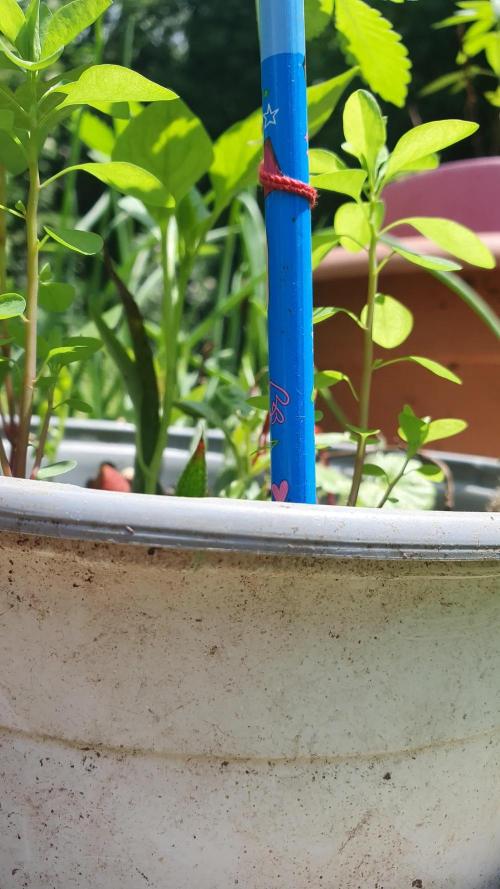
This girl is growing gorgeous and super frosty, hints of blue/purple are starting to show deep in the buds. she doesn’t seem close to finished pushing out new pistils, i would say she has at least 3 weeks left. i am switching to only water at this point, so that she starts to utilize the last of the nutes in her soil





@BrMarijuana
Volgen
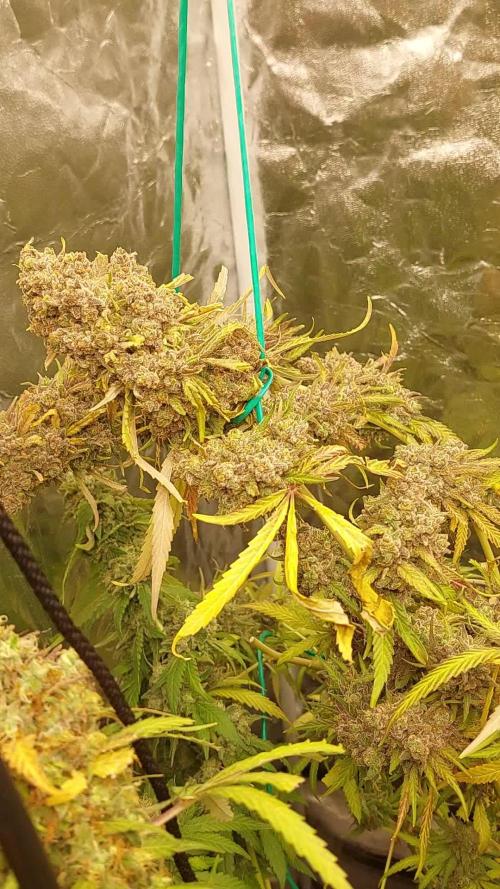
Primeiro mês de floração, ótimas plantas, super saudável, fertilização ok, folhas com. Um verde bonito, rega e alimentação todos os dias. Plantas satisfeitas.



@Z420Organics
Volgen
🌿 Kannabia Grow Update – Cold Temps and colors🌿
The temperatures have dropped noticeably, and that’s exactly what we wanted! ❄️
Cooler nights = better, cleaner, more refined maturation, deeper colors and richer aromas. 🌈👃
We’re not there yet — some plants still need days or even weeks — but everything looks absolutely stunning!
---
🔥 RS11
The colors are insane! Purples, pink hues… pure eye-candy.
The fast pheno is almost ready — I’ve already cut a few small branches at different ripeness levels so I can test the difference in effect and high. Super excited for that experiment!
---
🦍 Monkey Grease
One of them is already harvested!
The rest follow soon — very stable, easy plants, beautiful finish.
---
🍋 Amnesi-K Lemon
This cultivar seems like it wants more time than the others — totally normal for lemon-dominant profiles.
Still swelling and stacking nicely.
---
🍒 Cherry Dream
WOW. Just WOW.
The smell is unreal — I can’t wait to smoke it.
One pheno is pure cherry, the other is straight sugar, like cotton candy sweetness.
---
🍎🍌 Apples & Bananas
Colors are starting to pop hard now — blues, purples, darker greens.
Really interesting finish coming!
---
🕒 Timing
If everything continues like this, I expect most of the plants to be chopped in 7–10 days.
Just a bit more patience — we are on the final turn! 💚✨



@Hemposapien
Volgen
This is the first week of flower for Tropicana Cookies F2 and Terple. Really excited about this next crop. Thinking it'll be my best yet!


@JeyGanesha
Volgen
Inizio 3°settimana e tt procede come deve...brave piccole mie continuate a crescere forti🤣
Oggi 24/10/2024 inizio della 3°settimana, inizierò con il Ph perfect e tutti gli altri additivi advanced nutrients che sono davvero i migliori per nutrienti per cannabis. ....grazie anche ad advanced nutrients se le mie piccole, vengono belle grandi😀😉😂
