






Likes
3
Share

@MaltedMadness02
Follow
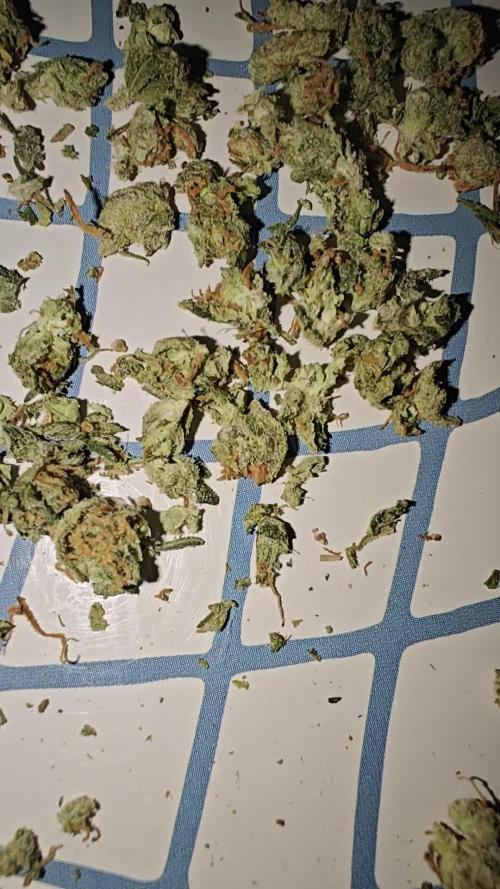
I chopped her down after taking a closer look at the trichromes, she was quite amber on some buds and I did make sure to check the calyxes, not the sugar leaves. Didn't want to risk over opening her, and I'm already nervous about drying so. Better to get it over with no? Low and slow. 60%rh and 60°F. My cheap equipment is struggling to keep the tent there, but it's chugging along. Anything id buy won't get here in time to save the harvest, so if it gets overdried.. it gets overdried. Its a bummer but what'll you do. This was a very educational experience for me, and my second plant (check out my new diary) will hopefully preform much better! Kudos!

Likes
45
Share


@masterofsmeagol
Follow
8/27 I think I mightve been overwatering. It's so hard to tell when the conditions change week to week. That's Maine for ya. Bags were still heavy and plants were soaked. I tried to shake the more advanced flowering plants without sending water everywhere. That's how septoria spreads. The event horizon I treated with plant doctor looks the best it ever has. It's tile for another application on the toasted toffy. I'm seeing a few spots again. I didn't have time to take pictures or do a video. This video is from last night. I'll treat that toasted toffy again today and I'll record it here. After I see it working u may treat the others. I see some residue of k bicarb but it has pretty much eradicated the pm. I know it will always be there but these treatments seem to be working. I'll be adding beastie bloom to my line up soon. EVERYDAY I go over the buds are bigger more compact and dense. Event horizon, toasted toffy and the red runtz (I think) in the 50 are flowering to beat hell! The get bigger everytime I see them. I can smell them as soon as I round the corner. This is going to be a good year. These strainsxare high in thc. Maybe I gave up some mold resistance and a harder to grow strain but if I can make it to the end it will be fire.
WENT BACK OVER AROUND 5. OBVIOUSLY IN THIS SCORCHING 80°+ day the seedling in the 10 was dry as a popcorn fart. Some other plants seemed dry when I stuck my arm down the bag but I could feel some moisture when I pushed my finger through the medium. They WILL need water but I'm not giving it to them tonight. Took a shit ton if pictures and a video this morning. I'll uploadcthat shit tomorrow. I'm trying to do a couple right now. Anyway I continued to defoliate what needs it. Flowers are swelling. I GAVE THE TOASTED TOFFY ITS 2ND TREATING OF PLANT DOCTOR. I USED A QTR GALLON OF A 4 TSP PER GALLON MIXTURE. I MADE SURE TO GET AS MUCH OF THE FOLIAGE AS POSSIBLE AND THEN I USED THE RESTCON THE MEDIUM. I SHOULDVE PROBABLY WATERED THAT ONE BUT ITS GOING TO RAIN TONIGHT. AT LEAST I HOPE IT IS. Looks like some of the pics are uploading! Yay! The plants looked the best I've ever seen them tonight so I held off watering. My wife is I'll and may need to go to the hospital. So instead of watering prematurely I can monitor the situation and make a decision in the morning. I made enough phed water for my father to go around and water everything. He is aware of the situation. Hopfully that will not be necessary. However, I don't want to over water and I feel like they didn't want it. Just going with my intuition. It's done me pretty good so far.
8/28 Luckily no hospital. It's sprinkling out. Plants are covered in water so we got SOME rain. It says we will get 0.00 but that can't be right. I watered the 10 yesterday and everything else this morning with a gallon each except the middle gmo in the 30 which got 1.5 gallons. Did not water the one in the 50 gal pot. It looks a little overwatered. Also looks like it has a slight calcium/magnesium deficiency. I'll up the calmag and i'll make sure when I do water I'll water thoroughly. Like usual toasted toffy is looking better after the treatment. The all star has been the k bicarb. I haven't seen shit for pm. Just a little residue from the k-bicarb. Took a video and some pictures. This is the fun time. I like watching the buds develop. Some of these plants were monster cropped so they are STACKED. I'll keep what I do updated.
8/29 Made an awesome video today bit it won't upload. Probably because its a little over 2 minutes. I'll do another one if it won't upload. Nope it won't even attempt to upload it now. Oh well. They flowers just looked so pretty this morning. I noticed some WPM on the event horizon in the middle. I noticed SOME on the bottom and interior of the GMO that I had already identified. I'll do another k-bicarb treatment and see how that goes. Plant Doctor seems to he doing a pretty good job on the septoria on toastedctoffy and my favorite event horizon. That plantvis THICK. it's going to be stacked and have some huge colas. I need to LST it and suppirt those giant colas and separate them a bit more. There is never any shortage of work to be done I can tell you that. I have defoliation to do on the sherb pie and the middle event horizon. It seems like crisis after crisis. Bu my plants are STRONG.
8/30 It was in the 40s at 6am. Shook off the plants. Bags are still heavy. I see some septoria climbing a bottom branch of the toasted toffy. It's foggy as hell out. Can't see a foot in front of me. Saw a LITTLE PM on the gmo I've been treating. It's just time to apply the ki bicarb. Plant Doctor is working wonders on even horizon in the back. I see some pm on the one in the middle. I think I'll treat that with plant doctor as well. I'm not sure. I messed up the video. I've got work to do. I'm waiting until I water and I'll feed again. I'm going to add beastie bloom to the lineup this time I think. Only one plant seems like it m9ght be too early for it. We'll see. I need to look back. I'll document what I do. Video won't upload. I'll try later but it's sideways
WENT OVER AROUND 3PM AND EVERYTHING LOOKED FABULOUS. WELL....THE PLANT I DIDNT WATERCLAST TIME IN THE 50 WAS DROOPING SO I GAVE IT A GALLON AND A HALF. THE TEN WAS LIGHT SO I GAVE IT A GALLON. IT WASNT DROOPY BUT ITS A HUGE PLANT IN A 10GAL AND USES A LOT OF WATER. I WAS PLANNING TO GO CHECK THEM TONIGHT AND SEE IF THEY NEEDED WATER BUT EVERYTHING IS PRAYING TO THE SUN! I DONT WANT TO OVERWATER AND I BELIEVE THESE WOULD BE BEST SUITED TO BE WATERED IN TGE MORNING. ILL FEED THIS TIME AS WELL. IM CONSIDERING ANOTHER APP OF K BICARB. TOOK A FEW PICTURES AND VIDEOS BUT ILL NEED TO UPLOAD
8/31 FED AND WATERED EVERYTHING. TOASTED TOFFY DIDNT GET FED DUE TO SEPTORIA AND THE 10 ISNT FAR ENOUGH ALONG.. THE 50 WAS WATERED YESTERDAY BUT GOT THE FEED WITH A LITTLE MORE WATER THIS MORNING. I ADDED ABOUT 1/16 TSP BEASTUE BLOOM TO THE REGULAR LINEUP TO SEE HOW IT GOES. MY BUDDY TOLD ME LOTS OF PEOPLE HAVING PROBLEMS WITH PM. I WENT BACK OVER TO DEFOLIATE AND LOOK FOR PM AND I FOUND IT. ON THE GMO INTETIOR AND SOME BOTTOM BRANCHES. I DEFOLIATED WHAT WAS BAD AND THEN I SPRAYED 3 GMO'S, EVENT HORIZON IN THE MIDDLE AND SHERB PIE WITH K-BICARB. HOPFULLY THAT WILL KEEP THINGS OUT OF CONTROL. I WILL BE WATCHING AND KEEPING UP WITH FUNGACIDES. IF I FIND ONE NOT WORKING ILL SWITCH IT UP. I HAVE A FEW OPTIONS. BUDS ARE EXPLODING IN GROWTH! WINDY OUT. I SAW A SECONDARY BRANCH LIMP AND MY GEART SUNK. I LOOKED DOWN THOUGH AND SAW THAT IT JUST WAS BLOWN HATD AGAINST THE TOMATO CAGE AND SNAPPED. I REMOVED IT WITB A SIGH OF RELIEF. MY BUDDY SAYS THE SEPTORIA DOESNT LOOK TO BAD AND ITS PRETTY FAR IN FLOWER SO HE THINKS ILL BE ALRIGHT. NEVER GROWING CLONES AGAIN. ILL STICK TO SEEDS AND STEAINS MADE FOR MAINES
9/1 Forgot to write an entry. IT RAINED FOR A BIT BUT TURNED TO BRIGHT 80'S
9/2 WATERED EVERYTHING. I THINK ITS TIME FOR ANOTHER TREATMENT OF PLANT DOCTOR TODAY. The septoria is getting a little worse. The buds are swelling everyday though. I think this plant only has a month left. I just need to outrun it. So far so good. I think my watering habits are better now. It's different depending on weather. Potassium bicarb has been wonderful treating the pm on that gmo. I treated the middle event horizon with it as well. It seems to work awesome. I'm losing tons of leaves. I hope that's normal senescence. I think it is seeing as how I see SOME foliage in the woods. Its matching other diaries. The plant must shed some leaves to make these flowers that seem to double in size every time I see them! Trying to upload a couple videos but they are long so we'll see what happens.
WENT BACK OVER AT NIGHT ANDCAPPLIED A LITTLE BIT OF K BICARB AND DEFOLIATED WHAT I SAW ON THAT GMO. IVE BEEN DEFOLIATING WHAT SEEMS LIKE A LOT BUT BUDS ARE SWELLING AND ITS CONGRUENT WITH THE MAJORITY OF MY DIARIES. I WISH I HAD PERFECT CONDITIONS BUT I DONT. I TREATED THE EVENTHORIZON WITH PLANT DOCTOR AGAIN. I USED APPROX A QTR GALLON OF 2 TSP/GALLON AND TRIED TO AVOID BUDS WHILE STILL GETTING THE LEAVES. I KINDA USED THE REST AS A SQUALCH SINCE I HAD WATERED THIS MORNING. THE WIND WAS STRONG. I ADDED A GARDEN STAKE AND ROPE SUPPORT TO THE TOASTED TOFFY AND ATTACHED IT RIGHT TO THE FRAME OF THE CAGE. LOOKS GOOD FOR NOW. ILL KEEP THINGS UPDATED.

Likes
58
Share


@Tazard
Follow
I’m very happy with the buds. I really didn’t think she would fill in the runs from her stretch but she has almost solid colas and an awesome calyx to leaf ratio.


Likes
6
Share

@420DeepGrow
Follow
📆 Semana 9
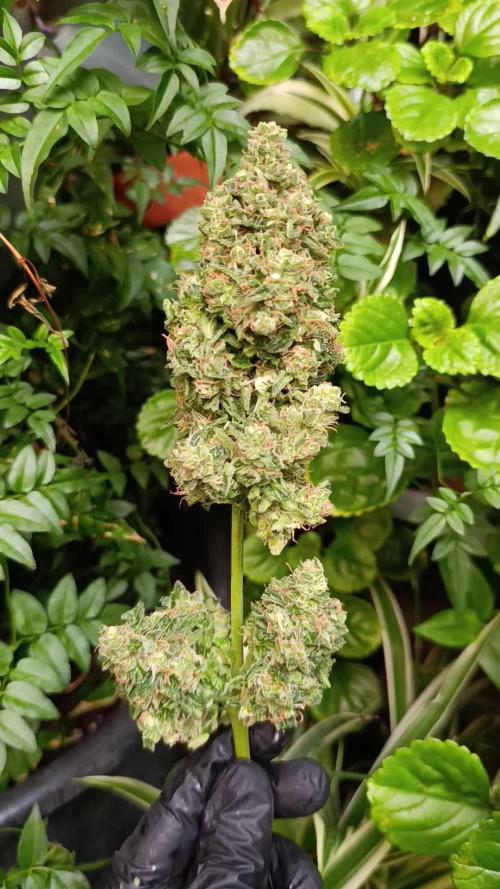
La Gaia F1 Auto llega al final de su ciclo, mostrando una maduración avanzada, cogollos compactos y una buena capa de resina. Después del lavado de raíz, la planta ha completado su última etapa manteniendo una evolución limpia y equilibrada.
Esta semana llega el momento de la cosecha. Retiro la planta en su punto de maduración y comienzo el proceso de secado, buscando conservar al máximo los aromas, terpenos y calidad de la cosecha.
🔥 Nota de cultivo: Fin de ciclo para la Gaia F1 Auto. Una cosecha que llega con buena densidad, mucha resina y una maduración muy completa.
Seguimos creciendo fuerte 💪!

Likes
8
Share


@Silverback_Guerilla
Follow
Moved them both back indoors into the tiny tent under the Viparspectras..set timer to go 12/12..
I really need these bitches to flower...seems a lot like they were mislabeled...
Finally....2 months in and pistils are popping after a few days of 12/12.... #notautosafterall
👉 Check out these new XS1000 lights on Amazon: https://amzn.to/3ttb2j9
👉 Get 10% OFF using this coupon code: lt10gdvip
Processing
Likes
29
Share


@Grey_Wolf
Follow
Ginger Nut cookies & Aussie music Videos
Grow Diary update 27th Feb 2020
The preflowering Stretch has well and truly begun with every branch that wasn't tied down , shooting upwards a few inches. The plant itself looks very healthy and content. Once flowering starts I'll begin to add P+K to the feeding regime.
We have had bugger all sunlight here for over a week and also we have had lots of rain and wind.
Daily max temps have been around the 24-25 celcius range and the minimums around 15 c. RH has been high
67% on average. That is about it for this weeks plant update . Now for the weekly Music videos.
** Last week I posted the links to three different artists who were picked by fellow growers thru the Grow question that I posted asking for requests. **
This week is back to just the one featured Artist from Australia.
This week's artist is Mr Paul Kelly who is an Australian rock music singer-songwriter and guitarist. He has performed solo, and has led numerous groups, including the Dots, the Coloured Girls, and the Messengers. He has worked with many other artists and groups and is considered one of the finest singer songwriters to have come from Australia.
Once again I couldn't narrow it down to just one song as he's had many great tunes but I have chosen the two with the best Music video as that is the main criteria for my Diaries Theme. So please prepare to enjoy some of Mr Kellys finest
The first song is a brand new one called Sleep Australia Sleep in which he evokes many emotions and anger with his poignant ords and the haunting images of destruction of our beautiful country thru both natural and man made disasters such as the recent horrific bushfires and floods, plus also the damage to our ecosystem from pollution, rubbish and envionmental terrorism performed in the name of industry ( mining, oil drilling coal power stations etc etc This song really touched a nerve in me being a true blue Aussie and passionate Animal lover so I urge you all to actually watch the video and listen to the song. this is the video link https://www.youtube.com/watch?v=-hY1w_c7nO4
the second song is on a much lighter note & is called "Dumb things " https://www.youtube.com/watch?v=ZR-eTR3Dcps which apparently was quite popular in the US at the time of it's first release.
I really hope you are all enjoying or atleast liking my weekly music videos so please leave a like if thats indeed the case.
I'll be back next week with another plant update and Aussie artist and music Video .
Cheers 👊👍👊
Likes
9
Share


@GrowPassionItalyChris
Follow
Da oltre venti anni che coltivo e sono sempre più felice della qualità proposta da queste magnifiche banche semi! Complimenti di cuore a chi ha selezionato e creato queste varietà autofiorenti. Crescono rapidamente,resistono agli afidi e alcune sfiorano il metro di altezza, tutte insieme sembrano una mini foresta! Iniziano a fiorire gradualmente ed essendo molto diramate tutte è spettacolare nel vederle! Appare la prima resina e sono in ottima salute. Sono felice fino ad adesso perché se guardate foto e video vi rendete conto che qui nel centro Italia in outdoor biologico abbiamo il migliore clima che si possa desiderare anche se questo 2023 fino a metà maggio ha piovuto tantissimo e ci sono stati sbalzi di temperatura, ciò non è stato un problema per queste varietà così forti e abbondanti! Adesso la magia è iniziata, il caldo è arrivato e non vedo l'ora di vederle piene di infiorescenze tutte! Si procede felicemente, un abbraccio a tutti!


Likes
14
Share


@Luv2Grow
Follow
Day 78 - The start of week 12 and from looking at her and the trichs, she probably won’t be getting chopped this weekend. Gave her a good flush with the sledgehammer yesterday so hopefully the depletion of nutes will push her to the end sooner rather than later.
Day 79 - Still just waiting but her leaves are starting to yellow a bit so she seems to be sucking whatever she can out of them to finish up. Can’t wait for her to be done to get a taste.
Day 80 - Leaves are starting to fade pretty good now and almost certain I’ll be chopping her this week or this coming weekend at the latest. Trying to push some more amber trichs into her.
Day 81 - No real updates, she’ll be getting the chop no later than this weekend. Most likely on Saturday.


Likes
52
Share


@Ultraviolet
Follow
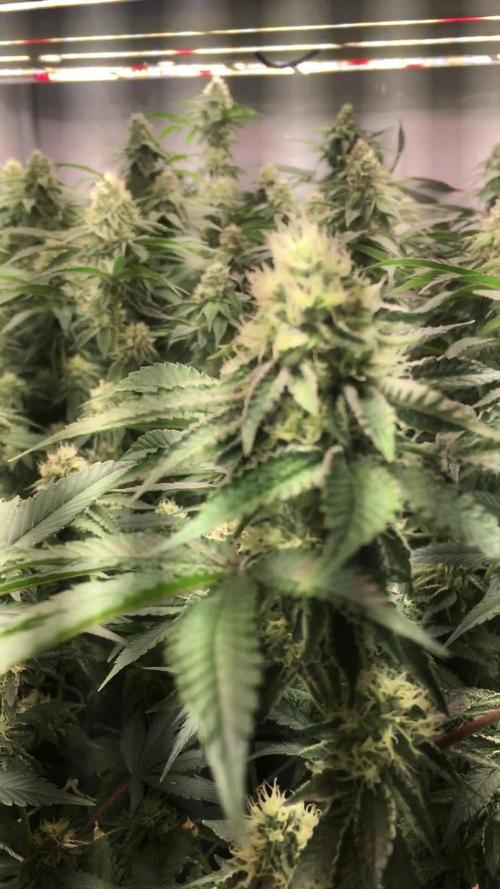
Lacewings seemed to have mostly killed themselves by flying into hot light fixtures. I may have left the UV on which was smart of me :) Done very little to combat if anything but make a sea of carcasses, on the bright side its good nutrition for the soil.
Made a concoction of ethanol 70%, equal parts water, and cayenne pepper with a couple of squirts of dish soap.
Took around an hour of good scrubbing the entire canopy.
Worked a lot more effectively and way cheaper.
Scorched earth right now, but it seems to have wiped them out almost entirely very pleased.
Attempted a "Fudge I Missed" for the topping. So just time to wait and see how it goes.
Question?
If I attached a plant to two separate pots but it was connected by rootzone, one has a pH of 7.5 ish the other has 4.5. Would the Intelligence of the plant able to dictate each pot separately to uptake the nutrients best suited to pH or would it still try to draw nitrogen from a pot with a pH where nitrogen struggles to uptake?
Food for stoner thought experiments!
Another was on my mind.
What happens when a plant gets too much light?
Well, it burns and curls up leaves.
That's the heat radiation, let's remove excess heat, now what?
I've always read it's just bad, or not good, but when I look for an explanation on a deeper level it's just bad and you shouldn't do it.
So I did.
How much can a cannabis plant absorb, 40 moles in a day, ok I'll give it 60 moles. 80 nothing bad ever happened.
The answer, finally. Oh great........more questions........
Reactive oxygen species (ROS) are molecules capable of independent existence, containing at least one oxygen atom and one or more unpaired electrons.
"Sunlight is the essential source of energy for most photosynthetic organisms, yet sunlight in excess of the organism’s photosynthetic capacity can generate reactive oxygen species (ROS) that lead to cellular damage. To avoid damage, plants respond to high light (HL) by activating photophysical pathways that safely convert excess energy to heat, which is known as nonphotochemical quenching (NPQ) (Rochaix, 2014). While NPQ allows for healthy growth, it also limits the overall photosynthetic efficiency under many conditions. If NPQ were optimized for biomass, yields would improve dramatically, potentially by up to 30% (Kromdijk et al., 2016; Zhu et al., 2010). However, critical information to guide optimization is still lacking, including the molecular origin of NPQ and the mechanism of regulation."
What I found most interesting was research pointing out that pH is linked to this defense mechanism. The organism can better facilitate "quenching" when oversaturated with light in a low pH. Now I Know during photosynthesis plants naturally produce exudates (chemicals that are secreted through their roots). Do they have the ability to alter pH themselves using these excretions? Or is that done by the beneficial bacteria?
If I can prevent reactive oxygen species from causing damage by "too much light".
The extra water needed to keep this level of burn cooled though, I must learn to crawl before I can run.
Reactive oxygen species (ROS) are key signaling molecules that enable cells to rapidly respond to different stimuli. In plants, ROS plays a crucial role in abiotic and biotic stress sensing, integration of different environmental signals, and activation of stress-response networks, thus contributing to the establishment of defense mechanisms and plant resilience. Recent advances in the study of ROS signaling in plants include the identification of ROS receptors and key regulatory hubs that connect ROS signaling with other important stress-response signal transduction pathways and hormones, as well as new roles for ROS in organelle-to-organelle and cell-to-cell signaling. Our understanding of how ROS are regulated in cells by balancing production, scavenging, and transport has also increased. In this Review, we discuss these promising developments and how they might be used to increase plant resilience to environmental stress.
Temperature stress is one of the major abiotic stresses that adversely affect agricultural productivity worldwide. Temperatures beyond a plant's physiological optimum can trigger significant physiological and biochemical perturbations, reducing plant growth and tolerance to stress. Improving a plant's tolerance to these temperature fluctuations requires a deep understanding of its responses to environmental change. To adapt to temperature fluctuations, plants tailor their acclimatory signal transduction events, specifically, cellular redox state, that are governed by plant hormones, reactive oxygen species (ROS) regulatory systems, and other molecular components. The role of ROS in plants as important signaling molecules during stress acclimation has recently been established. Here, hormone-triggered ROS produced by NADPH oxidases, feedback regulation, and integrated signaling events during temperature stress activate stress-response pathways and induce acclimation or defense mechanisms. At the other extreme, excess ROS accumulation, following temperature-induced oxidative stress, can have negative consequences on plant growth and stress acclimation. The excessive ROS is regulated by the ROS scavenging system, which subsequently promotes plant tolerance. All these signaling events, including crosstalk between hormones and ROS, modify the plant's transcriptomic, metabolomic, and biochemical states and promote plant acclimation, tolerance, and survival. Here, we provide a comprehensive review of the ROS, hormones, and their joint role in shaping a plant's responses to high and low temperatures, and we conclude by outlining hormone/ROS-regulated plant-responsive strategies for developing stress-tolerant crops to combat temperature changes.
Onward upward for now.
Next!
Adenosine triphosphate
(ATP) is an energy-carrying molecule known as "the energy currency of life" or "the fuel of life," because it's the universal energy source for all living cells.1
Every living organism consists of cells that rely on ATP for their energy needs. ATP is made by converting the food we eat into energy. It's an essential building block for all life forms. Without ATP, cells wouldn't have the fuel or power to perform functions necessary to stay alive, and they would eventually die. All forms of life rely on ATP to do the things they must do to survive.2
ATP is made of a nitrogen base (adenine) and a sugar molecule (ribose), which create adenosine, plus three phosphate molecules. If adenosine only has one phosphate molecule, it’s called adenosine monophosphate (AMP). If it has two phosphates, it’s called adenosine diphosphate (ADP).
Although adenosine is a fundamental part of ATP, when it comes to providing energy to a cell and fueling cellular processes, the phosphate molecules are what really matter. The most energy-loaded composition for adenosine is ATP, which has three phosphates.3
ATP was first discovered in the 1920s. In 1929, Karl Lohmann—a German chemist studying muscle contractions—isolated what we now call adenosine triphosphate in a laboratory. At the time, Lohmann called ATP by a different name. It wasn't until a decade later, in 1939, that Nobel Prize–-winner Fritz Lipmann established that ATP is the universal carrier of energy in all living cells and coined the term "energy-rich phosphate bonds."45
Lipmann focused on phosphate bonds as the key to ATP being the universal energy source for all living cells, because adenosine triphosphate releases energy when one of its three phosphate bonds breaks off to form ADP. ATP is a high-energy molecule with three phosphate bonds; ADP is low-energy with only two phosphate bonds.
The Twos and Threes of ATP and ADP
Adenosine triphosphate (ATP) becomes adenosine diphosphate (ADP) when one of its three phosphate molecules breaks free and releases energy (“tri” means “three,” while “di” means “two”). Conversely, ADP becomes ATP when a phosphate molecule is added. As part of an ongoing energy cycle, ADP is constantly recycled back into ATP.3
Much like a rechargeable battery with a fluctuating state of charge, ATP represents a fully charged battery, and ADP represents a "low-power mode." Every time a fully charged ATP molecule loses a phosphate bond, it becomes ADP; energy is released via the process of ATP becoming ADP.
On the flip side, when a phosphate bond is added, ADP becomes ATP. When ADP becomes ATP, what was previously a low-charged energy adenosine molecule (ADP) becomes fully charged ATP. This energy-creation and energy-depletion cycle happens time and time again, much like your smartphone battery can be recharged countless times during its lifespan.
The human body uses molecules held in the fats, proteins, and carbohydrates we eat or drink as sources of energy to make ATP. This happens through a process called hydrolysis
.
After food is digested, it's synthesized into glucose, which is a form of sugar. Glucose is the main source of fuel that our cells' mitochondria
use to convert caloric energy from food into ATP, which is an energy form that can be used by cells.
ATP is made via a process called cellular respiration that occurs in the mitochondria of a cell. Mitochondria are tiny subunits within a cell that specialize in extracting energy from the foods we eat and converting it into ATP.
Mitochondria can convert glucose into ATP via two different types of cellular respiration:
Aerobic (with oxygen)
Anaerobic (without oxygen)
Aerobic cellular respiration transforms glucose into ATP in a three-step process, as follows:
Step 1: Glycolysis
Step 2: The Krebs cycle (also called the citric acid cycle)
Step 3: Electron transport chain
During glycolysis, glucose (i.e., sugar) from food sources is broken down into pyruvate
molecules. This is followed by the Krebs cycle, which is an aerobic process that uses oxygen to finish breaking down sugar and harnesses energy into electron carriers that fuel the synthesis of ATP. Lastly, the electron transport chain (ETC) pumps positively charged protons that drive ATP production throughout the mitochondria’s inner membrane.2
ATP can also be produced without oxygen (i.e., anaerobic), which is something plants, algae, and some bacteria do by converting the energy held in sunlight into energy that can be used by a cell via photosynthesis.
Anaerobic exercise means that your body is working out "without oxygen." Anaerobic glycolysis occurs in human cells when there isn't enough oxygen available during an anaerobic workout. If no oxygen is present during cellular respiration, pyruvate can't enter the Krebs cycle and is oxidized into lactic acid. In the absence of oxygen, lactic acid fermentation makes ATP anaerobically.
The burning sensation you feel in your muscles when you're huffing and puffing during anaerobic high-intensity interval training (HIIT) that maxes out your aerobic capacity or during a strenuous weight-lifting workout is lactic acid, which is used to make ATP via anaerobic glycolysis.
During aerobic exercise, mitochondria have enough oxygen to make ATP aerobically. However, when you're out of breath and your cells don’t have enough oxygen to perform cellular respiration aerobically, the process can still happen anaerobically, but it creates a temporary burning sensation in your skeletal muscles.
Why ATP Is So Important?
ATP is essential for life and makes it possible for us to do the things we do. Without ATP, cells wouldn't be able to use the energy held in food to fuel cellular processes, and an organism couldn't stay alive.
As a real-world example, when a car runs out of gas and is parked on the side of the road, the only thing that will make the car drivable again is putting some gasoline back in the tank. For all living cells, ATP is like the gas in a car's fuel tank. Without ATP, cells wouldn't have a source of usable energy, and the organism would die.
Eating a well-balanced diet and staying hydrated should give your body all the resources it needs to produce plenty of ATP. Although some athletes may slightly improve their performance by taking supplements or ergonomic aids designed to increase ATP production, it's debatable that oral adenosine triphosphate supplementation actually increases energy.
An average cell in the human body uses about 10 million ATP molecules per second and can recycle all of its ATP in less than a minute. Over 24 hours, the human body turns over its weight in ATP.
You can last weeks without food.
You can last days without water.
You can last minutes without oxygen.
You can last 16 seconds at most without ATP.
Food amounts to one-third of ATP production within the human body.

Likes
Comments
Share


@Robom069
Follow
Going into the last weeks iam very happy with my plants
they´re almost too big
but i love the big buds and hope they get very dense
left acid dough
right black domina
Processing
Likes
62
Share


@OwlGang_Uk
Follow
Happy 1 Month To My Girls (Inserts Celebration Emojis)
I’m Very Proud Of The 1st Month’s Progress These Girls Has Really Exceeded My Expectations.
I’m Very Proud Of The Of The Purple Power If You Go Back To Week 1 You Will See That She Started Off The Slowest But She Is Now The Tallest In The Pack Standing At 21 Inches (that’s without adding the few cm I covered with soil) She Has Also Shown Signs Of Purple In Her Bud Development (Favourite Color) Can’t Wait To See Them, You Go Girl!
I’m Also Proud Of The Gorilla Glu (12 inches) Stardawg (17 inches) And Girls Scout Cookies (16 inches) Development, They Are My Favorite Buds Here In The UK. They Are Very Bushy & Branchy And Their Stems Are Very Thick. They Have The 3 Main Pillars To Accommodate BIG Buds.
Happy Growing Everyone. #OwlGang #AGrowingEmpire


Likes
59
Share


@JeyGanesha
Follow
Gente,sono arrivato alla 6 settimana di fioritura,per fortuna sto riuscendo a debellare sto cazzo di ragnetto rosso...e tutti i fiorellini maschi che stavano spuntando...al momento sembra che non stiano più facendo sviluppare,ne nannars ne fiori completi di Maschio......il che è buonissimo 😋...spero riuscire a portare a termine bene la mia terapia, altrimenti mi ritroverò (ma di molto nellaCACCONA...MERDA!!!)..MA no! sono positivo e quasi sicuro che sarà buonissima 😋

Likes
27
Share


@Salokin
Follow
This plant was an absolute joy to trim. This plant consisted of buds and stems only, so I am actually curious what the dry weight will be.
Likes
47
Share


@Mrs_Larimar
Follow
Sunday, Feb. 14th.
All Plants alive yaay... thats abig success for me
because its not so easy to keep them happy
10g of Soil are getting dry very fast
and its like agameof juggeling with the water... not overwatering/ not underwatering
Some Plants look alittle droopy but well, most Time looking good
I can see tiny Preflowers
Stay tuned

Likes
74
Share


@Rasta_Faraev
Follow
Всем привет, дорогие друзья! Ещё одна неделя в копилку. 50 дней позади. Начинается активный рост перед цветением, одна из соседок-халкберри уже выпустила одуваны аж на 8 день в режиме 12/12. Банана активно пьёт компот, по 2-3л в день, лейкой орудовать становится сложно. Задумываюсь о капельном полив на след цикл. В целом все хорошо как мне кажется. А вам? Пишите в комментариях, всегда рад Вашему вниманию, коллеги и спасибо!
23.10.21. Заснял спящих красавиц. Оцените музыку😍 сделаю ещё видос как проснутся и фото

Likes
21
Share


@MicrowGrow420
Follow
Getting a little tight for space, the tobacco and kush has filled the grow space to capacity. The clone i took from the kush has taken well, will be interesting to see what she produces.
Likes
6
Share


@SAC87
Follow
This grill went really well. In growing three different strains it did pose a bit of a problem later in flower due to differing light conditions needed by the three different plants. The Cali Kush being more Indica required less light and the jack Herer needed a bit more to finish nicely. This caused some light stress to the Cali Kush which caused late flower Hermes but didn’t cause any long-term problems like seeds or burn. All in all I’m happy with 600 g from a 4 x 4 tent and a 480 W light. This is especially true when you add in the Gaia Green and how easy it makes growing.

Likes
19
Share


@ThatoneAKguy
Follow
Here we are at week 5 already. The pistils are starting to turn red and the bulk is coming on. These plants have a nice mild lemony smell to them right now. They are at maximum nutrients and maximum light until they finish the third little stubby one appears to be ahead of the rest which is understandable given it doesn’t have nearly the mass to feed.
Sorry I can’t rotate the video. The button isn’t working