


Likes
Comments
Share


@TorvicKofran
Follow
ESPAÑOL:
Hola chicos, espero se encuentren muy bien!
Esta semana las chicas han mejorado un poco, se detuvo el amarillamiento, descubri que Cal-Max de Grotek interfiere en la composicion de la linea hesi por lo que las chicas sufren un bloqueo de nutrientes, dejé de utilizarlo y las chicas han continuado con su desarrollo relativamente normal.
ya estan en su 5ta semana de floracion, Tutankhamon ha producido una cantidad gigantesca de resina, Lennon esta engordando a toda velocidad y aun le quedan 6 semanas aprox.
Anubis a pesar de su color intenso amarillo palido esta engordando bastante bien y su produccion de resina es inimaginable y ya solo que quedan 2 semanas y media aprox.
espero que a partir de ahora ya no surjan mas problemas y que las chicas terminen su floracion de la mejor manera.
esto es todo por esta semana chicos, espero que se encuentren muy bien !
INGLES:
Hello guys, I hope you are very well!
This week the girls have improved a little, the yellowing stopped, I discovered that Cal-Max from Grotek interferes with the composition of the hesi line so the girls suffer a nutrient lock, I stopped using it and the girls have continued with their relatively normal development.
They are already in their 5th week of flowering, Tutankhamun has produced a gigantic amount of resin, Lennon is gaining weight at full speed and he still has about 6 weeks left.
Anubis, despite its intense pale yellow color, is gaining weight quite well and its resin production is unimaginable and there are only about 2 and a half weeks left.
I hope that from now on no more problems arise and that the girls finish their flowering in the best way.
This is it for this week guys, I hope you are doing well!
Likes
2
Share


@CannaIGrow
Follow
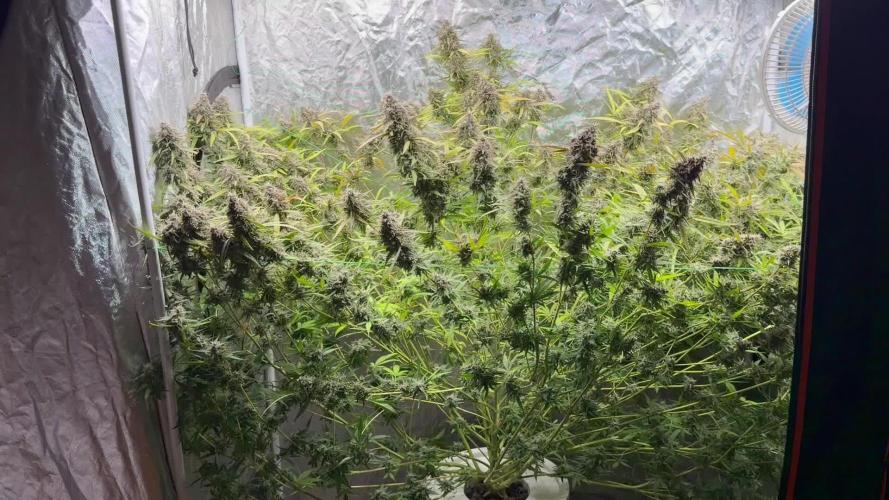
She’s growing well and finally starting to grow
out of her lil leaf mutation at the beginning.



Likes
15
Share

@DogDoctorOfficial
Follow
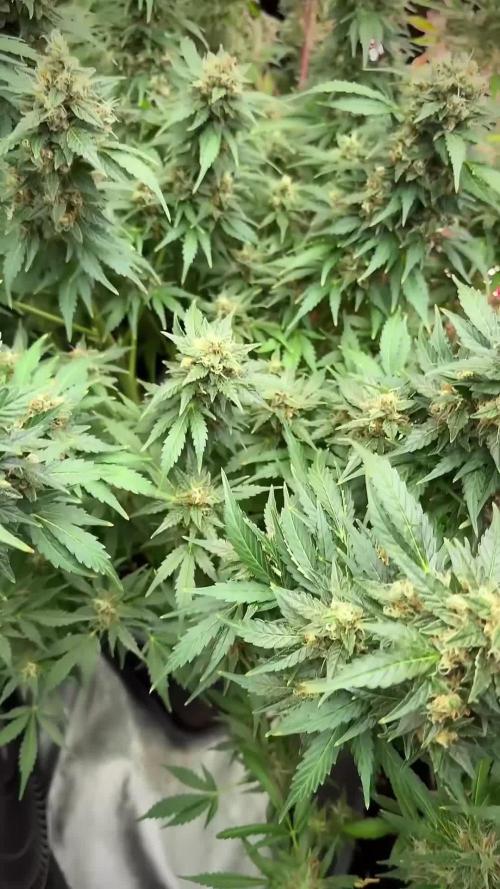
Amnesia Skunk Auto · Week 12 From Seed
The Zamnesia Way 🌿
Week 12 from seed, and the room is speaking clearly now.
The pace has changed. The structure is set. The stretch is long behind us. What we are watching now is the final conversation between plant, soil, and time.
This week marks a quiet but important shift:
the feed is gone, the bottles are mostly out, and the room is moving into its last phase with little more than water and time.
Not because the plant has stopped.
Because it already has what it needs.
⸻
From Seed to Here
This run was never about chasing size.
It was about letting the plant express itself honestly.
From the beginning, these Amnesia Skunk Autos stayed compact, controlled, and efficient.
Not the tallest in the room. Not the loudest in stretch. But from early on, they showed exactly what they wanted to be: short internodes, dense flower sites, tight stacking, and a natural tendency to build weight instead of height.
That is the shape of this plant.
And now, in late flower, that early structure is paying itself back.
The canopy stayed manageable.
The frame stayed compact.
And all that energy went where it matters now — into resin, density, and flower mass.
This is why reading plant structure early matters.
Not every plant wants to become a tower.
Some would rather become stone.
And that is exactly what these did.
⸻
Week 12 — What Is Changing Now
This week the room shifts gears.
The bulk is mostly built.
The flowers are set.
The plant is no longer trying to produce more structure — now it is finishing what it already made.
And that changes everything.
The metabolism slows.
Water demand begins to taper.
Nutrient demand drops.
Uptake changes.
The plant becomes less interested in growth and more interested in completion.
That is where we are now.
So this week we simplify.
Less input.
Less interference.
Less feeding.
More observation.
Because late flower is not the time to force more.
It is the time to let the plant finish speaking.
⸻
Why We Moved to Water Only
(And Why Pure Zym Stays)
This week the nutrient stack is stripped back and the room moves into water-only irrigation, with one exception: Pure Zym.
That is intentional.
At this stage, the plant is no longer asking for aggressive nutrition.
It is asking for access.
And that is what enzymes help provide.
Pure Zym stays in because the soil is still alive.
Even when bottles are reduced, the medium is not “empty.”
It is still biologically active. Still processing. Still cycling. Still breaking down what remains.
That matters now more than people think.
The plant may be drinking less feed,
but the soil is still working.
And enzymes help keep that system moving by supporting the breakdown of leftover organic material, dead root matter, and residual compounds in the medium — making them easier for microbial life to process and easier for the plant to access in its final phase.
In simple terms:
we are not feeding the bottle anymore.
we are feeding the biology that is still feeding the plant.
And because this soil will be reused afterward, keeping that microbial life active matters beyond harvest too.
The run does not end at chop.
The soil keeps going.
What is left behind in this pot will not be waste.
It will be recycled into the next life — broken down, reprocessed, and eventually returned to the garden again.
That is part of the system too.
⸻
The Plant Right Now
This is where the room gets beautiful.
The greens are beginning to deepen.
Pigments are shifting.
Leaf tone is changing.
The flowers are darkening.
The plant is beginning to wear its finish.
And with that comes the real reward of late flower:
resin.
Trichome production is immense now.
Heads are fully formed. Coverage is heavy. Resin has moved beyond the sugar leaves and deep into the flower surface itself.
The frost is no longer just visual.
It has texture now. Density now. Presence now.
And the flowers are following the same pattern.
Dense.
Compact.
Heavy for their size.
Not oversized plants — but plants that pack.
That is one of the most satisfying expressions in the room:
small frame, serious output.
No wasted motion.
No wasted energy.
Just compact plants doing exactly what they were built to do.
⸻
Conditions Stay the Same
Because the Plants Say So
Room conditions remain stable and largely unchanged.
Nothing dramatic.
No late flower panic.
No chasing numbers for the sake of numbers.
The room is still run by plant response first.
Leaf behavior.
Water use.
Transpiration.
Posture.
Response.
That remains the real metric.
The environmental numbers matter, of course — but only in context.
And right now, the context is simple:
the leaves are relaxed,
the flowers are building,
the resin is pushing,
and the room is balanced.
So we stay steady.
No need to force a correction where the plant is already in agreement.
⸻
What to Expect Next
(And What Not to Rush)
Now we wait and watch.
The finish line is visible, but this is still the part where patience matters most.
Over the next stretch, expect:
* deeper fade
* continued pigment shift
* slower water uptake
* final calyx swell
* heavier resin maturity
* stronger aroma expression
* less vertical movement, more flower completion
What not to expect:
* explosive new growth
* major swelling overnight
* dramatic structural change
* a miracle in the final days
That part is done.
Now it is refinement.
Maturity.
Completion.
Harvest may come next week.
It may come the week after.
The plant will decide that, not the calendar.
And late flower always rewards the grower who waits one more day for the right reason.
⸻
Gratitude
A run like this is never built alone.
Respect to the genetics from Zamnesia.
Respect to Plagron for keeping the root zone moving.
Respect to the LEDs for carrying the room from start to finish.
Respect to the platform for giving growers a place to document honestly.
Respect to everyone following quietly, watching closely, learning, questioning, supporting.
To the day ones.
To the new ones.
To the growers.
To the lurkers.
To the lovers.
To the skeptics.
To the curious minds.
To the old heads.
To the ones still learning.
To the ones teaching without saying much.
All of you are part of the room too.
Grow with love.
📡 DELETED @ 1K Please stay tuned.we never quit https://www.youtube.com/@TheDogDoctorOfficial NEW 🙏 Thank you for your patience and continued support.
FOR DISCOUNT CODES AND MORE JUST FOLLOW THE LINK https://website.beacons.ai/dogdoctorofficial
📲 Don’t forget to Subscribe and follow me on Instagram and YouTube @DogDoctorOfficial for exclusive content, real-time updates, and behind-the-scenes magic. We’ve got so much more coming, including transplanting and all the amazing techniques that go along with it. You won’t want to miss it.
GrowDiaries Journal: https://growdiaries.com/grower/dogdoctorofficial
Instagram: https://www.instagram.com/dogdoctorofficial/
YouTube: https://www.youtube.com/@dogdoctorofficial Deleted by Youtube - https://www.youtube.com/@TheDogDoctorOfficial NEW
Vimeo : https://vimeo.com/dogdoctorofficial Under construction stay tuned
⸻
Explore the Gear that Powers My Grow
If you’re curious about the tech I’m using, check out these links:
🔆 Lighting & Environmental Control
• Future of Grow — Advanced LED lighting technology
https://www.futureofgrow.com/
DISCOUNT CODE: DOG20
• Lumiflora — Under-canopy LED lighting
https://lumiflorade.com/
• TrollMaster — Environmental controllers and automation gear (past collaboration)
⸻
Genetics
• Zamnesia Seeds — Genetics used in this project
https://www.zamnesia.com/
⸻
🌱 Soil, Substrates, Boosters & Root Support
• Plagron — Substrates, bio mixes, and supportive products
https://plagron.com/en/
⸻
🎒 Storage, Curing & Preservation
• Grove Bags — Curing and storage solutions
https://grovebags.com/
⸻
📸 Photography Equipment & Tools
(Not sponsors, but part of my creative toolkit)
• Sony A6700
• Sony full-frame macro lens + few more
• Stacking photography workflow - learning
• iPhone (for behind-the-scenes shots)
We’ve got much more coming as we move through the grow cycles. Trust me, you won’t want to miss the next steps, let’s push the boundaries of indoor horticulture together!
As always, this is shared for educational purposes, aiming to spread understanding and appreciation for this plant. Let’s celebrate it responsibly and continue to learn and grow together.
With true love comes happiness. Always believe in yourself, and always do things expecting nothing and with an open heart. Be a giver, and the universe will give back in ways you could never imagine.
💚 Growers love to all 💚
📸 P.S. – The Eye Behind the Lens
All photos in this diary (for now — except for the ones showing the camera, which I took with an iPhone) are taken with a Sony A6700 paired with a Sony full-frame macro lens and a few more.
Photography is part of the story — it’s how we share the fine textures, the glow, and the quiet details that words can’t always capture.
I’ve also started experimenting with photo stacking — a technique where multiple images, each taken at a slightly different focus point, are layered together to create one perfectly sharp image from front to back.
It’s not digital enhancement or AI; it’s pure photography — a way to reveal the plant’s beauty in microscopic depth, from trichome to petal.
You’ll even see a few shots of "ghost me" capturing the shots — camera, lens, setup — because every grow deserves not just to be cultivated, but documented like art.
FOR DISCOUNT CODES AND MORE JUST FOLLOW THE LINK https://website.beacons.ai/dogdoctorofficial
NEW DISCORD - Official Server Invite Link : https://discord.gg/ksjAkA5T74

Processing
Likes
1
Share


@Divs_darkroom
Follow
I think she was locking out nutrients or something. She has stayed very dark, and it was taking a long time for her to mature. But now that she is being flushed, she's filling in and growing nicely. Very resinous and looks like she's gonna be dense
Likes
Comments
Share

Likes
22
Share


@Rangaku
Follow
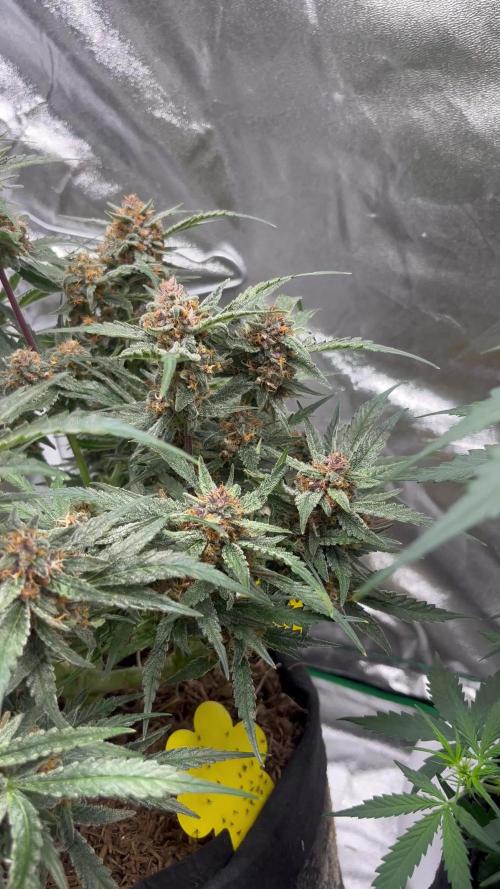
Soaked seed for 18 hours and planted into coco , 2 days later shes roaring along .




Likes
16
Share


Likes
50
Share


@AsNoriu
Follow
Day 36. One girl is shooting the sky other still have that unhealthy look, made my mind - its genetics and i can't do anything.
Girls got second feed, looks happy and hopefully will bring some nice flowers.
Took some leaves down, spread a bit, but most of work will be done next week, if i will dare ;)))
Last time used Root Juice, added Acti-Vera, increased Bloom and Heaven.
Day 40. After last feed, girls got small rusty spots on 4-5 leaves total, cut out cal mag for couple weeks.
Heavy training, its always tricky to decide what to do with Autos and i have almost no knowledge, but i have SPA Queen and Midget aka Margaret ;))) both different, but bushy, had to clear Midget really heavily and still loads future airbuds left, but maybe ... ;)))
Girls drink 3 liters every day, highest rate ever, but i relate it to most powerfull exhaust ever.
Some leaves on both plants got strange mutation, like leaf tries to branch out ... Never seen anything like this. But by height i presume it happend on first feed, late Root Juice aftermath ?
Happy Growing !
Likes
15
Share

@BudVision
Follow
Hi Growers,
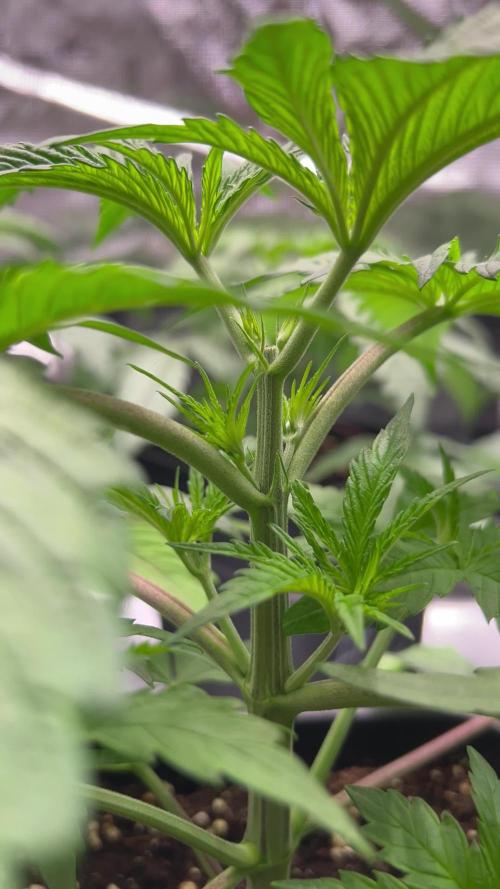
Another week of vegetation is complete. The plants were divided into two tents to provide more space and improve airflow. Topping was done yesterday, so I’ll give them some time to recover. Once they are ready, I will flip them to flower.
———————————————————————————
Další týden vegetace je za námi. Rostliny jsem rozdělil do dvou stanů, aby měly více prostoru a lepší cirkulaci vzduchu. Včera proběhl topping, takže teď jim dám nějaký čas na regeneraci. Jakmile budou připravené, flipnu do květu.
Peace and happy growing ✌️🌱
Likes
38
Share


@GODSGIFT_2005_JM
Follow
For LIQUIDS & NUTES ******GREEN BUZZ NUTRIENTS***** organic.
Also i’m using their LIVING SOIL CULTURE in powder form!
MARSHYDRO ⛺️ has large openings on the sides which is useful for mid section groom room work. 🤩
☀️ MARSHYDRO FC 3000 LED 300W
💨MARSHYDRO 6” in-line EXTRACTOR with speed-variation knob, comes complete with ducting and carbon filter.
Likes
10
Share


@Kevjunior20
Follow
Beginning of third week, changed up my set up! Ready to see how these girls react to the Nutes also I have two slow growing plants(purple lemonade autoflower) & (seedsman autoflower lemon)


Likes
45
Share


@Garreweedlover
Follow
Tienen un aroma muy dulce y afrutado, estoy feliz con su rendimiento, su aroma y la cantidad de tricomas , aun quedan 2 por cosechar asi que aun no dare por terminado el seguimiento.

Likes
5
Share


@Topshelf_only
Follow
Everything look excellent wishing I had a time machine. Just about run out from first grow can't get enough . hands down best smoke I had all year but I still think there is room for improvement .

Likes
15
Share


@XperencdGmanXG
Follow
It's all about the bacteria! Took the EM1, fish shit, kefir, worm castings, soil activator, ground malted barley, fine ground egg shells (uncooked), fine ground shrimp shells (uncooked) and molasses and brewed it out as a tea for 36 hours until it was bubbling. This one I'm calling the Ultimate microbe bomb. I applied this to the ladies after I moved them to the flowering tent and boy have they exploded in Growth of just over 2" in one Gas Lantern Day. Will flop them to flower at some point in the coming days. after I get them to grow a bit taller.
Likes
26
Share


@Bakeryguy420
Follow
Finally outta the 3x3 and into the 4x8 . So glad everyone growing better . Tangie is started to fill in along with gg4 and sweet creme. As as speak all 12 are flowering . Ogesus number 2 is so tall. Fixing to order more cobs to fill the tent! . Go to cobshop.net these lights are amazing !!

Glueberry Auto · Expert Seeds
Gorrila Glue #4 Auto (Expert Gorilla Auto) · Expert Seeds

Tangie Auto · Fast Buds
Sweet Cream Auto · Expert Seeds

Amnesia Haze Auto · Vision Seeds

Amnesia Gold · Pyramid Seeds
OGesus Auto · Expert Seeds

Royal Haze Automatic · Royal Queen Seeds

Caramella Auto · Custom Breeder & Strain
Rhino Ryder Auto · Fast Buds

Fugue State · Mephisto Genetics
Likes
19
Share


@Spirit4i20
Follow
This week she was a warrior... a few days with wind gusts up to 70 km/h 🙌👏💪
Likes
38
Share


@biggreens420
Follow
These monsters are just piling on the weight majority of buds on the right side are tied up did minor defoliation just watching them stack and keeping an eye on the humidity as its begun to rise .left side front to back am haze 1, exotic thai ,am haze 2 .right side front to back lsd,fruit spirit,blue mystic. Thanks for reading happy growing guys
