Likes
Comments
Share
@Chi_K24
Follow
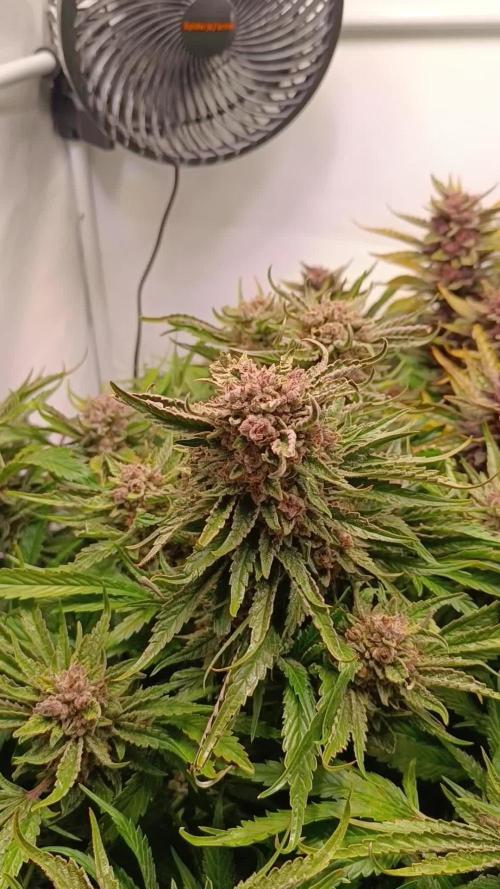
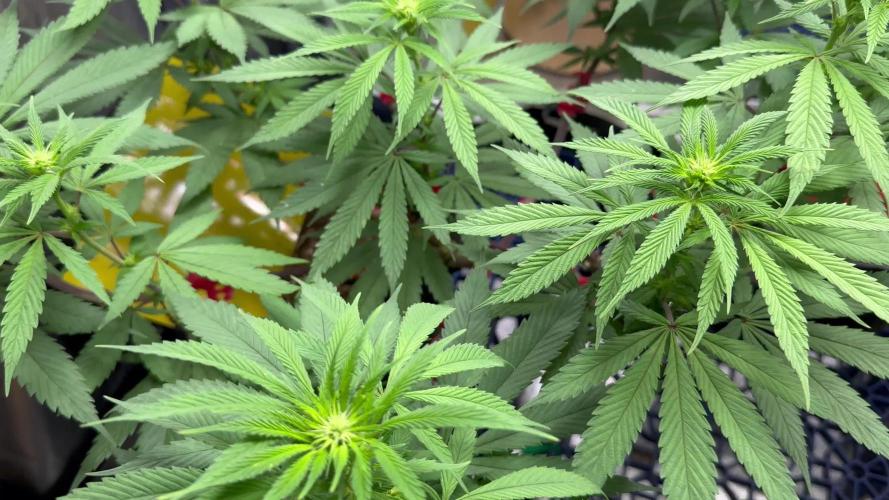
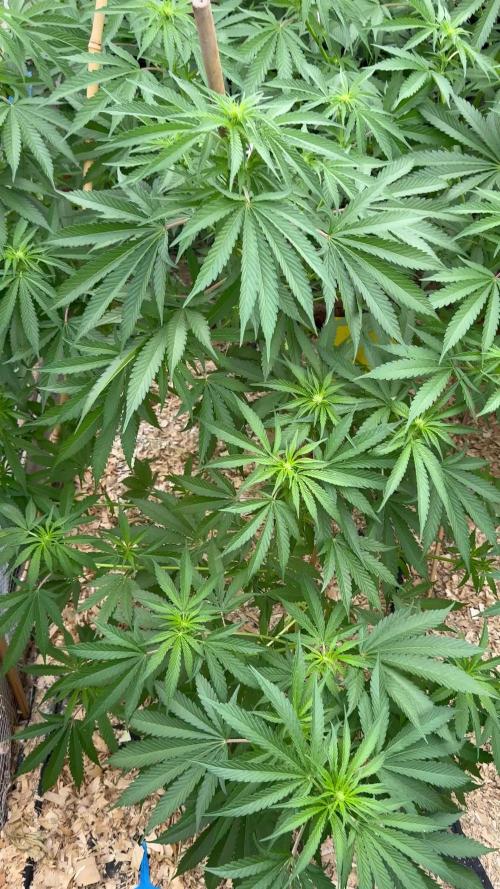
Hey folks, Hope you are all well during these pressing times... 2020 eh... so we are now into week 9 photos taken on Monday. Recap: Late into week 8 on Friday, it was time to perform the second round of amendments this time switching it into my bloom ratio. 50-50 of gaia green 4-4-4 and 2-8-4 organic amendments. Carefully tilled it into the the first 1/4" of topsoil and watered in with molasses 50mL to 5 gal of pH 6.0 water. Into Monday, I have spent a few hours having a brew and started to prune the ladies a bit with some selective defoliation to clean up the bushhh. Haha. These ladies should start kicking into flower real soon since we are now halfway through August. Can't wait to see these girls stretch and begin budding! I'm hoping to stay ahead of the nutes due to it being a slow release system. I belive adding the molasass to the watering regime is supercharging thr soil. Plants haven't shown any signs of defficiencys! Happy times. See you guys next week!
Likes
4
Share
@SamDo
Follow
Hello growers, Welcome back for another update on the Pineapple Upside Down from Humboldt, now entering week 12 of vegetative growth. This week was mostly about observation and stabilization rather than major interventions. The plant is now fully settled in the second tent. The goal of moving her there was mainly to give her more space and better environmental control. The larger space should provide improved airflow and a more stable climate overall. After the fairly heavy pruning and defoliation that was done previously, the plant appears to be recovering slowly. However, I still feel like the vigor is not quite the same as it was earlier in the cycle. The growth has resumed, but the plant doesn’t yet have the same explosive energy it showed before the structural work. That being said, nothing particularly concerning happened this week. The plant continues to develop and seems to be stabilizing gradually. One adjustment I made concerns the nutrient solution. The EC previously felt slightly too high considering the plant’s current pace of growth, so I decided to bring it back down to around 1.7 EC. The pH has been stabilized around 5.8–5.9, which should keep nutrient availability in a comfortable range for the plant. Environmental parameters look stable at the moment. Temperature sits around 25°C, and the VPD is roughly 0.9, which should encourage healthy transpiration without creating unnecessary stress. For the coming week, the strategy is simple. I’ll allow the plant to continue rebuilding foliage and recovering from the previous pruning while keeping a close eye on the environmental parameters and nutrient balance. For now, everything seems to be under control. We’ll see how she responds over the next week. Alright growers, take care and see you next week.
Likes
6
Share
Week has gone well, finished stretching. Flowers are developing well including lowers.
Likes
4
Share
Ok so I've moved these babies into flower already noticed the flowers forming and starting to bud this strain is just full of surprises so keep posted to see how these progress through the next 7 weeks of flower let's see if we can out do the last harvest of Barnys farm lsd been a good strain to grow however this will be last crop has have alot more new genetics I wanna give ago
Likes
2
Share
Die Höhe würde angepasst. Die 20liter töpfe sitzen jetzt noch 1 woche dann gehts in die Blüte. Kleinen mangel bei der größten, der Papaya X Blue Dream aber durch den 20 l topf vergeht das von selbst.
Likes
12
Share
@KalooNie
Follow
Switched them to flower on 7/5/18! On 7/14 I switched the nutes to the "transition to bloom" blend which basically means it's winging them off of vegetation nutrients. Next week (week 3 of flower), I will then switch to the full on bloom blend! Other than that, just keeping them trimmed and trained as they begin to flower!
Likes
2
Share
Topped once, turned off IR @ nights, slowed vertical growth back down, and took off both of the very lowest internodes on each plant. Eisenia fetida Stratiolaelaps scimitus Armadillidium vulgare Red wigglers (Eisenia fetida) are highly beneficial. They are considered an ideal choice for "no-till" or container-based organic growing because they live in the upper layers of soil, feeding on organic mulch rather than the plant's root system. Red wigglers accelerate the breakdown of organic amendments and produce high-quality, nutrient-dense worm castings directly in the root zone. Clover is another exceptional component of an organic rhizosphere, offering a sustainable, self-sustaining alternative to synthetic nitrogen fertilizers produced via the energy-intensive Haber-Bosch process. By forming a symbiotic relationship with Rhizobia bacteria, clover converts atmospheric nitrogen N2 into ammonium NH4, providing a steady, slow-release nutrient source that enhances soil health and reduces environmental impacts. Red clover offers superior nitrogen fixation and biomass production compared to white or yellow clover, making it the premier choice for maximum soil vitality, particularly for improving soil structure and providing a high-volume nitrogen credit for subsequent crops. If it is fully functional and efficient soil, the rhizophagy cycle is superior long-term than any synthetic delivery when it comes to preventing deficiencies, not because it's "better," per se. The medium will require a very high CEC to make it to harvest without re-fertilization. The rhizosphere acts as a dynamic, interactive exchange where plants and soil microbes trade resources based on immediate needs. When a plant lacks a specific nutrient, it changes its physiology and releases specialized chemical cocktails—root exudates—into the surrounding soil. These exudates, which include sugars, amino acids, and organic acids, serve as a "shopping list" to attract specific microorganisms, which in turn return higher levels of desired nutrients. There is nothing in comparison when using synthetic delivery, which can cause plants to stop producing exudates, effectively "starving" the beneficial soil life, over time turning the soil barren and void of microbial life. Responsible use, applying the right amount at the right time, can minimize these negative effects. Relying solely on synthetic fertilizers without replenishing organic matter is what typically leads to exhausted soil. The use of synthetic fertilizers can utilize the Cation Exchange Capacity (CEC) of the soil, but without a robust rhizosphere and active microorganisms, the efficiency of this process is significantly reduced. This makes synthetic growing more difficult to prevent deficiencies overall compared to an efficient organic living soil with a robust rhizophagy cycle, as there is no "one size, fits all" when it comes to different nutrient profiles of strains/genetics, making it trickier to "guess" and prevent creeping deficiencies. CEC does not contribute towards EC. Add more CEC using biochar, problem solved. If you keep pH between 6.3 and 6.7, hydrogen is exudated to cycle the medium's CEC for its needs. Keeping the pH between 6.3 and 6.7 creates an environment where plants release H+ to displace positively charged nutrients (like Ca2+, Mg2+, K+ held on soil particles or within artificial media this cycle through nutrients via the medium's Cation Exchange Capacity (CEC) Microorganisms generate a stable potential of approximately 0.5 V EC. The rhizosphere creates its own food, similarly to chelation, using 1000's of varying combinations to create its own food. Start to finish, just add water. Eventually, more materials will need to be added at the beginning of each new grow, but very attainable to go from seed to harvest without ever fertilizing. ATP is important when it comes to biomass accumulation. Cellular root respiration and cellular respiration are essentially the same biological process, the breakdown of glucose to create usable energy (ATP) in the presence of oxygen, just taking place in different parts of the plant. Synthetic (salt-based) grows have significantly lower levels of total rhizosphere respiration, often referred to as root-zone activity, compared to organic living soil grows. While the plant roots themselves may respire in both systems, the surrounding soil ecosystem in a living soil setup is vastly more active, teeming with bacteria, fungi, and beneficial microorganisms. 2 pools of ATP, it won't double in growth buuuut, but improving root respiration by ensuring high oxygen in the soil is crucial. Good aeration ensures roots can fully utilize glucose to generate the ATP necessary for nutrient uptake, leading to healthier and more productive plants, even if growth isn't exactly doubled. The ATP created using root respiration is dedicated to rootzone growth; the ATP created using regular cellular respiration in a synthetic system would have to dedicate a lot of ATP to the roots when there is little or no root respiration. It's true that there is less of an initial ATP cost in breakdown when nutrients are already in their final form (synthetic), but you lose a solid chunk of ATP when the entire plant is reliant on cellular respiration alone; a large portion of ATP is dedicated to root zones for "forced" nutrient uptake rather than traded. Making it overall less efficient, even if the initial cost of breakdown is higher. Not sure if I butchered that but one can hope It makes sense. Oxygen is of critical importance when growing in living soil compared to synthetic soil because it supports the metabolic needs of the microbial, fungal, and insect ecosystem, rather than just the root respiration required by the plant itself. While synthetic grows can survive in lower-oxygen environments with precise mineral feeding, living soil systems rely on aerobic microbes to decompose organic matter (microbial mineralization) to create plant-available nutrients, which is an oxygen-intensive process. While a specific fair percentage is difficult to guess, my experience points to a massive, compound difference between the two methods and the amount of oxygen required. All the ATP spared is used on more biomass, not only that, but the extra root respiration can achieve a much higher CO2 compensation point naturally than you could with synthetic and atmospheric CO2 alone. As a plant grows faster and increases in size, its demand for nutrients to support that growth increases, requiring a higher rate of nutrient uptake. As plants enter phases of rapid vegetative/floral growth, their metabolic demand for nutrients increases exponentially. Without a robust buffer zone—whether in the soil (cation exchange capacity) or in a hydroponic reservoir—deficiencies will occur rapidly because the instantaneous demand for specific nutrients can quickly exceed the rate of supply. A growing body of evidence suggests that organic living soil provides superior long-term soil health and environmental benefits compared to synthetic fertilizers, which are often criticized for promoting a cycle of dependency and degradation. While synthetic fertilizers offer short-term convenience and high yields, they often come at the expense of long-term soil health, sustainability, and increased corporate control over growers/ farmers. Organic living soil, while slower and requiring more care to establish, creates a sustainable, resilient, and, ultimately, more fertile environment. We don't really grow; we facilitate energy conversions, and energy is just numbers. Because the universe works the same way today as it did yesterday, there is a single, fundamental mathematical quantity that remains constant. We call this quantity energy. You cannot put "energy" under a microscope. You observe matter and forces (like heat, motion, or light), but energy is just a scalar number calculated to help predict how these things will change and interact. When an object falls, or when a battery powers your phone, matter shifts and changes form. Through it all, the universe ensures the "total score" of the numbers remains exactly the same. Once all water is removed, approximately 95% to 97% of a plant’s dry matter consists of carbon, oxygen, and hydrogen. These three elements form the structural backbone of all plants. NPK & all the rest 3-5%. Indigenous Amazonians created, or at least significantly enhanced, the fertile, dark soil known as Terra Preta de Índio (Portuguese for "Indian Black Earth") by incorporating biochar and other organic materials into the soil. This anthropogenic (human-made) soil technique, which dates back roughly 2,500 to 8,000 years, allowed ancient civilizations to flourish in regions with naturally poor, acidic, and nutrient-poor tropical soils.
Likes
33
Share
@Se7en616
Follow
This week has been extremely hot! Inside the tent reaching up to 30C ! So I’m going to need to get that in check this week, she seems to be handling it like an absolute trooper though!
Likes
19
Share
Likes
120
Share
This week I saw an explosion of growth; all four plants seem to be very vigorous and really drinking well. It been about 8 days since I repotted these plants and I am starting to see small capillary roots at the drain holes. I have taken off a few of the largest leaves to maximize light in the canopy, and any of the lowest nodes that look a little shrimpy I culled. Can’t wait for the weather to warm up so they can go outside 💚
Likes
3
Share
Nice start flowering time. Need sunny weather now. Left flower has bigger blooms, it is nice. Edit: The left flower goes faster.. Start nutrients Plagron Green Sensation and Royal Sugar for maximum blooming now.
Likes
1
Share
Got little under a half lb of buds from the sugar cane all nice frosty dense sticky buds. And got 2 gallon bags packed full of sugar leaves and popcorn buds to use for cold water hash 🤤🤤 not bad I must say with the quality of the buds and being stuffed in a 4×4 tent with black cherry twist from @InHouseGenetics . This stuff is gonna wash amazingly.
Likes
41
Share
So thus is how the ladies are looking at the end of Week 2, day 24 from Seed. So I have transplanted the ladies into their final pots and I have uploaded a video for you guys to see. Happy Growing guys, any questions just ask away. 👍🏾🌱💚😎
Likes
Comments
Share
The autos continued their steady vegetative push this week, with larger 5–7 finger leaves developing and noticeable daily growth. Canopies began to fill out, giving the plants a stronger, bushier appearance compared to the previous week. On Aug 26, the pots were watered thoroughly, and beneficial nematodes were applied as a preventative step against soil pests. This was the first pest management measure of the grow. The environment stayed stable overall. Temperatures stayed warm but within a healthy range, and humidity hovered in the target veg zone. By the end of the week, the plants looked vigorous and healthy, with no signs of stress or deficiency. They are well-prepared for topping and early training in the coming weeks.
Likes
4
Share
@Sharpy420
Follow
Day 22 flower... Did a little defoiling
Likes
5
Share
@Gulliver
Follow
Итог : 6 автоцветов Палатка 1.2 х 1.2 м Свет 600 Ват 775г общий урожай 1.3грамм на ват Шишки мокрые - уже очень плотные, прям очень, как камень. Думаю сухой вес порадует))
Likes
1
Share
No issues so far, dope soil is legit 6/20 Topped the first Gelato of Advanced Seeds
Processing
Likes
6
Share
Flowering stage activated.
Likes
Comments
Share
@Chaaaaarl
Follow
Switched one generic t8 8w led for a t8 9w grow led. Plants have responded well to the change. Will give the plants a few more days before moving them down to the 2nd grow chamber with double the lights. Will leave the small ones in the current chamber until they recover and catch up. USB Desktop fan seems to be too directional. WIll adjust so that the airflow is a bit more uniform.
Processing
Likes
7
Share
Processing
Likes
27
Share
A lot of growth over the last week. The girls are filling out nicely. Still no sign of maturity yet. That's okay. Still another month before they get flipped to flower. The NL is getting a little nitrogen toxic so I backed off on her feeding regime. I will put the nutes back in her feedings when I see her leaves have stopped curling. Other than the minor toxicity, all is well.