


Likes
Comments
Share


@Qaggy
Follow
Harvested 1 plant. Still have the bigger 2 to fatten up a bit more. I’m guessing another 2 weeks before they are ready.
Just a waiting game now.
Plant 1 seems to be drying nicely. Looking forward to getting the cure on and bringing them terpenes out.

Likes
35
Share


@Santica_Garden
Follow
Looking really good, 3 out of 4 are in flush, the smell that's coming out of the tent is amazing.... Definitely can't wait for this harvest! Uploaded a video guys so any questions just ask away. Happy Growing


Likes
15
Share


@Lordviper28
Follow
Plants have enjoyed the scrog net for support also had a nitrogen build happen with two of the red hot cookies but got it corrected and plants looking healthier

Processing
Likes
6
Share


Likes
14
Share

@Bread_n_Buds
Follow
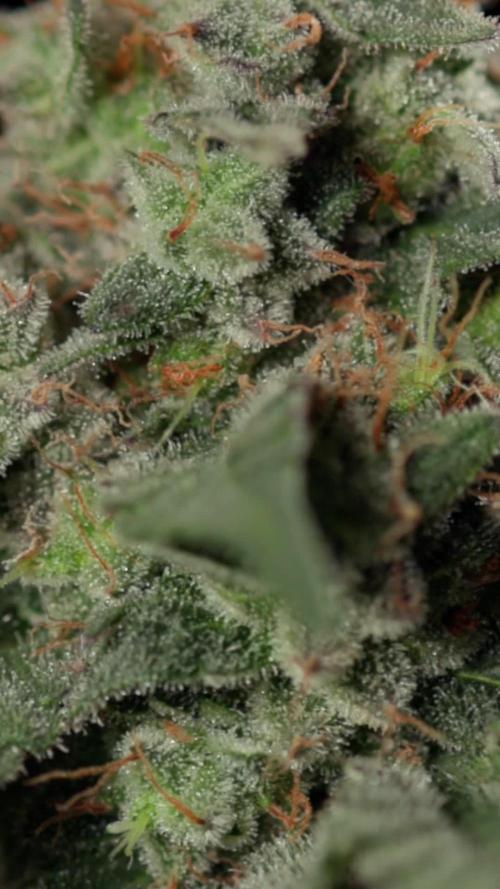
This week I'm showing you the harvest of the first of two London Pound Cakes, which was left to grow as Mother Nature intended, preserving the main cola and allowing you to see it in its natural state compared to the main cola you'll find next week.
The plant is truly beautiful, with a beautiful main cola and numerous peripheral flowers with excellent, super-tasty resin.
Pot and Soil - This plant was grown in an 11-liter pot with Plagron's BioLight Mix organic soil, which gave us a solid start, and then we proceeded to fertilize.
Lighting/PPFD - A Zamnesia Phytonaut 480W LED lamp was used from mid-flowering until fruiting. We achieved a PPFD (photosynthetically active photon flux density) between 800 and 1200 μmol/m²/s, with a cycle of 24 hours, then 23 hours, then 20 hours, and finally 18 hours. All with CO2 to mitigate the effects of heat and excessive light.
Z - https://www.zamnesia.io/it/14526-led-grow-lamp-phytonaut-480.html (National link, use Google if it doesn't work)
Growing system: Zamnesia Ecosystem, fan, extractor, and grow box, all manufactured and branded by Zamnesia.
Trichhomes: We still have a good amount of amber trichomes, starting at 30%. There are several 40-45% opaque and transparent trichomes. In this case, we've gone much further than usual in terms of maturity because the plant is indica-dominant, and we need and want to bring out its characteristics, even at the risk of some oxidation (the amber color is caused by oxidation. Don't fall into the common mistake of thinking that all or a majority of amber is needed; the harvest window opens at 15%, and you don't need a lot of amber, especially if the plants are sativa).
Nutrients: Grown with Plagron Official, a 100% organic base fertilizer, and all recommended additives.
Visit www.plagron.com for grow cycle calculations, product selection, and general information.
All nutrients are available on the Zamnesia website. Also check out the live substrate and the fantastic new Zammi product line.
You can find this excellent strain here:
https://www.zamnesia.io/en/11114-london-pound-cake-zamnesia-seeds-feminized.html
(Google if the link doesn't work; it's a national link)
Terpene Profiles // Caryophyllene, Myrcene, Limonene
Parents // Sunset Sherbet x Larry OG
Genetics // 80% Indica / 20% Sativa
THC // 22%
CBD // 0-1%
Flowering Time // 9-10 weeks
Taste / Aroma: Sweet, Citrus, Spicy, Vanilla, Creamy
Effect: Relaxing, Euphoric, Happy, Balanced, Calming
Zamnesia Description:
London Pound Cake is a decadent hybrid that satisfies both the palate and the soul. Derived from a potent cross between Sunset Sherbet and Larry OG, this strain combines intense dessert flavors, high-level potency, and lush growth, making it a true delight for growers and connoisseurs alike.
In the grow room, London Pound Cake displays vigorous growth and a textbook indica structure, with sturdy branches and dense, trichome-covered buds. With just 9–10 weeks of flowering, London Pound Cake offers impressive yields, up to 600 g/m² indoors and a whopping 900 g/plant outdoors by October. The aroma is decidedly indulgent: sweet, creamy, and citrusy, with hints of vanilla and spice filling the air like a working oven.
With 22% THC, London Pound Cake's effects are deep, relaxing, and euphoric, melting the body and mind and promoting a happy, fulfilled state of mind. Perfect for evenings, creative relaxation, or as a special treat after a long day, London Pound Cake combines flavor and potency in impeccable balance.
For those who appreciate premium flavor and performance, London Pound Cake by Zamnesia Seeds is a pure comfort strain, offering indulgence, an irresistible aroma, and a deeply satisfying effect.
Music - Frequencies 432 Hz and 528 Hz and black musc from www.radionula.com
"The best that nature has to offer"
www.zamnesia.com


Likes
5
Share


@Naujas
Follow
the weather this week was bad, little sun, a lot of rain, but the girl is growing well, big and bright leaves, thick trunk :) I really hope for a good summer;) I think she can be very beautiful :).

Likes
50
Share


@Mr_Motalovah
Follow
Hello growers and tokers! 👋 👩🌾 🧑🌾.🔥💨
There has been much change this week!!
First there was a big defoliation done, I cleaned the bottom of the plants.
All the growth that wouldn't amount to anything because the light doesn't penetrate that low.
Also took off the biggest fan leaves to give more room for light.
Then finally switched to 12/12..
After just 36 hours after the defoliation there was a major change.
New growth everywhere, colas started stretching upwards fast.
By far the tallest girls in the tent. Her colas are stacking up nice and tight if she keeps that up we'll have some nice dense colas. 😁
Great reaction to the defoliation and 12/12 switch.
I'm still watering every other day, After the defoliation I watered with only Enzymes 2ml/L to clean the roots a bit then started with the nutrientes again.
I dropped the amount of grow nutrients from 3ml/L to 1ml/L and started adding bloom nutrientes 2ml/L for now.
I'll slowly be upping the bloom nutrientes and after week 2 I'll no longer add grow nutrients.
That's it for this week. Stay tuned to see how they flower.
Stay safe!
Likes
19
Share


@ProfessorAutoflower
Follow
This plant has recovered from nutrient deficiency and is growing great. Doing lst everyday and plant is responding great. This is going to be a big girl. Still no signs of flower. The other NL from growers choice I grew took forever to flower also.
Monday update - did a little defoliation. Looks a little thin. Should get fuller in a few days


Likes
32
Share


@AsNoriu
Follow
Day 50. Selective defoliation, constant spraying ( I said never in flower, but it goes well, so I will keep up for few more days ).
All good, nothing special except missing space as always ;))))
Day 54. I repositioned them a bit, think too intense air was making both big Mimosas - a real sl@tty DIVAS ;)) Hope they will feel better aside.
Happy Growing !!!

Likes
5
Share

@Mannirumpel420
Follow
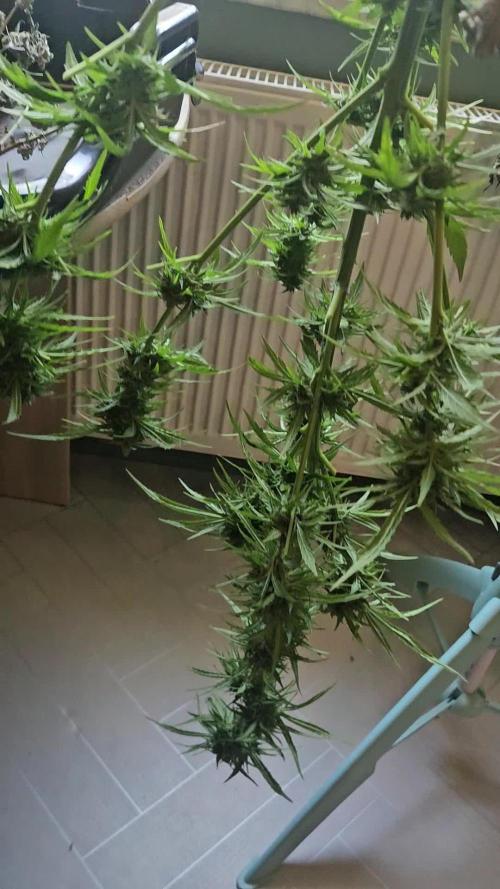
Der Schimmel kam und damit auch die Ernte.Ich habe sie zum Trocknen gehangen und an ihr war wirklich massiv dran.

Likes
16
Share


@Deer420
Follow
Jsem nadšen jak kvetení pokračuje. Ještě máme před sebou velký kus cesty. Dnes 25.5. poprvé přidán Green Sensation.
Ať to roste přátelé
🍊🍧🌻🌺🌷💐🏵️

Likes
9
Share


@Arcadios
Follow
So I think this is the week where I started to go a bit wrong. The Dr Earth I added on week 4 fixed my nutrient problem, however, I was impatient and added a bit more. As a result, I had 2-3 crispy, yellow leaves on the Quarter Pounder in the middle. Since then, I've upped my watering a bit and it seems to be fine.
This week
* Lights still at 15"
* Giving about a gallon of water every other day, each. At this stage, I get barely any runoff, but stop when runoff is consistent.
* Top dressed w/ more FFOF with some myco mixed in.
See video for a better view of the nute burn.


Likes
10
Share


@UrbanFog
Follow
Plants continued to grow well some plants show signs of nutrient deficiencies, trying to address it without burning all the other plants.
But besides that all looks good and we ready to flip to flower. 12/12 cycle to start.
Clones looking strong and ready to be replanted as mothers for the next batch of clones / SOG


Likes
16
Share

@Northern_Ent
Follow
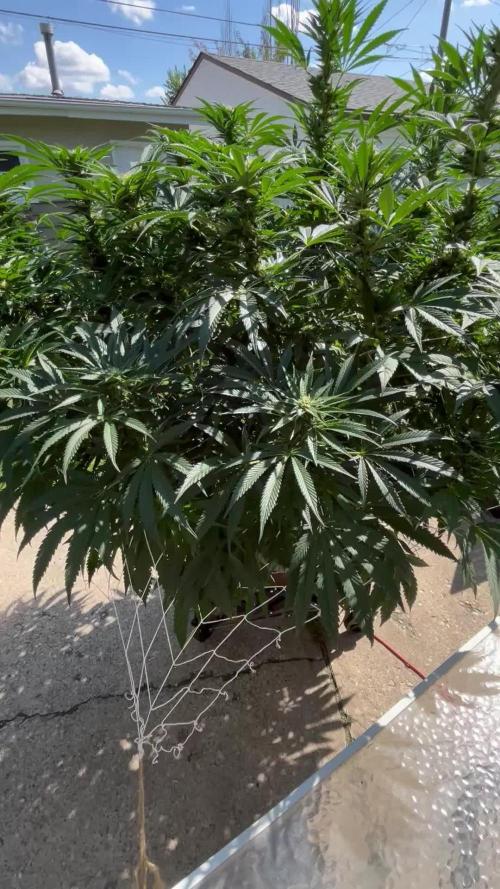
Aug 23: Lemon Cream Kush is doing fine.
Aug 26: quite hot now (finally summer?) with a week of 30 C starting now. Upped water volume to about 9 L a day.

Likes
6
Share


@TerpTurtle
Follow
12 day dry @ 58-63RH & 60-66F in blacked out dry tent | Glass Jar Cure with Inert gas
Early taste test and I actually love this bud, is the best in house strain I've grown so far & the second Platinum cross. Flavorful Funky Sweet Orange cream cereal terps, the texture of the bud is buttery smooth, fluffy and pink/orange color when ground up. Bud has deeply potent effects that is IMO the perfect amount of heavy on the body but still euphoric and creative.. it makes you calm and happy! is checking off so many boxes not even cured, just smelling this batch makes a true connoisseur grin and bag appeal is insane
