


Processing
Likes
Comments
Share


@Lil_Queazy
Follow
Start of week 2. Everything seems to be ok. The bottom left and right seem to have taken the lead. I switched the two biggest plants into the center. And raised the pots off the ground to help with airflow and temps. Plants are doing good. Two centers are taking the lead. Using RO water. Currently watering when top two inches are dry.

Likes
17
Share


@Leonard_Lunte
Follow
Day 70 - Everything going well with both dwarfs, the deficiencies have stopped and Ill be able to harvest them soon!


Likes
9
Share


@b_C6969
Follow
day 68, i know im a week ahead but whatever.
She's chugging along nicely, kind of. To be honest she's looking a bit overcooked in my opinion lol, i thought the light may be too close but nope, light meters reading between 50,000-70,000 which is normal, plus the 70k is at the tip of those big colours.
Super frosty, smells delicious, its mostly the 2 big colas at the back that need to hurry up, i've included photos.
She's had 2 flushes now, last one was a few days ago. So hopefully she'll finish up nicely. No more nutrients, definitely looks like the leaves are starting to deplete themselves of food and may start dying soon. I'm guessing she may be done at day 75? hopefully. gotta remember shes about a week behind because of the time she was stunted.
Just a quick update and a bunch of photos :) oh! and a video.
Likes
6
Share

@Dottgreenthumb
Follow
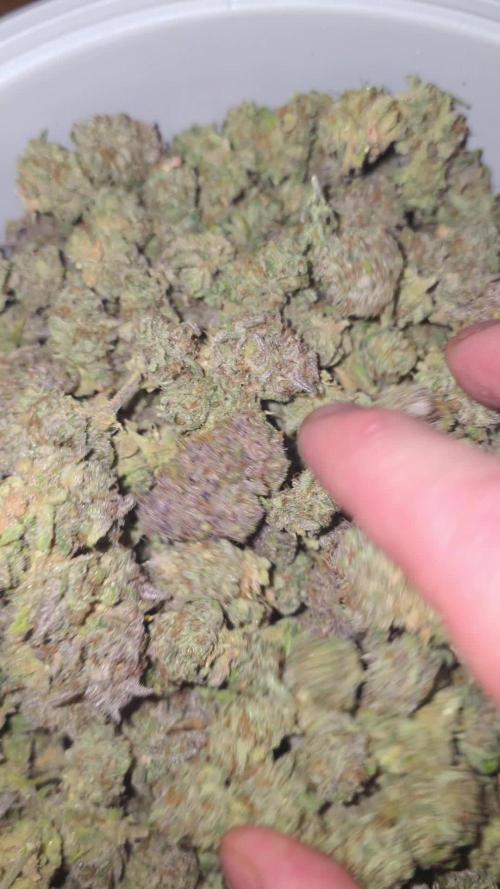
Super raccolto super strains impressionante 185 grammi/100 giorni
Essiccazione in box 17 gradi 55 di umidità 14 giorni

Likes
6
Share


@Walter_the_Ragamuffin
Follow
More Incredible Developments this week! I started adding General Hydroponics Bud on the first watering of the third week of flower - it has resulted in some surprisingly big and fast growth over the past week. You can see from going to the previous week and this one, the bud sites seem to just getting fatter and searching out for their neighbors above and below them with the white pistils - I know I keep saying this but as a lifetime cannabis user, this is the first time I have had the opportunity to watch my own garden closely through the entire plants development and life cycle, and so far this is VERY exciting and entertaining to see the developments each day. The topping and LST techniques I used (no experience, only watching videos and researching) have resulted in my plants taking on almost a bowl or basket shape, where the outside branches have reached far far above the middle canopy during their "final stretch" or first week or two of flowering. Now, the middle of all of my plants have numerous smaller bud sites that are developing - I am looking forward to how the lower canopy buds develop!
I am currently watering them every other day - 8 cups of water each. This past week I increased their water intake from 6 cups to 8 cups - So far I am seeing no sign of stress in any way shape or form - only VERY happy plants working on bulking up on their flowers. I plan on letting them do their thing and working on maintaining their environment so it stays consistent. Definitely a big increase in smell this week - the Cherry Gorilla x Sol Sonic seem to be moving along and bulking up a little more than the GMO. When picking leaves off the GMO, I can already start to smell and recognize hints of the tremendous gas garlic stank I have been looking forward to - Appreciate the Likes and Follows! Look forward to more photos and developments from my First Grow :)


Likes
13
Share


@masonandjayden
Follow
Week 2 of flower everything has been growing great praying leaves from start till now. Been really healthy four super sour s1 from copy cat genetixx 2 peanutbutter souffle from ilgm and 1 pressure clone from a cultivator in my neighborhood. Excited to see results in about 6-7 weeks

Likes
Comments
Share


@Algar
Follow
Just feeding her water and getting her ready for harvest, she’s almost there. Buds are really full and heavy. Branches are tilting down from the weight. I believe, i’ll harvest at the end of this week, but the rain might might put a dampner on that.

Likes
6
Share

@xXDankDripzXx
Follow
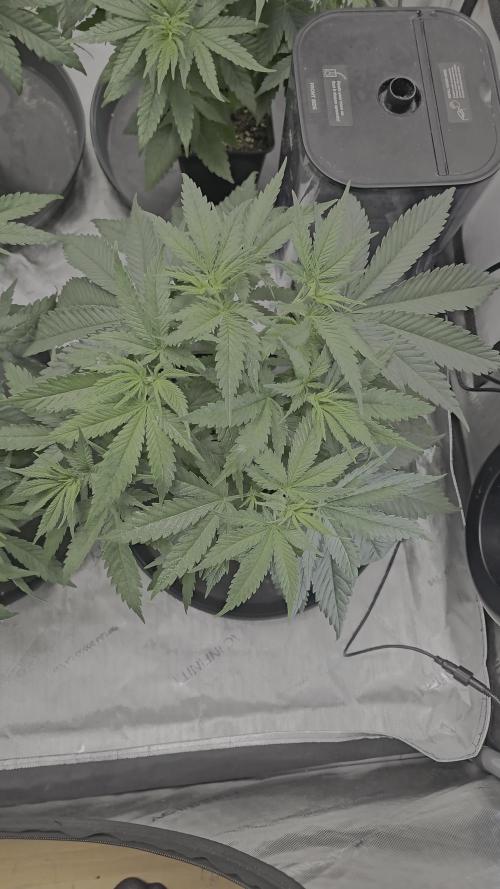
Week 3 - girls are loving life a getting bigger by the day, general plant structure is pretty much perfect, and they are showing strong indica leaning characteristics which is just what i want to see 🌱🌿🍀

Likes
17
Share


@Noob_quest
Follow
Such Bittersweet Joy
Added this week as ‘Flowering’ although technically should be harvested as I but I haven’t had a chance to weigh or anything. I will do that next week once trimmed etc.
So finally cut them down on D89, it was a beautiful day outside and it just felt right.
Although when it came to the deed itself I felt sadder than I thought I would for my girls and the time we had together.
All 6 (I’m growing another 3 different strains but not included on this diary) are now hanging to dry in the tent. Temp -18 C; Humidity-60% seems to be holding steady with no tinkering thankfully.
After the 3 days they have all dried noticeably, perhaps 4/5 more before trimming / curing.
I’ve had quite a close look at most of the harvest and as far as this noob can tell, there doesn’t seem to be any issues with mould / bud rot. Fingers remain crossed.
I did have one very profound moment this week... It happened as I was surveying the harvest hanging up for the first time.
I could feel my mindset change suddenly from the constant paranoia over their health and overcoming my impatience to “I actually have a crap load of weed”.
It was beautiful beautiful moment...
Thanks for reading. Have a great week 😊

Likes
29
Share


@BudXs
Follow
A desigber strain well worth the price. Grows magically outdoors with little to no care. Astroboy didnt get em, so its a win. Thanks for following, see these genetics shine under my indoor diaries.


Likes
6
Share


@DrBud420
Follow
21.06.
Dos Si Dos 33# 1# Day 56#
Dos si Dos 33# 2# Day 56#
With a little delay because I'm a lazy stoned person, and in addition the responsibilities regarding the plants are already starting to grow, and I also have a lot of work around the garden and then I don't always arrive in time to release the update.
The plants are progressing well, but now they are already hungry, so the next watering is for food.
Two days ago they were topped for the third time, I also topped the two highest side branches.
Yesterday was the end of their eighth week, the pictures are also from yesterday.
Last night I sprayed them with SMC for prevention, but none of those pests can harm the plant outside as well as inside..first of all, the plants are much bigger, and therefore have much more leaf mass, and secondly, it is nature, there are many of them in nature, the only thing that can destroy them all are caterpillars during flowering and mold when the humidity is too high or when there are frequent rains, everything else does not worry me at all.
Tomorrow I will move them somewhere where there is a lot less grass because now they have already filled this space and they can't expand any further, so in order for them not to get too long and to go wider I have to move them where the grass and other plants won't bother them.
Stay High and Keep Growing!!!
Likes
20
Share


@Enollam
Follow
Servus zusammen 🏽
Im Vergleich zum Rest im Zelt ist alles beim Alten... Sie hängt ein paar Tage hinterher... Was aber nichts ausmacht... Sie macht sich gut und zeigt eben etwas langsamer in welche Richtung sie will😁
Ich bin zufrieden und weiterhin gespannt
Likes
7
Share


@Genussmittel420
Follow
had to flip because of the critical already started flowering somehow
Likes
43
Share


@DaSofaSurfer
Follow
yo ppl out there growing this strain:
First of all congratulations !! This is something truly special !! I just fall deeper and deeper in love with this cultivar.
so to anyone growing this two notes, right quick:
- you can feed this one real heavy !!
I been red lining her with nutes. close to maxing out all the way thru. I think there were only two waterings with just sugar water. she responds very well to heavy nutes.
- also veg her out longer than you would. She don't stretch much.
I have the mom and two clones going but mom is three weeks ahead. I'll be posting some buds soon from her actually.
Anyway Greenhouse seeds co. describes it as creamy smell, a dark chocolate and coffee smell. Maybe I got a pheno but I don't get that. I get toffee and lemon flower, kinda like twizzlers and sprite but somebody frothing up cream in the coffee machine. but no coffee. Mom is 3 weeks ahead and she smells the same.
soon as I pull up smell welcomes me home. type of smell that just pulls you in and you just want to follow.
the buds are so dense !! I wouldn't want to be the story bastard to take of of these buds to the dome after falling of the empire state. The golf balls would take somebody out. some of the hardest nugs I've grown for sure. TIGHT !!
this is something very special

Likes
4
Share

@420DeepGrow
Follow
📆 Semana 3:
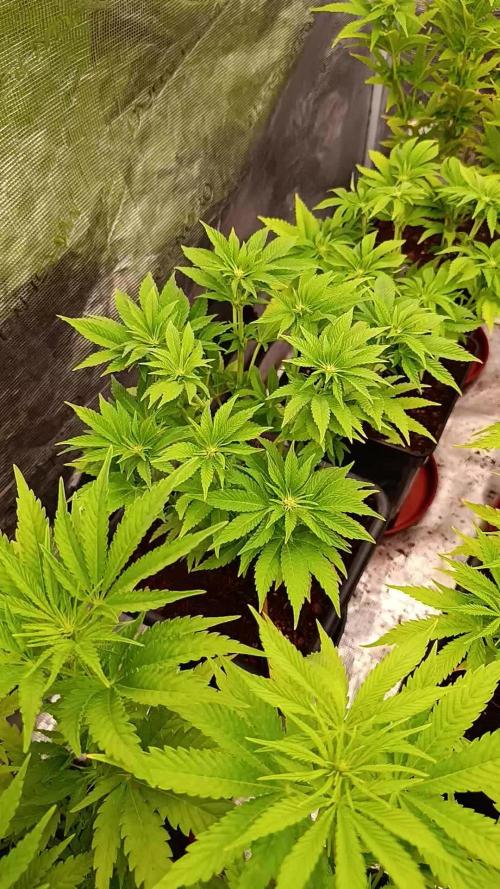
Con el coco ya limpio y la EC estabilizada, la planta entra en dinámica de absorción normal. El estiramiento se regula y comienzan a definirse los primeros botones florales en las puntas, con pistilos multiplicándose y estructura cada vez más ordenada.
Los riegos siguen suaves pero constantes, manteniendo el equilibrio radicular y evitando nuevas acumulaciones. La planta responde con hojas firmes, color uniforme y mayor presencia aromática, que evoluciona desde la nota cítrica inicial.
Semana de consolidación tras el ajuste del medio.
Seguimos creciendo fuerte 💪!
Likes
45
Share


@chapadux420r
Follow
Hello guys!
So it’s the end of week 2 of flowering and all is going well. Been watering every 2 days and, as you can see, we have white pistils and small buds in every plant
Not much to say, the ladys are green, stretching and growing buds as it should
Yesterday i’ve defoliated one of the critical + 2.0 clone and next week I’m going to defoliate the rest of the plants. Just wanted to test when it is better to do the defoliation so it’s kind of an experiment
Tell me what do you think of how this is going


Likes
27
Share


@HiddenMessage
Follow
Week 5 pretty successful, nothing bad happened, had good growth considering the troubles I had the week before. Leaving town for 3 days so they will be on their own. Plan on watering right before I leave and right when I get back. Got my lights on timers now. Pulled the light up to 24 inch assuming/expecting the plants will grow a bit while I'm gone.
Had a lil bit of yellowing at some of the tips of one of the plants as seen in pic above. Any ideas y?
Also posted a video and just curious if the wind is too much..?
Likes
45
Share


@masterofsmeagol
Follow
7/3 Hot as fuck today. Japanese beetles were around. I killed a few. I'm going to have to go over and keep an eye on things. It reached 90° today for the majority of the day. I watered around 1pm as I noticed most of the bags were very light. I'm glad I held off on the BT. I've dealt with jpn beetles before so hopfully that won't be an issue. Things are getting big. It won't let me upload any pictures or the video I did. I may upload it to past week. Went back over at night and and plants looked dropy but it was after 7pm and they were just going to sleep.
7/4 Didn't take photos this morning. Found some jpn beetles. That's the damage I've been seeing. I went back over last night to hunt them but I only got two. There weren't any others. No biggie. I'll put some pics up from today after I get back
7/5 Didn't get a chance to check the plants out today. My intuition tingled around 1pm and I had just gotten home and I ran over to check them. They displayed minor signs of heat stress as seen in the pics (due to the super high humidity and 90° weather) and the bags were light. A few were REALLY light. I could see they needed water. I WATERED 4 1/2 GALLONS TO THE GARDEN. DO TO THE HIGH TENPS AND WINDS IVE HAD TO WATER THE LAST THREE DAYS IN A ROW. IVE SLOWLY STRARTED INCREASING VOLUME. I don't want to water until I get a shit ton of run off because I want to keep the nutes in my soil as long as possible. As you can see things are going great. Minor pests but notjing major. They're growing at a very rapid pace. I'll need to add another layer of supports soon and begin to LST some of these girls. I've got one seedling in a 10 gal and I'm pretty sure it's a feminized red runtz but it's in preflower and looks and SHOULD be a female but I haven't seen the white hair yet. Looks like a female preflower though. I do have one auto though in a 5 gallon tjats doing good too. I have a bunch of pics but the internet is too slow. I'll upload tomorrow. Started pouring around 6.
7/6 Poured sheet rain all night. After it had Bern super fucking hot and I watered my plants with 4 1/2 gallons. Oh well. If I didn't water we wouldn't have gotten the rain. The fabric bags makes watering easier. The wind will dry out the medium. We do have some rain in the forecast. A pallet fell over and knocked my 5 gal bucket with tje auto into a 10 gal seedling but it held the pallet up and didn't damage anything. Out of all the ways it coyldve landed it landed just right to not hurt anything. Everything is super healthy. I do have some random pest damage but it's minimal. I'll decide whether to use a spray or not. Didn't take pictures this morning. Was pressed for time.
7/7 Super hot even at 8a.m. Rained the majority of the day yesterday. Plants are getting HUGE. I'm going to have to build a second round of supports and should probably start some LSTing. They seem to like growing natural how they are (besides the original topping and FIMed. You can tell these are ALL very high % indicas. I'm seeing pistols spitting out everywhere. Event horizon and sherb cake seem to be in the lead. The seedlings have realky taken off. The one I put in the 50 has fan leaves the size of my hands.
7/8 Wow it has been extremely hot. It's going to be in the 90's again today. Checked my plants and it seems the GMOs seem to be using more water. Those bags were a little lighter. Seeing how there is no rain in for a few days I had to water. WATERED 3 1/2 GALLONS. LAST SEEDLING FINALLY SHOWED AS A FEMALE.
7/9 Bags are still heavy. Found ONE jpn beetle this morning. Plants seem to be bigger everytime I look.starying the stretch and spitting out some pistols. I took some pics of the pistles. I'll update
7/10 should've started a new week but I didn't. I'll make next week six days. Plants are starting ro stretch. Minor random pest damage but woth the heat they need lots of water. Noticed a couple dead interior leaves so I should probably go through everything and defoliate. I need to add another layer of supports as well.
