


Likes
Comments
Share


@Andres
Follow
she will be 100 days old in some days more ... and she is ready to be cut ... I will also leave her until the first week of February ....

Likes
11
Share

@Oims_Finest
Follow
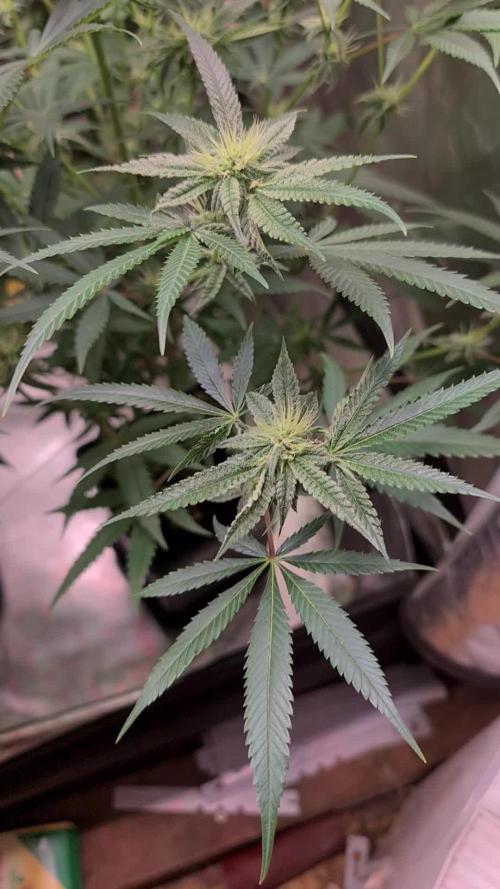
Good day Mates.After bit starting problems, the two remaining plants catched up perfectly.
Buds started to grow really big'n'fat..
Strong Red fruit and spice on the Z-leaning pheno..👌

Likes
16
Share


@SirBudAlotts
Follow
So this week was just a few adjustments in regards to environmental conditions...done abit of defoliation for air movement and prevention of extra moisture...The aim is no mold or bacteria having any chance to multiply or even exist..absolutely not! I ain't about to ruin this ladies!
Other than that...no issues..just maintain the process and environment. I do not want any major changes in that regards, especially during the early flowering stage.
I would like to thank all the Grommies for checking out this grow and showing love.🌿


Likes
12
Share


@CannaDiaries420
Follow
Week 7
Mars Hydro TS1000 has arrived.
plants starting up te flowering stage.
did some light defoliation.

Processing
Likes
12
Share


@Tazard
Follow
These are clones that I managed to take from my summer garden that became a disaster due to a heat wave that we had breaking 100 year records. I expect everything to be 48” in height at maturity.

Likes
5
Share


@HegauHillsFarmers_D23
Follow
In dieser Woche hat sich sehr viel getan , die Blüten sind herangereift und haben nochmal etwas an Volumen dazu gewonnen.😍
Der Geruch ist sehr stark und die Terpene intensiver geworden.
Es sind vorallem, Benzin und süße Düfte wahr zunehmen 🍬⛽️ Der Runtz Teil überwiegt leicht .
Die Skywalker OG Runtz Auto brauch nicht sehr lange um die Blüten auszureifen.
Deshalb habe ich hab dieser Woche, begonnen die Pflanze mit Flawless Finisch zu spülen und so auf die Ernte vorzubereiten 🍁🙌🏻


Likes
58
Share


@pifflestikkz
Follow
Day 78
Day 28 flower
19/07/24 Friday
Started the week with a good watering as she had a double feed end of last week. She took 4L de-chlorinated tap water pH 6 and no run off, added another 1L and see run off forming on all sides.
She is a happy, strong 💪 plant !!
The buds development is nice on this strain! I like to see the calyxes stacked like this, I'll get some macros tomorrow.
Smelling like lemon sherbet it's insane 🤯 or a old school sweety shop.
Day 79
Day 29 flower
20/07/24 Saturday
Nothing to report.
Day 80
Day 30 Flower
21/07/24 Sunday
Big feed again, de-chlorinated tap water pH 6 added nutrients.
Seeing her stack now 🤩
Smells getting stronger daily 🙌 💚
Added a short video.
Day 81
Day 31 Flower
22/07/24 Monday
De-chlorinated tap water only today pH 5.9 and watered in 5L had a little run off. She is getting so thirsty it's awesome!
She is starting to stack them calyxes.
Update on pictures and video 📸🤩
Day 82
Day 32 Flower
23/07/24 Tuesday
FEED again today , De-chlorinated tap water pH 6. Full 5L had about 300ml run off.
She is so thirsty !! 5L a day now.
But it's showing, calyxes are stacking beautifully, the trichomes production is nice and starting to have a magical effect with flash 📸 🤩
Day 83
Day 33 Flower
24/07/24 Wednesday
De-chlorinated tap water pH 6. Did 4L and started to see run off so left at that.
Day 84
Day 34 Flower
25/07/24 Thursday
END OF WEEK
She really has packed on weight this week, thirst and hunger is hard to keep up 😅
Smells phenomenal, looks insane.
Pic+Vid update

Likes
16
Share


@CanarianGrow92
Follow
Another good week for these girls, they are getting more and more thc day by day, still some weeks to go as we are still on the week 5, this strain is a really easy to grow strain which dont require that much attention, i just provided some guanokalong powders and shes good to go 👍😁

Likes
5
Share


@GREENPHOENIX6262
Follow
*Week 4 Veg - Seedsman Critical+2.0 - 10/29 - She has grown about an half an inch since yesterday (8.3inches) - Her fan leaves are twice in size in width*
* End of Week 4 Veg - Seedsman Critical+2.0 - 11/04 - Hard defoliation - LST tie down - (11 inches ) - Fan leaves removed *
*End of Week 4 Veg - Critical 2.0 - 11/4 -11 Inches - End of week recap - Split Cola - Sideview pic added.

Likes
34
Share


@Robbaus
Follow
Discretamente bene direi. A parte purtroppo un dubbio di una ermafrodita, penso e spero di aver scongiurato il peggio eliminando tutti i bulbi sottostanti al fiore di ciascun apicale facendo la massima attenzione.
Ad ogni modo i fiori si stanno gonfiando parecchio, il profumo è invitante, i tricomi hanno un bell'aspetto. Vediamo come va a finire.. 🤞🏼🍀💪🏼

Likes
10
Share


@Ganja_Victoria_Aus
Follow
They cut all my plant and take it. Bad friends. The yield and number of plant was higher. Unfortunately. I walk away with 500gr of 16 different strain. No trace of Super Lemon Haze

Likes
23
Share

@MyLittleGarden
Follow
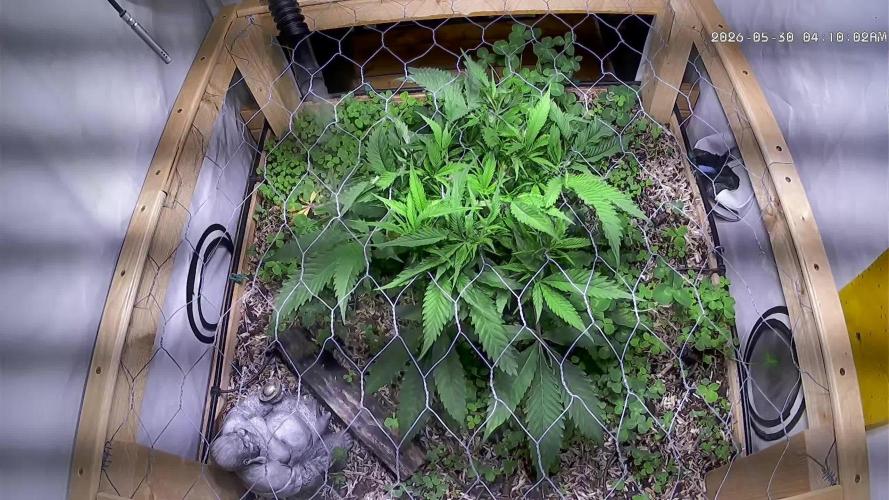
Vegetationswoche 8 - 30.05. – 05.06.2026
Diese Woche lief alles ziemlich entspannt. Einmal leicht entlaubt und die Triebe weiter unters Netz gespannt, damit sich die Utopia Haze langsam über die Fläche verteilt.
Die Pflanze wächst aktuell richtig gut, sieht gesund aus und hat schöne satte grüne Blätter. Der SCROG füllt sich langsam und das Cover Crop verwandelt das Beet mittlerweile in einen kleinen Dschungel.
Ansonsten habe ich nicht viel gemacht und der Pflanze einfach ihren Raum gegeben.
Blumat-System läuft stabil, Klima passt ebenfalls.


Likes
170
Share


@nonick123
Follow
Día 47 (03/03) Las señoras siguen su imparable Stretch. Solo mirarlas y disfrutar 😍😍😍🎉🎉🎉
Día 48 (04/03) Riego 1,25 Litro H20 + Wholly Base 2,5 ml/l + Solid Green 1,5 ml/l + Early Flower 0,75 ml/l de Gen1:11
TDS 960 PPMs - pH 6,26
Día 49 (05/03) Se empiezan a formar los erizos! 😍😍😍
Gorilla Cookies FF ha despegado hacia el cielo! 🚀
Día 51 (07/03) Riego 1,25 Litro H20 + Wholly Base 2,5 ml/l + Solid Green 1,5 ml/l + Early Flower 0,75 ml/l de Gen1:11
TDS 950 PPMs - pH 6,37
Día 52 (08/03) Los erizos empiezan a engordar!
Día 53 (09/03) Parece que el stretch se frena un poco...
💦Nutrients by Gen1:11 - www.genoneeleven.com
🌱Substrate PRO-MIX HP BACILLUS + MYCORRHIZAE - www.pthorticulture.com/en/products/pro-mix-hp-biostimulant-plus-mycorrhizae
🎚️Controlled by TrolMaster TCS-1 Tent-X System Main Controller - https://www.trolmaster.com/Products/Details/TCS-1

Likes
121
Share


@NuggetPawn
Follow
Continuing to use nutrients from 9 days ago. Mostly added back water to the tank to reduce the EC, as it was too high in my opinion. Going to try and milk another week out of the nutrients in the tank at the moment, as there are no obvious signs of deficiencies to note.
As you can see, I have opted not to defoliate at all for this grow. So far I have only cut off two leaves just so I can get to my filler cap easily.
I am doing a little supercropping here and there to level up the canopy.
In just over a week they have grown from 51 cm to 93 cm. So a good 80% increase in height. An average of 2 inches of growth per day.
If they grow similarly to my last crop, they should have just under 2 weeks stretching left to do.
Happy new year!
Likes
9
Share


@FCFLOWER
Follow
Another week with good development. Plant liked the LST and is showing off great potential.
Smell is stronger and amazing.
I am only concerned that I will need to travel and will not be able to leave the plant in the sun directly during the days but hopefully by leaving it on a very clear area of the house with both natural light and the led I have to support at night will be enough for her for 3 days in a row.

Likes
25
Share

@Ganjin
Follow
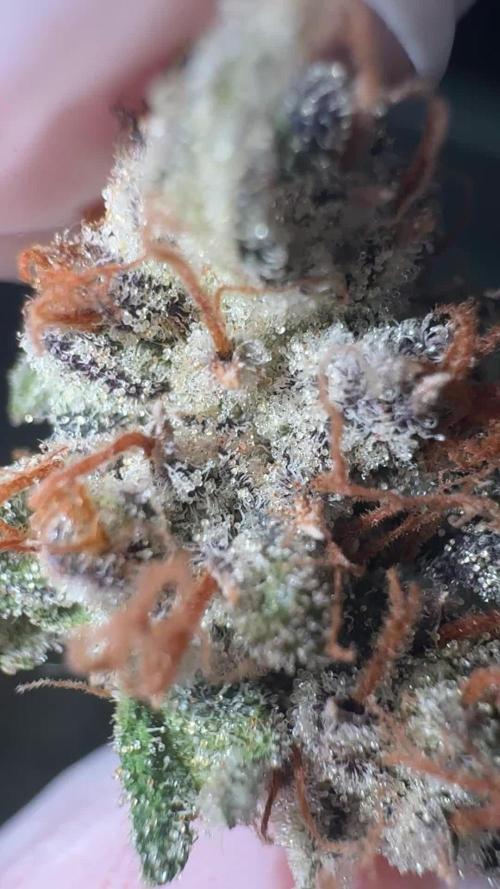
Drying went well, cured for over a month now and is really tasty. I got about 26g from the plant, if I remember correctly. Not much but more than enough for me. She had some nutrient issues and a small pot, so I am not judging that number too much. The bud quality is fire!

Likes
10
Share


@physicist
Follow
This strain is just amazing, best weed i've ever had. I hope you'll enjoy the timelapse!
Likes
4
Share


@SamDo
Follow
This week marks Week 18 of veg for the Pineapple Upside Down, and things are getting interesting.
The plant is still pushing hard, stacking growth on all sides — more height, more volume, more density.
She’s clearly in that phase where she’s comfortable, full of energy, and ready to take every bit of space you give her.
But that’s exactly where the challenge begins.
Right now, I still can’t move her into the bloom tent.
There’s another plant finishing inside, so the space isn’t free yet.
And that delay changes the whole strategy, because this girl is getting tall — fast.
So the main question of the week is the same one I’ve been wrestling with for a while:
Should I let her stretch and plan a SCROG, or should I top her to keep things low and contained?
And to be honest, I’m still not ready to decide.
I want to see her in her final environment before making that call.
Transplanting into the bloom tent will change the lighting, the airflow, the VPD, the root-zone rhythm — and I don’t want to shape her structure blindly before she settles in.
On top of that, she’ll need a short acclimation period once she’s transferred, so there’s no point in rushing structural training now.
It could do more harm than good.
So for the moment, the rule is simple: don’t touch anything.
I’m keeping her on the same settings, same nutrition, same EC, same feeding schedule.
She’s clearly thriving, and when a plant is this comfortable, the smartest move is not to interrupt her momentum.
You can feel she’s building up internal energy — thicker stems, fuller leaves, faster node spacing.
All of that will pay off in bloom, as long as I manage the height correctly once she moves to her final tent.
This week is all about timing.
Letting her grow, monitoring the stretch, and holding the decision until the very last moment.
The more I watch her, the more I realize that patience here is probably the winning move.
For now, she’s healthy, beautiful, vigorous, and still accelerating.
No signs of stress, no burn, no deficiencies.
Just a plant in full confidence.
Next week should be decisive — hopefully the bloom tent will finally be free, and I’ll get a clearer picture of the strategy: SCROG or top.
Until then, she keeps growing… and I keep observing.
