Likes
2
Share


@CalGonJim
Follow
6/9 MONDAY 12am. Looks good. Using distilled water in a spray bottle for now, did a light mix of Grow Con .5ml per L ONE TIME...good.
6/10 weed good. In a kit stickers temperature indicators too hot icon shows hot face or something. without power like fishtanks sticker thermometer. 3pm BPP Picture today Analog special effects lost a day to lighting and special effects all practical im also a tiny bit demonic it adds to the character.
4pm look up fluid dispersal in root medium
6/13 5am everyone looks good medium lights. Now to try the fiberglass cubes.... tired of bugs hope I dont regret this...
6/14 1230pm looking good. no problems. very tired. found a little pair of unicorn slippers from a long time ago. probably headed to another Leaving Las Vegas melt down so who knows.
1pm
6/15 245am BPP is hard to grow. so its good for a small container grow since it seems to be a smaller plant, bigger containers dont make that much of a difference. It's this one is growing great setting 5 on AC Humidity dome now, with blue & red as well full power. Going to try fiberglass for all this time.
1053am IVE SEEN THINGS YOU PEOPLE WOULDN'T BELIEVE ....BECAUSE I CANT UPLOAD MY PRECIOUS PHOTOS... I CANT SPELL BELIVE...GOT DAMNITO

Likes
7
Share

@RockoCalenberg
Follow
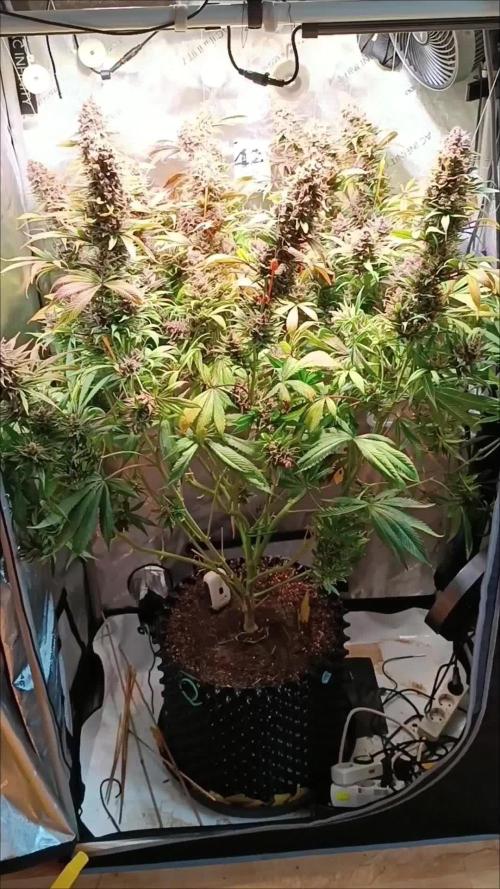
Die zehnte Woche beginnt und sie sieht ziemlich zerlottert aus. Die Blüten sind ein purpliger, pinkysher, funkelnder Harz Traum 😍
Die Drüsen trüben sich weiterhin ein und sie verströmt einen tollen Duft aber ich denke es werden jetzt die letzten Tage und diese Woche ist Schluss. Kann ja nicht ewig warten, oder ?


Likes
22
Share


@Aedaone
Follow
The weekly forecast turned to high percentage of rain every day for the rest of this week. Night 4 and Day 5 we had heavy rain and thunderstorms. Day 6 was heavy cloud cover all day with high humidity. Day 7 we had lots of rain and drizzle. Night 7 we had more rain. These two girls seem to love it. The haven't missed a beat and got a boost when they tapped into the fertilizer. The listed nutrients are ml/gallon of soil and we're fed during week 1.
Likes
16
Share


@VeggieTales
Follow
Day 49 of this grow and I wish I could be taking better care of these girls but am doing the best I can.
Throughout the grow I have done nothing but water once a day with calmag. I will be adding a compost tea in the coming days. I have been dealing with a nasty fungus gnats problem and after changing the environment and spraying. Neem seed oil they are under control. Hopefully things go well from here on out and it’s some 🔥 it smells wonderful already and each having its own unique quality to them!
Happy Growing Cheers! 🌱🎄🔥


Likes
58
Share


@Mosquito_Haarlem
Follow
Week 7 is begonnen en ze wordt heerlijk verwend.
Ze groeit lekker door, de toppen worden groter en ze ruikt nu al zeer sterk.
Helaas heeft ze wat gele bladpunten gekregen, ik denk dat ik haar overvoed heb en de aptus voeding iets te veel van het goede was, dus vanaf nu geef ik haar alleen nog plagron zoals gewoonlijk.
Ik ben zeer tevreden over de spiderfarmer sf-1000, geen geluid, laag energieverbruik, weinig warmte en intense zonnestralen. Topnotch.
Laten we zien hoe ze zich in week 7 verder weet te ontwikkelen.🧐
Ik zal gedurende de week nog verse foto's updaten. 📷
✌️🏼

Likes
3
Share

@smoking_hills9
Follow
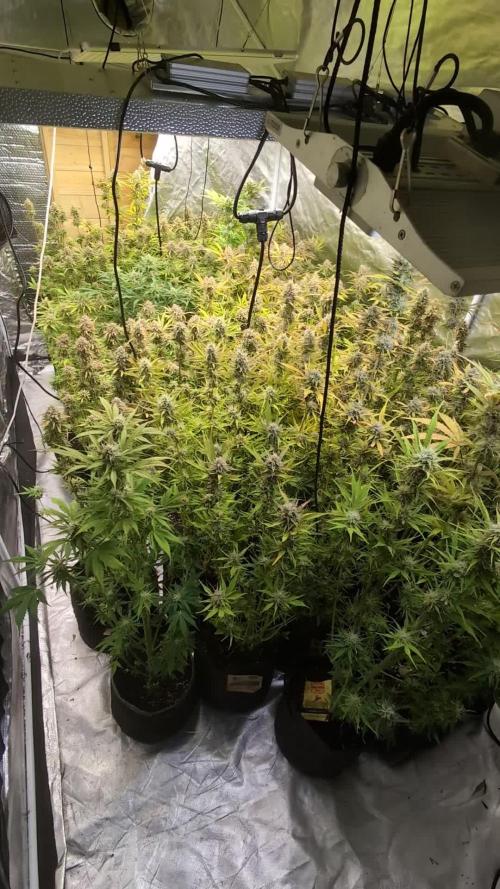
These cali genetics are blowing my mind 🤯 super sticky, very frosty rock dence buds with extra strong smells. All 3 strains are 10 out of 10, very impressed. Done last defoliation few days ago, preparing for the harvest so it's much easier. Stalks are super fat, same as buds.
Got big surprise from Atami, plant food, and many extras. Crazy. Thanks a lot guys. 💚 Start adding you Bloombastic food already. They love it. Smell is mad. I think most of plants ready in week or so.

Likes
5
Share


@GrowLegend
Follow
Bien aquí esta el día esperado la cosecha, es mi primer cultivo y considero que lo logre. En muchos medios de lectura y en especial en vídeos mencionan que no puedes esperar mucho es tu primer cultivo. En mi caso es falso y lo demuestro ya que si aprendes, investigas por cuenta y lees lo suficiente, obtendrás un alto porcentaje de que los resultados se den. Muy contento con mi plantas y sus tonos morados. Puntos a mejorar tener una carpa de cultivo y por su puesto un extractor de humedad para que baje la humedad preferiblemente a 45 grados
Vendrán mejores contenidos y cosechas mas abundantes. Gracias a todos por su vistas y comentarios. Saludos y bendiciones!
Processing
Likes
3
Share


@Snuffys_garden
Follow
Week 6 is going good, all are in flower and looking ok. Purple Punch flowers look a little small but hoping to see them swell as she looks to be done stretching. Starting to see some frost forming on Zkittlez and OG Kush. Pink Kush has some beautiful, almost black color. Lights are 18/6. No nutes. PH 6.5 water.


Likes
17
Share


@420DeepGrow
Follow
📆 Semana 6
Blue Zushi está mostrando su lado más exótico esta semana.
Los cogollos han comenzado a compactarse con fuerza y se nota una producción de resina que va en aumento. Visualmente, empieza a asomar ese tono azulado que tanto llama la atención en esta genética, sobre todo en las puntas más expuestas a la luz.
A nivel nutricional, sigo con la base de XpertNutrients y ya se nota el empuje adicional de Sticky Fingers, que está potenciando claramente la formación de tricomas y dando un pequeño salto en la intensidad del aroma, que empieza a volverse más dulce y fresco.
Los Adlite están funcionando a la perfección: gracias a su uniformidad, incluso las ramas laterales están sacando cogollos densos y con buena pinta.
Temperaturas estables entre 22 y 25 °C y humedad en torno al 55%, controlada con buena ventilación para evitar condensaciones y problemas en la fase más delicada.
En cuanto a olores, empieza a destacar ese perfil afrutado y ácido con fondo kush, muy característico de la Blue Zushi. Los tricomas están en su mayoría lechosos, por lo que aún queda recorrido antes de pensar en cosecha.
Una planta vistosa y con mucha clase.
¡Seguimos creciendo fuerte! 💪
Likes
61
Share


@Dunk_Junk
Follow
Wow look at her flowers!!!!!!!
She is bushy as hell!!!!
I do not know what phenotype this is but there is absolutely no purple either 😞
Still, she is she bushiest plant I've grown in a long long time.
Quite impressive!!! 😎💪

Likes
85
Share


@Tropicannibis_Todd
Follow
Start of day 98 ...... January 15 2022 Start of week 14 ........ 72 DAYS INTO FLOWERING
😕 LOOKS LIKE THERE GONNA GO A LITTLE LONGER THEN EXPECTED ? 😕 Gonna be honest , I didn't expect it to go over 85 days but here we are ........
( I BELEIVE IT HAS ALOT TO DO WITH THE SIZE OF MY GROW MEDIUM , AND THERE HEALTH AS I AM RUNNING 45 LITERS OF SOIL MEDIUM) .... SHE SEEMS TO WANNA RIPEN ON HER TERMS
( OMG THEY SMELLING GREAT ) !!!!!!!
Check out the full grow video on latest weekly update
Super Exceptional Growth Daily
Still adjusting LST when needed and leaf tucking.......
Water Only when needed but its drinking more every otherday and adjusting lights when needed......
Rain Water Only .......
( DAY 26 AND BOTH NL 1 & NL 2 SHOWED PREFLOWERS )
( DAY 49 AND RESIN PRODUCTION HAS STARTED )
( DAY 57 , EQUIPMENT FAILURE , main FAN , over heated😡 tripped breaker , reset light timers , lost a DAY, REPLACED new Main Fan 😁 back up running 👌)
( DAY 70 DID ITS FINAL FLUSHING TODAY TO GET RID OF ANY BUILDUP )
( DAY 77 AND IT SHOWS A SLIGHT DEFICIENCIE MAYBE A CAL/MAG GETTING CLOSE TO END OF LIFE ) IM ALSO DOING VERY LITTLE, SLIGHT DEFOLIATION
( DAY 101 AND ALL IS GOOD , THERE FATTING UP )
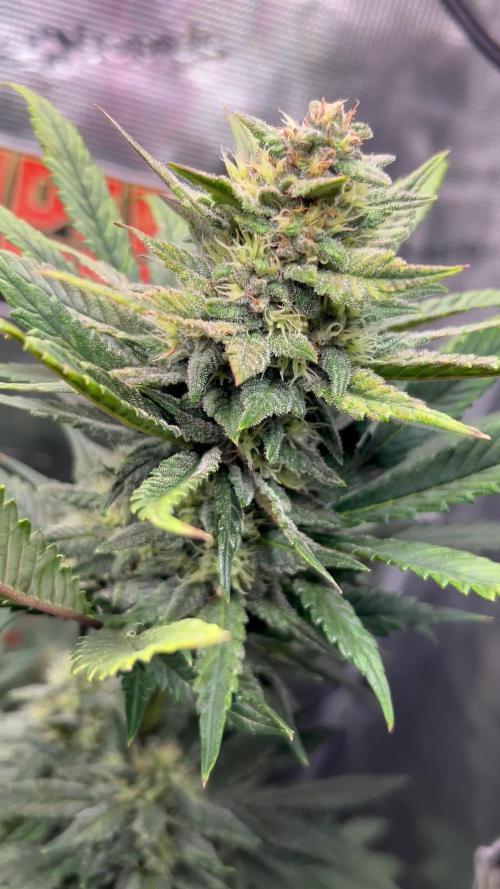
DAY 101 .....NL 1
SHOWS SOME CLEAR TO MOSTLY CLOUDY RESIN HEADS , LOOKS LIKE THERES STILL AWAY TO GO😩😩 .......
DAY 101 .....NL 2
SHOWS MOSTLY CLOUDY TO MILKY RESIN HEADS ( 💀 PROBABLY PEAK THC LEVEL 💀 ) , AMBER IS JUST GETTING STARTED , GETTING CLOSE BUT SEEMS MORE TIME NEEDED...... VERY CLOSE ( AS I WANT SOME % OF AMBER 😁 )
I hope you enjoy my growlog...
(Who the hell is TropiCannibis Todd😎 Well This is not only my FIRST AUTOFLOWER but my FIRST GROW in over 11-12 Years😳 I Grew from 2002-03 TO 2010-11 , I'm back nahnahnahnahnah , Been a fun grow , learned alot , and it looks like I am gonna have a great harvest with some great smoke....... who new 😁 )



Likes
7
Share


@StonedandSteady
Follow
Phenomenally Bright and Totally Tight under these Magnificent Grow Lights! I've been Flushing her out for the past 6 days with 2 gallons a day with some Cold Declorinated Tap Water and Applied the Ancient Art of Stem Splitting to help finish her with Extra Terpy Frosted Budz!
This Awesome and Outstanding #Opium is Growing the Distance and Got those Leaners Supported into her 13th W/Flower: No 13th Feed of #HumboldtCountysOwn this Week! I picked Up a pack of 32" bamboo skewers and staked her Up to help prevent her Bodacious Budz from breaking off! She's Packed, Stacked Up and Lights Upgraded!!! Cloned with my Steady's Saliva!!! We'll definitely Grow back to everything here soon! #Pre-Sexed 4/9/21 #Opium/#PabloEscobar *Fems* breed by Team #DivineSeeds #DivineSeedsSquad #DivineSeedsBreedingCompany I'm Very Excited and Extremely Gracious!!! These Cannabis plants are Camping out in the Closet for a week or so! Lol
My #PabloEscobar and #Opium *Fems* from #DivineSeeds Regs: SalamiLegF3's×2 and FireAlienRomulan look$ Outstandingly Awesome and Finished Up Phenomenally Fine into thier 9th week of Flower! Thanks Again for All the Love and Support my fellow Growmies and Growmets!!! These Magnificent and Magical Ladies were Growing in our 48×24×60 ViparSpectra Official Club 🌿 ®️ Grow Tent and under our #Osree QB1000w and #GrowStarQB1000w but Finished out in Flower under our #BloomPlus BP1500w! #TNBNaturals The Enhancer Co2 Despersal canister and ph'd them w/ Declorinated watering w/ TNB ph Up and Down! Totally Top Quality Topz all Around! Thanks Again #GallowGlas420 #HarleyGrower #thehumancannabiniod #AlienBloodGenetix #TNBNATURALS #www.as420.ca #divineseeds #divineseedssquad #divineseedsbreedingcompany #HumboldtCountysOwn #ThrivingDesign Family's and Teams!!! Your Genetics are Merry Magnificent, Mega Marvelous and Mighty Medical! Love um!!! I really Can't stress enough how Thankful and Grateful I am of All of you and what you've Shared with Us! Means the World!!! It's definitely a Pleasure being able to Grow with these Phenomenal Grow Lights! Please Enjoy! BudBrothers4-Life! Cheers Famz!!! Much Props and Much Topz!💯🔥#BloomPlus #GrowStar #Growatt #Osree #TNBNaturals #TNBTeam #HumboldtCountysOwn #GrowYourOwn #Bliss
Bloom Plus BP-4000
CA:https://www.amazon.ca/dp/B08DTDP5FF/ref=cm_sw_r_cp_awdb_imm_86Q7H2D5BGFYB9B6PR9K
US:https://www.amazon.com/dp/B08DTN3B84/ref=cm_sw_r_cp_awdb_imm_4B7XWCAS09M4V3W0AFJH
Bloom Plus BP-2500
CA:https://www.amazon.ca/dp/B08DTCYV9Y/ref=cm_sw_r_cp_awdb_imm_YDNA8G16PH3TB002VKGE
US:https://www.amazon.com/dp/B08DS53THM/ref=cm_sw_r_cp_awdb_imm_SX3AEDKRVAYQECF32BE4
Bloom Plus BP-1500
CA:https://www.amazon.ca/dp/B082XYLHRJ/ref=cm_sw_r_cp_awdb_imm_XEBFV7790EHT53B2J9B5
US:https://www.amazon.com/dp/B082XYLHRJ/ref=cm_sw_r_cp_awdb_imm_MB3PYZEVSQRZY096AB79
BloomPlus Instagram Link: https://instagram.com/bloom.plus?utm_medium=copy_link
Thanks Again Broski #SmokinPlantaz for Hosting your Bright and Tight Amazon Prime Day #BloomPlus-1500w Giveaway! I'm still Blinded by the Light!!! Lol (Song Pun) it's Ultimately Lit, Extremely Powerful and Brilliantly Bright! I also Love and Appreciate Everyone out here! Please! Go Over and Spread That Love to my Bro's YouTube Channel and Team #BloomPlus on their Instagram! I'll have thier Links posted ⬆️⬇️! BudBrothers4-L!!! Cheers Famz!!! Much Props and Much Pars!💯
SmokinPlantaz YouTube Channel Link: https://youtube.com/channel/UCDKJthWoS6-miAhq_lLb_-w
HumboldtCounty'sOwn:
Email: info@humboldtbottling.com
Phone: (707) 725-4119
Toll free: (866) 872-9434
Humboldt Bottling
Po Box 429 · Fortuna, CA 95540
HumboldtCounty'sOwn Website Link: https://humboldtcountysown.com/
HumboldtCounty'sOwn Instagram Link: https://instagram.com/humboldtcountysown?igshid=1qj809qkkwych
https://instagram.com/bloom.plus?utm_medium=copy_link
https://instagram.com/osree.light?igshid=1vrsbdyhzg2h8
https://instagram.com/growstarstore?igshid=2yjn0r00r6ru
https://instagram.com/divine.seeds?igshid=1r90iwe9xiwz8
https://instagram.com/thehumancannabinoid?igshid=17k159pumklkq
https://www.instagram.com/alienblood_genetix_official/
https://instagram.com/thrivingdesign?utm_medium=copy_link
https://instagram.com/as420.ca?igshid=1f116alw054wp
The Grow Bags: https://www.as420