


Processing
Likes
Comments
Share


@julian100614
Follow
MOHAN RAM AUTO DE SWEED SEEDS
Descripción:
Autofloreciente de 3ª generación. Híbrido entre una cepa seleccionada de White Widow automática del Departamento I+D+I de Sweet Seeds®️®️ y una cepa seleccionada de la variedad S.A.D. Sweet Afgani Delicious Auto®️ (SWS24).
Autofloreciente de gran vigor híbrido y fácil cultivo, que produce gruesos cogollos cargados de aromática resina de efecto potente y duradero.
El aroma de esta variedad es exquisito, muy afrutado, fresco y floral con un fondo de dulce almizcle.
Día 0: He germinado (como siempre) las semillas en un papel humedecido con un agua de 30°C de temperatura y un pH6 para que abra rápidamente.
Día 1. La semilla ya sacó su raiz e hicimos el transplante en su maceta final de 7l para que lance su sistema radicular lo mas fuerte y sano posible con Atami NRG roots-C 2ml/l y Deeper Underground 1ml/


Likes
2
Share

@Trinidad
Follow
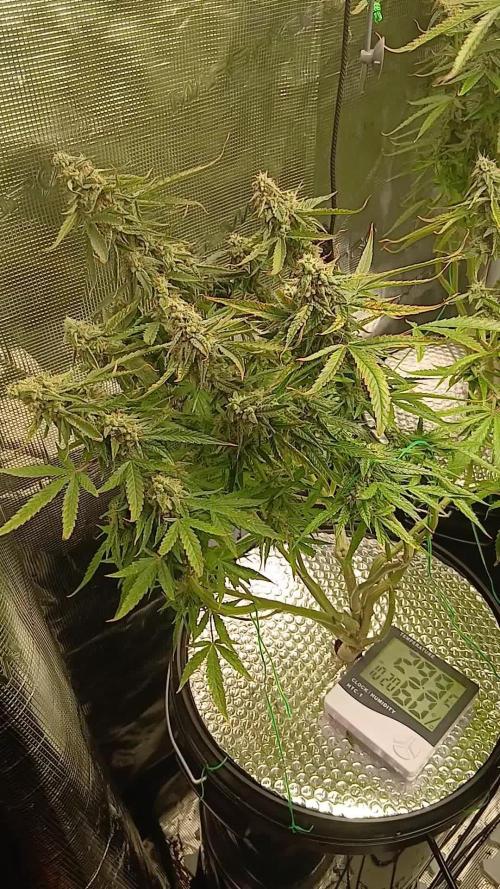
Titan f1 QRS unsure of number of days. They are nice short plant with sparkly buds and pleasant smell. I think she will make a smooth smoke. Fresh reservoir change out today.
Likes
7
Share


@Luv2Grow
Follow
Overall the grow was simple and she took care of herself. Even after snapping her main branch in the early stages, she bounced back and didn’t miss a beat. She took to LST without any issues and was definitely a delight to grow. Will definitely be growing this one again and I’ll give a finally dry weight and smoke report in about 7-10 days.

Likes
346
Share


@Canna96
Follow
This week went pretty well, other than she stretched like crazy and I am now getting worried about running out of vertical space. I also had a few of my bottom leaves get a few brown and yellow spots on them. I did post some pics and asked a question, thank you for the responses, much appreciated! I am thinking about adding my Spyder Farmer LED 100 Watt light into the tent for the nebula auto because it is about 23 inches shorter than the sour diesel. I believe it would only raise my temp about 2 degrees, and possibly lower the humidity by one or two percent. I must say my dehumidifier has been a freaking stud, running 24X7 and not complaining. I should look into adding another unit, it has been in the mid 90's and muggy for about a week. So far I have to say I am super impressed and excited with this setup, the genetics, and with growing this wonderful plant in general. Already planning ahead to my next grow, and what I can do better. I have been enjoying myself and I really appreciate everyone who has taken the time to answer my questions! I am having a blast and am excited to see what this lady will give up in a few weeks!

Likes
4
Share


@Creme_De_La_Creme
Follow
Autopot system was turned on day 15 !!
Now everything is on automatic 🦍🍓🦍🍓
Im not touching this girl until day 50 or some like that, no LST, no topping, just a stress free VEG, lets go !
NO DEFOLIATION AT ALL
Likes
21
Share


@Wicked_Stix
Follow
Got some phat girls up in here! Everyone is looking pretty good. A few of the plants are starting to ripen up while some others have at least a few weeks to go. Just filling the reservoir and letting them drink it. These girls show that simplicity isn't always a bad thing. I pulled the slurricane 7 from the system and started flushing it with plain tap water. It got a heavy 10 gallon flush today and I will give it 5 gallons a day for about a week. Just going to keep pumping the juice to the rest of them.

Likes
11
Share


@LittleBigTrees
Follow
I should have used a net as they are starting to fall over!
Next time 😅
Likes
15
Share


@RDWCGrowing
Follow
2/1/2024- Pre-Germination Activities Day 1
I have 21 weeks until final photo is do.. I took 3 seeds out of cold storage and will let them get to room temp for the next 48 hours before I go with Glass of water for germination. I have 3 beans because I will start from the very beginning helping ensure I present the best Pheno. This is going to be a fun one.. I am a few days away from being able to clear my tent out for this run.. I have a breeding run in right now and the Seeds are a few days away from being mature enough for me to take down the girls.
Once I get them down I will need to get my tent cleaned up and turned over right away. This is going to be close, I will have to time them to the water and into the tray at the right time.. because I will need to get lighting on them right away.. I have my 2X2 and my light ready incase I need to hold them in the cloning machine if the others are not done in the next few days.. Glad I have options that can stretch me out for a week or 2 to give me a little more time.
2/2/2024- Pre-Germination Activities Day 2
I checked on my breeding run to see how close the seeds are and if the tent is ready for me to clear and clean but alas I am still going to need a few days. I setup the emergency 2X2 and that should give me 2-3 weeks. The plan is to still wait one more day to allow the beans to warm up to room temp and then drop them in Water sometime tomorrow.
Form my Emergency 2X2 I have the following:
4" inline fan and carbon filter
Fan
VS-2000 light
2/3/2024- Germination Activities Day 0 - Dropped the Beans in.. Today is 0 day.. Go.. Go .. Go..
2/4/2024- Germination Activities Day 0-1 - Checked in on them this morning and no tap roots yet.. covered them back up and back in to the closet they went. I setup the Root Riots and the Seed tray for them. I Ensured my water that I was soaking the root riots in was PHed to 5.8 and I used RO water.
Afternoon Update: Checked on my Breeders and they are done. I started to harvest them, I took down the one I had reversed with STS and I took down the Black African Magic- All but one bud, I wanted to get some pics of that one today.
I was only able to get 2lbs into the Cannatrol because I had to be very careful to keep the bud from the plant that was treated with the STS separated from the other seeded bud that was pollenated from the plant I reversed.
Cannatrol could have held an additional 2oz of wet but not today. Ideally I need 1 more Cannatrol so I can take an entire Tent, but will figure that out. I put an additional 1.5lbs into the freezer to wait it's turn into the Cannatrol, I would have left it on the plant and taken it in 4 days when the dry cycle gets done but wasn't sure how much 2.2 lbs was equivalent to chopped and wet trimmed.
2/5/2024- Germination Activities Day 0-2 - Checked in on them this morning and 2 of them have very small tap roots out.. one still doesn't going to give them some more time. I will check in on them this evening and see if they are more open if so I will transfer the ones that are ready to their medium and seed tray.
2/6/2024- Planting Day TRUE Germination Day 0- Checked in on them this morning and all 3 of them have tap roots out. I broke the bottom of the tap root for #1 which was the biggest.. pretty sad.. I hope she survives.. I tried to be careful it just snapped off when I was trying to get it in the root riot right. Other than that all three are now in their in-between home in the 2X2 while if finish clearing and cleaning out their forever homes.
2/7/2024- Germination Day 1- Checked in on them and no surprise no sprouts yet. Sprayed the dome to moist it and light spray to the tops of the Root Riots.
2/8/2024- Germination Day 2- #3 is popped and it looks like #2 will be popped by this evening.. I got my second Cannatrol today so now I can take down the rest of the tent and get it into the dry/cure.
2/9/2024- Germination Day 3- #2 is popped as well.. so I have #2 and #3 up and still waiting to see on #1 but that might be a loss since I accidently broke off some of the Tap root when transplanting.
2/10/2024- Germination Day 4- #1 has Popped... We have ignition on all 3.. YAY!! I finished clean up and install of RDWC system, this time was unique the back left buckets 3 inch pipe wasn't seated correctly so I had to clean up about 12 gallons of water all of the floor. I also had two leaks coming from one of the Waterfall return junctions, this is why I do a full pressure test before I put anything in. I will continue to monitor it through tomorrow to ensure that I am good to go and then I will finish setting up the baskets and prepping the water to be ready for the ladies planting day!!!
2/11/2024- Germination Day 5- #1 Of course is going to be my trouble plant.. No matter what If she lives through planting in the system and making it, I think I might not cull her at all regardless, she has been such a problem, makes me wonder if she will be super worth it towards the end.. We will see as we go through this grow, but #1 has a piece of the shell on the leaves,
Other than that I set up a new thing I have been doing since last grow converting my Baskets into Sure plants so I can see exactly where the water is when I plant them and ensure I have the water up high enough that they are able to access it and grow but not too high were they are drowning.
2/12/2024- Germination Day 6- Everything seems to be going good.. will just keep them moist and let the roots grow for a few more days before I transplant to forever home.
2/13/2024 - Germination Day 7- Just keeping them Moist.
2/14/2024 - Germination Day 8 - Planting day.. they are now in the system.. :-)I had to fill the water to the bottom of the basket where I could see water on the bottom rocks and just coming up where I had created my whole/ sure plant.
2/15/2024 - Germination Day 9- Top fed just a little to keep them moist and encourage root growth towards the water. I ensured the PH is right at 5.98-6.02 range.
2/16/2024 - Germination Day 10- Top fed just a little to keep them moist and encourage root growth towards the water.
Likes
2
Share


@Sators
Follow
Day 9 – After the Clouds, the Sun Returns
Following a couple of cloudy, cooler days with unpredictable UK spring weather, today we’re back in business – full sunshine bathing the windowsill, and the seedling is clearly appreciating it. On day 9, she’s showing good upward momentum, with a healthy green tone and a nicely elongated, but not overly stretched, stem. The second set of serrated leaves is beginning to open up, and the seedling’s posture is strong and upright.
This morning I gave her 1 litre of clean, pH-balanced tap water. No added nutrients – the organic super soil and Biobizz All Mix are handling that just fine for now. I’m keeping to my minimal-intervention philosophy: no boosters, no chasing perfection – just observation, clean inputs, and natural sunlight.
Observations:
Although the last 48 hours brought overcast skies and some temperature swings (unmeasured near the window), the seedling remained stable – no signs of droop or stress.
Today’s sun is back in full force, with direct light from 07:00 to around 14:00, likely peaking again at ~1350 μmol/m²/s.
Still no supplemental light or artificial environment. Everything remains natural and low-effort.
Thoughts Moving Forward:
It’s always interesting to see how a young autoflower responds to dips in light and ambient temperature – they don’t have time to waste, and yet this one seems to have taken the brief grey spell in stride.
Looking ahead, if the weather holds steady, we should start to see noticeable structural development over the next few days.
She’s holding up well. Calm, steady progress – just the way I like it.
Day 11 – Holding Strong Indoors While the Outdoors Waits.
Here we are on Day 11, and the little CBD Auto 20:1 continues to develop steadily on the sunny windowsill. The first set of true leaves is broadening nicely, and the new growth in the centre is coming in with good symmetry and colour. Stem strength is improving as well, holding the plant upright with no signs of stretching or leaning – exactly what I like to see at this stage.
I’m continuing to water only with clean, pH-balanced tap water, no additives, no boosters. Just letting the super soil mix and Biobizz All Mix do their thing. This “less is more” approach seems to be paying off so far.
Weather notes:
The past few days have been moderately sunny, with occasional clouds, but the windowsill stays consistently warm – definitely warm enough to encourage strong vegetative growth. Outdoors, however, it’s a different story: cold air, unpredictable swings, and… snails. Lots of snails.
This seedling wouldn’t last a night outside right now – she’d be a gourmet treat for any passing mollusc. For now, she stays safe behind glass, soaking up the sun from dawn until early afternoon (~07:00–14:00), and building up strength for the future move outdoors – once the weather is right and the risks are low.
Final thoughts for today:
There’s something satisfying about watching a seedling thrive under low-tech, natural conditions. No grow tents, no supplemental lights – just sunlight, soil, and simple attention. She’s doing well, and the coming week should bring the next round of leaf growth and even more structure.
Slow, steady, and sun-fed – exactly how I imagined this grow would go.
Day 14 – Two Weeks Strong & Natural Salty Signs
Two weeks in, and the CBD Auto 20:1 is holding her own beautifully. After a slow and steady start on the windowsill, she’s now clearly entering a more active vegetative phase. The leaves are spreading wide, looking rich and healthy in colour, with that classic Fast Buds symmetry already taking shape. Stem structure is upright and solid, with no signs of stretching, which tells me she’s perfectly aligned with the available sunlight hours.
Watering & Environment Update:
She continues to receive pH-balanced, clean tap water only, and the pot remains well-drained and breathable thanks to the fabric construction.
Today, I noticed white patches on the fabric pot – a common and harmless sign of mineral salt deposits. This occurs when moisture evaporates through the fabric, leaving behind minerals from the water (mainly calcium and magnesium). It’s cosmetic only and doesn’t affect the plant or roots in any negative way.
Light Conditions:
After a few low-light days earlier this week (we recorded a light intensity drop down to ~30 μmol/m²/s during heavy cloud cover), today brought back that sweet UK sunshine. The plant is once again receiving its reliable 07:00–14:00 window of direct sun, which we’ve measured previously around 1350 μmol/m²/s at peak – ideal for a low-input indoor approach.
Final Thoughts:
She’s looking compact, balanced, and ready to stretch. No signs of stress, deficiency, or pest issues – and I’m really enjoying observing how this plant responds to minimal intervention in a realistic environment.
Not rushing anything, not chasing perfection – just letting nature and a well-prepped soil mix lead the way.
Next week should be an exciting one!


Likes
4
Share

@JVKdopegrow
Follow
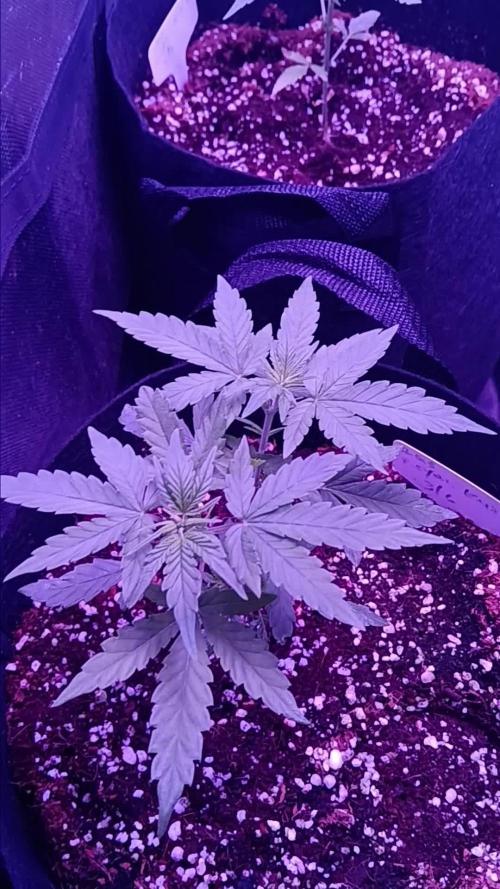
Thriving in the indoor tent. Leaf and node growth all showing well. There is some lower growth in will need to cut but these auto girls are at least 10 days behind so no stress for them.
Likes
28
Share


@HydroHerb420
Follow
They’ve been over fed and underfed but they look and smell good. Buds are quite small but are rock hard, even the lower ones. Just running loads of rainwater through them to finish them off, has a ph of 5.8 and doesn’t even register on the ec stick so it’s perfect for flushing in hydro. Merry Christmas 💚💚

Likes
7
Share


@pegas
Follow
Hice un riego con aceite de neem y jabón potasico debido a unas pocas moscas de sustrato que estaban rondando las plantas, espero haber matado los huevos que hayan puesto, si veo más lo repetiré la otra semana.
Likes
24
Share


@Rytmause
Follow
Getting there last 2 weeks Girsl are very beautiful and fat lot of sugar can be seen on buds smells fantastic 😀 cannot wait for taste uuuuuwwwwweeeee


Likes
8
Share


@Growador
Follow
Shoot!!!! They’re beginning to thickening up, i’ve done some lst for 5 days and now they’re pretty good. I’m letting them grow and will begin to tie the other branches when they will be big enough!

Likes
3
Share


@GrowWellSystems
Follow
By the end of week 3 both plants had 6 nodes and I topped both above node 4. Both plants were starting to grow rapidly and we watched for any slow down after topping. Started to use the Fox Farm nutrients. So far no issues. Plants really starting to grow. Watching how much water trying not to overwater. Lifting the pots when wet gives great reference to when water/feed is needed. Some time gaps in the photos uploaded...!
Likes
23
Share

@DevelGrow
Follow
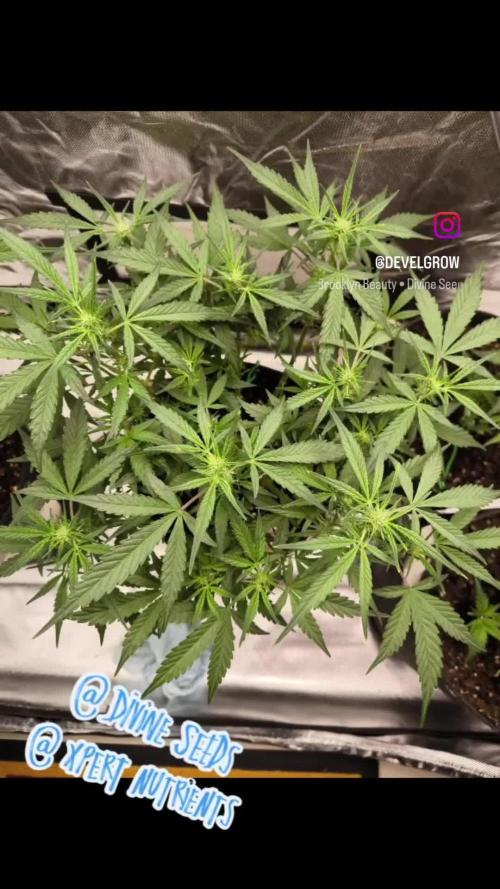
Hallo Freunde 👋 BigDemon von Divine Seeds ist 42 Tage alt! Sie ist schön in Blüte und streckt sich noch, baut schön die Buds auf und ist stark gesund und vital! Kann nur noch besser werden! 💎🥦 Bis dahin keep Green and grow High ✌️🍀💚🍀

Likes
9
Share

@All_our_small_plants
Follow
Bewässerung: 1000ml
pH-Wert: 5,8
EC-Wert: 0,6
Temperatur: 30ºC
Luftfeuchtigkeit 55%
Schädlingsbekämpfung:
PPFD: 200 µmol/m²/s
DLI:
Düngemittel:
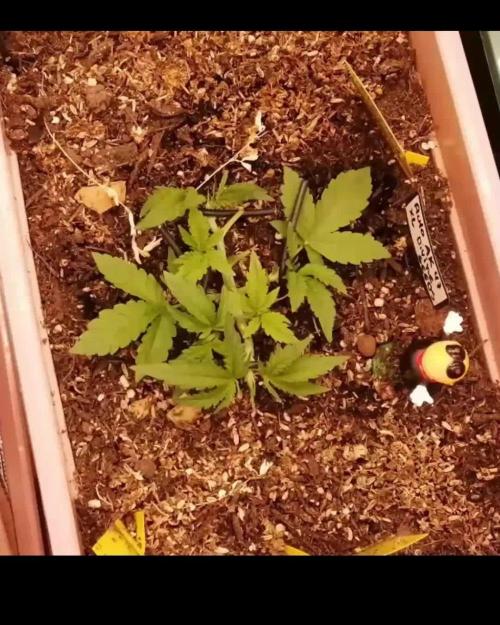
Besonderheiten: Wurden direkt in die erde gepflanzt in einer Kokos-Quelltabletten.
-Tag 23 sie hat heute etwas Wasser mit Effektive Mikroorganismen bekommen und sie war beim Friseur 😍
-Tag 25 Sie hat sich gut vom LST erholt und Wächst weiter sehr schnell, so konnten wir heute schon wieder mit dem LST weiter machen.
Sie hat heute Wasser mit Dünger bekommen.
-Tag 27 Sie hat heute wieder etwas Dünger bekommen und war beim Friseur 😋
Likes
12
Share


@Daviz_42
Follow
Los dos fenos tienes cosas en común, pero el dos es sin duda más especial, me gusta más por los terpenos y la cantidad de resina y la calidad de esta. Otra para mi coleccion de madres.
Likes
11
Share


@420DeepGrow
Follow
Gracias al equipo de MSNL Seeds y XpertNutrients sin ellos esto no sería posible.
💐🍁 CBG SOUL FEMINIZED:
CBG Soul es un híbrido rico en CBG con una proporción Indica/Sativa 50/50, creado por sus efectos calmantes y relajantes. Sus sabores dulces, limón y cítricos se complementan con terpenos limoneno y mirceno, ofreciendo una mezcla única para el alivio y disfrute terapéutico.
🚀🌻 Consigue aqui tus semillas:
https://www.marijuana-seeds.nl/cbg-soul-feminized-seeds
🍣🍦🌴 Xpert Nutrients es una empresa especializada en la producción y comercialización de fertilizantes líquidos y tierras, que garantizan excelentes cosechas y un crecimiento activo para sus plantas durante todas las fases de cultivo.
Consigue aqui tus Nutrientes:
https://xpertnutrients.com/es/shop/
📆 Semana 11:
Por fin comienza el buen tiempo y parece que a ella le gusta, ha explotado esta semana y parece que quiere crecer bastante.
De momento no tiene mucha rama lateral y ya no se aprecia carencia alguna.
Continuo con las dosis de nutrientes recomendada por el fabricante.
