


Likes
Comments
Share


@GreenHouseLab
Follow
Transplanting today into 3 gallon with some dry organic amendments. Coco, perlite, gaia green, EWC, Mycorrhizae will be the weapons of choice.
Currently under 4000K light might change to 3000K as only 2 x 3 or 5 gallon pots will fit under the preferred veg light.
Main focus has now shifted to this new run will try and get her ready for flower 2-3 weeks from today.
Cheers to all fellow growers.

Likes
7
Share


@Mr_nugs_lover_David
Follow
I went for a little defoliation on this couple of ladies, taking off some fan big leafs, I think this ladies are going to produce some really god flowrs, I'm always amazed by this genetic, the aroma it's extremely pleasant, very fruity stinky and tropical, I have harvested a haze berry a few weeks ago which you can check on my page, really excited to have this couple of haze berry by royal queen seeds, let's see how they perform! Stay tuned everybody! 💚❤️👨🌾

Likes
8
Share

@Organic473
Follow
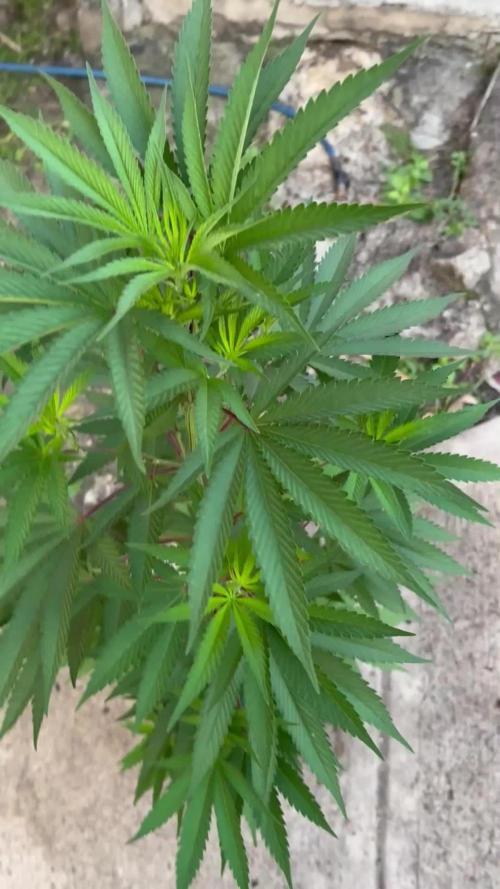
Growing so healthy I have no complaints…I promised to transfer her to a 5 gallon pot soon.

Likes
151
Share


@CANNASIM
Follow
———GENERAL COMMENT ———
Flushing for around 10 days, they will fall asap.
———BLUEBERRY COMMENT———
Taking off the cage i broke a cola stem for that she ended looking unbalanced... stems are stiff as iron.

Likes
19
Share


@crystal_garden_0
Follow
Theses girls really filled in fast , colors , smell are amazing. Really happy definitely nice strain

Likes
2
Share


@Jaschkoo0
Follow
I dryed them slow. I deleted the original report si i had to make a new one without all the data about watering and so.
Likes
12
Share


@Doggy
Follow
In the video by mistake, the last pruning was done by cutting the fourth knot, however all were left with their cut to the third knot :)
Happy growth!😁
Likes
88
Share


@Wastent91
Follow
Ehiiiii ragazzii come va?? La settimana per queste due ragazze hibride F1 è davvero andata bene!! Merito soprattutto penso della intensità e qualità della nuova luce Mars hydro che posseggo e ringrazio vivamente di avermi dato questa possibilità di poter collaborare con loro e creare delle bellezze del genere che x me sono come pezzi di arte in evoluzione!? Non so se mi spiego! Per me sono la cosa più importante di tutta la mia intera vita! Chiaramente dopo la mia donna ,mia nonna e i miei gatti🐱🐱 apparte questo la genetica mostra una crescita uniforme dei due fenotipi Apollo nonostante la differenza di nutrienti... Vedremo nelle prossime settimane lo sviluppo delle cime come sarà , mi aspetto delle gran belle cime a giudicare dal verde bello intenso che hanno queste piante si vede che sono in ottima salute , e x ora x me preparare prima il terriccio e fare un soil living tra micorriza e nematodi mi pare l opzione migliore, a meno che nn compro tutta la linea Advanced Nutrients e allora nn avrò carenze nutritive! Se volete spedirmela boss di Advanced sono qua x testare se i vostri prodotti siano migliori delle tecniche che utilizzo io , preparando un terriccio organico, piuttosto che aggiungere troppi fertilizzanti minerali dopo.. a meno che ho tutta l ampia scelta di utilizzare tutti i prodotti specifici.. apparte questo ringrazio come al solito Mars Hydro e Royalqueenseeds che mi hanno dato fiducia x costruire tutte questo ! Buon 420 a tutti?! 😼💪🧙♂️🌱🌿🌲💨❤️❤️
Likes
17
Share


@Its_Fruz
Follow
🐒🐒🐒
20day base + delta9 total 900ppm
25 day base + terpinator total 1000ppm
Likes
15
Share


@IsseyBukkake
Follow
So we've hit day 49 with the girls!
Everyone seems to be happy.
The 2 little runts are now the biggest in the crop, they're super stretchy and about a week behind in flowering.
I hope to be able to harvest all the plants at once as I plan to dry in my tent, but if I have to do a staggered harvest then, I guess I gotta do it.
Nutes are listed above, everything has been working excellent so far.
(I may be trying different coco nutes next run, as I'm suspecting the H&G set I'm using has contributed to the stretchiness of the girls.)
UPDATE - DAY 51 - 09/01/21
Everything seems to be just fine at this stage in time.
the runts are flowering slowly, so i hope they pick up sometime soon.
1 of the plants(the healthiest since day 1) seems to be a week or so ahead in flower.
I'm still hoping to chop the whole tent down at the same time (Fingers crossed!).
UPDATE - Day 53 - 11/01/21
The girls seem to be happy today.
Pheno type 1 ( plant 1 + 2) - Much more bud production than the rest of the plants.
pheno type 2 (plant 3 + 4) - runts of the litter are now the stretchiest out of the lot
Pheno type 3 (remainder of plants) are inbetween pheno 1 & 2.
I'm still hoping to harvest the majority of the girls at the same time, still have a while to go though :)
Thanks for stopping by!

Likes
Comments
Share

@NastyNatiBuds513
Follow
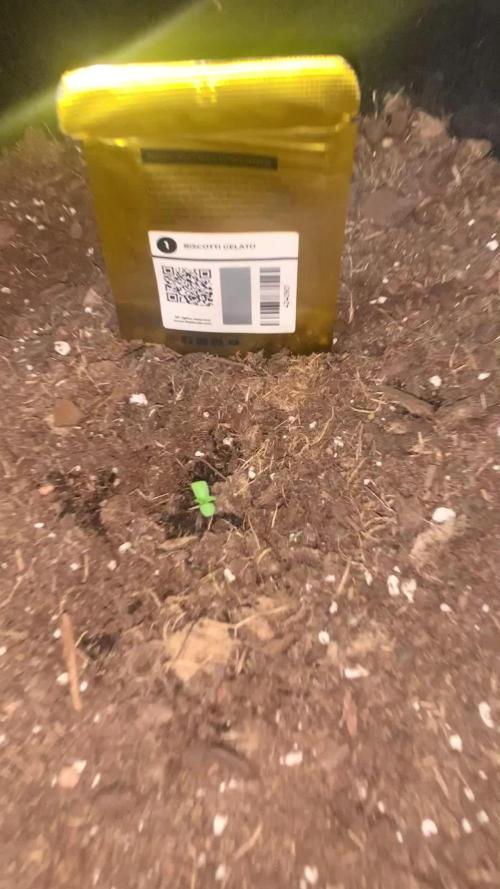
Only first week she Just Came Out the soil today!! Now It’s Time to watch the Magic ? My First Feminized Plant 🌱 Come Along For The Ride 🚗 🌲
Likes
10
Share


@nonick123
Follow
🚀 4 clones de Blueberry Pie F1 Fast seleccionados por @stacksfarmsltd - https://www.instagram.com/stacksfarmsltd
🚀 Breeding by @seedsmangenetics - https://www.seedsman.com/eu-en/blueberry-pie-f1-fast-feminised-seeds-sman-blpi-fast-fem
💦 BioTabs 15% DISCOUNT code "GDBT420" biotabs.nl/en/shop/ @biotabs_official
🌱Substrate PRO-MIX HP BACILLUS + MYCORRHIZAE @promixmitch @promixgrowers_unfiltered
💡2 x Mars Hydro FC1500 EVO Led Grow Light (2024 NEW FC 1500-EVO Samsung LM301H 150W LED) - https://marshydro.eu/products/fc1500-evo-led-grow-lights/ - https://www.amazon.de/dp/B0CSSGN5D8?ref=myi_title_dp
Likes
18
Share


@Stonyways
Follow
Back to the Grow
PH was at 7 when the pots were dry and returns to 6.5 after the feeding. I'll let the foliage build one more time so I can transplant into their 7 gal pots for flowering, this will add a tremendous amount of new fresh soil for the roots to thrive in during the early budding stage
lights up to 95w about 60% on the dimmer.
I hope you are having a great holiday season and a very happy grow.
114w after a series of jumps this week. plants reacted well and I'll continue to bring the watts up for the next few weeks so they're ready for fllower
12/29 plants went into their 7 gal pots
Likes
24
Share


@DeepRootsGrowTrees
Follow
GORILLA COOKIES 🍪 FF/ FASTBUDS
WEEK #16 OVERALL
WEEK #8 FLOWER
This week she's just about done she's got about 1 week left before harvest buds are looking good and got a nice aroma to them. She's just on water now to flush. Stay Growing!!
Thank you for stopping by and taking a look it's much appreciated!!
Thank you FASTBUDS!!
GORILLA COOKIES 🍪 FF / FASTBUDS
Likes
21
Share


@DeeDeeKushner
Follow
Day 12 of flower. Almost done with week 2 of flower and everything is on point. They’re stretching but nothing too crazy. I’m giving them less water but will be watering at least twice per week. They’re steady drinkers. This strain finishes in 8-9 weeks so harvest time isn’t that far away. It’s been a long journey, much longer than it should’ve been but it is what it is. Can’t wait to be finally done with this grow! Catch yall on the next update! ✌️🏾
Likes
2
Share


@Budking420
Follow
She was a little dried out before this update I gotta admit. So shes a little upset but otherwise looking really good. Shes drinking a lot right now! Check back next week for more

Likes
6
Share


Likes
76
Share


Likes
18
Share


Likes
2
Share


@EtnoGrow
Follow
we improvised with threads the mesh was badly placed but everything served and fulfilled its function, now the leaves have grown again and the mini jungle is re-formed, we really liked how the previous pruning turned out although aggressive to the plants it did not affect them they recovered almost instantly, and it works in our favor because of the space, so this is already the end of the second or the beginning of the third week, in the next one I will upload the pruning and everything as it is already at the end of almost the 3rd week of flowering, at least of the larger, the others, as you know, are 2 to 3 weeks apart, so for them it is 1 or 2 weeks of flowering, which is noticeable in their development. the risks that are written down in the diary are the fertilizer once a week, and 1 3.5-liter drum or a gallon is used, which is divided into the 2 largest and another equal gallon with a different proportion for the 5 smallest , in the newspaper it is written down of the great ones.
Likes
2
Share

@EtnoGrow
Follow
here already a little more grown and applying the techniques lst apical pizzicato experimenting, Seeing how the techniques are manifested, some were done poorly, so their results were somewhat strange or curious, if they did, you judge, errors such as not cutting the apical trying to do the pruning, poe error from fmi and only cut the tiny growing leaves that's why you will see those rare leaves