




Likes
20
Share


@TiRobotProds
Follow
- Super semaine plante vigoureuse boit beaucoup d'engrais pas de signe de brûlures. Elles ont doublée leurs tailles durant cette semaine affaires à suivre..
🌍 🌎 🌏 Frère cultivateurs cliquez et suivez venez partager vos connaissances. #LoveUnityAndPeace 🙏 🤲

Likes
47
Share


@Ultraviolet
Follow
Gave her a cocktail to help with stress. Added 1st net for lateral support, not so much now, but for later. Blue light is absorbed by photoreceptor proteins called phototropins, which trigger a hormonal response that causes cells on the shaded side to elongate, making the plant bend toward the light. Try and fill this side a little. She is quite big already, just needs to find her stride again after the undue torture.
The mind is constantly working and producing, just like a factory. It's not just a passive recipient of information but an active producer of ideas, attitudes, and beliefs. The "ingredients" in this factory are the information you consume, such as books, conversations, and the media you engage with. The "products" are your thoughts, beliefs, and actions. The quality of the ingredients directly influences the quality of the output.
5 apex stems with 20-30 mini cola, let them develop a little, with the apical dominance shattered, all those 20-30 will all compete with each other as soon as that stretch is initiated. Key to a good stretch is making sure the plant is cycling efficiently, with large ATP conversions occurring lights out.
For now, keeping light intensity high. A plant will slow its vertical growth in very high light intensities, leading to a more compact form with thicker stems and leaves. This response is a protective mechanism against light stress, which can damage the photosynthetic apparatus and lead to symptoms like leaf scorching, yellowing, and brittleness. Instead of growing taller, the plant invests its energy into creating a more robust, stress-tolerant structure.
Providing plants with necessary antioxidants helps protect the photosynthetic apparatus by scavenging reactive oxygen species (ROS) that cause damage from excess light.
UV light exposure can impact the xanthophyll cycle by either enhancing its photoprotective role or causing damage, depending on the intensity and type of UV radiation. UV exposure can trigger the synthesis of more xanthophyll cycle pigments to increase the plant's capacity to dissipate excess energy, but it can also cause direct damage, particularly to Photosystem II, and may lead to a decrease in the de-epoxidation state (DEPS ratio) which indicates a reduced capacity to dissipate excess energy.
Plants can respond to UV stress by increasing the synthesis of xanthophyll cycle pigments, such as violaxanthin and zeaxanthin, to improve their photoprotective capacity. UV-induced changes in xanthophyll cycle pigments can be linked to a plant's overall tolerance to high radiation stress. The xanthophyll cycle helps protect against photoinhibition, which is especially important when the plant is exposed to high levels of both UV and visible light. High doses of UV radiation can directly damage photosynthetic components, including the proteins, lipids, and pigments in the thylakoid membranes. Exposure to UV radiation can have a mixed effect on the de-epoxidation state (DEPS ratio) of the xanthophyll cycle pigments. In some cases, UV can inhibit the conversion of violaxanthin to zeaxanthin, resulting in a lower DEPS ratio and a reduced capacity for energy dissipation. However, the total pool of xanthophyll cycle pigments may increase, and this enhanced pool size could provide a greater potential for photoprotection despite a lower DEPS ratio.
The xanthophyll cycle works alongside other mechanisms, such as the accumulation of flavonoids (UV screens), to protect the plant from UV-induced damage.
Blue light repairs 100% UV-induced damage in plants through a process called photoreactivation, which uses a light-dependent enzyme called photolyase. This enzyme uses energy from blue and UV-A light to directly reverse the damaging pyrimidine dimers in the DNA caused by UV-B radiation, a key mechanism for maintaining the plant's genetic integrity.
After carbon, light, water, temperature, and nutrients, the limiting factor of a plant's growth is often its own internal factors or the amount of a key ingredient. Chlorophyll concentration is one such factor, as the amount of this pigment limits how much light can be captured for photosynthesis. Other factors include chloroplast number, respiration rate, and the concentration of carbon dioxide in the atmosphere, as plants are often in a CO2-deficient condition.
60x60x18=64800seconds x 700 = 45,360,000moles. 45DLI
Exposure to 165 µW/cm² of ultraviolet-B (UV-B) light for 3600 seconds = 1 hour, a extremely high, acute dose triggering stress responses and protective mechanisms.
.
The plant's photoreceptor protein, UVR8, senses the UV-B radiation. This triggers a signaling cascade that activates specific genes to protect the plant from damage. In response to the UV-B signal, the plant ramps up the biosynthesis of protective compounds like flavonoids, phenolic acids, and anthocyanins. These compounds absorb UV radiation and accumulate in the epidermal layers of leaves to shield inner photosynthetic tissues. The plant may increase leaf thickness or deposit more cuticular wax, creating a physical barrier to the radiation. The plant will produce more enzymatic and non-enzymatic antioxidants to neutralize the reactive oxygen species (ROS) produced by the UV-B radiation. The plant activates enzymes, including photolyases, to repair DNA damage caused by the UV-B. These repair mechanisms are critical for preventing permanent genetic mutations.
While protective measures are activated, a high dose delivered over a short period can cause stress that overwhelms the plant's defenses.
Photosynthesis is highly sensitive to UV-B. A high dose can inactivate Photosystem II (PSII), damage thylakoid membranes within the chloroplasts, and reduce chlorophyll content, which lowers the plant's overall photosynthetic capacity. Despite repair mechanisms, high UV-B doses can inflict persistent damage on the plant's DNA. The overproduction of reactive oxygen species can cause oxidative stress, leading to the oxidation of lipids and proteins and disrupting cellular function.
I am playing in the enchanted forest. A shift in perspective is what changes perception over time. By deliberately considering a situation from another point of view (perspective), you can challenge your initial, knee-jerk interpretation (perception). This is a valuable skill in both personal and professional life for fostering empathy, improving problem-solving, and making more informed decisions.
Move the mind off perception into perspective.
Thank you.
Likes
4
Share


@Ieiogrow94
Follow
Eccoci di nuovo qui!!!
Super eccitato per questa nuova collab con Sweet Seeds, team davvero al top, che mi ha dato l’opportunità di testare questa nuova genetica e di condividere i progressi con tutti voi!!!
Come sempre partiamo nei bicchieri per poi travasare.. Questa volta verrà svolto tutto sotto la Lumatek Zeus 465 ProC, mi aspetto molto da questo ciclo!!
Settimana WOW!!!
Grazie a tutti per il supporto ❤️🍀🔥

Likes
4
Share


@stolen_cheese
Follow
Ende Woche 7. Ich habe die Gute ordentlich entlaubt, mini Buds entfernt und alles so hingebogen, dass es gut Licht bekommt.
An Tag 48 gab es 2,5 g Pflanzengeflüster (Harpin-Protein) auf 1 L Wasser als Wurzeltränke, da ich so weit in der Blüte nichts mehr sprühen möchte, obwohl Harpin über Blattdüngung viel besser wirkt.
Beim ursprünglichen Mix der Erde hatte ich einen Denkfehler bei der Düngermenge, daher wurden die fehlenden 200 g jetzt noch oben aufs Substrat gegeben und dann mit frischer Erde abgedeckt.
Likes
6
Share


@Cultivandomedicinanatural
Follow
Hemos empezado un cultivo con semillas del banco Sweet Seeds y toda la gama de nutrientes y coco premium de Plagron.
Es nuestra primera vez con coco y esta marca de nutrientes pero nos va a sorprender para bien!
Primero diluimos siete gotas de seedbooster plus en un litro de agua y dejamos la semilla en esa dilución 12 horas. Esa misma agua la usaremos para empapar el papel donde pondremos a germinar las semillas. Al segundo día ya tenemos las semillas nacidas, y los líquidos de riego los haremos a un ph de 5,8 y usaremos power roots, silice rock y pure zym para cada riego con una EC de 0,5.
Una vez a la semana haremos una pulverización de vita start y otro día a la semana vita race. Hacemos una dilución de estos mismos de 1 ml por cada litro de agua para pulverizar dejando bien empapadas las hojas. Vita start nos aporta un npk bajo para nuestras pequeñas y vita race le aporta hierro, de manera que con ellas conseguimos un mejor enraizamiento, ramificación y un color sano de nuestras pequeñas en sus hojas. Tendremos que ir subiendo el nivel de la Ec, ya que pecaremos de cautos en comida al no haber usado nunca coco antes.😎
Likes
19
Share


@creichs
Follow
Switched to my 5 gal pots now, dumped 6L of water into each plant to get the pH back down still waiting for them to dry out a little before the next watering which should be less so next week will have water amounts
Height is for the holy punch again. Power flower is still around 1.5"


Likes
20
Share


@Chubbs
Follow
420 Fastbuds
FBT2305 Week 3
Merry Christmas Grow fam. Week 3 for these beautiful plants. I upped the feeding to 1000ml every other day and so far seem to be handling it fine. Will do a mild defoliation this coming week removing the lower leafs at soil level. All in all Happy Growing

Likes
13
Share


@NorfFarmer
Follow
Both plants are being fed plain ph water (about 207 ppm, ph 6.4) purples on the second pheno are almost black 🤤


Likes
10
Share


@Rangaku
Follow
I fucked up , the timer had gone back to 18-6 from the 12-12 I had it on 3 weeks ago and I just caught on .. fuck !!
Not sure what will happen now if they will stretch again or potentially hermie … man I’m fkn stressed out
Critical XL is just on auto pilot flying along , feed her up and watch her go . Keeping up the defol and spreading her out , same same next week .

Likes
11
Share


@Zurbena
Follow
No stress at all. growing like crazy🤪✌️🏻
He will have to practice again this week. ( 5.12.2022.)
Defoliation was done once again today (7.12.2022)
I would like to thank CannapediaGrowersCup for the lights (mars hydro ts1000) and for help.

Likes
11
Share

@Bncgrower
Follow
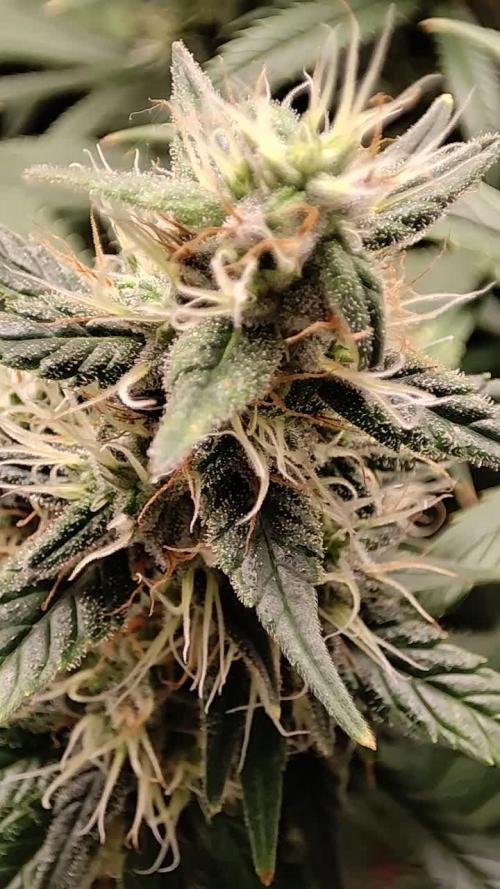
So far so good, this girl is developing really well. She's heading really well into the final weeks ✌️💪🌿


Likes
8
Share


@Spliffi
Follow
Heya👍🤙👍🌱
Apricot stopped drinking.
Check out my Facebook profile:
https://www.facebook.com/share/v/H6PnoahTHrEzm63U/?mibextid=oFDknk
Big BIG BIG thank you to Sebastien, Heather from Fastbuds420. You guys are the best. Can't wait for the next live.
Even Bigger shout out to Hydroponic.co.za. My local Hydro Shop and Sponsor. Thank you Sir.
👍🤙👍🌱
Processing
Likes
5
Share


@Ga4rd2en0er
Follow
1/30 backed a&b down to 9ml each and added first dose of pk 13/14 @ 4ml. Ppm clocked in @ 900. Reminder, these ladies are on constant drip feeding via troph blumats. They drip non stop and rarely is there any runoff and the media never dries out. I do flush with florakleen about every 2 weeks. Verticle growth ceased all plants. Airpots have been fully penetrated all around from top to bottom, roots are bright white and healthy.
2/1 finally recieved extension and raised lights up. No evidence of burn but it was a little too close
2/2 ordered high CFM kit for the gorilla tent. Walls sucked in much further and intruding on space.
2/3 spoke with the person I acquired the LS clone from and found out he grew it from DNA Genetics seed

Processing
Likes
7
Share


@Kushizlez
Follow
Day 10F-17F
(Day 10F) Everything is looking on point. I’m going to soak in a gallon of lite compost tea diluted to 400ppms on each plant except for #5. I’m still a little worried I won’t make it through the stretch but at the same time I fear N toxicity just as much. I will give one more lite tea before the end of stretch, most likely at the end of this week.
(Day 12F) Ladies responded nicely to the tea except for BBB#1. It just isn’t looking as vigorous as it was last week. It’s the only one without an air hose so I guess it couldn’t hurt to grab one. The air hose does without a doubt prevent overwatering in soil and I’m surprised I don’t see more people using it. It’s cheap, effective and gives me similar results to growing in pure coco. I’m going to give one more light foliar spray of 3ml of calmag, 3ml of kelp and 2.5ml of insect frass.
(Day 14) Got the air hose hooked up to all 5 plants now.
I hate that I’ve been forced to defoliate so much in early flower and it is definitely reducing bud size. Last round my bbb’s had pistil clumps twice the size at this time and they were dealing with severe deficiencies. I’m hoping it’s just genetics or the fact they are larger plants.
(Day 15) I’m starting to see signs of N toxicity on the some of the new growth and overall growth on all plants except #1 has slowed. It was most likely caused by the foliar spray/tea combo. No more feeding anything for the next 12 days at least. Luckily it’s still pretty early in flower but I know that N tox can hit really hard after the stretch stops. I would be pretty upset if I vegged for 80 days only to get severe N tox in mid flower. Since it’s not breaking down in the soil, I should be fine. I’m going to defoliate some more of the large bottom fan leaves as they hold large reserves of extra nutes I don’t need. Hopefully these small defoliations aren’t stressing them at all. Next round I plan to do a big strip one week before flower, at transplant and a second big strip on day 21.
(Day 17) I think I was over-worrying about the seriousness of the N tox. I’ve seen it hit very hard in mid flower and can’t be too careful. It’s almost always caused by water soluble nitrogen so I’ll try to stay away from that unless I absolutely need it. My case does not look to alarming just yet. I noticed the stunting on #3 right after that last tea so I am going to stop giving the last liter of compost tea because of how unbalanced and separated at the bottom it is. It sure helped out the other 4 plants that didn’t get the granulars from the bottom of the bucket. I‘m planning to give a bloom tea around day 26 and a final top dress a few days later. #1 has now out stretched everything else in the tent. I honestly was not expecting that. If #3 didn’t get stunted this whole week I think it would be the taller/heavier plant.
Likes
28
Share


@RoyalSton3r
Follow
First I need to thank Mrs_Larimar for helping me through this process!! Thank you!!!😅
The good girl was rinsed with
20 liters of tap water and surrounded with
approx. 1.5 - 2 liters
of fresh soil in a larger pot.
After strong concerns about whether it will be something with the good,
one day later I have already enjoyed
6cm of height gain and much stronger fragrances.
Now, on the third day after the action, she looks more fresh again and her scent....... * Awwwww *
No nutrients or other aids have been added.
Only when the weight is right, it will be poured again.
Yesterday one day after rinsing I removed the 2 lowest fan leaves as it seemed to me from stress of the plant as I could do that. It does not seem to bother her.
Wish me good luck! xD
Likes
5
Share


@AustinRon
Follow
TH 1Q2025 - Week 6 - Bolt 3
(ON Haze X Original Haze) X Northern Lights #2
“Todd’s Haze”
Objective
- 8 Female Plants, Topped ONCE @ Flip, 12” when topped
- Modified Sea of Green
Week’s Objectives
- Auto-Fertigation Installed and operational
- Twice/Day, 440 ml/ Day (Initial Rate) - 220 ml/Event
Weeks Observations
- We have a smattering of pistils showing - looks like pre-flowers with Haze morphology
- Confirms (for me) the known property of Haze - that 7+ weeks of veg (from seed) is required BEFORE the plants can initiate flowering. (Noting that CUTS will be ready to flower @ Flip.
Seeds Wet: 1139PM, 28.2.2025
Germinated: 2.3.2025
Flip: 21.3.2025
Harvest: 77 Days, DATE: 6.6.2025
_________________________________________
__
Fri Apr 11, 2025
TH 1Q25 22:F:3:1
EC: 1.8
LightDistance: [ 20.5, in] # We’re in STRETCH, ~1.5”/day!
LightIntensity: [ 640, µMol/m2/s]
- [x] TM-7: [ 0.125, g] # Prep
- [x] Fertigation: [8.5:8.5:3.4:3.4:3.4:0:3.4] # [Primer A:Primer B:CalMag Fuel:Silica Skin:Lush Green:Root Anchor:Peak Bloom]
- [x] Photosynthesis Plus: [ 6, ml]
- [x] Quillaja 60 Powder: [scant]
- [x] PCAL 1660: [ 0.5, gm] # Once or Twice/Week
- [x] TM-7 (µNutrients): [ 0.125, g]
__
Sat Apr 12, 2025
TH 1Q25 23:F:3:2
LightDistance: [ 18, in] # We’re in STRETCH, ~1.5”/day!
LightIntensity: [ 703, µMol/m2/s]
LightDimmer: [ 85, %]
We’re bringing up Intensity SLOWLY, as the plants adapt. Allowing the plants to grow INTO the LightField and naturally raise PPFD as it does.
- [x] TM-7: [ 0.125, g] # Prep
- [x] Fertigation: [7.8:7.8:3.1:3.1:3.1:0:3.1:0.0] # [Primer A:Primer B:CalMag Fuel:Silica Skin:Lush Green:Root Anchor:Peak Bloom:Resin Bloom]
- [x] Photosynthesis Plus: [ 6, ml]
- [x] Quillaja 60 Powder: [scant]
- [x] PCAL 1660: [ 0.5, gm] # Once or Twice/Week
- [x] TM-7 (µNutrients): [ 0.125, g]
__
Sun Apr 13, 2025
TH 1Q25 24:F:3:3
LightDistance: [ tbd, in] # We’re in STRETCH, ~1.5”/day!
LightIntensity: [ tbd, µMol/m2/s]
LightDimmer: [ 85, %]
- [x] TM-7: [ 0.125, g] # Prep dilution in 250 ml plain water
- [x] Fertigation: [7.8:7.8:3.1:3.1:3.1:0.0:3.1:0.0] # [Primer A:Primer B:CalMag Fuel:Silica Skin:Lush Green:Root Anchor:Peak Bloom:Resin Bloom]
- [x] TM-7: [ 0.125, g] # Delivered
- [x] Photosynthesis Plus: [ 6, ml]
- [x] Quillaja 60 Powder: [scant]
__
Mon Apr 14, 2025
TH 1Q25 25:F:3:4
LightDistance: [ tbd, in] # We’re in STRETCH, ~1.5”/day!
EC: [ 1.9, mS/cm]
- [x] TM-7: [ 0.125, g] # Prep dilution in 250 ml plain water
- [x] Fertigation: [7.8:7.8:3.1:3.1:3.1:0.0:3.1:0.0] # [Primer A:Primer B:CalMag Fuel:Silica Skin:Lush Green:Root Anchor:Peak Bloom:Resin Bloom]
- [x] Photosynthesis Plus: [ 6, ml]
- [x] Quillaja 60 Powder: [scant]
- [x] PCAL 1660: [ 1, tsp] # Once or Twice/Week
__
Tue Apr 15, 2025
TH 1Q25 26:F:3:5
EC: [ 1.8, mS/cm]
# [Primer A:Primer B:CalMag Fuel:Silica Skin:Lush Green:Root Anchor:Peak Bloom:Resin Bloom]
- [x] Fertigation: [8.7:8.7:3.5:3.5:3.5:0.0:3.5:0.0]
- [x] Photosynthesis Plus: [ 6, ml]
- [x] Quillaja 60 Powder: [scant]
- [x] Terps Plus: [ 2, ml]
- [x] PCAL 1660: [ 1, tsp] # Once or Twice/Week
__
Wed Apr 16, 2025
TH 1Q25 27:F:3:6
Stretched another 1.5”
Main Canopy @ 740 (PPFD)
Fertigation 1L/Plant/Day - 2 x 500 ml, 6 hour freq
LightDistance: [ 17, “]
LightIntensity: [ 740, µMol/m2/s]
EC: [ 1.8, mS/cm]
Fertigation Amount: [ 2.0, gal] # We’re a little low at a gallon/day …
Light Intensity: [ 750, µMol/m2/s] # Adjust Light Height to Achieve.
Light Dimmer: [ 100, %] # Photone is ok, but I think reads low . . .
# [Primer A:Primer B:CalMag Fuel:Silica Skin:Lush Green:Root Anchor:Peak Bloom:Resin Bloom]
- [x] Fertigation: [17.5:17.5:7.0:7.0:7.0:0.0:7.0:0.0] # [ 10, 4, 4]
- [x] Photosynthesis Plus: [ 12, ml]
- [x] Terps Plus: [ 2, ml]
- [x] Quillaja 60 Powder: [scant]
- [x] PCAL 1660: [ 2, tsp] # Once or Twice/Week’
__
Thu Apr 17, 2025
TH 1Q25 28:F:3:7
LAST HAND WATERING: FRIDAY We Start Auto-Fertigation
Light Distance: [ 13.5, in] # 2“ Today
EC: [ 1.8, mS/cm]
# [Primer A:Primer B:CalMag Fuel:Silica Skin:Lush Green:Root Anchor:Peak Bloom:Resin Bloom]
- [x] Fertigation: [16.9:16.9:8.5:8.5:6.8:0.0:6.8:0.0] # [ 10, 5, 4]
- [x] Photosynthesis Plus: [ 12, ml]
- [x] Terps Plus: [ 2, ml]
- [x] Quillaja 60 Powder: [scant]

Likes
11
Share

@eldruida_lamota
Follow
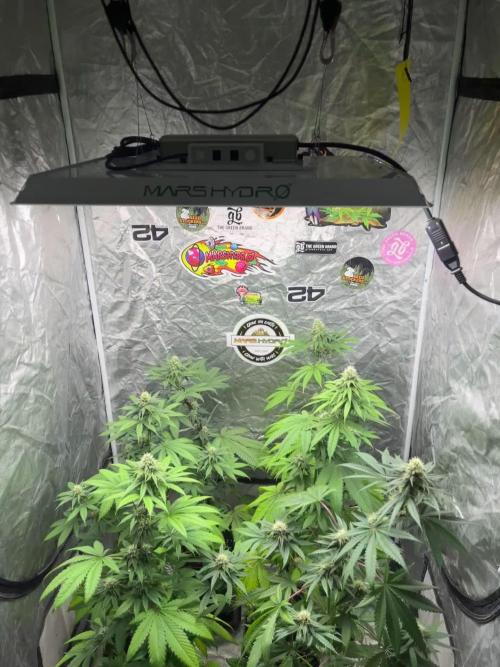
Vamos familia, actualizamos la cuarta semana de floración de estas Lemon Cherry Runtz de FastBuds.
La temperatura que estuvo entre los 24-26 grados y humedad dentro de los rangos correctos.
En cuanto a las plantas las veo verde sano, estiraron bien y ensancharon bastante también.
Se nota que los nutrientes de la marca Agrobeta cubre todas las necesidades de cada ejemplar.
Las flores empezaron a formarse, por el momento todo correcto, os dejé también alguna novedad y un cambio en la sala, agradecer al equipo de Mars hydro por el nuevo TSW2000. (los últimos 5 años cultive solo con los leds de esta marca) los cuales probé, TS600, TS1000, TS3000, TSL2000.
- os dejo por aquí un CÓDIGO: Eldruida
Descuento para la tienda de MARS HYDRO.
https://www.mars-hydro.com
Hasta aquí todo, Buenos humos 💨💨💨