




Likes
6
Share


@Bakeryguy420
Follow
3 mother fucking bears og :)
All smiles for this one , started showing sex so hopefully another week she starts flowering :) lady bugs have been doing such amazing work along with my predatory mites:) been dealing with thrips and fungal gnats !! Been also feeding them weekly with compost tea by xtream:)

Likes
22
Share


@Basementganja
Follow
The final week!Just waiting for the trichomes to shift from milky/clear ---> milky/30% amber.
This girl was unfortunately nutrient locked since week 3 of flower, due to low ph (~4).
Yield suffered. Potency didn't!

Likes
71
Share


@DogDoctorOfficial
Follow
🌸 Week 7 Flower — Eternity Grow Cup Update 🌸
📍Week 18 from seed
📸 +150 high-quality photos & videos provably more ups but they are shining and they deserve the attention
EC 2.5 | pH 6.2 | Full spectrum + under canopy light tuning
Welcome back to one of the most breathtaking updates so far in the Eternity Grow Cup. Week 7 Flower has arrived with a storm of frost, color, aroma, and structure — this is the beginning of the final masterpiece, and it’s nothing short of spectacular.
Each of the five phenotypes is shining in her own unique way, and the individuality of each plant is now in full display. From deep fruit tones to dense stacking, this week is a celebration of what happens when genetics, environment, and love come together in harmony.
💎 Standouts of the Week
• Pheno #1: Still holding the crown for the most intense fruity profile — bursting with sweetness, almost candy-like, and surpassing all expectations week after week.
• Frost levels are skyrocketing across the board. These buds are starting to look snow-covered, shimmering under every light source.
• Bud structure is really starting to swell — you can see the shift now as things gear up for ripening. We’re talking weight, mass, and beauty.
🔬 What’s Working
This is a week where everything is clicking:
• The mix of Plagron and Aptus nutrition lines is showing insane synergy. The balance of strength and finesse is just right, and the girls are loving it.
• ICL 300 under-canopy lights are performing beyond expectations. They’re lighting up every shaded spot, helping buds form from bottom to top with full integrity. You can see the results in the side buds — tight, frosty, and reaching up.
• We’re holding strong on spectrum tuning and DLI, hitting the right numbers at the right time, and that precision is paying off in how fast these ladies are moving forward.
• Temperatures and airflow have been key — we’re still running the vortex-style air movement, and it’s doing wonders for the microclimate around each plant.
🌿 Just 2–3 Weeks From Harvest
It’s starting to feel real. We’re entering the final arc. The finish line is not far, but right now, it’s all about patience, observation, and letting nature complete its masterpiece. Every moment counts now.
🎥 We’ve documented everything in full 4K and high-res stills. This is a week for the books — every trichome, every pistil, every sparkle. Be sure to head over to YouTube for the full experience and follow the journey with us.
🤝 Special Thanks
To all the growers, new followers, silent watchers, lovers, haters, and everyone in between — thank you. This journey is built with you, and this cup wouldn’t exist without your energy.
To all the participants in the Eternity Cup — congratulations. Every diary, every tent, every effort is valid. We’re getting close to the finish line, and it’s now in the judges’ hands. But no matter what happens, you’re all already legends for growing with intention and passion.
📲 Don’t forget to follow us on Instagram for sneak peeks, unseen content, and special behind-the-scenes looks. Every plant has a story, and we’re telling it together.
With deep gratitude,
Grower’s Love
DD
Reporting directly from 🌍 Eternity Grow Cup to You 🙌
--------------------
Genetics - Runtz https://www.zamnesia.com/6000-zamnesia-seeds-runtz-feminized.html
Nutrients - Plagron https://plagron.com/en/hobby
- Aptus Holland https://aptus-holland.com/
Controls - Trol Master https://www.trolmaster.eu/
LED - https://www.futureofgrow.com/en
LED - https://www.thinkgrowled.com
Soil - https://www.promixgardening.com/en
Germination - Cannakan https://cannakan.com/?srsltid=AfmBOopXr-inLXajXu3QFgKXCXXos4F1oEvScjMKIB5MR5dk8-GJ-F49
DOGDOCTOR 15% off
Smoking Papers - https://ziggioriginal.com/
Terpene saver - https://grovebags.com/
As always thank you all for stopping by, for the love and for it all , this journey of mine wold just not be the same without you guys, the love and support is very much appreciloved and i fell honored with you all in my life
With true love comes happiness Always believe in your self and always do things expecting nothing and with an open heart , be a giver and the universe will give back to you in ways you could not even imagine so
As always, this is shared for educational purposes, aiming to spread understanding and appreciation for this plant. The journey with nature is one of discovery, creativity, and respect. Let’s celebrate it responsibly and continue to learn and grow together!
Growers Love To you All 💚
#EternityGrowCup #RuntzHunt #GrowersLove #CannabisCommunity #AptusHolland #ProMixSoil #TrolMaster #Zamnesia #Plagron #ZiggiPapers #Grovebags

Likes
2
Share


@GodZilla_Owner
Follow
Week 9 – Day 65 (Flower Day 35)
🔄 Recap
One of those weeks where everything just works 😎
BioBizz pH+ is finally doing its job:
📈 I’m now able to raise the drain pH by around 0.1–0.2 points – definitely an improvement over Canna pH+.
Other than that, it’s all about the usual routine: watering, observing, and enjoying the view 🙌
🌿 Plant Status – White Widow
📏 Height: 110 cm – stretch is done
❄️ Buds are now visibly starting to frost up
💪 She’s looking healthy and strong – no issues at all

Likes
120
Share


@CBD_Sweden
Follow
Hi all the happy people here in GrowDiaries.
This is my second cultivation ever and it will be fun to try a bigger space than my closet grows
First, I'm just going to say I'm done with the construction of my new growroom.
I put some pictures on the construction here in week one.
The room is 2.14 meters by 1.7 meters and has a ceiling height of 2 meters.
It provides a floor area of 3.6 square meters.
I use a 54 Watt Lightwawe T5 for germination and 2 Pcs 400 Watt HPS lamps.
I have a channel fan that replaces the room air about 40 times an hour to get a comfortable theme in the room, the air enters a fresh air intake from the outside.
The air is purified through a carbon filter to then leave the room to the rest of the basement.
Then I use that heat to heat the rest of the basement.
I will use 8 pcs 15 liter Autopots to grow with and a 100 liter water tank that supplies the pots of water and nutrition.
I will grow completely organically in soil and will watercure my buds to get the best possible medicine for me.
But there are no cultivation rooms to be displayed here, so I continue with what is most important.
Today I have put my seeds in my moisture dome and hope the seeds have germinated within a few days.
I am very excited to see how the new growroom will work and how this CBD Fast Eddy plant from Royal queen seeds will turn out.
CBD Fast Eddy Automatic is combining Cheese x Juanita la Lagrimosa x Ruderalis, Fast Eddy is a rapid growing, flavourful, and CBD-rich auto strain that goes from seed to harvest in 8-9 weeks, produce generous yields, and induce a clear, mellow, and most importantly, functional high.
THC: 9%
CBD: High
Yield Indoor : 400 - 450 gr/m2
Yield Outdoor: 80 - 130 gr/plant
Height Indoor: 60 - 100 cm
Height Outdoor: 80 - 120 cm
Flowering: 6 - 7 weeks
Harvest month: 8-9 weeks after sprouting
Genetic Background: Cheese x Juanita la Lagrimosa x Ruderalis
Type: Sa 50% In 40% Ru 10%
Effect: Clear, Painrelief
Climate: Mild
..............................................................................................................................................................................................................................................................................................................................................
Update 2017-08-15. Both seeds have germinated and planted in small pots inside the humidity dome.
I'm so glad it worked so well and now it's just hoping they'll start growing and become 2 big healthy girls :)
...............................................................................................................................................................................................................................................................................................................................................
Update 2017-08-16. I have mixed my own soil today. Its 40% sieved peat harrow H2-H4 0-30 mm, 45% sieved peat harrow H4-H6 0-30 mm. 5% sand and 10% of compost soil. And i use 15% of perlite and mix it all together.
...............................................................................................................................................................................................................................................................................................................................................
Update 2017-08-20. These girls are much slower to germinate and to start growing than the other 6 girls I started at the same time.
One of the germinated seeds split in half, so I had to take a new seed and germinate it. It took 2 days.
It was just a smal taproots after germination with this strain as opposed to my Fastbuds cbd.
But I hope everything goes well from now and that they live up to their name, Fast Eddy.
................................................................................................................................................................................................................................................................................................................................................
Update 2017-08-21. New pics.
................................................................................................................................................................................................................................................................................................................................................
2017-08-22. Nr1 dident make it and died. Started germinate a new seed to get another Nr1.
..............................................................................................................................................................................................................................................................................................
2017-08-27. Nr 1 is in a small pot in humidity dome and i hope shes going to break the surface soon. Nr 2 is slow but doing fine.
---------------------------------------------------------------------------------------------------------------------------------------------------------------------------------------
2017-08-28. Nr2 is transplanted in 15 liter autopot.
---------------------------------------------------------------------------------------------------------------------------------------------------------------------
2017-08-29. New movie of the girls Nr2. Its no water for 3 days now so the roots develop more and match the plant above the soil. The temp controlled fan is awesome, its easy to set what temp you like to have in the room. Right now its 28 celcius. And humidity is 56%.
-----------------------------------------------------------------------------------------------------------------------------------------------------------------------------------------------
2017-08-29.
Hello to you who read my diary, I just want to say that I am pleased that you have chosen to check in with me and in my diary.
I just want to say that I do this for myself and for a steady flow of my medicine.
Everything you read and see in my diary is 100% honest and I will never distort or beautify anything here.
I document my crops so that I can learn from my mistakes and also to look back at those different crops.
I try to update with pictures every day and with text if something special has happened in the garden.
This is my strainhunt for the best medicine and the beginning of my journey with cannabis and the cultivation of it.
-----------------------------------------------------------------------------------------------------------------------------------------------------------------------
2017-08-30. Cleaned the room this morning, just vacuuming and cleaning with chlorine solution. Im testing the fan to control temp and humidity, it works great.
Added a movie. Everything is looking great right now.
------------------------------------------------------------------------------------------------------------------------------------------------------------------------
2017-08-31. 3 New pics.
------------------------------------------------------------------------------------------------------------------------
2017-09-01. New pics and a video of the grow room from today.

Likes
40
Share


@MrJones
Follow
47th Parallel Crowly's Comet
╰⊰🔹Popped Seeds 03.10.24🔹╰⊰
🌞Environment - 78F / 50% RH
🌾Training - Defoliating the buds as needed, a little at a time; they should be pretty clean by the time harvest comes.
⚱️2-Gallon 📊6.2 PH
💧 Feeding - Using Horti Late Bloom 0-24-26, Cal 12-0-0
🌞Mars Hydro FC-4800
🕷️ IPM - CannControl from Mammoth and Mosquito Bits
╰⊰🔹WEEKLY REPORT🔹╰⊰
📝 Notes - I ran the High Fortified P&K of the Horti-Late Bloom 0-24-26 for 2.5 weeks; going forward, I will be watering with H20 PHed to 6.2. The flowers are becoming oily, frosty, and have a strong smell. The terpenes are producing a gassy citrus scent with notes of garlic and herbs. It's the strong, aging orange aroma - quite impressive!
🗓️06.08.24 Feeding 2x Dail with Horti Cal and Horti Late Bloom
🗓️06.09.24 Feeding 2x Dail with Horti Cal and Horti Late Bloom
🗓️06.10.24 Feeding 2x Dail with Horti Cal and Horti Late Bloom
🗓️06.11.24 Feeding 2x Dail with Horti Cal and Horti Late Bloom
🗓️06.12.24 Feeding 2x Dail with Horti Cal and Horti Late Bloom
🗓️06.13.24 Feeding 2x Dail with Horti Cal and Horti Late Bloom
🗓️06.14.24 Feeding 2x Dail with Horti Cal and Horti Late Bloom
📝Fertigation injects fertilizers into an irrigation system to supply dissolved nutrients and water to crops.
╰⊰🔹STRAIN INFO🔹⊱╮
Crowley's Comet / https://www.47thgenetics.com/product-page/crowley-s-comet-10-fem-birdseeds
It's everyone's favorite piece of space rock, Crowley's Comet! The culmination of reversing our Matterhorn cut off Mr. Crowley to Intergalactic Runtz, and the results were out of this world (I had to do it). These ladies were slow to start, but once they hit their stride, they put any worries we had to rest. Compact, short-framed, and robust. They pack beautifully boulder-like flowers that reek of garlic and sickly sweet cotton candy. Dark green to a mosaic of purples, yellows, and silvers. Frost production is off the charts, the internode spacing is tight, and they certainly will impress in their last few weeks of flower. This is one of our favorite crosses in the new fem lineup. If you're looking for your hype fix, here you go.
Yield: Heavy to XL
Flower Time: 63 days
Feeding Schedule: Heavy
Likes
7
Share


@Adam22
Follow
Day 28 week 4 of flower plants looking good I dropped a 3L water bottle on a string which snapped a whole branch from the bottom 😳 on right plant 😭
Likes
3
Share


@Easyspeesy
Follow
Hi everyone, had some slight troubles this week. I had my light too high and the thc bomb stretched to quick and fell over when I watered her 😫. I Propped her up then added more soil around the stem, she seems to be ok now. Also been having trouble with night time temperature dropping to 55f so I’ve brought a tube heater and thermostat this has helped keep it at 64.5 F. As you can see from the pics the auto bomb seems to have some defects with her leafs, not sure what’s wrong but it does not seem to be effecting her at all. Day 13 i noticed the edges of the leafs on the thc bomb started to curl up slightly, don’t know why. I lifted the light slight coz I thought it might be heat stress. Apart from all that I am still fine tuning my set up and learning loads along the way. Really happy with how my girls are coming along. 🍁🍁


Likes
Comments
Share

@Count-Dooku
Follow
Branch broke off, but I actually decided later to put the rest of the plant back for ripening. When I pull the rest I'll update the diary with a new week.
Then when I press rosin I'll see if ripening made the yield better or terps improved, etc.
This pheno that I have has this quite offensive terpene profile, I would almost describe it as leathery, like the leather in manly cologne that's usually paired with tobacco.
As I write this I just took a dab off my third generation plant that I harvested almost two weeks ago now. This run I focused on feeding to maximize terpenes. I did get fantastic yields of beautiful golden rosin, and possibly a more complex terpene profile. That dab blasted my entire throat and sinus with this sort of green, undeniable weed taste, not exactly skunk but definitely a pungent green. No candy, not getting any purple punch, really no sweetness either that you find with a lot of strains these days. Just pure green dank.
It's been maybe 15 mins since I took that dab, I'm lying in bed, my sinuses are COATED I can taste it on my entire palate. Can't wait to run some other genetics like this! 😂 Just not my favorite terpene profile I guess. Damn I can appreciate the difference in my old runs and this run though. I always said I wanted to make rosin that punches you in the face with flavor.
Likes
15
Share


@seousgrows
Follow
The consistent and healthy grow is continuing. The first flower sites and buds started to form theirselves. Also the bottom leaves of the plants started turning to yellow by the end of the week. I'm not sure if it is normal but since everything looks good and healthy I will just assume that the yellow fades are just the leaves dying due to the buds which started to grow.

Likes
13
Share


@GanjaFarmar
Follow
To be honest overall this strain done good so as the others. Reflecting back on how i started with just a tent and light, and slowly buying the fans and filters whiles the plants were growing.
But i did want these plants to grow naturally without topping and Low Stress Training. I regret not removing the lower branches becuase i did get alot of small airy buds down there. But it was all trial and error. All i done was remove some fan leaves when good to do so every now and then. Not on a mad level tho, i did have alot of sugar leaves which i will be making some stuff with!
At veg the plants had deficiencies due to out of date Biobizz bottles. But that got sorted with the magic of Algimac and Calmag.
Overall
Next time I will definitely train the plants and maybe top a few.
Final Yield:
Plant #1 21.88 Grams
Plant #2 33.36 Grams
Plant #3 56.06 Grams
Which yield exactly 110 grams! Ounces come out very fat with these light buds
Not bad for the conditions they were brought up in, and with no training!
Thanks for everyone who has followed this diary throught out the journey! I hope this diary will help people out.
And thank you to Seedstockers for very cheap and quality seeds.
And special thanks for the GrowDiaries Team for providing the best platform for growing journals! I couldnt explain how much this Diary helped me. Its like a dream come true finding a site like this! And if you do see this message, i would love to see a Iphone app coming soon!
Kind Regards!
One love!


Likes
35
Share


@BrediniGreeny
Follow
1st WddngCake is under a SpiderFarmer SF 1000D 100W but an older model. The 2nd WddngCake is under a MarsHydro FC-E1500 LED 150W.
They also receive on the sides UV (total per day 2 and 1/2 h ) exposure and IR (total per day 2h)
From a Secret Jardin Cosmorrow UV 40W and one Secret Jardin Cosmorrow IR 40 W.
UV 1h in the morning starting with main light, 1h in the afternoon and 1/2 h just before the main light goes off.
IR 1/2 h in the morning before any lights even start then letting it another 1/2 h with all the other lights.Total 1h
IR 1/2 in the evening right before all the lights go out and let it smooth out 1/2 alone without the other lights. Total 1h
1/13/25
The girls are starting the week ok.
1/14/25
1st WddngCake,
She is older, is happier after the flush, still has a little bit of alkaline soil but i don't want to stress her out to much.
Gave her a little BioBizz CalMag aprox 3,5 ml ; TopMax 5ml and 5 ml BioBlom . All mixed in 3,3 l PHed Water at PH 5.0 ppm 290. Runoff PH 6,8 :( ppm 1100.
Also took like a handful of inter buds leafs :D . I think she will be ok. Seeing signs of buds fattening, new pistils. Frosty :D
2nd WddngCake
Is very strong starting to fatten up the buds because she is younger and just now entering that stage.
Like I already said her smell still resembles a tropical sweet creamy hoppy IPA.
I think she is good, no major problems. Gave her 3,3 l of PHed water.
Also mixed in CalMag 2,6 ml; 4 ml TopMax and 5 ml BioBloom. PH 5,4 ppm 207.
Runoff PH 6,08 and ppm 302. I think is a good sign that i flushed a lot of nutrients from the soil and she also used a lot of them.
Should keep and eye on that. Took 5 inter buds leafs off.
1/15/25
They are doing ok, both are fattening their buds and coming around good.
The 2nd WddngCake better then the 1st one because I didn't make so many mistakes with her 😬
The tent is smelling great the Temp is at 23 C at night 20 C and RH at 50% (+- 3%) .
1st WddngCake stand at 47 cm and the 2nd WddngCake at 74 cm at their highest. New Photos! 😍😃
1/17/25
Back with some updates. The girls are doing wonderful. Shades of pinkish darkish greenish on both.
The 1st Wddng Cake Auto,
is older and showing this colors also on the very small sugar leafs.
Gave her 4,2 l of PHed water, going in PH 5,6 and ppm 95. The Runoff is at PH 6,4 ppm 205 and I feel like now she is a little bit happier.
Soil PH at 7,3 but not measuring precisely have a cheap tho rod measure stabby thing.
The 2nd Wddng Cake Auto
is younger, starting to forming her full flowers, bursting with mass .
She also displays the colors mentioned above on the leafs closer to the main buds and also here and there on other sugar leafs.
Gave her 4,2 l PHed water , going in PH 5,4 ppm 110. Runoff at PH 6,5 ppm 195 .
Her soil PH is also at PH 7,3 kinda of. :))
I can see she is happier. I think is because i didn't make mistakes at the start.
I also had 2 other Autos that aren't on here. But none of them grew like this one. Until now :)).
Also took from both some leafs here and there. I think like a hand full total. Half a handful a plant. :D
In the new photos you can see the "between the fingers roll" 😁 like i call it. That I only do twice in the life of an Auto, not to stress her to much.😨
Temp in the tent at 24 C when day +-2 C. At night time 21 C +- 1 C . Rh 50% +- 3% all of the time.
Ventilators on for wind, and the grow must go on 👽🙌
1/18/25
So just 1 day until end of the week. I just got a Microscope.
Very good actually recommend Andonstar AD203 Portable, 4' Screen also metal holder.
A microSD Card 32Gb is also included and the data cable.
Has a battery. Handels good. for the money i am surprised 😍.
1st Wddng Cake
Took some pictures of the thricomes and I see a lot of milky one, some clear ones too. No amber ones.
I think the harvest window is open but , I don't have time to harvest now.
I also prefer also to let it a few days. Also must see for an extra tent to do 2 "days" of darkness.😥
2nd Wddng Cake
is doing good, starting to fade in nuances of pink dark green just on the leafs of the top. and just a little bit of yellow.😢
But tomorrow she will get another feed to push her further the 2 weeks or so she has got to go😍
Seems i forgot to set the clock of the Microscope:))), i just went to town because it was half battery full :)))).
Also Pictures from under the Microscope 😍😁
1/19/25
Sooo end of week. I think we are fine. All the things that should be happening are happening :)).
Sorry i messed up the timelines. But the older one smaller one will be 10 weeks old in 2 days.
And the younger one is gonna be 9 weeks in 3 days. Or something like that. Chaotic start like i said :)).
1st Wedding Cake Auto is starting to open her harvest window. Very much thanks to all that answered my grow question.
She got 4,9 l of water PH 5,4 ppm 92; Soil Ph aprox 7; Runoff PH 6,6 ppm 305.
I will keep an eye on her because she will be done in like about a week or maybe 2. Must see how next week goes.
Continue to give PH water no nutes 😁
She is aprox 10 weeks old.
2nd Wedding Cake Auto changed color more on the leafs. Purple dark green. Some little bit of yellow. But today i feed her.
She got 4,2 l water with CalMAg 3,5 ; Activera 5 ml ; Algamic 5 ml; Bio Heaven 5 ml; BioBloom 5ml; TopMax 6ml.
Going in PH 5,7 ppm 315; Soil aprox PH 7; Runoff PH 6,9😢 ppm 610.
She is younger then her sister so i think 3 - 4 weeks. We will see. 😆
New pics 😁

Processing
Likes
39
Share


@InnerCityGardens
Follow
Looks great and tastes great, poor yield due to the algae issue I had which stunted their growth. All my fault, you live and you learn

Likes
114
Share


@Tropicannibis_Todd
Follow
💩Alrighty Then Growmies We Are Back At it 💩
Well folks we just finished up the last run and so we are back to do it all over again 😁
So what do you say we have some fun 👈 We got some Gorilla Punch 👊 👊 👊 DAY 7
👉 Its been a really good week , ive had to boil water the last week as its been so dry , and even with my Humidifier its been tuff 👌
Never the less we are moving along and so far so good folks👌
FC4800 from MarsHydro Lights being readjusted and chart updated .........👍👉Added an RU45 too the mix 👍
www.marshydro.ca
👉I used NutriNPK for nutrients for my grows and welcome anyone to give them a try .👈
👉 www.nutrinpk.com 👈
NutriNPK Cal MAG 14-0-14
NutriNPK Grow 28-14-14
NutriNPK Bloom 8-20-30
NutriNPK Bloom Booster 0-52-34
I GOT MULTIPLE DIARIES ON THE GO 😱 please check them out 😎
👉THANKS FOR TAKING THE TIME TO GO OVER MY DIARIES 👈


Likes
6
Share

@MisterTree
Follow
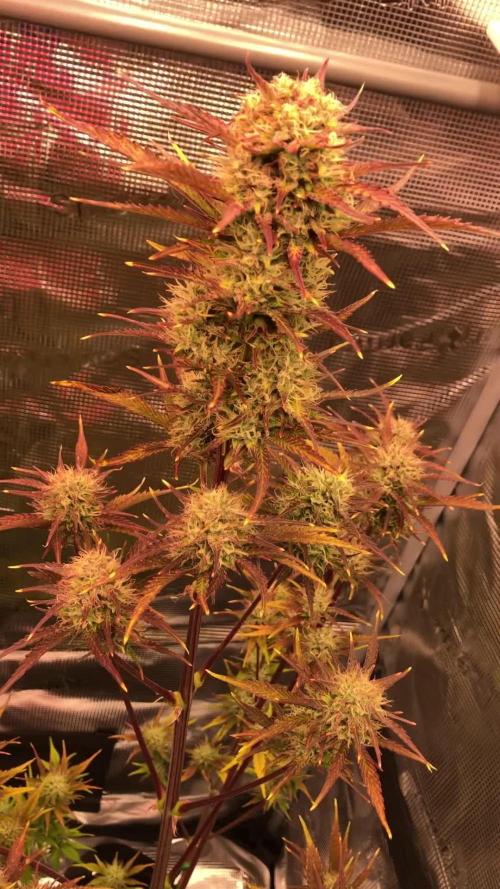
Tag 58 der Lady‘s, Sie wurden heute nochmal leicht nackig gemacht (entblättert) und leicht gegossen.
Denke die nächste Woche wird geerntet ich halt euch auf dem laufenden.
Danke an alle die mein Diary betrachten und mit verfolgen wünsche euch allen eine gute Zeit🙏🏽
Stay Strong & Healthy Growmies
Likes
Comments
Share

@Growingbuds
Follow
9/2 to 9/9i
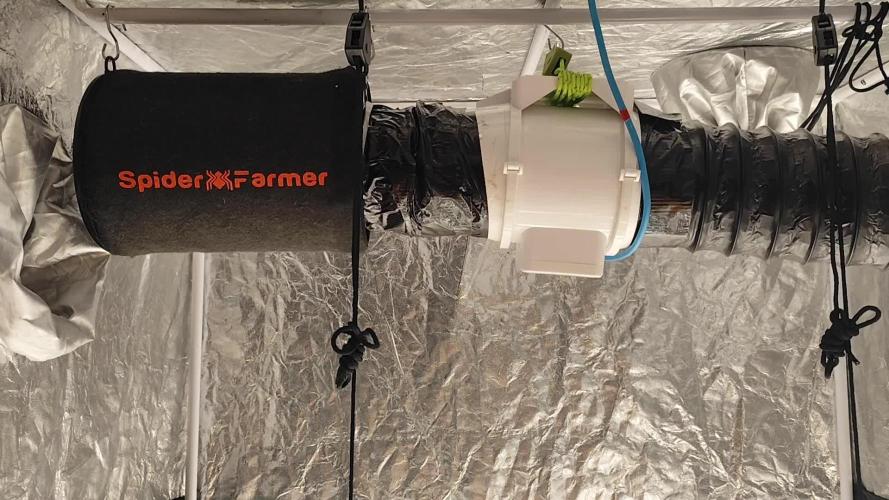
I adjusted pH to 6.2 maximum 6.3, EC 1.0 to 1.2 and it helps a lot cause measure pen arrived this week , I'm doing defoliation and some LsT but both of them smoothly to not stress more , temperature beating almost 40 degrees at my region is enough for sure , spraying a lot of water to cooling them and I think we are ok , two plants don't look so vigorous like others, for the first experience growing autos and looking for the structure, I think it's ok , I know. That d second attempt normally goes better d first one and I hope in 4 weeks germinate another strain to try to be consistent. Let's see ! Probably Critical or Critical Somango maybe Zkittles by advanced seeds again , looking at costs it's not bad .
Trying open the middle a little more, to take advantage of increase light about 60% to 80%.
Mars hydro fan added and tomorrow 9/9 last day of week 5, I see some pistilis appearing so Week 6 begin pre-flower


