





@HardNuggGrow
Volgen
Finish the flush with plain distilled water. Got her runoff down to 29 ppm 6.6 ph . Letting her ride it on out while watching the tricombs. a good bit are coudly with a few clear left. What y’all think? a week? Or two?


@A1420
Volgen
Best result from an Outdoor Auto yet, completely organically grown and natural sunlight only


@gottagrowsometime
Volgen
Grow is going great. The bigger pheno has taken to the bamboo shoots really well & now both plants are growing really well. Coming into preflower without a care in the world.
Days 29-32 2nd/2/
Growth is steady. I really haven't done anything differently so there's not much to report on. Keeping the feed ppm steady & I haven't touched anything LST or any defols. I haven't had the need. It'll do a good amount of stretching over the next few days. I haven't switched to bloom feed yet. Maybe in a few days.
3rd/3 Day 33
Growing like nothing in her way. Moving like a pair of mad women. Added 500ml of Master Root/Enzymes/Calmag ph'ed to 6.9, little higher than I'd like but I wasn't wasting a mix for a point out of what I normally give.
5th/2 day 35
Wow, just blow away by the growth in 2 days. DAMN Herbies got it going DOWN.
She has one or 2 blemishes. Still learning the nutrients. With these you can only improve the more you use, I'd she'll easily put on another 20-25cm for each plant. One is much bigger.
DISCOUNT CODES
20 OFF ZAMNESIA WITH CODE: ZAMMIGROW2024
20% OFF XPERT NUTRIENTS& KANNABIA WITH CODE: GGST
20% off Oringal Sensible Seeds with code:


@Therbalist
Volgen
They have shown sex and seem to have grown multiple pistils from calyxes so I'm hoping there going to continue to flower. 🙏
Shot up in the last week and two smaller ones have now become two tallest. Trying to convert a branch on the tallest fastest growing middle plant using a home made STS solution!


@StrangeTomatos
Volgen
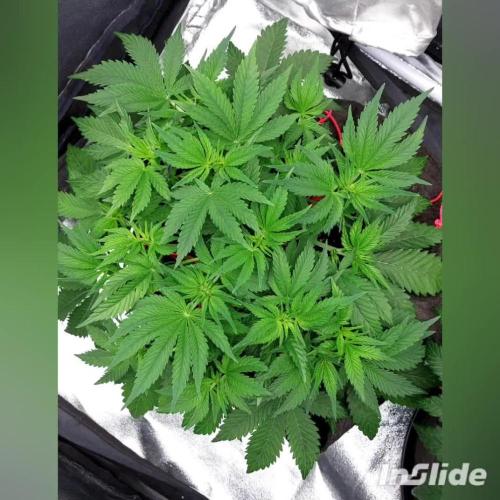
A nice week without problems i have added a few basil seeds, but posible way too much i migth have to remove them, have you grow other plants on your pots? any advice?




@squalino
Volgen
bonjour
je suis squalino
je réside au Luxembourg
je suis passionné depuis 5 ans
je fais de la culture bio en intérieur. le temps extérieur n'est pas adapté aux plante canabis
j'adore ce que je fait .j'aime partager et surtout découvrir et apprendre de nouvelles choses .
j'adore le contact humain et discuter
si je pourrais travailler avec vous serait le début d'un rêve d'enfant pour moi .je suis très motivé, j'ai le temps pour mon hobby , sérieux et il ni aurait pas meilleur candidat pour se job .
tout cela pour dire que je serais ravi de pouvoir faire pousser vos graines. car je n'ai pas eu l'occasion de pouvoir les tester malheureusement
a bientôt et bonne journée a tous
foro et video présentation materiel et préparation terre .
video diapo cola cherry fast bud et permanent white marker growers choice



@Ieiogrow94
Volgen
Eccoci di nuovo qui!!!
Super eccitato per questa nuova collab con Divine Seeds, team davvero al top, che mi ha dato l’opportunità di testare questa nuova genetica e di condividere i progressi con tutti voi!!!
Come sempre partiamo nei bicchieri per poi travasare.. Questa volta verrà svolto tutto sotto la Lumatek Zeus 465 ProC, mi aspetto molto da questo ciclo!!
Purtroppo ho perso i file delle scorse settimane e dovrò reiniziare il report da ora scusate per il disagio
Grazie a tutti per il supporto ❤️🍀🔥


@Edles_Gas
Volgen
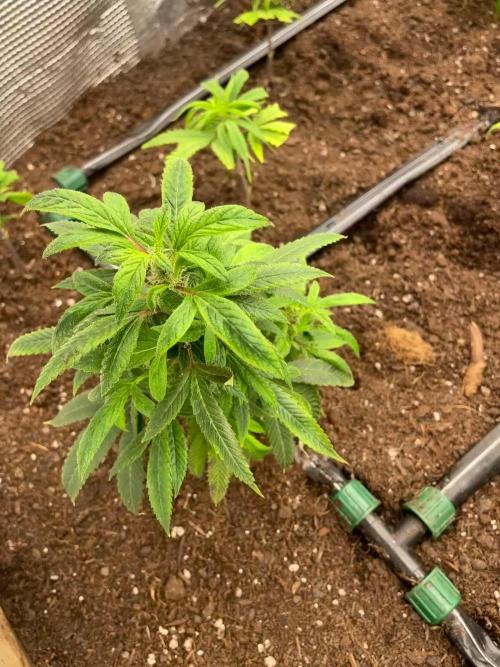
For this second week of flowering im doing more lst on the 🍉Zkittlez getting the right shape for the plant. I’m also increasing their nutrient uptake as they are in full flower mode and hoping to get phat buds, aswell I brought the trellis down to start tucking any colas that reach above it. As for next week I’m gonna set up the carbon filter to reduce the aroma these girls are gonna put out and that’s it.



@carlitoshaze44
Volgen
nuestra pequeña vuelve a la vegetación!
acompañada de sus hermanas amnesia Haze selección
Día 1/3/26
Todo perfecto la pequeña avanza bastante hien


@Smokepurple137
Volgen
All are going strong, zkittles OG auto is nearly 30cm bigger than the rest and has started showing bud sites, the rest are not far behind at all. I think they will be into flowering stage at the end of next week and by then hopefully 30-40cm taller. Do si dos is very different, looks short and stout so will be doing some LST on her. Seems to be happy with the nutrients and strengthening nicely. Added another 600w light on 11/12/20 so 3 600w lights in now.


@Ultraviolet_
Volgen
The nighttime VPD does not need to mirror the daytime VPD. Daytime VPD dictates the pull of water and nutrients, while nighttime VPD acts mostly as a prevention tool. A high nighttime VPD increases the risk of the leaf temperature dropping below the dew point, which can trigger bud rot and powdery mildew.
Switched down to 12's hours of light mid-week, changed spectrum, increased light intensity from 840umol up to 1150umol at current height. Overnight from 800ppm to 1500ppm, morning compensation point (microorganisms) 46-47 days from germination, she fills the canopy herself, once the apical dominance is broken.
Measuring a plant's overnight CO2 emissions provides an accurate estimate of its dark respiration rate. Because photosynthesis stops in the dark, you are isolating the respiration process, which allows you to gauge how much stored energy (glucose) the plant has consumed and estimate the scale of oxidative phosphorylation. Oxidative phosphorylation is the final stage of respiration that generates the bulk of the plant's ATP (90%) and relies directly on the oxidation of these respiratory substrates NADH and FADH2 along with the consumption of oxygen.
From a thermodynamic standpoint. Growth is an energy-capturing process, and the rate of that growth is bound by the available free energy (Gibbs free energy) and the First Law of Thermodynamics. While the ceiling or upper limit is dictated by free energy (such as photosynthetically active radiation), the actual amount of growth relies on how the plant balances that energy with other limiting factors. These are often described as the nine cardinal parameters of plant growth. 4 Above, 5 Below. If any one of the 9 becomes bottlenecked, the entire plant's cycle is restricted.
Operating an 80F+ environment at night to force rapid carbon conversion comes with major drawbacks, as the biochemical processes work differently than the deductive logic suggests. While raising nighttime temperatures to 80F indeed accelerates respiration and speeds up the conversion of captured sugars (sink activity), doing so also radically increases the plant's overall metabolic baseline. If the plant's metabolic rate is artificially forced too high via heat, it can actually "burn" through more energy than it managed to assimilate during the day. This leads to carbohydrate starvation, stretching, and a net loss in final biomass yield.
400 ppm is near the standard ambient level; the plant's stomatal intake is the primary limiting factor, not the dark-reaction enzymes. To push 45 DLI without burning out the plant. Trying to force the conversion of a massive daylight DLI in a compressed time frame (12 hours) becomes highly inefficient because the Rubisco enzyme simply hits a saturation limit. To successfully convert a 45 DLI into dense, productive mass, the ambient CO2 generally needs to be elevated to the 1000 to 1200ppm range. This creates a steeper concentration gradient, driving the stomata to inhale CO2 fast enough to match the high photon energy.
It's not all about the amount of light, but the ratio too, as this will dictate growth through the ratio of phytohormones. In order for correct bud development, there needs to be a correct ratio of RGB. Different wavelengths have different penetration depths. When one grows using top-down lighting, only the entire canopy is limited to 2-3 layers of leaf, meaning there will only be correct bud development in those layers, regardless of getting 45DLI.
The biomass potential of a plant is linked to root mass. Generally, when a plant reaches its maximum biomass, you can help to chop off parts of the plant that are in less than efficient areas of the plant (low light) so that it can create new biomass growing towards the light.
Strength is the maximum potential, and power is the rate of conversion. You can have the biggest veg period of 18 weeks, and it means nothing, as soon as you start flowering, the chronological clock starts ticking, the only metric that matters to bud size is how much energy you convert each cycle, not by how long it took you to build the framework, it helps a lot nonetheless.
Not saying anyone should not defoliate for a reason, only that you should have one, and at the right time. Don't defoliate 30+% on autoflowers or 4 weeks into the flower period and expect an increase in yields; it doesn't work like that. There is room for dictating growth patterns and clearing out overcrowded nodes, but it needs to be done in veg because once that timer starts and buds start growing, it's all just energy conversion. One barely needs to defoliate at all in a 4x4 because with side lighting, turning a 2d canopy penetration into a 3d, even lower buds are 90% the quality and density of top ones. The rate of photosynthesis and the ultimate density of lower buds aren't just about the sheer number of photons PPFD. The specific ratio of R:G:B dictates canopy penetration and drives different photochemical reactions. The Electron Transport Rate (ETR) measures the speed at which electrons are driven through Photosystem II (PSII) during photosynthesis. The ratio of Red, Green, and Blue (RGB) light heavily dictates this rate.
Plant leaves continuously perform cellular respiration regardless of the time of day, using energy and oxygen to fuel essential metabolic maintenance. If you over-defoliate, the remaining canopy may be unable to produce enough net sugars during the day to offset the constant respiratory demands of the plant. Must balance fixation with assimilation; there's no point in capturing 45 DLI if you only convert 20% every cycle due to an extreme lack of respiratory capacity to perform cellular oxidative phosphorylation.
You can have a 4x4 canopy or a 4x4x4 canopy, yes, we know that side lights are not as effective at absorption from the sides or underneath, but it's not about DLI, it's never been just about efficiency, it's about the penetration ratios of RGB that drive ETR of/photosynthesis and trigger correct bud development. The size of each bud is its own ability to perform the ETR required for its own personal growth, and bud development is dictated by the ratio of RGB. It drives localised growth and acts as a regulatory switch for that development. Turgor pressure is another very important factor in understanding if you want big buds, for it is the "steam engine" that dictates the rate of bud expansion. Simply, a lot harder to achieve metabolically at ambient 75F than at say 86F
Because buds have less chlorophyll, they do not suffer from the same photosynthetic shutdown that over-exposed, light-stressed leaves do. They can soak up direct light energy to swell in density and size. Their tolerance to intense light is heavily limited by the temperature and humidity, but if you can control those temps and keep the rot away, buds have a much, much higher tolerance to high light than leaves. Beneficial to hammer with high light before trichomes appear. Balancing this with trichome maturity is key for rich terpene and flavonoid profiles, want it just right, somewhere in the middle, not too much, not too little. Find cannabis plants can defoliate themselves come harvest, given the right signals. Every last ounce of potential is recycled into buds by the plant itself (senseceance), given you can keep the level of conversion high enough to prompt a need to do so.
Get the canopy @ optimal PPFD range, 45-55DLI, then let the plant "stretch" the stems into a "PPFD range much higher, one that leaves don't like to grow in, but buds thrive in. What is optimal for a bud is different from what is optimal for a leaf photosynthetically. Genes provide the blueprint, but the environment dictates how, when, and if those genes are expressed. Must first signal the condition to increase the expression you want to exist through stress and response, cause and effect. A well-buffered CEC medium prevents extreme nutrient swings, allowing plants to maximise their dedicated genetic expression.
A plant is either genetically expressing "growing" or "recycling" genes based on its nutrient starvation level in the medium. Constantly toggling between "growing" and "recycling" hormonal states creates a futile cycle that wastes valuable metabolic energy. Plants rely on sophisticated biochemical switches to manage this trade-off and prevent rapid fluctuations that disrupt that balance.
This energy inefficiency is a recognised biological challenge. Plants avoid this costly "flip-flopping" by using hierarchical master regulators (like the TOR and SnRK1 protein kinases) that act as strict molecular switches. These networks enforce cellular commitment to either growth or survival, preventing mixed signals.
This is something that was missing from previous grows.
Under nutrient-rich conditions, TOR promotes protein synthesis, cell division, and structural expansion.
Under starvation, TOR is inhibited, and SnRK1 is activated. This triggers autophagy—where the plant breaks down old macromolecules and organelles to scavenge and reallocate essential nutrients to critical sinks.
"What's the point in flushing?"
The core idea behind a PK booster is to deliver a massive, concentrated surge of P&K exactly when buds are swelling in conjunction with a N starvation. Because these are short, targeted windows, the nutrients must be highly bioavailable so the plant can process them immediately. As soon as you go "organic," that's out the window. Much slower release, uncontrolled, very difficult to "spike". to cause the ratio that will initiate a response.
High-volume PK spikes rely strictly on the immediate uptake capabilities of mineral fertilisers. Making it far less efficient in organic/living soil setups.
When you use organic nutrients, it changes the dynamic with which the plant delivers and trades its nutrients; organic is always releasing new nutrients into the immediate EC. This prevents a lot of autophagic responses from occurring due to a constant stream of new nutrients into the immediate medium's EC. This can prevent nutrient starvation from being signalled.
PK boost is essentially just N starvation, triggering an autophagic response. Concentrated ratio of P&K while tapering off the Nitrogen base. To the plant, the sudden drop in Nitrogen registers as a severe environmental stressor—essentially, the beginning of starvation protocols. She aggressively strips nutrients and proteins from older leaves and vegetative structures and shuttles them directly to the developing flowers and fruit. Ta daaa. Call it a PK booster and sell it. Nothing to do with the P and K itself, it's the ratio immediately available in the medium triggering a nutrient recycling mechanism within the plant itself; all the "booster" sells is the trigger to the signal.
PK BOOST with 50% ammoniacal N signals floral maturation.
PK BOOST with N starvation signals nutrient recycling/sinking.
Very difficult to initiate a response when organic nutes are doing their thing. It takes 4x5x more water significantly to leach or wash ammonia out than it does nitrates. This can prevent triggering N starvation from having its normal impact.
Manipulating the C:N ratio in the medium. One autophagic response has multiple potential signal triggers. Nutrient starvation is not an option.


@pHilosophy420
Volgen
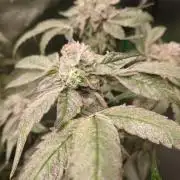
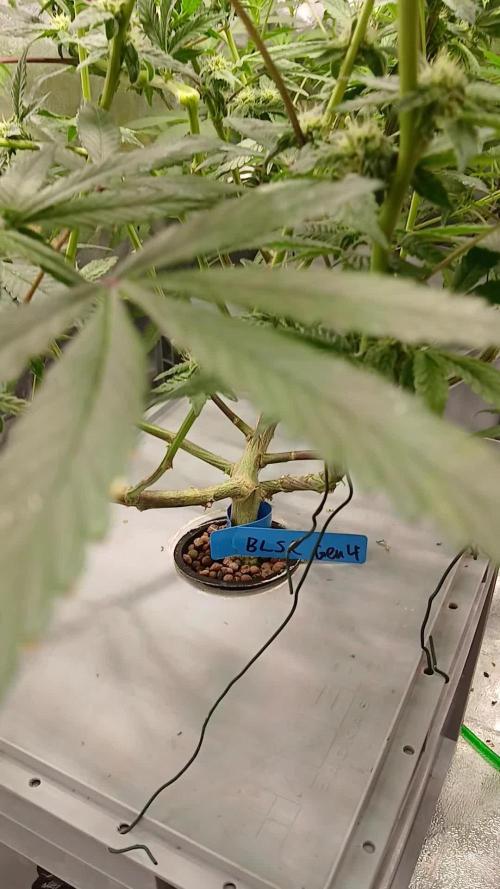
She’s almost ready for harvest, just one more week of watching the weather, a big flush, and then it’s time. She’s looking incredibly frosty for a CBD plant; the buds are more like what you’d expect from a high-THC strain. Can’t wait to see how she tastes and what the effects are like in the next few weeks.


@Caertner
Volgen
Streckung fast durch, jetzt kommt die erste Schwellung. Klingt auf englisch mit Stretch und Swell/Bulk zwar fancy...
Habe noch ein paar Äste mehr geknickt, damit sie nicht so hoch wird... ihre 2 Wochen spätere Schwester wird sie sicher auch überholen... aber die hat noch ne Woche bis zum Brechen der Beine. Omg fieser Pimp könnte man meinen...
Update: Bricht mir doch tatsächlich der Haupttrieb beim umtopfen ab... grrr. Shit happens. Hinterher erinnere ich mich eh nicht mehr dran ;)


@MG2009
Volgen
01/27/2022
Got a couple stragglers in cups but working on getting more pots.
I apologize for rough looking leaves on the plants, I've been spraying neem oil as a preventative, and to also boost immune responses I've been doing aspirin in water regime so leaves can get beaten up being scavenged for extra energy.
(to fight a non existing threat)
At least in my experiences.
02/02/2022
Potted up a Lemon OG into ? gallon self watering pot will top dress with Coast of Maine 5-2-4 and water in for first week or two, then to 12-12 for her


@CanarianGrow92
Volgen
Week 2 vegetation for the ztrawberry from fastbuds 420.
All good at the moment, we are testing the xpert line with these girls.
1ml of master grow A+B
1ml of master root
We removed the 2 lowest sets of leaves and branches. We do this because we have the girls in 7 liters and quite some plants together, so i prefer to concentrate on the main bud and only some side buds


