


Likes
Comments
Share


@danielsegovia
Follow
17.06.20 (28 DÍAS) Empezaron a salir los primeros pistilos y se está estirando bastante
23.06.20 (34 DÍAS) La Red Critical Auto empieza a mostrar sus primeros buds violetas.

Likes
11
Share


@Chubbs
Follow
420 Fastbuds
Amnesia Haze Auto
Week 6
This week has been interesting especially since the outside Temps have gone back up into the mid to high 90's. Over all the plants have been OK and still growing well. Definitely can't wait for mid flower to see how they'll start to smell.
Happy Growing

Likes
11
Share


@CanarianGrow92
Follow
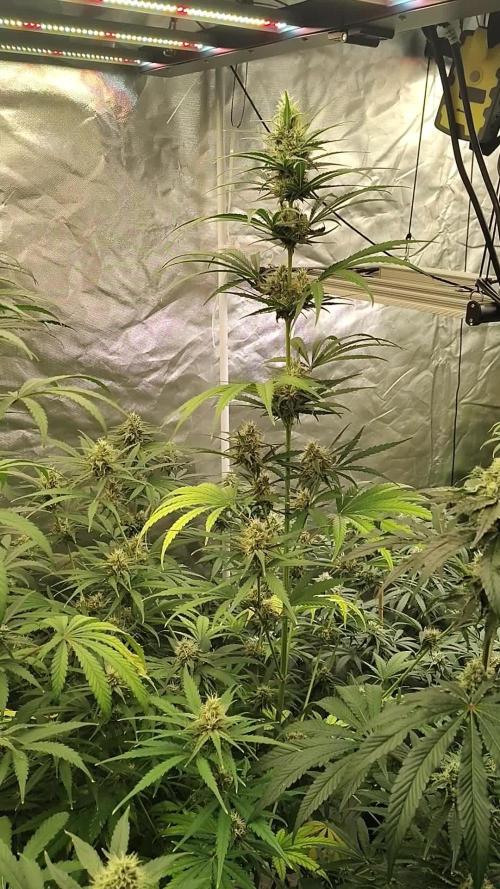
Week 5 flowering for our banana purple punch from fastbuds 420!
The buds are starting to get fatter day by day, we continue with our food program. This week again we gave sugar shot, sticky fingers, bloom booster, silica, amino and master root all from xpert nutrients.
All good at the moment 🤗


Likes
15
Share


@JeyGanesha
Follow
Prima settimana di fioritura... tutto procede come deve .. 💪 forza belle piantine mie regalatemi della Apple strudel buona ed efficace per la mia cura🙏✌️
Likes
61
Share

@WhiteEdge
Follow
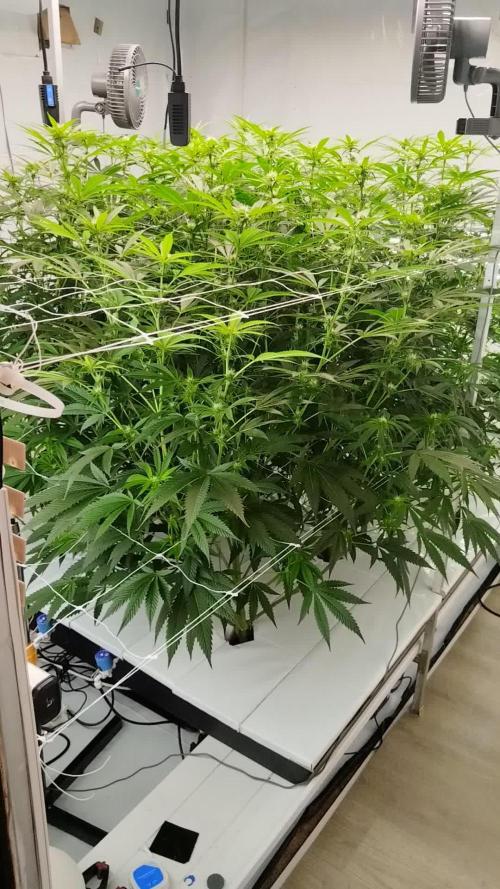
Flowering W3 D1
Canopy @ 88cm from white board, growth from yesterday 3cm,
SUPERCROPPING looking great, second layer of trellis netting @100cm, 40cm above first layer
Clean/remove some leaves from bottom, just to see underneath
Light intensity - Max 850 PPFD , Light distance - 50cm, DLI - 38, Light Interval 12/12
Midea 27c5% day/night, TM 67/63%, AC Infinity AUTO
Day RH - 67/72%, Night RH - 63/74%,
Day Temperature - 27/28c, Night Temperature -25c/26c,
Leaf temperature 25/26,
VPD Day - 0.9/1.1 , VPD Night 0.9/1.1
CO2 - 400+PPM
Nutrient Tank - 2.84EC, PH-5.80 Temperature - 19/20c, ORP-410/450mV
Day Misting - 30sON/20minOFF + 2 x 5 minute long shot
Night Misting - 20sON/30min OFF
Runoff - 10.00 r3510,
Flowering W3 D2
From midnight another interruption in irrigation for 5-6 hours. Girls looking little bit sad, but OK
Lower light intensity for first part of the day, to ease a bit until they recover and completely hydrate again.
Growth from yesterday 3cm...Stacking looking nice from last week
Light intensity - Max 850 PPFD , Light distance - 50cm, DLI - 38, Light Interval 12/12
Midea 27c5% day/night, TM 67/63%, AC Infinity AUTO
Day RH - 67/72%, Night RH - 63/74%,
Day Temperature - 27/28c, Night Temperature -25c/26c,
Leaf temperature 25/26,
VPD Day - 0.9/1.1 , VPD Night 0.9/1.1
CO2 - 400+PPM
Nutrient Tank - 2.84EC, PH-5.80 Temperature - 19/20c, ORP-410/450mV
Day Misting - 20sON/20minOFF + 2 x 5 minute long shot
Night Misting - 20sON/30min OFF
Runoff 10.00h-3500ec, 16.00h-3300ec, 20.00h-2890ec,
Flowering W3 D2
Foliar Feed - Athena Stack + H4SiO2 - 200ml
Light intensity - Max 850 PPFD , Light distance - 55cm, DLI - 38, Light Interval 12/12
SCL - 30%, start adding side light from one side to see it is help to control stretch on that side..
From next week firing up on another side also..
Midea 27c10% day/night, TM 67/61%, AC Infinity AUTO
Day RH - 67/72%, Night RH - 61/65%,
Day Temperature - 27/28c, Night Temperature -25c/26c,
Leaf temperature 25/26,
VPD Day - 0.9/1.1 , VPD Night 0.9/1.1
CO2 - 400+PPM
Nutrient Tank - 2.84EC, PH-5.80 Temperature - 19/20c, ORP-410/450mV
Day Misting - 20sON/20minOFF + 2 x 5 minute long shot
Night Misting - 30sON/30min OFF
10.00 r2750/5.95, 18.00 r2840, Stack + Flush, r2810,
Flowering W3 D4
Keep 30/30 in day time......SLC-35%
Remove some leaves, mainly from bottom and less developed branches
Light intensity - Max 850 PPFD , Light distance - 55cm, DLI - 38, Light Interval 12/12
SCL - 35%
Midea 27c10% day/night, TM 67/61%, AC Infinity AUTO
Day RH - 67/72%, Night RH - 61/65%,
Day Temperature - 27/28c, Night Temperature -25c/26c,
Leaf temperature 25/26,
VPD Day - 0.9/1.1 , VPD Night 0.9/1.1
CO2 - 400+PPM
Nutrient Tank - 2.84EC, PH-5.80 Temperature - 19/20c, ORP-410/450mV
Day Misting - 30sON/30minOFF + 2 x 5 minute long shot
Night Misting - 30sON/45min OFF
Runoff - 10.00 r3210/6.05, after flush 2900, second flush at midnight, r2890ec
Flowering W3 D5
Girls growing 2-3cm daily...Enough vertical space for another 15-20cm of stretch...
Light intensity - Max 850 PPFD , Light distance - 55cm, DLI - 38, Light Interval 12/12
SCL - 40%
Midea 27c10% day/night, TM 67/61%, AC Infinity AUTO
Day RH - 67/72%, Night RH - 61/65%,
Day Temperature - 27/28c, Night Temperature -25c/26c,
Leaf temperature 25/26,
VPD Day - 0.9/1.1 , VPD Night 0.9/1.1
CO2 - 400+PPM
Nutrient Tank - 2.84EC, PH-5.80 Temperature - 19/20c, ORP-410/450mV
Day Misting - 30sON/30minOFF + 2 x 5 minute long shot
Night Misting - 30sON/45min OFF
Runoff - 10.00 r3310, 00.00h-r2800ec/6.00PH
Flowering W3 D6
Two big AC power interruption for 3-4h in total ...Think Grow LED stay active on car battery .
Canopy @ 108cm more or less, girls grow around 15cm this week. Hope that stretch is over in couple off days.
Keeping everything the same, then defoliation and pruning and new irrigation timings
NEW Nutrient tank solution - 5ml Athena Balance + 100g Athena Bloom + 60g Athena Core - 5ml H4Sio2 + 30ml HOCl
Light intensity - 800-900 PPFD , Light distance - 50cm, DLI - 39, Light Interval 12/12, SCL - 40%
Midea 28c1% day/night, TM 68/60%, AC Infinity AUTO
Day RH - 67/72%, Night RH - 60/65%,
Day Temperature - 28/29c, Night Temperature -25c/26c,
Leaf temperature 25/26,
VPD Day - 1.0/1.2 , VPD Night 0.9/1.1
CO2 - 400+PPM
Nutrient Tank - 2.80EC, PH-5.85 Temperature - 19/20c, ORP-450/550mV
Day Misting - 30sON/25minOFF + 2 x 5 minute long shot, slight shot frequency increase
Night Misting - 30sON/45min OFF
Runoff - 10.00 r3420/5.91ph,
Flowering W3 D7
Canopy - 112cm , highest top is at around 118cm, 2cm from last day
Light intensity - 800-950 MAX PPFD , Light distance - 50/55cm, DLI - 40, Light Interval 12/12, SCL - 45%
Midea 28c1% day/night, TM 69/59%RH, AC Infinity AUTO - New settings
Day RH - 68/70%, Night RH - 59/62%,
Day Temperature - 26.5/28c, Night Temperature - 22c/23c
Leaf temperature 24/25,
VPD Day - 1.0/1.1 , VPD Night 1.0/1.1
CO2 - 400+PPM
Nutrient Tank - 2.80EC, PH-5.88 Temperature - 19/20c, ORP-500/600mV
Day Misting - 30sON/20minOFF + 2 x shot (3+4min)
Night Misting - 45sON/45min OFF
Runoff - 10.00h r3110/6.12PH, 19.00 r2900,

Likes
2
Share


@Cannabot
Follow
Very nice tasting bud some of the best ive had,decent yields.Very resistant to mold and diseases


Likes
25
Share


@pifflestikkz
Follow
Day 29
01/08/24 Thursday
Another feed today using de-chlorinated tap water pH 6, there now taking 300ml every evening.
Day 32
04/08/24 Sunday
300ml De-chlorinated tap water pH 6 today again with Plagron PK13-14 and power buds.
All plants doing really well!
Had an infestation of leaf minors this week, no idea how, but they are treated and I'll check every 48 hrs on progress of pets.
All of them have shot up this week 💚
Day 34
06/08/24 Tuesday
De-chlorinated tap water pH 6 today with calmag only.
Pre flower stretch initiated, pre flower female sex pistils forming 😍
All happy and healthy!


Likes
8
Share


@datrobspeoria
Follow
Loving the look and smell of this plant.. She is quite compact and is loaded with Frosty buds. I am still feeding her nearly every watering as these plants are demanding
Likes
25
Share


@Luna91
Follow
Hello guys!
This week was amazing for my girls & Me! :D
4 of them are showing a great sign of flowering! After I defoliated all and tried main Lining for the first time! I didn’t expect such a great results! They are already healing and I should say: I’m falling in love with growing!!
It’s like my thing! After hours and hours reading and searching! When i see them happy like this, feels like all of my efforts are paying off.
I just wish they weren’t autos!
A newbe grower totally can handle an original femmenized seed! I don’t know why everyone said go for autos for tour firat grow!!
I’m practicing most of the trainings suitable for autos till i get real stuff!! Soon!
I also got that powerful AC, i was hesitating to buy!! it’s pretty amazing! Now I can grow my pineapple Express at thr best temp 25 degrees with 2200w!
I just hope i dont get too suprise when i see the Bill😅
Likes
23
Share

@MyLittleGarden
Follow
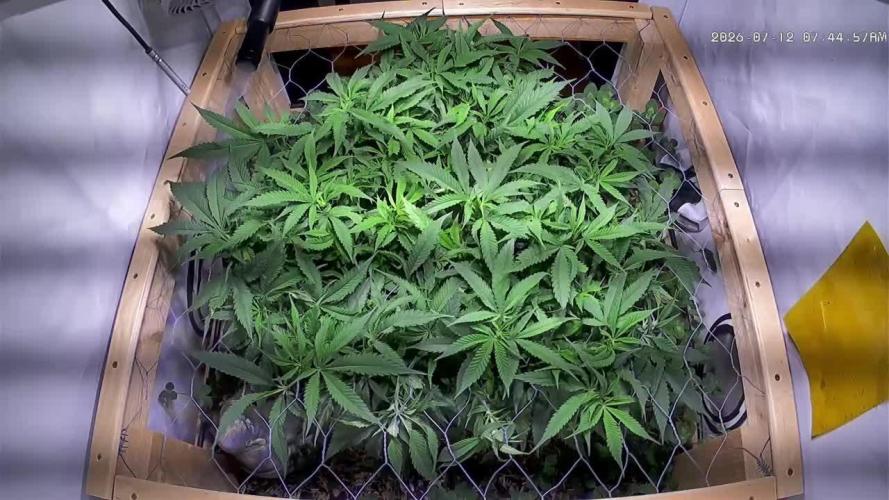
Vegetationswoche 14 - 10.07. – 17.07.2026
Diese Woche gibt es eigentlich nicht viel zu berichten. Die Utopia wächst weiter vor sich hin, sieht gesund aus und entwickelt sich genau so, wie ich mir das vorgestellt habe.
Ich habe nach wie vor kaum eingegriffen, sondern sie einfach wachsen lassen. Gegossen wurde einmal mit etwa 4 Litern Wasser.

Likes
9
Share


@Bread_n_Buds
Follow
Don't be fooled, this specimen of Pineapple express was born only a week after the other F1 hybrids from Zamnesia but with these latest generation autoflowering plants called f1 noin you're joking, they are really fast, the flower comes together in an instant and poof it's ready .
She has begun to grow a lot, she has made a central main cola take off which promises to be very, very interesting, and she is composing the gems.
The conditions are all there, we await the decisive weeks for the construction of the flower, cup after cup, we will see what this young lady with the famous name will do.
We are sure it will be very interesting.
The fertilizer is always a hair too much but I have very little of the paranoia of Italian grandmothers about leaving my girls hungry.
Buy seeds on Zamnesia at the link https://www.zamnesia.io/it/10681-zamnesia-seeds-pineapple-express-f1-automatic.html
Food by Plagron
https://plagron.com/en
Light www.viparspectra.com/
Tent & Air www.secretjardin.com
Music of the week www.radionula.com
+++ 432 hz frequencies for keep in line my Girls to Gaia.
Site Description
ZAMNESIA SEEDS - PINEAPPLE EXPRESS F1 HYBRID AUTOMATIC: FRUITY FLAVORS AND ENERGETIC EFFECTS
Combining Trainwreck with Hawaiian, Pineapple Express F1 Hybrid Automatic brings a beloved strain to new heights. This autoflowering F1 hybrid cultivar ensures exceptional uniformity, reliability, and stability, making it well-suited to growers of all experience levels. If you've not checked out Pineapple Express F1 hybrid Automatic for yourself just yet, now is the time.
GROWING PINEAPPLE EXPRESS F1 HYBRID AUTOMATIC
All it takes is 8–9 weeks from germination before Pineapple Express F1 hybrid Automatic is ready to harvest. Thankfully, very little effort is required throughout the growing process, aside from a bit of maintenance, to ensure ample, high-quality harvests. Thanks to its F1 genetics, Pineapple Express F1 Automatic offers superb resilience and uniformity, meaning all plants will have a similar height and appearance, and will churn out comparably large yields. Reaching heights of 50–70cm, Pineapple Express F1 Automatic is not an overbearing plant and can effortlessly slot into any setup. Once ready to yield, growers can see a return in the region of 400–550g/m² indoors and up to 200g/plant outdoors.
AROMAS, FLAVORS, AND EFFECTS OF PINEAPPLE EXPRESS F1 HYBRID AUTOMATIC
Just one hit of Pineapple Express F1 hybrid Automatic treats users to a rich assortment of flavors and aromas. This strain offers strong pineapple notes alongside moments of citrus, spice, and pine, making for a mouth-watering blend that's extremely moreish. Bolstered by 21% THC and an array of cannabinoids, Pineapple Express F1 Automatic showcases an energetic and uplifting high that will have you feeling chatty in no time. So if you've been looking for a strain to enjoy with friends, Pineapple Express F1 Automatic could be just the thing.
All F1 Hybrids and more and more and more on
www.zamnesia.io


Likes
99
Share


@BudXs
Follow
Fuck a cbd
Thc leaves me
feeling like a king
And my life is easy
Take more for me than for u to please me
So breathe easy
Hang up your jacket, kick off your custom yeezy's
2020 gonna squeeze ye, so keep the target easy
Get urself a boardgame, get yourself parcheesi


Likes
13
Share

@LittleBigTrees
Follow
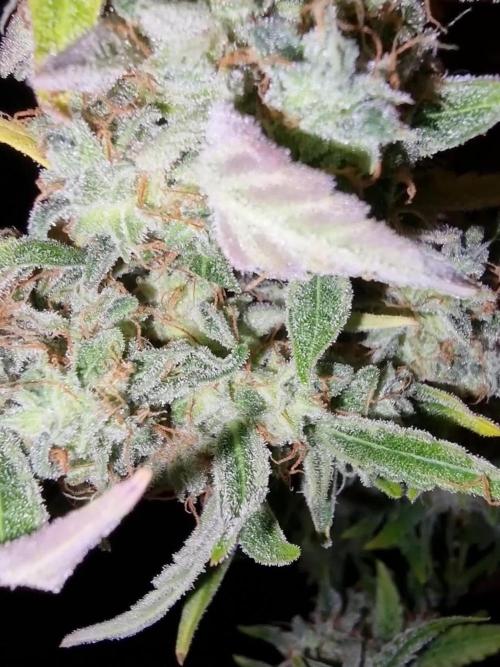
Defoliated then cut down. They are full of autumn colours 😍 after drying they averaged 65-70g per plant, not bad for 1ltr pots.
The high has an old school feel to it, it's very tastey but I don't smell or taste pineapple at all, more a car Polish/strong parsnip smell in the background.
Recommended and after a 2 week cure very strong for an auto.
I will grow again at some point.
Likes
11
Share


@KcKoolaidMan
Follow
What’s up this is the very start of week five these plants are huge really filling out the screen good. The grow XL really kicked into high gear. Got tons of tops and nodes poking up. Keep folding everything down under the screen and it’s really getting good results. Nutrients are doing great everything has a really nice color.
The DWC plant water got a little high on the PPM for a day towards the end of last week so I started to see a little bit of tipp nute burn butt got the water changed out and everything is looking great again. I topped that plant really good and it’s got a really nice round shape trying to get it to fill the whole end of the tent screen. I’m pretty excited about this plant.
This will probably be the last week of veg well I know it will everything’s in pre flower pretty heavy. And they have a really strong smell for being where they’re at in their life cycle which is cool!
I’ll update again in a few days thanks for stopping by and as always 🍻
Likes
5
Share


@ReddDwarfBear45
Follow
The grow is going great for my first time however I have made a lot of mistakes up to this point but the Gurlz are still thriving.
Likes
15
Share


@HighOhioAn
Follow
Growing for FastBuds420 has truly been an honor their genetics are truly Best in the world in my book strange our name beautifully mimicking the smells and appearances of their names. Pineapple express is one . They nailed the name right on the head. This plant truly smells just like a pineapple and almost looks like a pineapple once the fade starts one of the biggest autos I’ve ever grown truly thankful for the opportunity to grow this plant
FastBuds420. 4 Life 🌿💨💯
Likes
4
Share

@LittleBigTrees
Follow
I've been defoliating slowly trying to keep them small due to a house inspection coming up. Once that's out the way I'll put them in bigger pots then switch to flower.
They all outgrew the mutated start and are looking good.