


Likes
Comments
Share


@Budman788son
Follow
Well as you can see the double stuffed sorbet has grown wildly long while all the others seem to have stayed short.
I have taken two clones of the white runtz to test how long the roots will take to pop out.
Edit I have started to do a little lst to the bigger plants and removing the big leafs.


Likes
3
Share


@BR1CK_SANCHEZ
Follow
Week 2 went smooth... Started to see 5-finger leaves showing so I lowered the lights and turned them almost all the way up. Installed a Co2 Dispersal Canister that should finish out veg. Wish I knew the ppm for the Co2 but I don't. Finna start LST this upcoming week

Likes
9
Share


@RdSkM
Follow
No fueron cosechadas todas al mismo tiempo. Unas empezaron floración primero que otras.

Likes
16
Share


@the_medicine_grow_uk
Follow
So she’s a week into flush with only about 10% amber trichomes so has a few more days yet. The bud size isn’t moving but the density of the buds has definitely increased.
Let me know what you think. 🙌🏼🙌🏼

Likes
41
Share


@Cannaguy
Follow
Decided to harvest other plants and let my one big 15 gallon Blue MOB go another week or two to fully fill out. The others were beginning to show signs or bud rot however the 15 gallon has not at all yet which is why I’ve let it go the extra time. Will update with harvest pictures once all are cut down!
Likes
26
Share


@FUH20
Follow
2021 - 08 - 29
Wedding Glue Auto 1
- most fan leaf are starting to turn yellow , Hoping she finished up in a week to 2.
- Day 55 since sprout
- trichomes are mostly milky, not much amber on buds yet.
Wedding Glue Auto 2
- Some of the buds and fan leaf with abit of sugar leaf are turning purple...
- Day 50 since sprout
- She's fattening up nicely
image format : Wedding Glue Auto 1-4.1 day 27
Wedding Glue Auto 1( plant strain and tag number) , 4 (week), 1 (image number) , day 27 ( Date since sprout )
Likes
2
Share


@Sixedgyvibes
Follow
I just let them chill and few them and have the extra water as I had to go on vacation for a week


Likes
1
Share


@FarithAriasFajardo
Follow
Aquí las fotos de esta nueva semana de vegetación para ambas plantas, cumpliendo así la white widow 23 dias de plantada y la zinfandel 16. La fotos corresponden al 21, 24 y 27 de abril. Por ahora no hay nada más que agregar. Ya que esta semana solo agregué algo de sustrato en ambas y el riego fue de agua reposada con una bomba dando oxígeno por 24hr y un ph de 6,1 a 6,5. Lo que no sé es si realizar alguna tipo de poda más adelante o si mejor las dejo crecer como son, ya que no sé mucho. Existe el temor de dañarlas o estresarlas demasiado. Lo pensaré, también recibo cualquier consejo u observación con ellas!


Likes
44
Share


@Cogollo_eu
Follow
**Encontrarás la traducción a español al final de la descripción**
From/Desde: 10/05/19 || To/Hasta: 16/05/19
From day/Desde día: 78 || To day/Hasta día: 84
You can find the Money Maker Diary here:
** Podéis encontrar el diario de las Money Maker aquí:**
https://growdiaries.com/diaries/25667-gorillamakingmoney-gorilla-vs-money-m
-----IMAGES & VIDEOS-----
5 - HomeMade Organic & Cheap CO2 generator (more info in week summary)
9, 10, 11 & 12: The bud on the right is a Gorilla one, the buds in the left or/and in the middle are Money Maker ones.
15 - Same Gorilla plant buds, one affected by CO2 in the roots and the other not.
-----WEEK SUMMARY-----
The smell is more sweet and intense every day, friends that came home turned them eyes into crystals when they see this little babys. The size isn't awesome, but the high ammount of buds full of crystals plus the strong sweet aroma makes them awesome. Buds are growing and fattenning very very well.
This week i added a boost of HomeMade CO2, i never measured the results of this invention so i can't give CO2 measurements. This method is widely used in home aquariums and there is where it comes from. For those interested i'm going to write here more detailed instructions. The 4 liters i've made will last for about 2 weeks.
---NEEDINGS---
- 250 ml Bottle
- 6~10 l Bottle
- 400 g Sugar / l water
- 1 Envelope of organic baker's yeast / l water (CHEMICAL WILL NOT WORK)
- 3 mid plastic tubes 40~50 cm
- 1 short plastic tube 5~6 cm
- 4 tube adapters
- Hot glue to seal adapters
The process of creating CO2 is simple, mix water, organic yeast and sugar in a bottle, and the sugar will free CO2 in the process of fermenting to alcohol due to the yeast.
1. Make a hole in the center of the big bottle cap, insert an adapter and secure it with hot glue
2. Make 3 holes in the small bottle cap and glue the other 3 adapters
3. Link both caps with one of the mid tubes and insert the other tubes on free adapters
4. Insert a short tube in the bottom of the small cap in the adapter that came from the big cap
5. Watch the Video!!
-----WATERING CALENDAR-----
Plants are beginning to drain the pots a bit faster so from now on i will raise the water ammount on each watering day 0.25 l.
11/05/19 - 1,5 l with All week nutrients -(Nirvana & Blombastic) also Big Bud half dosed @ PH6.4 & 2 E.C.
14/05/19 - 1,5 l with Bud Candy, Big Bud, Nirvana, B52, Bud Factor-X, Sensizym & Blombastic @ PH6.4 & 1.5 E.C.
*****ESPAÑOL*****
-----IMÁGENES Y VÍDEOS-----
5: Generador de CO2 casero, barato y orgánico (más info en el sumario semanal)
9, 10, 11 & 12: El cogollo que sale a la derecha es de una Gorila, el de la izquierda y/o el de en medio son de una Money Maker
15: Dos cogollos de la misma planta, uno afectado por CO2 en las raíces y el otro no
-----SUMARIO SEMANAL-----
El olor es más dulce e intenso día a día, los amigos que vienen a casa a verlas se quedan ojipláticos al verlas. El tamaño no es una maravilla, pero la gran cantidad de cogollos llenos de cristales añadido al aroma que entra por las fosas nasales las hacen increíbles. Los cogollos crecen y engordan de maravilla.
Esta semana he añadido un boost de CO2 casero, nunca he hecho mediciones de los resultados por lo que no puedo darlas. Este método es ampliamente usado en peceras caseras y de ahí saqué la idea. Para aquellos interesados dejo aquí instrucciones más detalladas. Con los 4 litros de agua que he preparado yo da para unas 2 semanas.
---NECESITAMOS---
- Botella de 250 ml
- Botella de 5 a 10 litros
- 400 g de azúcar por litro de agua
- 1 sobre de levadura de postre orgánica (LA QUÍMICA NO FUNCIONARÁ)
- 3 tubos de plástico de tamaño medio 40~50 cm
- 1 tubo de plástico de tamaño pequeño 5~6 cm
- 4 adaptadores para los tubos
- Cola caliente para pegar y sellar los adaptadores
El proceso de generar CO2 es simple, mezcla agua, levadura orgánica y azúcar en una botella, y el azúcar liberará CO2 en el proceso de fermentación a alcohol.
1. Haz un agujero en la tapa de la botella grande, inserta un adaptador y séllalo con cola caliente
2. Haz 3 agujeros en el tapón pequeño y haz lo mismo con los otros 3 adaptadores
3. Conecta los 2 tapones con uno de los tubos y conecta los otros 2 tubos a los adaptadores restantes
4. Conecta el tubo pequeño en la parte libre del adaptador del tapón pequeño que viene del tapón grande
5. Mira el vídeo
-----CALENDARIO DE RIEGO-----
Las platas comienzan a secar los tiestos un poco más rápido, asi que de ahora en adelante incrementaré 250 ml de agua adicionales en cada riego.
11/05/19 - 1,5 l con todos los nutrientes semanales -(Nirvana & Blombastic) BigBud mitad de dosis @ PH6,4 & 2 E.C.
14/05/19 - 1,5 l con Bud Candy, Big Bud, Nirvana, B52, Bud Factor-X, Sensizym y Blombastic @ PH6,4 & 1,5 E.C.

Likes
24
Share


@Basementganja
Follow
Week6 of bloom, feeding Cal-mag+Floranova Bloom, both at 1tsp/gal. Each plant receives a glug or two from a 1gallon mixture. Runoff is removed.
New Clones of different phenos have entered the arena!
Happy growing!

Likes
4
Share


@MasterKush714
Follow
👺Yoooo Gang Week 9 Update!!! LFG!👺
👽What's good fam!! Let's get in it!!!👽
Sooo couple of things I have adjusted in the setup, increased all channels in my GML Ultimate 1K LED up to 💯% from 70% so after that lowered Intensity to 700 watts output as of now, saw an overnight difference in growth lol really amazing what this light can do, also I'm keeping pH swing between 5.8-6.2, which is really a small challenge but nothing i can't overcome, feeding is standing at every 3 days to add 2 gallons fresh as of now, the girls are really eating through the PPM also which is good to see, other then that they are really runnin!!! Stay tuned gang!
LFG 👹😎
+++++++++++++++++++++++++++++++
👺Update before the week is over!!!👹

Likes
1
Share


@GrowFunMD
Follow
Grape Walker Kush is massive. Very pleased with these plants. Super Orange Haze is also doing great, just more normal size, not as massive as GWK. SOH is also slightly behind GWK in bud stage.

Likes
6
Share


@CanadianFillmore
Follow
Start of week 4. This girl did not stretch during week 3, but her bud sites continued to pack on size and take shape. She is very sticky to the touch, almost finger hash sticky, which is really impressive at this stage.


Likes
4
Share

@Stacy_smokez
Follow
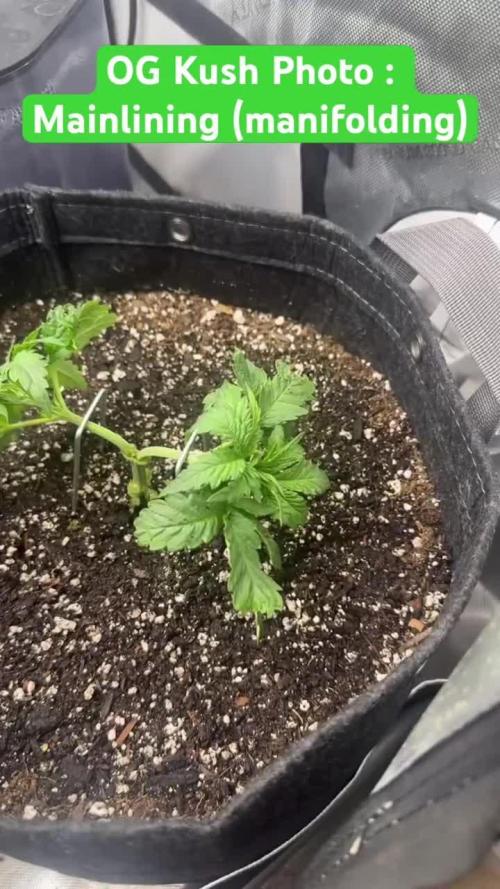
Plant was transplant into 5 gallon and decided to do manifolding for the first time so far is going very well. She recovered and I decided to talk again today. I’m gonna give it time to recover before I decide what to do next.

Likes
6
Share


@Lickey
Follow
Had a MAJOR fungal gnat infestation. I was overwatering. Got doctor doom and blasted the soil with it twice. Then worked cinnamon into top layer and let pots dry out a lot more. Started watering in 2L rather than 3.
Likes
62
Share


@MeaCulpa
Follow
I get the first place among complete idiots!
EVERYTHING IS FULL OF SEEDS!!!
I completely freaked out and didn't even understand it. Apparently no lady had a hermaphrodite. No “yellow penis” or “scrotums.” I taped up my window and all the indicator lights for plugs, etc. The whole thing in a separate room. So how does it work? A good friend enlightened me. I slept at a colleague's house about 2 weeks ago. He also grows. Messy tent. Because he doesn't pay for electricity. And the tent was open all day long. Another friend told me that his whole grow was full of seeds. The idiot didn't even tape off his indicator light in the tent. Fat red irritating light all the time. This means the sperm is happily distributed around the apartment all day long. That's how I brought the plague into my house.
If I understood that correctly.
I'm really mad at him. He is not aware of any guilt. I can't eat as much as I want to vomit.
So I harvested them to stop the seeds from growing and maybe be able to smoke some. Accordingly, there are no trichome photos. It's too early anyway.
And now you can laugh your ass off and throw balls at me.

Processing
Likes
3
Share


Likes
15
Share


@GreenQueenz420
Follow
We have officially started low stress training this girl on June 29th. The second video is on Friday July 1st within two days she grew a good amount . As you can see in the second video she suffered a little light burn. My mistake I didn’t think she was big enough to get burnt by the light but when I went to adjust her stakes I noticed she got burnt. So I quickly fixed it and put the light farther away.
Likes
11
Share


@samuraifroggig
Follow
Look at the video Weds was an explosion of growth. I tried a higher ambient temp on Thursday to dry out the medium and see how she would respond growth seamed to slow so it's back to 70F mornings slowly bring it up to 78F-80F for mid day. Watering every 48 hours early morning when light comes on or right before, Friday was flush 20% nutes 2 gals. LST seamed to slow growth too so I just let it do its own natural thing.
