


Likes
Comments
Share


@WhiteWidow
Follow
Perfectly healthy not a single sign of defficiency or burning / overfeeding.
First day of week 2 of flowering, next feeding i will add flowering nutes.

Likes
3
Share


@LittleBigTrees
Follow
Defoliated and in its flowering pot, switched to 12/12 on day 35 she's stretching out nice.
Will start feeding from week 7.

Likes
24
Share


@DogDoctorOfficial
Follow
🌱 Divine Seeds Week Three Veg Report 🌱
Hey, fellow growers! 🌿✨
Welcome back to our weekly update on the Divine Seeds journey. We’re now into Week Three of the vegetative stage, and our plants are loving their new environment. The Moon Rock, Opium, and Big Demon are thriving after the transplant, and we’re excited to share the latest developments.
🌟 Week Three Highlights 🌟
This week, we plugged in the Autopots and turned them on, letting gravity do its magic. From now on, we’ll rely on the Regulator and CaMg-Boost in the reservoir. Our soil is rich in organic matter and nutrients, so we’re testing if just the organic inputs in the soil, plus CaMg and Regulator, can sustain the entire run. Let’s dive into the details:
1. Moon Rock 🚀
• Growth: Vigorous vertical and lateral growth, with lush, broad leaves.
• Health: The transplant has boosted its vigor, and the plant looks healthier than ever.
• Notes: Moon Rock is showing exceptional adaptability and strength.
2. Opium 🌸
• Growth: Steady and balanced growth with symmetrical leaf development.
• Health: Opium is thriving, with no signs of stress or deficiencies.
• Notes: This plant continues to flourish with grace and beauty.
3. Big Demon 💪
• Growth: Robust and vigorous, with thick stems and expansive leaf growth.
• Health: The transplant has enhanced its already impressive growth.
• Notes: Big Demon remains a powerhouse in our garden.
🌟 Nutrient Strategy 🌟
Our feeding regimen this week focuses on:
• Regulator (0.15ml/L): Helps reduce stress and improves overall plant health by regulating plant processes and enhancing nutrient uptake.
• CaMg-Boost (0.25ml/L): Provides essential calcium and magnesium, preventing deficiencies and supporting strong cell wall development and photosynthesis.
Our rich organic soil is packed with biolife and nutrients, so this experiment will test if these organic inputs, combined with CaMg and Regulator, can sustain the plants through their entire growth cycle.
🌟 LED Lighting and Control System 🌟
To support our plants’ growth, we’re using the Lumatek Zeus 465 Compact Pro LED. Here’s why it’s amazing:
• Efficiency: Provides high light output with low energy consumption, ensuring optimal growth while being energy-efficient.
• Full Spectrum: Delivers a balanced spectrum of light, mimicking natural sunlight to support all stages of plant growth.
• Coverage: The compact design ensures even light distribution across the entire canopy, promoting uniform growth.
We’re also using the TrolMaster Hydro X controller with its impressive 3-in-1 sensor for temperature, humidity, and light detection. This controller allows us to:
• Monitor and Control: Keep precise control over the grow environment, ensuring optimal conditions for our plants.
• Automation: Automate various aspects of the grow room, reducing manual work and improving efficiency.
• Data Insights: Gain valuable insights into environmental conditions, helping us make informed decisions.
🌟 Key Observations 🌟
• Plant Response: The plants have responded exceptionally well to the transplant and nutrient strategy.
• Growth Rate: Significant increase in growth rate, thanks to the balanced environment and nutrient-rich soil.
• Health and Vigor: The plants are healthy, with vibrant foliage and strong structures.
🌱 Next Steps 🌱
As we move into Week Four, our focus will be on:
• Monitoring the Autopots: Ensuring the system runs smoothly and the plants receive consistent moisture.
• Observing Plant Responses: Keeping a close eye on how the plants respond to the nutrient strategy.
• Maintaining Optimal Conditions: Using the Lumatek LED and TrolMaster controller to maintain perfect growing conditions.
Stay tuned for more updates as our Divine Seeds continue to flourish. We’re excited to see the results of this nutrient strategy and share every milestone with you on this incredible journey!
Happy growing, and may your gardens be ever green! 🌿💚
#DivineSeeds #WeekThreeVegReport #AptusHolland #MoonRock #Opium #BigDemon #GrowDiaries #PlantMagic #GreenThumb #Inspiration #LumatekZeus #TrolMasterHydroX
Germination method 🌱 @thecannakan
Genetics
@divine.seeds
Nutrition
@aptusholland 🌿
@aptus_world 🌎
@aptus_es 🌍
@aptusbrasil 🌱
@aptus_thailand 🌿
@aptus_portugal 🌳
@aptususa_officiala 🍀
@aptusplanttechnz 🌺
@aptusplanttechaus 🍃
Ambient controls🎮
@trolmaster.eu @trolmaster.eu.support @trolmaster.support @trolmaster.agro
Soil @promix_growers_eur @promix_cannabis
LED - @lumatekeu
Watering- @autopot_usa @autopot_global
Love and attention- @dogdoctorofficial
#aptus #aptusplanttech #aptusgang #aptusfamily #aptustrueplantscience #inbalancewithnature #trolmaster #trolmastereurope #trolmastersecrets #Autopots
#GreenJoy
As always thank you all for stopping by, for the love and for it all , this journey of mine wold just not be the same without you guys, the love and support is very much appreciated and i fell honored and so joyful with you all in my life 🙏
With true love comes happiness 💚🙏 Always believe in your self and always do things expecting nothing and with an open heart , be a giver and the universe will give back to you in ways you could not even imagine so 💚
More info and complete updates from all my adventures can be found ⬆️link in the profile description ⬆️
Friendly reminder all you see here is pure research and for educational purposes only
💚Growers Love To you All 💚



Likes
16
Share


@eldruida_lamota
Follow
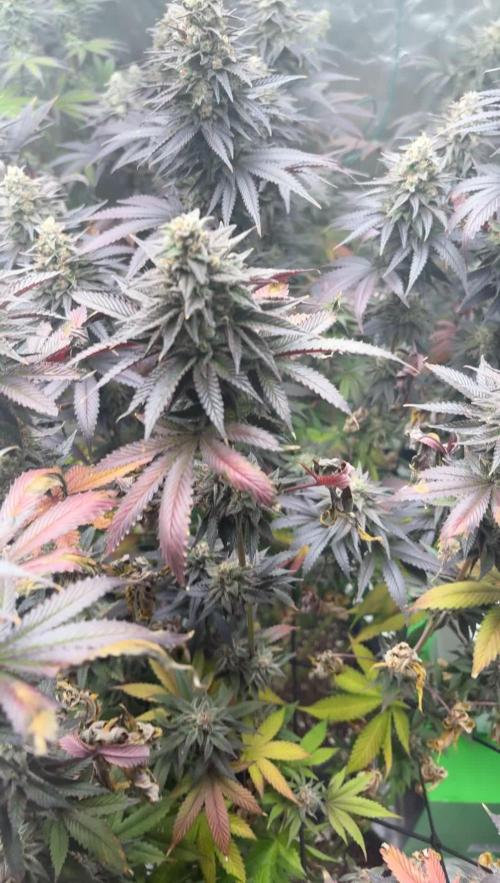
Que pasa familia, estamos otra vez actualizando la quinta semana de floración, y es que ya van cogiendo unos colores que ya van apeteciendo y todo, el aroma se noto esta semana la sala está llenándose de un aroma bastante dulzón.
Quite ya el big bud y empecé aportar un poco de overdrive así se van acostumbrando, y tengo que añadirles algo de Pk que tendré por el cajón esta semana que viene sin fallo lo añado.
El ph está siendo controlado y ahora mismo está regulado a 6.5 yo creo que es buen ph para que la planta absorba el Maximo de nutrientes, hasta aquí es todo nada nuevo sin problemas con este proyecto. Buenos humos 💨💨

Likes
11
Share


@MadeInGermany
Follow
Harvest day 67
since time switch
to 12 / 12 h
Hey guys :-)
Finally it's time 💚
The lady is done the large leaves have been removed and hung upside down to dry in the dark drying room.
You can now stay there for 13-15 days at a temperature of 18-20 degrees and 55-62% humidity.
After 13-15 days it is neatly trimmed by hand and placed in jars with boveda packs 62.
After 4 weeks Boveda 58% come in and are ready for testing ;-).
After everything has been cut cleanly, the last update comes with the smoke report and the finished pictures.
Have fun and stay healthy 💚🙏🏻
👇🏼👇🏼👇🏼👇🏼👇🏼👇🏼👇🏼👇🏼👇🏼👇🏼👇🏼👇🏼
‘Powered by GreenHouse Feeding’
Copy the link for 10% off all Nutrients 👇🏼
http://shop.greenhousefeeding.com/
affiliate/madelngermany_passiongrower/
👇🏼👇🏼👇🏼👇🏼👇🏼👇🏼👇🏼👇🏼👇🏼👇🏼👇🏼👇🏼
Water 💧 💧💧
Osmosis water mixed with Cal/Mag (24 hours stale that the chlorine evaporates) to 290 ppm and Ph with Ph- to 5.8 - 6.4
MadeInGermany

Likes
9
Share


@SlickCityOrganics
Follow
Black Strap and Peach Crescendo getting close. I see they will get cut way before the Fat Bastard. Fat Bastard must have a long flowering period. But branch structure is thick. I will get a heavy yield from it. Peach Crescendo has so much frost on it. Ethos fkn rocks! Black Strap smells like baked cookies and gas.


Likes
44
Share


@HerbalEdu
Follow
(65 cm - 105 cm) 77 cm
2nd week flushing
- deep purple: pheno 1, 2, 3, 5, (7)
- purple pink: pheno 4, 6
- green pink: pheno 8
smell like candy(bubblegum)/citrus

Processing
Likes
5
Share


@PETEROG
Follow
Hey everyone at week 4 know and wow have these girls grown early this week I applied some LST and all took really well to say it was my first time trying this

Processing
Likes
24
Share


@Grnhead
Follow
This was a fantastic plant to grow, and although it doesn't have the strongest resistance to mold, I think that if I were to grow it again I could avoid the issue.
I am starting to figure out how to maximize my grow space! Come check out my next grow when you get a chance!


Likes
16
Share


@DeepSouthDank
Follow
Today marks day 22 since we flipped to 12/12 and about 2 weeks into true flower.
Struggling to install the reptile UV bulbs optimally but we should have them in this next week.
Did another defoliation and thinning out of side branches.
Otherwise things are looking good.
Check you next week ;)

Likes
6
Share

@DogDoctorOfficial
Follow
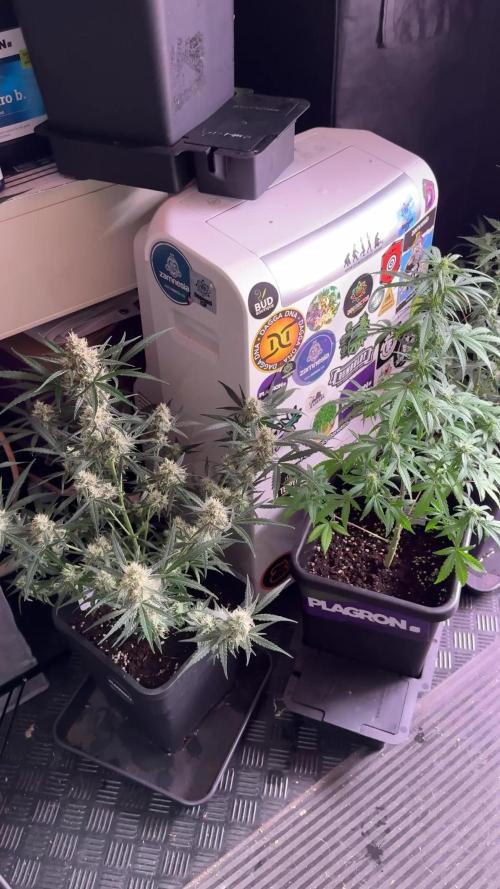
💚 Amnesia Haze Auto by Zamnesia – Pheno B
Week 8 | Small Pot, Big Appetite
Welcome back to another chapter of the 8×8 Adventure!
Sometimes a phenotype doesn't need to be the biggest plant in the room to become one of the most interesting.
And this little lady is becoming exactly that.
Last week I was already talking about how difficult it was becoming to believe that this plant was growing in only 11 litres of soil.
Well...
This week she's making that even harder to believe.
She is lush.
She is vigorous.
She is flowering beautifully.
And she's drinking and feeding like she has absolutely no idea that she's supposed to be the girl living in the smallest pot in the room. 😂
So this week, I think Pheno B deserves the spotlight.
Let's talk about her.
🌱 The 12/12 From Seed Adventure
If you're joining this diary for the first time, welcome to the 8×8 Adventure.
Every plant in this room has been grown under a 12 hours on / 12 hours off light schedule from seed germination.
There is no traditional vegetative period.
Instead, every phenotype has been given the same environment and allowed to reveal its natural architecture from the beginning.
That makes comparisons incredibly interesting.
Same room.
Same light schedule.
Same environmental conditions.
Same general feeding strategy.
Same grower.
But completely different personalities.
And Pheno B has developed into one of the most fascinating examples of that genetic individuality.
? The Smallest Pot in the Room
There are 12 different genetics growing together in this room.
Almost all of them are sitting comfortably in 15-litre pots.
Pheno B?
She's the exception.
She's growing in only 11 litres of soil.
Originally, this was simply another little experiment.
I wanted to see how far I could push a smaller root volume while maintaining proper nutrition and environmental control.
And honestly...
She's making me rethink some assumptions.
Because the limitation I'm seeing isn't that she's struggling.
It's actually the opposite.
She's drinking like crazy.
Her smaller substrate volume means I have to pay much closer attention to moisture levels and irrigation frequency. There are times when she needs watering twice in the same day because she's drying back so quickly.
That tells me something important.
She's not behaving like a plant sitting in a small container waiting for the next irrigation.
She's behaving more like a plant with a very active root system that is continuously demanding water and nutrients.
And that's exactly why having proper substrate monitoring becomes so valuable.
📡 Watching the Root Zone in Real Time
This is where the TrolMaster WCS-2 substrate sensor has become one of my favourite tools for this particular experiment.
Instead of guessing what's happening inside the pot, I can actually monitor the root-zone conditions.
Moisture.
Temperature.
And substrate EC.
At the moment, the substrate EC is reading approximately:
0.91 mS/cm
And that number is fascinating considering the strength of the irrigation.
I'm feeding around 2.0 EC, yet the substrate is sitting considerably lower.
To me, that's a very interesting indication of how actively this plant is taking up what I'm giving her.
She's not simply sitting there accumulating nutrients.
She's using them.
And when I look at the plant itself...
It makes perfect sense.
🌿 A Plant With a Big Appetite
This phenotype is absolutely lush.
The foliage is vibrant and vigorous, the structure remains beautifully balanced, and the plant continues pushing new flowering growth throughout the canopy.
There is no obvious sign that the smaller container is holding her back.
In fact, one of the biggest challenges I'm having with this plant is simply keeping up with her demand for water.
That's quite a funny problem to have when your experiment was supposed to test whether a smaller pot might become the limiting factor.
Instead, Pheno B seems to be saying:
"Give me more."
😂
And I'm listening.
🌸 Flower Development Is Moving Forward
The flowering sites are continuing to develop beautifully.
The white pistils remain abundant across the plant, and the developing flowers are becoming increasingly defined.
The structure is particularly pleasing to look at.
She has enough spacing between the branches to maintain airflow and light penetration, while still producing a very respectable number of flowering sites.
The central growth remains strong, but the secondary branches aren't being left behind.
That's something I really appreciate about this phenotype.
She doesn't look like she's trying to become one giant cola.
Instead, she's building a balanced architecture where the entire plant contributes.
And now that we're moving deeper into flower, that structure should become increasingly interesting as the flowers begin to swell.
✂️ Still No Defoliation
And yes...
I still haven't defoliated her.
And I'm completely comfortable with that decision.
Looking at the plant, I simply don't feel she needs it yet.
The foliage is healthy.
The plant is actively flowering.
The canopy isn't showing signs that demand an aggressive intervention.
And perhaps most importantly, I don't want to remove healthy leaves simply because we're accustomed to seeing defoliation performed at a particular stage of flower.
Every plant gets evaluated individually.
Pheno B is telling me that she still wants those leaves.
So for now...
She keeps them.
A little leaf positioning when necessary is enough.
I'm much more interested in watching how she naturally manages her canopy than forcing her into a particular shape.
Sometimes the best training technique is knowing when not to train.
💧 Feeding Strategy
The nutritional program continues supporting this extremely hungry phenotype.
Current feeding includes:
Plagron Terra Bloom — 2.2 ml/L
Plagron Power Buds — 1 ml/L
Plagron Green Sensation — 1 ml/L
Plagron Sugar Royal — 1 ml/L
Plagron pH Plus / Lemon Kick — as required for pH adjustment
The irrigation is running at approximately 2.0 EC, while the substrate sensor is currently showing around 0.91 mS/cm.
And once again...
She's eating.
A lot.
That's probably one of the most interesting characteristics of this phenotype so far.
She may be the smallest pot in the room, but she's certainly not the smallest appetite.
💡 Light, Environment & Root Zone
The environmental conditions remain stable, which is exactly what I want at this stage.
Current conditions:
🌱 Flowering: Week 8
📏 Height: 135 cm
💡 Light schedule: 12/12
🌡️ Day temperature: 29°C
🌙 Night temperature: 25°C
💧 Relative humidity: 60%
⚗️ pH: 6.0
⚡ Substrate EC: 0.91 mS/cm
🌡️ Root-zone temperature: 21°C
💧 Solution temperature: 21°C
🌫️ CO₂: 639 ppm
? Pot size: 11 L
💦 Watering: approximately 1.2 L per plant per 24h, with frequency adjusted according to substrate demand
💡 Under-canopy lighting: Lumiflora
📡 Substrate monitoring: TrolMaster WCS-2
The most important part of this week's environmental story isn't necessarily a single number.
It's consistency.
And that consistency gives the plant the freedom to express what she's capable of genetically.
🌿 The Personality of Pheno B
Every phenotype eventually develops a personality.
And I think I finally know how I would describe this one.
She's the quiet overachiever.
She wasn't the phenotype that immediately demanded attention.
She wasn't the biggest.
She wasn't the fastest to announce herself.
She simply kept growing.
Kept building.
Kept flowering.
And now we're reaching the point where she's becoming impossible to ignore.
The funny thing is that her biggest disadvantage on paper — the 11-litre pot — has actually become one of the most interesting things about her.
Because instead of showing weakness...
She's showing efficiency.
📸 This Week's Gallery
Looking through this week's photographs, the first thing that stands out is just how healthy the plant looks.
The leaves are beautifully developed, with strong colour and excellent structure.
The macro photographs reveal flowering sites covered in fresh white pistils, with the developing flowers beginning to take shape.
The full-plant photograph tells another part of the story.
She's tall.
She's balanced.
She's branching beautifully.
And when you remember that this plant is growing in only 11 litres while her sisters are sitting in 15-litre containers...
It's genuinely impressive.
The close-up photographs also show why I haven't felt the need to defoliate her.
There is still plenty of healthy foliage contributing to the plant's energy production.
For now, I'm happy to let her keep doing what she's doing.
🔬 One Small Pot, One Interesting Experiment
This is becoming one of those experiments that I didn't expect to become so educational.
We often associate larger containers with greater potential.
And there's certainly good reason for that.
More root volume can provide more buffering capacity, more available water and more room for root development.
But this plant is reminding me that container size is only one part of the equation.
Genetics matter.
Root health matters.
Irrigation strategy matters.
Nutrition matters.
Environment matters.
And perhaps most importantly...
The plant itself matters.
A phenotype with an efficient, highly active root system can behave very differently from another plant sitting beside it in the exact same room.
That's why I love phenotype hunting.
You think you're running an experiment on one thing...
And the plants teach you about five other things along the way.
🔮 Looking Ahead
The next few weeks should be very exciting.
We're entering the part of the cycle where the structure we've been watching develop should begin transforming into much more substantial flowers.
I'll continue monitoring the substrate closely because this little 11-litre container is clearly demanding more attention than her sisters.
The WCS-2 will remain an important part of that process.
I'm particularly interested in continuing to watch the relationship between:
irrigation EC → substrate EC → moisture depletion → plant response.
And of course...
I'm still not planning to defoliate simply because the calendar says I should.
If she continues looking this good, I'll continue letting her tell me what she needs.
💚 Final Thoughts
Pheno B started this adventure as the smaller sister.
The quieter one.
The phenotype living in the pot that was supposed to become the limiting factor.
Eight weeks later...
She's standing 135 cm tall, flowering beautifully, drinking aggressively, consuming nutrients at a serious rate, and maintaining a canopy that is still lush and healthy.
She's making me water more.
She's making me monitor more.
She's making me pay attention.
And she's making this experiment much more interesting than I expected.
Sometimes the plant you expect the least from becomes the one that teaches you the most.
And this little lady?
She's definitely teaching me.
Small pot.
Big appetite.
Beautiful structure.
And absolutely no intention of playing small.
Let's see where she takes us next.
💚 Thank You
Thank you so much for following another chapter of the 8×8 Adventure.
A huge thank you to:
🌱 Zamnesia — for providing the genetics and making this phenotype hunt possible.
💜 Plagron — for the nutrition supporting these plants throughout the run.
💡 Future of Grow LED — for providing the lighting driving this garden.
🌿 Lumiflora — for bringing under-canopy lighting into the experiment and giving me another variable to evaluate.
🌡️ TrolMaster — for helping me monitor and maintain the environment, and especially for giving me the tools to look deeper into what is happening inside the root zone.
🌱 GrowDiaries — for providing the platform where growers can document, compare, learn and share these experiments with one another.
And finally, thank you for following, commenting, asking questions and growing alongside me.
This little lady may have the smallest pot in the room...
But she's proving that size isn't everything.
Growers Love. 💚🌿

Likes
7
Share

@Growbody
Follow
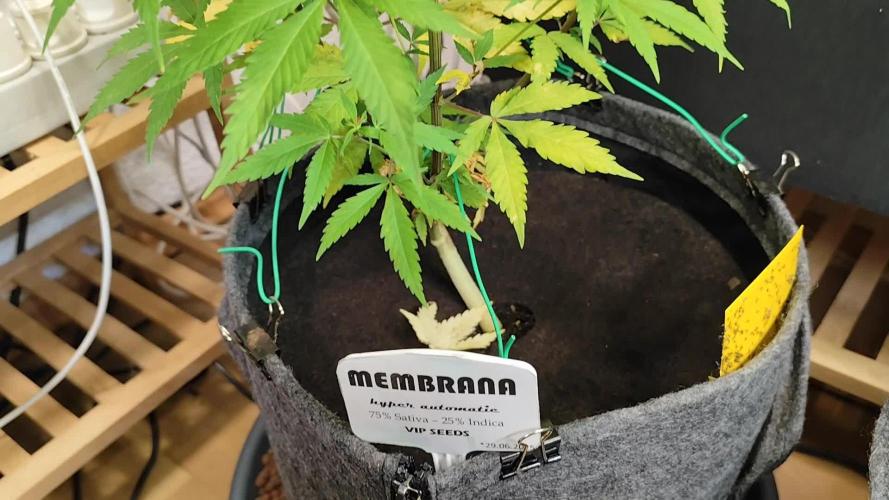
Herzlich Willkommen zu meinem Growbericht der Membrana Hyper Autofem von VIP Seeds.
Die URL für den Strain findet Ihr hier:
https://www.vip-seeds.com/membrana
Für den Grow verwende ich den großen 15 Liter WideVersion Stofftopf von ROOTIES. Bei meinem ersten Grow mit den ROOTIES kam nur die 9 Liter Version zum Einsatz, da haben die sich gut bewährt.
Auch die Smart Start Plugs von Zamnesia werden wieder verwendet, dieses Mal ohne den Samen vorher einzuweichen.
Und die Erde und der Dünger von BioBizz findet wieder Verwendung.
Tag 88: Die Membrane Hyper Autofem von VIP-Seeds bleibt filigran und streckt sich weiter.
Schön, dass du dir mein Tagebuch angesehen hast. Bis bald. ✋😎

Likes
19
Share


@The_Lonely_Farmer
Follow
Hey growers I hope your all well ✌️
SHOULD I FLIP???
These girls are nearly 50cm and the one girl is around 35cm, I'm going too continue veg for 1-2 weeks longer and scrog in the meantime too gold back the 2 taller girl.
These girls are plodding into week 7 now so they are ready too flip but will see how my grow question goes before switching too 12/12 👌
They are happy and healthy and doing well under the shogun nutrients!
I have defoliate the odd top fan leaf too allow better air circulation.
We have very high heat atm but hopefully they uptake more 😉😅
Happy growing 🌱💚
Likes
1
Share


Likes
11
Share


@SlowerLowerGrower
Follow
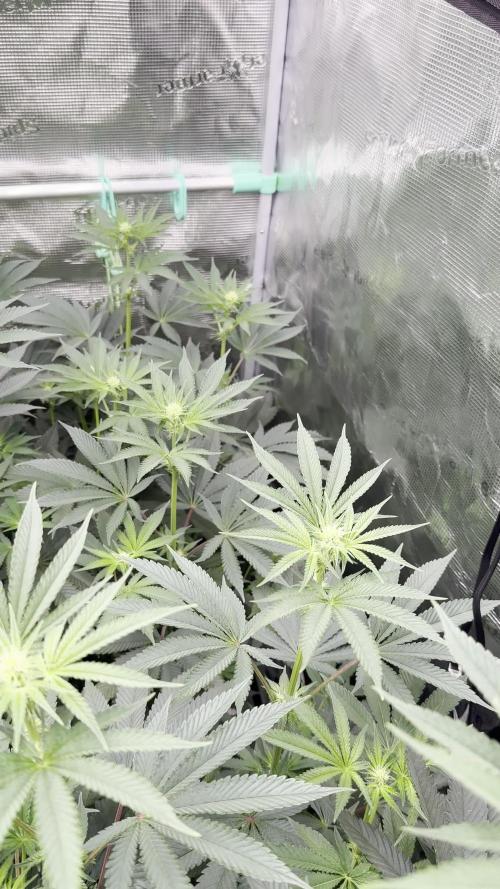
No it’s not weight but it was a fun little side grow next to my bed that gave me no headache and top shelf bud 👍

Likes
7
Share


@Baboon_Grows
Follow
Well one thing I learned , if you tie down using anything check it everyday
Likes
10
Share


@Diegobike
Follow
Esta planta realmente fue Muy rápida ya que se le recortó el tiempo de vegetación para alcanzar una buena floración en el maceto en el que estába, fue un experimento para ver qué podía hacer esta cepa en poco sustrato para minimizar gastos las fertilizadas también fueron mínimas y con fertilizantes naturales elaborados en la zona.como lo son: humus de lombriz y en floración melaza hubo algunos problemas de mildiu oidiom pero se solucionaron con una mezcla de leche con bicarbonato de sodio y así como vino se fue el hongo. Es una planta muy resistente tanto en vegetativo como en floración en su floración el olor de la planta es muy fuerte solo por pasar cerca de ella te envolverá su olor. En conclusión estoy feliz con los resultados y la rapidez con la que fue cultivada esta cepa sin duda la volvería a tener en mi jardín


Likes
20
Share

@HinduGod
Follow
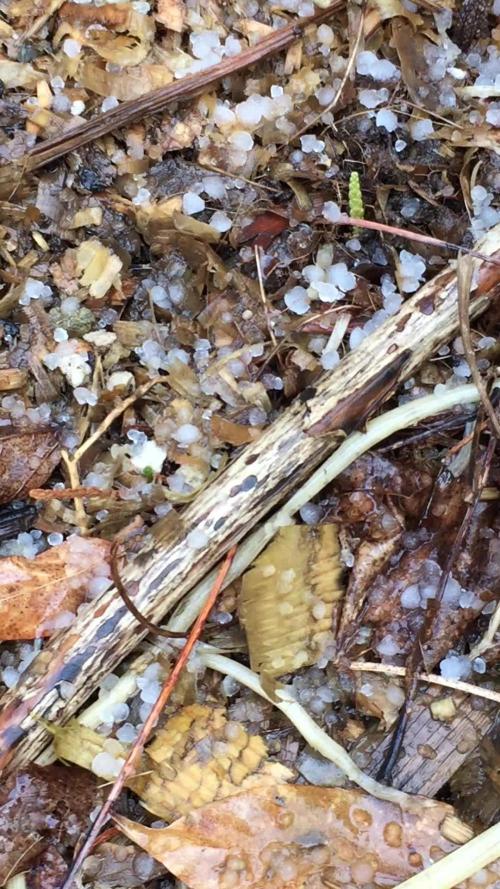
WOW LOOK AT DAT!!! DIS HAS BEEN A VERY VERY FCKED UP WEEK!!! DA WINDGOD AND DA HAILGOD PUNISHED DIS POOR GIRL!!! WINDGOD BLEW DA PLANT OVER!!! HAILGOD BEAT DOWN ON HER!!! JUST IN DA LAST 2 WEEKS FROST,WIND AND HAIL!!!! SHE IS VERY VERY TOUGH!!!! EVEN AFTER ALL DAT DA HINDUGOD DID A MAJOR DEFOLIATION AND ADDED SOME BUD CLIPS TO DAT PLANT!!!!! WHAT A TEST ON DIS CULTIVAR!!!! OUTDOORS IN DA LATE WINTER/EARLY SPRING BRING IT ON!!!!!