


Likes
Comments
Share


@Kushizlez
Follow
Day 40-47 (May 31st- June 7th)
(Day 41) For the first time in this grow these plants are looking halfway decent. Smell is ramping up too. I finally feel optimistic about this grow.
(Day 42) The two jacks and the chunky blueberry are showing early signs of N/Mg deficiencies. I know it’s late in flower but since I’m experimenting with this tent, I’m going to give them one final feeding of nature’s pride 2-5-5.5 (tbsp) along with a teaspoon of oyster shell flour and some rock dust. Everything else I’m going to give a teaspoon of rock dust and oyster shell. There is no way these amendments will fully break down in time to be used by the plant but they could at least use the pH buffering and trace amounts of minerals after their recent leach.
Everything but the BAOGC is covered in pistils that don’t really match their bud size. I hope they fill into their pistils because an over abundance of hairs drops the bag appeal like crazy.
Over the last few cycles, indoor and outdoor, I’ve definitely learned that different strains and phenotypes mature at different times. Sometimes really radically too.
(Day 43) None of the plants are fading at all but they’re still looking good. Black garlic I know should be fading but remains dark green and toxed. I popped a developing seed out of the main bud too. I wonder if that blueberry herm branch pollinated it at all. It seems like plants don’t really like that Destiny dark matter soil by itself. I find it works better mixed with coco or promix 1:1.
(Day 44) I’m starting to think I might be mixing up the TWOG and BAOGC. BAOGC took forever to fatten up last round and the 2 phenos I suspected already look done. I was thrown off by the similar terps. The beauty phenos are definitely TWOG
(Day 45) God these Jack Herer’s smell good. Nothing but fruity funk. Almost like a vanilla or blueberry yogurt. I would say this stuff has the most overpowering smell in the tent now. I’ve noticed they’re starting to foxtail like crazy. Blueberry#1 too.
I’m watering a final low strength feeding of seaweed extract on everything.
(Day 47) Everything really fattened up this week. Even at the beginning of the week I was saying I didn’t think they would fill out. Jack Herer and BAOGC specifically made some big gains and nearly doubled their density and still have quite a way to go on them too! The smell has ramped up and finally, everything is looking happy and healthy.


Processing
Likes
15
Share


@raulmoat123
Follow
Sorry I started this current diary around week 5 , just before flip into bloom . You won't want to miss this one tho guys, some monsters are beginning to form .
So far so good 👍


Likes
7
Share


@Ninjabuds
Follow
What a crazy hot week I’m happy the flowering light is now off it’s helping with the ac not running constantly. Also a perfect time to dry buds when the ac is blasting all day.


Likes
10
Share


@ArtisticGrown
Follow
Hello, hope all is well! I’m going to be growing this clone that I got off my og kush plant that’s in flower now. I took the clones about 3 weeks ago, recently saw her root growth and transplanted her to a bigger pot for growth In the veg! I really like the genetics of the og kush. Wishing for a good week of root growth and stability! Happy growing
Likes
10
Share


@Plzgrow4me
Follow
This will be the last week in veg! You can already see some coots forming and their height is upwards of 18 inches. I will switch their light schedule on Sunday and start the bloom. Can’t wait!!

Likes
21
Share


@Staffedition
Follow
Привет друзья. Моей растихе сегодня 119 дней
20.10 перевёл свет в режим 12/12
Начал применять LST технику на 19 дне и продалжаю применять её через день, а 18 августа добавил ДЕФОЛИЗАЦИЮ
С 20.08 ДЕФОЛИЗАЦИЮ делаю каждые 3,4 дня
С 20.08 LST технику делаю каждые 4.6 дней
На сегодняшний день влажность 54%
5.09.2023 заметил высокий Ph 7.9
С 48 дня Ph не ниже 5.8
На сегодняшний день Ph 6.0
Начал кормить с 60 дня Canna Terra Vega
PPM 870
Всем мира и добра!
Не забудь поставить лайк❤️, если понравилась как прошла неделя
И читайте наш TELEGRAM: https://t.me/smail_seeds
#Smail_Seeds 😀
Likes
13
Share


@Willy_Balls
Follow
7 th week of flower. They stopped putting on size. Now they put on some mass and mature. No happy with the colours. Maybe ec was too low in the beginning. Next time I will try to bump the ec up in the first stage of flowering and reduce gradually.

Processing
Likes
6
Share


@Mr_nugs_lover_David
Follow
She's responding super good to lst method she looks absolutely gorgeous I would have loved to be able to grow her since march however It was not posible but I keep this wonderful indica in my list. This wonderful pheno of Alien gorilla has started flower the 3rd of August.

Processing
Likes
2
Share


@Valedor
Follow
semana de crecimiento de tricomas, ademas las flores presentan un crecimiento muy bueno, ya están madurando de verdad, el próximo cultivo lo documentaré con fotos mas claras, he aprendido mucho de tenerlas en hidroponia, me gusta y lo voy a seguir usando y explotando

Likes
10
Share


@Ieiogrow94
Follow
Eccoci di nuovo qui!!!
Super eccitato per questa nuova collab con Anesia Seeds, team davvero al top, che mi ha dato l’opportunità di testare questa nuova genetica e di condividere i progressi con tutti voi!!!
Un risultato inaspettato devo dirlo...
Strain 1 ha un odore molto forte sembra "salsiccia" ma quando la fumi davvero è molto pesante!!
Strain 2 molto più soft sia come odore che sapore ma comunque abbastanza interessante..
Nel complesso la consiglio per i colori che rilascia la pianta in fioritura tendendo al rosso specie nelle punte delle prendisole davvero molto bello da vedere..
Grazie a tutti per il supporto ❤️🍀🔥

Likes
11
Share


Likes
11
Share


Processing
Likes
13
Share


@ladyjane
Follow
8/10 - In prep for flower I've got some Compost Tea brewing with a little Terp Tea Bloom by Roots Organics. .Also did a little selective defoliation
8/11 - Flipped the ladies to flower today! And all is good in the 8x4.
8/12 - Watered all the ladies with the Compost/Terp Tea. Also did some more defoliation and added some mosquito bits for added pest prevention.

Likes
31
Share


@AccidentalB
Follow
During a beautiful spring evening somewhere in May, the idea came to me to choose for a new hobby. And because I enjoy gardening very much and also like to smoke a joint, I decided that night to try to grow my own weed. And I also wanted to challenge myself to grow the best weed I possibly can. That's when I started to read up on all the facets of growing cannabis. From materials to technique, from strains to the anatomy of the plant, I prepared myself for at least 2 months before even one seed went into the soil. And partly because of this thorough preparation, I can now say to myself afterwards that this is the maximum I managed to get out of it. And the great thing about all this is that after these past 4 months I have learned so much more! Therefore I already know for sure that my next grow will be even better. Below some tips for my fellow newbies, they might help you during your own grow...
Material
In addition to the lamp, the tent and the right nutrients, which I commented on above, I have benefited a lot from a humidifier and dehumidifier over the past 4 months. Especially in the first weeks of growth, a humidifier is very useful so that you can keep the humidity around 60% (or what the VPD chart tells you depending on the temperature). During the flowering phase it is very useful to use a dehumidifier so that the humidity remains below 50% and at the end of the growth even close to 40%. That way you also exclude the risk of mold and bud rot. It is also useful to use these devices during the drying process so that you can keep the humidity around 60% and dry your weed slowly (at a temperature of around 15.5 Celsius, drying takes about 14 days). Drying slowly and coolly definitely benefits the smell and taste!
What's also really a must are an EC and pH meter, without these 2 instruments it is actually not possible to realize a perfect grow. Make sure you use a reputable brand like Apera, they are a bit more expensive but always deliver spot on.
In total I invested about 1500 euros in material on my first grow. This is also because I wanted to do it perfectly and therefore only went for quality products. But all in all I think I earn back my investment within 2 runs, taking into account that both my friends and I will never run out of a joint 😊
Seeds
Good genes are important to ultimately achieve a good end result. Therefore, do not save on the seeds and buy them from a reputable breeder. That way you can be sure that you will grow strong and healthy plants that can withstand pests and other negative influences. Well begun is half done and this is especially true when growing cannabis.
Technique
Of all the training techniques I have used, I would like to specifically mention one that surprised me the most: Supercropping!
Because I did this grow using the ScrOG method, I wanted to create as even a canopy as possible. The type of lamp I use is also most suitable for this method. But no matter how well you train your plants, they will eventually stretch unevenly during the first weeks of flower. I therefore snapped about 8 stems using Supercropping, which made my canopy nice and even again in a way that each branch gets the same amount of light. And the colas on those branches turned out SUPER nice! Also the nuggets beneath were growing bigger because they too got more light. I will certainly use this technique even more in my next grow!
Will
I will definitely use a diary again
I will definitely use VPD charts again
I will definitely use a feeding schedule again
I will definitely turn my light on during the day and off during nighttime again
I will definitely use the ScrOG method again
I will definitely choose a feminized American strain again
I will definitely use a webcam again (Wyze Cam)
I will definitely defoliate even more during the 4th week of flowering
I will definitely go higher on lollypopping
I will definitely Supercrop more
I will definitely dry my plants slowly and cool again (15 days at 60% RH and 15,5 C)
I will definitely continue to learn more and prepare myself even better for my next grow again 👊
Won't
I will certainly not water my seedlings too much again 😅
I will certainly not go for 3 plants again, but instead for 4 plants per m2
I will certainly not hesitate to ask experienced growmies for help again 🙏
(next week I'll comment on the bud dry weight and give my final smoke experience)
Likes
2
Share

@hassehujasse
Follow
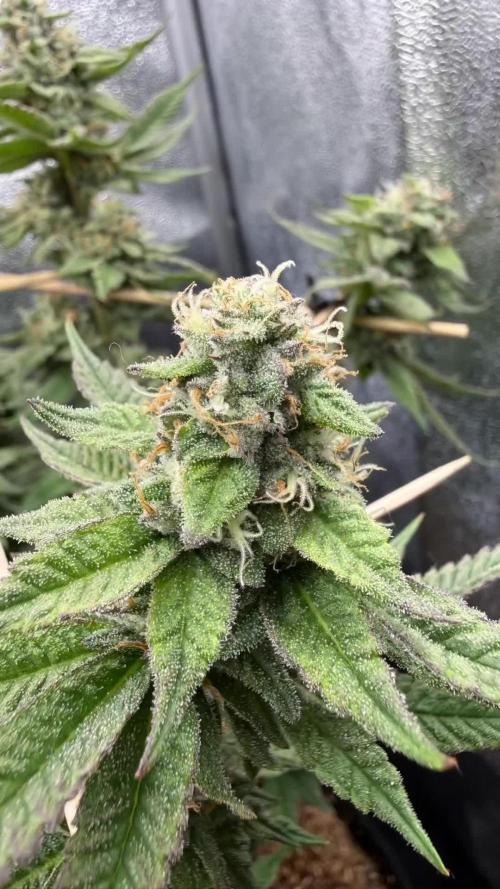
Estoy disfrutando de lo que hago. Usted?
No Os perdeis que sandra de esta mujercita !!!
Transformation de la chica a la mujer. Disfruta lo conmigo
Strong begining of the week, looking forward to give her all my love
Likes
17
Share


@JonnyKush
Follow
hey guys sorry for the absence but in this period I have had a lot to do with my work and I have not been able to bring a good detailed diary, but finally now the holidays will start and I will be able to dedicate myself 110% to a new crop and new ones diaries. having said that, I think I will leave him a week at the most and finally reap the benefits 💚🌳💚🌳maybe my fault the RQS slow release nutrients did not perform as much as the ADVs in my tent, you can see it from the video of 27/07/22 where you can see that 2 out of 6 plants are visually leaner and less compact to the touch , I wanted to try on the same varieties in order to have feedback. I think it could also be caused by the crowding of the tent but with the ADV I have not encountered any problems. I will definitely try them again, giving them much more attention.
Likes
7
Share


@n1kl24
Follow
Seems to BE alright so far. Banana Kush plants are Like 1-2 ahead of the Skunk XL I guess.

Likes
57
Share


@TheBudWhisperer
Follow
Week 8 of flower is in the books and this show is quickly coming to an end. I said last week we had about 7-10 days and I was spot on at the 10 day mark. I was only wrong about the order. The cheese is ready to chop before the rest and the gorilla cookies, cherry Bomb and lemon haze will follow in due course. The cheese is a beast and it’ll take a little time to get it all run through the bowl trimmer. At least the big one goes first. Her tallest colas have foxtailed like mar, despite the late supercrop. You can tell where the sweet spot for the light is at about 10” distance from the canopy. Any closer than that and the tails begin to show prominently. It’s a good example of just how close you can get to these fixtures with a little bit of prior experience. It’s been noted for the next run😎👍😎. The res. is on an h2o2 only flush for the remainder until the rest are ready to come down. Not a moment too soon either - the pollen chucking project has stalled out waiting for these girls to finish and now that we’ll have a little extra room, we can start running our cuts in the aerocloner🤟. Not long at all now folks. Thanks for tagging along through all this. Learned a bunch about this system and we’re back to hardware mode to make some serious improvements for the next run🤙😎. I love hardware mode😉.
Background/Repetitive Nonsense
The strain line up on this grow is look’n quite saucy 😈. We’ve got 2 FB strains this time around - Gorilla Cookies (seems we always have some GSC cross in the works). Mainly because the colours look stellar and remind me of a sugar breathe we did last year that was 🔥. The other FB is their original Cheese strain... because we already smoked all our cheese... and we really like our cheese...😉. Emerald triangle was kind enough to include a freebie of Lemon Haze. Wasn’t really big on the list but we haven’t done a haze strain to write home about yet so worth a go👍. The last is a Cherry auto from Bomb seeds that we’ve been trying to get to for months. Let’s just hope that she’s not a dud like the last bean.
The new digs for this run are courtesy MarsHydro👊. Their 2x4 single grow tent, paired with a shiny new 240w QB courtesy ViparSpectra.
These folks were kind enough to discuss a collaboration and as a result, here we are to test out the gear with an inaugural run of autos. Each week, we’ll try to expand on some of the benefits of each, as well as any limiting factors or considerations that need attention when pondering purchase.
Already I can say that both are high quality products in terms of overall craftsmanship.
MarsHydro 2x4 Grow Tent:
Excellent construction in terms of durability. Reinforced stitching on the zippers and corners ensures zero tearing. Conveniently placed screen vents and intake/exhaust ports. The ceiling exhaust port only exists on the right side. Perfect for me but not great if you’re running exhaust from the top on the left side (left side wall port makes up for this however). The aluminum frame is rigid enough to support the weight of the lights and accessories. Once you have some weight in the tent, she’s go’n nowhere and you can assemble and break it down in record time if moving or stashing the grow op.
Only limiting factors I’ve noticed is that temp. Control will be an issue for a tent. It just doesn’t have the same insulating ability as a wood cabinet or other permanent enclosed space. No worries, this is offset by a small desktop heater and keeps the environment exactly where desired. The other issue was a production problem - the ceiling vent was accidentally stitched into the corner seams on the assembly line. Again, no real issue - just pulled it out with no damage or fraying to the tent or port👍.
Website link here:
https://www.mars-hydro.com/grow-tent/buy-mars-hydro-grow-tent-24x48x70-2-x-4-cabinet-closet-grow-box-upgraded-diamond-1680d-mylar-for-sale
ViparSpectra 240w Quantum Board:
This thing is sleek and slick in terms of design. Closest comparable to it that I’ve seen would be spiderfarmers line of qbs. They feature the same top-o-the-line components and roughly similar spectrums. Where VS takes the advantage is in the convenience of the dimmer nob which is easily accessible and works great at 50% with no strobing👍. The heat sink is also larger which contributes to lower temps. That’s not a good thing in my case but beneficial for most folks.
I can already say that this will be a great fixture through all stages of growth. Where I know this light will excel will be in the veg. Stage for sure. Dimming function gives seedlings a much better chance of success with the ability to use lower lighting levels early on and the coverage area on a 240w is great. The average grower will find this panel suitable and fitting to their needs in a 2x4 grow space although I’d suggest 2 units if going any larger than that. The total output in this space equates to about 30w/sq.ft. Which is a decent amount of coverage based on power vs. Growprint. Ideal for veg. Certainly but, in flower - I tend to run closer to 50-60w/sq.ft to achieve higher yields. Again, similar fixtures have performed admirably in the past and while this wouldn’t be considered an “entry-level” fixture, I’d recommend that any grower new to the game not skimp on lighting and start with one of these. The price points are a great value for quality LED tech. These days, so there’s little reason to even consider a lesser fixture👍.
I have no detail on limiting factors for this light as yet but have heard that stock branded fixtures don’t necessarily incorporate enough red diodes. I’ve seen no issue myself but confess - I’m no lighting guru.
Website link:
https://www.viparspectra.com/collections/xs-series/products/xs-series-xs2000
***8% discount when using code: “ItBudWhisper”***
Happy to have you along for the ride if you made it this far through my opening rant!!😎🤟😎🤟😎


Likes
80
Share


@JamMAKEcan
Follow
9wk flowering. Loupe shows all clear CRYSTALS I guess 10 week flowering might be the lick.. Maybe even 11 😜😜maybe even 12. Im straight going off amber CRYSTALS .. Now their all clear🤔🤔or is it milky.. Most defenetly now AMBER
