






@GreenEldritchGardens
Volgen
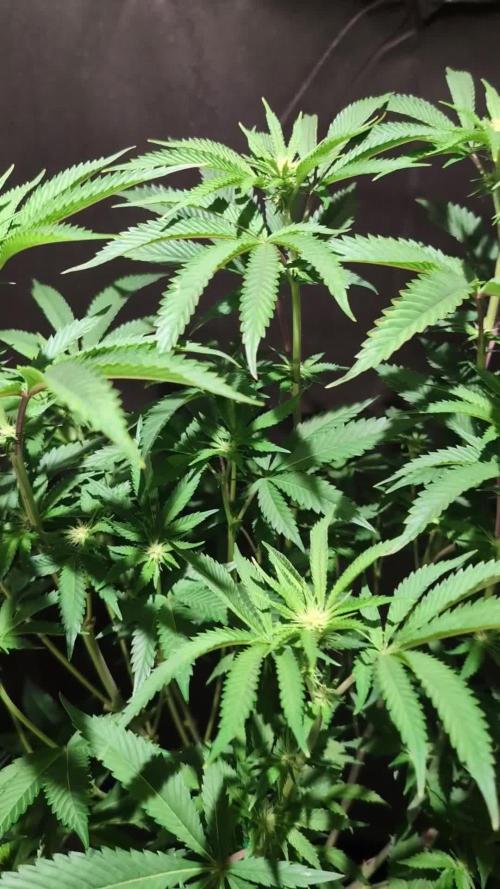
The defoliation seems to be helping with the root lvl stress, she is having more care on PH and some good nutrients this week.
Her bud formations are really beautiful and hopefully she will give good fruits





@GoodTimesOrganics
Volgen
Welcome Back!💚
Die zweite Blütewoche ist ins Land gezogen und die Pistilen an den Blütenansätzen entwickeln sich langsam aber ständig
Der Stretch hat nochmal knappe 8 cm an Wuchshöhe mitgebracht.
Die Blattentwicklung war nochmal sehr rasant, so dass ich die Sonnensegel nochmal stark ausgedünnt habe.
Die Werte im Zelt sind optimal auf die Blüte eingestellt.
———————
🌞 Temp: 24°C
🌚 Temp: 20 °C
💨 RH: 56%
VPD: 0,97 kPa
😎PPFD: 830 mqm
———————
Stay Tuned! 💚


@cheetah844
Volgen
They're lagging a little from the transplant, hopeful next week we'll see their growth spurt starting.
She seems to be one of the healthiest of the bunch.




@DE_BW
Volgen
The Mendo Frost continues to develop beautifully. After her strong stretch, the focus is now clearly shifting towards flower production. The buds are starting to stack nicely along the branches, and there are plenty of promising bud sites all over the plant.
She still looks very healthy and vigorous, and I’m especially happy with how quickly the flowers are developing. Another interesting difference compared to my first Mendo Frost phenotype is the aroma: this one is already giving off a noticeably sweeter scent.
So far, I’m very pleased with how she’s progressing and I’m curious to see how much those buds will fill out over the next few weeks.


@pifflestikkz
Volgen
Day 99
Day 49 Flower
09/08/24 Friday (Morning)
FLUSH- de-chlorinated tap water pH 6 with flawless finish. She's taken a full 5L with 1L run off, I shall continue to do this daily or every 1.5 days when top soil dries out.
Starting her flush this week, seeing those trichomes maturing, and pistils now forming 50-60% red.
Flush for 10-14 days depending on trichomes.
Day 100
Day 50 Flower
10/08/24 Saturday (Evening)
FLUSH- de-chlorinated tap water pH 6 with flawless finish.
Another 5L and seeing about 10-15% run off. Not quite the 1L.
Day 101
Day 51
11/08/24 Sunday (morning)
FLUSH- de-chlorinated tap water pH 6 with flawless finish. 5L run off 10%
Majority of pistils now maturing, trichomes flooded with cloudy , barely seen clear anymore, spotting a few amber's.
Day 102
Day 52 Flower
12/08/24 Monday (Morning)
FLUSH- de-chlorinated tap water pH 6 with flawless finish. 5L again with run off 10%
Day 103
Day 53 Flower
13/08/24 Tuesday (Evening)
FLUSH- de-chlorinated tap water pH 6 today again with flawless finish.
Full 5L again with 10% run off.
All fans starting to fade now, tops all bending under the weight 🤩
Euphoric sweet lemon zest smell with a gassy slap.
Video and pictures ✌️💚
Day 105
Day 55 Flower
15/08/24 Thursday (end of week)
Final FLUSH- de-chlorinated tap water pH 6 with flawless finish. Full 5L again little run.
Finally!!! The FLUSH has finished!!
She has developed beautifully 😍
All buds are solid as rocks.
She is now entering her 2 day dark period from 10am today till 10am Saturday morning ✌️💚


@Lifesgarden420
Volgen
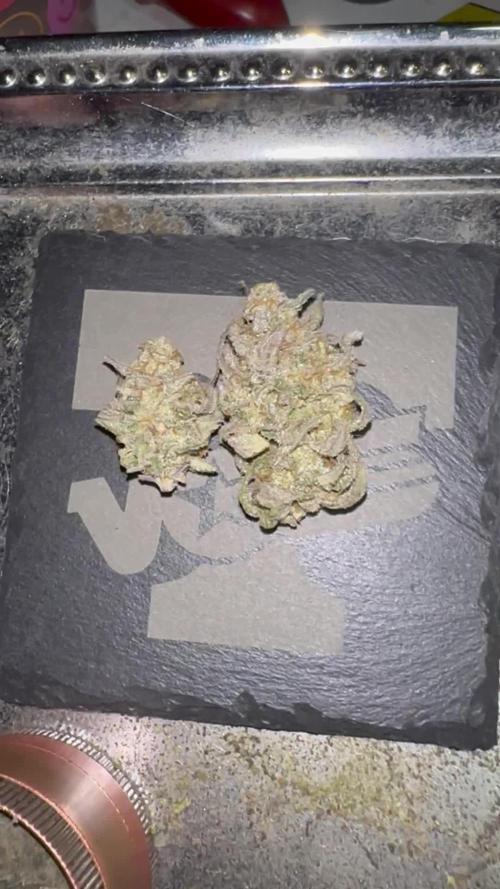
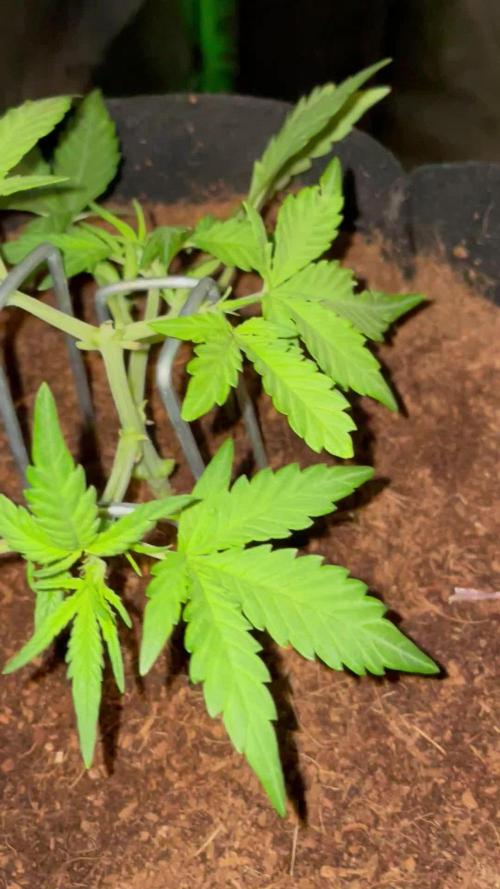
This lady is getting better every week
All of her sisters are too
Amazing genetics with amazing nutrients






@yaron
Volgen
Hi guys!its getting kind of boring but again a rainy day.They need sunlight bad,the coming days the sun will shine so we will see what happens.
Cheers!
Finally we have sunshine!The smallest one,a gg,just will not grow i dont know whats wrong with her and she is already in flower.
The rest is doing fine i think.
Cheers!


@TheCannaProphet
Volgen
~ FASTBUDS CHEMDAWG AUTOFLOWER~
'The history of the Chemdawg strain starts in the early 90s where a group of cannabis breeders from Colorado were following a band on tour and took some of their weed with them, they had named this weed “chem bud” due to the unique chemical and diesel flavors.
When they got to one of the shows, they sold a couple of grams to a group of friends who quickly realized those were some special buds and, lucky for them, the buds had a couple of Chemdawg seeds (before they actually knew what they were) which they stored.
When one of the friends, who was also a cannabis grower, went back to his home on the East Coast, he germinated some of the seeds and started selecting the best phenotypes to continue developing those genetics even further.
As you may know by now, his effort paid off, and soon enough there were two versions of this strain going around, one was Indica-dominant and the other was a Sativa-leaning hybrid.
Both of these versions quickly spread around and several breeders developed new strains with these genetics, getting known by almost every cannabis consumer, becoming extremely popular and giving birth to a lot of famous strains such as Sour Diesel and OG Kush, although this isn’t confirmed, several old-school growers swear by it.' *content credit to FastBuds
_______________________________________________________________________________________________________________________________________________________________________________________________________________________________________________________________________________________________________________________________________________________________________________________________________________________________________________________
The Spec's:
'These precious genetics were boosted by the Fast Buds team to provide a super tough, potent, and easy-to-grow strain.
This Chemdawg Auto from their 'Originals' line grows around 90cm and is very resilient to diseases and colder climates but watch out because if you’re growing outdoors, your neighbors will be able to smell it easily!
This strain can be cultivated even by beginner growers due to it requiring minimal maintenance and can produce up to 400gr/m2 in 8-9 weeks, this is one of the shortest varieties FastBuds offers and can be the perfect choice for those growing on a balcony or in a limited grow space.
As soon as the trichome production starts, you can expect a terpene profile that resembles a mix of chemicals that is a delicious blend of diesel, gasoline, and petroleum.
With up to 20% THC, you can expect a super potent high that will take you into another world and leave you there, while you relax with a strong corporal high that will leave your whole body melting, a perfect effect to relax after a long day of work or inducing a good night of sleep.' *content credit to FastBuds
~Chemdawg Auto~
Genes: Sativa 20%/Indica 80%
Genetics: Chemdog Autoflowering
Flowering: 8 – 9 weeks
Harvest: 350 – 400 gr/m2
Height: 60 – 90 cm
THC: Up to 20%
CBD: < 1%
Autoflowering: Yes
________________________________________________________________________________________________________________________________________________________________________________________________________________________________________________________________________________________________________________________________________________________________________________________________________________________________________________________
THE SETUP:
~Planted into Jiffy Peat Pellets that were hydrated with de-chlorinated water with SuperThrive added then ph'd to 6.0 @ 80℉
~Grown 100% organic in 10g fabric pots with Mother Earth 70/30 Coco/Perlite medium amended with 2tbs/g of Down To Earth 4-4-4 / 2 cups/g of Earthworm Castings / 1tbs/g of Dr. Earth Flower Girl 3-9-4, 1tbs/g of Dr. Earth Bat Guano, 3/4 cup of Down To Earth Azomite and 1 tsp/g Down To Earth Fish Bone Meal.
~24hr light cycle during Germination / 19/5 light cycle for Vegetation and 12/12 for Flower
~Straight water ph'd @ 6.2-6.8 when needed and weekly Compost Tea's.
________________________________________________________________________________________________________________________________________________________________________________________________________________________________________________________________________________________________________________________________________________________________________________________________________________________________________________________
WEEKLY UPDATES:
9/6- Day 37 of flower and harvest time is fast approaching with her trichomes, which are now checked daily, maturing rapidly being 80% milky now with the remaining being clear.
Daily watering's continue with 1g of straight de-chlorinated water ph'd to 6.7 @74℉ and also I'm turning her pot 1/4 turn daily as well.
9/8- Well, her trichomes are right about where I like them to be and she's ready for 48hrs. in the dark before I chop and hang her to dry for 10-12 days.
I'm watering her with 1g of straight de-chlorinated water ph'd to 6.7 @74℉ and will continue to water her while she's in the dark (cannabis continues to carry on with it's growth processes even while in the dark) so that her medium doesn't completely dry out. Keeping her watered will also help to extend her drying time to that ideal 10-12 day target.
This should be some epic smoke as her buds are absolutely crystalized with trichomes and her smell is AMAZING! 😛💚
9/10- Well she's been in the dark for 24hrs. now with 24 more to go. I'm keeping temperatures in the low to mid 60's℉ and the RH @ 45%. Tomorrow is 'Chop Day'! I'll be taking some pic's of her when she comes out of the dark and during harvest...Stay tuned, this is some 🔥!
I am continuing to water while she's in the dark with 0.5g of straight de-chlorinated water ph'd to 6.8 @67℉ to keep her hydrated.
9/12- Well she's out of the dark where she spent roughly 60 hours. I kept the temp's @ 64℉ and the RH at 45%.
After I brought her out I shot a few pictures of her, then plucked off all of the shade leaves. I then cut her off at her base and hung her whole. I'll keep the RH in the room @ 50% for the first 24hrs., then raise it to 55-60% for the remainder of the drying. I have the temperatures in the Dry Room at a constant 65℉ to help preserve the terpenes.
Hopefully she'll take 10-12 days to dry to the point that she's ready to be trimmed and jarred! Stay tuned for the harvest of this phenomenal cultivar! 💚🔥
~Thanks for stopping in! Things are wrapping up and harvest is right around the corner....Stay lifted and be Blessed! 😎🙏~


@eldruida_lamota
Volgen
Venga familia que ya viene la cosecha de estas Apple Fritter de RoyalQueenSeeds, que ganas que tenia ya de darles machetazo.
No veas que pinta que tienen estas plantas.
Las flores aparte de prietas se ven bien resinosas.
a sido una genética con la que disfruté mucho cultivarla, es algo complicada cultivarla pero merece la pena si eres cultivador con experiencia no te será problema cosechar.
Agrobeta:
https://www.agrobeta.com/agrobetatiendaonline/36-abonos-canamo
Mars hydro:
Code discount: EL420
https://www.mars-hydro.com/
Hasta aquí es todo , espero que lo disfrutéis, buenos humos 💨💨.



@Caertner
Volgen
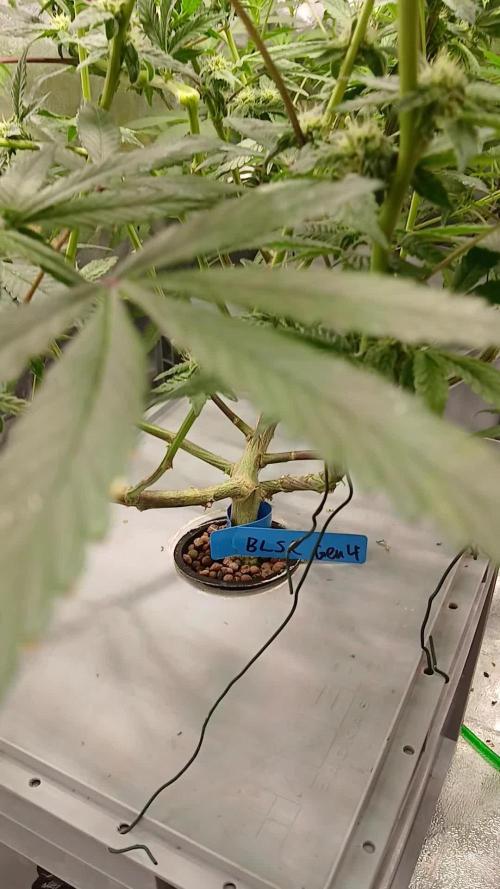
Streckung fast durch, jetzt kommt die erste Schwellung. Klingt auf englisch mit Stretch und Swell/Bulk zwar fancy...
Habe noch ein paar Äste mehr geknickt, damit sie nicht so hoch wird... ihre 2 Wochen spätere Schwester wird sie sicher auch überholen... aber die hat noch ne Woche bis zum Brechen der Beine. Omg fieser Pimp könnte man meinen...
Update: Bricht mir doch tatsächlich der Haupttrieb beim umtopfen ab... grrr. Shit happens. Hinterher erinnere ich mich eh nicht mehr dran ;)




@Ultraviolet_
Volgen
Topped once, turned off IR @ nights, slowed vertical growth back down, and took off both of the very lowest internodes on each plant.
Eisenia fetida
Stratiolaelaps scimitus
Armadillidium vulgare
Red wigglers (Eisenia fetida) are highly beneficial. They are considered an ideal choice for "no-till" or container-based organic growing because they live in the upper layers of soil, feeding on organic mulch rather than the plant's root system. Red wigglers accelerate the breakdown of organic amendments and produce high-quality, nutrient-dense worm castings directly in the root zone. Clover is another exceptional component of an organic rhizosphere, offering a sustainable, self-sustaining alternative to synthetic nitrogen fertilizers produced via the energy-intensive Haber-Bosch process. By forming a symbiotic relationship with Rhizobia bacteria, clover converts atmospheric nitrogen N2 into ammonium NH4, providing a steady, slow-release nutrient source that enhances soil health and reduces environmental impacts. Red clover offers superior nitrogen fixation and biomass production compared to white or yellow clover, making it the premier choice for maximum soil vitality, particularly for improving soil structure and providing a high-volume nitrogen credit for subsequent crops.
If it is fully functional and efficient soil, the rhizophagy cycle is superior long-term than any synthetic delivery when it comes to preventing deficiencies, not because it's "better," per se. The medium will require a very high CEC to make it to harvest without re-fertilization. The rhizosphere acts as a dynamic, interactive exchange where plants and soil microbes trade resources based on immediate needs. When a plant lacks a specific nutrient, it changes its physiology and releases specialized chemical cocktails—root exudates—into the surrounding soil. These exudates, which include sugars, amino acids, and organic acids, serve as a "shopping list" to attract specific microorganisms, which in turn return higher levels of desired nutrients. There is nothing in comparison when using synthetic delivery, which can cause plants to stop producing exudates, effectively "starving" the beneficial soil life, over time turning the soil barren and void of microbial life. Responsible use, applying the right amount at the right time, can minimize these negative effects. Relying solely on synthetic fertilizers without replenishing organic matter is what typically leads to exhausted soil. The use of synthetic fertilizers can utilize the Cation Exchange Capacity (CEC) of the soil, but without a robust rhizosphere and active microorganisms, the efficiency of this process is significantly reduced. This makes synthetic growing more difficult to prevent deficiencies overall compared to an efficient organic living soil with a robust rhizophagy cycle, as there is no "one size, fits all" when it comes to different nutrient profiles of strains/genetics, making it trickier to "guess" and prevent creeping deficiencies.
CEC does not contribute towards EC. Add more CEC using biochar, problem solved. If you keep pH between 6.3 and 6.7, hydrogen is exudated to cycle the medium's CEC for its needs. Keeping the pH between 6.3 and 6.7 creates an environment where plants release H+ to displace positively charged nutrients (like Ca2+, Mg2+, K+ held on soil particles or within artificial media this cycle through nutrients via the medium's Cation Exchange Capacity (CEC)
Microorganisms generate a stable potential of approximately 0.5 V EC. The rhizosphere creates its own food, similarly to chelation, using 1000's of varying combinations to create its own food.
Start to finish, just add water. Eventually, more materials will need to be added at the beginning of each new grow, but very attainable to go from seed to harvest without ever fertilizing.
ATP is important when it comes to biomass accumulation. Cellular root respiration and cellular respiration are essentially the same biological process, the breakdown of glucose to create usable energy (ATP) in the presence of oxygen, just taking place in different parts of the plant. Synthetic (salt-based) grows have significantly lower levels of total rhizosphere respiration, often referred to as root-zone activity, compared to organic living soil grows. While the plant roots themselves may respire in both systems, the surrounding soil ecosystem in a living soil setup is vastly more active, teeming with bacteria, fungi, and beneficial microorganisms.
2 pools of ATP, it won't double in growth buuuut, but improving root respiration by ensuring high oxygen in the soil is crucial. Good aeration ensures roots can fully utilize glucose to generate the ATP necessary for nutrient uptake, leading to healthier and more productive plants, even if growth isn't exactly doubled. The ATP created using root respiration is dedicated to rootzone growth; the ATP created using regular cellular respiration in a synthetic system would have to dedicate a lot of ATP to the roots when there is little or no root respiration. It's true that there is less of an initial ATP cost in breakdown when nutrients are already in their final form (synthetic), but you lose a solid chunk of ATP when the entire plant is reliant on cellular respiration alone; a large portion of ATP is dedicated to root zones for "forced" nutrient uptake rather than traded. Making it overall less efficient, even if the initial cost of breakdown is higher. Not sure if I butchered that but one can hope It makes sense.
Oxygen is of critical importance when growing in living soil compared to synthetic soil because it supports the metabolic needs of the microbial, fungal, and insect ecosystem, rather than just the root respiration required by the plant itself. While synthetic grows can survive in lower-oxygen environments with precise mineral feeding, living soil systems rely on aerobic microbes to decompose organic matter (microbial mineralization) to create plant-available nutrients, which is an oxygen-intensive process. While a specific fair percentage is difficult to guess, my experience points to a massive, compound difference between the two methods and the amount of oxygen required. All the ATP spared is used on more biomass, not only that, but the extra root respiration can achieve a much higher CO2 compensation point naturally than you could with synthetic and atmospheric CO2 alone.
As a plant grows faster and increases in size, its demand for nutrients to support that growth increases, requiring a higher rate of nutrient uptake. As plants enter phases of rapid vegetative/floral growth, their metabolic demand for nutrients increases exponentially. Without a robust buffer zone—whether in the soil (cation exchange capacity) or in a hydroponic reservoir—deficiencies will occur rapidly because the instantaneous demand for specific nutrients can quickly exceed the rate of supply.
A growing body of evidence suggests that organic living soil provides superior long-term soil health and environmental benefits compared to synthetic fertilizers, which are often criticized for promoting a cycle of dependency and degradation. While synthetic fertilizers offer short-term convenience and high yields, they often come at the expense of long-term soil health, sustainability, and increased corporate control over growers/ farmers. Organic living soil, while slower and requiring more care to establish, creates a sustainable, resilient, and, ultimately, more fertile environment.
We don't really grow; we facilitate energy conversions, and energy is just numbers. Because the universe works the same way today as it did yesterday, there is a single, fundamental mathematical quantity that remains constant. We call this quantity energy. You cannot put "energy" under a microscope. You observe matter and forces (like heat, motion, or light), but energy is just a scalar number calculated to help predict how these things will change and interact. When an object falls, or when a battery powers your phone, matter shifts and changes form. Through it all, the universe ensures the "total score" of the numbers remains exactly the same.
Once all water is removed, approximately 95% to 97% of a plant’s dry matter consists of carbon, oxygen, and hydrogen. These three elements form the structural backbone of all plants. NPK & all the rest 3-5%.
Indigenous Amazonians created, or at least significantly enhanced, the fertile, dark soil known as Terra Preta de Índio (Portuguese for "Indian Black Earth") by incorporating biochar and other organic materials into the soil. This anthropogenic (human-made) soil technique, which dates back roughly 2,500 to 8,000 years, allowed ancient civilizations to flourish in regions with naturally poor, acidic, and nutrient-poor tropical soils.


@Uncle_Cabbage
Volgen
The 1st week was kind of nerve racking wondering if I did the right thing by popping the seed straight into the soil. Luckily 🍀 everything went smooth, with an exception of me having to leave for a couple of days. I’ll show you an update on how that went on my next post for week 2. Keep your fingers crossed 🤞 for me and please send any advice you guys and gals have in mind. Again this is my first time growing I could use all the advice I can get! 🙏
-Uncle Cabbage


@gobigdale
Volgen
They are starting to get more comfortable now so I turned the AutoPots on. They took right to this and watering became so much easier.


@Crwfz1
Volgen
Lots of training on all the girls this week all original sensible two gorilla glue one is the biggest under scrog already ghost is right behind then going to lay the last babby gorrilla across light range stay tuned


@Mrs_Larimar
Volgen
2024-08-31
One more Week and she will be harvested too, this is around her 5th. week in Flower,
and she buddes up very well, as long as it stays hot and dry she can stand, but if it starts to rain for days, iam going to cut her.
BREEDERS INFO
What exactly are the genetics in Auto Critical Orange Punch?
Auto Critical Orange Punch is a feminized autoflowering seed variety, the first Dutch Passion auto to use Critical genetics. The genetic base was Grandaddy Purple (Purps) x Orange Bud. This was called Orange Punch, and gave great potency and flavor. But yields were below average until she was crossed with an elite XXL Auto Kritical Bilbo. Auto Critical Orange Punch is one of our strongest strains with abundant yields and white buds that are completely covered with a thick layer of resin and beautiful orange flower hairs.
Auto Critical Orange Punch has thick compact buds that will provide a good yield in a relatively short period of time
Auto Critical Orange Punch is the autoflower seed version of our photoperiod Critical Orange Punch. This stable hybrid cannabis plant has roughly the same Indica and Sativa genetic content and can be regarded as a 50/50 variety. In this autoflower version, ruderalis genes (autoflower genetics) have of course also been crossed to make this strain flower automatically. This results in slightly more phenotype differences between the different plants than in the photoperiod version.
This strain can grow quite fast during the first 5-7 weeks of its life cycle. She grows strong branches that can bear long flowers. Blooms of 30-50 cm are no exception. She is classified as an XXL autoflower for all the right reasons! Her leaf structure is also that of a hybrid, she can grow very large fan leaves that convert a lot of light into energy. By the end of the flowering phase, the thickest branches with the heaviest flowers will need some support. By the 9th - 10th week, the buds will become so heavy that the branches can collapse under the weight.


@Organic473
Volgen
Love how she bounced back after being dug out by a pot hound dog and left for dead. I see signs of pre flowers which is always a good sign. She probably could have been taller but this plant is going straight to seed. Skunk pollen awaits.