


Processing
Likes
Comments
Share



Likes
14
Share

@Thomas86
Follow
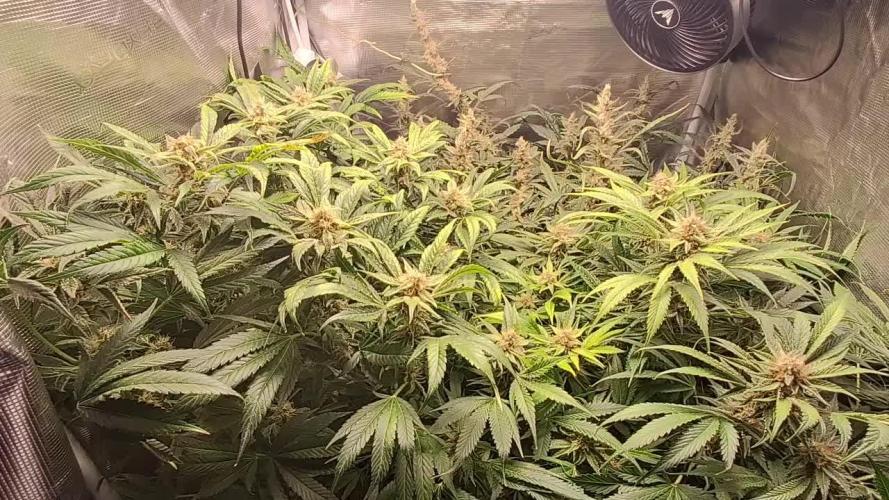
Raised up the Banana punch at the Back to keep the canopy even, had to raise the reservoir to maintain the gravity feeding, Humidity is still a little high, and stopped ising Pk 13/14 this week, getting close to the end, il start checking trichomes this week with a microscope, The charcoal filter is a bit old now and isnt dampening the smell great, Its stinking up the hallways in our apartment building, hope the neighbors don't mind a few more weeks of some dank nugs smell before i can bag it up in some terplock bags, gonna be a bunch of trimming to do in the next couple of weeks but the buds look nice and crystaly, reducing the Ec slightly this week to 1.6 and maintaining ph at 5.5 swinging up to 5.7, The airdomes are blowing some bubbles at the valves so I turned down the Air supply to the roots below 1 liter per min, hoping humidity drops further but nearly at the finish line, I need a better tool to cut the trunks soon because theyre quite thick, Possibly one more update before harvest, Thanks for checking out my grow guys😀

Likes
10
Share

@Nillenium
Follow
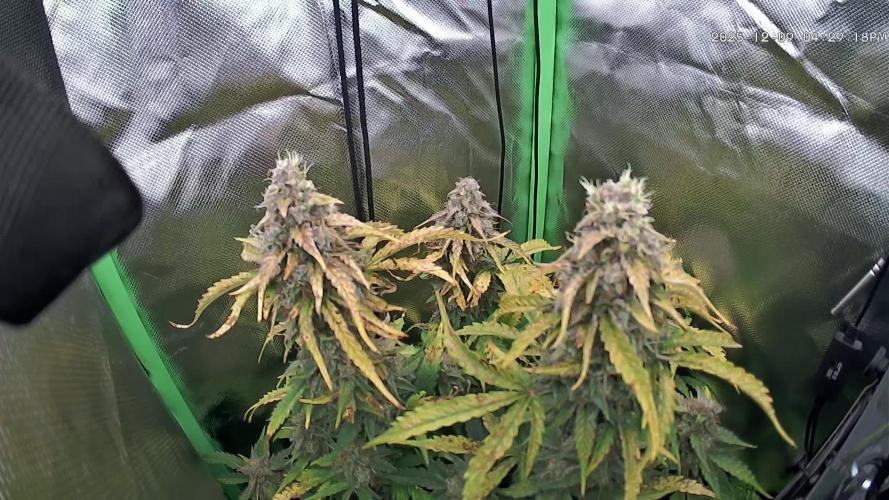
Woche 13 und außer weiteres foxtailen und purplen ist nichts passiert. Morgen wird geerntet!
Btw...Wer Katzenhaare auf den Bildern findet , darf sie behalten. Es ist leider nicht zu verhindern, denn sobald der Tiger den Reißverschluss hört, steht er sofort am Zelt. Er darf das 😬


Likes
39
Share


@MariRemediesLLC
Follow
Very rough week. I noticed discoloration of fan leaves which led to a lot of different deficiencies. Thought I was going to lose my plants.
Likes
3
Share

@NewMan
Follow
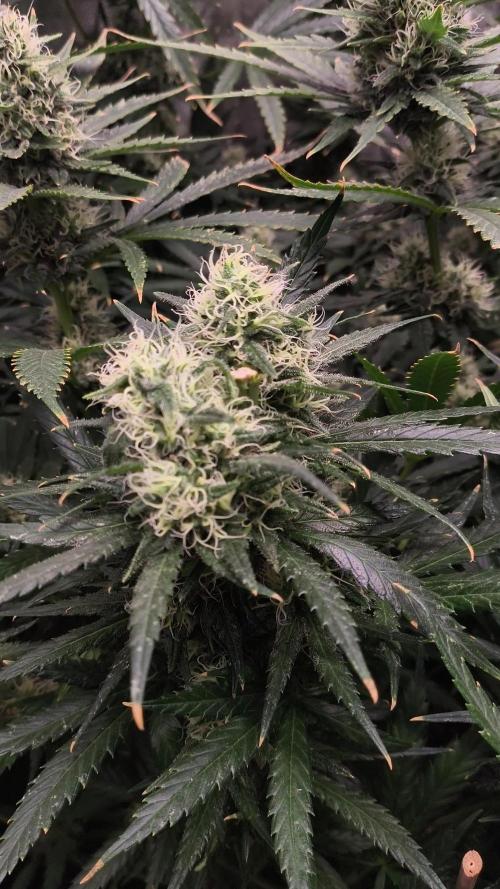
Chtěl jsem ji ještě nechat, ale bohužel. Naštěstí to odnesla méně než Dark nectar..ten už jen počkat , až ten sýr dozraje ve špajzu

Likes
55
Share


@Roberts
Follow
Fruity Pebbles #1 has sprouted after I thought she was a dud. So I will be growing 2 of these plants in different nutrition through the grows. #2 has its own diary. She is getting acclimated currently. With the rockwool on the side of the basket, she should find the solution quickly. I have been testing if this is more efficient. So far it looks like a better option. Everything is looking good at the moment. Thank you ILGM. 🤜🏻🤛🏻🌱🌱🌱
Thank you grow diaries community for the 👇likes👇, follows, comments, and subscriptions on my YouTube channel👇. ❄️🌱🍻
Happy Growing 🌱🌱🌱
https://youtube.com/channel/UCAhN7yRzWLpcaRHhMIQ7X4g
Likes
8
Share


@Rabidreject
Follow
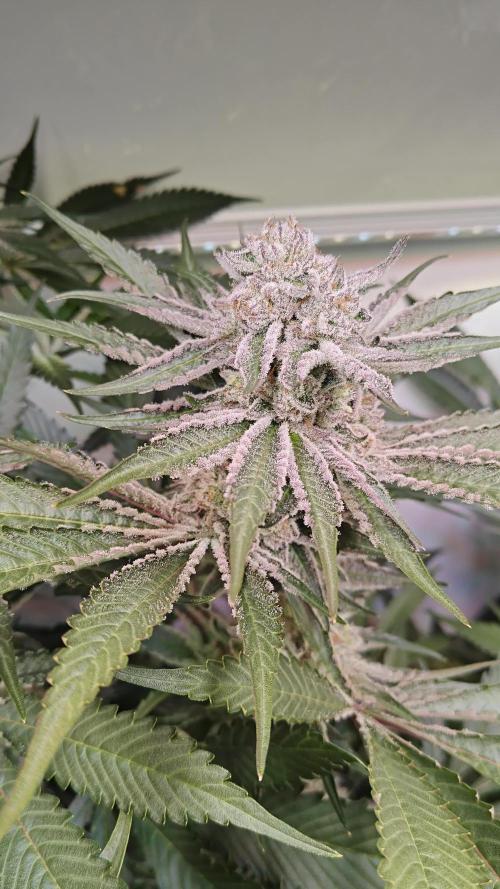
Okay so everything is okay atm but my shower isn’t working which is opposite the grow room so I just shut the door and put a visible dehumidifier in the hall. Seems to work to drown out the fan in the tent.
Plant looks okay - think she needs a little more N still. We’ll see how it reacts to the newest res change and react accordingly - at least it’s all stopped flooding!


Likes
1
Share


Likes
13
Share


@K_MoK
Follow
Only 8 Clones remaining. I took the WW clone out.
I took a lot of leaves and some branches.
It was overcrowded...😶
Likes
1
Share


@jojopfoh
Follow
they are all growing great and starting to get taller. a very robust plant and very easy to grow and maintain. they are getiing 1/2 the recommeneded dose of nutrients 3 times a week

Likes
3
Share


@GrowInBavaria
Follow
Tag 34 - 03.01.2025
Es gibt keine Veränderungen.
Tag 40 - 09.01.2025
Es wurde etwas enlaubt, die Pflanze wächst weiterhin sehr kompakt.

Likes
12
Share


@SolitudeCorners
Follow
Currently, run out of nutes but buds bigger than last week SoI think it's time to flush then watering plain water might use flawless finish next week then✊

Likes
1
Share

@burnbae420
Follow
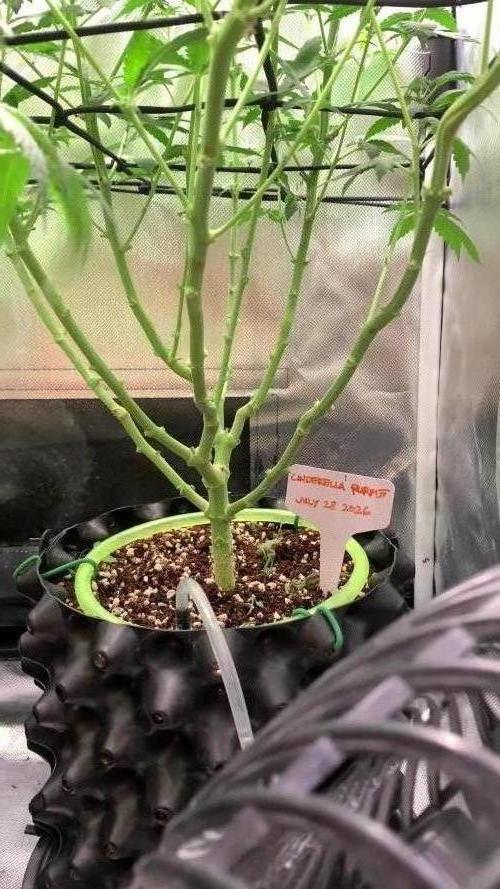
One of Cindy Purp is smaller than the other, and both are female.
The Purple Afghan is smaller but has lush and dense Foliage 🔥


Likes
8
Share

@TyRun
Follow
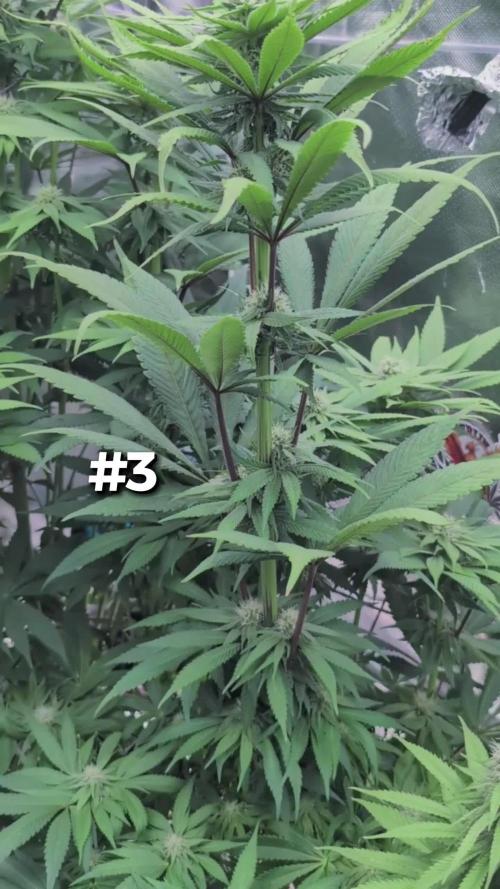
Main news of the week: we’re saying goodbye to #6. She went straight to compost.
Sounds dramatic, I know. But honestly, it’s pretty simple: she wasn’t growing, had no real buds, smelled like wet coco — literally the same coco she was sitting in — and on top of that, she decided to go hermie. Well… happens.
If it had been a worthy plant, I’d probably bother picking the nanners off and trying to save her. But this one was clearly some kind of outcast from the start. Plus, I still hadn’t tossed #1 and #2, and suddenly a proper pot spot under the light opened up.
So #6 got chopped, and the little ones were moved into one pot. They had been living in 0.3L cups this whole time anyway.
What else, what else…
At the beginning of the week, I sprayed chitosan for the second and final time. For the next three weeks, the only real stress they should get is UV. Well, maybe the main light too, to some degree. It feels like there might be too much light… but also maybe not. I don’t see any clear downside yet, so I’ll keep it at full power for now.
That’s 320W main light + 40W under-canopy light + 20W blue during peak hours.
Development is steady. Bud sites are swelling, leaf tips are slightly burnt, so we’re clearly riding the edge here. Vertical stretch has basically stopped — maybe just a couple more centimeters added.
That means irrigation-wise I’m switching back to a more vegetative strategy: keeping the substrate as wet as possible, with a small dryback of around 15%. Of course, every plant drinks differently, so it’s easier said than done. In reality, one sits closer to 10%, another one closer to 25%.
The feed is almost unchanged in terms of EC and pH: EC 1.33 / pH 5.8. But potassium and phosphorus are slowly going up.
That’s it for now. The fun part is still ahead. For now, we sit, rub our little paws together, and watch the buds get fat.
Likes
8
Share


@DogDoctorOfficial
Follow
💙 Project Blue Tent – Week 7
Blue Waffle F1 – Pheno A (Folder 13A)
Welcome back everyone to another week inside Project Blue Tent! 💙🌱
If you're new here, welcome aboard.
This project is all about exploring the incredible Blue Waffle F1 genetics from Zamnesia while putting the complete growing ecosystem through its paces.
Rather than documenting four plants as a single diary, each phenotype receives its own individual journey from seed to harvest. They share the same tent, the same environment, the same nutrition, the same irrigation and the same lighting.
And yet...
They still manage to tell four completely different stories.
As I always like to say:
We're not just growing plants.
We're getting to know them.
────────────────────────
🌿 Week Seven – The Final Cleanup
This week feels like a milestone.
The SCROG has done its job.
The canopy is full.
The plants have established their structure.
And now it's time to prepare everything for the next chapter...
Flowering. 🌸
Plant A is looking absolutely beautiful at the moment.
Her foliage has developed into the rich, healthy green I've been hoping to see, and the overall structure is remarkably balanced. After several weeks of gently guiding branches underneath the SCROG, we've managed to create a canopy that is surprisingly even from one side of the tent to the other.
At approximately 60 cm, she's sitting comfortably within the space we've created for her.
And although she could certainly continue growing vegetatively, I don't want to simply keep filling the tent with more and more foliage.
At some point, you have to stop building the canopy...
...and start preparing it for what comes next.
That's exactly where we are now.
────────────────────────
🕸️ From SCROG to Flower
Over the last couple of weeks, the SCROG has completely changed the way these plants occupy the tent.
Instead of allowing individual branches to dominate vertically, we've been gently guiding them horizontally beneath the screen.
The result is exactly what we were looking for:
A broad, relatively even canopy with many developing tops sharing the available light.
SCROG isn't about forcing a plant into submission.
It's about working with its natural growth and redistributing that growth across the available space.
And looking at the tent now...
I'd say the mission has been accomplished.
The screen is filled.
The plants have claimed their territory.
Now we need to create the best possible starting point for flowering.
Which brings us to this week's main job.
────────────────────────
✂️ Defoliation – Cleaning Today for a Better Tomorrow
This week we're performing a deep, purposeful defoliation across the canopy.
For anyone unfamiliar with the technique, defoliation simply means selectively removing leaves from the plant.
But it's important to understand what defoliation isn't.
It isn't stripping a plant bare.
It isn't removing leaves just because they're in the way.
And it isn't something that should automatically be performed every week.
The purpose is to improve the structure we've already created.
After several weeks of SCROG training, there is now a tremendous amount of foliage packed into a relatively small space. While those leaves are essential during vegetative growth, too much overlapping foliage can eventually create unnecessary congestion inside the canopy.
So we're removing selected leaves that are:
• Blocking developing growth
• Creating unnecessary overlap
• Restricting airflow through the interior
• Shading lower areas that we've decided to retain
• Or simply no longer contributing enough to justify occupying that space
The goal isn't to make the plant look empty.
The goal is to make the plant efficient.
────────────────────────
🌬️ Why Defoliate Before Flower?
Timing is everything.
We're doing this now because the plants are still in vegetative growth and have time to recover before we ask them to transition into flowering.
Defoliation is a form of stress.
Even when performed carefully, removing a significant amount of foliage temporarily changes the plant's balance between its leaves, roots and growing points.
That's why I don't want to perform a major cleanup deep into flowering unless there's a very good reason.
Right now, the plants can take that short period of recovery while they're still operating under an 18/6 light schedule and actively producing new vegetative growth.
After the cleanup, we'll give them time to recover, settle and rebuild their foliage before flipping the lights.
The idea is simple:
Stress now.
Recover now.
Flower later.
Rather than asking the plant to simultaneously deal with a major transition into flowering and a significant amount of pruning, we're separating those events.
One step at a time.
That's especially important in a project like this, where I'm trying to observe the plants rather than simply push them as hard as possible.
────────────────────────
🌿 Plant A – Looking Better Than Ever
Plant A continues to impress me.
The first thing that stands out this week is the colour.
That slightly lighter appearance we saw earlier in the grow has completely disappeared. The foliage is now displaying that rich, healthy green that tells me the current nutritional strategy is working extremely well.
She's vigorous without looking excessive.
Healthy without showing signs of nutritional stress.
And most importantly...
She's balanced.
Her branches have responded beautifully to the SCROG, and the canopy has developed into a very usable structure for flowering.
This is one of those moments where you can look at the plant and realize that the weeks of small adjustments have finally come together.
The topping.
The recovery.
The daily SCROG work.
The irrigation.
The feeding.
The environmental stability.
None of those things created this canopy by themselves.
They're all pieces of the same puzzle.
────────────────────────
💧 The Drip Irrigation System
One of the things I have become particularly impressed with during this project is the automatic drip irrigation system.
It's working beautifully.
With the plants now drinking more consistently and the canopy becoming increasingly demanding, having a reliable irrigation system makes maintaining uniformity across the tent considerably easier.
Each plant is currently receiving approximately 1.2 L per 24 hours, delivered through the drip system.
And the plants are clearly enjoying the consistency.
One of the advantages of automated irrigation isn't simply saving time.
It's repeatability.
Instead of relying on every watering being manually performed at exactly the same interval and volume, the system provides a much more consistent routine for the plants.
That consistency becomes increasingly valuable as the root systems develop and the plants transition toward flowering.
So far...
The system is doing exactly what I wanted it to do.
And honestly, watching four plants respond so uniformly to the same irrigation strategy has been one of the most satisfying parts of this project.
────────────────────────
🥥 Feeding Program
The feeding recipe remains unchanged this week.
And for now, I don't see a reason to interfere with something that is clearly working.
Current nutrition:
• Plagron Hydro A — 1.9 ml/L
• Plagron Hydro B — 1.9 ml/L
• Plagron Hydro Roots — 1 ml/L
Current EC remains approximately:
1.92 mS/cm
with the solution maintained around 18°C and pH at 5.8.
The plants are showing excellent colour, strong growth and healthy leaf development, so I'm perfectly comfortable maintaining the current recipe for now.
We may increase the nutritional strength next week depending on how the plants respond after defoliation and as flowering approaches.
But that's exactly why I don't like changing several variables at once.
First, we observe.
Then we adjust.
The plants will tell us what they need.
────────────────────────
🌡️ Environmental Conditions
The Blue Tent continues to remain remarkably stable.
This week's average conditions were:
• 🌡️ Day Temperature: 28°C
• 🌙 Night Temperature: 27°C
• 💧 Relative Humidity: 65%
• 🥥 Substrate Temperature: 24°C
• 💦 Nutrient Solution: 18°C
• ⚗️ pH: 5.8
• ⚡ EC: 1.92 mS/cm
• 💨 CO₂: approximately 450 ppm
• 💡 Light Schedule: 18/6
• 💧 Irrigation: approximately 1.2 L/plant/24h
• ? Pot Size: 8 L
• 📏 Plant Height: approximately 60 cm
The plants are continuing to respond beautifully to these conditions.
The root-zone temperature remains particularly stable, irrigation is consistent, and the canopy has enough air movement to support vigorous transpiration.
As we move toward flowering, environmental management will become even more important.
The room we've created now needs to support not only vegetative growth...
...but the much denser flowering structure that is coming next.
────────────────────────
🌬️ Why the Cleanup Matters
One of my main objectives with this defoliation isn't simply aesthetics.
It's airflow.
When four vigorous plants completely fill a 100 × 100 × 200 cm tent, the amount of foliage inside that space becomes considerable.
From above, everything can look absolutely perfect.
But underneath that beautiful canopy is another story.
Leaves overlap.
Branches cross.
Interior spaces become crowded.
Air needs to move through all of that.
By selectively removing excess foliage now, we're opening those internal spaces before flowering begins.
That gives us a cleaner structure going forward and makes it much easier to inspect the plants, maintain airflow and monitor the developing flowers.
This is also one reason I'm much happier doing the major cleanup before the flip rather than waiting until the plants are deep into flowering.
Once flowering begins, the priorities change.
I want the plant concentrating its energy on developing flowers rather than repeatedly recovering from major structural work.
So we're preparing the room now.
Clean canopy.
Good airflow.
Healthy structure.
Then...
Flower.
────────────────────────
🧠 Defoliation Isn't About Removing Leaves
One of the biggest misconceptions surrounding defoliation is that more leaves automatically means a worse plant.
That's not true.
Leaves are incredibly important.
They're the plant's solar panels.
They capture light and help drive photosynthesis.
So the objective should never be:
"How many leaves can I remove?"
The better question is:
"Which leaves are no longer contributing enough to justify occupying this space?"
That's the philosophy I'm following here.
We're not trying to weaken the plant.
We're trying to improve the relationship between:
Light → canopy → airflow → growing sites.
And because we've already spent weeks creating the structure with SCROG, this cleanup is simply the final refinement of that work.
────────────────────────
🌱 Plant A's Personality
Every phenotype continues to develop its own personality, even when all four plants are living under almost identical conditions.
Plant A has consistently been one of the more balanced girls in the tent.
She doesn't appear interested in becoming the biggest plant in the room.
Instead, she seems much more interested in becoming an efficient one.
Her growth is structured.
Her canopy is balanced.
Her foliage is beautiful.
And after weeks of training, she has settled into the SCROG extremely well.
Now, after today's cleanup, she looks almost like a different plant.
Less crowded.
More open.
More organized.
And ready for the next chapter.
That's the part of growing I really enjoy.
You spend weeks slowly building something...
Then one day you step back and suddenly realize:
It all came together.
────────────────────────
👀 Looking Ahead
The next few days will be about one thing:
Recovery.
No unnecessary training.
No chasing perfection.
No constantly changing the environment.
Just observation.
The plants have been through topping.
They've been trained beneath the SCROG.
They've filled the canopy.
And now they've received their final major vegetative cleanup.
So we're going to let them breathe.
Let them recover.
Let them continue growing.
And then, assuming everything continues to look as good as it does today...
we flip the Blue Tent into flower. 🌸
This is the point where all those weeks of preparation finally start paying off.
The screen is full.
The structure is ready.
The plants are healthy.
Now we just need to let them do what plants do best.
Grow.
────────────────────────
💙 Thank You
A huge thank you to Zamnesia for making Project Blue Tent possible, from these fantastic Blue Waffle F1 genetics to the complete ecosystem surrounding this grow.
A massive thank you to Plagron for providing the Premium Growbags together with the Hydro nutrient line, which continues delivering excellent results and beautifully healthy growth.
A special thank you to Mars Hydro for the drip irrigation and automatic drainage system. After watching these plants respond to the consistency of automated irrigation week after week, I'm genuinely impressed with how well the system is performing.
Thank you as well to GrowDiaries, for giving growers around the world a place to document their journeys, exchange knowledge and learn from one another.
And finally...
Thank you to everyone following Project Blue Tent.
Every comment, every question, every bit of feedback and every person simply stopping by to see how these four phenotypes are developing means more than you probably realize.
We've spent weeks building this canopy together.
Now the really exciting part is about to begin.
The plants are cleaned.
The SCROG has been filled.
The room is ready.
Flower is next. 🌸💙
Until next week...
Growers Love, happy growing, and take care everyone! 🌱💙
Likes
3
Share

@kdifiori_
Follow
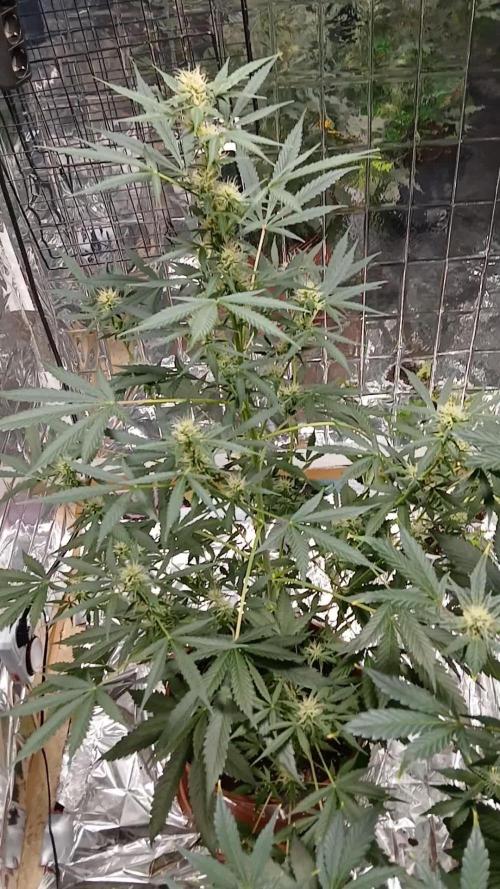
And just like that, month number two is over!
What started out as just a little seedling has quickly grown into a plant nearly a meter tall.
This week, it drank two liters of nutrient enriched water. I stopped using Bloom A and B to make room for Atami’s Blossom Builder.
Are you ready for next week?