






@gnzk030
Volgen
3rd week Day 15-21 12/12
Videos 21-27.Nov.2026
22.Nov still stretching like crazy but very healthy and happy lady. Zero issues at all at this point.
23.Nov very happy lady
24.Nov BAD NEWS, Very healthy and doesn't happy doesn't get stressed a lot, yet She's Hermaphrodite 😬
I have to think if i need to continue, she looks so beautiful though and very strong fruity smell.
A week of max flowering nutrients dosage.


@CropHouseLew
Volgen
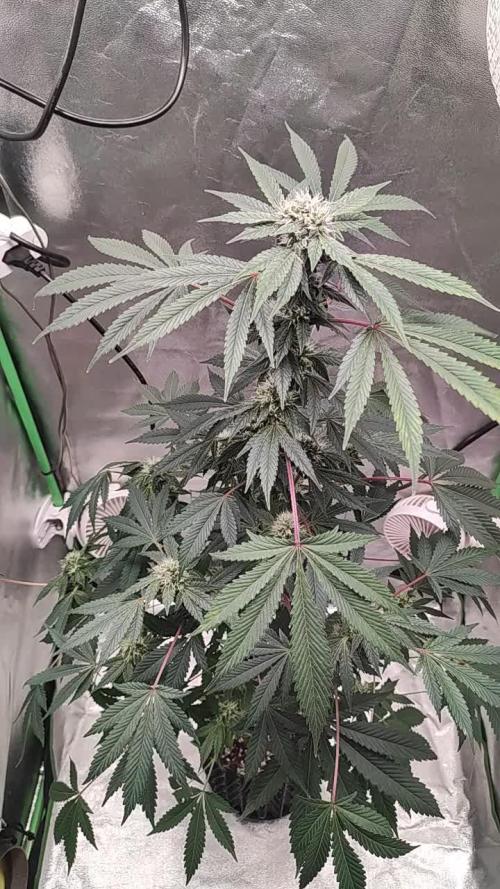
I harvested 2 weeks after the last update. The videos are from a month later after the buds were cured.




@Eldorado_ed
Volgen
We’ll all up to date and the guys who have said to hold on to next week or week after before chop now that my diaries uploaded I will post weekly as just thought I would post for info today and got it instantly cheers people ✌️🏻


@spacetimeman
Volgen
Mildew was detected in the beginning if the week, the plant sprayed with solution of hydro peroxide to kill spores and then solution of apple vinegar to stop prevent new mold. It worked.
I decreased the concentration of the watering solution and reduced light. A couple of daye left before harvest.


@KannaGrowing
Volgen
Semana de transición entre el abono para el periodo vegetativo (Bio Vega) y el abono que utilizaremos durante el periodo de floración (Bio Flores). El primero más rico en nitrógeno y el segundo, en fósforo, magnesio y potasio.
Mezclo Bio Rhizotonic + Bio Vega + Bio Flores y riego con 50 litros de agua, todo el cultivo... Alterno riegos cada tres días, unos con abono y otros con agua.
La próxima semana, elimináremos Bio Vega.


@PersonalSmok3s
Volgen
Finished her second week of flush, plan on harvesting her as soon as her pot has fully dried out.
Trichomes appear mainly cloudy to the point where the buds appear white.
I’ve smoked a few test buds that I took a couple of days into her flush, the taste even at that point was unreal!
By far the strongest strain I’ve grown to date.
Happy with how everything looks, until next time 🌱💚


@leafy_greenz
Volgen
Note: Moisture and Temp readings are done in the mornings.
Lights are on an automated 17/9 schedule unless stated otherwise.
Drip water system waters 1 Liter every 9 hours.
Quick Notes: I notice as I go into full-blown flower, the plants are starting to need less frequent waterings, especially North. The watering system overflows her pot often, and the AKs soils feel relatively damp before the auto-watering starts. All plants are stopping their growth also. North is the furthest into flowering and is starting to smell and get sticky, the microscope is showing trichome development also.
📏: AK1: 36 in (91.44 cm), AK2: 44 in (111.76 cm), North: 24 in (60.96 cm)
Day 64 (Jul 29) - Manually watering today. All plants drinking a bit slower, especially North (probably had a 0.5 liter overspill). Refilling drip water system tomorrow to get a better pace for watering.
💧: Tap: 7.45 pH
Adjusted with pH down.
AK1: 1.5 liter (5.95 pH, 1 ml FloraMicro, 2 ml FloraGro, 3 ml FloraBloom, 2.5 ml CalMag) ~1220 PPM
AK2: 1.5 liter (6.05 pH, 1 ml FloraMicro, 1.5 ml FloraGro, 3 ml FloraBloom, 2.5 ml CalMag) ~1150 PPM
North: 1.5 liter (x pH, 1 ml FloraMicro, 2 ml FloraGro, 3 ml FloraBloom, 2.5 ml CalMag)
💦: 57% (37-67) - 🌡️: 27C (22-30)
Day 64 (Jul 30) - Noticing Plants drinking slower. Soil not completely dry in the mornings as usual. Defoliated AK2 a bit more. Attempted to Supercrop but decided not to follow through (crushed main trunk between fingers without bending it over)
Watered all plants and refilled drip water system with 14.2 liters.
💧: Tap: x pH
Adjusted with pH Down.
All: 14.2 liter (6.2 pH, 14.5 ml FloraMicro, 14.5 ml FloraGro, 33.5 ml FloraBloom, 33.5 ml CalMag) ~1250 PPM, ~2250 EC
💦: 49% (38-70) - 🌡️: 28C (20-30)
Day 65 - Plants look healthy. Set drip System to water 1 liter every 9 hours.
💦: 38% (36-65) - 🌡️: 26C (20-29)
Day 66 - Plants look healthy.
💦: X% -🌡️: xC
Day 67 - Trimmed some leaves below. Humidity spiked unexpectedly, buying dehumidifier.
💦: X% (40-79) - 🌡️: XC (21-29)
Day 68 - Humidity spike overnight. Manually watered AK1 & AK2, not North (didn't seem like she needed it).
Looks like the plants are needing a bit less watering overall.
💧: Tap: x pH
Adjusted with pH down.
AK1: 1.5 liter (6.05 pH, 1 ml FloraMicro, 1.3 ml FloraGro, 2.3 ml FloraBloom, 2.3 ml CalMag)
AK2: 1.5 liter (5.95 pH, 1 ml FloraMicro, 1.3 ml FloraGro, 2.3 ml FloraBloom, 2.3 ml CalMag)
💦: 45% (39-71) - 🌡️: 27C (20-29)
Day 69 (week 9) - Humidity spike overnight. Set water system to water 1 liter every 11 hours. Dehumidifier came in mail, monitoring effectiveness throughout the day and tomorrow. Refilled water system and set to water 1 liter every 10 hours.
All: 14.2 liter (6.2 pH, 14.5 ml FloraMicro, 14.5 ml FloraGro, 33.5 ml FloraBloom, 33.5 ml CalMag) ~1550 PPM
💦: 44% (36-70) - 🌡️: 26C (19-29)




@HeizraumGrower
Volgen
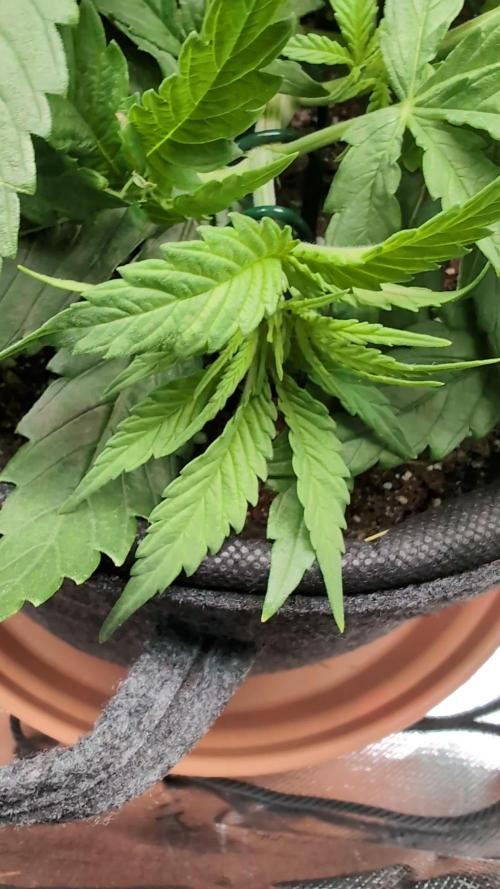
At the beginning of week 4, the Wedding Cheesecake was flipped to a 12/12 light cycle, to which it responded with the first fine white hairs by the last day of the week. Water consumption has increased to approximately 500 ml per day. Nutrients were supplied in two doses: initially with an EC value of 1.7, and in the middle of the week with an EC of 1.4, which was the first time flowering fertilizer was used.
Training focused on aligning the four main shoots using LST. The lighting is now at 70% - 75% (approx. 450-500 PPFD). In terms of climate control, the exhaust fan has been running continuously on a low setting for several days now, with an external dehumidifier stabilizing the climate in the room where the tent is located. The VPD value is now being continuously increased. The stretch will be the exciting topic in week 5.


@b_deal
Volgen
Well folks, this was a PPFD and CO2 controlled grow and I didn't use any bloom boosters like the Big Bud or Canna Boost etc.. Results are crazy.
I managed to collect over 760 grams of dried and fine trimmed nugs. The flowering lights is the LEDWisdom Coral 600W IP67 water and dust proof grow lights. For the first two weeks, I used Rosa 400W and Rosette 200W grow lights from LEDWisdom. When Coral arrived, I changed the light setup so the total lights used is 600Watts. Anyway Coral grow lights have near 3.0 umols/J efficacy and makes your garden yield like crazy no matter what. I'm sure I would have collected more if I used a bloom booster but I wanted to show you guys that you can achieve great results with a great grow light even without flower boosters. You can check my other diaries growing with the Rosa 400W and Rosette 200W. These lights are also killing it and they have around 2.7 umol/J efficacy.
Lights were drawing 590 Watts from the power outlet on the wall so I can say that the whole grow yielded more than 1.3 grams per Watt. These strains are not heavy yielders except the Chocolate Chunk but I only had one plant of this strain and she was the smallest plant in the tent. It didn't affect the total yield much. Pink Kush yields are pretty standart but the quality is exceptional. On the crossbreed strain, yield was slightly more than the Pink Kush plants and the yield from each strain is like below;
-Chocolate Chunk: 80 grams
-Pink Kush: 320 grams
-Purple Punch x Pink Kush: 360 grams
I made some COB's and also some kief and has with the trim. there wasn't much to trim in the end because I kept my plants in good shape. This was a joy to grow and now I have an amazing stash of high quality dried material stored in vacuum. I'm ready for another pandemic but I hope we won't have one 😅
Wish you the best of luck in your garden. Stay green 💪


@cheetah844
Volgen
Excited to watch how big her flowers will get! 💮
She's very thirsty - has been the whole grow so far 💦
We'll see if the seeds begin to form soon🌰


@Amaya
Volgen
Джелато имеет очень густую листву и кустистое строение, несмотря на то что вентиляция направлена прямо в самый ее центр опасаюсь плесени.
В качестве профилактики опрыскала фитоспорином. Развивается медленно, в связи с низкой температурой в помещении.




@Altitonans_Fulmen
Volgen
For most crops, a slightly acidic soil pH between 6.0 and 6.8 is ideal because it optimizes nutrient availability. When soil pH rises above 7.0 (alkaline), the concentration of hydrogen ions H+ drops significantly, and they are replaced by calcium, magnesium, or sodium ions on the clay colloid exchange sites. To naturally lower alkaline soil pH, you can add organic matter (carbon-rich materials), which produces weak organic acids as it decomposes. Maintaining this slightly acidic range stimulates a highly active, diverse microbial community; these microbes decompose organic matter and release carbon dioxide CO2, which plants absorb through their roots and leaves to boost photosynthesis and sugar production. Furthermore, the added organic carbon acts like a sponge, drastically improving the soil's water-holding capacity.
While soil biological activity does involve cellular electron transport, electrical conductivity (EC) in soil is actually a measure of dissolved mineral salts, not a voltage carried by individual microbes. Soil microorganisms secrete organic acids and chelate metallic and non-metallic minerals, transforming locked-up inorganic compounds into bioavailable organic complexes. Unlike harsh synthetic fertilizers that can dehydrate soil life in high concentrations, these naturally chelated nutrients safely nourish the plant, creating a thriving, self-sustaining ecosystem where plants can efficiently synthesize their own food.
Metal-based: Could include elements like iron, manganese, copper, or zinc, which are essential nutrients for plants but can exist in forms not readily accessible.
Non-metal-based: Examples like calcium carbonate, phosphate, or sulfur are also important for plant growth and potentially serve as building blocks for the organic salt.
Chelation in a plant medium is a chemical process where a chelating agent, a negatively charged organic compound, binds to positively charged metal ions, like iron, zinc, and manganese. This forms a stable, soluble complex that protects the micronutrient from becoming unavailable to the plant in the soil or solution. The chelate complex is then more easily absorbed by the plant's roots, preventing nutrient deficiency, improving nutrient uptake, and enhancing plant growth. Chelation is similar to how microorganisms create organic salts, as both involve using organic molecules to bind with metal ions, but chelation specifically forms ring-like structures, or chelates, while the "organic salts" of microorganisms primarily refer to metal-complexed low molecular weight organic acids like gluconic acid. Microorganisms use this process to solubilize soil phosphates by chelating cations such as iron (Fe) and calcium (Ca), increasing their availability.
Added sugars stimulate soil microbial activity, but directly applying sugar, especially in viscous form, can be tricky to dilute. Adding to the soil is generally not a beneficial practice for the plant itself and is not a substitute for fertilizer. While beneficial microbes can be encouraged by the sugar, harmful ones may also be stimulated, and the added sugar is a poor source of essential plant nutrients. Sugar in soil acts as a food source for microbes, but its effects on plants vary significantly with the sugar's form and concentration: simple sugars like glucose can quickly boost microbial activity and nutrient release. But scavenge A LOT of oxygen in the process, precious oxygen. Overly high concentrations of any sugar can attract pests, cause root rot by disrupting osmotic balance, and lead to detrimental fungal growth. If you are one who likes warm tropical high rh, dead already. Beneficial, absolutely, but only to those who don't run out of oxygen. Blackstrap is mostly glucose, iirc regular molasses is mostly sucrose. Sugars, especially sucrose, act as signaling molecules that interact with plant hormones and regulate gene expression, which are critical for triggering the floral transition. When sucrose is added to the growth medium significantly influences its effect on floral transition.
Probably wouldn't bother with blackstrap given its higher glucose content. Microbes in the soil consume the sugar and, in the process, draw nitrogen from the soil, which is the same nutrient the plant needs. Glucose is not an oxygen scavenger itself, but it acts as a substrate for the glucose oxidase (GOx) enzyme, effectively removing oxygen from a system. Regular molasses (powdered if you can), as soon as she flips to flower or a week before, the wrong form of sugar can delay flower, or worse. Wrong quantity, not great either. The timing of sucrose application is crucial. It was more complicated than I gave it credit for, that's for sure. When a medium's carbon-to-nitrogen (C:N) ratio reaches 24:1, it signifies an optimal balance for soil microbes to thrive, leading to efficient decomposition and nutrient cycling. At this ratio, soil microorganisms have enough nitrogen for their metabolic needs, allowing them to break down organic matter and release vital nutrients like phosphorus and zinc for plants. Exceeding this ratio results in slower decomposition and nitrogen immobilization, while a ratio below 24:1 leads to faster breakdown and excess nitrogen availability.
Carbon and nitrogen are two elements in soils and are required by most biology for energy. Carbon and nitrogen occur in the soil as both organic and inorganic forms. The inorganic carbon in the soil has minimal effect on soil biochemical activity, whereas the organic forms of carbon are essential for biological activity. Inorganic carbon in the soil is primarily present as carbonates, whereas organic carbon is present in many forms, including live and dead plant materials and microorganisms; some are more labile and therefore can be easily decomposed, such as sugars, amino acids, and root exudates, while others are more recalcitrant, such as lignin, humin, and humic acids. Soil nitrogen is mostly present in organic forms (usually more than 95 % of the total soil nitrogen), but also in inorganic forms, such as nitrate and ammonium. Soil biology prefers a certain ratio of carbon to nitrogen (C:N). Amino acids make up proteins and are one of the nitrogen-containing compounds in the soil that are essential for biological energy. The C:N ratio of soil microbes is about 10:1, whereas the preferred C:N ratio of their food is 24:1 (USDA Natural Resource Conservation Service 2011). Soil bacteria (3-10:1 C:N ratio) generally have a lower C:N ratio than soil fungi (4-18:1 C:N ratio) (Hoorman & Islam 2010; Zhang and Elser 2017). It is also important to mention that the ratio of carbon to other nutrients, such as sulfur (S) and phosphorous (P) also are relevant to determine net mineralization/immobilization. For example, plant material with C:S ratio smaller than 200:1 will promote mineralization of sulfate, while C:S ratio higher than 400:1 will promote immobilization (Scherer 2001).
In soil science and microbiology, the C:S ratio helps determine whether sulfur will be released (mineralized) or tied up (immobilized) by microorganisms.
A carbon-to-sulfur (C:S) ratio smaller than 200:1 promotes the mineralization of sulfate, when the C:S ratio is low, it indicates that the organic matter decomposing in the soil is rich in sulfur relative to carbon. Microorganisms require both carbon and sulfur for their metabolic processes. With an excess of sulfur, microbes take what they need and release the surplus sulfur into the soil as plant-available sulfate
A carbon-to-sulfur (C:S) ratio higher than 400:1 will promote the immobilization of sulfur from the soil. This occurs because when high-carbon, low-sulfur materials (like sawdust) are added to soil, microbes consume the carbon and pull sulfur from the soil to meet their nutritional needs, temporarily making it unavailable to plants.
200:1 C:S 400:1: In this range, both mineralization and immobilization can occur simultaneously, making the net availability of sulfur less predictable.
This dynamic is similar to how the carbon-to-nitrogen (C:N) ratio regulates the availability of nitrogen in soil. Just as microbes need a certain amount of nitrogen to process carbon, they also require a balanced amount of sulfur. Both mineralization and immobilization are driven by the metabolic needs of the soil's microbial population.
Sulfur is crucial for protein synthesis. A balanced ratio is particularly important in relation to nitrogen (N), as plants need adequate sulfur to efficiently use nitrogen. A severely imbalanced C:S ratio can hinder the efficient use of nitrogen, as seen in trials where adding nitrogen without balancing sulfur levels actually lowered crop yields.
Maintaining a balanced carbon-to-sulfur (C:S) ratio is highly beneficial for plant growth, but this happens indirectly by regulating soil microbial activity. Unlike the C:N ratio, which is widely discussed for its direct effect on nutrient availability, the C:S ratio determines whether sulfur in the soil's organic matter is released (mineralized) or temporarily locked up (immobilized).
Glucose will hinder oxygenation more than sucrose in a solution because glucose is consumed faster and has a higher oxygen demand, leading to a more rapid decrease in oxygen levels. When cells respire, they use oxygen to break down glucose, and this process requires more oxygen for glucose than for sucrose because sucrose must first be broken down into glucose and fructose before it can be metabolized.
In a growth medium, glucose is a more immediate and universal signaling molecule for unicellular and multicellular organisms because it is directly used for energy and triggers a rapid gene expression response. In contrast, sucrose primarily acts as a signaling molecule in plants to regulate specific developmental processes by being transported or broken down, which can be a more complex and slower signaling process.
Critical stuff.


@Esoteric_growing
Volgen
Flushing nicely, leaves fading to purple and yellow. Will be flushed for a total of 12-14 days and then hung.


@Badassxwar
Volgen
So one thing about this strain that was kind of a bummer was the smells were literally all over the place in a great way. Sour gummies worms from the keef, diesle/gas from the leaves, and lemon hard candy/carrots/dab carts from the buds but when smoked it, the floral taste was so rounded that the other smells never came thru except the purple one that had tight smaller buds, had a lemony taste still. (Remember had to cut early from braking).
On the other hand, the way this plant grew had me in a state of personal amazement. I was actully super excited telling my friends that it got TOO BIG for the branches. Buds stacked perfectly on every plant. The topping and recover time went smooth. She shaped nicely right before flower. And back to my negative statement that I had..... the smells were INCREDIBLE!!! I recommend it to everyone soly for the smells.



@grimm420
Volgen
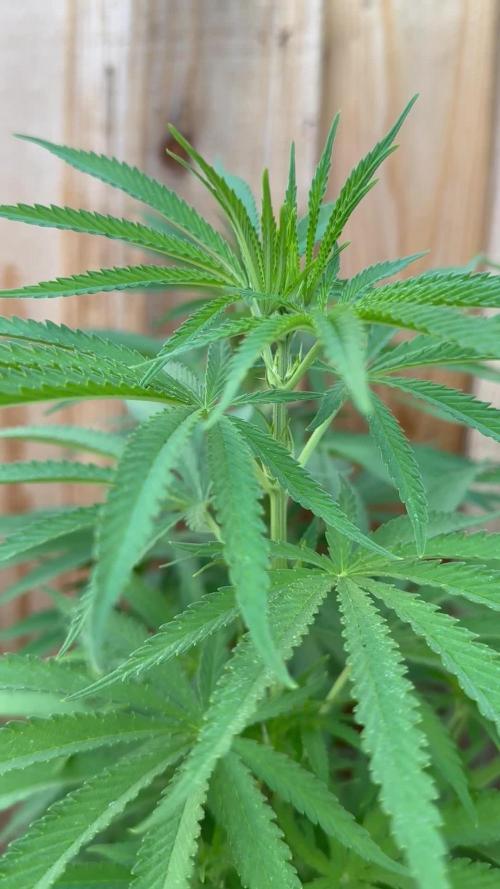
One thing I noticed is that its smell went away. But I figured it’s gunna get a lot stronger during flowering! I’m trying to find a way to aerate the soil because it’s so compact along with the roots that I sometimes feel like not all the soil is getting soaked properly, will find a big enough container to bottom feed, maybe it’ll help loosen it up a bit. And mites as well : oh well