


Likes
Comments
Share


@JakeTheButcher
Follow
Week 10 of flowering! This last week has been one of the most challenging when it came to climate, After I stopped C02 the humidity levels just continued to climb and the AC and Dehumidifier could not keep up. I'm guessing this has to do with the sheer volume of the plants in the airspace, and without the additional C02 keeping the stomas partway closed. I've decided to just leave the tent open during the day and its sits right at 55% humidity.
Now on to the flush...

Likes
3
Share


@GoodTimesOrganics
Follow
Der Stretch ist vermutlich abgeschlossen und die ersten Zuckerblätter mit schönen kristallinen Trichomen sind sichtbar.
Sie entwickelt sich prächtig.💚
Absolut auf die nächsten Wochen gespannt!

Likes
Comments
Share


@eldruida_lamota
Follow
Vamos familia, actualizamos la octava semana de floración de esta Amaretto Tarmac de Seedstockers.
Empezamos abonando ya con varios productos de la gama Agrobeta para la floración.
Temperatura y humedad dentro de los rangos correctos, 12 horas luz, 12 oscuridad.
Una lástima que de todas solo aguanto una, y en concreto tiene un color espectacular aún así seguiremos con el diario hasta el final.
Agrobeta:
https://www.agrobeta.com/agrobetatiendaonline/36-abonos-canamo
Hasta aquí todo, Buenos humos 💨💨💨

Likes
132
Share


@rhodes68
Follow
Week 6 and still veg, they are knocking on Flowering's door but not there yet.
Happy with growth and between the Coco Tek and the weekly foliar (just for good measure) no problems. Water slowly rising but keeping nuets reasonable.
Increasing the bloom nuet ratio slightly as when it does go its gonna want lots of PK
Side note: Cant really drop the new FFT-7/5 seeds till these go into flower (never seen it go this long) and I can move them under the HPS so... good and bad.
12/21 New pics hope they are better
12/22 Beginning to transition into flower now, colas beginning to form, so half and half on the nuets.
Time for the last Kangaroots drench to get those roots as large as possible. 10ml with feeding at lights on tonight
Ripley went into the Flowering tent as they just need more room, think it will be ok as Ripley could use some stretch, Tara remains in veg tent until Stardawg final harvest.
12/23 pics
12/24 All is good but think I am going to continue reducing the nuets 10% and checking EC of runoff as still getting some small issues on leaf tips.
Maybe I am chasing ghosts we will see
12/25 White tip under control, tested runoff at 1450 adjusted out and 700 adjusted in, within limits
Last day in veg tent for Belle, she joins the Flowering tent after Stardawg harvest.
Water needs increasing steadily, up to almost 3 quarts/ feed for good runoff. Good sign the roots took to the Kangaroots drench well.

Likes
8
Share


@sativa_thc
Follow
hoy lunes actulizo solo he regado ayer con bloom de atami. voy a estar regando solo con agua nada mas durante unos dias hasta q vuelva actualizar, como vemos ya esta comenzando a sacar resina poco a poco y ese engorde ya va dando sus frutos.

Likes
6
Share

@Growtyp
Follow
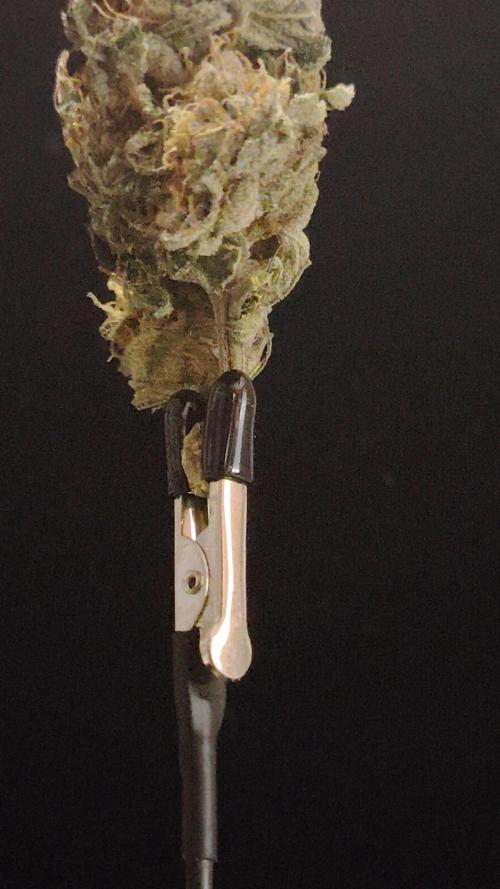
Ein sehr schönes ding geworden.
In einer Woche wird mal probiert und gebe euch Feedback.
Riecht sehr fruchtig mit bisschen Gas.
Schmeckt fruchtig Im Abgang etwas gasig.
Wirkung sehr sehr stark, ein davon geraucht reicht dann erst mal 😂

Likes
7
Share


@Ton_Trichomen
Follow
Day 14 🤩 vegi is starting
Piccas from this morning 8.30 and 17.00 after LST
So today was the first time I had Terra, Generator & Root Stimulator, only ¼ of the specified amount of everything and of course Hy Pro Fertilizers, my fertilizer barrel is finally ready, is being supplied with oxygen and the fertilizer is in motion, which means that as I am lazy I make 50l and leave it in the corner 😉 but always ready to use...
Then today was the first light LST, I will leave it alone for 4 days and then see where and how I pull it out, it doesn't really matter because I want to put up a net and lay it flat underneath
The Frosted Agave from Original Sensible Seeds has also seen the light of day
This grow is sponsored by:
Zamnesia Seeds
Hy-Pro Fertilizers
Mars Hydro LED
Start 26.4.024
Germination date 30.4 024
Germination 6v6
From Zamnesia
Do Si Dos f1 Auto.2x
Green Crack f1 Auto 2x
Pineapple Express f1 Auto 2x
Growing method
L.S.T with the help of a scrog net..🙈
Light led 1x fc 4800 from mars hydro
Exhaust air, I replaced the heavy pk 150 with my Mars Hydro 6 inch fan
Filter Rhino pro 900m³
Inlet air 305 m³ with filter 160mm
Soil:
Atami Light Mix &
5 mm pumice stone &
16 mm expanded clay on the floor
In 15 l. Factory pot
Temperature inside: 26.50°C 79 Fahrenheit
Outside temperature 21°C
R/H 64%
Light: 19/5 dimmed to 75% distance 70cm
Roots 21.00°C
Ph medium 7.0
Ph water 6.3 1.5 liters today
Ec 0.8
Nutes Hy-Pro Fertilizers Terra ml to 1l
Terra Veg & Bloom 0.6ml
Roots Stimulator 2.0 ml
Spraymix 5 ml
Generator 0.3 ml
Epic Boost 0 ml
Enhancer by Greenhouse
0 g
😉🤜🤛
#marshydroreview
#HyProFertilizers
#zamnesia
#originalsensibleseeds

Likes
6
Share


@canna_becrazy
Follow
I thought my seed was done for after the casing fell off, but I observed and noticed the leafs came out first then the root. Was told when this happens its fine, just place immediately into growing choice for next stage. I love plants, I'm enjoying the process already.


Likes
4
Share


@HurlinghCultiveta
Follow
Primera vez aplicando estas tres técnicas al mismo tiempo. Veremos como resulta!
Ella parece recuperarse de tal estrés lo más bien. Esperemos que todo siga así.
Gracias por leer mi diario!
Likes
24
Share


@olli0420
Follow
it's been a very good week 💚 I feel a little bad for this plant cause it's getting a little squished by the other two but I'm ddfinetly not complaining😅🌱.
started giving 5l of water per plant every 5 days. runoff shows that they are not over or under fed :) and pH is about 6.3.
very very very happy with this grow 💚
Barney's farm amazing as always
Likes
18
Share


@Tazard
Follow
She is just waiting for Pandora to finish up then she will move to the flower tent.

Likes
29
Share


@CanadianFillmore
Follow
Week 5 of 8 begins for LSD. She looks good, very frosty and sticky with a berry citrus smell. Did a little defoliation as well.
Thanks for stopping by, tune in next week for another episode of growfessor theatre. 👽🌳💚

Likes
16
Share


@BruWeed
Follow
Desde el momento uno fue fácil de cultivar, no tuve ningún problema en todo su desarrolló.
Como planta supero todas mis expectativas, se encuentran densos y muy pegajosos los cocos. En algunos hay partes de color violeta/lila.
Y por ultimo recomiendo mucho cultivar esta genética por lo sencillo que fue cultivarla y sus resultados finales, todo de diez.

Likes
Comments
Share


@FrenchMister
Follow
Starting to Low Stress Training and super cropping some secondaries

Likes
5
Share

@Kominest
Follow
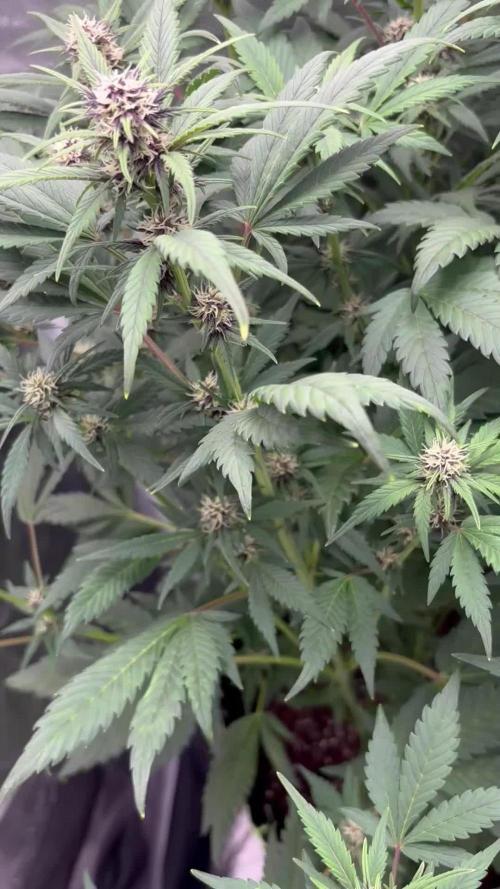
Just stretching a little.
I think she got done stretching slowly since I don’t need to adjust the light anymore since some days . So now to thicken up those bad buds 😎
I love the colors already but no big smells so far.
Gave around 4L of tap water on day 4
Likes
8
Share


@GoosengrowerUK
Follow
Hey my growmies hope everyone is keeping well just a wee update on the garden all looking swell they had a nutrient feed today comprising of:
Nukeheads uranium veg: 1tsp/gal
Vitalink CalMag: 5ml/gal
Urb naturals: 15ml/gal
Vitalink BioPlus: 10ml/gal
Vitalink PH up: PH'd to 6.8
Anyway I'm rather concerned about the lemon meringue autos as I had a cold snap last week so reckon they've self pollinated but not 100% so I've tried them with another flower nutrient feed to see if they'll spark up if not I'll just wait till harvest and drysift them 💪

Likes
1
Share

@Francuzzo
Follow
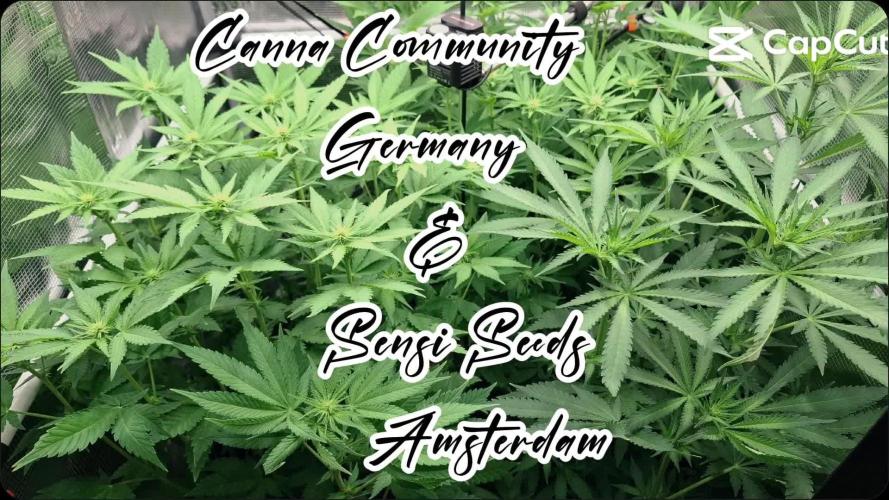
Ende Woche zwei der blüte und auf geht's in die dritte Woche. Sie entwickelt sich prächtig !!!

Likes
38
Share


@MadeInGermany
Follow
Info:
Unfortunately, I had to find out that my account is used for fake pages in social media.
I am only active here on growdiaries.
I am not on facebook instagram twitter etc All accounts except this one are fake.
Have fun with the update.
Hey everyone 😊.
This week has continued to develop great :-).
It was poured once with about 200 ml because it is still under the hood with very high humidity that is enough :-).
Next week the hood will be opened bit by bit so that it can get used to the surroundings :-).
Otherwise the tent was cleaned and the humidifier refilled every day this week.
I think I'll repot next week and then start training :-).
Until then, I wish you lots of fun with the update.
Stay healthy 🙏🏻 and let it grow 👍
You can buy this Strain at :
https://www.zamnesia.com/de/4532-zamnesia-seeds-gorilla-glue-feminisiert.html
Type:
Gorilla Glue
☝️🏼
Genetics:
Chem's Sister x Chocolate Diesel
50% Sativa/50% Indica
👍
Vega lamp:
2 x Todogrow Led
Quantum Board 100 W
💡
Bloom Lamp :
2 x Todogrow Led
Cxb 3590 COB 3500 K 205W
💡💡☝️🏼
Soil :
Canna Coco Professional +
☝️🏼
Fertilizer:
Green House Powder Feeding
☝️🏼🌱
Water:
Osmosis water mixed with normal water (24 hours stale that the chlorine evaporates) to 0.2 EC. Add Cal / Mag to 0.4 Ec Ph with Organic Ph - to 5.5 - 5.8 .
Likes
18
Share


@BigDaddyK
Follow
keep an eye on ph and EC
i top up approx 2ml of A+B per day
I think she finally stopped stretching , this is when I start to lower the base nutrients , one of them is a little behind the other , she has some wicked buds forming
Likes
23
Share


@Susquihanna
Follow
OMG! Miss Gorilla was showing her strength this week and grew a whopping 9 inches this week. The sun is shining and she is drinking 1 gallon of nutrients a day.
@Fastbuds website says, "Plant Appearance This lady likes to stay low and will usually grow to a height of 60-130cm. Her growth structure is short and bushy, thanks to her sativa dominance, and will grow one main central cola, with fat side branches all around. Once flowering starts, expect Gorilla Auto to fill out thick and fast, as she begins to pack on size, weight and go crazy with the trichome output. From seed to harvest she is ready in 9-10 weeks, where she will finish with a short and fat appearance."
So far, Miss Gorilla is keeping up to her description.
I took a magnified picture and it shows me that Miss Gorilla will probably be in flower next week. It looks like she is in the beginning stages of flower.
@Fastbuds website said to, "add support around this strain, to help the side branches during the flowering stage" which I have done by LST with her side branchs. I have tied them down to allow light in and support growth.
I am feeding her 1 gallon on nutrients a day right now and @Fastbuds website said, She can take a big feed especially during week 3 and onwards." So, I am on target with that information.
I also have a pool umbrella protecting all of my plants from the direct sun.
As always, please comment and let me know what you think of Miss Gorilla.