






@DerTim
Volgen
Hallo liebe GrowDiaries-Community,
willkommen zu unserem wöchentlichen Update der Cherry Poppers und White Runtz!
Die Entwicklung im Zelt läuft absolut großartig und die Pflanzen sehen im Großen und Ganzen sehr gesund aus. Dennoch zeigen sich bei den White Runtz ein paar kleinere vergilbende Blätter (vermutlich leichte Calcium-/Magnesium-Themen), aber da wir uns in der finalen Phase befinden, greifen wir hier nicht mehr groß ein und lassen die Natur den Rest machen.
Wichtige Updates zu den Sorten:
* White Runtz: Die Intensität des Geruchs von der White Runtz hat sich noch deutlich verstärkt, ist sehr schwer und süßlich geworden. Sie legt einen fantastischen Endspurt hin und wird voraussichtlich in den nächsten 1 bis 2 Wochen geerntet.
* Cherry Poppers: Die Cherry Poppers hält sich geruchlich noch zurück. Sowie mit der Trichom Produktion. Jedoch scheint sie augenscheinlich aktuell die gesündere von beiden zu sein und hat im Vergleich zur White Runtz noch etwa 3 bis 4 Wochen längere Blütezeit vor sich.
Danke fürs Reinschauen, wünsche euch allen weiterhin viel Erfolg beim Growen! ✌️

shorts_status_processing


@DjDaveAtHome
Volgen
Blueberry Headband (2) and a Amhest Sour Diesel (1)from Humboldt Seeds.
https://www.dinafem.org/en/blueberry-headband/
https://www.dinafem.org/en/amherst-sour-diesel/
Lighting
https://www.horticulturelightinggroup.ca/products/260w-qb-v2-led-kit
DWC Nutients
https://generalhydroponics.com/floraseries
FloraGro
FloraBloom
FloraMicro
Diamond Nectar
https://generalhydroponics.com/diamond-nectar
Cal Mag
https://generalhydroponics.com/calimagic
SuperThrive
https://superthrive.com/
Epsom salts


@BrigadeDesTerps
Volgen
Jour 76
Et commence à développer leur pistils
Les plantes sont saine et prennent beaucoup de hauteur je dois en palisser quelques une
J’ai fais un thé de compost oxygéné pour les booster pour la floraison
Recette :
5g cendre coque de ricin
25g biochar
5 gr levure de bière
4gr pollen d’abeille
7gr ortie micronisé
5gr spiruline
10gr tourteau de karanga
8gr Kelp
20gr zéolithe chabasit
5gr de consoude
3gr hydrolysât de Kelp
5gr vers de farine
12,5gr bactérie soluble
5gr levure saccharomyces cerevisae souche myco 6420
12,5gr de prêle sauvage sécher
125gr lombricompost
2gr big foot mycorhize gold
Mycorrhizae (400 propagules per gram)
Endomycorrhiza
Glomus aggregatum -100 propagules/gram
Glomus etunicatum – 100 prop/gram
Glomus intraradices – 100 prop/gram
Glomus mosseae – 100 prop/gram
Bacillus subtilis – 350,000,000 cfu/gram
Bacillus licheniformis – 200,000,000 cfu/gram
Bacillus megaterium – 200,000,000 cfu/gram
Bacillus simplex – 200,000,000 cfu/gram


@Colibri_grow
Volgen
Caminhando para os dias desta jornada, agora levanso somente com água.. Tive algumas dificuldades com a HR no grow devido a alta umidade em minha região que chega a 100%.. Vários dias a HR ficou entre 80 a 90% e infelizmrnte o aparelho desumidificador foi insuficiente para manter o nível ideal para o cultivo, devido a esse fator tive problemas com mofo nos em alguns poucos buds, por sorte não se espalhou para todos os buds e todas as plantas, foram apenas algumas flores que apresentaram os sintomas e logo cortei por prevenção...


@MicroHidroGrow
Volgen
Día 29. Tuve que atar las plantas porque seguían estirando, y estaban demasiado cerca de la luz. También subí la luz 25cm. que es lo único que me quedaba. Volví a agregar bud blood, ya que leí que suma mucho en la resina. Subí bastante la EC de la solución esperando ver hasta donde aguantan, ya que están comiendo mucho y rápido, al punto que tuve que subir la capacidad del depósito a 16 litros. Seguiré actualizando, pero veo que están tardando más de lo esperado, ya que de ser 6, debería estar mas avanzado. Voy a seguir esperando a ver que pasa.
Día 32. Las plantas están empezando a engordar. Por el momento se ven muy llenas de flores y brotes que van creciendo sin parar. Empiezo a pensar que van a ser demasiado tupidas, por lo que voy a necesitar manejar muy bien la humedad. Al momento creo que deben faltar 3 o 4 semanas, lo que me pone en duda si la variedad es la que puse. Probablemente me dé cuenta más al final, ya que hay una pequeña posibilidad de que se me hayan mezclado las variedades, y estas sean sweet tai. Espero que no, ya que esas últimas toman entre 10 y 11 semanas. Voy a esperar al final de la semana, que ya seguramente voy a poder hacer un estimado mejor sobre cuanto falta. Me interesa mucho, ya que no quiero adelantar el uso de overdrive, porque no sé si puede haber efectos negativos. Por el momento veo que hasta las hojas grandes estan pegajosas. Esto va a ser interesante.





@Ultraviolet_
Volgen
67 days since April 16th, 2026
We become aware at such times of man's wonderful ability to bring seemingly unrelated elements into harmonic balance, and receive a glimpse into a world where everything exists in conscious sympathetic attunement to everything else. When we listen to a piece of music that seems to strike a beautiful chord somewhere inside us, or view a painting that simply glows with harmonic awareness well executed, we probably do not spare much time to contemplate the wonderfully intricate combination of vibrations that our sensors make it possible for us to perceive. We tend to appreciate the relationship between the parts of something by an awareness of the harmony or dissonance of the whole. This ability enables us to say "what a beautiful house!" instead of "analysis has proven that this collection of building materials exhibits certain elements of harmonic proportion." While this ability to instinctively appreciate the beauty of true harmony has an important role to play in evolution, a more analytical understanding of the laws involved can be most useful. This is especially so if we wish to create works of art where each part exists in true harmony, not only with the other part of that particular whole, but with the universe within which the creator and the created exist.
Everything vibrates. From the most dense matter to the most subtle cosmic rays, everything which our senses allow our thoughts to become aware of, can be specified in terms of wavelength or frequency of vibration. These two terms define the same thing, but from different points of view.
The following are the approximate wavelengths of various energy carriers:
Cosmic rays 0.000,000,001 mm
Gamma rays 0.000,000,1 mm
X rays 0.000,500 mm
Ultraviolet rays 0.003 mm
Visible light 0.006 mm
Infrared 0.01 mm
Sound waves 1 meter
Radio waves 300 meters
Violet light 400 nm to 450 nm
Blue light 450 nm to 500 nm
Green light 500 nm to 570 nm
Yellow light 570 nm to 590 nm
Orange light 590 nm to 610 nm
Red light 610 to 700 nm
1 nanometer (nm) = 0.000,000,1 cm = 1/10,000,000 cm
If a guitar string is plucked and we hear a sound, it is not too difficult for the human mind to associate this sound with the vibration of the guitar string. With color it is quite different. It is difficult for us to conceive that the color of a substance is not an inherent property of the substance itself, but an indication picked up by our senses of that substance's ability to absorb or reflect the light which happens to be shining on it at that moment. Neither the matter nor the light is colored. What happens is that the brain learns to differentiate between the frequencies reflected or transmitted by the substance the eyes are focused on. The same thing happens with sound. When we say "Oh! Listen, they're playing my favorite song," what we really mean is: "My brain has stored within it a particular pattern of frequencies. I have compared the new information being received with this stored pattern and have deduced the answer that the two patterns are similar within certain specified tolerances." The 'pleasure' involved could have something to do with our running the pre-recorded pattern at the same time, in 'sympathy' with the new pattern as it is received.
The word sympathy describes very well our ability to appreciate color and sound. It also describes the reason behind certain elements of harmony. For instance, if a substance vibrating at 100 cycles per second (tone 1) is in the proximity of another substance vibrating at 200 cycles per second (tone 2), we could perceive, if we had the right equipment, a certain sympathetic relationship between the two.
We will see from this that there is a uniform doubling of the first tone seen in the second. At various points along the waves, the two are the same in amplitude. At other points, they are at opposite poles to each other. This doubled frequency has more points of similarity to the original than any other frequency except the original itself. If the equipment we had available for measuring these two frequencies was a soundboard amplifier and a pair of ears, then we would hear what would sound to us like one tone. If we had the opportunity to hear one at a time, we would hear that although they sound the same, one is higher in pitch than the other. This characteristic of 'the same but different in pitch', musicians have called the octave. Any two tones produced where one has exactly doubled the frequency of the other is called an octave. Speaking in ratios, an octave would appear then as the ratio 2:1 or 1:2, depending on whether we are talking of an octave up or down.
A single note produced by almost any instrument will contain more than one wavelength or frequency. It will have a dominant frequency, the wavelength of which we would call the note's 'fundamental' or 1st harmonic. It will also have a varying number of upper harmonics, gradually fading in intensity into infinity or silence.
Natural harmonics always have the same pattern of intervals between them. The interval between the 1st and 2nd harmonic is a perfect octave; between the 2nd and 3rd a perfect fifth; between the 3rd and 4th a perfect 4th; and so on, the intervals becoming smaller and smaller until they lose any relationship with the western 12 tone scale as it exists at the moment. Just as an octave has certain elements of sympathy with its fundamental, so some intervals have been noted to be more perfectly in sympathy with the fundamental than others. The ratio of the 'perfect 5th' or interval of 7 semitones, as it occurs in the harmonic series, is 3:2 or 2:3, while that of the 'perfect fourth" is 4:3 or 3:4. All the tones in the western 12 tone scale can be expressed in terms of the ratio between the upper tone and its fundamental. This would seem to be an ideal way of generating a scale from any given fundamental and several attempts have been made to do this, the Pythagorean system being probably the most well known. Although when working with a single tone instrument playing on its own, the Pythagorean formula works wonderfully well, if we had several instruments tuned this way together and asked them to play almost any western music, we would find that at times they sounded quite out of tune to each other.
The lack of flexibility of the various scale systems based on the harmonic series has led to what is known as the 'tempered' scale. This uses as its primary unit of interval the ratio of the octave or 2:1. It then proceeds to divide the interval between any fundamental and its upper octave into 12 smaller intervals by applying the ratio: two to the one-twelfth power, to one (21/12:1). This equals 1.059463094, so by multiplying any frequency by this number, we will obtain the tempered semitone next up from our fundamental. We will also find that any tone twelve semitones up from any other tone, in a scale generated in this way, will have exactly double the frequency.
If we took the note middle C on a piano and halved the wavelength, we would have the note C one octave above. If we halved this, we would have the C above, and so on. However, within about 6 octaves, we would find that although a 'sound' was being produced, no human ear could perceive it. If we kept on going, halving and producing upper octaves of our fundamental C, we would proceed through the infrared band, into the visible light spectrum. If we happened to be outside during the day, we would, for one octave only, see the note C with our eyes. The next octave above would already be in the ultraviolet band, and outside the eye's sensitivity range. If we can think of color as being an indication of a substance's vibratory rate or wavelength, we may begin to see a relationship that could exist between the color and sound spectrums.
The logical extension of what has so far been said is that there exists a scale in the color spectrum that corresponds exactly to the scale in the sound spectrum, each color tone being an octave of the equivalent note in the sound range.
This is not the end of the story but only the beginning. If we can for the moment accept that any wavelength in one band has upper and lower octave stretching out to infinity, then the next question is 'fine, but what shall we use as our fundamental? A particular color? A particular sound frequency?' The musicians among us will probably say 'A 440'. This means that the note A should vibrate at 440 Hertz, or 440 times per second. They would tell us that this is standard pitch has been adopted by most orchestras around the world; pianos are tuned to it, instruments are constructed to formulas based on it, and so to them it would probably seem the most appropriate place to begin. Some of these musicians may know of the battle that is still raging with regards to this being the standard, but few would know why A = 440 Hz was chosen except that it worked when it was set to be a suitable compromise between the many different pitches in use at the time.
432 Hz is said to be mathematically consistent with the patterns of the universe. Studies reveal that 432 Hz tuning vibrates with the universe’s golden mean PHI and unifies the properties of light, time, space, matter, gravity, and magnetism with biology, the DNA code, and consciousness. When our atoms and DNA start to resonate in harmony with the spiraling pattern of nature, our sense of connection to nature is said to be magnified.
Another interesting factor to consider is that the A=432 Hz tuning correlates with the color spectrum, while the A=440 Hz is off. Audiophiles have also stated that A = 432 Hz music seems to be non-local and can fill an entire room, whereas A=440 Hz can be perceived as directional or linear in sound propagation.
Once you adopt the idea that sound (or vibration in general) can have an equalizing and harmonizing effect (as well as a disturbing effect), the science of harmony can be applied to bring greater harmony into one's life or tune to specific energies. There is a form of absolute and relative harmony. Absolute harmony can, for example, be determined by the tuning of an instrument. The ancients tuned their instruments at an A of 432 Hz instead of 440 Hz - and for a good reason. There are plenty of music examples on the internet that you can listen to in order to establish the difference for yourself.
Attuning the instrument to 432 Hz results in a more relaxing sound, while 440 Hz slightly tenses up the body. This is because 440 Hz is out of tune with both macro and micro cosmos. On the contrary, 432 Hz is in tune. To give an example of how this is manifested microcosmically: our breath (0,3 Hz) and our pulse (1,2 Hz) relate to the frequency of the lower octave of an A of 432 Hz (108 Hz) as 1:360 and 1:90.
It is interesting to note that 432 Hz was the standard pitch of many old instruments and that it was only recently (19th and 20th century) the standard pitch was increased. This was done in order to be able to play for bigger audiences. Bigger audiences (more bodies) absorb more of the lower frequencies, so the higher pitch was more likely to “cut through”. One of the oldest instruments of the world is the bell ensemble of Yi Zeng (dated 423 BC), tuned to a standard F4 of 345 Hz, which gives an A= 432 Hz. The frequency of 345 Hz is that of the platonic year! Similarly, many old organs are tuned in A=432 as well; for example, St. Peter’s Capella Gregoriana, St. Peter’s Capella Giulia, S. Maria Maggiore in Rome.
Maria Renold’s book “Intervals Scales Tones and the Concert Pitch C=128 Hz” claims conclusive evidence that 440 Hz and raising concert pitch above scientific “C” Prime=128 Hz (Concert A=432 Hz) disassociates the connection of consciousness to the body and creates anti-social conditions in humanity.
The difference between concert pitch A=440 Hz and Concert A=432 Hz is only 8 cycles per second, but it is a perceptible difference of awareness in the human consciousness experience of the dream we share called existence.


@SubliminalSociety
Volgen
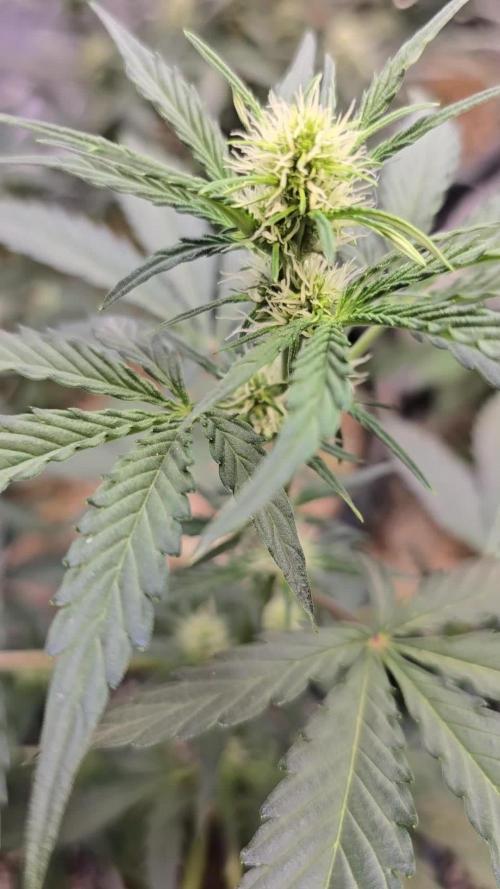
Act III - Week 11: The Dame Finally Breaks Bad
Hallelujah, folks! Our dame finally saw the light – or rather, the lack thereof. Flowering has begun, a slow burn that's more like a smoky confession than a fireworks display. Big shoutout to all the growmies out there who kept me calm during this green-fingered fiasco.
Still, gotta be honest, this is some seriously late blooming for an "auto." My outdoor non-autos have also started flowering. Looks like this dame had her own schedule, one that wouldn't be rushed by sunshine or a well-timed trim.
Growth slowed down this week, a respectable 4cm. She's putting all her energy into those precious flowers. Speaking of which, tiny shoots have started popping up all over – another sign our dame's finally embraced her floral destiny. Rain and sunshine, both in abundance this week, seem to have given her the push she needed.
But the question remains, folks – will this late bloomer be worth the wait? Stay tuned for Act III, where the stakes are higher than a penthouse with a bad view, and the harvest moon hangs heavy in the smokey air.



@ChronicNerve
Volgen
This plant is shaping up well with large node spacing and good uniformity. Moved from seedling lights to Quantum Boards with no problems. Not much watering needed at this stage.


@GmansGarden
Volgen
Sept 7- I decided to Set the Jager Kush to Flower I defoliated a few Fan Leaves and Made a tea Out of the Leaves. I am Hoping for a Girl. Wish Me Luck Fellow Growers 🤞
Sept 9 - The Bud Sites are Foliating Well and Getting Larger
Sept 11- Topped Again
The Jager Kush Is Very Strong Smelling Super Skunky Hoping its a Girl she would be Killer


@DieselKush
Volgen
Oct.29 - We transplanted the girls into soil since they are moving into vegetation phase
Nov.4 - Watered each plant 250mL, 0.25mL of each nutrient for each girl


@blazin_skywalker
Volgen
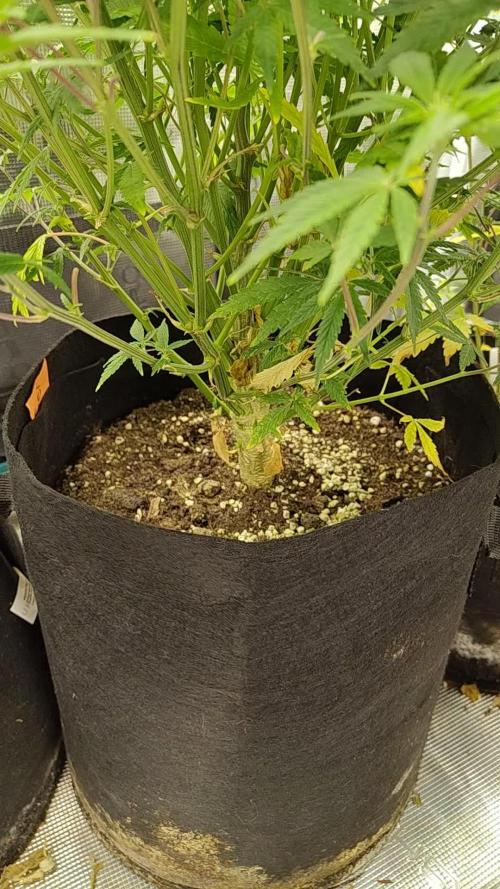
I guess I can't put it off any longer.... This plant officially needs some yoyos. She can no longer hold herself up, and I have too many colas leaning against the wall.
These buds are exquisite! The contrast of the trichomes against the purple bud is stunning! I want to make it my mission to grow all the purple FastBuds strains! They're just breathtaking!
The smell in this tent is phenomenal. If only I could upload the smell! 🍇🍇🍇


@undermink
Volgen
She's awesome. So bushy and strong - I can't belive it 😻 No wonder this strain won so many prices in the past...Love it! It's one of my favorites.


@Sators
Volgen
Day 71 – Weathering the Storms, Rooted in Resilience.
This past week was a true test of strength. My lady was caught in a full-on storm – strong winds, pouring rain, and yes… she even tipped over. But like a true warrior, she bounced right back once I repositioned her in a more stable spot. Despite the harsh gusts, she remained under open skies, unfazed and proud.
Now standing firm at 80cm, she continues to push into flowering with grace. The Plagron Bat Guano applied 10 days ago clearly kicked things into motion, as the buds are swelling up nicely. Seeing that, I didn’t hesitate to apply another round of top-dress today – just enough to maintain steady phosphorus levels and support those forming colas without overfeeding.
My approach hasn’t changed: a low-effort, fully organic outdoor grow that relies on nature as the main partner. Pure, pH-balanced tap water (oxygenated, of course) and a living super soil continue to do the heavy lifting. No tents, no fancy equipment, no synthetic nutrients – just soil, sun, and patience.
This FastBuds CBD strain continues to impress not just with structure and health, but with its incredible resilience. Even after tipping and being battered by the elements, she’s standing tall and happy.
Every day closer to harvest makes this journey more rewarding – and I can’t wait to craft some beautiful CBD oil from this natural survivor 🌿💚


@Arcadium
Volgen
Weathers been great, cool nights, but not much rain. Lab Serum has been amazing, zero sign of PM. Did a quick addition of BT as well, did see some caterpillars, nothing major though. Probably still a week or 2 of neem before i'll stop entirely and rely only on lab serum. Her leaves look so shiny and healthy with that lab serum. Shes loosing virtually no leaves, well fed, super impressed with how well this Hugel has kept her happy!
Shes full into flower now, but will still be another 5-6 weeks. She's absolutely massive now, i need my ladder daily for inspections, must be nearly 9 feet.


@Afterglow
Volgen
Начинаю растить новый сорт моим собственным методом. Я его называю корона, хотя больше подходит название Multiple Symmetric Lollipopping. Это что-то среднее между Main Lining, Low Stress Training и SoG. Суть заключается в том, что мы делаем Topping выше 4-го этажа и затем все 8 основных веток разводим по сторонам. Четыре нижние ветки по диагонали, четыре верхние крест-накрест. В итоге получается эдакий равномерный круг веток, растущих на одной высоте, так как мы легко можем контролировать высоту каждой ветки. Принципиально можно и 10 и 12 веток делать, но мне хватает 8. Желательно иметь широкий горшок, чтобы было куда разводить ветки. Надеюсь когда-нибудь появится новый метод MSL с моим авторством.
Итак, взял две семечки, а победитель по росту переедет в большой горшок.
Гроубокс у меня самодельный. Две лампы HLG 100, но по факту обе работают по 50ватт. Встроено два фильтра и два канальных вентилятора. Один работает постоянно, второй включается автоматически при превышении верхнего порога температуры. Дверки на защелках, проклеены уплотнителем чтобы не пробивался свет и запах. Внутррение габариты от лампы ШДВ - 67х48х68 сантиметров. Помещается два куста, но я предпочитаю растить только 1.
Как проращиваю семена?
1. Они всегда хранятся в холодильнике. При попадании в теплую и влажную среду семена получают сигнал к росту и быстрее всего прорастают, буквально за 14-16 часов.
2. Берем нужные семена и кладем в теплую воду (18-22 градуса Цельсия) на 3-4 часа. Это нужно, чтобы скорлупа размягчилась, а семечко согрелось и получила достаточно влаги.
3. Слегка маникюрными щипчиками расщепляем скорлупу. Делается специально, чтобы как можно раньше корешок начал получать воздух. Чем быстрее раскрывается скорлупа, тем быстрее начинает прорастать корень и уменьшается риск загнивания.
4. Садим в таблетку или сразу в готовый субстрат. Обычно я сажу сразу в готовый субстрат, но в этот раз решил попробовать в торфяной таблетке, чтобы выбрать победителя по активности роста.
Как я готовлю кокосовый субстрат?
1. Я никогда не использую старый субстрат. Во-первых, я применяю микоризу и множество других грибков и бактерий, которые для маленьких ростков будут слишком концентрированными и могут навредить. Во-вторых, в старом кокосе очень много старых корней, которые обязательно будут гнить. С одной стороны это хорошо, но по факту это приводит к загниванию субстрата и образованию плесени.
2. Беру половину брикета, развожу в воде, промываю в проточной воде (попеременно горячей и холодной) пока не вымоется вся морская соль и затем размешиваю с вермикулитом и перлитом.
3. Заливаю полученный субстрат на 15-20 минут удобрением Cal-Mag (1000 PPM), чтобы субстрат набрал катионов кальция и магния, иначе первую неделю полива кокос будет забирать эти вещества из полива, а растение будет голодать. Если измерить PPM воды после внесения Cal-Mag и через 20 минут, то увидите, что PPM упадет до 600-700 единиц. Это кокос вобрал в себя соли.
4. Заливаю удобрением, в случае трех-компонентного Grow-Micro-Bloom в соотношении 3-2-1, PPM 1000. Также оставляю на 15-20 минут. Нужно это затем, чтобы кокос теперь равномерно вобрал в себя другие катионы (железо, цинк, медь, калий, ну и азотистые соединения, как то мочевина и аммоний). То есть мы целенаправленно вымываем излишки кальция и магния.
5. Затем, уже поливаем нашим удобрением с PPM 600-700 чтобы чуток снизить концентрацию.
6. В этот готовый буферизированный субстрат потом и попадет пророщенное семечко.
Как я поливаю?
В течение первых трех недель я поливаю через день. И не важно, высох субстрат или не высох. Кокосовый субстрат это позволяет. Далее приходится поливать каждый день, потому что развитая корневая система осушивает весь субстрат за сутки под чистую. Никогда не поливаю чистой водой - это только нарушает PH внутри субстрата и приводит к стрессу растения. Если нужно промыть субстрат, то готовится несколько поливов с нужным удобрением. Вспомните про то как после промывки падает PPM. Вот тоже самое происходит и при поливе чистой водой: питательные элементы вымываются с кокоса и когда вы начинаете "кормить" растение, оно голодает, потому что кокос все отбирает, чтобы делиться "потом", когда "насытится".
PH на веге всегда около 5.6-5.8, на цветении 5.8-6.1. PPM стараюсь держать на уровне 700. На цветении 1200-1400. Если вы дочитали до этого момента и увидели страшную цифру в 700 PPM, то на самом деле ничего страшного в этом нет. Если вы возьмете обычную землю, разведете водой и померяете PPM, то он там будет куда более высокие показатели. На самом деле растение способно жить даже при PPM в 5000 единиц. Поливать растение с PPM 300 - это слишком бедная смесь. Как правило, все руководства ориентируются на земляной грунт, а производители страхуются и дают заниженные нормы, чтобы покупатели случайно не сожгли свои растения. Но если если у вас есть PH и TDS измерительные приборы, то вы смело можете щедро кормить свое растение, а оно вам ответит буйным ростом и плотными шишками.
Всегда руководствуюсь золотым правилом проверки дренажа:
PPM растет PH падает: у растения несварение и что-то оно не может усвоить.
PPM падает PH растет: растение голодает, либо нарушен ионно-катионный баланс.
PPM стоит PH растет: все идет хорошо.
В каждом случае нужно понимать что было сделано ранее и корректировать действия.
Итак:
19.01.2021, в 12:00 замочил семечки в воде
19.01.2021, в 16:00 расколол аккуратно семечки и посадил в торфяную таблетку
19.01.2021, в 23:00 уже одна семка начала вылезать из торфа, хотя утапливал. И это всего лишь прошло 7 часов. Чувствую кандидат на пересадку уже показал себя.
20.01.2021, в 16:00 эта же семечка уже отрастила корешок и полностью показалась из торфа.
21.01.2021, в 10:00 выскочило из торфа и готова расправить листики. Вторая семечка пока сохраняет молчание.
21.01.2021, в 17:00 росток вот вот начнет разрывать скорлупку чтобы выпустить первые семядоли. Перенес в гроубокс под лампу.
23.01.2021, в 10:00 умер... так и не увидев свет. А вот её младшая сестра неожиданно вылеза из торфа и вытянулась за ночь на 2 сантиметра, пока были отключены лампы. Пришлось ей вручную снимать скорлупу.
23.01.2021, в 15:00 младшая сестра уже показала хвостик корня с другой стороны торфяной таблетки. Завтра надо будет пересаживать уже в нормальный горшок
24.02.2021, в 14:00 девочка переехала в новый дом. Первые листики стали размером с семядолями. Поздравления принимаются, мы проросли.


@Natrona
Volgen
RQS Titan F1 week 5
Hello friends and followers,
2/25 This has been an exciting week. My Titan girls started flower 🌼. T3 in the 3-gallon air pot is larger at 6.5 inches. Last week I noticed her new growth was getting long and thin. A sure sign the pistils will emerge in a day or two. T3 started flower 🌼on 2/25.
2/26 Surprise surprise, T3 stretched an inch overnight and T2 about a.5 inch. That stretch meant I had a busy plant workday ahead.
First, I defoliated T3 since I could see what I had to work with. Then because I’ve been following @yan402 on his Titan grow, I said I was going to top her. He said its ok if done correctly and at the right time. Well, fingers crossed 🤞, I hope it was not too late or cut in yhe wrong place since T3 was already in flower. Her short (.75-1” long) stems are so close to the stem, it was difficult getting the tie down pins placed.
With T2’s stretches her tippy top is just peeking above the copper pot rim. She is towering 😅 at 2.5 inches. T2 was defoliated on 2/26 as well. Her defoliation pictures above show how many I was able to trim off 7 and the leaf relative size. T2’s largest leaf is the size of a quarter and the smallest set I cut off, about the size of a penny. I keep supplementing and folar spraying with Cal-mag but the internodal chlorosis is still visible. I think Teapot gal (T2) has a copper excess.
Slowed Growth,
Fewer branches
Internodal Chlorosis
Stumpy roots (I won’t see this until I harvest and reveal the root ball)
Given these symptoms of copper excess, and that RQS Titan are F1 hybrids and should be stable, I believe the height and the health differences are attributable to the copper wire teapot. They are in the same soil, same tent environment, same nutrient solution, same light, same everything. As I stated in previous discourse, I expected the overall plant to be smaller than T3 simply based on the pot size but did not expect to see such size differences so early, not to mention the nutrient issues. How I wonder? The copper wire is separated from the plant and soil by coco liner (which should be neutral, then coffee filters because I thought the soil would was out). Then the soil and plant.
T2 is towering at 2.5 inches and started flower on 2/29. I expected a delay in her flowering time (4 days after T3) since she was transplanted to the teapot when T1 failed to thrive (maybe also the teapot cause?). Any time you train your plants, the stress causes delays in flowering then harvest.
I defoliated T2 on 3/1 day 30. The pictures after defoliation show the tight node structure with 3 or 4 nodes crammed in only 1.5 inches of the main stem. Sheesh.
So, as we enter March, we are off and growing buds. RQS says harvest 70-75 days or 40-45 days of flower. My calculations – harvest will be April 13-18. Be sure to come for my tea
shorts_status_processing


@Silverback_Guerilla
Volgen
1/14:
This morning, I did a foliar application of big bloom and fulvic acid, then about 5 hours later I watered them with about a half-gallon of rainwater each and added armor si, humic acid, endoboost myco/tricho, liquid molasses, and a bunch of cal-mag. Today, I also I wired up and mounted my new samsung sun board strips (660nm/730nm) and my Solacure FlowerPower UVB fixture.
I'm running the deep red/far red bud boosters a few hours per day right now, but will run them for the entire photoperiod once I start flowering them. I'll run the UVB for 4 * 15-minute sessions a day for the full flowering cycle, and if they don't protest too much I'll increase each session by 5 minutes and evaluate again. Some strains are more forgiving than others and I've got 5 different strains in this space...so really not sure much time I'll get away with exposing them to the deadly rays without damaging them too much...😈
1/15:
I received one of the rapid led/growmau far red initiator pucks today. With the placement of my UVB light, I'm realizing I'll need another far red puck to have even and intense far red coverage, so I'm ordering another with Prime delivery and waiting to start flowering until I receive it.
I sprayed them down really well with ph adjusted rainwater tonight to rinse off nutrient build-up from foliar applications.
1/16:
I'm really excited to try flowering under 14/10. I grew photos indoors on an off for 15 years before I semi-retired. If I added up all the additional flowering time I could have done through the years if LED technology existed, I'd have had an extra truckload of bud to smoke.
I did another application of Axiom Harpin a|b Proteins this evening, right before dark. I'm expecting a big growth burst this week, leading up to the flower stretch. I really need them to trigger under 14/10 within 4 or 5 days🙏
...if not, I'll switch to 13/11 and wait a few more days🙏😟..if still no pistils are poppin, I'll go to 12/12 and chalk it up as bad luck or varietal indifference to Pr and Pfr manipulation.
1/17:
I fed each of them about 3/4 gallon of full strength veg nutes. This will be the last. I'll go with half-strength veg and half-strength bloom for a week, then go with full strength bloom nutrients until I start flushing them in 6-8 weeks.
1/18:
I installed the second far-red flowering initiator today and got all my timers configured for flowering:
=========================================
timer#1 - power strip with qb's and red boosters
10:00am -12:00am
timer#2 - (dual/independent setting)
sideA- 3-way cube with uva bars
10am - 3pm
7pm - 11pm
sideB- flowerpower uvb
1pm - 1:15pm
4pm - 4:15pm
7pm - 7:15pm
11pm - 11:15pm
timer#3 - far red pucks
11:00pm - 12:15am
timer#4 - sub-canopy tube
10am - 1pm
3pm - 6pm
8pm - 11pm
========================================
I also did some testing on the timers and sealed myself into the closet to check for any light leaks. All good.👌
1/19:
Tonight is their first long night. It's ON!👍
1/19:
Looks like the FIM job didn't take on one of them..but she's got perfect symmetry. WIll probably have to just top her again next week...gonna be a tall one I think. Tonight is their first long night. It's ON!👍
1/20:
I watered them today with about a half gallon each. I'm seeing calcium and magnesium deficiences here and there, so added some boomerang and heavy cal-mag-Fe along with liquid molasses, humic acid, and endoboost myco. I also foliar fed with big bloom and fulvic acid.
That's it for week 4-
