


Likes
Comments
Share


@Cannibalgardens
Follow
Dam the smell coming off the tropicanna cookies is bomb a very tangerine 🍊 smell.. The banana runtz is more fruit yet skunk overtone ... Both are growing great besides one issue I moved my light down 4 inches over the two and got some slight burning on a few leaves so moved up again.. They both have been given minimal nutes and a microbial mass additive since before flowering .. The next three weeks will be awsome as the buds spread and build size ..



Likes
21
Share


@Cardiffgrown
Follow
All looking healthy the one strawb banana that didn’t germ ended up sprouting out the soil but I think the shrooms claimed the soil first my bad fast buds smashing it as usual 🤟giving them 24hrs of darkness trying to harden them off for outdoor end of this week hopefully waiting on last bits to arrive for the soil
Likes
6
Share


@Skunk_Life85
Follow
I harvested her today, the trichomes were to my liking. She is STINKY, she is definatly taking after her diesel heritage, granted, she does have a super fruity tropical smell. She developed some purple tinges to the calix with the lights out temp in the 60's. Super starchy, and lanky. She needed support 3 weeks into flower. The buds are fat and solid. There was some foxtailing at the end, but its expected. She is super frosty and I'm happy with the outcome thus far. I'm trying out whole plant hang drying instead of individual branch hanging. Definatly saving me some time.

Likes
35
Share


@valiotoro
Follow
I'm gonna need a parachute
Insane! One girl’s nearly finished, and the other two are in that last push.

Likes
14
Share


@madlangs
Follow
All going very well not a single problem throughout the grow. Finally finished stretching
14.1.24
Top feed 1.5L each
10ml Pk 5-8
4ml/L Bio heaven
4ml/L Acti Vera
2ml/L alg a mic
1ml/L topmax
1ml/L Fish mix
Recharge 4 spoons
Ph6.1
17.1.24
Dos si dos front 102cm
Mimosa 71cm
Dos si dos 86
Runts on middle right 73
Far right runts 68
Far left runts 110 before supercrop


Likes
23
Share


@adam_pawloski87
Follow
Today is day 71 for these ladies and they are doing just amazing! Stacking up densely with a Very sweet smell , I still get hints of vanilla ! Not to much longer to go these girls few more weeks an they should be done! Stay tuned for next week ! ✌️
Likes
73
Share


@Roberts
Follow
Cookies and cream auto is growing great. She is bulking and smelling and looking good. Gonna sit back and let her finish under the Medic Grow Mini Sun-2. Thank you Medic Grow, and MSNL Seeds. 🤜🏻🤛🏻🌱
Thank you grow diaries community for the 👇likes👇, follows, comments, and subscriptions on my YouTube channel👇. ❄️🌱🍻
Happy Growing 🌱🌱🌱
https://youtube.com/channel/UCAhN7yRzWLpcaRHhMIQ7X4g


Likes
44
Share

@Roberts
Follow
Bubba Kush Mintz great great. She has some nice dense looking colas on her. Lots of frosty goodness awaits. She will be going to ph water in a few days. Then the next update will be her harvest time. The grow has gone well, Bd now time to reap the rewards. Thank you Aeque Genetics, Athena, and Spider Farmer. 🤜🏻🤛🏻🌱🌱🌱
Thank you grow diaries community for the 👇likes👇, follows, comments, and subscriptions on my YouTube channel👇. ❄️🌱🍻
Happy Growing 🌱🌱🌱
https://youtube.com/channel/UCAhN7yRzWLpcaRHhMIQ7X4g


Likes
55
Share


@Ultraviolet
Follow
2nd net is up. Early bud formations are promising. holding up to the extremes pretty well, some leaves taking minor damage, but overall, she is holding up, gave her 1 night at 50F see how she would react, stressful. Not advised as it messes with her metabolism, but I want to see if it triggers any anthocyanin response. Love to see her purp up but no signs yet. Remember, For every molecule of glucose produced during photosynthesis, a plant needs to split six molecules of water. This process provides the hydrogen needed for synthesizing glucose and other organic compounds, while oxygen is released as a byproduct.
Homework.
If Rubisco activity is impaired and it cannot properly function or regenerate its substrate, the plant's leaves are likely to turn a pale green or lime green, a condition known as chlorosis. Essentially, Rubisco activity is highly regulated and susceptible to various environmental and metabolic factors that can cause it to become inhibited, leading to an apparent failure in RuBP regeneration due to a lack of consumption.
Rubisco regeneration is intrinsically linked to nitrogen supply because Rubisco is a major sink for nitrogen in plants, typically accounting for 15% to over 25% of total leaf nitrogen. The regeneration phase itself consumes nitrogen through the synthesis of the Rubisco enzyme and associated proteins (like Rubisco activase), and overall nitrogen status heavily influences the efficiency of RuBP regeneration. RuBisCO is a very large enzyme that constitutes a significant proportion (up to 50%) of leaf soluble protein and requires large investments in nitrogen. Insufficient nitrogen supply limits the plant's ability to produce adequate amounts of RuBisCO, thereby limiting the overall capacity for photosynthesis and carbon fixation. Maintaining the optimal, slightly alkaline pH is crucial for the proper function and regeneration of Rubisco. Deviations in either direction (too high or too low) disrupt the enzyme's structure, activation state, and interaction with its substrates, leading to decreased activity and impaired RuBP regeneration. (Lime/yellowing)
Structural Component: Nitrogen is an essential building block for all proteins, and the sheer abundance of the Rubisco protein makes it the single largest storage of nitrogen in the leaf.
Synthesis and Activity: Adequate nitrogen supply is crucial for the synthesis and maintenance of sufficient Rubisco enzyme and Rubisco activase (Rca), the regulatory protein responsible for maintaining Rubisco's active state. Nitrogen deficiency leads to a decrease in the content and activity of both Rubisco and Rca, which in turn limits the maximum carboxylation rate, Vmax, and the rate of RuBP regeneration Jmax, thus reducing overall photosynthetic capacity.
Nitrogen Storage and Remobilization: Rubisco can act as a temporary nitrogen storage protein, which is degraded to remobilize nitrogen to other growing parts of the plant, especially under conditions of nitrogen deficiency or senescence.
Nitrogen Use Efficiency (NUE): The allocation of nitrogen to Rubisco is a key determinant of a plant's photosynthetic nitrogen use efficiency (PNUE). In high-nitrogen conditions, plants may accumulate a surplus of Rubisco, which may not be fully activated, leading to a lower PNUE. Optimizing the amount and activity of Rubisco relative to nitrogen availability is a target for improving crop NUE.
Photorespiration and Nitrogen Metabolism: Nitrogen metabolism is also linked to the photorespiration pathway (which competes with carboxylation at the Rubisco active site), particularly in the reassimilation of ammonia released during the process.
To increase RuBisCO regeneration, which refers to the process of forming the CO2 acceptor molecule Ribulose-1,5-bisphosphate (RuBP) during photosynthesis, the primary methods involve optimizing the levels and activity of Rubisco activase (Rca) and enhancing the performance of other Calvin-Benson-Bassham (CBB) cycle enzymes.
Biochemical and Environmental Approaches:
Optimize Rubisco Activase (Rca) activity: Rca is a crucial chaperone protein that removes inhibitory sugar phosphates, such as CA1P (2-carboxy-D-arabinitol 1-phosphate), from the Rubisco active site, thus maintaining its catalytic competence.
•Ensure optimal light conditions: Rca is light-activated via the chloroplast's redox status. Adequate light intensity ensures Rca can effectively maintain Rubisco in its active, carbamylated state.
•Maintain optimal temperature: Rca is highly temperature-sensitive and can become unstable at moderately high temperatures (e.g., above 35°C/95F° in many C3 plants), which decreases its ability to activate Rubisco. Maintaining temperatures within the optimal range for a specific plant species is important.
•Optimize Mg2+ concentration: Mg2+ is a key cofactor for both Rubisco carbamylation and Rca activity. In the light, Mg2+ concentration in the chloroplast stroma increases, promoting activation.
•Manage ATP/ADP ratio: Rca activity depends on ATP hydrolysis and is inhibited by ADP. Conditions that maintain a high ATP/ADP ratio in the chloroplast stroma favor Rca activity.
Enhance Calvin-Benson-Bassham (CBB) cycle enzyme activity: The overall rate of RuBP regeneration can be limited by other enzymes in the cycle.
•Increase SBPase activity: Sedoheptulose-1,7-bisphosphatase (SBPase) is a key regulatory enzyme in the regeneration pathway, and increasing its activity can enhance RuBP regeneration and overall photosynthesis.
•Optimize other enzymes: Overexpression of other CBB cycle enzymes such as fructose-1,6-bisphosphate aldolase (FBA) and triose phosphate isomerase (TPI) can also help to balance the metabolic flux and improve RuBP regeneration capacity.
Magnesium ions, Mg2+, are specifically required for Rubisco activation because the cation plays a critical structural and chemical role in forming the active site: A specific lysine residue in the active site must be carbamylated by a CO2 molecule to activate the enzyme. The resulting negatively charged carbamyl group then facilitates the binding of the positively charged Mg2+ion. While other divalent metal ions like Mn2+ can bind to Rubisco, they alter the enzyme's substrate specificity and lead to dramatically lower activity or a higher rate of the non-productive oxygenation reaction compared to Mg2+, making them biologically unfavorable in the context of efficient carbon fixation. The concentration of Mg2+ in the chloroplast stroma naturally increases in the light due to ion potential balancing during ATP synthesis, providing a physiological mechanism to ensure the enzyme is activated when photosynthesis is possible. At the center of the porphyrin ring, nestled within its nitrogen atoms, is a Magnesium ion (Mg2+). This magnesium ion is crucial for the function of chlorophyll, and without it, the pigment cannot effectively capture and transfer light energy.
Mg acts as a cofactor: Mg2+ binds to Rubisco after an activator CO2 molecule, forming a catalytically competent complex (Enzyme-CO2-Mg2+). High light + CO2) increases demand: Under high light (60 DLI is a very high intensity, potentially saturating) and high CO2, the plant's capacity for photosynthesis is high, and thus the demand for activated Rubisco and the necessary Mg2+ cofactor increases. Mg deficiency becomes limiting: If Mg2+ is deficient under these conditions, the higher levels of Rubisco and Rubisco activase produced cannot be fully activated, leading to lower photosynthetic rates and potential photo-oxidative damage.
Optimal range: Studies show that adequate Mg2+ application can enhance Rubisco activation and stabilize net photosynthetic rates under stress conditions, but the required concentration is specific to the experimental setup.
Monitoring is key: The most effective approach in a controlled environment is to monitor the plant's physiological responses e.g., leaf Mg2+ concentration, photosynthetic rate, Rubisco activation state, and adjust the nutrient solution/fertilizer to maintain adequate levels, rather than supplementing a fixed "extra" amount.
In practice, this means ensuring that Mg2+ is not a limiting factor in the plant's standard nutrient solution when pushing the limits with high light and CO2.
Applying Mg2+ through foliar spray is beneficial to Rubisco regeneration, particularly in alleviating the negative effects of magnesium (Mg) deficiency and high-temperature stress (HTS). While Mg can be leached from soil, within the plant it is considered a mobile nutrient, particularly in the phloem. Foliar-applied Mg is quickly absorbed by the leaves and can be translocate to other plant parts, including new growth and sink organs.
Foliar application of: NATURES VERY OWN MgSO4 @ 15.0g L-1 in a spray bottle. For those high-intensity workouts when 1 meal a day is just not enough!
Foliar sprays are often recommended as a rapid rescue measure for existing deficiencies or as a supplement during critical growth stages, when demand for Mg is high. Application in the early morning or late evening can improve absorption and prevent leaf burn. The plant was getting a little limey yellow in the centre. Shortly thereafter, she was back in business, green mostly regenerated. The starting point [of creativity] is curiosity: pondering why the default exists in the first place. We’re driven to question defaults when we experience vuja de, the opposite of déjà vu. Déjà vu occurs when we encounter something new, but it feels as if we’ve seen it before. Vuja de is the reverse—we face something familiar, but we see it with a fresh perspective that enables us to gain new insights into old problems.
Confidence is evidence... nothing more. You are confident because you have driven 10,000 times, you are confident because you have spoken 10,000 times. People think confidence is a feeling, but it's not. If you want more confidence, then you need to create evidence, take more shots, collect more data, build more experiences, take more risks; fail, confidence doesn't come first; it is the reward you get for doing the work. no one else wants to do.
Likes
9
Share


@TrickzGrowz
Follow
Die Punch Pie steht auper da, hängt von allen ein wenig hinterher, aber das wird sich sicher in den nächsten Tagen ändern. Sie wurde dieses Wochenende umgetopft, in einen großen 20L Airpot.


Likes
9
Share


@High_Grade_Dadli
Follow
Two low branch broke off due to wind and
stem wasnt stong enough for weight of the buds....other than that just a handful or two of defoliation every two day or so....makes trimming ez lol
Processing
Likes
10
Share


@BodyByVio
Follow
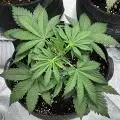
This week I top all 8 Green Poison ( 4dwc and 4 coco ) clones. They look healthy and happy and few days later I already start to low stress training (LST) them.

Likes
29
Share


@lefthandedJ
Follow
Flowering looks awesome on the ChemDog! Lots of bud sites and they're growing at a respectable rate. ATF's are running 3 plants in 3 diff stages- one's a couple weeks into flower, one's just starting,and one's still the holdout. Meanwhile, I've got flowering on the Night Nurse and one of the Viper Cookies. The rest are close but I can't say for sure they've transitioned. Weather's getting into a hot and humid phase, gotta watch that ChemDog. Think it's got a decent structure for ventilation but I've read horror stories on how the Dog loves mold. Further training of the branches has been fruitful, I'm seeing a lot more topside bud sites than usual. I'm working on irrigation-- I set up a 30 gal container and it works for drip, but without a pipe system it's still one at a time, although I have to admit it's worth it to save my back. Plus, I have to have a supply ready for use in case my buddy needs to fill in for me and water the ladies.
Been checking the cameras regularly ( I have them all throughout the property, game cameras with IR flash), and to date haven't seen anything that would constitute a threat. Just some curious raccoons and one really ugly opossum. Even the skunks don't bother them this year, which is nice but a little strange considering they dig in them every year. It's really just the animals I'm watching for, people aren't as much of a concern. Mostly because I don't know any. Aside from that, I sleep with my head feet away from my babies, so somebody would have to have big brass ones to even try. Yes, I know, a little overprotective.
Fingers crossed it'll be one hell of a harvest (by my standards).
8/11 Update:
Been lucky still with the weather, but it's turning really humid. Fed the girls this morning, a mix of 1C molasses and 1/2C epsom salt in 20 gallons. Just a little supplement to the tiger bloom they've been feasting on. Speaking of the Tiger Bloom, I can't help but think I'd do just as well mixing my own nutrient solution, since the cost really adds up quick. For his year, however, it'll be fine. My watering gizmo is working well, just leaks a tiny bit and that's fine for the remainder of the year. Now that I have an idea of what works for me I can spend the off-season setting up something right.
Had to thin out the Lamb's a bit, it wasn't getting anywhere near enough air flow. Also took a few on the ChemDog as I'm expecting mold/rot conditions for a while and she's prone. Shouldn't have much problem, wind blows almost constantly here, but you can never be too careful. Training is taking well, overall they look pretty good. Next year-- bigger grow bags, better soil, and much pickier seed choices. I think I may even abandon the idea of topping them in the future-- it just slows them down and you can get the same end results with training. Granted, my ladies are kinda sparse and ugly, but that's the learning curve. Next time around I think I have a pretty good idea of what to do and when to do it, based on what worked and didn't work this year. Another big thing is nutrient timing-- I def jumped the gun on flower power for a few of them and it just stunted them wicked-- shoulda continued veg food a couple weeks into flower even for the early bloomer, she'd be a monster.


Likes
11
Share


@SteffenX
Follow
18.10.2024
very humid and little sun on the west side
21.10.2024 day 187
Beautiful sunny day, then powdery mildew discovered and started the 3rd harvest.


