


Likes
Comments
Share


@DogDoctorOfficial
Follow
💜 8×8 Adventure – Week 14 🌿
Purple Haze by Zamnesia – Pheno B
❄️ The Slow Starter Might Be a Fast Finisher… AND OH MY GOD, THE FROST! 👑💜🌸
Hello everyone, and welcome back to another chapter of the 8×8 Adventure! 🌱💚
And today...
I have one thing to say.
OH.
MY.
GOD.
LOOK AT THE FROST ON THIS GIRL! 😂❄️💎💜
Seriously!
Our Purple Haze Pheno B has taken her sweet time getting here.
She started slowly.
She stayed compact.
She never grew anywhere near as big as her sister.
And for weeks, we kept looking at her and thinking:
"Come on, girl... when are you going to show us what you've got?"
😂💜
Well...
I think she's finally answered.
And she didn't answer with height.
She didn't answer by taking over half the tent.
She didn't answer by trying to become another version of her sister.
Nope.
She answered with FLOWERS.
With density.
With structure.
And with enough frost to make me wonder whether somebody accidentally left the freezer door open inside the 8×8.
😂❄️
She's still a compact plant.
She's still the smaller sister.
But when you get close to those flowers...
HOLY SHIT.
💜❄️🌸
This girl is beautiful.
And here's the really interesting part.
Our slow starter is beginning to look like she might also become a fast finisher, much like her sister.
I said MIGHT.
We're not declaring anything yet.
We're not writing the ending before we get there.
But the way she's developing has certainly caught my attention.
So let's give the Little Frosty Queen her own chapter.
Because she deserves every bit of this spotlight.
────────────────────────
❄️ WEEK 14 — THE LITTLE FROSTY QUEEN HAS ENTERED ANOTHER LEVEL
If you've followed this diary from the beginning, you already know her story.
She's the smaller Purple Haze.
The slower Purple Haze.
The girl who took her time while her sister was busy becoming a whole damn sporting arena.
😂💜🏀
Her sister went big.
Really big.
But Pheno B chose a different direction.
She stayed compact.
She developed at her own pace.
And while we were waiting for her to show us more, she was quietly building her own personality.
Now?
Look at her.
The flower structures are becoming increasingly impressive.
The density is catching my attention.
And the frost...
Oh, the frost!
❄️💎❄️
This is why I love following individual phenotypes rather than treating every plant with the same name as if it were an identical copy.
Her sister gave us size and presence.
This girl is giving us compact structure, beautiful flowers, and a seriously frosty expression.
Same genetic family.
Same room.
Same general environment.
Two completely different stories.
And both are worth documenting.
────────────────────────
💎 OH MY GOD… THE FROST!
I know I've said it already.
And I'm probably going to say it again.
😂❄️💜
But seriously...
THE FROST!
Look at those flowers.
Look at the sugar leaves.
Look at the details in the close-ups.
The resin-covered surfaces give the flowers that beautiful frosted appearance, and the closer we get with the camera, the more there is to appreciate.
From a distance, you see a compact Purple Haze plant carrying some lovely flowers.
Move closer...
and the story changes.
You begin to notice the details.
The flower structure.
The texture.
The resin.
The way the individual floral sites are developing.
And suddenly, the smaller sister doesn't look small at all.
Not when you're looking at those flowers.
😂💜❄️
She's got her own way of making an impression.
Her sister can keep the height.
This girl is busy decorating everything in sight.
👑❄️💎
And I'm absolutely here for it.
────────────────────────
🌿 COMPACT DOESN'T MEAN LESS IMPRESSIVE
This is something I really want to emphasize.
Yes, Purple Haze Pheno B is still compact.
She didn't grow as big as her sister.
She didn't develop the same overall architecture.
And she certainly hasn't tried to compete with the Big Mama for the title of largest Purple Haze in the room.
😂💜👑
But why should she?
A plant's overall size doesn't tell us everything about the flowers it produces.
And in this case, her compact structure is simply part of her individual expression.
She's showing us a different balance between plant size, flower development, density, and resin appearance.
That's what makes this phenotype interesting.
We're not looking at her and wishing she were her sister.
We're looking at her and appreciating what she actually is.
A compact, beautiful, increasingly frosty Purple Haze.
And honestly?
That's more than enough to make her stand out.
💜🌿❄️
────────────────────────
⏳ FROM SLOW STARTER TO POSSIBLE FAST FINISHER?
Now this is where things get interesting.
Because when I look at her now, I can't help thinking about how slowly she started.
She took her time getting established.
She stayed smaller.
She moved at her own pace while some of the other girls seemed to be racing ahead.
But now?
She's looking like she might be approaching the later part of her journey much faster than her early development would have led us to expect.
And that reminds me of her sister.
The Big Mama has also been giving us reasons to watch the finishing process closely.
Now Pheno B is making me wonder whether we're seeing a similar pattern in a much more compact plant.
But let's keep our feet on the ground.
A slow start doesn't guarantee a fast finish.
And beautiful, frosty flowers don't automatically tell us exactly how much time remains.
What we're seeing is a change in her appearance and development that makes the comparison interesting.
That's all.
We're not going to force a harvest date onto her.
We're going to keep observing the flowers, watching the changes, and comparing the photographs from week to week.
If she really does turn out to be a fast finisher...
we'll document it when the plant gives us enough evidence.
Until then?
Let's enjoy the show.
😂💜❄️
────────────────────────
👭 TWO SISTERS, TWO COMPLETELY DIFFERENT EXPRESSIONS
I absolutely love having these two Purple Haze phenotypes in the same room.
Because the contrast is becoming impossible to ignore.
💜 PURPLE HAZE PHENO A — THE BIG MAMA
👑 Larger overall structure.
🌸 Substantial flowering architecture.
💜 A plant that immediately catches your attention across the room.
🧡 Beautiful colour development.
💧 Still giving us plenty to observe about her water consumption and maturity.
❄️ PURPLE HAZE PHENO B — THE LITTLE FROSTY QUEEN
👑 Compact overall structure.
🌸 Beautifully developing flowers.
💎 A seriously frosty appearance.
💜 A slower start and a different developmental rhythm.
❄️ A flower presentation that's becoming increasingly impressive.
Same room.
Same general lighting setup.
Same overall growing environment.
Same grower.
And yet...
look at the differences!
😂💜
That's the beauty of following individual phenotypes.
If we only had one plant, we'd know what that plant looked like.
With both sisters, we can see just how differently they can express themselves.
One became our Big Mama.
The other became our Little Frosty Queen.
And neither needs to become the other to be worth celebrating.
────────────────────────
🌸 THE FLOWERS ARE GETTING THEIR OWN SPOTLIGHT
One thing I love about this week's photographs is how much attention we can give to the individual flowers.
The full-plant shots show us the compact structure.
The wider photographs help put her development into context.
And then we get to the close-ups...
😂📸💜
That's where she really steals the show.
You can see the details in the flowers.
You can appreciate their structure.
You can see the resin-covered surfaces that give her that frosty appearance.
And you can follow the changes compared with the previous weeks.
This is why I don't want these diaries to be just a collection of pretty photographs.
The photographs are part of the documentation.
They let us compare.
They let us notice changes we might otherwise forget.
And they help us tell the story of each individual plant.
Pheno B's story is becoming particularly satisfying because we can look back at those earlier weeks when we were waiting for her to show us more.
Now we have a very different-looking chapter in front of us.
The girl was never doing nothing.
She was developing at her own pace.
And now we're seeing more of what that development looks like.
💜❄️🌸
────────────────────────
🌿 THE PLANT HAS HER OWN PERSONALITY
This is something I keep coming back to throughout the 8×8 Adventure.
We have twelve plants sharing one room, but we don't have twelve identical responses.
Some plants are tall.
Some are compact.
Some develop quickly.
Some take longer to show us what they're capable of.
Some have very different flower structures.
And some have a visual expression that makes you want to bring the camera closer every time you walk past.
😂📸
Purple Haze Pheno B is one of those plants.
She's not trying to dominate the room through size.
She's making herself noticed through her own combination of structure and frost.
And that's exactly what I want from these individual diaries.
Not a competition to decide which plant is the best.
Not an attempt to make every phenotype fit the same expectations.
Just honest documentation of what each plant is showing us.
And this girl?
She's showing us something beautiful.
────────────────────────
📸 MACRO PHOTOGRAPHY — WHEN YOU GET CLOSER, YOU SEE MORE
The closer we get with the camera, the more interesting the details become.
😂💎📸
A full-plant photograph gives us the big picture.
A flower portrait lets us focus on the structure.
A close-up reveals details that are easy to miss when we're looking at the plant from across the room.
And with this Purple Haze phenotype, those close-ups are absolutely worth taking.
The frost is one of the first things that catches the eye.
But there's more to the story than resin alone.
There's the way the flowers are developing.
The structure of the surrounding leaves.
The variation between different flowering sites.
And the overall appearance of the plant as she continues through the flowering cycle.
That's why I like documenting the same plant over time.
We don't have to rely on a single photograph to tell us everything.
We build a visual record.
And as that record grows, we can better appreciate the differences between one week and the next.
The Little Frosty Queen is giving us plenty of reasons to keep the camera ready.
💜❄️📸
────────────────────────
☀️ SAME PHOTONS — DIFFERENT GENETIC EXPRESSION
The lighting setup remains part of the same expanded 8×8 environment.
We're still using the Future of Grow Black Series LEDs, including the two additional Black Series 600W fixtures supplied for this project.
The previous lighting reference was approximately:
🔌 59% power from the plug.
☀️ Around 1,500 PPFD across the upper canopy.
Those figures are our established room reference, not a claim that every point across the canopy receives identical light intensity.
The plants have different heights and structures, so their positions relative to the fixtures matter.
And that's particularly interesting when we compare these two Purple Haze phenotypes.
Pheno A developed into a much larger plant.
Pheno B remained more compact while producing a very different visual expression.
We're providing a shared lighting environment, but the plants are not identical.
Genetics, developmental stage, plant structure, and the wider environment all contribute to what we see.
That's the experiment.
We're not trying to force twelve plants to become twelve copies.
We're observing twelve individual responses.
💜🌿☀️
────────────────────────
💡 MORE LIGHTING CAPABILITY — MORE CONTROL
One of the things I appreciate about the Future of Grow upgrade is that additional lighting capability doesn't mean we have to operate every fixture at maximum output.
The two additional Black Series 600W fixtures give us more available capacity and flexibility.
We're controlling the output rather than simply chasing the highest possible number.
And that matters because the goal isn't just to throw more light into the room.
The goal is to create a controlled environment that allows us to observe how the different plants develop.
The upper canopy provides one reference point, but the garden is three-dimensional.
Plant height, flower position, and canopy structure all affect the light received by different parts of each plant.
The Lumiflora lighting also contributes another layer to the overall lighting setup deeper in the canopy.
And our Little Frosty Queen is part of that shared environment.
A huge thank you to Future of Grow for supplying the two additional Black Series 600W fixtures for us to test.
Having that additional capability while retaining control over output has been an important part of this project.
💡🌱💜
────────────────────────
🔴 THE RED-LIGHT ROUTINE — ANOTHER PART OF THE EXPERIMENT
We're also continuing to document the additional 15-minute red-light period after the main lighting period.
Red and far-red wavelengths can influence plant responses through the phytochrome system, which helps plants interpret their light environment.
The outcome depends on the wavelength, intensity, timing, duration, and the rest of the conditions.
That's why we're recording this as part of our lighting routine rather than assuming it automatically produces a particular result.
With Purple Haze Pheno B, the focus remains on documenting her own development.
She's compact.
She's increasingly frosty.
Her flowers are developing beautifully.
And we're watching how her appearance changes over time.
We can't attribute those characteristics to the red-light period alone without a suitable comparison.
That's an important distinction.
The lighting routine is one part of the environment we're documenting, not proof of a specific effect.
And that's how I want to approach this experiment: observe first, make claims only when the evidence supports them.
🔴🌿🔬
────────────────────────
🔬 A LITTLE LIGHT SCIENCE — THE EMERSON EFFECT
Since we're talking about red light, let's revisit the Emerson effect.
The Emerson effect describes how photosynthesis can respond more efficiently when suitable red and far-red wavelengths are supplied together under particular experimental conditions.
It involves the cooperation between two major components of the light-dependent reactions of photosynthesis:
🌿 Photosystem II (PSII)
🌿 Photosystem I (PSI)
These photosystems have different light-absorption characteristics. Under suitable conditions, combining light that supports both can produce a greater photosynthetic response than would be expected from the individual wavelengths alone.
It's a fascinating example of how plant responses to light involve more than simply increasing brightness.
But there's an important distinction.
The Emerson effect does not mean that every red-light treatment produces the same response, nor does it prove that any particular short red-light routine will increase yield, accelerate flowering, or determine harvest timing.
The spectrum, intensity, timing, and experimental conditions all matter.
Our additional 15-minute red-light period is something we're documenting in this grow.
We're not claiming that it automatically reproduces the Emerson effect.
We're recording the routine, observing the plants, and keeping our conclusions grounded in what we can actually see and measure.
That's how we keep learning without turning an interesting scientific concept into an unsupported promise.
💡🔬🌱
────────────────────────
⚗️ NUTRITION — THE SHARED ROOM APPROACH
The previous shared nutrition reference for this stage of the run was:
🌸 Plagron Terra Bloom — around 2.0 ml/L
🌱 Plagron Power Buds — 1 ml/L
🌿 Plagron Green Sensation — 1 ml/L
🍯 Plagron Sugar Royal — 1 ml/L
The previously recorded room readings were approximately:
⚗️ pH — around 6.0
⚡ EC — around 2.05 mS/cm
These are the established reference values from the previous reports, not newly verified measurements for this week's update.
The wider approach remains consistent with the room's current stage, while we continue observing the plants individually.
And Pheno B is a good reminder that a shared nutritional programme doesn't make every plant develop at the same pace.
She's still compact.
She's showing beautiful flowers.
And her frost is becoming one of the most striking features of this phenotype.
We don't need to invent a new story around the numbers.
We need to keep observing the plant in front of us.
────────────────────────
🌡️ THE 8×8 ROOM — SHARED CONDITIONS
Our previous shared room reference was:
🌸 Flowering — Week 14
💡 Light schedule — 12/12
☀️ Upper-canopy PPFD reference — approximately 1,500
🔌 Future of Grow lighting output — approximately 59% from the plug
🌡️ Day temperature — approximately 26.5–27°C
🌙 Night temperature — approximately 25–26°C
💧 Relative humidity — approximately 60–61%
🌱 Substrate temperature — approximately 25–26°C
💦 Nutrient solution temperature — approximately 25°C
⚗️ Previous pH reading — approximately 6.04
⚡ Previous EC reading — approximately 2.05 mS/cm
💨 CO₂ — approximately 693 ppm
💧 Previous irrigation reference — approximately 1.4–1.45 L per plant / 24 hours
🌱 Pot size — 15 L
These are the previously established room references for continuity, rather than a claim that every reading was taken again this week.
The key point is that Pheno B continues to develop within the same general environment as the other plants.
And yet her expression is entirely her own.
💜🌿❄️
────────────────────────
🔬 SAME ROOM — DIFFERENT TIMELINES
The 8×8 Adventure keeps teaching us the same lesson.
The plants don't read our expectations.
😂🌿
One plant may develop quickly from the beginning.
Another may take longer to establish herself.
One may become very tall.
Another may stay compact.
One may catch our attention through size.
Another may do it through flower structure and resin expression.
Purple Haze Pheno B has taken the slower route.
But looking at her now, I'm not thinking about what she failed to become.
I'm looking at what she actually is.
A compact plant with beautiful flowers and an incredibly frosty appearance.
And if she does turn out to be a fast finisher, that will be another interesting part of her individual story.
For now, we'll keep watching her development and comparing her progress with the photographs from previous weeks.
No competition.
No forced expectations.
Just twelve plants, one shared room, and twelve individual stories.
────────────────────────
💬 JOIN THE DOG DOCTOR COMMUNITY!
Want to talk about the 8×8 Adventure, share your experiences, ask questions, or hang out with other growers?
Come and join us on Discord! 💚🌱
🔗 https://discord.gg/dogdoctorofficial
Different genetics, different environments, different experiences, and plenty to learn from one another.
Come say hello and join the conversation!
────────────────────────
🔮 WHAT COMES NEXT FOR THE LITTLE FROSTY QUEEN?
Honestly...
I'm curious.
Very curious.
😂💜❄️
How will those flowers continue to develop?
Will her compact structure remain the defining feature of this phenotype?
How will the frost and colours evolve?
And will our slow starter really become a fast finisher, just like her sister?
We'll see.
I'm not going to predict an exact harvest date from photographs alone.
The appearance of the flowers is one part of the picture, and we'll keep following the changes as they happen.
For now, the important thing is that she's continuing to give us something beautiful to document.
And after all those weeks of waiting for her to show us more...
I am absolutely enjoying this chapter.
💜🌸❄️
────────────────────────
❤️ FINAL THOUGHTS — SMALLER PLANT, SERIOUS FROST!
Week 14.
And our Purple Haze Pheno B is giving us a chapter I absolutely love.
💜❄️👑
She took her time getting started.
She stayed smaller than her sister.
She developed at her own pace.
And now?
LOOK AT HER!
😂❄️💎
The frost is beautiful.
The flowers are looking fantastic.
Her compact structure gives her a completely different character from the Big Mama.
And she's showing us that being the smaller sister doesn't mean being any less interesting.
In fact, the contrast between the two plants is one of my favourite parts of following them together.
Pheno A gives us size and presence.
Pheno B gives us compact structure and an incredible frosty appearance.
Same genetic family.
Same room.
Different expression.
And both deserve their own spotlight.
The possibility that our slow starter might also become a fast finisher is certainly keeping me curious, but we're not going to rush the conclusion.
We'll continue observing.
We'll keep photographing.
We'll compare the changes.
And we'll let the plant tell us how her story unfolds.
Until then...
Keep shining, Little Frosty Queen.
Keep showing us those beautiful flowers.
Keep doing things your own way.
And keep making me bring that camera closer!
😂💜📸❄️
You took your time, girl.
But I think we can all agree...
you were worth the wait.
💜🌿🌸❄️💎👑
────────────────────────
🙏 THANK YOU
A huge thank you to everyone following the 8×8 Adventure here on GrowDiaries. 💚🌱
Thank you to Zamnesia for the Purple Haze genetics and for giving us the opportunity to follow two such different expressions from the same genetic family.
Thank you to Plagron for supporting the garden throughout this journey with the growing media and nutrition.
A massive thank you to Future of Grow for supplying the additional Black Series 600W fixtures and allowing us to test this expanded lighting setup inside the 8×8. 💡🔥
More lighting capability.
More control.
More photons.
And twelve different plants showing us twelve different responses.
Thank you to Lumiflora for helping bring additional light deeper into the canopy and allowing us to explore this garden as the three-dimensional environment it really is.
Thank you to TrolMaster for helping monitor and manage the room behind the scenes.
And thank you to everyone who stops by, leaves a comment, asks a question, or follows the journey week after week.
You're all part of this adventure.
💚🌱
Twelve plants.
One room.
Twelve individual stories.
And Purple Haze Pheno B?
She's the compact girl who took her time...
and is now making us stare at the flowers like we've never seen frost before.
😂💜❄️
Let's keep watching.
Let's keep documenting.
Let's keep learning.
And let's give this beautiful girl the spotlight she deserves.
Growers Love, my friends! 💚🌱
Happy growing, take care everyone...
and don't forget to join the Dog Doctor community on Discord:
https://discord.gg/dogdoctorofficial
See you next week in the 8×8 jungle!
💜🌿🌸❄️💎👑



Likes
5
Share


@Subbe
Follow
I had to defoliate the very Bushy short super critical. She has a ton of Budsight/preflower on her they were all just drowning in leaves . Did that Yesterday. 9/4 .
So far she took it well . And all those budsights are now exposed to beautiful light. But lets see during the week if she Will get any set back the Lil Girl

Likes
28
Share


@Targona
Follow
29 days since my seed sprouted a little girl🌱
The fourth week of growing my Space Cookies Auto 🌠🍪🚀
Nutrients:Nutrients - transition to flower:
Plagron Alga Bloom is an organic flower fertilizer for growing in soil. The fertilizer is algae-based and contains amino acids, proteins and a balanced ratio of phosphorus and potassium 🌺
------------------------------------------------------------------------------------
Plagron Green Sensation is a flower booster. Green Sensation is a 4-in-1 product, so you don't need to add additional fertilizers. Suitable for all types of substrates and systems 💚💜💚
------------------------------------------------------------------------------------------------------------------
Bud Candy is a carbohydrate supplement from Advanced Nutrients that maximizes the growth and aroma of flowers. It supports strong root activity by providing food for beneficial microorganisms.
------------------------------------------------------------------------------------------------------------------
BioBizz Calmag is a 100% organic, but also vegan fertilizer with BIO certification. Biobizz Calmag was designed for professional growers and home growers who need an extra dose of calcium and magnesium. It contains added humic acid 💩☘️- I only apply it once a week.---------------------------------------------
Biobizz Bio pH-/ Biobizz Bio pH+ is a 100% natural and vegan pH regulator. Suitable for all types of substrates and crops. For use in growth and flowering. 💩🍋🌱
----------------------------------------------------
PRO-MIX CONNECT MYCORRHIZAL POWDER - for substrate
Generally:
Space Cookies Auto 🌠🍪🚀 is the only one that grows
in the PRO-MIX HP Mycorhize+Bacillus substrate, where I also add coconut fiber and perlite ☘️🌱
The girl is already fully blooming 🌺🏵️, it is a plant with many branches, it grows more broadly, like a bush than like a Christmas tree. That is why it is quite demanding to train, the branches are not very strong, so I have to handle it carefully. I have to do LST and defoliation very often - the plant breathes much better then 🍃🍃
I use the new pH and EC meter Aqua Master Tools P110 PRO, the measurement is fast and accurate 👌 So far I have managed to keep the pH and EC as they should be. Although my EC has jumped a little more now, I diluted the watering so that the EC drops. I use Biobizz Bio +/- to correct it. The excellent mycorrhizal powder PRO-MIX Connect to support the roots certainly works very well. All the girls are very strong and stable from an early age 💚🌿🌲
Training:
As I mentioned above, this week I had to do LST and defoliation 2 times. The branches are delicate, but there are really a lot of them. I made the first defoliation bigger, the second one more gentle 🍃

Likes
5
Share

@JoExotic
Follow
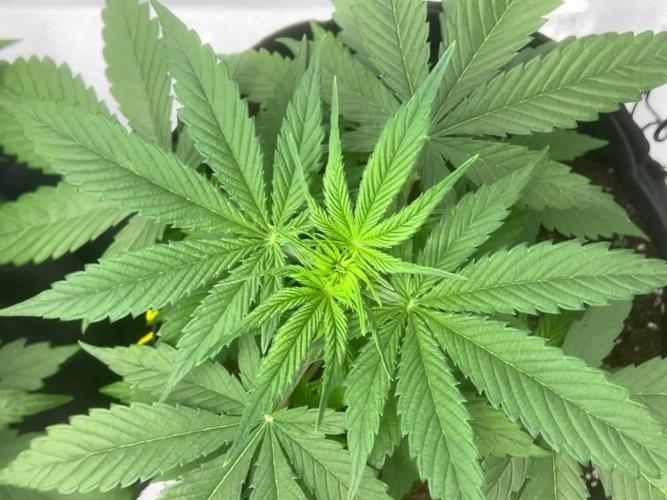
Week 4 -Apple Strudel Auto What an insane strain the smell is super gassy already ! I’ve just started adding Athena Grow A and B. I’ll see how the plants respond. Zero issues so far I’ll update next week. Never thought I’d grow Autos over photos FastBuds is a true Master !

Likes
6
Share


@Mr_nugs_lover_David
Follow
She looks extremely healthy and happy let's see how she performs at the end,she's 100% organic grown without any chemicals from bottles. Starting to show the first pistils on August 24th

Processing
Likes
12
Share


@CanadianFillmore
Follow
Week 5 starts for LSD & Green Crack. All four ladies look happy and they all grew 1-3 inches during week 4, hopefully they grow the same amount this week.
Thanks for stopping by, tune in next week! 👽🌳🔥

Likes
12
Share


@UK420hydrogrow
Follow
Ok so had a good week approaching week 5 of flower for the rest of the plants the large critical mass that's a few weeks ahead of these has now started to be flushed checked the trichomes looking nice and milky so will flush that one over the next 2 weeks and continue with the feeding schedule of advanced nutrients for rest of the baby girls

Likes
20
Share


@usere
Follow
I got about 38/40 buds sites for now, so i topped the 2 plants and Lollipopping under screen.


Likes
13
Share


@caliboyyy22
Follow
Week 3 still moving smooth. In stead of pictures I did this quick little video.

Likes
12
Share


@Bryankush
Follow
Continuando a preparare la sua forma finale.
Purtroppo nella mia zona le temperature sono molto alte, circa intorno ai 34° ma per fortuna la Mango riesce a resistere un po. Attualmente la annaffio con 10L di acqua a settimana.

Likes
21
Share


@JuicyFruit
Follow
Week 9 - Day 63 - 26/11/19
Im so grateful to be a part of this community and to be at this milestone so to speak :) had an amazing time growing this plant, thanks to everyone who had a look or contributed to my diary!
Harvest was fun but that little 16cm tall plant stunk my whole house out of cheese when i started trimming her :)
Added a few photos and videos of the harvesting, i got a little ball of hash off the scissors which i smoked in a bong and it was nice! very hashy!
its taken about 2 hours to finish trimming but ive stored all the trim in the freezer along with the dwarf trim from my last diary :) im making cannabutter and edibles this week. really excited for that.
So i hung my drying rack outside the tent beside the passive intake. temps are between 20-22c in the room so it should dry fine and im hoping the passive intake will drag the smell in and keep it sort of fresh in the room :)
This diary has got me excited for my Quick One plant as its much taller and has colas like arms :D.
Il update in 3-7 days when buds are dried and then il be updating a lot throughout curing :)
Day 65 - 28/11/19
Still drying these buds :) they look much smaller now, i smoked a small bud and although its much drier than harvest its still spongy/sticky and stretchy when breaking apart so 2-3 more days drying i think.
Smell is wonderful especially if you get it on your hands, its like tropical fruit cheese and the effects of thc are not as pronounced with this strain but i felt very relaxed, no muscle pain etc and no paranoia or anxiety. i havent had a clear relaxed headspace before bed in a very long time. Any 1:1 THC/CBD is a must grow, give it a try if you havent already, i couldnt have picked a better starter medical plant as i love a good old cheese strain :)
And i made some cannabutter out of the 59g of sugar leaves i got from this diary and my first diary. il have to upload a few pictures of the process later and let you all know if the cannabutter worked in my brownies :)
Day 66 - 29/11/19
Started curing and added a photo to show :) buds were at 59-60% when left in the jar alone for a few hours so i threw in my boveda 58% pack and started burping 5-6 times per day :) i could have cured for a week before adding the boveda pack but i had barely any bud in the huge jar so i thought it would be wise to add the boveda to prevent mold and to keep it curing perfectly!
Day 67 - 30/11/19
Posted a picture of a handful of buds :) i smoked a few in a bong and had a joint and it left me nice and medicated! no anxiety no paranoia nicely locked to the couch and sleepy. perfect nightime smoke as it wont trip you out or mess with your head, just a nice happy little mellow buzz!
Flavour hasnt really came through yet, not sure what to expect as im a newbie but its slightly like cheese/flowery/herbs.
Curing is definitely helping every day! the smell is getting better, buds are getting really smooth and they look amazing also! really excited for the next few weeks curing :)
Final Update - Day 69 - 02/12/19
Finally here at the end of this diary and i have to say i loved growing this plant. it was a dark green colour throughout growing and took whatever i threw at it.
Buds are nice and dry and curing well. i saved the best buds until last and added a couple of photos of them and a video also! they are covered in trichomes and feel great.
Not much of a smell from the buds and it tastes like a sweet floral cheese mixture.
Im pretty couchlocked from a bong of this strain so im gonna end this diary here and go relax but many thanks for following along folks and take a look at my other diaries if you get a chance :)
Peace!
Likes
6
Share


@MaxWax
Follow
The plant is healthy but the genetics of the seed is really not good. The leaves have only five teeth
Likes
87
Share

@wolfvb
Follow
🌿 Week 10: The Final Countdown & The Autumn Fade 🍂
The Vibe:
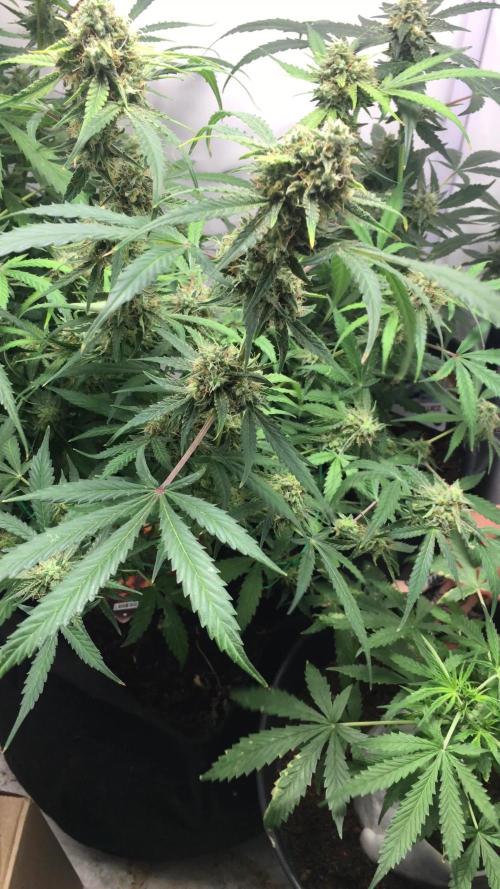
We’ve officially entered double digits! The tent is a jungle of smells, and the air is thick with a mix of sweet pineapple, heavy cream, and that funky cheese undertone. Most of the white pistils have now tucked in or turned orange/brown, and the plants are starting to pull mobile nutrients from the larger fan leaves the "autumn fade" is officially here!
The Ladies:
Pineapple Express F1: Still the undisputed Queen 👑. Her main colas are rock hard and coated in a sticky layer of resin. She’s starting to show some beautiful purple/yellow hues in her fan leaves as she nears the finish line.
White Runtz: The "Chonk" of the tent! 🍩 Even though she the tallest girl is the tent, her bud density is incredible. The frost on the Runtz is next level it looks like she’s been dipped in sugar.(And she is now drying)
Blue Cheese F1: My little rebel. 🧀 She stayed compact and "boujee" with her 3-fingered leaves until the end, but don't let her size fool you the smell coming off her is the most pungent in the tent. She’s finally stopped that weird side-branch stretching and is putting all her energy into ripening those dense little nuggets.
Care & Nutrients:
Feeding: This is the last week of full nutrients. I’m still using the Bio-Bloom and Top-Max combo, but I’ve started tapering down the Fish-Mix and TNT Complex to let the plants use up their stored nitrogen.
Watering: They are thirsty! I’m still giving about 1L per plant every other day, ensuring the pH stays steady at 5.5-6.0 to avoid any late-stage lockouts.
Environment: Keeping the humidity lower (around 45-50%) now to prevent any bud rot issues since the flowers are so dense. Temperatures are steady at 27°C lights on.
Next Steps:
It’s all about the jeweler's loupe now. I’m checking trichomes daily. We are looking for that perfect 10-20% amber ratio before we start the final flush. It won’t be long now!
Question for the Growmies:
Do you prefer to harvest when trichomes are all cloudy for a "heady" high, or do you wait for more amber for that "couch-lock" feel? Let me know below! 👇

Likes
3
Share


@Earthsower
Follow
She is doing well with a lick of 300ml of nutrients the fuel dog is holding up so far with no leaf burn and healthy green leaves she stands at about 35cm


Likes
31
Share


@THCpapa
Follow
Week 7 in the comedy of my garden journey, and my green squad has decided to embrace the art of being vertically challenged – they're like the plant version of a pocket-sized superhero team. "Short and sassy" seems to be their new motto.
In an attempt to uplift their spirits, two of the ladies scored a new, roomier 3-gallon final home – it's like they moved from a cozy apartment to a botanical mansion, hoping a change of scenery would inspire some vertical ambition. They're probably comparing their new homes and deciding who has the fanciest leafy chandelier.
However, the plot thickens as one plant emerges with a leafy fashion statement that's a bit too avant-garde – discoloration that could rival a Picasso painting. Is it a magnesium deficiency or an oxygen rebellion? The plant might as well be holding a tiny protest sign that says, "Give me answers or give me wilting!"
Playing the role of a plant detective, I cranked up the fans, turning my grow tent into a botanical wind tunnel. It's like a leafy hurricane is sweeping through, and my plants are either loving the breeze or planning their escape. As a bonus, I threw in a leafy spa day – deformation and topping, because who doesn't love a good horticultural makeover?
But wait, there's more! In the midst of the botanical sitcom, the humidity decided to play the villain in this leafy drama. It's like the humidity gauge is staging a rebellion of its own. So, armed with misters and perhaps a leafy motivational speech, I'm on a mission to turn my grow tent into a tropical paradise and give my plants the humidity vacation they didn't know they needed.
Week 7 – where the plants are short, the homes are upgraded, the leaves are avant-garde, and the humidity is throwing a curveball. Stay tuned for the next episode of "The Green and the Humid" – because in the world of my garden, every week is a new episode filled with laughs, surprises, and a touch of leafy chaos! 🌿🌧️🎭

Likes
4
Share


@GREENPHOENIX6262
Follow
*Week 3 Flower - 11/24 - 16 Inches*
Week 3 flower - Heavy trichomes set - Flower nutes are being weaned off - started feeding only clean water and Lotus CarboFlush - 1 more week flower before dry/cut down.