






@GreenEldritchGardens
Volgen
After recovering, Black Orchard now moved with its sister to a new grow box for more space and better lights reflection also with more light added. Re applied the scrog net and she seems happy.


@Silverback_Guerilla
Volgen
12/15:
Some plants are taking too long to transition and stretching beyond my space constraints, so I dialed the photoperiod back to 12/12.
12/16:
Fed today and rotated edge plants. Added another 150w of 3000k below the canopy.
12/17:
Worked on ventilation...no A/C necessary now, as I'm using another AC Infinity 6" fan to intake outdoor air into the closet whenever temps reach 75f..and it's been cold as hell outside.👍
The final trick will be to replace the 6" exhaust fan with an 8" so as to be able to fully exchange the closet air faster ...but that's gonna have to wait til next season.


@Osavv_OTGUK
Volgen
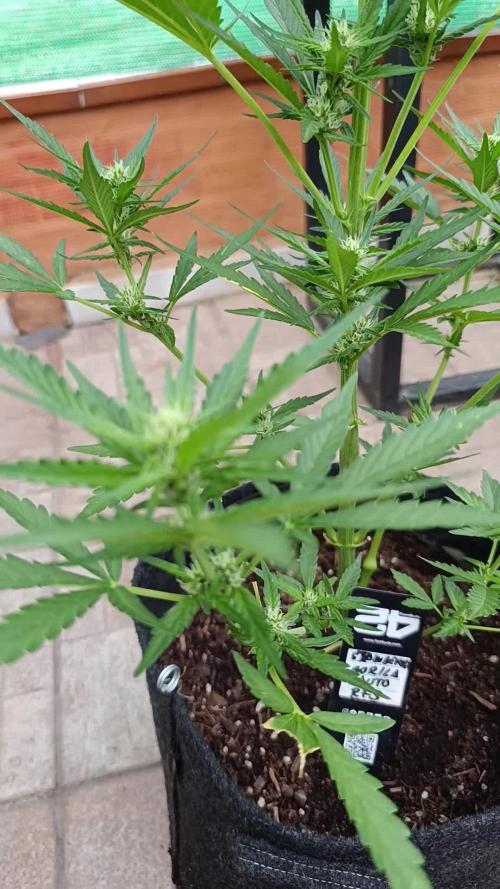
I set up a scrog net at this moment of time I wasn’t sure how to set it up until I watched a couple of videos. One of the bag seed girls started showing which was amazing. I was still waiting for the other bag seed to show. The female gorilla cookies started to show which was also amazing


@420DeepGrow
Volgen
📆 Semana 3
La planta entra en plena floración temprana y el stretch alcanza su punto más fuerte, llegando ya a los 80 cm. Las ramas laterales se han desarrollado muy bien y los primeros cogollos comienzan a formarse en todas las puntas.
Aparecen abundantes pistilos blancos y los primeros tricomas empiezan a ser visibles, señal de que la producción de resina ya ha comenzado. El consumo de agua y nutrientes sigue aumentando, acompañando el fuerte crecimiento de la planta.
El perro se ha llevado algunas hojas bajas durante la semana, aunque esto no ha afectado al vigor general y la planta continúa desarrollándose con fuerza.
⚡ EC: 1.3 – 1.4
💧 pH: 6.3
🌡️ Agua: 18–22°C
🌫️ Humedad: 45–60%
☀️ Luz: Sol directo de junio
🌡️ Temp ambiente: 22–30°C
📏 Altura: 80 cm
🔥 Nota: La estructura final ya empieza a definirse y las flores se multiplican en todas las ramas. Los primeros tricomas y la formación de cogollos indican que la planta entra en una fase cada vez más productiva.
Seguimos creciendo fuerte 💪!


@YAMA47
Volgen
Dia 67 desde germinacio.aqui muestro las 2 mas avanzadas.comparando cultivos de bsf Arg. Con Bsf España. LLEGO A LA.CONCLUSION QUE A NOS NOS TRATAN DE SUDACAS Y NOS MANDAN SEMAS DE CALIDAD MEDIA.PROX CULTIVOS CAMBIO E BANCO¡


@Vegetoo420
Volgen
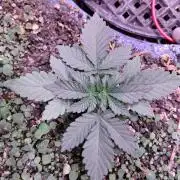
This lady’s on the end ! Only water starts tomorrow!
I’ll flush it hard to get a smooooooth smoke !




@Ultraviolet
Volgen
Not particularly growing for speed or any dedicated reason this time round, just adding water and a abundande of positivity, gotta admit I do like the autoseed logo. Off we go again into the magical forest.
(Arthrospira platensis) cultivated in high-alkaline, mineral-rich water in Kailua-Kona, Hawaii. It is renowned for having a higher nutrient content, including more carotenoids and essential fats, compared to other spirulina brands. It is frequently cited as a "complete food" due to its dense concentration of proteins, vitamins, minerals, and pigments.
The nutritional profile of standard dried Spirulina platensis biomass. 3kg of spirulina powder has an approximate NPK ratio of 10-2-1 (or 10% Nitrogen, 2% Phosphorus, and 1% Potassium).
Here is the breakdown of the nutrient content for 3kg of powder:
Nitrogen (N): ~300g (10% of total mass)
Phosphorus (P): ~60g (roughly 2% of total mass)
Potassium (K): ~30g (roughly 1% of total mass)
3kg of spirulina powder is more than enough nitrogen for 4 cannabis plants in a 100-gallon pot—in fact, it is likely excessive and could cause severe nutrient burn or toxicity if not properly managed. Spirulina has a very high protein content (46% to 63% dry weight), which translates to a significant nitrogen source. It is often described as a 5-1-1 NPK fertilizer.
3kg (3000g) of powder in 100 gallons means 30g per gallon. General organic recommendations for potent amendments (like frass) are often around 1–3 tablespoons per gallon. 30g of powder is roughly 2-3 tablespoons, making this a very high-strength application rate if added all at once. Balance this with calcium/magnesium, and organic nutrient delivery in soil growing can lead to deficiencies in these nutrients.
Not all of that 100 gallon is used, so figuring out precise measurements was ballpark, but there is about 10kg of engineered biochar in that pot. Mostly in the top half. Ideally, I'd have 25kg in a full active 100-gallon, but......... don't mess with something that is not broken. Roots do not utilize the entire 100 gallons. This has been a couple of years of trial and error, mostly error. The amount of cations you can add in grams depends entirely on the specific cation exchange capacity (CEC) of your biochar and the type of cation being added. Biochar CEC values vary widely, typically ranging from 4 to over 300cmolc/kg. Multiple Biochars in use, ranging upwards of 100cmolc/km.
Different cations have different atomic weights
Potassium K+ 39.1g/mol.
Calcium Ca2+ 40.1g/mol.
Magnesium Mg2+ 24.3g/mol.
Nitrogen NH4+ 18.04g/mol.
You get more nitrogen bang for your buck. It all depends on the CEC of the biochar you use, but brrrrrrrrrr roughly I'm looking at 500-600 grams worth of elemental cation exchange capacity, give or take. That's just for the biochar alone. Elemental cation exchange capacity refers to the ability of materials—such as soil, minerals, and biochar to adsorb, hold, and release positively charged ions Ca2+, Mg2+, K+, Na+, Al3+, and Zn2+. This capacity is a critical measure of nutrient availability in soil and energy density in electrochemical systems.
Added calmag 2:1 to complement spirulina.
Calcium (Ca): Approximately 150g - 300g of elemental calcium.
Magnesium (Mg): Approximately 75g - 150g of elemental magnesium.
So long as pH stays in 6.3 to 6.7 ish, the plant will unlock hydrogen. Plants will be able to cycle CEC for their own needs. Hydrogen ion pumping (proton pumping) is a fundamental mechanism used by plant roots to facilitate the cycling of nutrients within a medium's Cation Exchange Capacity (CEC), directly increasing nutrient availability. A growing medium's Cation Exchange Capacity (CEC) does not contribute directly to Electrical Conductivity (EC). CEC represents potential nutrient storage, while EC represents active nutrients in the water/soil solution. A medium with a high CEC can hold many nutrients, but if there is no water present, the EC will be low.
98% of plant nutrient uptake comes directly from the soil solution.
2% of nutrient uptake is directly from soil particles.
Nutrients held on exchange sites (CEC) are not directly measured by EC until they are released into the soil solution through exchange with other ions (e.g., hydrogen ions from roots or fertilizer).
Plants source the H+ ions (protons) used in cation exchange primarily by exuding carbon sugars into the rhizosphere, then microorganisms perform root respiration, which reacts with soil water to form carbonic acid H2CO3 that dissociates into H+ and bicarbonate. Roots also actively pump out H+ ions directly to acidify the rhizosphere, plants trade hydrogen produced through metabolism for essential nutrients held by the soil.
In plant cells, the H+ (protons) used in proton pumping across the plasma membrane come primarily from the cytoplasm (cytosol). The protons are derived from internal cellular sources, including metabolic processes that release H+, and the regulation of intracellular pH homeostasis.
Distilled water is highly useful in managing the electrical conductivity (EC) of a growing medium by allowing for precise control over nutrient concentration and assisting in the mobilization of nutrients from the cation exchange capacity (CEC) into the active, plant-available nutrient solution.
Just add water & positive energy.
Potential hydrogen. pH. + - , potential charge balance for hydrogen.
So long as there is adequate oxygen in the soil and air and water moves at a decent interval, its practically impossible for the pH to skew in a soil that is taking in oxygen and releasing CO2 and nitrogen, I say practically, but meh, even with plenty of oxygen, the process of converting ammonium NH4+ to nitrate NO3- by bacteria releases hydrogen ions H+, which directly causes acidification (lowering pH). While water movement is necessary, consistent water moving through the soil can leach away basic cations Ca2+, Mg2+, K+, Na+, leaving behind acidic hydrogen and aluminum ions, causing pH to drop, especially in humid regions. High levels of CO2 in the soil (from intense respiration) dissolve in soil water to create carbonic acid, H2CO3, which lowers the pH. (barometric pumping removes that possibility) The pH in a cannabis cultivation environment, particularly in hydroponic or soilless setups, will often naturally drift towards acidic (lower pH) over time. Understand how to know when to lime the pH back up. Complex but critical. Once I understood this it helped ease the pain of understanding pH.
Base saturation directly reflects the percentage of CEC occupied by base cations. Generally, as base saturation increases, soil pH increases because fewer acidic cations, H+ and Al3,+ are present on the soil colloid surfaces.
At a pH of 7 or higher, the soil colloids are saturated with base cations, resulting in a base saturation of 90+%.
While many sources include Sodium Na+ as a base cation, some calculations focused specifically on plant nutrients (like in some nutrient management contexts) may focus solely on the "Big 3": Ca2+, Mg2+, and K+. However, in soil science and CEC (Cation Exchange Capacity) measurements, sodium is usually included in the definition of total base cations, making it the "Big 4" base cations.
At a pH around 5.5, soils often have a 45–55% base saturation, while a soil with a pH between 6.5 and 6.8 generally has an 80–90% base saturation.
Base saturation is considered a reliable, albeit complex, indicator of soil fertility and the degree of soil weathering, acting as a crucial metric in soil classification and management.
Once you take full control of the pH, so long as there is oxygen, and one keeps tabs on base saturation levels. Its near impossible for anything to go wrong. All you are essentially doing is adding water and waiting for any sign of deficiency. Not so much growing as eliminating the possibilities of things going sideways. Can't over or under water, can't skew pH, can't go anaerobic. Everything runs in optimal cycles, watering every 2 to 3 days or as required, depending on the rate of combined ET. A little warmer, a little drier, but never short on water. All the nutrients are already there in the medium, we still focus on the water, just not adding salts, but to mobilize nutrients held in the Cation Exchange Capacity (CEC) and move them into the active soil solution for plant uptake, the best supplements to add to water are fulvic acid, humic acid, or seaweed/kelp extract. Liquid solutions with high concentrations of essential trace elements. Distilled water has no alkalinity or minerals to help buffer or release nutrients. Adding these supplements turns the "empty" water into an active agent that forces nutrients off the CEC colloids into the solution for plant uptake.
When to water? When Electrical Conductivity of soil gets low. No water, no conductivity.


@RDWCGrowing
Volgen
Week 1 Day 1 - 8/12/2023
1st Water change Day! Such a special time it is when you remove the little bit of Nutes that you gave them as an appetizer and you give them their first real meal.
Added
39 Gallons of Water to my system
SILICA= .5mil/Gal = 19.5 = 20mil
Root Drip = 1mil/Gal = 39mil
Cal Mag= .25mil/Gal = 9.75 = 10mil
FLoraMicro= 3.0mil/Gal = 114mil
FloraGro = 2.0mil/Gal = 78mil
FloraBloom = 2.0mil/Gal =78mil
ORCA= .5mil/Gal = 19.5 = 20mil
Week 1 Day 2 - 8/13/2023
Everything is looking good the roots are making thier way to the water and the new grow is looking nice and green.
Week 1 Day 3- 8/14/2023
Everything is right on track, they are looking beautiful and in the praying postition all leaves happily lifting towards the light.
Week 1 Day 4- 8/15/2023
Looking beautiful today and looked like she could use her first haircut.. gave her a TOP off. Roots are laying in the water everything is looking right on track..
Week 1 Day 5- 8/16/2023
walked in and the humidity was under 60.... ohh noooooo.. So I added 2 humidifiers to the tent and attached them to my InkBird controller which is set to 62. She had roots nicely in the water.. this grow is on!!!
Week 1 Day 6- 8/17/2023
Humidity was a little low this morning, so I refilled the humidifiers. Other than that, the temp looks great, the PH looks great, the PPM looks good the plant is in the praying position and all damage from the little drowning seems to have been fixed. Happy Happy.
Week 1 Day 7- 8/18/2023
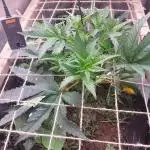
Yay.. week 1 in the books, roots in the water growth has started first hair cut given and both side nodes are growing. Everything is looking good and on track.. A lot better than week one of the last grow when I had them drowning week 1.
Really excited on how this grow is going to come out.

@Dameon0803
Volgen
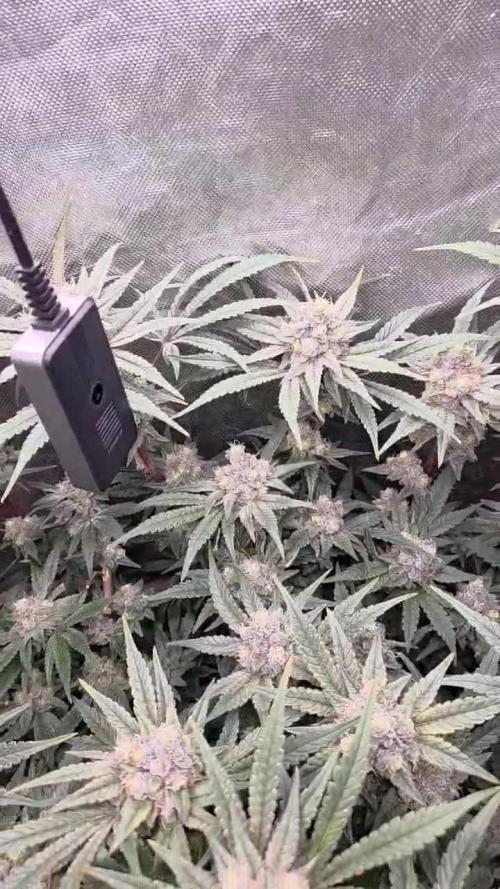
Another smooth week with the continued issues ive previously addressed. Trichomes are multiplying and buds have grown some. With the dehumidifier running pretty much constantly, it has bypassed my carbon filter. (I have my dehumidifier extract from outside the so I'm not adding additional, unwanted, heat.) Smell is very evident within the entire room. Final week of feeding and I have turned my reds down to 50%. Took trichome shots for fun around the front of the plant.


@HanzGrowz
Volgen
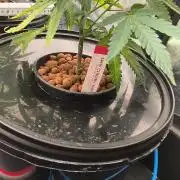
Just waiting it out now. No added nutrients, just water. Bubba and Black Dog have exceeded their expected flowering time, and both are at 95% cloudy with 5% or so still clear. Chemdawg and The New can take up to 70 days or more so we’ll see if they’re late too.
Bubba is a foxtailing machine. It was one weekend in early Flower when heat/humidity got out of hand while I was away for 3 days. She hermied a bit and I’ve had my eye out for bananas ever since (find a few every so often). Taking a risk to keep her in the tent with the others but if I catch them early enough the others should be ok. Interestingly I found a YouTube video of a guy that ran bubba and had the same foxtail development (also the same scent description and look overall). Nothing like the gorgeous fat purple budded girl I had last year but the citrus smell on this lime green bud pheno/version is impressive. Curious to see how the smoke compares.
Scent combo from all four plants is amazing!



@ellioschka
Volgen
Die Lemon Cherry Mintz Damen machen sich herrvorragend. Sie wachsen fleissig in die Höhe wie auch in die Breite. Das Topping vom Anfang der Woche haben sie gut überstanden und sind schon wieder weiter am austreiben. Die Wuchshöhe ist relativ normal nicht besonders hoch nicht besonders weit. 😊
VPD Zielbereich wurde angepasst, genauso wie das Sprüh- bzw Trockeninterval. Die Wurzeln und deren Spitzen sind dabei weiterhin schneeweiss, genauso wie es sein soll. 💪
Dies Woche kommt noch das ScrOG Netz mit rein und dann wird aufgefüllt was das Zeug hält. Vermutlich T -2 Wochen bis zur Blüteeinleitung. 😃


@Eddjack
Volgen
La pianta è carica di nutrienti sana e forte. Continua una fioritura lenta non vedo l ora che esploda ..comunque ha già un buon profumo ed è bella appiccicosa ...promette bene
Dajeforte growers





@HK_OG
Volgen
Die Pflanze scheint sehr gesund bis hier, entwickelt sich sehr geil. Blütenbildung hat auf jeden fall seitdem ich BigBud wieder habe deutlich verbessert. In der letzten Woche sind auf alle fälle noch deutlich mehr Terpene dazu gekommen, der Kopf ist Schneeweiß. Ich glaube sie braucht noch so 4-5 Wochen. Terps werden auf jeden fall immer geiler, am Anfang hab ich die nicht ganz so gefeiert aber mittlerweile immer mehr.


@KarlysCannabis
Volgen
I love growing with GrowDiaries! It's great to be able too look back at previous grows and compare. Being able to share with the community is a bonus!!
This strain was so easy to grow I found her and her brothers picky on ph, but most are. I'm excited to growing again. @honeycombhydrollc @thefreakoff2021


@MadeInGermany
Volgen
Hey guys :-) .
Today the plant was sprayed again with neem oil.
There weren't any more trips to be seen after the second application, but to be on the safe side, you did it again today get a cure.
That's why the beautiful dark shimmer on the leaves :-).
She has developed very well this week.
I will give you 7-10 days before I switch to flowering.
This week it was poured 3 times with 1 l each (nutrients see table above)
I will tie the Dr Grinspoon down again with LST and apply topping because it will be damn big 😂.
Otherwise everything was cleaned and, as always, everything was checked.
Have fun with the update and stay healthy 🙏🏻
👇🏼👇🏼👇🏼👇🏼👇🏼👇🏼👇🏼👇🏼👇🏼👇🏼👇🏼👇🏼
You can buy this Nutrients at :
https://greenbuzzliquids.com/en/shop/
With the discount code: Made_in_Germany you get a discount of 15% on all products from an order value of 100 euros.
👇🏼👇🏼👇🏼👇🏼👇🏼👇🏼👇🏼👇🏼👇🏼👇🏼👇🏼👇🏼
You can buy this strain at :
https://www.barneysfarm.com/dr-grinspoon-5
Water 💧 💧💧
Osmosis water mixed with normal water (24 hours stale that the chlorine evaporates) to 0.2 EC. Add Cal / Mag to 0.4 Ec Ph with Organic Ph - to 5.8 - 6.4
MadeInGermany