Likes
Comments
Share
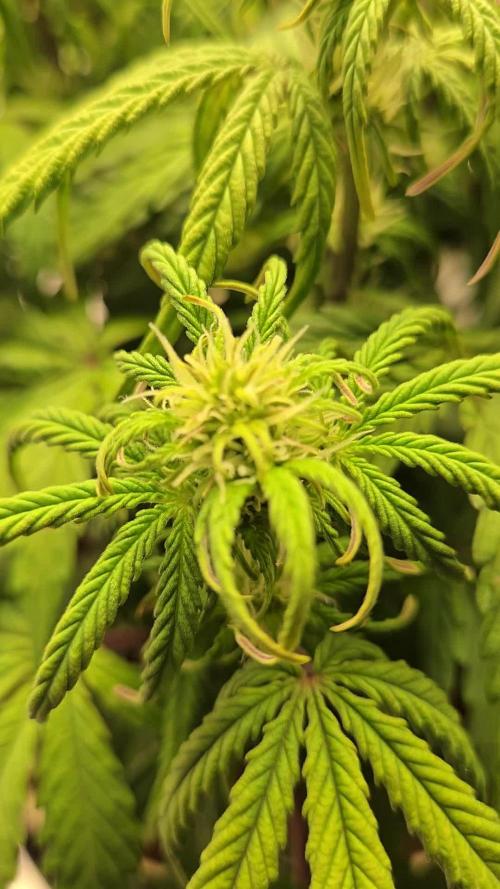
Hello everyone, These girls are still flowering!!! Been giving them water thinking they would finish soon. Let's see what happens this week See you guys next week 🤘🤘🤙🤙👊👊👊
Likes
4
Share
@Ageddd
Follow
ULH2: Still growing buds AH1: Strated branching ^^ Bent the plant a little AH2: Transplant to 25l Tex Pot with Canna Terra Pro
Likes
63
Share
@AsNoriu
Follow
Day 29. Girls grow slow, but most important .... Could be i overwatered with 2.5 liters of water or i stonly watered them twice ;))) Girls didnt drop pot weight till day 31, on days 32 morning ill do new round of lst. Will feed them hard, will defoliate all bigger old leaves which are covering new grow, plants are strong enough to take pain now ;))) Its sad situation a bit, i got flue and with that corona madness my mood was very down and i didnt work with plants at all, anyway, they made to that stage where harm can be done and its time. Gorillas looks okeish even without work, really good strain at least for now. Cookies are very picky, its hardest to veg strain from all i ever tried, lets see, maybe food and heavy training will make them fit ;) Day 32. Girls are finaly light, so heavy training and huge feeding. I dont know what hapend, but they refused to drink for 8 days almost, one cookie has obvious sighns of overwatering and if to be honest all cookies are crap, gorillas grow amazing, especially self toped one, she made natural mainlining and covers space perfectly. Guess in next 2-3 days they will blast off, but i cant feed silica till more branches will grow up, cookies too small, lets wait and see... Day 33. Girls loved food, plenty new grow, all tops are facing sun again , they will bush up in next few days. Next watering - silica and cal mag and next after - fish mix. Day 34. Girls are drinking again, so i gave 1ml/l fishmix. Cookies show strange colours and on fresh grow you can see cal mag def. Next feed will give them extra, normaly TopMax should be enough... I dont like Cookies genetics so much, that i planted last 5th bean ;)) Want to check two things : 1. Are my lights strong to grow something not under direct light 2. Are those Cookies such crap, that i should never try any seeds from RQS. I planted 4 new girls, no work,no top - nothing will be done to them. Hope to see last Cookie bean growing beter than almost two years old Incredible Bulk x2 and last StrawberyCough bagseed bean, otherwise its sad quality for such big house. Cant find why all 4 Cookies grow so slow compaired to all 4 perfect Gorillas. Was using new worm castings, too ritch ?? maybe thats the answer in test grow i put pure BIOBIZZ AllMix soil, nothing extra. Had to top one Cookie, new grow was all damaged and didnt want to develop, will harm them even harder next time before silica and cal mag, which i thought not to use in this run ... Lets see .... Happy growing !
Likes
27
Share
This lady is just about ready too come down , I will get her down tomorrow Smell is strong and she is frostie as hell , She has been in darkness for 3 days now so she will be chopped down on day 6 of week 11 :)
Likes
6
Share
Sie sieht soweit gut aus, aber spargelt ein wenig. Vielleicht liegts daran, dass sie erst gegen 11 Uhr direkte Sonne bekommt.
Likes
13
Share
Likes
21
Share
@NSABND
Follow
Today start of week 10 (Day 70) 😎😵😏 with Trailer Park Mod 😂😂😂😂 i had old fans around here and a ice box, so i startet to build the 7 watts Trailer Park Fans Mod 😁😁😁 It´s Monday Day 71 and "Hilde" got another fertilizer shot today from Day 72 to Day 75 i was on a Road Trip... 😳😎😳 Back from Road Trip and "Hilde" got another fertilizer shot today 😎👍😏
Likes
150
Share
Bonjour à tous , Ont peux dire que maintenant la floraison à commencé pour ces demoiselles , certaines sont encore en retard , en près floraisons je dirais mais ça avance ! Les journee diminue et donc la nuit arrive plus tôt dans la journée Cependant je ne sais pas pourquoi celles ci ne sont pas toutes au même niveau... La semaine dernière je voulais arrêter l'apport en azote mais je vois qu'il y a de grosse carrence donc je repars sur une production de purin d'ortie que je continuerais à apporter en plus petite quantité au long des semaines avenir afin qu'il n'y est plus de carrence.... L'odeur est forte à présent , réellement forte.. 🙌😁 Je continue le palissage / LST tous les 2 à 3 jours et cela deviens de plus en plus compliqué mais j'aime ça 😂🍀 J'ai ajouté de la cendre de bois au pieds de ces demoiselles et continue à leurs fournir des peau de bananes à foison !!!! Je pense fournir plus de photo durant cette semaine en espérant que l'azote apporté aura un réel impact pour épargné ces carrence Petit retour également de la Black Domina 0 qui se porte à merveille dehors avec un très beau début de floraison !! Yoouupiii Voila voilà 🙌🙌🙌🙌🙌🙌🙌🙌
Likes
44
Share
As with a lot of things in life, the harvest did not go as originally planned. I stated in my last entry in week 16, that I was going to continue the flush till I remembered and tried the dried, broken branch of C1. So I decided to harvest the plants on October 29th. Their last watering/feeding/flush was done on 10/27/21. I already had plans to take a day trip to see a MLS fútbol ⚽️ game I had tickets for on Saturday, 10/30/21; then I didn’t think parents would want to bring their kids near a house that wreaked of weed on Halloween, so not the 31st either. Then I had an appointment in the afternoon on Monday, and I didn’t want to get a late start, so not on 11/1/21 either. My wife had an appointment on Tuesday morning. Fortunately, her appointment was over by noon, so I got the chance to finally start the harvest on November 2nd. I turned off the lights halfway through the 12 hour light schedule on Sunday morning (10/31), so my ladies received varying periods of darkness before the harvest was begun. I harvested one plant per day for three days beginning 11/2/21. The day I started the harvest, I took all three plants outside for some pictures and to make a short video before cutting them up. The extended darkness before harvest made all three plants change their colors and become absolutely beautiful! I was very pleased with their final presentation. 02 Nov 2021 - C1 C1 was sitting in complete darkness for just under 48 hours when I took her outside to chop her up. Her buds were large, mixed with purples, blues, and pink. The trichomes glistened in the overcast sunlight and covered every bud like a protective blanket. I took some pictures of her by herself before starting her destruction. I started by snipping her branches and laid them out on a foil covered cookie sheet. Then I took them inside and started trimming, trimming, and trimming. Her buds are very dense and super sticky! The smell is absolutely divine! It took several hours to complete the trimming, and once I was done I had no desire to continue with the next plant. After I finished trimming all of C1’s buds, I got my wet weight on the branches before hanging them up to dry. 03 Nov 2021 - C2 C2 sat in complete darkness for nearly 72 hours before I took her out to harvest her flowers. The sun was shining, but it was windy and cold. I took some pictures of her in the sunlight and she was marvelous! Deep purples, with some pink edges mixed with some green in her foliage. She was truly a sight to behold. Then I cut her up into pieces. Wonderful, tight bud structure. Very dense. Trichomes a plenty and glistening! I truly love growing weed. My house by this time is absolutely saturated with the sweet, berry, fruity scent of these wonderful buds. You might think it unpleasant, but it wasn’t. I trimmed C2 for a long while because my hands are sore from two days of scissor snips and carefully holding and manipulating branches of sweet smelling, beautiful bud. The things we do for frosty buds! Once I finished trimming I got the wet weight and hung it up to dry along with C1. 04 Nov 2021 - C3 C3 sat in darkness for approximately 96 hours before finally getting harvested. It had been over a week since she had any water, and she was still beautiful and vibrant! The weather was not being friendly when I took her outside to cut her up. It started to rain lightly, so I wasn’t able to get any pictures of her before chopping her up. Sad, I know. I was in such a hurry to beat the downpour that I didn’t even think about it till it was too late. 🤷‍♂️ Oh well. As with the other two; I cut off her branches and laid them out neatly on a foil covered cookie sheet and took them in to start the trimming. As you may well imagine, I was sick and tired of trimming by this time, but I took my time to make sure that they were done well. Once done; I got my wet trimmed weight and hung them up to dry. Fast forward 4 days. 08 Nov 2021 C1 had been hanging to dry for 6 days, which is how long their mother took to dry. However, it was the end of summer when she was drying, and the relative humidity was between 50-60%. November is different! The humidity in my grow tent was very low at 39%, and not only was C1 super dry, but both C2 and C3 were also dry and ready for curing. Starting with C1, I took each plant out of the tent and got the dry weight on the branches for direct comparison to the wet weight before hanging to dry. Then I separated the buds from the branches and weighed the loose bud to get the actual smokeable harvest weight. I hope you all followed that. Here’s how all the weights turned out by plant. C1 - Wet trimmed weight: 8.566 oz. Dry trimmed weight: 2.214 oz. Actual harvest weight: 1.826 oz. C2 - Wet trimmed weight: 8.332 oz. Dry trimmed weight: 2.392 oz. Actual harvest weight: 1.992 oz. C3 - Wet trimmed weight: 8.750 oz. Dry trimmed weight: 2.763 oz. Actual harvest weight: 2.312 oz. Blueberry Muffin Trio: Hanging wet weight: 25.648 oz. Complete harvest weight: 6.130 oz. I am very happy with how this grow turned out! This Trio represent the only clones that I have ever been able to take root, and made it possible to get 4 complete grows from 1 plant. This grow was a success at the beginning, and with the experience I gained from my first three plants, the entire grow was wonderful! I hope you all have enjoyed this journey with me. Happy growing everyone!!
Likes
Comments
Share
@AboGrows
Follow
started seeing pustils coming out. i consider this week one of flower. really early flower im having a feeling this will be a longggg flowering plant. did a heavy defoliation. first vid is before and second vid is after. i DONT want mold this year.
Likes
27
Share
The demo clips show how the nutrient and air supply are being delivered to the root zone. After the flooding of the root zone to the top of the container, the pump turns "off" and the nutrient solution simply drains back down the supply pipe and out of the pump intake, which in effect, has now has become the outlet :)
Likes
5
Share
Week 5 Pistils are changing colors pretty rapidly and she's about to start to bulk
Likes
11
Share
@Microsun
Follow
Flowering is going amazing, this candy cane is growing some very fast weight and caking up with Trichome’s. The sweet and slightly minty berry smell is growing in power day by day, and I’m very happy with how the size of the buds are developing since adding the increase of 2-8-4 and fish bone meal, just a little bit, not too much at all and she’s reacting great, knowing that the candy cane is a larger auto in size makes me a bit sad with the total size of this plant, but in its young age as my very first auto I believe I probably stunted it, but after all this and how she looks now Im more than happy with the growth, yield and quality of it, just speaking now as I do not obviously know how much I Will revive from it, I’m guessing about a ounce. No small bud sites other than maybe one on a lower branch that already has a main top cola on it. The main cola is massive and packing on a lot of size. I’ve switched the light to a hour less now as I am growing 2 photo indica L.A grape and with the season change I am having to fix my temp and humidity more for the photos, so changing to a 17-7 schedule has actually helped quite a lot and also has helped my other autos veg slightly better. But all in all I’m very exited!
Likes
58
Share
Happy 4:20 One of the San fernando valley Plants gets purple... its more a pink... very soft she is covered with colored trichomes, 😜 Buds are swelling...... What else to say.... Shes coming to an end Leavees are discloring Buds are swelling Pistils are orannge Trichomes are getting milky
Likes
2
Share
Α,α (alpha) and Ω,ω(omega) Here we grow again. LAST GROW. 344g+280g+445g+255g=1324g dry bud. Yielding 1,324 grams of dry cannabis using a 600W light in a 4x4 tent is exceptionally efficient. This breaks down to roughly 2.21 grams per watt, far exceeding the standard indoor benchmark of 1.0 g/W and outperforming elite professional targets (1.5–2.0 g/W). For carbon and energy efficiency, this output drastically lowers the carbon cost per gram compared to typical indoor grows. Achieving 1,324 grams (47.2 ounces) of dry cannabis from a 600W light in a 4x4 tent is exceptional, yielding roughly 2.21 grams per watt. This is an elite-tier result that reflects world-class photosynthetic conversion, highly optimized canopy light distribution, dialled-in CO2 supplementation, and precise environmental control. Growing 1.3kg of dry in a 2x2 with 1 plant is just being silly and not understanding how carbon and energy conversion works towards mass. Took 6 years and 10,000+ Hours to break the 2 grams-per-watt barrier not exactly 600W, in honesty, though—even with modern, high-efficiency LEDs—is an incredible feat that requires hitting the absolute genetic ceiling of the cultivar and maintaining flawless environmental parameters for the space. Photosynthesis is the literal conversion of light energy (photons) into chemical energy (carbohydrates). Leaf temperature, driven by radiation from fixtures and mitigated by latent heat of vaporization (transpiration), dictates metabolic rates. If your room's thermal dynamics are off, enzyme activity inside the plant stalls, grinding growth to a halt. Anyone else pretending to have done so with nothing but Plagron nutrients at 75F is telling porkie pies *cough*, otherwise known as a liar, liar with a bum that's on fire, but it seems that's the new norm these days on GD. *cough cough*. Using copper and zinc plates in the plant medium to form a natural earth battery to assist with Electrochemical Reactance. The moist soil acts as an electrolyte, while zinc serves as the anode and copper as the cathode. Zinc is a highly reactive metal and oxidizes, losing electrons into the soil. These electrons travel through an external wire to the copper plate. The moisture and dissolved salts in your plant medium allow charged ions to move freely between the plates, completing the circuit and generating a small direct current (usually between 0.8 and 1.1 volts). This micro-current subtly alters/the Electrical Conductivity (EC), allowing more effective breaking apart of chemical bonds in the soil (electrolysis), making soil nutrients like phosphorus, calcium, and potassium more accessible to roots. Buried the zinc plates around the sides of the plant pot's root zone and the copper plate in the middle. Ran an insulated copper wire above ground to connect the zinc plate to the copper plate, creating a closed loop. Making sure the soil remains perfectly moist and contains everything it needs; entirely distilled water or bone-dry medium will prevent ion exchange and block the current. Leave that up to the rhizosphere. Currently testing new parameters for a couple of weeks. Seeing what she can do with a new and upgraded ducting closed loop and double the water capacity. Also added 6kg of inoculated biochar along with a slew of small improvements. Keeping an eye on. Zinc toxicity vs. consumption, given how sacrificial zinc is. Want to make sure the biochar stabilizes first. A Synganic closed-loop bioengineering-logic grow room merges synthetic inputs (precision minerals/chelated nutrients) with an organic living soil matrix (microbial life/bio-stimulants), managed via automated, data-driven automation. Master Operating Procedure (MOP): The system balances a sterile environment with a thriving, dynamic rhizosphere, merging the biological resilience of living organic soil with the high-precision chemical control of modern Controlled Environment Agriculture (CEA). Synganic blends a biologically active living soil or microbe-rich substrate with targeted, low-dose mineral or synthetic fertigation to optimize both metabolic yield and secondary metabolite expression (terpenes/flavonoids). What else is alive! Eisenia fetida (Red Wigglers) will continuously process organic matter into plant-available nutrients and aerate the media. Stratiolaelaps scimitus (Hypoaspis mites) provides excellent biological control against fungus gnats and pupating thrips. Armadillidium vulgare (Pillbugs) excel at breaking down tough, woody organic matter and toxic heavy metals. New "Closed-Loop Sealing" Isolates the internal microclimate from external weather, vectors, and pests. Air is scrubbed 264nm UV-C, recirculated, and enriched rather than openly exhausted. Operational Parameters (MOP Framework). Microbes act as biological buffers for the mineral inputs, preventing salt toxicity and ensuring continuous nutrient availability. Precise management of Vapour Pressure Deficit (VPD) day and night to force optimal stomatal conductance without stressing the biological media. Strict clean-room protocols prevent pathogen intrusion while maintaining non-sterile, highly active beneficial bacteria and fungi populations in the root zone. Looking at a grow room as a closed-loop system changes everything. You aren't "growing a plant"; you are managing a mass and energy balance equation where the plant is a biological transducer. Every watt of light introduces sensible heat. Every drop of water turns into latent heat via transpiration. When a deficiency appears, a grower flushes or adds a bottle of "magic" additive. A master looks at the HVAC duty cycle, realizes the dew point spiked, the stomata closed, and calcium transport stalled due to lack of transpiration, not lack of nutrients. Protocol-driven logic can be automated, replicated, and optimized. Legacy growing and anecdotal habits fail the moment the room moisture volume changes. ADD CALMAG! Comprehensive Substrate Composition: Because why not. 1. Substrate Base & Aeration Media Expanded Clay Aggregates (Hydroton Pebbles) Coir Chunks & Horticultural Coco Coir Sphagnum Peat Moss Horticultural Perlite Horticultural Vermiculite Horticultural Pumice Volcanic Basalt Rock 2. Mineral Amendments & Soil Conditioners Agricultural Gypsum (Calcium Sulfate) Wollastonite (Calcium Silicate) Dolomitic Limestone (Calcium Magnesium Carbonate) Basalt Rock Dust (Trace Mineralizer) Azomite (Micronutrient-Rich Volcanic Ash) Glauconite (Greensand) Crushed Seashells (Calcium Carbonate Source) Pyrolyzed Carbon Feedstocks (Biochar & Horticultural Charcoal) Shungite (Carbonaceous Mineraloid) 3. Organic Nutrient Amendments Steamed Bone Meal (High Phosphorus) Dehydrated Blood Meal (High Nitrogen) Fish Bone Meal (Phosphorus & Trace Calcium) Cold-Processed Kelp Meal (Ascophyllum nodosum) Dehydrated Moringa Oleifera Powder (Botanical Nutrient) Spirulina Powder (Arthrospira platensis / Cyanobacteria Nutrient) Marine Crustacean Biomass (Shrimp & Crab Chitin) 4. Biological Inoculants & Organic Acids Mycorrhizal Fungi Inoculant (Endomycorrhizae / Ectomycorrhizae) Vermicompost (Premium Worm Castings) Humic & Fulvic Acids (Concentrated Humates) Soil-Plant-Atmosphere Continuum (SPAC): An ecological concept referring to the pathway of water moving from the soil, through the plant, and into the atmosphere. Humidity of the air dictates the moisture in the medium, which dictates the rate of pull from the terracotta stakes 15 in total. Terracotta (unglazed, low-fired clay) is highly porous, acting as a breathable, permeable membrane that transports water based on the moisture gradient between the potting medium (soil) and the surrounding air. White terracotta and brown terracotta often have different pore sizes and overall porosity, primarily driven by differences in clay composition, impurities, and firing temperatures. While both are considered porous, brown terracotta often has higher iron content and impurities that behave as fluxes, affecting how the pores form during firing, while white terracotta is generally derived from more refined clays, with smaller pores making it more suited to pure water. This mechanism is driven by capillary action and evaporation. When the surrounding soil is dry, the terracotta acts as a wick, pulling water out of the pot and into the soil. If the soil is very saturated, the terracotta absorbs water from the soil and allows it to evaporate from its outer surface, increasing the drying rate of the soil. Terracotta tends to keep the potting mix at an optimal saturation point, wicking up more water when the outside surface evaporates water into the air. The greater the difference in moisture between the soil and the outside air, the faster the water transfers through the ceramic. In low humidity and hot weather, the evaporation rate from the terracotta surface is high, creating a rapid drying effect. Newer terracotta pots often have a denser, lighter-toned structure that is less porous than traditional, red-orange terracotta, slowing down the moisture transfer rate. Over time, dissolved salts from fertilizer or tap water build up and block the pores, reducing the permeability of the clay. Water is all that is used or needed, thanks to the biochar and the massive storage bank of nutrients. Just waiting until something creeps up. Clay pot irrigation (Ollas), an ancient farming practice, utilizes this property by burying unglazed jars in the soil, allowing water to slowly seep into the surrounding soil only when the soil dries out. Remember to clean terracotta stakes in mild acid after each grow. Submerge the stakes in a solution of 1 part distilled white vinegar to 3 or 4 parts water. Let the stakes soak for 20 to 30 minutes. You will hear a fizzing sound as the acid reacts with and dissolves the mineral salts. Use a stiff-bristled brush or an old toothbrush to scrub away the loosened residue. Rinse the stake thoroughly in clean water to wash away any leftover vinegar. BOOM good for next grow! Indigenous Amazonians created, or at least significantly enhanced, the fertile, dark soil known as Terra Preta de Índio (Portuguese for "Indian Black Earth") by incorporating biochar and other organic materials into the soil. This anthropogenic (human-made) soil technique, which dates back roughly 2,500 to 8,000 years, allowed ancient civilizations to flourish in regions with naturally poor, acidic, and nutrient-poor tropical soils. Electrical Conductivity refers to how easily a material or solution allows electrons or ions to flow continuously when an electrical potential is applied. Electrochemical Reactance is the opposition to alternating current (AC) caused specifically by the temporary storage of energy in electric or magnetic fields, rather than energy being lost as heat. Reactance does not directly alter a material's intrinsic electrical conductivity. Instead, it dictates how the system stores and releases energy over time, which creates a temporary barrier to current flow in AC circuits. Together with resistance, reactance makes up total impedance. Electrical impedance (the combination of resistance and reactance) in the rhizosphere dictates how easily ions and water move into plant roots, directly impacting the Electron Transport Rate (ETR). High impedance restricts ion mobility, leading to nutrient deficiencies that decrease ETR and stunt overall plant growth. Electrolysis in the rhizosphere can reduce the direct ATP energy cost for a plant by electrochemically altering soil chemistry, changing pH gradients, and splitting or reducing compounds so that nutrients become easier to absorb or break down. Electrolysis uses an external electrical voltage to drive chemical reactions (like splitting water or reducing ions). This external electricity performs thermodynamic work on the soil solution. Rather than directly fueling plant enzymatic machinery or lowering biological ATP synthesis costs inside root cells, electrochemical reactions alter surrounding nutrient forms (e.g., changing pH, altering redox states, or breaking tight mineral bonds). By electrochemically making mineral ions more mobile or bioavailable, the plant may spend less root exudate carbon or membrane-transport ATP trying to scavenge locked nutrients, though the plant's baseline respiration and ATP costs for active uptake still apply. Laws of math are conceptual, laws of math are universal, the laws of math are invariant, and the laws of math are exceptionless. The laws of mathematics are the foundational rules that govern structure, quantity, space, and change. Unlike the laws of physics, which describe how our specific universe behaves, mathematical laws are absolute truths independent of physical reality. Think of electricity like highway traffic to easily understand the difference between the movement, the road, and the speed. •Electron Flow is the traffic (the cars moving). •Electrical Conductivity is the highway (how wide and smooth the road is). •Electron Transport Rate (ETR) is the speedometer (how many cars pass by per second). ETR stands for Electron Transport Rate. It measures the speed at which electrons are moved through the thylakoid membranes in a plant's chloroplasts during the light-dependent reactions of photosynthesis. Mass is effectively "congealed" energy. Energy is just numbers. Energy isn't a physical "substance" you can hold or touch. It is essentially an abstract, calculated number that we assign to a system to predict how it will change, interact, or move. A numerical label we attach to matter to track how it behaves. ATP (adenosine triphosphate) is the primary energy carrier in cells, including plant cells. It powers various cellular activities like nutrient uptake, protein synthesis, and cell division. Without ATP, the plant's metabolic machinery would grind to a halt, regardless of the presence of nutrients, oxygen, or carbon. Nutrients, like nitrogen, phosphorus, and potassium, are essential for building plant tissues and various molecules. They are incorporated into proteins, nucleic acids, and other vital compounds. While crucial, their uptake and utilization rely on ATP-driven processes. Oxygen is vital for cellular respiration, a process that generates ATP. While plants can produce ATP through photosynthesis, oxygen is essential for maximizing ATP production in mitochondria through oxidative phosphorylation. Carbon is the backbone of all organic molecules, including carbohydrates synthesized during photosynthesis. It's the fundamental building block of plant structures and fuels. However, its incorporation into organic molecules is also ATP-dependent. We don't grow we facilitate energy conversion. Everything is energy. Energy is represented by numbers. Numbers are frozen music. Music is moving sacred geometry of the Uni-verse.
Likes
3
Share
Started off with some training 😍 Shes responding very very well! Was about to top her but I changed my mind so ill see how big she will grow Hoping for a bushy plant 😍
Likes
Comments
Share
@jporfiado
Follow
Esta semana aplique la tecnica lst. Hubiera preferido hacerlo antes pero estaba esperando por que antes queria trasplantarlas. Pero no he podido comprar macetas, ni el medio de cultivo. Entonces decidi hacerlo en las macetas actuales para comenzar a guiar la planta, ya que va creciendo muy rapido. Junto con la tecnica lst tambien hice defoliacion a todas las plantas. Comence a regar con fertilizante en polvo Green House para la etapa de vegetacion. Uso 0.5g / 1L . Ocupo unos 2L para regar cada planta.