




@Rare_Terps_5280
Volgen
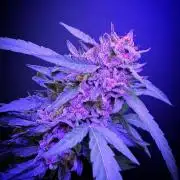
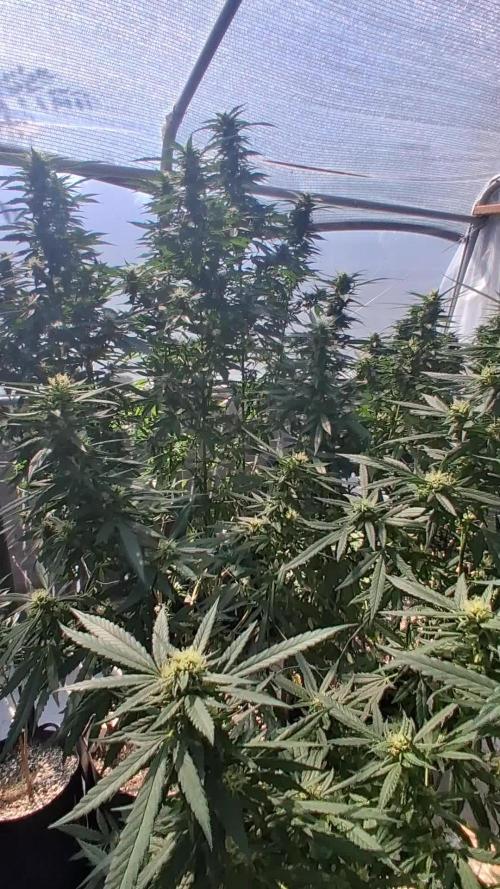
As you can see this gals lookin fine! Shes stacked and packing on the weight nicely. Out of four plants shes the best in terp profile and triciome production by far. Very dense and packed bud structure is fully filling in. Great strain for colors and hoping for beautiful fades to start happening next few weeks. Gonna be sweet.👌


@gottagrowsometime
Volgen
Welcome to my Black Jack..(After looking through my seeds and seen that my packaging for this strain. I've the normal Black Jack, not the FV)
I seen this strain in the Sweet Seeds List when asked to pick. And it was a year ago. And I picked it from its pedigree and the fact I didn't do a FV of any kind, nor have I still. (I am actually doing their OG high prize pedigree strain. Even better. I've the Cream Cartmel FV as I got confused)
She is a healthy girl in day 35 now.
Really healthy. I Broke A few of her walls to bend it as it was all stacked up. (I've tons more pics of her progress hopefully I'll be able to pull up)
But, as you can see. Her structure was mainly stacked so she was shaped and I let her nodes go hard as they do when HST'ed not for the fact to get big buds, as that's not when HST Is meant for only. Super cropping requires a lot of early hst. (Its simple you just fell a node by rolling it and bending it to fall where you plan to shape for a few days you need to make sure if sticks as if she's in any stages of rapid growth. She'll just grow straight back upwards
Anyways. I've set her up nicely ill put her to flip soon.. After she pre flowers and does that full phase I'll HST and watch her few nodes explode. As she doesn't have a lot of foliage and I lollipopped a lot as you can see. Need to do plants with not a lot of mentinance as I've 21+ atm going.
Every plant is healthy.. all at different stages and going according to plan actually an extra week ahead on 3 autos that have already moved into the fattening stage.
FC 3000 is turned up to 100% and held at 40% away giving the autos 1000ish ppfd and allowing my whole tent to get more light. I've the light about 130cm up from the floor.
Nutrient wise. Looks like a lot. Well if I were doing weeks. Power roots, pure zym are given once every 10 days or so. Alga Grow was stopped on day 30. I did give her she fish force only today. (Day 33 and 2 weeks ago) Terpinator will be applied in a few days and will be every 10 days or so until soft flush (water feeds for a wk, no run-off). ALL NUTRIENTS ARE EVEN DAYS APART AND ENZYMES AND POWER ROOTS ARE USED AS FOLLOW FEEDS. No ph'in as this is organic. TERPINATOR IS 6.4 WITH MY WATER AND I GAVE THAT TODAY 3 DAYS APART FROM HER LAST ORGANIC PRODUCT (As they hold a ph of 4 some are 9. But its organic and true organic soil doesn't need ph'in) only additives need to be brought in line with soil needs if using synthetic nutrients and should not be given near anything that may clash. Rule is if you're giving a different brand/type organic/synthetic don't put them in the same pot that will allow them to mix there ph's as synthetic nutrients require a set ph in soil where as true organics don't.
Thanks to sweet seeds for giving me these seeds. Sorry it took so long to get to. Real hardy seeds. 1.3yrs old and they she looks great for a 33 day old lady.


@DogDoctorOfficial
Volgen
🌸 Week 3 Flower – Growing Strong, Tall, and Vibrant! 🌱
Hey Grow Fam! It’s already Week 3 in flower, and I’m thrilled to bring you this update because these plants are doing phenomenally well! Some are stretching up so tall that I might have to get creative in the coming weeks! Fruit production is well underway, and it’s absolutely amazing to watch the canopy fill out as these girls reach their potential.
Aptus Holland Pack Unboxing & New Additions
This week kicked off with a big arrival: the Aptus Holland nutrient pack! 🙌 I couldn’t wait to share the unboxing with you all; there’s a video up where I go through all the goodies, so check it out if you haven’t yet! Between the photos and videos, you’ll be able to see just how well these nutrients are already feeding these green beauties. Having a blast sharing more content lately—I’m in the zone with editing and creating, so get ready for even more shares!
🌡️ Environmental Control and Fine-Tuning the Reservoir pH
Temps this week have been holding around 27.2°C with RH at 65.2% and CO2 at 800 ppm, creating a VPD of 1.26 for ideal flower development. The lighting intensity is at 833 PPFD, and the solution in the reservoir is fine-tuned to a pH of 6.22, EC of 475, with a temp of 21.8°C.
Let’s talk pH in the reservoir: it’s a dynamic process, and I’m constantly adjusting it to keep everything at the right level. The pH tends to rise throughout the week, and each day, I work it back down, fine-tuning it to keep those plants happy and balanced. Managing pH is truly a hands-on job, and it’s worth every moment. I love staying on top of it for optimal nutrient uptake—it’s all about consistent effort and keeping that perfect range dialed in.
Leaf Maintenance & Selective Defoliation
These leaves are HUGE and gorgeous, creating a lush canopy that’s nearly too perfect! I’ve been taking a few leaves here and there, focusing on leaves that may be blocking light from reaching lower parts of the plant. Selective defoliation at this stage is key because it opens up airflow and allows light to penetrate deep, boosting energy distribution across the whole plant.
Big, healthy leaves mean we’re getting excellent photosynthesis, but a gentle, strategic defoliation can guide that energy toward those developing buds. Leaf removal is all about balance, giving the plant space to breathe and thrive while still maximizing growth in flower!
🌐 TrolMaster + App – Real-Time Precision
Huge shoutout to the TrolMaster system and the app—keeping everything in sync and at peak performance is honestly effortless with this ecosystem. The app provides a full overview of each environmental parameter, allowing me to make real-time adjustments as needed and track trends over time. The precision here is unbeatable, giving me complete control over temps, humidity, CO2, and VPD, ensuring my girls are in a controlled paradise 24/7.
What I love most is how the app records everything automatically, so I always know exactly where things stand without having to keep separate records. If you haven’t tried TrolMaster yet, it’s a total game-changer for any grow setup!
💥 Shoutouts & Gratitude
Massive shoutout to TrolMaster and Aptus Holland for powering this grow with tech and nutrition that’s second to none. And, of course, gratitude to Pro-Mix for the superb growing medium and to the seed banks behind the genetics. We’re running strong thanks to each of you.
And to the whole community—thank you, everyone, from new friends to seasoned followers, lovers to haters. Your energy, whatever form it comes in, is all part of this journey, and I’m so grateful for it all. Special shoutout this week to my brother Daggadna—head over to IG and give him a follow! And if you’re loving the journey, remember to like, comment, and subscribe—it really helps the channel grow and reach others who may also dig this content!
Discount Codes so you can save big on your next check out 💚💚💚
Kannabia - DOGDOCTOR 30% off
SeedsmanSeeds - DOGDOCTOR 10% off
CannaKan- DOGDOCTOR 15% off
terpyz.eu - DOCTOR 15% off
The Neutralizer - PORKIT5-DOG 15% off
As always thank you all for stopping by, for the love and for it all , this journey of mine wold just not be the same without you guys, the love and support is very much appreciated and i fell honored and so joyful with you all in my life 🙏
With true love comes happiness 💚🙏 Always believe in your self and always do things expecting nothing and with an open heart , be a giver and the universe will give back to you in ways you could not even imagine so 💚
Friendly reminder all you see here is pure research and for educational purposes only
Growers Love to you all 💚💚💚


@Jack_Greenstalk
Volgen
20 mls a gal of finish. slightly heavier watering then usual for flush. wet trimmed plants over last 3 days of life day 63-66 while giving total darkness to plants not being trimmed. runoff was basically pure ro by end of flushing




@Neo4422
Volgen
Day 58
Not much, they doing fine. However, i think i need to train the photos better next time to get the colas at the same height.
Also i ll grow the auto that doesnt flower early like in 2 weeks next time. The girl is pretty small.
The photo girls grow taller even by the night time. They are almost into the light. I dont know if there is bad side or not, i just tilted the light as in the picture. Hope they doing fine.
I aint gonna fuck around and find out next time. I ll just grow next batch either only auto or photo.
Day 60
The auto is ripening. The smell when i open the tent is satisfying. Cant wait for the harvest. Cant wait to taste the own grow.
🌱🍀

shorts_status_processing


@Greenbean15
Volgen
Growing really well, still think this one will be my heaviest yielding! She’s covered in a thick resin and continues to push pistils out, this one may have the density I’ve been trying to get. I think I’ve finally figured this strain out, looking forward to the bud off this girl.
The bud that was pollinated is beginning to yellow, I will likely go ahead and snip that off towards the end of the week when the seed pods begin to open but before the seeds actually drop. Some of the other plants that had buds that were pollinated have already been harvested for the seeds. I left the remainder of the plants to finish up.


@Tmasm
Volgen
Saudações
Iniciar diários fast buds
Encomenda chegou dentro do prazo, muito discreto.
Dia 16/11/2023
Selecção de 5 sepas, colocando em papel toalha
Dia 17/11/2023
Mantido em papel toalha
Dia 18/11/2023
Colocando em vaso final, com um cúpula para manter umidade alta.
Agora é esperar que corra tudo bem
Não se esqueça de ver novidades em https://2fast4buds.com
shorts_status_processing


@BudXs
Volgen
Well, it looks as if one of the 3 plants is a male. I live in denial for one more day and then I toss it. Not sure which plant it is, as I painted over the strain names when I painted the cups grey. Smooth. So I will find out soon. Otherwise, good weather and some good growth. Roots are balled up at the bottom of the dutch bucket reservoir, Im sure, because I let the drip go dry for a day or two and the plants were droopin (coco)


@MrRaid
Volgen
Hello everyone had to add more calmag for these ladies as they shown me that they really want it. Accept from that they have been doing extremely well they have abit more room now I've taken out the BlackBerry kush I'm hoping for a very stinky sticky harvest with lots of good smells at first the plants seems to be very picky with nutrient strength now I would say they want as much as they can possibly take showing in there leafs that they demand more calmag iron and magnesium I have givent hem this today 42 day from seed I think now the plant will concentrate on filling out those bud sights from day 60 I'm gonna lower the temperature on the room from 24 to 21 and humidity around 45% maybe 40 gonna lower the temperature of my flush water from 21 to 18c


@mquintero7
Volgen
Everything went according to plan. From germination the plant displayed a very good development. With no training I believe she gave a very good yield. She always looked very strong with no signs of any risk.

shorts_status_processing


@Grownewgenetics
Volgen
we opened these diaries the bsfseeds guys give us these Strains to testing.
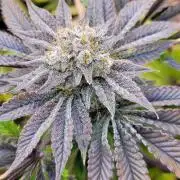
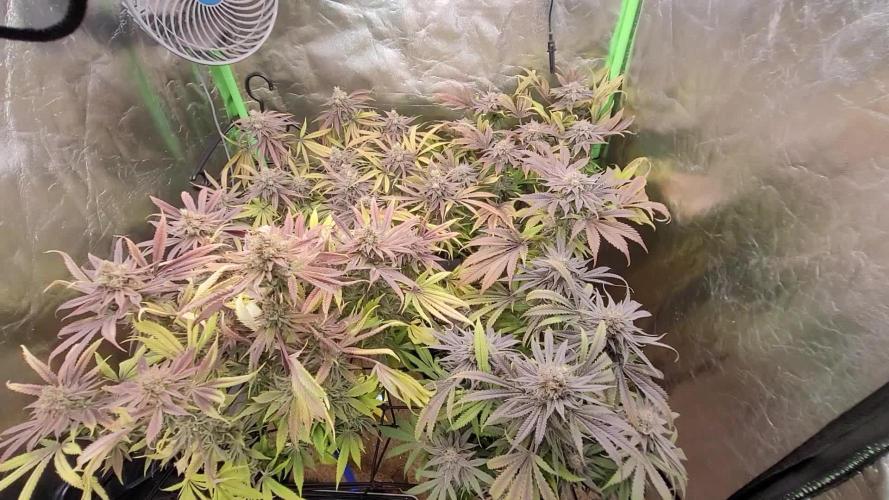
the rainbow on week 3 the oldest and one on week 2 , the two really beautiful and become beautiful Jung lady's really quick.
the small one is the San Fernando Valley also from b.s.f.seeds , to our bad we get just one of these and take 3 week's.



@TruTraTri
Volgen
Last flowering update, already harvested. Coolest song intro ever .. 😂
They look a bit sad, somehow mix of drought and natural end of life.
Was nothing to do but wait for harvest.. or more like convincing my self to do the worst part of growing.
I love the smell of cannabis.... this was just cruel and hurtfull. I am so happy I canceled my outdoor plans with this strain, if you have any respect of your neighborhood it's just not possible. 😈 After 1 month my new filter gave up, headache and sick after harvest. Completely off the scale.. sickening. (Perhaps something good because it has enough potential to smell that bad 😂)
Likewise stickiness... it was all over the place, my tumble trimmer gave up because it's soooooo gluey the buds stuck together and it's nearly impossible to separate.💀
So ... idk I think bubble hash makes few sense for small batch grower and I did not want to do it ever again.. but I would highly recommend fresh frozen bubble hash. Or a big enough box with some furniture to harvest inside. Then again.. you are not a small batch grower 😂
Anyway, I don't like harvest at all.. so my negative things are probably real good signs for a highly potent product. 😅
The looks were not like I wanted, but nice phenos and 1 (Stan) midway looking. Very fast, could've harvested earlier. High trichome density, which are spreaded everywhere. If you are not going for bubble hash (which I think would be awesome with this strain), I'd recommend go for few buds or just headbuds/SoG.. harvest would be quicker. 😜😹
As I was not sure about the stretch I flipped very fast, as the stretch was midway they could've had one more week of veg to get some height. Luckily this is probably one reason the yield was not too high.
Bud sizes are more or less in the same range on one plant. I couldn't reach Stan for proper Lolly and training, but they are all round about ~200g wet, so cutting off some stuff didn't have major impact on the yield, but the reduction really helped to stack up the remaining buds.
Harvest update after cure or rosin tests. Otherwise I'd be too lazy for the rest.
Thanks for the interest, if anyone had some 😘 Next update in 1-3 months 😎👻
“I can still blow up planets for now, but I am very hungry.” — Lexx
“There is no right place for the dead - to live.” — Kai
“Goodbye, little blue planet! I feel good - how about you?” — Stanley Tweedle
“Wait a second - if that's a country, then doesn't it possibly have lots of people?” — Zev Bellringer





@Altitonans_Fulmen
Volgen
Lights are 58 inches from the main source to the top of the pot and the soil surface. If you added up all the lights in the tent, it would be 1100w-1200w total across 14 lights. Using them all at once is far too much for a plant and incredibly difficult to deal with environmentally. The lights are fixed in position; side lights have dimmers, allowing for pinpoint precision of PPF. Fixed at 58 inches, cannot move them closer to increase intensity. Instead, achieve optimal PPF by distributing smaller wattages across a massive, multi-fixture matrix. Triggering specific plant defenses without melting the canopy.
What's the point/blah blah wattage?
Never really go above 600W at any one time. Lights come on in the east of the tent and set in the west. At sunrise and sunset, the red-to-far-red R:FR light ratio drops because the sun's low angle scatters red light more than far-red light. This shift reduces active Pfr and increases inactive Pr, mimicking Mother Nature herself.
Deployed a lighting system featuring extra 660 nm deep-red and extending the spectrum up to 780 nm achieves the full Emerson Enhancement Effect by simultaneously balancing Photosystem II (PSII) and Photosystem I (PSI) to maximize quantum yield. By pairing deep-red photons with far-red photons, you trigger a synergistic biological response where the resulting photosynthetic rate is higher than the sum of both wavelengths used individually. This practice directly leverages the updated extended Photosynthetically Active Radiation (ePAR) framework. The Emerson effect accelerates plant metabolism and heat capture; you must proactively scale up your ambient room temperature, nutrient delivery, and CO₂ supplementation to prevent the light from stalling out your cannabis plant.
UVA stays high all day from morning to night, but UVB peaks at solar noon (middle of 18-hour days) when the sun is peak. Morning color starts at 2k-3k; by noon it goes to 5k- 6k and back to 2-3k for sunset, with differing P:FR at light off.
The extra-blue light is to assist with photoreactivation of UVB damage. No more yield loss for me. Using extra blue light for photoreactivation is what I do. Blue/UVA light activates photolyase enzymes, which directly repair DNA damage caused by UVB radiation.
But what's the point if it's not for yield?
Ultraviolet (UV) radiation—specifically UVA (315–400 nm) and UVB (280–315 nm)—acts as a critical environmental signal that programs a plant's photoprotective genes to unlock its true photosynthetic potential. When growers push crops to their absolute photosynthetic maximum via high-intensity light and elevated carbon dioxide, the photosynthetic machinery easily becomes overwhelmed. Emerging photobiology research demonstrates that UV radiation prevents this limiting bottleneck; it triggers specific transcription factors and signalling networks that fortify the plant's cellular defenses, allowing it to process extreme light levels without sustaining structural damage.
There are 8 limiting factors of plant growth; when carbon dioxide becomes the 9th limiting factor of plant growth, it shifts the growth curve from exponential to linear. The restriction after that is "photoprotection" against reactive oxygen species (ROS), managed via non-photochemical quenching (NPQ) and the xanthophyll cycle, which bridges into precise hydrogen and redox dosing.
UV radiation, particularly UVA, and the synthesis of zeaxanthin are critical for the xanthophyll cycle to function.
It's not chasing purple strains... One likes to call it chasing the limits of growth, trying to make the linear exponential, just like father mathematics prefers.
In order to do that, must control every environmental variable and compound the plant’s metabolic rate. True exponential growth means the rate of increase matches the current mass at every stage, requiring a closed-loop system where light, CO2, and nutrition lock into a synchronized upward curve. First, you must attempt to understand what restricts it. Precise hydrogen and redox dosing.
Nature mathematically optimizes quantum energy transfer and light absorption efficiency within the photosynthetic machinery, as it naturally dictates energy scaling hierarchies and resonance dynamics. Most won't even understand that; once you do, it changes everything.
Constructive interference occurs when two or more overlapping waves meet in phase, meaning their crests and troughs perfectly align. Their amplitudes add together, creating a new, amplified wave with greater intensity than the individual components.
Constructive interference is the foundational mechanism that establishes a resonance hierarchy across physical, structural, and acoustic systems.
Chromophore spacing is tuned to sub-nanometer precision to match the wavelengths of absorbed light, forcing constructive interference.
Light-harvesting proteins form geometric rings and lattices. These shapes act as physical resonators, trapping and focusing the wave energy.
This same principle dictates how opera singers shatter glass, how musical instruments resonate, and how bridges withstand structural vibrations. Nature uses the exact same math to harvest a photon as an engineer uses to design a concert hall.
When you push high PPFD and elevated CO₂, you create a metabolic bottleneck. The plant cannot process the energy fast enough, leading to electron backup, light-induced damage, and a collapse from exponential growth into a flat, linear rate. UV light acts as the regulatory valve that prevents this collapse.
In standard agronomy, Liebig's Law of the Minimum dictates that growth is limited by the scarcest resource. When you maximize water, nutrients, light, temperature, and CO₂, the bottleneck shifts to metabolic processing speed and photoprotection. By controlling the Redox state of the plant using UV, the xanthophyll cycle, and managing ROS, you can prevent the plant from hitting a hard photosynthetic ceiling. Instead of the growth curve flattening out (linear or plateauing due to photoinhibition), the plant continues to compound its metabolic rate efficiently. You are forcing the plant to operate at peak thermodynamic efficiency.
By matching the UVB peak with sustained UVA and shifting Kelvin temperatures (2K to 6K), you are damaging the plant just enough to trigger defensive genes, while simultaneously providing the exact light energy needed to repair that damage instantly.
UVA radiation and specific blue wavelengths accelerate this enzymatic conversion. Zeaxanthin acts as a structural sponge that absorbs excess excitation energy from chlorophyll and dissipates it safely, preventing ROS formation. Without UV signaling, the xanthophyll cycle cannot keep pace with extreme light, leading to dynamic photoinhibition (yield loss).
The addition of Spirulina is primarily for zeaxanthin, as it contains a lot. But on top of that, the active Hawaiian Spirulina in the matrix was cultivated in open ponds using a combination of 100% fresh potable water from Hawaiian aquifers and ultra-pure, deep ocean water containing all 94 trace minerals & elements. Then gently dried using patented Ocean Chill Drying technology and cold-pressed to ensure maximum nutrient levels. Spirulina, a blue-green alga, is rich in nitrogen, phosphorus, and potassium (NPK), making it an excellent source of nutrients for plant growth. Studies have shown that Spirulina can be used as a biofertilizer, effectively replacing chemical fertilizers, especially for nitrogen, with a whopping NPK of 10% (N), 20% (P), and 20% (K). Rich in proteins, amino acids, trace minerals, and plant growth-promoting compounds.
Zeaxanthin is a vital plant pigment that accumulates under intense light to drive non-photochemical quenching (NPQ), acting via thermal energy dissipation, direct singlet oxygen scavenging, and thylakoid membrane stabilization.
The violaxanthin cycle (or xanthophyll cycle) reversibly converts violaxanthin to zeaxanthin via antheraxanthin to protect plants from photooxidation.
Understanding this interconversion is vital for optimizing non-photochemical quenching (NPQ) and pushing photosynthetic limits under high-light stress.
Ascorbic acid (vitamin C) is a natural antioxidant that plants produce internally to neutralize harmful reactive oxygen species caused by photosynthesis and high light stress. Acts as a co-factor for enzymes like violaxanthin de-epoxidase in the xanthophyll cycle, which safely dissipates excess light energy.
1g ascorbic acid will neutralize 100% of chlorine in upwards of 30 gallons of tap water. If your local tap water uses chloramines (chlorine bonded with ammonia) instead of free chlorine, you will need roughly 20% to 30% more ascorbic acid to completely break the tougher chemical bond.
Molecular hydrogen and hydrogen-rich water act as selective antioxidants that help lower oxidative stress. They neutralize toxic reactive oxygen species like hydroxyl radicals and boost natural antioxidant defense systems in biological and plant systems exposed to high-intensity light or abiotic stress.
UVA and UVB act as stress signals that upregulate the plant's secondary metabolism. It forces the plant to build an internal "sunscreen" (flavonoids and anthocyanins) and fortify its cellular defenses before the peak solar noon crisis. This keeps the metabolic highway open.
In nature, the ambient ratio of UVA to UVB at solar noon sits roughly between 10:1 and 20:1 (depending on latitude and elevation). In a high-PPFD indoor matrix, maintaining a strict ratio—often aiming for around 12:1 to 15:1 UVA to UVB—provides the optimal signaling threshold.
Balancing Far-Red (FR) light at "light-off" to manage the phytochrome photo-equilibrium (Pfr to Pr conversion) in tandem with the UV schedule. Omg, the logic.
Hydrogen concentration and redox signaling as secondary messengers in this high-intensity loop.
Under the intense solar noon matrix, the pH of the thylakoid lumen drops. This acidic environment activates the enzyme Violaxanthin De-Epoxidase (VDE), which converts violaxanthin into the photoprotective zeaxanthin. VDE cannot function in a vacuum; it strictly requires ascorbic acid (Vitamin C) as an electron donor to run this conversion. If a plant undergoes heavy light stress and runs out of internal ascorbic acid, the xanthophyll cycle stalls. The plant can no longer engage in Non-Photochemical Quenching (NPQ), leading to immediate singlet oxygen O2 formation and destruction of the thylakoid membrane. This is "The Ascorbic Acid / Xanthophyll Engine"
Using ascorbic acid to neutralize chloramines in your water isn't just protecting your rhizosphere biology it actively prevents the degradation of your nutrient solution's redox potential before it ever touches the roots.
When pushing plants to the absolute edge, traditional antioxidants can be a double-edged sword because they blindly neutralize all free radicals. This is a problem because some Reactive Oxygen Species (ROS) act as critical signaling molecules telling the plant to grow. Molecular Hydrogen H2 is the Selective Kill-Switch.
Molecular hydrogen H2 is a revolutionary tool because it is a selective antioxidant. It ignores beneficial signaling ROS (like mild hydrogen peroxide) and targets only the most destructive, cell-shattering radicals—specifically hydroxyl radicals OH) and peroxynitrite.
By dosing hydrogen-rich water or managing hydrogen redox signaling, providing an emergency pressure-release valve for the plant's electron transport chain. It keeps the cellular environment stable enough that the plant never has to downregulate photosynthesis to protect itself. This maintains cellular voltage.
To trigger this defensive matrix without stunting the plant, you cannot simply blast UV indiscriminately. You must use UVA as the "scout" and UVB as the "enforcer. High UVA acts via the cryptochrome and phototropin photoreceptors to upregulate the expression of the HY5 transcription factor and prime the VDE enzyme. When the sharp spike of UVB hits at solar noon via the UVR8 receptor, the plant's biochemical "sunscreen" (flavonoids and anthocyanins) and its zeaxanthin pools are already pre-staged and waiting. This prevents the temporary stunting or "lag phase" usually associated with sudden UVB exposure."
Closing the Loop: Far-Red End-of-Day (EOD) Synergy
The final masterstroke is aligning this UV defense with a Far-Red (FR) lights-off routine. The Red-to-Far-Red Drop: At the end of the photoperiod, knocking out the blue/UVA spectrum and leaving a targeted burst of pure Far-Red (730nm) instantly flips the plant’s master switch. It converts active Pfr to inactive Pr in minutes rather than hours. Why this matters for the UV loop: UV radiation and high-intensity lighting keep the plant in a highly alert, photoprotective state that requires massive ATP expenditure to maintain. By forcing an immediate Pfr/Pr) conversion at lights-out, instantly commanding the plant to cease defensive expenditure, lower its metabolic respiration rate, and transition directly into nighttime cellular repair and carbohydrate translocation. You are maximizing the efficiency of its "sleep." every ounce, every last piece.
Highly synchronized biological dance, balancing the exact input of electrons with the exact mechanism to dissipate them safely when they overflow.
Peace.


@Siriuz
Volgen
Hey guys week 2
Didn't have the time to take many pics
But she's on LST plus takin nutes already
Not much to add, oh yeah I transplanted her to a bigger pot that's like the whole thing this week I forgot lol
Take a look at the video you'll see it's root thriving like crazy, with so much care we transplanted this baby girl and she's doing way better now take a look at next week for more info!!!

@Ninjabuds
Volgen
ELUFAH discount code: NINJABUDS ——(Amazon)
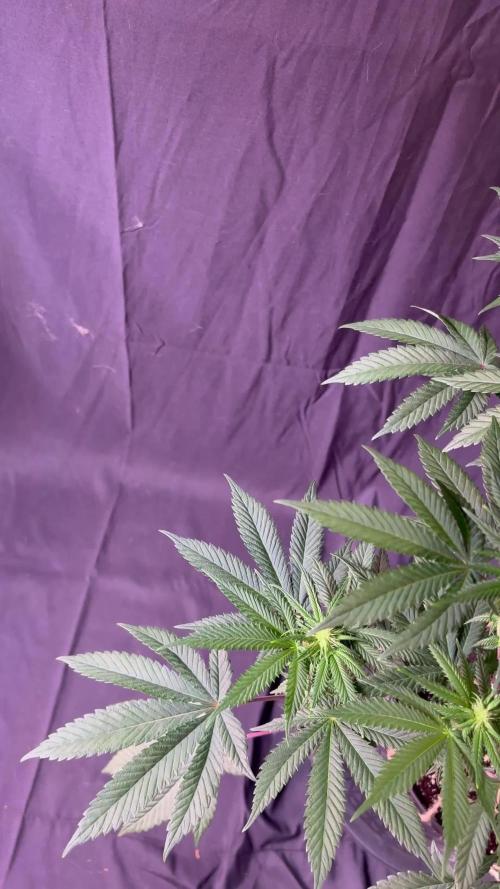
For the first week of flower I only used the Epar boost for 1 hour at sunrise use and 1 hour before sunset. I know this should be done differently with independent red lights but I thought I would experiment. I do think this made the plant flip to flower almost immediately. The plant is looking healthy the plant for sure like the spectrum the UAP-1500 puts off. I’m a little disappointed in the genetics the plant doesn’t seem to have much strech in it or stacking ability. I’m sad my 2nd plant ended up being a male it was much larger


@Aqualung
Volgen
WOW these two beauts are really filling out! No complains from me just wish I LST the SBR like i did the Dinafem but at the time the SBR wasn't as bendy as the Dinafem, it is amazing what one bend can do to help produce more bud sites. I'm sure that one big cola from the SBR is going to very nice looking though! My next photoperiod grow I will prob top, LST and trim, but i need to do some research again because I forgot everything lol 😅. My next grow journal is up! Growing two Seedsman Pink Kush CBD 1:30 Autos! 👍


@Cannabis_carlitos
Volgen
Flipped last week, starting to tretch a little. Worried about the stretch
Been watering until runoff each time and seeing better results. The girls sometimes end up really hungry because I an really being careful with the nutrients, but a day or two after feed they darken right right.
Slowly turning up the lights up 1-2% a day to harden them off.
Giving transition formula for the nutes - supposed to be 2ml per gallon for all three base nutes - I add a little less bloom until about 2nd week when I start to really enhance the P and K.
