





@birdmountain
Volgen
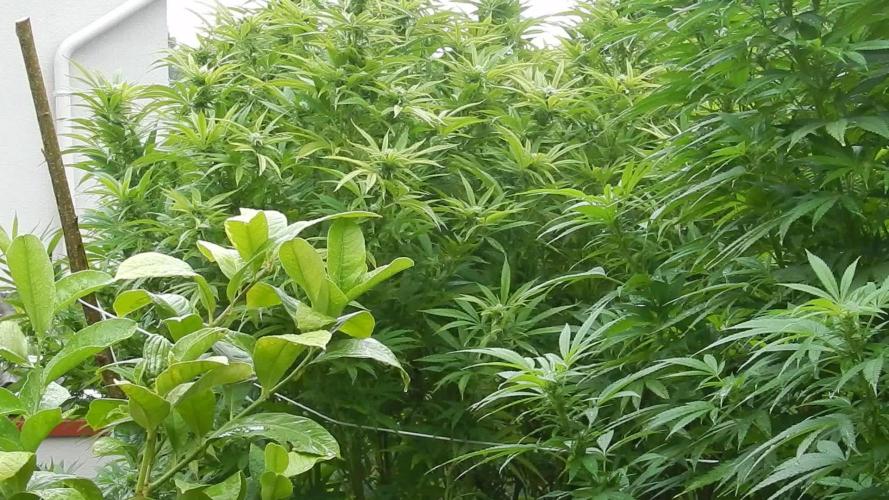
Die Lady hat es eilig!
In einem beeindruckenden Tempo entwickelt sie ihre Blütencluster und zieht dabei die letzten Energiereserven aus den Blättern, die inzwischen immer mehr ins Gelbgrüne wechseln. Aus ihrem Inneren habe ich viele dünne Zweige und Blätter entfernt, damit mehr Licht und Luft an die Blüten gelangen können.
Die Mulchschicht im Topf wird von Woche zu Woche dicker. Die Wurzeln wachsen bereits hinein, und zwischen Erde und Mulch tummeln sich Regenwürmer sowie zahlreiche andere Kleinstlebewesen. Das Bodenleben scheint also bestens in Schwung zu sein. Deshalb habe ich diese Woche auf die Gabe von Komposttee verzichtet.
Bei diesem rasanten Tempo der Blütenbildung könnte es sein, dass ich etwas früher als geplant mit Phosphor und Kalium nachdüngen muss. Dafür stehen Fledermausguano und Bananenschalenmehl bereit. Auch eine zusätzliche Gabe Kelpmehl behalte ich im Hinterkopf.
Der Duft, von dem Dutch Passion selbst so schwärmt, war bislang nur wahrnehmbar, wenn man die Blüten sanft zwischen den Fingern rieb. Heute jedoch, bei nachlassendem Regen und hoher Luftfeuchtigkeit, legte sich ihr Aroma erstmals wie ein feiner Schleier über die Terrasse und war sogar aus einiger Entfernung zu erkennen.
Besonders faszinierend ist die Wandelbarkeit ihres Bouquets. Morgens steigt ihr Duft würzig und fruchtig auf, wie frisch geriebene Muskatnuss auf einem Korb sonnengereifter Früchte. Gegen Mittag verwandelt sich die Luft in eine kleine Streuobstwiese mit dem Duft reifer Äpfel und süßer Fruchtnoten. Erst am Abend zeigt sie ihre edelste Seite: Dann wird das Aroma samtig und warm und erinnert an süßen Cognac, der langsam im Glas seine vielschichtigen Noten entfaltet. (Copilot übertreibt bewußt etwas ...)
Das Höhenwachstum spielt mittlerweile kaum noch eine Rolle. In den kommenden Wochen wird das behutsame Entblättern zu den wichtigsten Arbeiten gehören, damit die Blüten weiterhin optimale Bedingungen vorfinden.
Vielen Dank für euren Besuch und euer Interesse an der Entwicklung der Lady!
Ich wünsche euch eine erfolgreiche Grow-Woche, bestes Wetter und natürlich gesunde, glückliche Pflanzen. 🌱



@Stayblazin420
Volgen
Everything is good. the NL is getting a little heat stressed but she's a blooming beauty. The dwarf is exactly that. A dwarf


@MT_Farmer
Volgen
This week i defoliated a bit, as i wanted to have more light reach lower parts of the plant to increase bud sights and increase air flow through out the plants. Also I put in the net again in a nother attempt to even out the cannopy which didn't really work


@valiotoro
Volgen
Photoperiod buds 🤩
The smell is absolutely divine very fruity,sweet & tropical🍋🍊🍉🍌
Solid like a diamond 💎
Bay harbor butcher’s trim to show the density


@CanarianGrow92
Volgen
Week 4 for the strawberry gorilla from fastbuds 420
All good so far, we continue to apply addictives from xpert nutrients and add some more bloom nutrients as some of the girls are demanding a little more bloom nutrients.
All good so far and not much more weeks to go, lets see of the girls continue to swollen up a bit more


@wolfvb
Volgen
📅 Week 1: The Micro-Mission Begins! 🥦
Strain: Sticky Broccoli Auto 🥦
Stage: germination
Light Schedule: 18/6
📝 The General Vibe
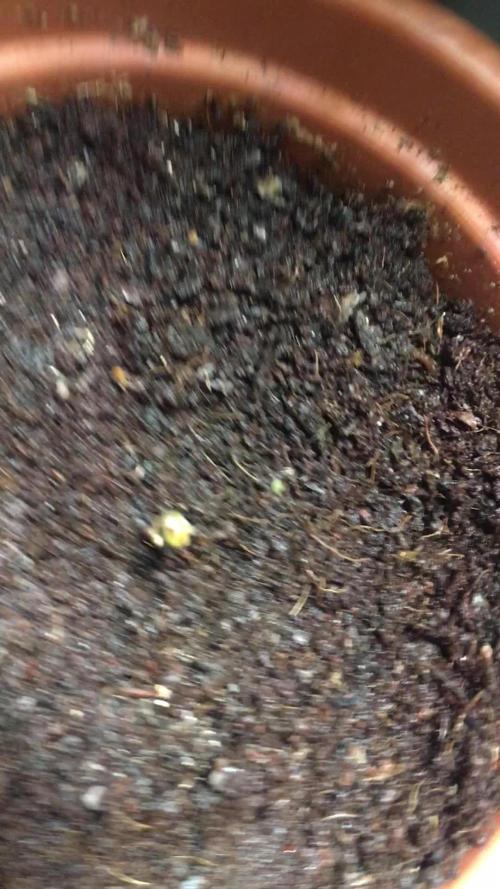
Welcome to my micro-grow experiment! I'm using an extra Sticky Broccoli Automatic seed from my main grow to see what I can achieve in a small space. She's popped and is looking healthy! This is going to be a fun little side project.
So original I popped one 6.01 but she did not Survive, I guess I have over water her the new one have survived so far.
It will be nice experiment and challenge!
🌡️ Environmental Data:
💡 Light: @ 70% intensity
🌡️ Temp (Day/Night): 27°C / 24°C
💧 Humidity (RH): 65%
🚿 Watering: Mist the soil surface daily to keep it moist
⚗️ pH : 5.5
🍽️ The Menu (Nutrients)
Powered by Plagron
Biobizz root juice 3ml



@GREENPHOENIX6262
Volgen
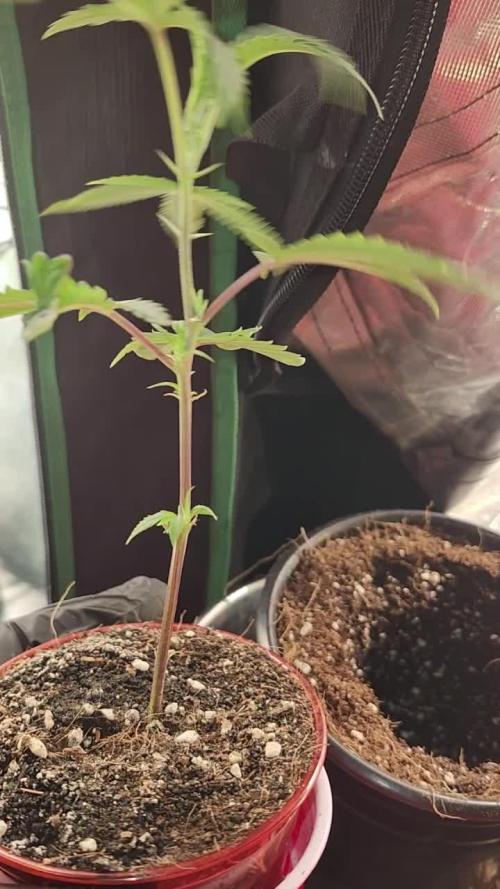
03/01 - (M) - Currently in pre-flower - She is growing amazingly - No deficiencies, wilted leaves or visual que's - I have changed her feeding program to daily micro-dosing between clean water and nute feed alternating days - She will be transferred into the 4x4 flower tent within the week.
03/01 - (C) - The clones are coming along nicely - Transplanted the 7 into 1 gallon pots last night - The substrate is the same as the mother with an added top dressing of worm castings last night - Increased feed formula on some of the nutes (Nitrogen/Silica and Cal-Mag) - High humidity/High heat is the name of the name the game - Specs to follow
Clone specs - Week 2
Height - 13 Inches
Temps - 82°(f)
Feed Temp - 65° (f)
Humidity - 79 - 81%
Watering Vol - 2 cups every 3 days
Nutrient Feed - Nitrogen - Silica - Cal-Mag - Microbes - Kelp - Horti Grow - Myco



@Greenkeeper_SJ
Volgen
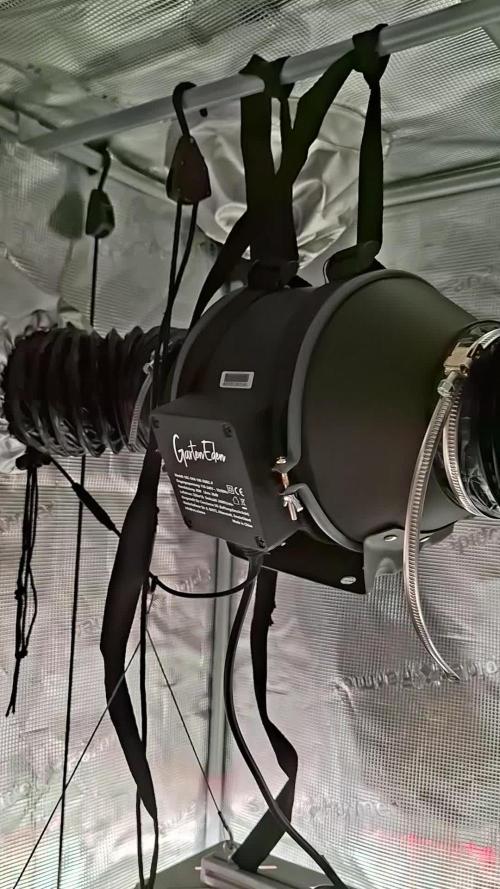
Blütewoche 4 - Abluft Final Stage - Turbo / Wurzelbelüftung (Airdome) - Start PK
- Abluft Projekt II - Final Stage ;-)
-- Abluft ist durch die Wand gekommen, mit Mauerkasten, Rückstauklappe usw.
-- Abluft jetzt deutlich leistungsstärker, und macht weniger Geräusche
-- Abluft Leistung auf ca. 20-30%
-- sehr leise draußen
-- konstante Luftfeuchtigkeit bei 50%
- Turbo Booster
-- Wurzelbelüftung eingeschaltet
-- Airpots haben unten jeweils einen Airdome drin, plus Luftpumpe
- kein PH Ausgleich mehr, nach allen Düngern bin ich konstant auf 6.1 PH - das ist i.O.
Nährlösung (Wasser mit CalMag) auf 0.6 EC , mit Dünger (von starke Zufuhr, auf normal verringert) -- 2.6 EC
Erste Leichte PK Gabe (Canna PK 13/14) , kleiner Boost für den Start vor Woche 5
Wassermenge im Moment ca. 18 L Nährlösung alle 4 Tage.

shorts_status_processing


@STAYINGONMYMAINCBATORUNTWO
Volgen
I made some extract and made some edibles and added it to the diary!
This diary may get a little unorthodox because they’re in the jungle down the centre line but will still document as much as I can and get close ups of the bud sites and buds as time goes on! Shouldn’t be too challenging but it’s a challenge lol it’s all doing great though! Better than I expected!


@No_Clout
Volgen
29/08/18 - A wee bit of light burn(Bleaching) on tips of girl #1 and #2, girl #3 is abit smaller than the others but that should change once my new light arrives next week, also got some terpinator arriving on Saturday so I’ll update then ✌️🏻
02/09/18 - unfortunately my terpinator dident arrive yesterday still a unknown ETA on that but the good news is my mars hydro 192 reflector is arriving tomorrow.
03/09/18 - new light hanging up great had to tie some of the stems to my tent post to keep them at 16” distance, still no terpinator which is guttin I’m hoping it arrives tomorrow, also got some big bud coco in the post aswell. ✌️🏻




@gr3g4l
Volgen
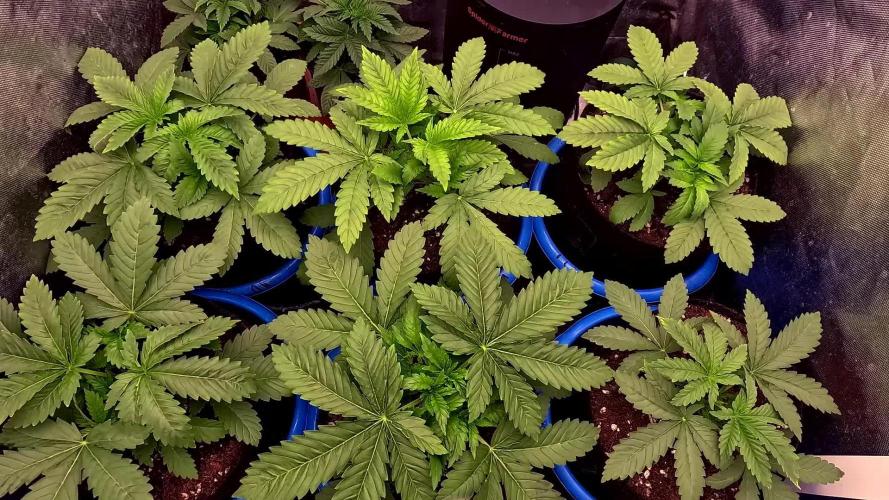
La semana pasada corte apicales y esta semana una buena defoliación dejando namás que las copas y poco más.
A finales de semana las resitué y puse a todas en su sitio .
Dos que habia descartado y las tenia en maceta de 1 L las trasplanté a una maceta de mayor tamaño y saqué al exterior.



@Ultraviolet_
Volgen
"You will know them by their fruits"
46-47 days from germination, she fills the canopy herself, and the apical dominance is broken.
It's not all about the amount of light, but the ratio too, as this will dictate growth through the ratio of phytohormones. In order for correct bud development, there needs to be a correct ratio of RGB. Different wavelengths have different penetration depths. When one grows using top-down lighting, only the entire canopy is limited to 2-3 layers of leaf, meaning there will only be correct bud development in those layers, regardless of getting 45DLI.
The biomass potential of a plant is linked to root mass. Generally, when a plant reaches its maximum biomass, you can help to chop off parts of the plant that are in less than efficient areas of the plant (low light). So that it can create new biomass growing towards the light.
Strength is the maximum potential, and power is the rate of conversion. You can have the biggest veg period of 18 weeks, and it means nothing, as soon as you start flower, the chronological clock starts ticking, the only metric that matters to bud size is how much energy you convert each cycle, not by how long it took you to build the framework.
Each leaf is like a satellite receiver attached to an antenna called a stem; each leaf removed lowers the energetic potential of conversion.
Not saying you cannot defoliate for a reason, only that you should have one, and at the right time. Don't defoliate 30+% on autoflowers or 4 weeks into the flower period and expect an increase in yields; it doesn't work like that. There is certainly room for dictating growth patterns and clearing out overcrowded nodes, but it needs to be done in veg because once that timer starts and buds start growing, it's all just energy conversion. Most grows I barely defoliate at all in a 4x4 because with side lighting, turning a 2d canopy penetration into a 3d, even lower buds are 90% the quality and density of top ones. The rate of photosynthesis and the ultimate density of lower buds aren't just about the sheer number of photons PPFD. The specific ratio of R:G:B dictates canopy penetration and drives different photochemical reactions. The Electron Transport Rate (ETR) measures the speed at which electrons are driven through Photosystem II (PSII) during photosynthesis. The ratio of Red, Green, and Blue (RGB) light heavily dictates this rate.
Plant leaves continuously perform cellular respiration regardless of the time of day, using energy and oxygen to fuel essential metabolic maintenance. If you over-defoliate, the remaining canopy may be unable to produce enough net sugars during the day to offset the constant respiratory demands of the plant. Must balance fixation with assimilation; there's no point in capturing 45 DLI if you only convert 20% every cycle due to an extreme lack of respiratory capacity to perform cellular oxidative phosphorylation.
A crinkle-cut French fry has more surface area. When it cooks, it has a higher capacity for energy transfer/conversion, which is what makes it slightly crispier than a regular straight-cut French fry when it comes out of the oven.
You can have a 4x4 canopy or a 4x4x4 canopy. Oversimplified, but you get the idea, yes, we know that side lights are not as effective at absorption from the sides or underneath, but it's not about DLI, it's never been just about efficiency, it's about the penetration ratios of RGB that drive ETR of/photosynthesis and trigger correct bud development. The size of each bud is its own ability to perform the ETR required for its own personal growth, and bud development is dictated by the ratio of RGB. It drives localized growth and acts as a regulatory switch for that development. Turgor pressure is another very important factor in understanding if you want big buds, for it is the "steam engine" that dictates the rate of bud expansion. Simply, never going to happen playing it safe metabolically at ambient 75F.
Because buds have less chlorophyll, they do not suffer from the same photosynthetic shutdown that over-exposed, light-stressed leaves do. They can soak up direct light energy to swell in density and size. Their tolerance to intense light is heavily limited by the temperature and humidity, but if you can control those temps and keep the rot away, buds have a much, much higher tolerance to high light than leaves. Beneficial to hammer with high light before trichomes appear. Balancing this with trichome maturity is key for rich terpene and flavonoid profiles, want it just right, somewhere in the middle, not too much, not too little. Find cannabis plants can defoliate themselves come harvest, given the right signals. Every last ounce of potential is recycled into buds by the plant itself (senseceance), given you can keep the level of conversion high enough to prompt a need to do so.
Get the canopy @ optimal PPFD range, 45-55DLI, then let the plant "stretch" the stems into a "PPFD range much higher, one that leaves don't like to grow in, but buds thrive in. What is optimal for a bud is different than what is optimal for a leaf photosynthetically. Genes provide the blueprint, but the environment dictates how, when, and if those genes are expressed. Must first signal the condition to increase the expression you want to exist through stress and response, cause and effect. A well-buffered CEC medium prevents extreme nutrient swings, allowing plants to maximize their dedicated genetic expression.
A plant is either genetically expressing "growing" or "recycling" genes based on its nutrient starvation level in the medium. Constantly toggling between "growing" and "recycling" hormonal states creates a futile cycle that wastes valuable metabolic energy. Plants rely on sophisticated biochemical switches to manage this trade-off, and prevent rapid fluctuations that disrupt that balance.
This energy inefficiency is a recognized biological challenge. Plants avoid this costly "flip-flopping" by using hierarchical master regulators (like the TOR and SnRK1 protein kinases) that act as strict molecular switches. These networks enforce cellular commitment to either growth or survival, preventing mixed signals.
This is something that was missing from previous grows.
Under nutrient-rich conditions, TOR promotes protein synthesis, cell division, and structural expansion.
Under starvation, TOR is inhibited and SnRK1 is activated. This triggers autophagy—where the plant breaks down old macromolecules and organelles to scavenge and reallocate essential nutrients to critical sinks.
"What's the point in flushing?"
The core idea behind a PK booster is to deliver a massive, concentrated surge of P&K exactly when buds are swelling in conjunction with a N starvation. Because these are short, targeted windows, the nutrients must be highly bioavailable so the plant can process them immediately. As soon as you go "organic," that's out the window. Much slower release, uncontrolled, very difficult to "spike". to cause the ratio that will initiate a response.
High-volume PK spikes rely strictly on the immediate uptake capabilities of mineral fertilisers. Making it far less efficient in organic/living soil setups.
When you use organic nutrients, it changes the dynamic with which the plant delivers and trades its nutrients; organic is always releasing new nutrients into the immediate EC. This prevents a lot of autophagic responses from occurring due to a constant stream of new nutrients into the immediate medium's EC. This can prevent nutrient starvation signalling.
PK boost is essentially just N starvation, triggering an autophagic response. Concentrated ratio of P&K while tapering off the Nitrogen base. To the plant, the sudden drop in Nitrogen registers as a severe environmental stressor—essentially, the beginning of starvation protocols. She aggressively strips nutrients and proteins from older leaves and vegetative structures and shuttles them directly to the developing flowers and fruit. Ta daaa. Call it a PK booster and sell it. Nothing to do with the P and K itself, it's the ratio immediately available in the medium triggering a nutrient recycling mechanism within the plant itself; all the "booster" sells is the trigger to the signal.
Very difficult to initiate a response when organic nutes are doing their thing. It takes 4x5x more water significantly to leach or wash ammonia out than it does nitrates. This alone will prevent flushing from having its normal impact.
I'll be manipulating the C:N ratio in the medium instead. One autophagic response has multiple potential signal triggers. Nutrient starvation is not an option. Well, it is, just it's going to be manipulated Nitrogen starvation through Excess Carbon, instead of starving the medium entirely(EC).


@JJs_Js
Volgen
This week has been a breeze. Simply watered at 6.5, kept the humidity at 65%, and increased the power of my light to about 70%. Also made a tea with Roots Organic Terp Tea Grow, and watered it down 1 -4 tea to water. Even with diluting the tea, the plants showed a little burn, so I’m holding off on ferts til next week. All are looking great, besides the one LSD25 that is off to a slow start.

@burnout
Volgen
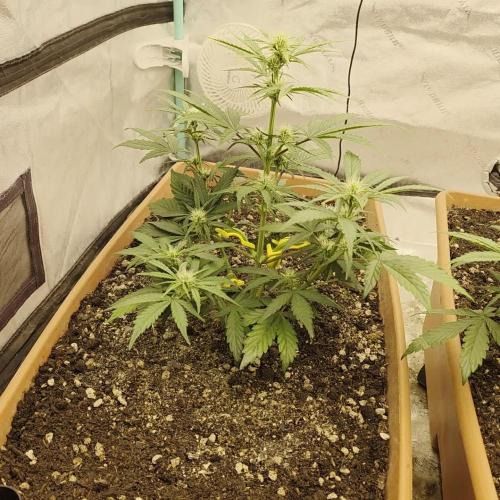
Day 28. Started seeing stigmas on the plant on the left on day 24, now seeing flowering on the plant on the right and just starting on the plant in the middle. The middle plant sprouted first, the other two came up a few days later. Hoping to see some good stretch soon! Took about three days for the reservoirs to go dry last week. Added top dress along with rock phosphate and top watered each box with one gallon of water including the ferment, recharge, and build a bloom. Added another gallon of water to reservoirs today.



@Vincent11
Volgen
Hi Everyone
A great week like always for the Gorilla Autoflower from RQS.
Buds forming up nicely getting bigger by the day. Some big buds forming again.
She is doing really good besides the light stress I always cause because no high in little grow room.
She accepted high PK Bloom nutrition really well and we are gone into first flower sprout first orange/brown pistils have appeared.
This means she is getting ready to go into finishing and concentrating on buds ripening.
From my experience most Autoflowers have 2-3 cycles off flower spouts before they are ready.
So one more week High Bloom nutrition awaits my baby.
Feeding her 2 times Nutrition, 1 Time 6PH water only 1.2 Litres every 2 and half days.
I think she will do well on the scale.
Thanks everyone for following and good luck growing.
Happy Growing


