


Likes
Comments
Share


@organically
Follow
Week 5 - Day 4 - 11.12.2017
-
Hay lovers of Green, i will give you a big update.
While trying to fix the PH and Humidity issues last week, i've already found some nice root developments and decided to transplant to support the regeneration - 6.12.2017 -.
The Plants were unhealthy and shocked.
After 2 Days they started to reviltalize and stable - 08.12.2017 - and i found a suprise, the Dinamed's start to Preflower.
-
Today the sweetys are healthy,vital,bushy and got nice stems, in height arround 16 cm
-
■ Dinamex Auto. [Dinamex (Cali Sour D x OG Kush {Emerald OG}) x Haze 2.0 Auto (Jack Herer x Haze Automatic) ]
■ OG Kush Auto. CBD [ OG Kush Auto {OG Kush x Haze 2.0 Autoflowering} x Auto CBD ]
-
■ Timeline ■
Germination start [ 09.11.2017 - 17:00]
Germinated / into Coir Pellets [ am - 11.11.2017 / ]
PreVegetative start [ 13.11.2017 ]
Transplanted into 1L Airpots [ 19.11.2017 ]
Vegetative start [ 26.11.2017 ]
Transplanted into 7L TeKu [ 06.12.2017 ]
-
PreFlowering start [ Dinamex - 08.12.2017 // ]
-
Flowering start [ xx.xx.xxxx ]
Harvesting Part 1 [ xx.xx.xxxx ]
Harvesting Part 2 [ xx.xx.xxxx ]
-
■ Growroom ■
Size » 90x90x170 ~ 0,8 m²
-
PreVegetative Lightning
» 24 ▪️ LED ~ 33W - daylight - 3700lm
Vegetative Lightning
» 24 - 20/4 ▪️ HID ~ 250W - 5600K - 18.000lm
Flowering Lightning
» 12/12 ▪️ HID ~ 400W - 2100K - 56.500lm
-
Supply air ▪️ mesh window - negative pressure
Exhaust air fan ~ max.420m³/h ]
Circulating air fans ~ 3x16W max.2250 rpm
-
Pots ▪️ Coir Pellets --> 1 L Airpots --> 7 Liter TeKu.
Medium ▪️ Organic Soils!
Composition ▪️ bark humus,wood fibers,coconut fibers,coconut husks,compost,guano,hornmeal,clay minerals,trace elements,calcium carbonate,perlite.
-
■ Supported by ■
» Dinafem Seeds!
» Cellmax - Organic Growing.
//////////////////////////////////////////////////////////////////
👋 Greetings your organically
» tried and true, since simple is the best! 👍

Likes
13
Share


@Swamp81
Follow
Week 3 - doing very well!
Moved the plants to an attic room in my house and positioned them under a sky light - seem to be thriving now. I taped some tinfoil around the plants to maximise sunlight.
Vegetation looks healthy and I have been watering sporadically when needed. No signs of any problems or stress, fingers crossed!
Thinking about repotting them into their final, larger containers soon. Nothing added in terms of nutrients or anything like that!
So far, so good. Let's hope they stay on track.


Processing
Likes
96
Share


@The_Projexx
Follow
Things are going very well for Obi#2 . She's come a very long way and shes sure showing her ability to endure this nub grower :P :P :) Over all her flowers are swelling up nicely no major signs of stresses or anything like that shes just growing and doing her thing . She smells very pungent I really enjoy the smell . I'm excited to see what the next few weeks are going to be like !
A special thank you goes out to all the people who stop by the diary ! You guys rock . A special thank you goes out to all my followers keep being kick ass guys !! I'd like to wish everyone a happy/merry what ever holiday you celebrate and may you new year be filled with love and joy !
-Happy Growing!

Likes
18
Share


@Family_Trees
Follow
This week gave me a lot of info.
I see purple showing up on the edges of leaves. The trichomes are really starting to line the leaves of the upper buds. Both of those things are like krunkleberry. The longer structure of the buds lean toward critical. The way the buds are filling in looks krunkleberry.
The smell is a dank sour dough blueberry with a floral critical back drop. I'm not sure if I want to eat it burn it or stuff a pillow with it!
In regard to nutrients over the week. A top dressing of roots organic terp tea was applied at a rate of 1 tsp/ gal of soil. 2 cups of roots organic 707 soil was added as well for the ready available nutes in it. Today a brewed batch of terp tea will be watered in. The tea was brewed for 24 hours. It was mixed at a rate of 1 tsp/gal of water. This next part really just made me smile. The water started at a ph of 7.3. After brewing for 24 hours the terp tea ph was 6.73.
Likes
6
Share


@CanadianFillmore
Follow
Start of week 7. Week 6 went well, however she still required and extra 2 liters of food on day 6 of week 6. This girl is insanely sticky, she's getting super dense and frosty, with a sweet earthy smell.
Likes
283
Share


@love_2_grow
Follow
D53 - It's been a few days since my last entry, but I had the opportunity to spend a long weekend in Amsterdam, and who can say no to that?
It's a mission to hook up the automatic drip irrigation for only a few days of travel, so I watered the girls thoroughly before leaving.
Sure, they were thirsty when I came back but weren't drooping.
The trichomes still show a bunch of clear, so chop day is still a bit off.
The girls STINK! Or rather, they smell amazing but smell A LOT. It's that bad that I'm replacing the old carbon filter tomorrow. I was initially planning on replacing the filter after this grow, but my girlfriend starts to grumble a bit, so I better get to it...
D56 - We're at the end of the eighth week of flower, and it is all a waiting game. I still see many clear trichomes, so that it will be another week or two before the chop.
I'm a bit concerned, though, as we have had a lot of rain lately, and the general humidity is relatively high. This increases the humidity in the tent as well, and it is currently in the low 60s even though I have a small dehumidifier running. That is high this late in flower, and I'm worried about botrytis.

Processing
Likes
10
Share


@yaron
Follow
starting week 6,the wedding cheesecakes are in flower for a couple of days now and the gg are starting to flower.
alot of wind and clouds and rain these past two weeks but the girls are looking good in my opinion.
update:after 4 or 5 days of rain and low temperatures finally the re is sunlight so the girls have to recover a bit.
but things are looking better wheatherwise.
cheers!

Likes
5
Share


@Bamz84
Follow
Did a little Defoilation in the garden trimmed of any branches thar werent going to reach the top cleaned up the fans leaves that were blocking air circulation so far so good getting these ladies ready for transition😶🌫️

Likes
27
Share


@All_our_small_plants
Follow
Bewässerung: 500 ml jeden 3 Tag in der Sechsten Woche
pH-Wert: 6
EC-Wert: 1,8 mS/cm
Temperatur: 26ºC
Luftfeuchtigkeit: 55%
Schädlingsbekämpfung: im Moment haben wir keine Anzeichen das es was zu bekämpfen gibt, sobald die ersten Anzeichen da sind werden wir handeln :), aber zur Sicherheit haben wir wieder ein paar Raubmilben an die Pflanzen gehenkt.
PPFD: 600 µmol/m²/s
DLI: 38 mol/m²/Tag
Düngemittel: Sie bekommt CalMag von BioBizz zu Prävention. Ab Tag 8 haben wir angefangen sie mit einem Mineralischen NPK Dünger (NPK 10-4-7) zu Gießen .
Besonderheiten: Sie ist nun seit einer Woche im Großen Zelt und macht sich ganz gut.
-Tag 36 sie erholt sich gut von Umtopfen und wir haben die LST Sticks wieder angepast.

Likes
26
Share


@pifflestikkz
Follow
Day 37
06/08/24 Tuesday
De-chlorinated tap water pH 6 today with calmag only.
Pre flower stretch initiated, pre flower female sex pistils forming 😍
All happy and healthy!
Structure of Melonade Runtz and Critical orange is Beautiful.
Pic and vid update
Day 39
08/08/24 Thursday
Feed today using de-chlorinated tap water pH 6 with Plagron PK13-14.
Showing her pre stretch 😍
Day 41
10/08/24 Saturday
De-chlorinated tap water pH 6 today again with calmag.
400ml with run off now.
Day 42
11/08/24 Sunday
End of week
De-chlorinated tap water pH 6 today again with calmag.
400ml with little run off this time
Pistils on pistils now 😁
Starting to see the beginning of bud formations 💚

Likes
10
Share


@23Savage
Follow
here we go, day 12 from born, i think it goes little slowly, what you all think maybe add floratrio? "bloom,micro,grow"?
Likes
5
Share


@diabloelnino
Follow
The whole cycle was pretty easy. Grew great didnt need to take care of it alot.


Likes
27
Share


@Veteransgrow710
Follow
Week is normal for got the super sherb back on track after i overfed to see what she could handle lol. Im gonna transplant her tomm into a 5gal power pot. The other 3 are getting huge the 2 l.i.t have been topped 2x now and the ethos only 1x so far. They are looking very nice these plants are bigger than my first grow.


Likes
7
Share

Likes
5
Share

@Bread_n_Buds
Follow
Merry Christmas and happy holidays to everyone, and above all, a fantastic new year of growth with monsters, plants, unicorns, and all the magical beings we love.
** This week, mostly just grow tent photos, so you don't miss any updates over the holidays.
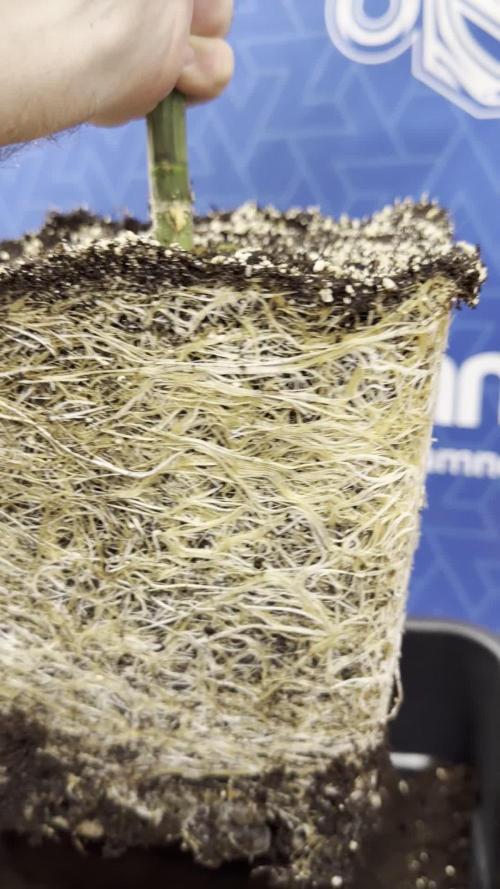
Our Tropicana Cookies #2 was transplanted from 6.5 to 20 liters into a larger pot just after I finished taking the photos, and she's already enjoying it. She was starting to feel a bit cramped, the vegetative stage is producing a lot of roots, and I could see her wanting a new home, so this time, the photoperiod-trained plants will all be in 20-liter or 15-liter Zamnesia pots.
Selected techniques - I was thinking of topping this plant repeatedly with a mainfold of 16 branches, but I think I'd like to get to 32, perhaps by trimming off any that are at risk of remaining low.
We're 100% organic and 1000% Plagron, as always.
We've chosen the recently launched Plagron Bio LightMix soil, which will allow us to get off to a smoother and more reliable start, without the sudden changes that liquid fertilizers can cause. A week is more than enough, so don't overdo it.
We're in the early stages of the vegetative stage, but we're well equipped with fertilizers and additives. We've added:
- Power Roots 1 ml/l
- Pure Zym 1 ml/l
- Silic Rock 1 ml/l
- CalMag Pro 1 ml/l
- Sugar Royal 1 ml/l
- Alga Grow 3 ml/l (Let's go easier on the topping)
Foliar spray only once a week
- Vita Race 5 ml/l
Choose your preferred style and calculate your results on the website:
www.plagron.com
Our new 720W Spider King lamp from Vanguard Hydroponics is still on its lowest setting. Visit the new Growshop area on the Zamnesia website:
Z - https://www.zamnesia.io/en/531-growshop
Our Tropicana Cookies is now in great shape, give it a try!
Z - https://www.zamnesia.io/en/10921-zamnesia-tropicana-cookies-semi.html
Z - The award-winning Girl Scout Cookies is a cannabis strain that lends itself very well to breeding projects. That's why we boldly experimented by combining its genetics with a fruity Tangie. The result is Tropicana Cookies, a fast and potent hybrid with 22% THC. This strain is highly productive, and its buds are not only rich in sweet and spicy terpenes but also covered in a layer of sticky trichomes (which facilitate the extraction of high-potency concentrates). Tropicana Cookies' genetic makeup is 60% sativa and 40% indica, a blend that produces a balanced and euphoric effect.
Although easy to grow both indoors and outdoors, Tropicana Cookies thrives outdoors in warm climates. If you have enough space and good sunlight, the plants can reach heights of 180 cm. Wait until mid-October and, in optimal conditions, you can harvest a whopping 700 g/plant. A result well worth the effort. This strain also impresses indoors, reaching heights of 150 cm and producing 500 g/m². Tropicana Cookies also stands out for its rapid flowering. After just 7-8 weeks of indoor flowering, it will be ready for harvest.
You know it, but I recommend it: here you can find so many beautiful things, essentially "the best that nature has to offer."
Z - www.zamnesia.com
Music //
www.radionula.com
+ Feng Shui Music
+ 432 Hz Frequencies

Likes
59
Share


@Rap_a_cap
Follow
Cropped on Sunday evening as scheduled, a few days before complete ripening. I'm not worried about that as this shit plant has the hardest and frostiest buds I've ever seen. The complete pre-harvest defoliation made me understand a few things, stem rot. What I believed was a lack of nutrients instead was some rot at the base of the stem which I did not recognize because this plant was too leafy. This is probably the reason for the buds rot spots, considering that the weather was still dry until now. The loss is few grams so far. The plant has a fantastic skunky and fruity smell and is very easy to manicure.The buds are so resinous that seems to have slime in my hands. See you soon for the report of the harvest. I've decided to do a wet trim and manicure to check out for eventual hidden rot spots, this has required 3 days of work and a lot of spliffs and simply I forgot to weight wet plant. Estimated wet weight is 1,5/2 kilos.
Likes
14
Share


@RunWithIt
Follow
She's a beast! Trucking along, just doing her thing.... I hit her with a molasses watering last night and she frosted up today! And now she gives off a super sweet, kind of tangy scent. Dont worry, I rub the branch calyxes, not the buds haha. I will be feeding her with the usual ratio of FF nutes(10ml Big Bloom, 5ml Grow Big + Tiger Bloom). Also up until this point, I've been giving her foliar spray with 5ml/1gal Calmag+. I will no longer be doing that to combat relatively high humidity I've had over the past week.

Likes
161
Share


@DogDoctorOfficial
Follow
An the time to move this Girl to her final pot and final home destination as came and she was praying to the gods, i mean happy as they can be, not so happy after the transplant but that was just for a couple hours i think since wen i look at her again past 12 hours or so she was again praying to the gods like they are just listening to what she as to say, and to me she is saying that she is happy and thankful for the new changes for the care , for the love and for it all <3 <3 <3
Haded a Full HD POV Video of the all process transplanting this cutie to her final destination hope you all enjoy it <3 <3 <3
So lets see how she does now that she as serious and way more advanced competitors in the same house as her so stay tuned because this one promises to be an outstanding journey true what seams to be an amazing phenotype <3 <3 <3
She is just loving the changes, the new home , the environment and to be surrounded with girls way bigger than she is hihihi, i think it all is making her moving even faster than she already was hahaha
As always thank you all for stoping by, for your time for the love and for it all, i do love growing in this amazing community and how we all interact and learn from each others and thank you Super Sativa Seed Club for this one for the new competition evolving her and for it all <3 <3 <3
I know she looks small comparing tho the rest of her sisters, but she is almost a month younger and running crazy trying to catch up with the rest of the gang, growing amazing, loving it <3 <3 <3
Connected her to the autopot and there is no questions that she is drinking and praying to the gods <3 <3 <3 week is almost ending, very curious to see next one and how she will do <3 <3 <3
Genetics :
PURPLE OG PUNCH AUTO @ Super Sativa Seed Club
All info and full product details can be find in can find @
https://aptus-holland.com/
https://supersativaseedclub.com/cannabis-seeds
https://autopot.co.uk/
https://lumatek-lighting.com/
#aptus #aptusplanttech #aptusgang #aptusfamily #aptustrueplantscience #inbalancewithnature #trueplantscience #growerslove #dogdoctoofficial
With true love comes happiness <3 <3 <3 Always believe in your self and always do things expecting nothing in return and with an open heart , be a giver and the universe will give back to you in ways you could not even imagine so <3 <3 <3
More info and updates @
https://growdiaries.com/grower/dogdoctor/official
https://instagram.com/dogdoctorofficial
https://youtube.com/channel/UCR7ta4DKLFMg2xxTMr2cpIg
<3 <3 <3 Growers love to you all <3 <3 <3
I know that i still have to change to the auto on the dearie profile, but its a new strain and i cant find it in there so asap i will change it to the proper one <3 <3 <3

Likes
Comments
Share

@Budhunter
Follow
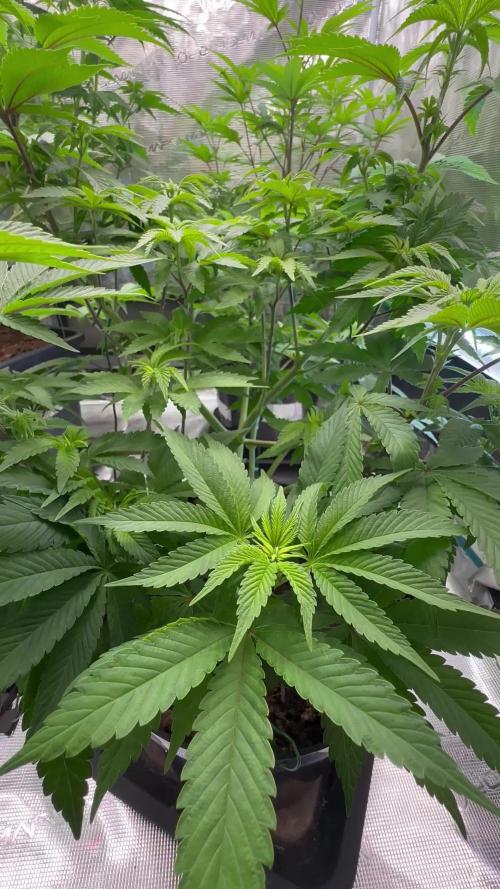
Week 1 flowering - Day 6 of flowering & Day 62 of life
Finally flowering here. It’s been 5 days on flowering, still pre flowering but finally the best is coming.
Lemon cherry pie is going well, many bud sides, let’s fatten up them 💪🏼🔥✨