


Likes
Comments
Share

@StonedSteve
Follow
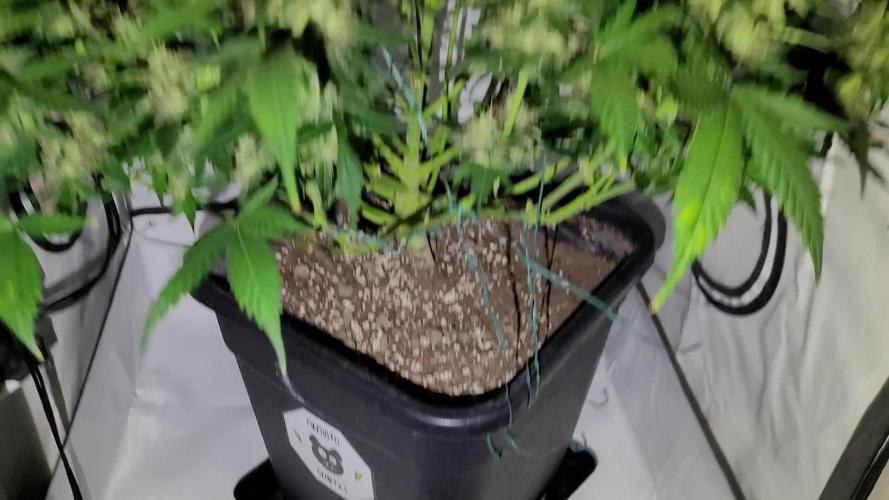
Zdar startujeme 6. týden květu
Apollo kyne, zálivku jsem stáhl na 6L, protože při 7L začalo vytékat až 2L, hnojky jsem taky zreguloval začali mi lehce žloutnout špičky listů, ale teď to vypadá že je vše v pohodě, teď už to jen dokrmit a dotáhnout do zdárného konce.
Vůně je velmi intenzivní, zatím jsem spokojenej snad se nic neposere, za týden zase čau ať se vám daří.
Fotky a video z 02.09.

Likes
1
Share

@DogDoctorOfficial
Follow
🌱 8×8 Adventure | Folder 09
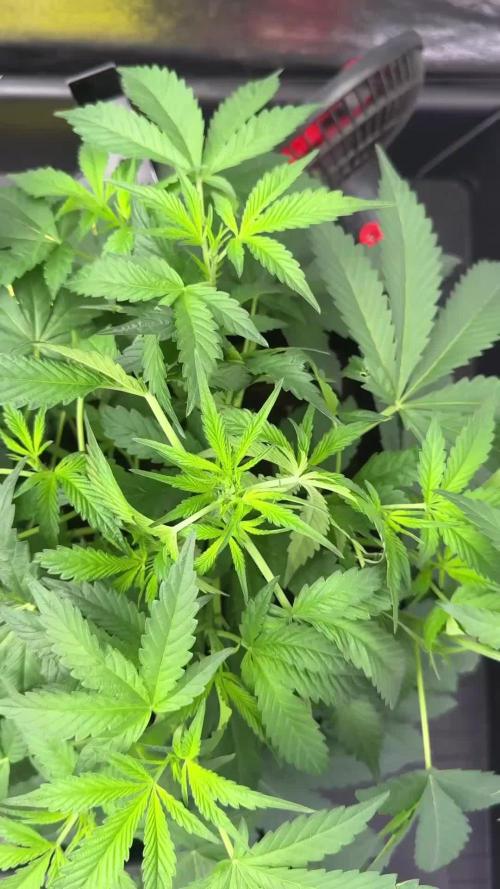
Candy Rain – Plant A | Week 4
The Little Survivor
Every grow tells a different story, and sometimes the most memorable stories begin with unexpected setbacks.
Welcome back to the 8×8 Adventure, a project dedicated to exploring multiple genetics grown 12/12 From Seed inside the same flowering environment. The goal is simple: document every phenotype individually, compare their development under identical conditions, and learn something new from every plant along the way.
Folder 09 follows our Candy Rain.
Unfortunately, she is the only survivor from this batch. The other seeds didn’t make it, and that’s entirely on us. Growing is a journey of constant learning, and sometimes the greatest lessons come from the mistakes we make. Rather than seeing it as a failure, we’ve chosen to give this little lady all of our attention and let her show us exactly what she’s capable of.
Every plant deserves the opportunity to tell its own story.
⸻
🌿 The 8×8 Adventure
This entire project is being grown inside our dedicated 8×8 flowering tent, where every cultivar begins life immediately under a 12 hours ON / 12 hours OFF light schedule.
There is no long vegetative period.
Instead, every plant develops naturally from seed while already living under flowering conditions, creating unique structures, shorter internodal spacing and allowing us to compare how different genetics react to exactly the same environment.
Although every plant shares the same room, nutrients and lighting, each phenotype expresses itself differently. That’s exactly why each folder documents a single plant from start to finish.
Candy Rain is proving that point perfectly.
⸻
🌡️ Environment
Despite summer temperatures continuing to challenge the room, the environment has remained remarkably stable.
Week 4 Conditions
• Light Schedule: 12/12
• Day Temperature: 33°C
• Night Temperature: 25°C
• Relative Humidity: 63%
• pH: 6.1
• EC: 1.35 mS/cm
• CO₂: 639 ppm
• Pot Size: 15 L
Even with daytime temperatures reaching 33°C, the plants continue responding well thanks to stable humidity, strong air circulation and careful environmental management.
Consistency is often far more important than chasing perfect numbers.
⸻
💧 Feeding Programme
Candy Rain receives the same balanced Plagron feeding programme as the rest of the room.
Current solution per litre:
• Terra Grow — 1.8 ml/L
• Power Roots — 1 ml/L
• Pure Zym — 1 ml/L
• Sugar Royal — 1 ml/L
The solution is adjusted to pH 6.1, maintaining nutrient availability while supporting healthy root development throughout this early stage.
Because this plant is hand-watered, every irrigation becomes another opportunity to inspect the substrate, monitor water consumption and observe her development closely.
⸻
🌱 Development
From the very beginning it became clear that this Candy Rain is developing differently from many of the other plants in the room.
She remains significantly smaller, with a naturally compact structure and shorter internodal spacing. While several of her neighbours have already begun stretching into flower, this phenotype seems to prefer building slowly, producing tight growth and a sturdy main stem before committing to vertical expansion.
Sometimes 12/12 From Seed reveals exactly these kinds of differences.
Certain cultivars explode almost immediately, while others seem to take their time adapting before accelerating later in flower.
At this point there is nothing suggesting poor health.
Quite the opposite.
Her new growth is vibrant, symmetrical and full of life. Every node develops cleanly, her stem continues to strengthen and the fresh growth emerging from the centre has a beautiful healthy colour.
She’s simply telling her own story at her own pace.
⸻
🍃 A Small Setback
One detail worth mentioning this week is the damage visible on a few of the older fan leaves.
After careful observation, the injury doesn’t resemble a nutritional problem. The new growth remains completely unaffected and the damaged areas are isolated to only a handful of older leaves.
The most likely explanation is mechanical wind damage.
With strong airflow inside the flowering room, larger fan leaves can occasionally fold onto themselves or vibrate continuously in the same position. Over time this creates dry, burnt-looking patches that may resemble nutrient issues but are actually simple physical damage.
Because the affected leaves aren’t getting worse and the new growth remains perfect, no corrective feeding changes were necessary.
Sometimes the best decision is simply to observe instead of reacting.
⸻
🍃 Gentle Training
Training remains intentionally minimal.
Rather than removing healthy foliage, we continue relying on leaf tucking to expose developing shoots to the available light.
By carefully moving larger fan leaves beneath the canopy, lower branches receive more light without reducing the plant’s photosynthetic capacity.
This gentle approach allows the plant to continue building energy while maintaining as much healthy foliage as possible during these early stages.
Patience often produces better results than unnecessary intervention.
⸻
🌱 Looking Forward
Although Candy Rain currently appears to be one of the smallest plants inside the 8×8 tent, that certainly doesn’t mean she’ll stay that way.
Some phenotypes invest heavily in root development before accelerating above the soil. Others naturally remain compact throughout their entire life while producing exceptionally dense flowers.
That’s exactly why projects like this are so enjoyable.
Every phenotype becomes its own little experiment.
Whatever path this Candy Rain decides to follow, she’ll receive exactly the same care, patience and attention as every other plant in the room.
Because every seed deserves the opportunity to reach its full potential.
⸻
💚 Final Thoughts
Growing has a funny way of keeping us humble.
Sometimes everything goes according to plan.
Sometimes we lose seeds.
Sometimes one little survivor becomes the most interesting plant in the room.
That’s exactly why we document every stage honestly—the successes, the mistakes and everything in between. Every experience teaches something valuable, and every diary becomes another chapter in the journey.
A massive thank you to everyone following the 8×8 Adventure. Your encouragement, advice and shared passion for growing make these journals far more meaningful than they would ever be on their own.
Huge thanks to Zamnesia for the genetics, Plagron for the incredible nutrition keeping this garden healthy, Future of Grow LEDs for providing the light that powers every day of this project, and to the entire GrowDiaries team and community for giving growers around the world a place to learn, share and inspire one another.
As always, thank you for stopping by, for reading, and for growing alongside me.
Until next week…
Growers Love and happy growing! 🌱💚

Likes
12
Share


@HerbalBlazer
Follow
Now nearly court up so this is around 3_4 weeks flower just finishing stretch here

Likes
Comments
Share

@Greenthumb85
Follow
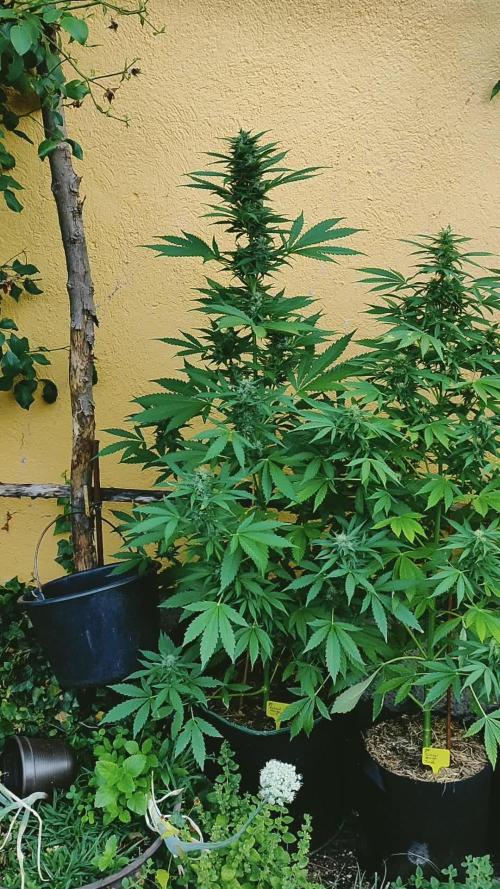
The Rainbow Sherbet is still in stretch. The tallest plant is around 168 cm tall. The buds are still very small and with lots of white hairs. I assume the stretch should end very soon and the bud development should kick in. The plants do not smell yet but I think this will change once the buds get growing. I have added some Plagron Alga Bloom for some quick nutrients. The temperatures have been very warm and should stay like this for a while. Happy growing!
Likes
2
Share


@eldruida_lamota
Follow
Que pasa familia, vamos con la sexta semana de floración de estas Gorilla Cookies Fast Flowering, de FastBuds.
Agradezco a Agrobeta todos los kits obtenidos de ellos 🙏.
Hasta aquí veis que llevan buen progreso y el color que se marcan es espectacular.
Vamos al lío, el ph se controla en 6.2 , la temperatura la tenemos entre 22/24 grados y la humedad ronda el 50%. El fotoperiodo a 12-12. Estás próximas semanas veremos cómo avanzan.
Agrobeta:
https://www.agrobeta.com/agrobetatiendaonline/36-abonos-canamo
Hasta aquí todo, Buenos humos 💨💨💨

Likes
14
Share


@NANTANLUPAN
Follow
A very sticky🍯 and fragrant variety, it has a sweet 🍑peach-like scent and is grown entirely organically☘️

Likes
14
Share


@AndrewC
Follow
So this is the Tear Down week. The timing of it makes it so i will need to the harvest flag in a few days when I can weight and test the plants.
I have included the Cleaning, and Cutting and some Root Porn.
I will make the harvest post in about 4-5 days, when I can trim these plants. There is a lot of Plant here. I got way more than I was expecting. I don't have a scale that measure this amount of plant, without taking like 10 measurements and then adding them together. So I will just be posting the dry weight. I will post the wet weight as dry weight * 1.65.
Autopots: Wow, what a great product. I have been blown away by how well and how easy it was to work with them. They really did solve the watering issues. Excellent product. If you are a beginner, start with Autopots.
-= Lessons Learnt =-
- Overdrive the air to your Autopots. In my control plant, I used a small rectangle air stone (instead of a standard air dome). This lead to root rot and some other issues, it also put significantly less air into the water. The root rot, give the material for the Brown Algae to grow. Using a huge Air-disc-Air-Stone would be an excellent combo to mix in with the air dome itself. Something like this: https://www.amazon.ca/Pawfly-Diffuser-Suction-Hydroponics-Aquarium/dp/B01MY3AQ33 at the bottom and the air-dome on top of it, will be what I do with my next experiment.
- Air stone in the reservoir. I had two instances where algae grew into the res. An air stone would have helped. It would have also helped my control plant get less root rot. Given the amount that the air-domes and air sources got engulfed, having the water have more o2 in it would have only been beneficial.
- Don't grow 6 plants in a 4x4. Since my control plant was about 1/8th the size of the others, I think I could have grown 5 in the shape of a 5 (on a 6 sided dice)⚄ This placement would give a much more spaced canopy for airflow and more importantly light. The sides of some of the plants were lighter green and produced larf due to lack of light penetration.
- This tent was on 19-5 schedule. This worked out very well for this strain. After every lights on, they were in the praying position, so this strain was able to recover in that 5hrs off. If I had more seeds, I would run these again, and try 20-4. I think this strain could handle it. All for all, I think I'm going to 19-5 as my default timing. This kept up a solid DLI.
- Staring at .9EC (really .7 EC cause my water here is .2 EC) Then bumping up at .1 a week, until 1.6EC worked out VERY well. I experimented on this crop all the way up to 1.9EC, which burnt the tips of this plant. I think if I did this strain again, I would do 1.6EC until 3-4 weeks left then crank it to 1.9. It did plump them up when I went to 1.9, however it left them looking rough. Bulk was added though.
- Sticking to 6.0PH for all of veg, and 2 weeks into flower worked great. The plant had solid and consistent color and leaf shape . The plant's did get hurt, due to some issues (as noted on the weeks). I switched to 6.5 PH in the last 3-4 weeks and it helped them recover, and plump up noticeably.
-VPD. The #1 thing I focused on was VPD. I keep it .9kpa range, as best as humanly possible. It was honestly, HUGELY noticeable compared to my other grows. I know truly understand the value of properly dialed in VPD. This is the one lesson that will stick with me forever.
- Super-cropping: On the plants I give the chiropractic treatment too, had much thicker stems as much larger channel internally. I did this treatment to 4 of the 6, and the 4 that had it done has larger buds and recovered from defoliation faster.
TLDR; VPD is king. Super-cropping is worth the time. Keeping PH and EC dialed in were all wins. Autopots kick ass.
Likes
8
Share
@DogDoctorOfficial
Follow
🌸 Week 6 Flower – Gelonade Diaries
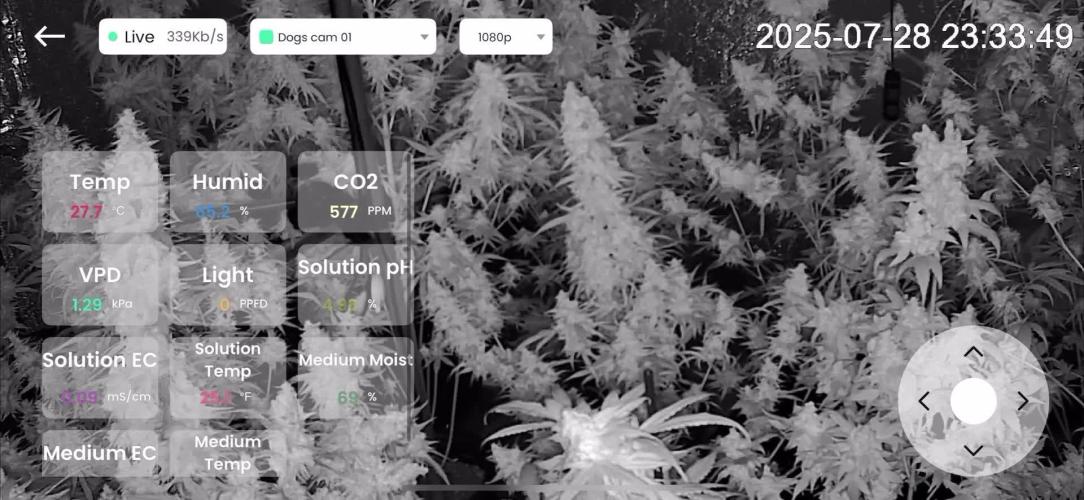
The Gelonade girls continue their elegant dance into flower, both Pheno #1 and Pheno #2 shining in their own unique way. Their structures remain remarkably similar, tall, strong, and full of energy, while each holds onto her own personality, expressed in leaf form and flower shape.
This week we noticed a few small spots on the leaves. Nothing dramatic, nothing to sound alarms about, but enough to remind us that plants, like people, sometimes whisper when they need something. It could be calcium, it could be another minor imbalance, but the key is observation. We’ll keep a close eye, watching for patterns, listening to what the girls want to tell us, and adjusting gently if needed.
🌱 Quick Recap (For Those Just Joining)
From the start, this run has been about detail and care.
• Germination was clean and quick, the girls leaping from seed into life.
• Veg was marked by strong branching, healthy leaves, and the unforgettable funky unicorn foliage of Pheno #2.
• Transplanting into super soil and fabric pots gave them the room to spread their roots and breathe.
• The shift into flower was smooth, guided by careful lighting, steady feeding, and a balance of Aptus and Plagron nutrients.
• Weeks 4 and 5 saw sativa-like stretch, white hairs bursting across every cola, and canopy lights filling every corner with photons.
Now here we are in Week 6: the garden maturing, the flowers stacking, the personality of the genetics truly revealing itself.
💧 Feeding & Balance
The recipe continues to revolve around Aptus Regulator, CalMag Boost, Top Booster, and Plagron’s Power Buds, Sugar Royal, and Green Sensation, with Aptus All-In-One Liquid helping tie the orchestra together. We’re keeping EC balanced, always mindful that the soil already provides a strong foundation.
💡 What’s Happening & What’s Next
This week is all about observation. Flowers are swelling, resin begins to sparkle in early traces, and aromas start to hint at what’s to come.
What to expect: denser buds, richer pistil coloration, and a canopy that will soon demand defoliation for airflow.
What not to expect: miracles overnight. This is the stage of patience, where the magic brews quietly within each calyx.
💚 Closing Thought
The Gelonades remind us that growth is rarely flawless. A spot on a leaf is not a failure, but a message. Perfection isn’t the goal, balance is. And balance is exactly what these girls are showing us week after week.
May the flowers swell with grace,
may the leaves whisper their truths,
and may the grower’s patience
be rewarded in full bloom.
PS: Understanding Foxtailing
One of the girls, our Pheno #2, is starting to show signs of foxtailing. For those new to the term, foxtailing refers to when buds grow in elongated, irregular patterns instead of stacking neatly into the dense, conical shape we often expect. The result is a flower that looks “spiky” or “funky,” almost as though the plant is growing multiple little towers from a single cola.
Why does this happen? There are two main sides to the story:
• Genetic Foxtailing: Some strains naturally express this trait, especially sativa-leaning hybrids. In this case, foxtailing is simply part of the plant’s personality, often leading to extra surface area for resin glands, which can even mean more trichomes and aromas.
• Environmental Foxtailing: Stress factors can also trigger it — high heat, intense light (too much PPFD), or shifts in feeding can encourage buds to keep stacking in odd ways rather than finishing their round formation.
In our case, the temperatures have sometimes pushed higher than ideal, and the lights are running strong, so those factors might play a role. But genetics also carry a heavy influence, and Gelonade — being sativa-leaning, can naturally lean toward these elongated flower expressions.
Is foxtailing a problem? Not at all. While it can look unusual compared to the “textbook” cola shape, it doesn’t reduce quality. In fact, it can increase flower mass and surface resin coverage, giving us more material and potentially more complex aesthetics. Some growers even treasure it as a unique expression of their plant’s individuality.
So while Pheno #2 may look a little funky, we see it as a gift, more fruit, more character, more story to tell. This is the garden’s way of reminding us that beauty doesn’t always fit a mold, and that variation is part of the magic of growing.
📲 Don’t forget to Subscribe and follow me on Instagram and YouTube @DogDoctorOfficial for exclusive content, real-time updates, and behind-the-scenes magic. We’ve got so much more coming, including transplanting and all the amazing techniques that go along with it. You won’t want to miss it.
•GrowDiaries Journal: https://growdiaries.com/grower/dogdoctorofficial
•Instagram: https://www.instagram.com/dogdoctorofficial/
•YouTube: https://www.youtube.com/@dogdoctorofficial
⸻
Explore the Gear that Powers My Grow
If you’re curious about the tech I’m using, check out these links:
• Genetics, gear, nutrients, and more – Zamnesia: https://www.zamnesia.com/
• Environmental control & automation – TrolMaster: https://www.trolmaster.eu/
• Advanced LED lighting – Future of Grow: https://www.futureofgrow.com/
• Root and growth nutrition – Aptus Holland: https://aptus-holland.com/
• Nutrient systems & boosters – Plagron: https://plagron.com/en/
• Soil & substrate excellence – PRO-MIX BX: https://www.pthorticulture.com/en-us/products/pro-mix-bx-mycorrhizae
• Curing and storage – Grove Bags: https://grovebags.com/
⸻
We’ve got much more coming as we move through the grow cycles. Trust me, you won’t want to miss the next steps, let’s push the boundaries of indoor horticulture together!
As always, this is shared for educational purposes, aiming to spread understanding and appreciation for this plant. Let’s celebrate it responsibly and continue to learn and grow together.
With true love comes happiness. Always believe in yourself, and always do things expecting nothing and with an open heart. Be a giver, and the universe will give back in ways you could never imagine.
💚 Growers love to all 💚


Likes
11
Share


@CanarianGrow92
Follow
First week of flowering for the girls.
We started with some master bloom from Xpert nutrients and continue with master root also from xpert nutrients.
We placed a net above the poants to guide some of the taller branches and create a more equal canopy.
We defoliated some lower leaves and for the rest it looks quite good, some plants showed a little sign of overfeeding so we lower the dosis this week.
Likes
2
Share


@JuanP
Follow
In to week 2 of flower, screen starting to fill in nicely. Nothing much else to report, everything looking healthy with no signs of any deficiencies, really stepped up a gear with growth now. I’ll be doing some more tucking to fill the screen completely over the next few days, final defoliation and clean up below the screen next week and that should be the training finished till harvest.


Likes
4
Share
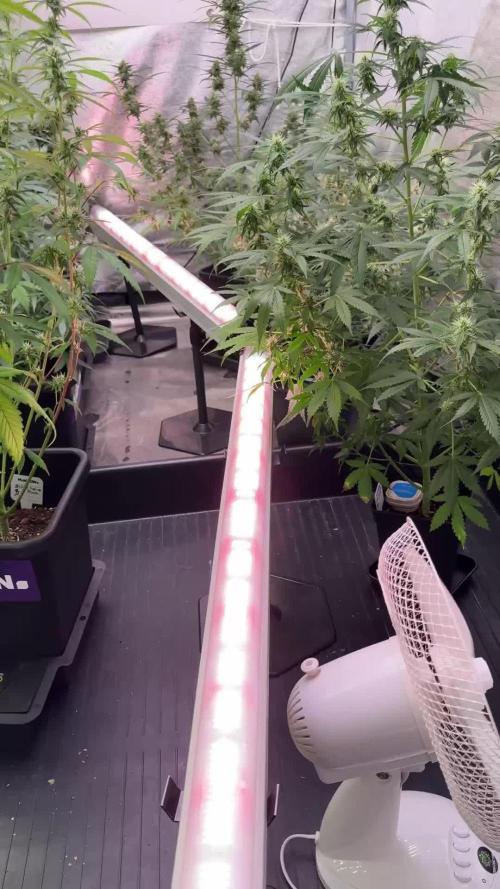
@DogDoctorOfficial
Follow
🌿 Frosted Guava Auto by Zamnesia | Pheno A | Week 9
✨ She's Shining — And Sometimes Beautiful Plants Need a Little Cleaning
Welcome back to another chapter of the 8×8 Adventure!
And our Frosted Guava girl?
She's still shining. 🌿✨
Actually...
She's shining more and more.
The flowers are developing beautifully, the plant remains lush and green, and those gorgeous flowering structures are becoming increasingly impressive.
But this week wasn't just about watching her grow.
This week, she told me something.
She needed a little attention.
Not because anything was wrong.
Not because she was struggling.
Simply because she had reached the point where some of the older, tired leaves had done their job and it was time to clean things up.
So...
we did exactly that.
A little defoliation.
A little cleaning.
A little maintenance.
And then?
Back to letting this beautiful girl do what she does best.
Grow.
Flower.
And shine. 💚
🌱 The 8×8 Adventure Continues
For anyone discovering this diary for the first time, welcome to the 8×8 Adventure.
This project is all about watching different genetics and phenotypes develop under the same general environment.
The same room.
The same 12/12 lighting schedule.
The same environmental philosophy.
The same nutrition strategy.
The same lighting ecosystem.
And yet...
every plant tells a completely different story.
Frosted Guava Pheno A has been writing hers beautifully.
She's not necessarily the biggest plant in the room.
She's not trying to compete with every phenotype around her.
She simply has her own personality.
And right now, that personality is becoming very easy to recognize:
lush, green, balanced, beautiful, and increasingly frosty.
✂️ This Week: Time for a Cleanup
Last week I was looking at her thinking:
"She's looking really good."
This week I was looking at her thinking:
"Okay girl... I think you need a little haircut." 😂
There were older leaves.
Leaves that had started to fade.
Leaves that were no longer contributing much to the plant.
And there were a few areas where the canopy simply benefited from a little more organization.
So we went in and cleaned her up.
Nothing extreme.
Nothing crazy.
No stripping the plant bare.
Just a sensible removal of the leaves that had reached the end of their useful life and a little bit of canopy maintenance.
Because there's an important difference between defoliating a plant because you think you should...
and cleaning a plant because you've actually looked at the plant and decided it needs it.
This week was the second one.
🍃 We Don't Need to Take Everything
One thing I always want to make clear when I talk about defoliation:
The goal isn't to remove every leaf.
Far from it.
Healthy leaves are still part of the plant's machinery.
They're capturing light.
They're contributing to photosynthesis.
They're supporting the developing flowers.
So even after the cleanup, plenty of healthy foliage remains.
I took what needed to come out.
I left what still had a job to do.
And that's the balance I'm looking for.
You don't need to make a plant look naked to call it clean.
You need to make the plant appropriate for the environment it's growing in.
And Frosted Guava now looks exactly where I want her.
Clean enough.
Open enough.
But still beautifully green and full of life.
The Job Isn't Finished When the Leaves Come Off
And here's something that I think deserves much more attention in grow diaries:
What happens after defoliation?
Because removing old leaves from the plant is only part of the job.
If those leaves fall onto the floor...
they don't magically disappear.
😂
They stay there.
They dry.
They break down.
They can accumulate underneath plants, around pots, in corners and in places where we don't necessarily notice them immediately.
And that's not what I want inside my growing environment.
So after cleaning the plant...
we clean the room.
Old leaves come out.
Plant debris comes out.
The floor gets cleaned.
The areas underneath the canopy get checked.
Anything that shouldn't be there...
gets removed.
Because maintaining a clean growing environment isn't about making the room look pretty for photographs.
It's about good hygiene.
It's about reducing unnecessary organic debris.
It's about making the environment less welcoming to unwanted problems.
And when you're running a full room like this...
cleanliness matters.
🌿 A Clean Plant in a Clean Environment
This is something I've learned more and more throughout the 8×8 Adventure.
The plants are only one part of the ecosystem.
The room itself matters.
The floor matters.
The pots matter.
The airflow matters.
The surfaces matter.
The little pieces of dead plant material hiding underneath the canopy matter.
Everything contributes to the environment.
So when we clean a plant, we're not finished when the scissors stop moving.
We clean the whole area.
And then we can close the tent and say:
"Okay. Now we're ready for another week."
That's exactly what we did with Frosted Guava.
🌸 And She's Looking Beautiful
And after all that maintenance...
the best part?
Look at her.
She's beautiful.
The green is still gorgeous.
The flower structures are developing beautifully.
The calyxes are becoming more pronounced.
The white pistils are still standing proudly throughout the flowers.
And the resin development continues becoming increasingly visible.
This is one of those plants where I genuinely enjoy looking at the photographs because there's so much going on.
From a distance, you see the overall structure.
Move closer...
and suddenly you're looking at individual flowers.
Move closer again...
and the calyxes and pistils become their own little world.
That's what makes this stage so fascinating.
The plant is still changing.
Every week.
❄️ Frosted Guava Is Living Up to Her Name
And yes...
the frost continues.
It's becoming increasingly easy to understand where the name Frosted Guava comes from.
The flowers are developing that increasingly sparkling appearance, with resin becoming more obvious across the developing structures.
We're still not at the finish line.
Not even close to making any final judgments.
But she's certainly giving us a beautiful preview.
And those white pistils?
I love them.
They're still fresh and prominent throughout the flowers, giving the plant that wonderful contrast between deep green foliage and bright flowering sites.
It's one of those combinations that never gets old.
☀️ Still Eating Photons
The lighting strategy remains the same.
The Future of Grow Black Series LED continues providing the primary overhead lighting, while Lumiflora continues contributing additional light into the lower portions of the canopy.
And Frosted Guava is still doing what plants do best:
turning photons into plant.
Leaves capture light.
The plant uses that energy.
Structure develops.
Flowers develop.
And eventually we get to see the result of all of that work.
At around 1,000 PPFD across the upper canopy, there is plenty of light available above.
The under-canopy lighting adds another interesting dimension to the experiment, particularly as the room becomes increasingly full.
And Frosted Guava has plenty of flowering sites to keep us interested.
💧 Feeding Continues
The nutrition program remains consistent.
🌱 Plagron Terra Bloom — 2.2 ml/L
🌿 Plagron Power Buds — 1 ml/L
✨ Plagron Green Sensation — 1 ml/L
🍯 Plagron Sugar Royal — 1 ml/L
⚗️ Plagron pH Plus — 0.03 ml/L
🍋 Plagron Lemon Kick — 0.03 ml/L
Current recorded parameters remain around:
pH: 6.0
EC: ~2.0 mS/cm
Watering: ~1.3 L per plant / 24h
Solution temperature: 25°C
Substrate temperature: 26°C
And visually, she continues responding beautifully.
There are no dramatic changes required.
No reason to reinvent the program.
She's growing.
She's flowering.
She's building.
So we're continuing to let consistency do its job.
🌡️ Week 9 Environment
Current conditions:
🌸 Flowering: Week 9
📏 Height: 120 cm
💡 Light schedule: 12/12
🌡️ Day temperature: 29°C
🌙 Night temperature: 25°C
💧 Relative humidity: 60%
⚗️ pH: 6.0
⚡ EC: ~2.0 mS/cm
🌡️ Solution temperature: 25°C
🌱 Substrate temperature: 26°C
🌬️ CO₂: 639 ppm
? Pot size: 15 L
💦 Watering: ~1.3 L per plant / 24h
Stable.
Consistent.
Predictable.
Exactly what I want while the plants continue doing their thing.
📸 This Week's Gallery
This week's photographs tell two stories.
The first is the plant itself.
Beautiful flowers.
Beautiful leaves.
Beautiful structure.
Beautiful colour.
Beautiful development.
The second story is what happened around the plant.
The cleanup.
The older leaves coming out.
The canopy becoming a little more organized.
And then the room being cleaned afterward.
I think that's worth documenting too.
Because growing isn't just about taking the beautiful photographs when everything looks perfect.
It's also about the work that happens behind those photographs.
The cleaning.
The observation.
The maintenance.
The little decisions.
The things nobody sees when they look at the final picture.
That's part of the 8×8 Adventure too.
Clean Room, Happy Room
There is something extremely satisfying about finishing a cleanup and looking around the tent.
No old leaves lying around.
No unnecessary plant debris.
The floor is clean.
The canopy is tidy.
The plants have room to breathe.
And then you step back...
and look at the whole 8×8.
That's when you realize how far this project has come.
What started as individual plants has become one enormous flowering garden.
Every phenotype different.
Every plant with its own personality.
And Frosted Guava has found her place right in the middle of it.
🔭 Looking Ahead
Now?
We let her work.
The cleanup is done.
The room is clean.
The healthy foliage remains.
The flowers continue developing.
And Frosted Guava can simply concentrate on the next stage of her journey.
I'm especially curious to see how much more those beautiful flowers will develop from here.
The calyxes.
The pistils.
The resin.
The density.
The final structure.
There is still plenty of story left to write.
And I have no intention of writing the ending before she does.
💚 Final Thoughts — She's Shining
Frosted Guava Pheno A is becoming one of those plants that doesn't need an introduction anymore.
You look at her...
and you know why she's here.
She's beautiful.
She's healthy.
She's balanced.
She's green.
She's flowering beautifully.
And she's getting increasingly frosty.
This week she needed a little attention.
So we gave it to her.
We removed the older leaves that needed to go.
We kept the healthy ones.
We cleaned the canopy.
And then we cleaned the room.
Because good cultivation isn't only about what happens on the plant.
It's also about what happens around the plant.
Old leaves don't belong on the floor.
Dead plant material doesn't belong underneath the canopy.
And unnecessary debris certainly doesn't belong inside the growing environment.
So we clean.
We remove.
We reset.
And then...
we let the plants shine again.
And Frosted Guava?
She's doing exactly that.
She's shining. ✨🌿❄️
The green is beautiful.
The flowers are beautiful.
The calyxes are beautiful.
The white pistils are beautiful.
The frost is coming.
And the whole plant is telling me the same thing:
"I'm not finished yet."
Good.
Because neither am I.
Let's see where this beautiful girl takes us next.
🙏 Thank You
A huge thank you to everyone following the 8×8 Adventure.
Thank you to Zamnesia for these Frosted Guava genetics.
Thank you to Plagron for supporting the flowering program.
Thank you to Future of Grow LED for the main lighting driving this garden.
Thank you to Lumiflora for bringing the under-canopy lighting dimension into the experiment.
Thank you to TrolMaster for helping maintain the environment behind the scenes.
And, of course, thank you to the incredible GrowDiaries community for following, commenting, sharing knowledge and growing alongside me.
This adventure isn't just about the final flowers.
It's about everything that happens along the way.
The experiments.
The phenotype differences.
The successes.
The mistakes.
The maintenance.
The cleaning.
The photographs.
And all those little lessons that appear when you stop and actually pay attention.
Frosted Guava Pheno A is giving me another one this week.
Sometimes you don't need to change the plant.
Sometimes you just need to clean the plant, clean the room, step back... and admire what you've built.
And damn...
she's beautiful. 💚🌿❄️
Growers Love & Happy Growing! 🌱💚
Likes
77
Share


@Ukfarmer420
Follow
So I thought the plants was going to be a flop but they turned it around, really long time tho for a auto flower, I could of ran photos with a better yield, but never the less these look like 10/10 nugs and smell amazing i can't wait to see how these look dried off.


Likes
113
Share


@420Highlifecouple
Follow
Hey My 420 Friends.
Very cruisey week this week,kicking back watching our Purple Princesses popping out more purples and bulking heavier day by day.Changed watering schedule to flush with ph adjusted water and dropping the nutrients.I also measured light and have lowered the Mars TSW2000 to get a higher Par reading but they are still at around 35-40 Cm from the light.Some girls branches needed abit of stretching to let lower light in and get more light and air distribution.I have also staked some for heavy bud support.Have got some close up photos of chromes….The girls are teasing me with there Trichromes,and heck I’m sure there not ready to go but there flirting with beautiful trichromes and just delicious smell of sweet Terps,PURPLE LEMONADE Flowers.This strain is my new favourite.Goodbye Purple Grand Daddy,We have a NEW Purple Power House around.😎🌱🤜🏼🤛🏼😊🍁💨🚬
https://growdiaries.com/grower/420highlifecouple
https://youtube.com/channel/UCKvjJ_S8nRI2wTc4cx_O1KQ
https://myfastbuds.com/?a_aid=616a33e294e50
With every order you will get a free seed
Join the community on GROWDIARIES
It’s a awesome place to meet cool people, document your grow and learn a lot from fellow growers, happy growing 😊🌱


Likes
175
Share


@love_2_grow
Follow
Day 29 Flower (Day 71)
Woohoo! First day of week five of flower and an easy day at that. I just gave the right girl 3 liters of pH 6.2 water and took some pics.
I'm still experimenting with bud photography. This time with a tripod but still no additional lights. I also need to take the pics when the lights are off as the flowers look funky under the LEDs.
The right girl is slowly starting to bulk up, but the left girl is lagging. That is no wonder, though, considering that she has had much less light due to those space issues.
Also, there's a huge quality difference between the lights in each tent. So I'm looking forward to comparing the bud quality that each tent will generate.
Day 30 Flower (Day 72)
It slipped my mind, but it's been over two weeks since I gave the girls nematodes to get rid of the gnats. As always, the nemos did their job quickly and effectively, and I haven't seen any gnats since. However, to ensure that they stayed gone, I did a second treatment today, mixed up 10 million nemos into 6 liters of water, and gave each girl half at pH 6.6.
Day 31 Flower (Day 73)
Chill day. I just gave the right girl 3 liters of pH 6.5 water and cut some clones from her.
She is deep in flower so I'll try to monster-crop her. Never tried that before but have heard that it creates some really bushy plants. As she already is bushy I'm curious to see how bushy a monster-cropped clone of her will be. She had a few low branches that I left during lollipopping for this reason and I cut four of them with a sterile razor blade, then scraped the lower part of the stem and dipped them in Clonex. They're now sitting in the window with a small LED spot to make sure that they have enough light to re-veg.
Day 32 Flower (Day 74)
I know that I got a new tent for my left girl only a few days ago, but I decided to upgrade to give her a bit more space.
I went to my local grow store today and picked up a tent made by the same company as my main tent (UndrCovrLab).
This new tent is also made specifically for my wardrobe, maximizing the available space. I went from a tiny 40x40 cm tent to a "massive" 75x45 cm tent. Still very small but almost 2x bigger. Woohoo!
The left girl was squeezed into the 40x40 tent for so long that I had to use some LST to spread her out and increase light penetration now when she has some more breathing room.
Speaking of lights, my small ViparSpectra is a bit underpowered now in this larger space, so now I have to consider upgrading that as well. The simplest solution would be to get another ViparSpectra, and while this little light has been performing well, it lacks UV diodes. I'll look around for options.
We have gotten hit by a heatwave here, so now my tents are sweltering. The main tent reached 36 degrees C today at one point :/
Oh well, I cannot do much about it except hope that the heat doesn't stress out the girls too severely.
The girls are very thirsty in this heat though, and I gave each 4.5 liters of pH 6.5 water.
Day 33 Flower (Day 75)
All I did today was to give the right girl 3 liters of pH 5.9 water. A bit low as I used too much pH down and then was too lazy to fix it.
Day 34 Flower (Day 76)
No idea what happened, but an army of fungus gnats invaded my right girl. It's only four days ago since I watered her with Nematodes against gnats, and there were no gnats at all then. A few days later, it is gnat central in my main tent (the left girl in the other tent has no gnats). It's almost like I didn't give nemos to the plant but instead gave her gnats. Weird as the nemos have always worked great in the past. Now I need to start fighting these annoying little shits. Sigh. I'll give nemos another go, and if they don't work, then I'll use some sand. Worst case scenario, I'll use Neem oil, but I really don't want to go that far.
I gave each girl 3 liters of pH 6.5 water, and that was it for today.
Day 35 Flower (Day 77)
The last day of the fifth week of flower and all is (pretty well) well in the tents.
The left girl is 103 cm tall (6 cm increase in a week), and she is lagging quite a bit behind the right girl. She is healthy and quite sticky to the touch, but the flowers still have a lot of fattening up to do. I hope that will speed up now when she has a bit more room to spread out so the light can penetrate the canopy deeper. Getting a more powerful light would also help. When in doubt, add more photons!
Someone who doesn't need more photons, though, is the right girl. The top bud has been burnt slightly, and there's light bleaching on a couple of colas as well as on a few fan leaves. I removed the driver from one of the lights and raised the light a bit higher. Every centimeter counts when you're running out of space! The right girl increased another 3 cm this week and is now 123 cm tall. I hope that is it as I'm now completely out of room.
The gnat army in my main tent is still going strong. So strong that they have now sent out a small expeditionary force to my small tent and started to colonize the area. Sigh. I Will hit the girls in a day or two with nemos, but today I just put up some yellow sticky traps and gave the right girl 3 liters of pH 6.5 water.


