


Likes
Comments
Share

@CannaArchive
Follow
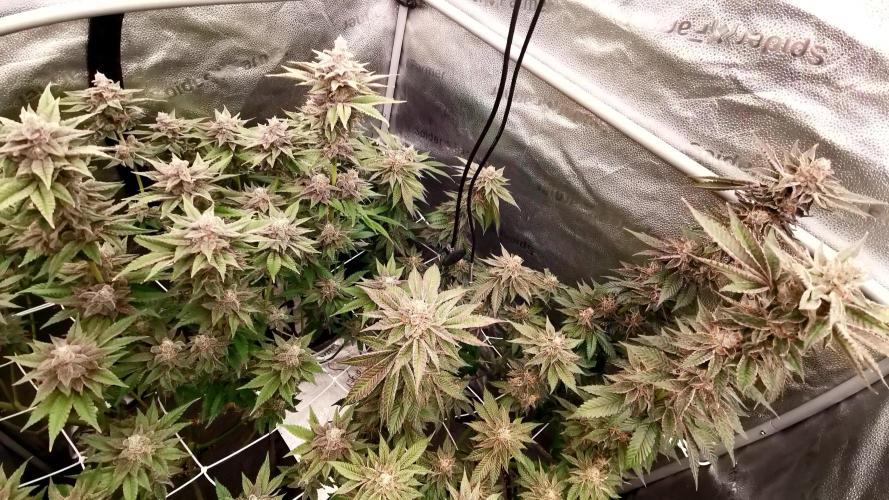
The final week for both Candy Hustle phenos has come to an end, and I’m really happy with how these two finished.
There was a noticeable difference between the two plants towards the end. #2 definitely finished faster than #1, although I decided to harvest both together on August 2nd.
The light stayed unchanged until the end at around 1000–1200 PPFD. They received their final watering three days before harvest with RO water + CalMag. After one final day under the lights, both plants were given 48 hours of darkness before being cut.
Visually, these plants are probably some of the frostiest from this run. The buds and surrounding leaves are absolutely covered in trichomes and almost look sugar-coated, combined with some beautiful dark purple colors. ❄️💜
The two phenotypes also developed very different terpene profiles. #1 is very close to the breeder description for me, a strong grape aroma with mint/menthol and something fresh in the background. #2 went in a completely different direction and reminds me much more of soap mixed with a Skittles-like sweetness. 🍇🌿🍬
Both plants were also used for my DryRocket test. I separated some of the nicest buds from each plant to dry inside the DryRocket, while the remaining harvest was dried using my normal method. This gives me a direct comparison from the same plants under two different drying conditions. I’ll cover the results and my experience with the DryRocket separately in the harvest report.
Overall, a beautiful finish to these two Candy Hustle phenos. Despite sharing the same genetics, they showed some very noticeable differences in finishing time, structure and especially aroma. Now it’s time to see what remains after drying and curing. 👀🔥

Likes
19
Share


@StonedandSteady
Follow
Hang Drying 7-14 days before the #TotalDryYields $ #SmokeSesh's! 63rd Day #HarvestTime 9th week of Flower Update of my Fastbuds 2fast4buds.com Genetics looking Great, Gorgeous, Magnificent, Phat and Finishing out Super Strong! I Applied the #AncientArtofStemSplitting for more #FrostedTerpyBuds on 3/19/22 #Trichomes are Ripened and Ready for Steady! #ChopCity is underway! #FadeTime I Can't wait to Blaze Up these Beauties! I started thier #FlushingPhase on 2/23/2022 with Declorinated Tap Water Ph'd-6.0! I #Lollipopped the Lowers on Sunday 2/6/22 after posting to #GrowDiaries They received thier 5th #Feeding of #DivineSeeds #DivineGrow but this is thier 1st #Feed of #LongFlowering 3.0G. Mixed into a Gallon of water, Ph'd to 6.5 on 2/20/22! #BudzForming into Frosted #ChronicColas w/ #PistilsPoppin everywhere looking Pristine!!! I've been implementing some #LSTtraining at the beginning of 10 week's back by bending them over with #PipeCleaners to the sides of thier pots, pulling down thier side branching and #LeafTuckin the Biggest leaves under each other to Expose the Bud site's and Branches to more lighting w/ some #LiteDefoliation 9 weeks back as well! I introduced the #SpinningStemzStrengthing technique a few weeks ago to thier main Stocks and Side branching to make them Stronger and more Sturdy! They popped in under 24hrs in the wet paper towel method and now that they've busted out of thier ProMix potting mix medium, I've been watering them when dry with around 4 cups or 32 fluid ounces 64 Tbsp 192 tsp 948ml of Declorinated Tap water that's Ph'd to around a 6.4-6.3 using TNB ph Up$Down and watering thier whole pots these past couple of weeks! They're Growing under our Bodacious #BloomPlus1500w with the 150w Done driver in our 2×4.5×7ft. GrowTank Grow Closet with the 18/6 lighting schedule cause Everything needs a little rest! Team #Fastbuds recommends the 20/4 schedule as well!!! Our Grows also get Enhanced with #TNBNaturals The Enhancer with my Special Steady'z mix in their bottles!
Yo!!! Top-Notch and The Finest in AutoFlowers indeed! Let's Grow and Get it In from Team #Fastbuds @fastbuds_genetics on Instagram!!! Check it Out my fellow Growmies and Growmets! I'm very Thankful, Grateful and Appreciate these Fantastic, Famous, Fast-Growing, Flavorful and Fiery genetics! Spectacular and Superb Sponsorship package from my Broski Sir #Santi as I like call him and thier Award-Winning Company full of Great Growers, Bodacious Breeders and Pleasant People from All over the World! Your Strains are Phenomenally Pristine and Perfectly Priced! I Can't wait to Try, Test and Review these Crafted Cannabis Cup strains!!! Thanks Again Everyone and Everybody! I've also learned All sorts of Growing Tipz, Tricks, Techniques and Methods from you and your Detailed- How to Grow Instructional categories on your Website SeedBank! Your a Fantabulous Family and Terrific Team!!! It's my Pleasure and I'll do my Best!!! With the Help of my Broski #GallowGlas420 making my original Masterpiece's! I Made, Perfected and Hope Everyone Enjoys these New Introductions, Mail Call and Outros! I also Hope that Everyone will and Go Spread That Love to you Guys on your other social media's! I'll most definitely have their Link's posted Below⬇️! BudBrothers4-L!!! Cheers Famz!!! Much Props, Topz and Much Love!💯
https://youtube.com/c/FastBudsGenetics
https://instagram.com/fastbuds_genetics?utm_medium=copy_link
https://www.facebook.com/FastBudsMedia/
https://mobile.twitter.com/fast_buds
https://www.reddit.com/r/FastBuds_Family/
https://t.me/fast_buds_genetics
https://es.linkedin.com/company/420fastbuds
Remember "it's 4:20 Somewhere"!!! Bloom Plus BP-4000
CA:https://www.amazon.ca/dp/B08DTDP5FF/ref=cm_sw_r_cp_awdb_imm_86Q7H2D5BGFYB9B6PR9K
US:https://www.amazon.com/dp/B08DTN3B84/ref=cm_sw_r_cp_awdb_imm_4B7XWCAS09M4V3W0AFJH
Bloom Plus BP-2500
CA:https://www.amazon.ca/dp/B08DTCYV9Y/ref=cm_sw_r_cp_awdb_imm_YDNA8G16PH3TB002VKGE
US:https://www.amazon.com/dp/B08DS53THM/ref=cm_sw_r_cp_awdb_imm_SX3AEDKRVAYQECF32BE4
Bloom Plus BP-1500
CA:https://www.amazon.ca/dp/B082XYLHRJ/ref=cm_sw_r_cp_awdb_imm_XEBFV7790EHT53B2J9B5
US:https://www.amazon.com/dp/B082XYLHRJ/ref=cm_sw_r_cp_awdb_imm_MB3PYZEVSQRZY096AB79
BloomPlus Instagram Link:
https://instagram.com/bloomplusled?utm_medium=copy_link
Thanks Again Broski #SmokinPlantaz for Hosting your Bright and Tight Amazon Prime Day #BloomPlus-1500w Giveaway! I'm still Blinded by the Light!!! Lol (Song Pun) it's Ultimately Lit, Extremely Powerful and Brilliantly Bright! I also Love and Appreciate Everyone out here! Please! Go Over and Spread That Love to my Bro's YouTube Channel and Team #BloomPlus on their Instagram! I'll have thier Links posted ⬆️⬇️! BudBrothers4-L!!! Cheers Famz!!! Much Props and Much Pars!💯
SmokinPlantaz YouTube Channel Link: https://youtube.com/channel/UCDKJthWoS6-miAhq_lLb_-w

Likes
2
Share
@ukojesita
Follow
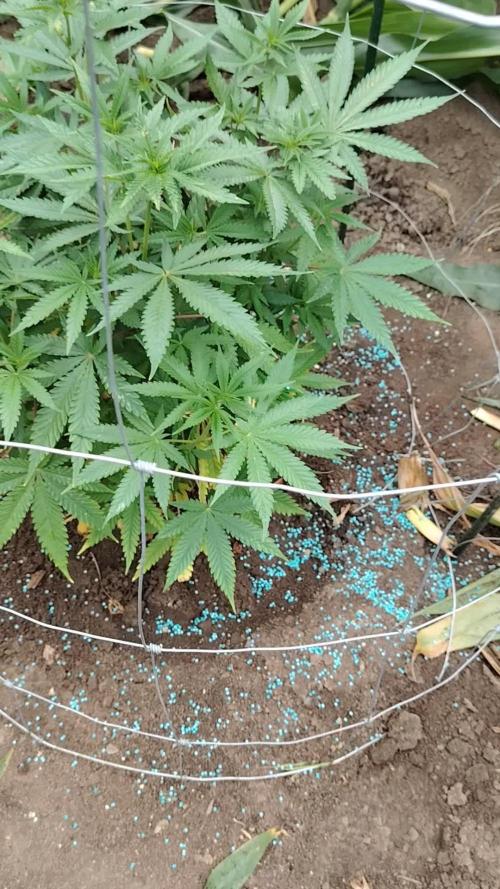
Zdarec pěstiči, tak 8 týden za náma a konečně povyrostla kukuřice tak sem mohl nainstalovat pletivo proti srnám a nasypat granule na slimáky. Holky dostali 5l zálivku s naloží fishmixu ať se zase pěkně Zelenají. Zatím Čus.


Likes
21
Share


@Smokey89
Follow
Week 4 and these girls are looking great the cheese is looking as though it's a week behind the bubblegum but still looking nice and healthy and I was expecting it to be slower as it has a longer flower time.
My 2 bubblegum are growing really well pheno number 2 is by far the biggest even after I snapped a branch completely off.
I've noticed an uptake in water I'm now giving them 2 litre of 6.5 ph plain water every other day.
Theres a slight hint of candy as you enter the grow tent makes my mouth water every time I walk in.
The LST has gone well (baring the one snapped branch) all bud sites are exposed/tied out towards the exterior of the pot, looking forward to watching them develop and I will be keeping an eye on them for signs of pre flower as the bubblegum is supposed to be 8 weeks or less.
Day 31
I think pheno 2 is in early pre flower stage, she is consuming 1.5 litres of water every day and is growing at a great rate.
Pheno one is a little smaller and has no signs of flower as of yet, she has had the same feeding and watering as pheno 2
Cheese critical I think is looking good but I'm not seeing much growth I'm wondering if she may be stunted I'm going to check the ppm run off and see if theres any indication as to what's going on
That's all for now guys and gals happy growing


Likes
6
Share

@soil2bud
Follow
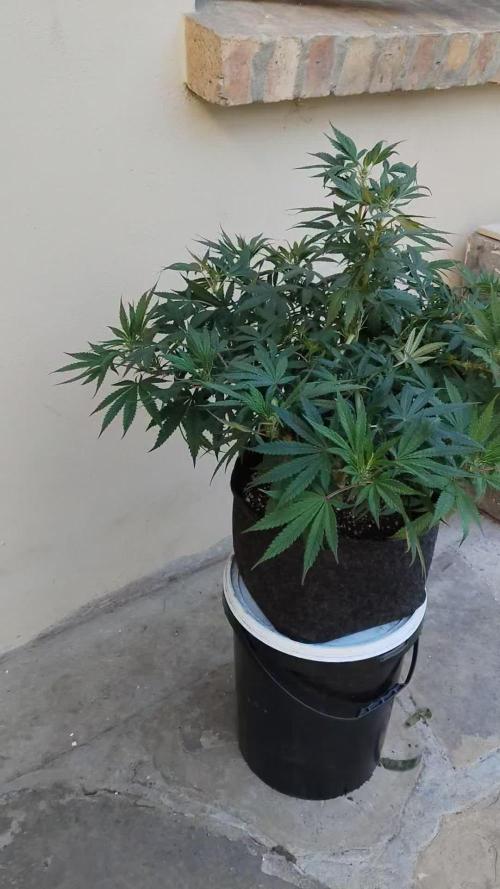
I didn't have space and started flowering her out. 1 week in I changed my mind and decided to veg her more to repot and get her bigger. I supercropped her quite hard but she has responded very well
I am going to leave the 2 tips to veg and take cuts from it...I am not sure if the hard supercrop falls under LST or HST ...
Likes
2
Share


@KannaGrowing
Follow
Esta semana seleccionamos las plantas más adelantadas de nuestro cultivo, para colocarlas bajo la nueva luminaria Led LazerLite Pro 720 de The Pure Factory, con la potencia ajustada al 50%.
Miramos de que las cuatro variedades estén representadas bajo el led y bajo las lamparas HID, de esta forma podremos ver las diferencias entre los dos sistemas.
Seguimos con nuestra rutina de fertilización para la fase vegetativa Grow Soldier + Green Mystic by JUJU Royal y CALMAG de BioBizz.
Al final de la semana, cambiamos el ciclo lumínico para pasar a 12/12 Floración.

Likes
24
Share


@rucucu94
Follow
Disculpen las fotos, es que las saque para consultar. Bueno primero que nada fue una semana de mucha tormanta, lluvias y humedad. lo peor que nos puede pasar en floracion. Segundo intente hacer supercroping ya que las ramas seguian superando el tejido y les llegaba luz en la noche. Y me salio desastrozo, mi primera vez. Pero los otros punteros que superaban la altura, los hizo mi compañero que sabia hacerlo (No tengo foto, luego actualizo). Y Tercero que debido a la humedad se ven en las fotos como aparecio hongos, por lo que pude observar era solo ese poco, lo cual ya fue removido vamos a ver como continuamos.


Processing
Likes
4
Share


@Tried_and_Tested
Follow
In this dairy I will be growing two, Critical + 2.0 photoperiod plants alongside 4 others (see other dairies) using the methods of Topping, Low Stress Training, ScrOG and slight defoliation under the screen. I am growing in a 4x4 area and will be using a 250W MH, 400W & 600W HPS over the grow period. The other 4 plants will be grown using the same technique and environment, I am just splitting the dairies into separate strains as recommended by GrowDairies.
The seeds were placed directly into solo cups that were pre-soaked with plan, pH'd water overnight beforehand. After three days all seedlings had emerged, and I placed them in the shadow of my other plants currently being grown for three more days. After this I transplanted them directly into the 11L pots that they will be in until harvest (see photos).
I will be growing the plants until the are roughly 6 weeks old or 1m tall, whichever comes first. I will be bending them and keeping the branches low to build an even canopy, so this time period could change. All of the seedlings are being grown in BioBizz all-mix soil, so I will not be using nutrients either for the first 1-2 weeks.
Any questions or recommendations, please let me know! Thanks :)

Likes
12
Share


Likes
179
Share


@Tropicannibis_Todd
Follow
💩Holy Crap We Are Back At It And Loving It💩
Growmies we are at DAY 35 and she's just killing💀it👌
👉We are in the Preflower stretch 👈 Everything is looking good even the Tiny Cup 🥤
So Shit , I gave them just a tad to much nutes on the last feeding 👈 But I have since fixed it
So I'm starting to pull her over and do some low stress training 🙃 and some defolation 😳
Lights being readjusted and chart updated .........👍rain water to be used entire growth👈
👉I used NutriNPK for nutrients for my grows and welcome anyone to give them a try .👈
👉 www.nutrinpk.com 👈
NutriNPK Cal MAG 14-0-14
NutriNPK Grow 28-14-14
NutriNPK Bloom 8-20-30
NutriNPK Bloom Booster 0-52-34
I GOT MULTIPLE DIARIES ON THE GO 😱 please check them out 😎
👉THANKS FOR TAKING THE TIME TO GO OVER MY DIARIES 👈
Processing
Likes
3
Share


@BirminghamGrowman420
Follow
Really good week she doubled in size, going to top her next week I’d rate her 8/10 right now

Likes
2
Share


@Ultraviolet_
Follow
The nighttime VPD does not need to mirror the daytime VPD. Daytime VPD dictates the pull of water and nutrients, while nighttime VPD acts mostly as a prevention tool. A high nighttime VPD increases the risk of the leaf temperature dropping below the dew point, which can trigger bud rot and powdery mildew.
Switched down to 12's hours of light mid-week, changed spectrum, increased light intensity from 840umol up to 1150umol at current height. Overnight from 800ppm to 1500ppm, morning compensation point (microorganisms) 46-47 days from germination, she fills the canopy herself, once the apical dominance is broken.
Measuring a plant's overnight CO2 emissions provides an accurate estimate of its dark respiration rate. Because photosynthesis stops in the dark, you are isolating the respiration process, which allows you to gauge how much stored energy (glucose) the plant has consumed and estimate the scale of oxidative phosphorylation. Oxidative phosphorylation is the final stage of respiration that generates the bulk of the plant's ATP (90%) and relies directly on the oxidation of these respiratory substrates NADH and FADH2 along with the consumption of oxygen.
From a thermodynamic standpoint. Growth is an energy-capturing process, and the rate of that growth is bound by the available free energy (Gibbs free energy) and the First Law of Thermodynamics. While the ceiling or upper limit is dictated by free energy (such as photosynthetically active radiation), the actual amount of growth relies on how the plant balances that energy with other limiting factors. These are often described as the nine cardinal parameters of plant growth. 4 Above, 5 Below. If any one of the 9 becomes bottlenecked, the entire plant's cycle is restricted.
Operating an 80F+ environment at night to force rapid carbon conversion comes with major drawbacks, as the biochemical processes work differently than the deductive logic suggests. While raising nighttime temperatures to 80F indeed accelerates respiration and speeds up the conversion of captured sugars (sink activity), doing so also radically increases the plant's overall metabolic baseline. If the plant's metabolic rate is artificially forced too high via heat, it can actually "burn" through more energy than it managed to assimilate during the day. This leads to carbohydrate starvation, stretching, and a net loss in final biomass yield.
400 ppm is near the standard ambient level; the plant's stomatal intake is the primary limiting factor, not the dark-reaction enzymes. To push 45 DLI without burning out the plant. Trying to force the conversion of a massive daylight DLI in a compressed time frame (12 hours) becomes highly inefficient because the Rubisco enzyme simply hits a saturation limit. To successfully convert a 45 DLI into dense, productive mass, the ambient CO2 generally needs to be elevated to the 1000 to 1200ppm range. This creates a steeper concentration gradient, driving the stomata to inhale CO2 fast enough to match the high photon energy.
It's not all about the amount of light, but the ratio too, as this will dictate growth through the ratio of phytohormones. In order for correct bud development, there needs to be a correct ratio of RGB. Different wavelengths have different penetration depths. When one grows using top-down lighting, only the entire canopy is limited to 2-3 layers of leaf, meaning there will only be correct bud development in those layers, regardless of getting 45DLI.
The biomass potential of a plant is linked to root mass. Generally, when a plant reaches its maximum biomass, you can help to chop off parts of the plant that are in less than efficient areas of the plant (low light) so that it can create new biomass growing towards the light.
Strength is the maximum potential, and power is the rate of conversion. You can have the biggest veg period of 18 weeks, and it means nothing, as soon as you start flowering, the chronological clock starts ticking, the only metric that matters to bud size is how much energy you convert each cycle, not by how long it took you to build the framework, it helps a lot nonetheless.
Not saying anyone should not defoliate for a reason, only that you should have one, and at the right time. Don't defoliate 30+% on autoflowers or 4 weeks into the flower period and expect an increase in yields; it doesn't work like that. There is room for dictating growth patterns and clearing out overcrowded nodes, but it needs to be done in veg because once that timer starts and buds start growing, it's all just energy conversion. One barely needs to defoliate at all in a 4x4 because with side lighting, turning a 2d canopy penetration into a 3d, even lower buds are 90% the quality and density of top ones. The rate of photosynthesis and the ultimate density of lower buds aren't just about the sheer number of photons PPFD. The specific ratio of R:G:B dictates canopy penetration and drives different photochemical reactions. The Electron Transport Rate (ETR) measures the speed at which electrons are driven through Photosystem II (PSII) during photosynthesis. The ratio of Red, Green, and Blue (RGB) light heavily dictates this rate.
Plant leaves continuously perform cellular respiration regardless of the time of day, using energy and oxygen to fuel essential metabolic maintenance. If you over-defoliate, the remaining canopy may be unable to produce enough net sugars during the day to offset the constant respiratory demands of the plant. Must balance fixation with assimilation; there's no point in capturing 45 DLI if you only convert 20% every cycle due to an extreme lack of respiratory capacity to perform cellular oxidative phosphorylation.
You can have a 4x4 canopy or a 4x4x4 canopy, yes, we know that side lights are not as effective at absorption from the sides or underneath, but it's not about DLI, it's never been just about efficiency, it's about the penetration ratios of RGB that drive ETR of/photosynthesis and trigger correct bud development. The size of each bud is its own ability to perform the ETR required for its own personal growth, and bud development is dictated by the ratio of RGB. It drives localised growth and acts as a regulatory switch for that development. Turgor pressure is another very important factor in understanding if you want big buds, for it is the "steam engine" that dictates the rate of bud expansion. Simply, a lot harder to achieve metabolically at ambient 75F than at say 86F
Because buds have less chlorophyll, they do not suffer from the same photosynthetic shutdown that over-exposed, light-stressed leaves do. They can soak up direct light energy to swell in density and size. Their tolerance to intense light is heavily limited by the temperature and humidity, but if you can control those temps and keep the rot away, buds have a much, much higher tolerance to high light than leaves. Beneficial to hammer with high light before trichomes appear. Balancing this with trichome maturity is key for rich terpene and flavonoid profiles, want it just right, somewhere in the middle, not too much, not too little. Find cannabis plants can defoliate themselves come harvest, given the right signals. Every last ounce of potential is recycled into buds by the plant itself (senseceance), given you can keep the level of conversion high enough to prompt a need to do so.
Get the canopy @ optimal PPFD range, 45-55DLI, then let the plant "stretch" the stems into a "PPFD range much higher, one that leaves don't like to grow in, but buds thrive in. What is optimal for a bud is different from what is optimal for a leaf photosynthetically. Genes provide the blueprint, but the environment dictates how, when, and if those genes are expressed. Must first signal the condition to increase the expression you want to exist through stress and response, cause and effect. A well-buffered CEC medium prevents extreme nutrient swings, allowing plants to maximise their dedicated genetic expression.
A plant is either genetically expressing "growing" or "recycling" genes based on its nutrient starvation level in the medium. Constantly toggling between "growing" and "recycling" hormonal states creates a futile cycle that wastes valuable metabolic energy. Plants rely on sophisticated biochemical switches to manage this trade-off and prevent rapid fluctuations that disrupt that balance.
This energy inefficiency is a recognised biological challenge. Plants avoid this costly "flip-flopping" by using hierarchical master regulators (like the TOR and SnRK1 protein kinases) that act as strict molecular switches. These networks enforce cellular commitment to either growth or survival, preventing mixed signals.
This is something that was missing from previous grows.
Under nutrient-rich conditions, TOR promotes protein synthesis, cell division, and structural expansion.
Under starvation, TOR is inhibited, and SnRK1 is activated. This triggers autophagy—where the plant breaks down old macromolecules and organelles to scavenge and reallocate essential nutrients to critical sinks.
"What's the point in flushing?"
The core idea behind a PK booster is to deliver a massive, concentrated surge of P&K exactly when buds are swelling in conjunction with a N starvation. Because these are short, targeted windows, the nutrients must be highly bioavailable so the plant can process them immediately. As soon as you go "organic," that's out the window. Much slower release, uncontrolled, very difficult to "spike". to cause the ratio that will initiate a response.
High-volume PK spikes rely strictly on the immediate uptake capabilities of mineral fertilisers. Making it far less efficient in organic/living soil setups.
When you use organic nutrients, it changes the dynamic with which the plant delivers and trades its nutrients; organic is always releasing new nutrients into the immediate EC. This prevents a lot of autophagic responses from occurring due to a constant stream of new nutrients into the immediate medium's EC. This can prevent nutrient starvation from being signalled.
PK boost is essentially just N starvation, triggering an autophagic response. Concentrated ratio of P&K while tapering off the Nitrogen base. To the plant, the sudden drop in Nitrogen registers as a severe environmental stressor—essentially, the beginning of starvation protocols. She aggressively strips nutrients and proteins from older leaves and vegetative structures and shuttles them directly to the developing flowers and fruit. Ta daaa. Call it a PK booster and sell it. Nothing to do with the P and K itself, it's the ratio immediately available in the medium triggering a nutrient recycling mechanism within the plant itself; all the "booster" sells is the trigger to the signal.
PK BOOST with 50% ammoniacal N signals floral maturation.
PK BOOST with N starvation signals nutrient recycling/sinking.
Very difficult to initiate a response when organic nutes are doing their thing. It takes 4x5x more water significantly to leach or wash ammonia out than it does nitrates. This can prevent triggering N starvation from having its normal impact.
Manipulating the C:N ratio in the medium. One autophagic response has multiple potential signal triggers. Nutrient starvation is not an option.
Likes
33
Share

@Joni2017
Follow
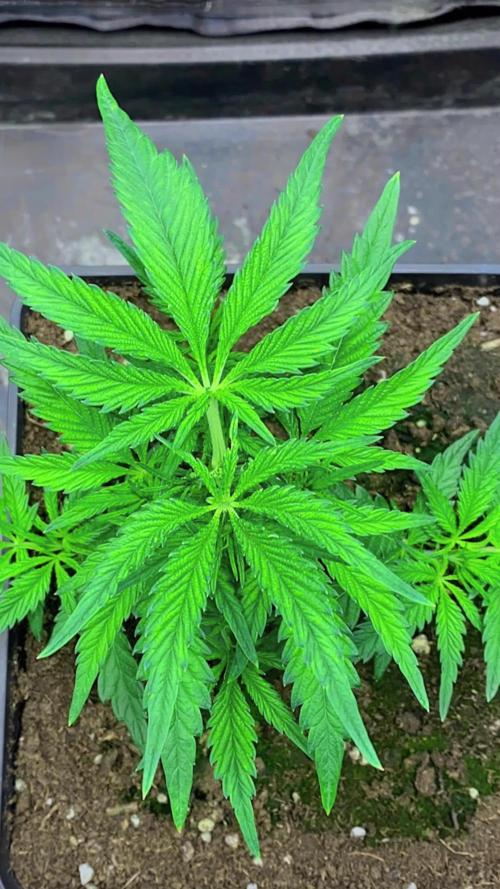
The big day is here! 😎 Today, March 28th, 104 days (15 weeks) after germination, I have harvested my first indoor photoperiod plant. It has been an incredible challenge, especially managing it in the middle of a winter environment, but the results speak for themselves.
📏 Harvest Data (Wet Weight)
-Total Wet Weight: 56.5 grams (15.7g + 40.8g).
-Final Height: 40 cm of pure density.
-Status: Rock-hard buds and an impressive resin layer.
-Dry Estimate: I estimate that after water loss (60-70% less), the final dry weight will be between 14 and 17 grams, given how dense the buds are and the cold conditions we’ve faced.
🌡️ Process Summary
-Managing a grow with lows of 12°C for my first indoor photoperiod experience has been difficult. I am aware that a climate control system would have been ideal, but the budget is what it is 😆.
Despite the limitations, using lukewarm water for irrigation and controlling the lamp height were vital. This plant has been a great learning experience, and I am sure the next one will be much better, applying everything I’ve discovered during these 15 weeks.
Now, on to a slow and controlled dry so the flavor is as spectacular as its look!
I want to wrap up this diary by thanking everyone who has joined me during these 15 weeks. Your likes, and comments have been an extra motivation to pull this Critical through despite the cold challenges.
It has been an incredible learning journey, and I couldn't be happier with the outcome of my first indoor photoperiod plant. See you all very soon with the Cream Caramel and that Main-Lining I have planned!
Happy growing and happy smoking to everyone! 🌿💨


Likes
51
Share


@nonick123
Follow
Día 64 (23/12) Christmas holidays. Only watering
Día 65 (24/12) Christmas holidays. Only watering
Día 66 (25/12) Christmas holidays. Only watering
Día 67 (26/12) Christmas holidays. Only watering
Día 68 (27/12) CBD Auto 20:1 #1 - Riego con 0,5 litros de PK Booster Compost Tea
OG Kush Auto - Riego con 0,5 litros de PK Booster Compost Tea
Preparación del Té de Compost
Ingredientes
Agua Osmosis o Agua declorada durante 24 horas: 1 Litro (o la cantidad que necesites)
PK Booster Compost Tea: 15 g/L
ORGATREX: 5 ml/L
BACTREX: 1 g/L
Instrucciones:
Airear con una bomba de aire de pecera durante 24 - 36 horas a 20-25 ºC
Añadir BACTREX (1 g/L) 30 minutos ANTES de parar la aireación
Usar el Té inmediatamente al apagar la bomba de aire
Usar 0,5 Litros de Té por Planta
Día 69 (28/12) Christmas holidays. Only watering
Día 70 (29/12) Christmas holidays. Only watering
💦Nutrients by Bio Tabs - www.biotabs.nl/en/
🌱Substrate PRO-MIX HP BACILLUS + MYCORRHIZAE - www.pthorticulture.com/en-us/products/pro-mix-hp-biofungicide-plus-mycorrhizae
"GDBT420" 15% DISCOUNT code for the BIOTABS Webshop https://biotabs.nl/en/shop/
With 2 x Mars Hydro FC1500 EVO Led Grow Light (2024 NEW FC 1500-EVO Samsung LM301H 150W LED) - https://marshydro.eu/products/fc1500-evo-led-grow-lights/ - https://www.amazon.de/dp/B0CSSGN5D8?ref=myi_title_dp
Likes
51
Share


@Organic_LarF
Follow
Week 6,
2 weeks outside, first week was a blast, fantastic wheater good night temps.
Second week was much colder. Daytime temps just tipping 20 degrees celcius in the sun. Nighttime was between 6 and 7 degrees.
Pictures are plant 1 in the shed with transparent roof. Not a real serre, its more just a roof and some protection against most of the elements of nature.
Video is plant 2, she's hardening because of the harsh nights. She didnt grow as much as plant 1, but looks healthy, goal number 1 at this moment. Better times are coming so all will settle.
🍀🍀🍀

Likes
1
Share

@CptnNugz
Follow
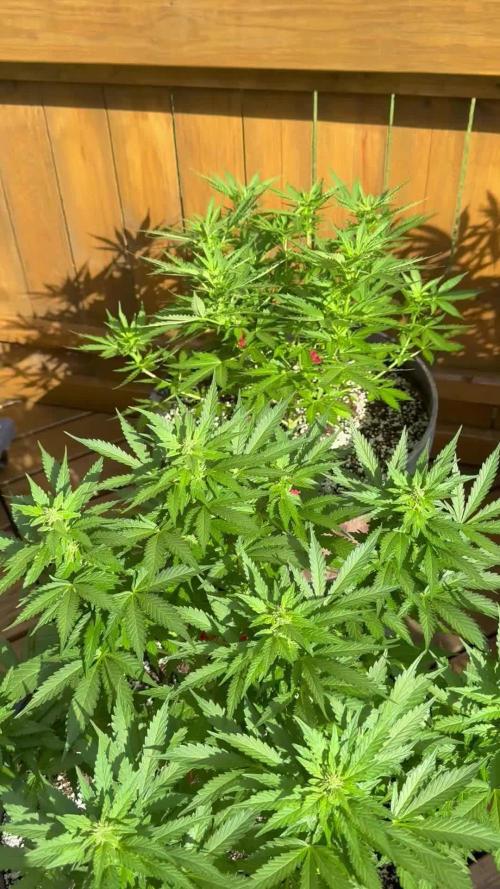
These plants are going insane! I’m loving the bushy structure that I’ve been building with the plant clips. Canopies are looking great. Not going to make them too much wider so now we will work on getting them bigger & stronger which isn’t going to be an issue. The two gorilla plants are revegging back. Definitely must of shocked them bringing them outdoors. The only two plants/same strain that started to flower. No big deal as they are smaller and it will be easier for them to get back to the vegging stage which signs are already showing with new leaves. So far very happy with These seeds from Spliff seeds. The Two Blueberry & Gold Rush plants are killing it. I’m really excited for the blueberry! ?

Likes
16
Share


@Kirsten
Follow
Ok so I asked about harvest to you wonderful folks, and decided to chop. I've left PPP3 as she isn't quite at the same stage as the other 2 yet.
So I used the old microwave drying trick. I remembered to put it in for 1 minute on a piece of kitchen towel- Please do NOT do this! It caught the paper and weed on fire and I had to put it out in the sink. (It was only in there for about 15 seconds).
I tried again using a couple seconds at a time. It worked out that time.
I smoked some up, and it's very nice. Tastes peppery and exotic. Smells divine like dank usually does.
7.3.25:
Buds we're ready to trim, I think slightly too dry. Could have done it yesterday, probably.
Weight dry with stems was 1 and 7/8 of an ounce. I'm putting it in my mason jar
Likes
73
Share


@LazLow
Follow
First week of my first grow! The weeks leading to this were filled with hours of research from every source I could find. I still wake up and start reading or looking at diaries. I’m growing in a 4x4 tent in an insulated but not heated garage. I have a small heater in the tent connected to an Inkbird temp controller set to kick on at 70 degrees and turn off at 80. This sucks a lot of humidity from the tent. I have 2 humidifiers running to combat this and it stays around 45% RH on average; getting higher than that has proved quite the challenge. I’ve admired quite a few diaries on here and I hope everyone enjoys my rookie season.