




@Lebanese_Landrace
Volgen
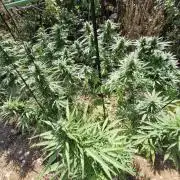
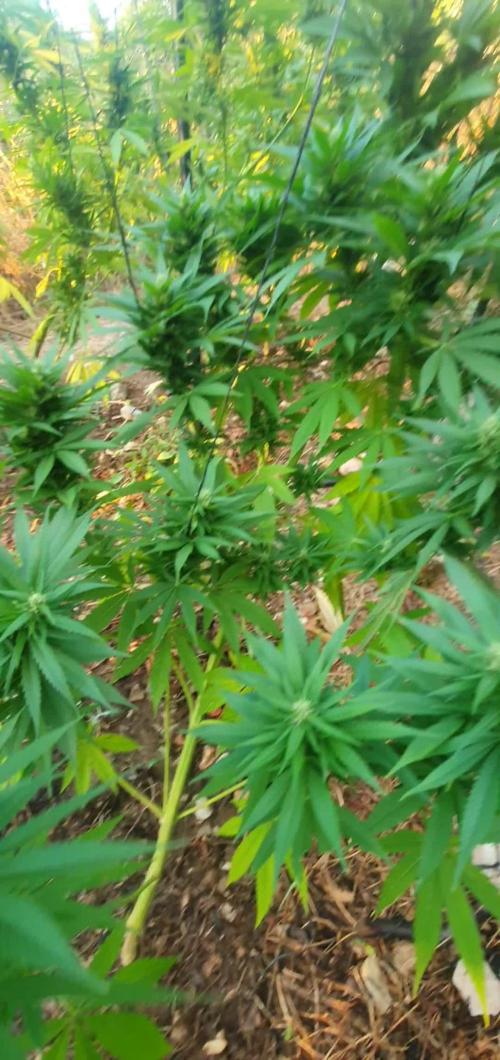
Week 17 August 30
Flowering plants (a&b) are now in week 5 of flowering this means peak bulking so for today's feed :
- 0-52-34 ~ 24gr / 30L
- 0-0-50 ~ 24gr/ 30/L
- Cal-Mag 3gr each.
- Ph 6.3 & TDS 1600ppm
As for the third plant (plant c)
- 10-20-30 ~12gr or 2 tsp
- 0-52-34 ~16gr
- Cal-Mag 3gr each.
PH 6.2 & TDS 1300 ppm
Was supposed to perform a little mid flower defoliation but since its peak bulking decided thia timw to let it slip. Stay tuned.


@CANNASIM
Volgen
------GENERAL COMMENT------
We arrived pass mid flowering as we are now starting week 5 of flower. No issues, bumped up a bit the Sensi Bloom to 2.5 after 3ml, and have seen the girls darken a bit, so i decided to go down a bit to 2ml this week, maybe stick to this dosage depending how the girls react.
The tent have become small for or two ladies, no way to train them more, there is no space. Decided to move forward without a mid grow flush.
Still on the 1.5l of water every other day, one base + recharge + pk booster, other with pk booster + natures candy + velokelp alternating.
Today was the last Pk booster - Big Bud dose, now we will cut the Big Bud and enter with the Overdrive, the rest will be as is.
------SM.BB COMMENT------
The blueberry is darker than the AK, presenting no signs of overfert, tips are ok, and no spotting, buds are becoming fat and resinous.


@Slurpy_Terpy
Volgen
Note:
At time of writing the Runtz has had 2 weeks cure, will update the review and rate it after 2+ months cure.
Hermied a bit, has very few seeds so not too bad.
Growth review:
- vigorous grower during veg
- solid stretch
- medium internode distance
- small sized buds
- lower buds not too airy
- very easy/not fussy
- medium amount of smell
- 80+ days flower (12/12) in hydro DWC under full spectrum led
- responded well to various lst techniques
Ease of growth rating: 9/10
General note:
--> For me personally this strain NEEDS a good cure and is not worth smoking yet... It has a bit of a citrus grassy (not hay) taste, with some 'special' fruity smells to it that remind a bit of grapes/cassis. When grinding/opening the curing pots there is a pretty dank heavy weed smell so I think the quality will come out after a few months of cure... In its current state not worth smoking for the taste or effect after 14 days cure.
--> Currently the effect is not very strong, easy to handle and I need a lot to feel a bit. The effect lasts for short compared to the average strains I smoke. Should develop more character with a longer cure.
Hash making notes:
- water extraction of the trim yielded 16g of hash (45mc-220mc)
- rosin has a bit too much of a weird spicy grassy taste which make it a bit unpleasant, waiting till the buds improve with cure to try again
- rosin color at 80c is yellow/white/beige creamy waxy, with hard consistency
- rosin color at 95c is golden with hard consistency


@Kitties_and_Colas
Volgen
~_~_~_~_~_~_~_~_~_~_~_~_~_~_~_~_~_~_~_~_~_~_~_~_~_~_~_~_~_~_~_~_~_~_~_~_~_~_~_~_~_~_~_~_~_~_~_~_~_~_~_~_~_~_~_~_~_~_~_~_~_~_~_~_~_~_~_~_~_~_~_~_~_~_~_~_~_~_~_~_~_~_~_
10/21/20
😻 We're documenting a day early because we'll be gone for a weekend camping trip...The plants are progressing beautifully and perpetually praying, they're absolutely loving this new MarsHydro! We decided to move the light from 24" to 30" to try widening the nodes a little before dropping back to 24", we're in unamended Promix so we typically start thinking about feed this week but being autos we're going to take it slow and wait on color ques before making that move (probably next week for sure)...thanks for reading and happy harvests everyone!! ❤️💡🌱😽💨
~_~_~_~_~_~_~_~_~_~_~_~_~_~_~_~_~_~_~_~_~_~_~_~_~_~_~_~_~_~_~_~_~_~_~_~_~_~_~_~_~_~_~_~_~_~_~_~_~_~_~_~_~_~_~_~_~_~_~_~_~_~_~_~_~_~_~_~_~_~_~_~_~_~_~_~_~_~_~
10/25/21
😺 We gave all plants a very, very light feeding (<3ml/gal) to see how they tolerate it, its super early but a few were already beginning to wash out ..We started bending plants today, low stress only for these girl and everything looks great so far! This MarsHydro is intense, the node spacing is extremely tight on all plants and growth has been really steady (especially these last few days), we couldn't be happier! Thanks for reading and love all around growmies!! 😻
❤️💡🌱..
⚡Mars Hydro/SP-3000⚡ Specifications ⚙️:
Diodes: Samsung LM301B / Osram 660nm (960 total!)
Driver: Meanwell 300watt 🔌 (300W±5% @AC120V-277V)
PPF: 824umol/S ☢️
PPE: 2.8 µmol/j 〰️〰️
Lifespan: >50k hrs ⌛
Veg Coverage: 3 x 5 ft 🌱
Flowering Coverage: 2 x 4 ft 🌼
Weight: 10.1 lbs (4.6kg)
-The SP-3000 uses an aluminum heatsink (no fan) and the driver can be placed outside the tent 🌡️⬇️
-IP65 waterproof ratings, tolerant to high humidity grow environments 💦 ..
-Up to 30 of these lights can be daisy-chained together and all controlled from a single light! 💡~💡~💡~💡~💡
~_~_~_~_~_~_~_~_~_~_~_~_~_~_~_~_~_~_~_~_~_~_~_~_~_~_~_~_~_~_~_~_~_~_~_~_~_~_~_~_~_~_~_~_~_~_~_~_~_~_~_~_~_~_~_~_~_~_~_~_~_~_~_~_~_~_~_~_~_~_~_~_~_~_~_~_~_~_~_~_~_~_~_


@PrairieFrostGrow
Volgen
***** Week 6 May 16 to 22, 2020 - Days 36 to 42 from germination *****
Calling this a flower week but it certainly is more of transition week.
Been battling a busy life along with pH issues this grow. Starting to get both under control😃
These girls were transplanted into 3 gal plastic pots after battling pH issues and unable to bring down below 7.1 until cut out of fabric pots.........piss off!!!
Cheap fabric pots from Amazon are a thing of the past!!!! 😡😡😡 Ordering Radical bags👍
During transplant GSC2 took it hard. She got twisted coming out of the old pot and it was a bit of a disaster😢..........GSC went very well and her root mass stayed together.😃
GSC2 is a freak and I am learning more from her. Growing out almost sideways from the pot. Keeping an eye on the main stem to ensure she doesn’t start to rot at the soil level........may trim off a couple of more branches. Her root mass won’t be very big so think I will take more branches and let her focus on building the density of a few bud sites rather than spreading a little to several sites.
LST introduced this week as well.
Started the introduction of Rezin and Terpinator now.
Little more detail..........
May 16/20 - Day 36
- 2L each girl of Massive @ 3ml, VeloKelp, Rezin, @ 2ml, Sensyzime, Liquid Wt, Dual Fuel @ 1ml = 1000ppm and 4.5pH
- stop lower the pH as much next feeds. 5.5 idea now and see how they react. I really want 6.2 going in!!!!😞
- GSC2 is concern as she took the transplant poorly with her whole root mass being flipped over and on top of herself.
May 17/20 - Day 37
- Mixed 3L water with Massive @ 2.5ml, Piranha, Voodoo, Dual Fuel @ 1.5ml, Rezin, Liquid Wt, CalMag @ 1ml = 1050ppm and 5.5pH
- GSC given 2L and GSC2 only 1L.
- giving them more microbes and beneficials next couple of feeds with more Piranha and Voodoo again.
- stripped more leaves today. GSC2 took more lower stuff as well.,,.....so bushy on the bottom.
May 18/20 - Day 38
- mixed 3.5L water with Massive @ 3ml, Piranha, Voodoo, Dual Fuel, Rezin, Liquid Wt, Vitathrive @ 1.5ml = 850ppm and 5.7pH
- checked some runoff numbers today......
- GSC runoff was 400ppm and 5.8pH.
- GSC2 runoff was 550ppm and 6.2pH
- PH is back in line!!!!!!🙌🙌
- GSC is coming along but her branches are not as thick as I would like. Side branches are getting longer.
- GSC2 is a mess in general😀 She is shooting out fan leaves and they leaves are getting bigger but she is not getting any bigger??
- LST day today and GSC had some branches pulled down. Leaving GSC2 for now.,
May 19/20 - Day 39
- dry out day
- just left them alone today😃
May 20/20 - Day 40
- 2L each girl of water with Rhino skin, CalMag, Sensyzime @ 1.5ml, Dual Fuel @ 1ml = 650ppm and 6.1pH
- there was some runoff from GSC2 only.
- girls look happy overall today.
May 21/20 - Day 41
- 3L water mixed with Rezin and Terpinator @ 1.5ml = 160ppm and 5.7pH
- was going to be a plain water feed but changed last minute and its time for Terpinator.
- the girls are not overly happy today.....not sure why
- all girls seem to be responding well to the LST over last couple of days.
May 22/20 - Day 42
- dry out day
- Both girls still trying to set bud sites but no success yet.

@gr3g4l
Volgen
Semana de lavado, regando cada dos días solo con agua de ósmosis inversa.
Esta semana continuaron mostrando un cambio de color más acelerado.
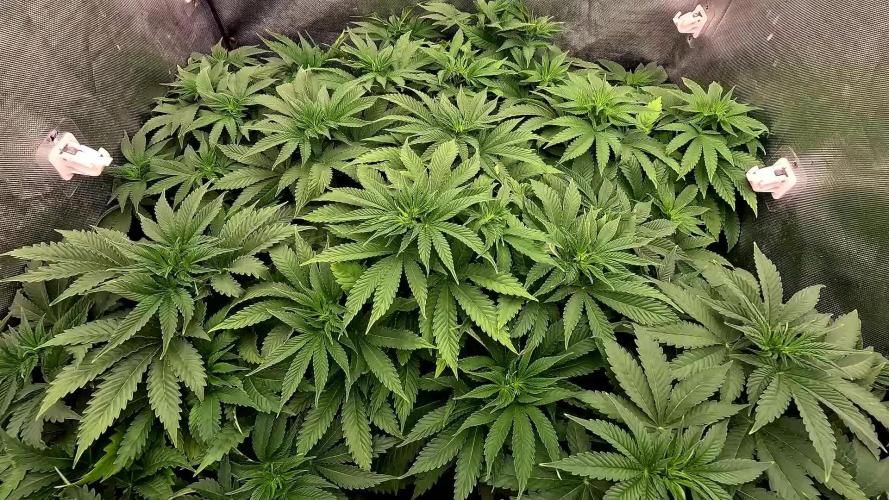
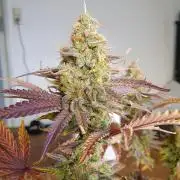
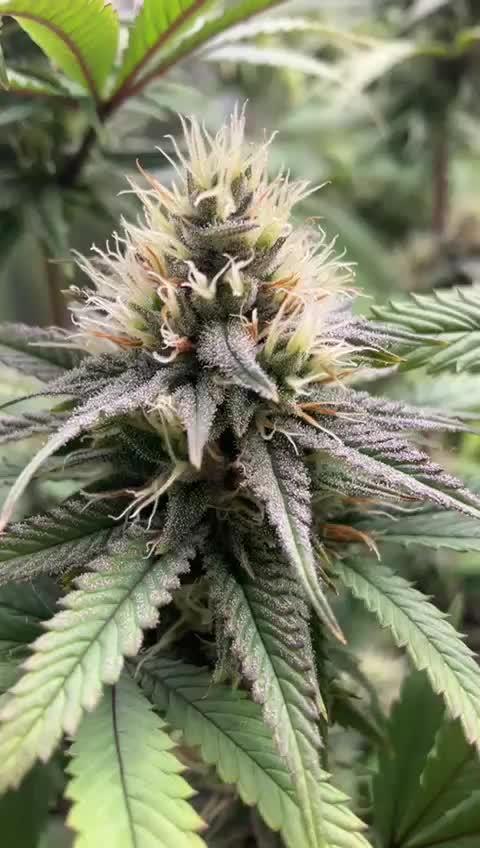
At 59 days they already showed a high percentage of amber trichomes, more than enough to harvest before 60 days.
A simple, uncomplicated grow, the plants are truly rewarding, not so much for the quantity of trichomes as for their growth, yield, and aroma—an aroma that suggests it will be delicious, possibly earthy, sweet, perhaps pine, or who knows, maybe even a hint of citrus, lemon. Something along those lines. What I can say for sure is that it smells terrible; it wouldn't be recommended for grows that want to go unnoticed.
After 61 days, harvest and dry inside the closet.

@GeezandDraht
Volgen
Week 5 🌸
This week we had quite a lot of fruit flys loving the fruity odors emitting from the tent. They especially loved the Pineapple and Blueberry heavy plants 😅.
We watered with an EC reading of about 1,1mS twice this week. Also, we finaly got the Nemathodes into our pots.
The Terps are developing beautifully and we are so excited what these flowers will taste like, once the time has come!💚
All three Strains have an estimated flowertime of 45 days, but we think most of them will take a little longer to finish up.



@Bakeryguy420
Volgen
Rolling through week 2 of flowering. Everyone has been stretching like crazy :) .
Glueberry , sweet creme , gg4 , tangie are mid week flowering 2.
Ogesus 1,2 amensia haze 1,2 are mid week 4 some are flowering some are still vegging
Rhino Ryder , royal haze and forgotten cookies about mid week 3 from seed . Everyone growing fast moving into the 4x8 in a few days can't wait :)

Glueberry Auto · Expert Seeds
Gorrila Glue #4 Auto (Expert Gorilla Auto) · Expert Seeds

Tangie Auto · Fast Buds
Sweet Cream Auto · Expert Seeds

Amnesia Haze Auto · Vision Seeds

Amnesia Gold · Pyramid Seeds
OGesus Auto · Expert Seeds

Royal Haze Automatic · Royal Queen Seeds

Caramella Auto · Custom Breeder & Strain
Rhino Ryder Auto · Fast Buds

Fugue State · Mephisto Genetics


@el_cultivito_colombia
Volgen
Semana 1 (18/7/22 - 24/7/22)
Se preparo una solucion de Mills Start R:
- PPM : 100
-pH : 5.8
Se submergio cubos de roca de lana dentro de la soulcion.
Cada semilla que se germinara se paso a un cubo de roca de lana y se mantuvo sin luz.
Cuando las plantulas salian del cubo, se pasaron a otra bandeja de germinacion con domo de humedad bajo una luz T5.


@069Ganja
Volgen
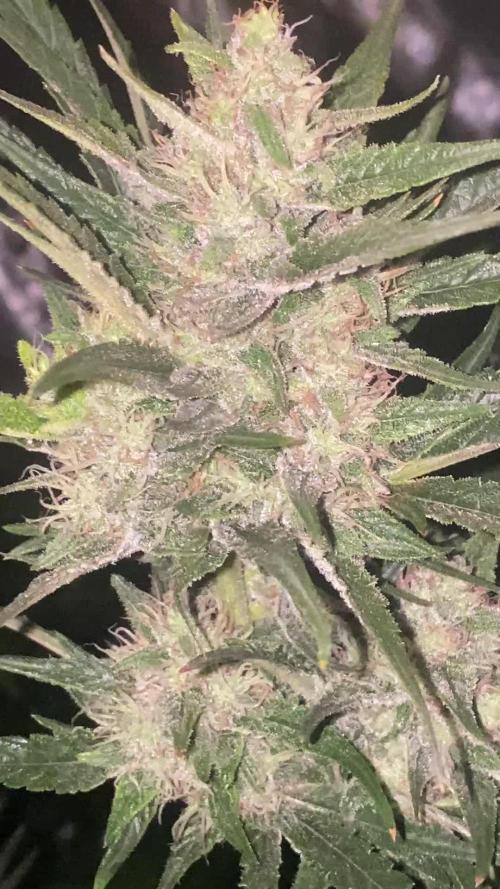
week 2:
I filled up the pots because the plants were a little long but now they are more stable, the light is now from 25% to 50%.
All in all I’m pretty happy with the plants 🌱 (:





@GrowerMario
Volgen
Prvý týždeň mame úspešne za sebou , dievčatám nič nechýba , už som im namontoval aj doma vyrobenú závlahu . Uvidíme kedy sa to v stane poriadne naplní a bude tam poriadna džungľa 💚


@Ultraviolet
Volgen
Lacewings seemed to have mostly killed themselves by flying into hot light fixtures. I may have left the UV on which was smart of me :) Done very little to combat if anything but make a sea of carcasses, on the bright side its good nutrition for the soil.
Made a concoction of ethanol 70%, equal parts water, and cayenne pepper with a couple of squirts of dish soap.
Took around an hour of good scrubbing the entire canopy.
Worked a lot more effectively and way cheaper.
Scorched earth right now, but it seems to have wiped them out almost entirely very pleased.
Attempted a "Fudge I Missed" for the topping. So just time to wait and see how it goes.
Question?
If I attached a plant to two separate pots but it was connected by rootzone, one has a pH of 7.5 ish the other has 4.5. Would the Intelligence of the plant able to dictate each pot separately to uptake the nutrients best suited to pH or would it still try to draw nitrogen from a pot with a pH where nitrogen struggles to uptake?
Food for stoner thought experiments!
Another was on my mind.
What happens when a plant gets too much light?
Well, it burns and curls up leaves.
That's the heat radiation, let's remove excess heat, now what?
I've always read it's just bad, or not good, but when I look for an explanation on a deeper level it's just bad and you shouldn't do it.
So I did.
How much can a cannabis plant absorb, 40 moles in a day, ok I'll give it 60 moles. 80 nothing bad ever happened.
The answer, finally. Oh great........more questions........
Reactive oxygen species (ROS) are molecules capable of independent existence, containing at least one oxygen atom and one or more unpaired electrons.
"Sunlight is the essential source of energy for most photosynthetic organisms, yet sunlight in excess of the organism’s photosynthetic capacity can generate reactive oxygen species (ROS) that lead to cellular damage. To avoid damage, plants respond to high light (HL) by activating photophysical pathways that safely convert excess energy to heat, which is known as nonphotochemical quenching (NPQ) (Rochaix, 2014). While NPQ allows for healthy growth, it also limits the overall photosynthetic efficiency under many conditions. If NPQ were optimized for biomass, yields would improve dramatically, potentially by up to 30% (Kromdijk et al., 2016; Zhu et al., 2010). However, critical information to guide optimization is still lacking, including the molecular origin of NPQ and the mechanism of regulation."
What I found most interesting was research pointing out that pH is linked to this defense mechanism. The organism can better facilitate "quenching" when oversaturated with light in a low pH. Now I Know during photosynthesis plants naturally produce exudates (chemicals that are secreted through their roots). Do they have the ability to alter pH themselves using these excretions? Or is that done by the beneficial bacteria?
If I can prevent reactive oxygen species from causing damage by "too much light".
The extra water needed to keep this level of burn cooled though, I must learn to crawl before I can run.
Reactive oxygen species (ROS) are key signaling molecules that enable cells to rapidly respond to different stimuli. In plants, ROS plays a crucial role in abiotic and biotic stress sensing, integration of different environmental signals, and activation of stress-response networks, thus contributing to the establishment of defense mechanisms and plant resilience. Recent advances in the study of ROS signaling in plants include the identification of ROS receptors and key regulatory hubs that connect ROS signaling with other important stress-response signal transduction pathways and hormones, as well as new roles for ROS in organelle-to-organelle and cell-to-cell signaling. Our understanding of how ROS are regulated in cells by balancing production, scavenging, and transport has also increased. In this Review, we discuss these promising developments and how they might be used to increase plant resilience to environmental stress.
Temperature stress is one of the major abiotic stresses that adversely affect agricultural productivity worldwide. Temperatures beyond a plant's physiological optimum can trigger significant physiological and biochemical perturbations, reducing plant growth and tolerance to stress. Improving a plant's tolerance to these temperature fluctuations requires a deep understanding of its responses to environmental change. To adapt to temperature fluctuations, plants tailor their acclimatory signal transduction events, specifically, cellular redox state, that are governed by plant hormones, reactive oxygen species (ROS) regulatory systems, and other molecular components. The role of ROS in plants as important signaling molecules during stress acclimation has recently been established. Here, hormone-triggered ROS produced by NADPH oxidases, feedback regulation, and integrated signaling events during temperature stress activate stress-response pathways and induce acclimation or defense mechanisms. At the other extreme, excess ROS accumulation, following temperature-induced oxidative stress, can have negative consequences on plant growth and stress acclimation. The excessive ROS is regulated by the ROS scavenging system, which subsequently promotes plant tolerance. All these signaling events, including crosstalk between hormones and ROS, modify the plant's transcriptomic, metabolomic, and biochemical states and promote plant acclimation, tolerance, and survival. Here, we provide a comprehensive review of the ROS, hormones, and their joint role in shaping a plant's responses to high and low temperatures, and we conclude by outlining hormone/ROS-regulated plant-responsive strategies for developing stress-tolerant crops to combat temperature changes.
Onward upward for now.
Next!
Adenosine triphosphate
(ATP) is an energy-carrying molecule known as "the energy currency of life" or "the fuel of life," because it's the universal energy source for all living cells.1
Every living organism consists of cells that rely on ATP for their energy needs. ATP is made by converting the food we eat into energy. It's an essential building block for all life forms. Without ATP, cells wouldn't have the fuel or power to perform functions necessary to stay alive, and they would eventually die. All forms of life rely on ATP to do the things they must do to survive.2
ATP is made of a nitrogen base (adenine) and a sugar molecule (ribose), which create adenosine, plus three phosphate molecules. If adenosine only has one phosphate molecule, it’s called adenosine monophosphate (AMP). If it has two phosphates, it’s called adenosine diphosphate (ADP).
Although adenosine is a fundamental part of ATP, when it comes to providing energy to a cell and fueling cellular processes, the phosphate molecules are what really matter. The most energy-loaded composition for adenosine is ATP, which has three phosphates.3
ATP was first discovered in the 1920s. In 1929, Karl Lohmann—a German chemist studying muscle contractions—isolated what we now call adenosine triphosphate in a laboratory. At the time, Lohmann called ATP by a different name. It wasn't until a decade later, in 1939, that Nobel Prize–-winner Fritz Lipmann established that ATP is the universal carrier of energy in all living cells and coined the term "energy-rich phosphate bonds."45
Lipmann focused on phosphate bonds as the key to ATP being the universal energy source for all living cells, because adenosine triphosphate releases energy when one of its three phosphate bonds breaks off to form ADP. ATP is a high-energy molecule with three phosphate bonds; ADP is low-energy with only two phosphate bonds.
The Twos and Threes of ATP and ADP
Adenosine triphosphate (ATP) becomes adenosine diphosphate (ADP) when one of its three phosphate molecules breaks free and releases energy (“tri” means “three,” while “di” means “two”). Conversely, ADP becomes ATP when a phosphate molecule is added. As part of an ongoing energy cycle, ADP is constantly recycled back into ATP.3
Much like a rechargeable battery with a fluctuating state of charge, ATP represents a fully charged battery, and ADP represents a "low-power mode." Every time a fully charged ATP molecule loses a phosphate bond, it becomes ADP; energy is released via the process of ATP becoming ADP.
On the flip side, when a phosphate bond is added, ADP becomes ATP. When ADP becomes ATP, what was previously a low-charged energy adenosine molecule (ADP) becomes fully charged ATP. This energy-creation and energy-depletion cycle happens time and time again, much like your smartphone battery can be recharged countless times during its lifespan.
The human body uses molecules held in the fats, proteins, and carbohydrates we eat or drink as sources of energy to make ATP. This happens through a process called hydrolysis
.
After food is digested, it's synthesized into glucose, which is a form of sugar. Glucose is the main source of fuel that our cells' mitochondria
use to convert caloric energy from food into ATP, which is an energy form that can be used by cells.
ATP is made via a process called cellular respiration that occurs in the mitochondria of a cell. Mitochondria are tiny subunits within a cell that specialize in extracting energy from the foods we eat and converting it into ATP.
Mitochondria can convert glucose into ATP via two different types of cellular respiration:
Aerobic (with oxygen)
Anaerobic (without oxygen)
Aerobic cellular respiration transforms glucose into ATP in a three-step process, as follows:
Step 1: Glycolysis
Step 2: The Krebs cycle (also called the citric acid cycle)
Step 3: Electron transport chain
During glycolysis, glucose (i.e., sugar) from food sources is broken down into pyruvate
molecules. This is followed by the Krebs cycle, which is an aerobic process that uses oxygen to finish breaking down sugar and harnesses energy into electron carriers that fuel the synthesis of ATP. Lastly, the electron transport chain (ETC) pumps positively charged protons that drive ATP production throughout the mitochondria’s inner membrane.2
ATP can also be produced without oxygen (i.e., anaerobic), which is something plants, algae, and some bacteria do by converting the energy held in sunlight into energy that can be used by a cell via photosynthesis.
Anaerobic exercise means that your body is working out "without oxygen." Anaerobic glycolysis occurs in human cells when there isn't enough oxygen available during an anaerobic workout. If no oxygen is present during cellular respiration, pyruvate can't enter the Krebs cycle and is oxidized into lactic acid. In the absence of oxygen, lactic acid fermentation makes ATP anaerobically.
The burning sensation you feel in your muscles when you're huffing and puffing during anaerobic high-intensity interval training (HIIT) that maxes out your aerobic capacity or during a strenuous weight-lifting workout is lactic acid, which is used to make ATP via anaerobic glycolysis.
During aerobic exercise, mitochondria have enough oxygen to make ATP aerobically. However, when you're out of breath and your cells don’t have enough oxygen to perform cellular respiration aerobically, the process can still happen anaerobically, but it creates a temporary burning sensation in your skeletal muscles.
Why ATP Is So Important?
ATP is essential for life and makes it possible for us to do the things we do. Without ATP, cells wouldn't be able to use the energy held in food to fuel cellular processes, and an organism couldn't stay alive.
As a real-world example, when a car runs out of gas and is parked on the side of the road, the only thing that will make the car drivable again is putting some gasoline back in the tank. For all living cells, ATP is like the gas in a car's fuel tank. Without ATP, cells wouldn't have a source of usable energy, and the organism would die.
Eating a well-balanced diet and staying hydrated should give your body all the resources it needs to produce plenty of ATP. Although some athletes may slightly improve their performance by taking supplements or ergonomic aids designed to increase ATP production, it's debatable that oral adenosine triphosphate supplementation actually increases energy.
An average cell in the human body uses about 10 million ATP molecules per second and can recycle all of its ATP in less than a minute. Over 24 hours, the human body turns over its weight in ATP.
You can last weeks without food.
You can last days without water.
You can last minutes without oxygen.
You can last 16 seconds at most without ATP.
Food amounts to one-third of ATP production within the human body.


@LittleBigTrees
Volgen
I've been pulling the top fan leaves to stop the main stem growing any taller and repotted them into 4L pots, once they show roots I'll flip them over to flower.
They've all outgrown their mutations but the apple fritter has a slight varigation.


@Herbz_Unkraut
Volgen
I spoted herms on 2 plants...both Pineapple Chunk...last time it was the pineapple chunk too which got herms...sad..i like the taste of it...but with such herm rate they're no good...
Did a final heavy defoiliation
From now on i'll only remove leaves that are puting shade on budsites


@eldruida_lamota
Volgen
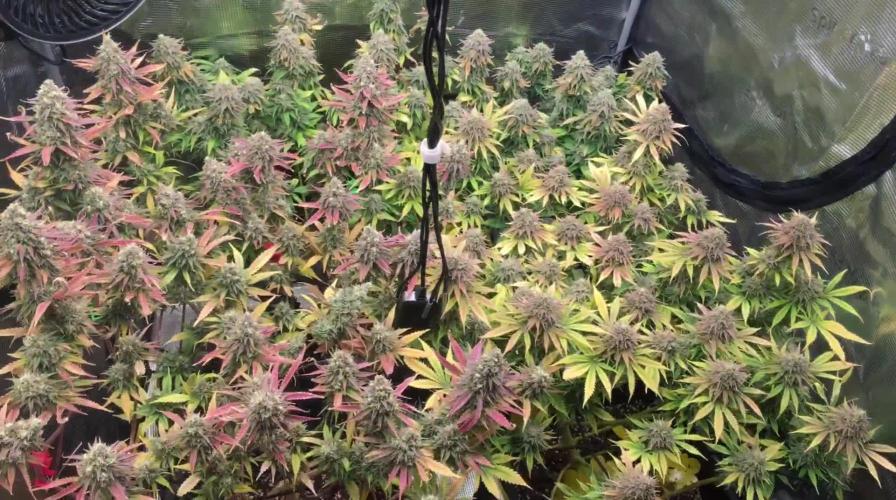
Esa familia, estamos de vuelta, actualizando la 4 semana de floración de las Zkittalicious de Exotic seeds.
Y de primeras , estoy sorprendido con la velocidad y el ritmo de floración de los 2 ejemplares, son muy rapidas.
Están repletas de tricomas y ya empiezan a brillar, las flores están engordando y formándose perfectamente, tanto colas principales como colas laterales.
La verdad se ven bastantes flores estoy muy contento.
Agrobeta:
https://www.agrobeta.com/agrobetatiendaonline/36-abonos-canamo
Mars hydro:
Code discount: EL420
https://www.mars-hydro.com/
Las maximas de temperatura no superan los 26 grados y las mínimas no bajan 20, así que no me puedo quejar.
Los niveles de humedad también son los correctos van entre 50%/65% de humedad relativa.
Por supuesto el Ph lo estamos dejando alrededor de 6.
Hasta aquí es todo, buenos humos 💨💨💨.


@Thedibber
Volgen
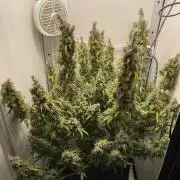
Week 7 of flower so 1-2weeks left for these girls and they looking 10/10 and smelling 100/10 my gosh! 🙌


@Bud_vista
Volgen
Welcome to last week, week 11!
Buds getting continuous bigger and she’s smells fantastic tangie-ish! I would loved to chop her in 2025 but the trichome ratio milky to amber is not really there yet.
Update 01.01.26: happy new year to y’all!
Trichomes starting turning amber. I think she’s ready in 2-3 days since m there a little less amber trichomes that I would like to see