


Likes
Comments
Share

@Fruitgrower
Follow
20.8
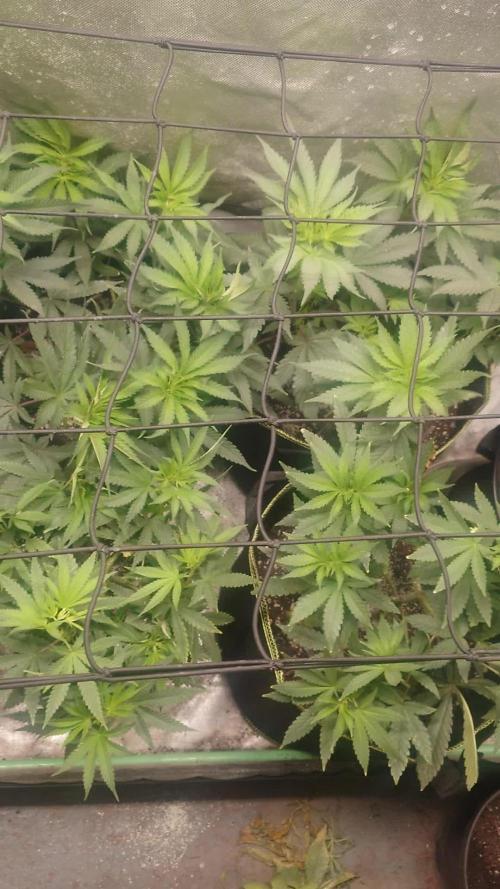
2 nights under 12/12, I can already see the stretch begins.
Gave them another feed.
Hopefully I've ironed out the flaws from the last grow (gassed one, didn't go well, caught some kind of virus?)
23.08
Reacting well to big pots, flowering stretch and current nutrient schedule.
Stretching pretty quickly for Scott 5/6 days in flower!
The bay burger plants are the 4 on the left of the tent, they've all grown lovely structures and reacted to topping and bending well. A few tiny flowering heads were removed and a few dying leaves, as you can see on one of the plants from a few weeks ago, is now looking very healthy it's the one I chose not to top.


Likes
30
Share


@zombikush81
Follow
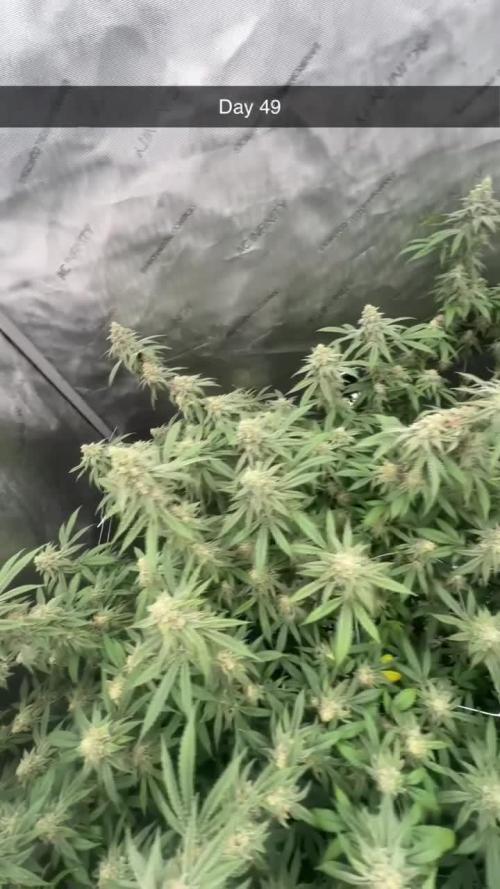
Conclusion and a plant that grows quite slender in bloom doubles if it does not treble its size, responds well to defoliation, it is usually harvested in 8-9 weeks but if it is left a week more mature to perfection. on a scale of 1/10 my vote for this variety is 8.



Likes
74
Share


@Schnabeldino
Follow
_____📅 Week 7 | 📅 🌼🌸🌺Pre-flower🌼🌸🌺 ______
🔸The red lady 💃 is doing great since I put her in the big tent below the sunlight lamps, but it looks like the light is still too strong. But as I have 5 other plants in there I won't change anything and see how she continues to do.
🔸This week I have watered it twice again, 2 x 2,5 l
______________________________________________________________________________________
current conditions
🌡️🔆= 24-25°
🌡️🌜= 18-19°
💨 Hum. = 67%
🔦 PPFD = 800 umol 12/12
🔦⌚DLI = ~ 34
_________________________________________________________________________________________
Equipment to use:
💡 Light: 2 x Sanlight Evo 4- 120 on 90%
🌬️ 3 osziling clips fans
⛺ tent:: 120 x120 x 180 Spider-Farmer
🍯 Pots: 15 liter pot
🌱 Soil: Bio-Bizz light mix
💊 Nutrients: Advanced Nutrients
💧 Water: Tap Water 0,5 EC


Likes
17
Share


@HowtoBubatz
Follow
After deciding to start this new growing journey, I chose to germinate a Banana Purple Punch seed from Fast Buds.
This particular strain caught my attention with its unique characteristics, and I couldn't resist giving it a try.
I began by using a hydrogen peroxide water solution to germinate the seed, which helps oxygenate the water and prevent harmful pathogens.
After about 36 hours, the seed cracked open, revealing the first signs of life.
With a taproot emerging, I carefully transplanted the sprouted seed into a 20L airpot, ensuring enough room for the roots to breathe and grow freely.
This marks the beginning of an exciting new adventure, nurturing this intriguing strain to its full potential.🌱💚
_________________________________________________________________________________________________________________________________________________________________________________________________________________________________
One of my cannabis seedlings unfortunately didn’t survive in the pot....😭
Now, I’m trying again with two more seeds of the same strain, but I’ve changed my approach. Once they've successfully sprouted, I transfer them into coco tablets.
There, they’ll remain until they’ve developed healthy roots before being moved to their final growing environment.
I’m hopeful that this method will help me handle the early phase of the cannabis plants more successfully, and I’m excited to see how things turn out.💚💚

Likes
10
Share

@all_about_420
Follow
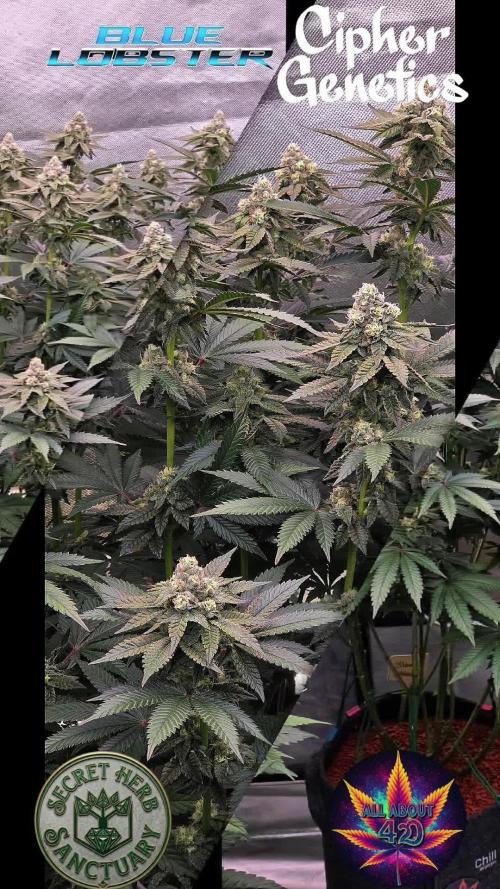
In der fünften Blütewoche bricht bei der Blue Lobster von Cipher Genetics die entscheidende Phase an, und die exklusive Genetik aus Blueberry x Banana x Blue Lobster zeigt jetzt ein ganz besonderes Phänomen. Das absolute Hauptaugenmerk liegt in dieser Phase auf der beginnenden Reife der Harzdrüsen, bei der sich auf den prallen Knospen zunehmend ein charakteristischer, intensiv gelblicher Trichomteppich bemerkbar macht, der fast wie feiner Blütenstaub wirkt. Diese dichte Puderzuckerschicht überzieht die massiven Blütencluster, während die Buds unaufhaltsam weiter anschwellen, an Dichte gewinnen und langsam eine minimale, leichte bläuliche Färbung annehmen. Das komplexe, fruchtig-süße Terpenprofil dieser Kreuzung kommt immer deutlicher durch, und das stabile, tiefe Blattgrün zeigt, dass die Nährstoffversorgung perfekt balanciert ist. Die Lady läuft absolut am Limit ihrer Leistungsfähigkeit und baut genau die klebrige High-End-Qualität auf, die man von dieser Genetik erwartet.
Likes
5
Share


@Ringoworm
Follow
Every thing is looking fine I think the two at the back looks really good 👍

Likes
1
Share


@Yisusondahood
Follow
Cada tres/cuatro días empecé a regar con 500 ml de agua, el domingo va a ser el primer día de comida q le voy a dar ferti de crecimiento. Ya empezó a crecer para arriba y a ramificar bien.
Apliqué hasta ahora en cada riego micorrizas de Namasté


Likes
19
Share


@Sweetie420
Follow
Everything okay
They grow up very quickly 🙏
Im really curious how they become.
This week i will have suprise for You All. I will make a video and i will participste in Herbies Seeds Contest If the plant could talk.
In my weedy mind, if the plant could talk they will say this: ...
22.01.2022 Hier is mine version of the Herbies Seeds Contest:If The Plants Could Talk 🤣🙂
Have a nice vision and volume up guys
Happy growing

Likes
4
Share

@DogDoctorOfficial
Follow
🌱 Week 3 | Purple Haze Photo | Folder 7B | Growing at Her Own Pace
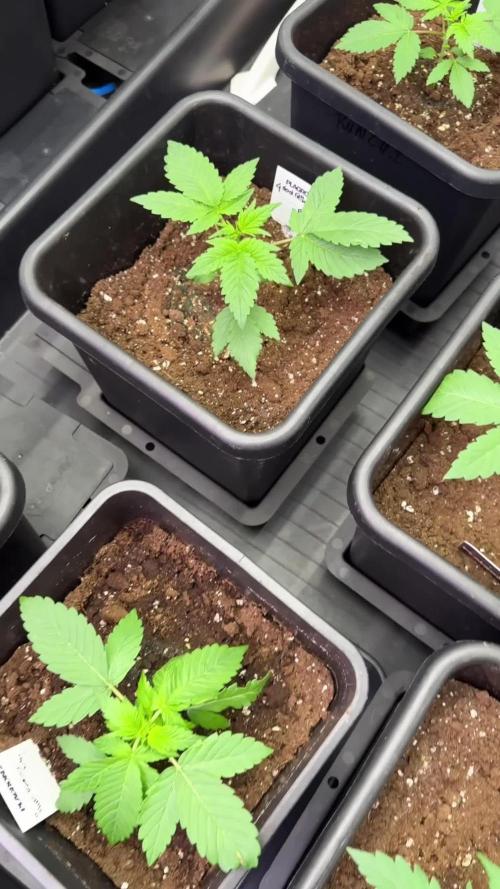
Welcome back to another chapter of Project Blue, where every Purple Haze phenotype receives its own dedicated diary. Although every plant shares the same genetics, environment, nutrients, and lighting schedule, each one expresses its own unique growth pattern, making every folder a story of its own.
This diary is part of my ongoing exploration of 12/12 From Seed, a cultivation technique that has become one of my favourites. From the day these seeds emerged from the soil, they have grown under a 12-hour light cycle, encouraging compact development, excellent internodal spacing, and allowing every phenotype to reveal its natural structure without excessive vegetative growth.
Purple Haze 7B reminds us of one of the most important lessons in growing:
Not every healthy plant develops at the same speed.
She entered Week 3 slightly behind some of her sisters, but she never showed signs of stress or weakness. Instead, she quietly focused on building a strong foundation. Comparing the first photographs with those taken at the end of the week, the improvement is obvious. New nodes are stacking, the stem has thickened, and the canopy is beginning to take shape beautifully.
Sometimes patience is the best nutrient we can provide.
⸻
🌡️ Week 3 Growing Environment
Every phenotype in Project Blue benefits from the same carefully controlled environment.
During this week the room remained stable with the following conditions:
• 🌡️ Day Temperature: 27°C
• 🌙 Night Temperature: 25°C
• 💧 Relative Humidity: 55%
• 🌱 Root Zone Temperature: 21°C
• 🚰 Nutrient Solution Temperature: 20°C
• ⚖️ pH: 6.0
• ⚡ EC: 1.3
• 🌬️ CO₂: approximately 666 ppm
• 💡 Photoperiod: 12 Hours ON / 12 Hours OFF
• ☀️ Average PPFD: 600–700
Providing identical environmental conditions across every plant allows each phenotype to express its own genetic potential, making differences in growth much easier to observe and document.
⸻
🌿 Feeding Schedule
Purple Haze 7B continues receiving the complete Plagron Terra vegetative feeding program:
• Terra Grow — 1.8 ml/L
• Power Roots — 1 ml/L
• Pure Zym — 1 ml/L
• Sugar Royal — 1 ml/L
Rather than increasing nutrients simply because another plant grows faster, I prefer feeding according to overall health. She has shown excellent colour, healthy new growth, and no indication that she needs anything beyond a consistent and balanced feeding schedule.
Healthy roots always come before explosive growth.
⸻
🍃 Letting the Plant Set the Tempo
One thing I enjoy about phenotype hunts is learning to respect each plant’s individual pace.
It’s tempting to compare sisters growing side by side, but plants don’t read calendars.
Purple Haze 7B may have started the week slightly behind, yet every day she added another piece to the puzzle. Her leaves gradually became larger, her stem gained strength, and fresh shoots began emerging confidently from each node.
Rather than chasing rapid vertical growth, she invested her energy into creating a sturdy framework for the weeks ahead.
That’s exactly the kind of patience I like to see.
⸻
🌱 Preparing for Future Training
With several healthy nodes now established, this phenotype is approaching the point where gentle canopy management will begin.
For now, the focus remains simple.
Allow every branch to develop naturally.
Maintain strong root growth.
Keep the environment stable.
As the side branches continue to elongate over the coming days, they’ll become excellent candidates for gentle leaf tucking and Low Stress Training (LST), helping open the canopy without interrupting the plant’s natural momentum.
There’s no need to rush the process.
Every training technique works best when the plant tells you she’s ready.
⸻
🌿 Quiet Progress Is Still Progress
One of my favourite things about Purple Haze 7B is her balance.
The leaves remain a beautiful healthy green.
Internodal spacing is nice and compact.
New growth appears vibrant and vigorous.
The stem continues to strengthen with each passing day.
Although she’s one of the smaller ladies in the room, she carries herself with confidence, and every new set of leaves suggests she’s finding her rhythm.
She may not be leading the race today.
But healthy, steady plants often become some of the biggest surprises later in flower.
⸻
🔭 Looking Ahead
Week 3 has given Purple Haze 7B exactly what she needed: time.
Time to establish healthy roots.
Time to strengthen her stem.
Time to build the structural foundation that will support future flowering.
As she enters the coming week, I expect her side branches to accelerate, her canopy to become fuller, and her compact frame to transform into a well-balanced flowering structure. With stable environmental conditions and consistent nutrition, she’s now perfectly positioned to continue catching up naturally.
Some phenotypes sprint.
Others build quietly before showing what they’re truly capable of.
Growers Love and I have a feeling 7B belongs to the second group.
A massive thank you to Plagron for providing the outstanding Terra nutrient line that keeps Project Blue thriving, to Zamnesia for making this incredible journey possible, and to everyone following these individual phenotype diaries. Every comment, question, and bit of encouragement makes this adventure even more rewarding.A massive thank you to Plagron for providing the outstanding Terra nutrient line that keeps Project Blue thriving, to Zamnesia for making this incredible journey possible, and to everyone following these individual phenotype diaries. Every comment, question, and bit of encouragement makes this adventure even more rewarding.
Likes
12
Share


@DevelGrow
Follow
Eine wunderschöne Pflanze dichte harte harzige stinkende Buds! Mischung aus Erdbeere und 💩 😁 mit einem süßen Abgang! Es sind wirklich Monster buds geworden!✌️🍀💚🍀
Processing
Likes
18
Share


@CanadianFillmore
Follow
Week 5 begins! Divine storm 1 & 2 are doing well, however DS2 is a bit hungrier. I believe that was do to her close location to the fan moving air around the bottom of the canopy.
Increased feeding to 5 liters per plant and did some defoliation of the yellowing leaves. Moved the ladies to the other side of the room for the rest of the grow.
Thanks for stopping by 👽🌳🔥
Processing
Likes
98
Share


@TheBudWhisperer
Follow
Nov. 12 - start of week 7 and it’s been busy. HAd to clip a few leaves out of er to expose some more bud sites. Been tying er back every other day and growth has really picked up. She’ll be ready to go as soon as her kush neighbour is recovered👍. All is well peeps and thanks for swingn in👊
Nov. 17 update - not much to report. ANother lst session to keep spreading her out. Looks like these girls are gonna fill up the cabinet well. Really happy with how she’s developed. NOW biding our time to the switch.
Background
This one is gonna be fimmed out and defo’d as a comparative to its manifolded kush sister. They’ll spend a first week or so under a cfl assembly while the last harvest dries out in the cabinet. This is our 2nd grow of an NL strain and this one should be typical of NL in terms of resilience. That said, she’s a former cup winner so we’re hopeful for supreme quality this time around. 👍 Gonna jack up the nute shed. and supplements heavy throughout the grow in the hopes of really testing the limits of my grow space (approx. 2sq/ft). With the coco medium we’re hoping for that 20% bump in yield as well. THANKS for check'n er out

Likes
120
Share


@DogDoctorOfficial
Follow
It's time to unveil the latest thrilling chapter in the saga of our Lego Ninja Tropical Tangie Run. Brace yourselves for another exciting update on our little green wonder, who continues to captivate our hearts and flourish beyond expectations!
Picture this: our intrepid Lego ninja guards stand tall, their watchful eyes overseeing the steady growth of our beloved plant. With each passing day, she becomes more resilient and awe-inspiring, embodying the true essence of a ninja warrior.
Let's delve into the secret behind her remarkable progress: the enchanting powers of Aptus Holland nutrients. This week, our plant has been pampered with the finest offerings of Regulator, All-in-One Liquid, Camg, and Start Booster. These nutrients, like a well-honed ninja arsenal, provide the precise nourishment she needs to unlock her full potential. She's metamorphosing into a cannabis ninja superhero, fortified by the very elixirs of gardening greatness!
Of course, the dance of light remains a crucial factor in shaping her journey. Bathed in the illuminating glow of a PPFD (photosynthetic photon flux density) of 350, our Tangie absorbs the perfect dosage of light energy. It's akin to a rigorous training camp for photosynthesis, with each photon acting as a cheerleader, motivating her to grow stronger and more vibrant with every passing day.
Let's not overlook the significance of her environment, for it plays a vital role in her development. With a cozy temperature range of 27 to 28 degrees Celsius, she experiences a warm embrace that keeps her content and thriving. Maintaining a relative humidity level of 60 to 70%, we strike the perfect balance of moisture and freshness, crafting a tropical haven that encourages her to reach unprecedented heights.
Now, let's take a moment to revel in the magic unfolding before us. Our Lego Ninja Tropical Tangie Run, nourished by Aptus nutrients, basking in the optimal PPFD, and embraced by a harmonious environment, epitomizes the wondrous art of cannabis cultivation.
Before we conclude, let's pay tribute to the master breeders at Dutch Passion. Their ingenuity has gifted us with the tantalizing Tangie strain, igniting our taste buds and adventurous spirits. We raise our metaphorical shurikens in honor of their expertise and unwavering dedication to the craft of genetics.
In summary, our Lego Ninja Tropical Tangie Run continues to astound and delight. With each passing day, she grows stronger under the watchful eyes of her ninja guardians, fueled by the nourishing powers of Aptus nutrients. Let us embark on this ongoing journey with unwavering love, celebrating the joy that comes with nurturing life.
May your gardening endeavors be filled with the spirit of the ninja! And a special shout-out to @DutchPassion_Official for their remarkable contributions to the cannabis community. We are forever grateful for your seeds, genetics, and overall magnificence.
Remember, my fellow cultivators, stay stealthy, grow strong, and spread the joy of cannabis cultivation. Until our paths cross again, may the ninja spirit guide your verdant adventures!
As always thank you all for stopping by, for the love and for it all , this journey of mine wold just not be the same without you guys, the love and support is very much appreciated and i fell honored and blessed with you all in my life<3 <3 <3
#aptus #aptusplanttech #aptusgang #aptusfamily #aptustrueplantscience #inbalancewithnature #trueplantscience #dutchpassion #dogdoctorofficial #legoninjago #growerslove
With true love comes happiness <3 <3 <3 Always believe in your self and always do things expecting nothing and with an open heart , be a giver and the universe will give back to you in ways you could not even imagine so <3 <3 <3
Friendly reminder all you see here is pure research and for educational purposes only
<3 <3 <3 Growers Love To you All <3 <3 <3
Likes
Comments
Share
@DogDoctorOfficial
Follow
Folder 10 – Frosted Guava Auto B
Week 4 | Vegetation – The Quiet Climber
Welcome back to The 8×8 Adventure, a project where twelve unique cultivars are being grown side by side inside the same environment, allowing every genetic to express its own personality under identical conditions.
Each plant is documented individually because no two phenotypes tell the same story. Even when they share the same genetics, subtle differences in structure, vigor and flowering behaviour make every diary unique.
Frosted Guava Auto B is proving exactly that.
Although she shares the tent with her sister, she has developed her own character. Slightly taller, equally healthy, and every bit as determined, she’s entering the next chapter of her life with confidence. Our 12/12-from-seed journey continues, and this week marks another exciting milestone as the first signs of flowering begin to appear.
⸻
🌱 Week 4 – A Compact Plant With Her Own Personality
While Plant B has stretched just a little more than her sister, she remains a very compact autoflower compared to many of the other cultivars sharing this 8×8 room.
Instead of investing her energy into vertical growth, she has focused on producing tight internodal spacing, sturdy branches and a surprisingly balanced structure. Looking around the room, it’s already clear that Frosted Guava is unlikely to become one of the tallest ladies of the garden—but height has never been the goal.
Sometimes the smallest plants surprise us with the biggest harvests.
Her canopy is filling beautifully, each node producing healthy new growth that will soon become flowering sites. Every day she looks more organized, more symmetrical and more prepared for what comes next.
⸻
🌿 Gentle Training, Natural Development
Just like her sister, Plant B has only received gentle Low Stress Training throughout her early life.
Rather than forcing the plant into shape, I’ve focused on carefully bending large fan leaves, tucking foliage away from developing shoots and allowing natural light penetration into the centre of the canopy.
This subtle approach has encouraged multiple branches to grow evenly without creating unnecessary stress. The result is a plant that still looks completely natural while developing a much more open canopy.
Sometimes patience is the best training technique.
⸻
🌸 Pre-Flower Has Officially Begun
This week brings one of my favourite moments of every grow.
Tiny white pistils have started appearing throughout the upper nodes, confirming that Frosted Guava Auto B has officially entered the pre-flowering stage.
One of the most fascinating aspects of this 12/12-from-seed experiment is watching these autoflowers transition into bloom without hesitation. Rather than waiting for a long vegetative period, they simply follow their own internal clock.
Despite her compact size, she’s wasting no time. The foundation has been built, and now the real show is about to begin.
Over the coming weeks, I’ll be watching closely to see whether she delivers a modest stretch or stays true to her compact structure while focusing her energy on dense flower production.
Either way, she’s looking incredibly promising.
⸻
🌡️ Environmental Conditions
The room continues to provide a stable environment for all twelve cultivars despite the warmer summer temperatures.
Environment
• 🌡️ Day Temperature: 33°C
• 🌙 Night Temperature: 25°C
• 💧 Relative Humidity: 63%
• ? Substrate Temperature: 21°C
• 💦 Nutrient Solution Temperature: 26°C
• ⚗️ pH: 6.1
• ⚡ EC: 1.35 mS/cm
• ☁️ CO₂: 639 ppm
• 💧 Water Consumption: 1.1 litres per plant per day
Even with daytime temperatures reaching 33°C, Plant B continues showing excellent colour, strong leaf posture and vigorous growth, demonstrating how well she’s adapting to the environment.
⸻
Feeding Schedule
This week’s feeding remained simple and consistent, allowing the plant to continue building healthy vegetative growth before fully committing to flowering.
Per litre
• Terra Grow — 1.8 ml
• Power Roots — 1 ml
• Pure Zym — 1 ml
• Sugar Royal — 1 ml
Adjusted using:
• pH Plus — 0.03 ml
• Lemon Kick — 0.03 ml
The Plagron feeding programme continues delivering exactly what these plants need at this stage—healthy roots, lush green foliage and vigorous, stress-free development.
⸻
💡 Lighting
The entire 8×8 garden continues to thrive beneath the outstanding Future of Grow LED fixtures.
Uniform light distribution across the canopy has helped every cultivar develop evenly, while allowing each phenotype to express its own natural growth pattern.
It’s fascinating walking through the room and seeing twelve completely different personalities growing under exactly the same environmental conditions. Frosted Guava Auto B is a perfect example of how genetics shape the plant just as much as the environment.
⸻
🌱 Looking Ahead
Week four closes with Plant B looking healthy, balanced and full of potential.
She’s entering flower with strong branching, vibrant foliage and a structure that promises excellent light penetration throughout the canopy.
While some cultivars in the room are already showing more vertical ambition, Frosted Guava B seems determined to stay compact and focus her energy where it matters most.
The coming weeks will reveal whether this translates into dense, resin-packed flowers—but for now, she’s ticking every box.
The journey is only getting started.
⸻
🙏 Thank You
As always, thank you to everyone following The 8×8 Adventure. Sharing this project with growers from around the world is one of the most rewarding parts of the journey, and I truly appreciate every comment, question and piece of advice along the way.
A special thank you to Zamnesia for providing these exciting Frosted Guava Auto genetics, to Plagron for the trusted substrates and nutrient line that continue supporting healthy, vigorous growth, and to Future of Grow LED for delivering exceptional lighting that allows every phenotype in this room to perform at its very best.
Finally, thank you to GrowDiaries for giving this amazing community a place to learn, share experiences and celebrate our passion for growing together.
See you all next week, when Frosted Guava Auto B takes another step into flowering.
Until then…
Growers Love and happy growing! 🌱💚
Likes
44
Share


@Cogollo_eu
Follow
**Encontrarás la traducción a español al final de la descripción**
From/Desde: 15/03/19 || To/Hasta: 21/03/19
From day/Desde día: 22 || To day/Hasta día: 28
You can find the Money Maker Diary here:
** Podéis encontrar el diario de las Money Maker aquí:**
https://growdiaries.com/diaries/25667-gorillamakingmoney-gorilla-vs-money-m
-----IMAGES & VIDEOS-----
Video 1:
Exactly the same video as 2 but accelerated +300% to fix it to 1 minute for instagram.
Video 2:
4 days (25~28) TimeLapse, 1 image each 60 secs @ 30 fps, awesome video of how is responding the main Gorilla to the Man Linning, at about minute 2:00 i pruned and trained the other gorilla and the main Money Maker, and at the end of the video i pruned the last Money Maker.
Video 17:
General video of the 4 plants and it's trainings, i'm sorry for being so repetitive with the music.
Video 18:
Video focushed on the second Gorilla
Photo 10:
Top and bottom cuts marked on photo 11
Photo 26:
Last main branches toppings
Photo 29:
The main internodal became very rocky, awesomly robust.
-----WEEK SUMMARY-----
As you see i'm testing many different things among the plants, the first Gorilla is recieving a heavy training in man-lining, and with the second gorilla im trying to equilibrate all the tops and then i will push them horizontally, also i twisted the main branch a little so there's no node below any other.
I love how the man-lining is forming the plant, but i'm really scared as i really don't know what am i doing, i just sin in front of the plant some minutes, and then i cut where i fill, same with the grab points. please don't be too enthusiast with this growing as maybe i will fuck up everything at some point lmao!! 😭
-----WATERING CALENDAR-----
18/03/19 - 400 ml with all "LAST" week nutrients @ 0.95 E.C. PH5.9 (i had some rests from the last watering)
- Also i applied a foliar irrigation with the same mix as the last week
20/03/19 - 1.000 ml with all week nutrients @ 0.9 E.C. PH5.9
*****ESPAÑOL*****
-----IMÁGENES & VÍDEOS-----
Vídeo 1:
TimeLapse, exactamente el mismo vídeo que el 2 pero acelerado a un poco más del 300% para ajustarlo a 1 minuto para Instagram.
Vídeo 2:
4 días (25~28) TimeLapse, 1 imagen cada 60 segundos @ 30 fps, vídeo increíble en el que se ve com responde la Gorila al Man Lining, en aproximadamente el minuto 2 podo y entreno un poco a la otra Gorila y la principal de las Money Makers, al final del vídeo podaré la última Money Maker.
Vídeo 17:
Vídeo general de las 4 plantas y sus entrenamientos, siento la repetitividad de la música entre los vídeos.
Vídeo 18:
Video enfocado a la segunda Gorilla
Photo 10:
Los cortes nombrados (Top&Bottom) de la foto 11
Photo 26:
Los toppings de las ramas principales.
Photo 29:
El internodo que he dejado como principal se ha puesto duro como una piedra, extremadamente robusto.
-----SUMARIO SEMANAL-----
Como se puede observar estoy probando diferentes cosas enter las 4 plantas, la primera de las gorilas está recibiendo un man-lining y entrenamiento bastante heavy, y con la segunda Gorila intentaré equilibrar las partes altas y después la extenderé horizontalmente, también he torcido el tallo principal para que los pisos se distribuyan en círculo.
Me encanta como el man-lining está distribuyendo la planta, pero estoy muy asustado pues realmente no se lo que estoy haciendo, simplemente me siento delante de las plantas un rato y después las meto cortes donde siento, de la mima manera las estoy agarrando. Por favor no seáis muy entusiastas con este cultivo, pues en cualquier momento puedo liarla y destrozarlo todo Jajajajajajajaj 😭
-----CALENDARIO DE RIEGO----
18/03/19 - 400 ml contodos los nutrientes de la "ÚLTIMA" semana @ 0.95 E.C. PH5.9 (me quedaba un resto del útlimo riego)
- También he hecho un riego foliar con un resto del ultimo riego foliar
20/03/19 - 1.000 ml con todos los nutrientes de la semana @ 0.9 E.C. PH5.9

Likes
5
Share

@Jungle_James_Grows
Follow
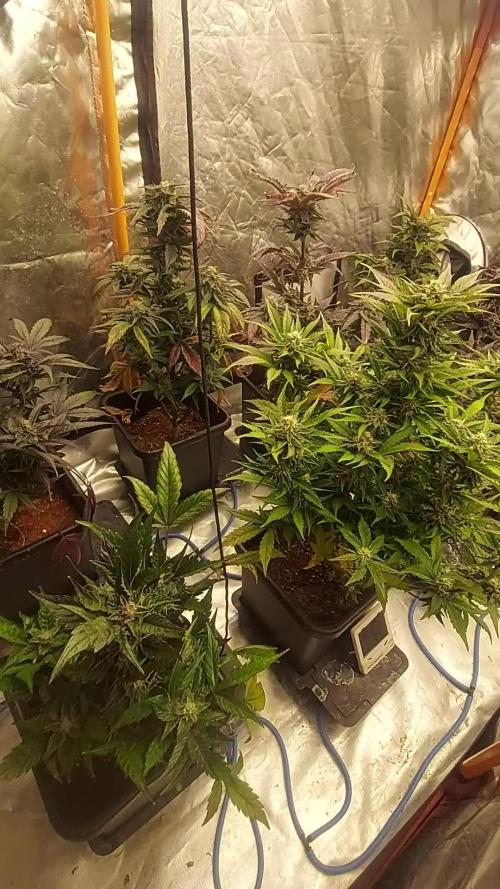
Just on water now and they're getting the chop in a week or so.
Likes
9
Share


@Hazebuster888
Follow
In der sechsten Blütewoche haben sich die Blüten weiter verdichtet und an Größe zugenommen. Die Pflanze profitiert sichtbar von der erhöhten Lichtintensität und den zusätzlichen Netzen, die für Stabilität sorgen. Das Scrogging hat sich als äußerst effektiv erwiesen, da alle Blüten gleichmäßig Lichlt erhalten und sich prächtig entwickeln. Die Pflanze wirkt insgesamt sehr vital, und die Blütenstände zeigen eine schöne Harzbildung, was auf eine erfolgreiche Ernte hoffen lässt.
Likes
3
Share


@Xebediah
Follow
Bumped up the nutrients this week. not by much, though. Just enough to top off. I prefer to make gradual increases and underfeed rather than overfeeding. To me it's easier to correct problems of underfeeding than to correct the problems from overfeeding.
