Likes
Comments
Share
@Klyaksa
Follow
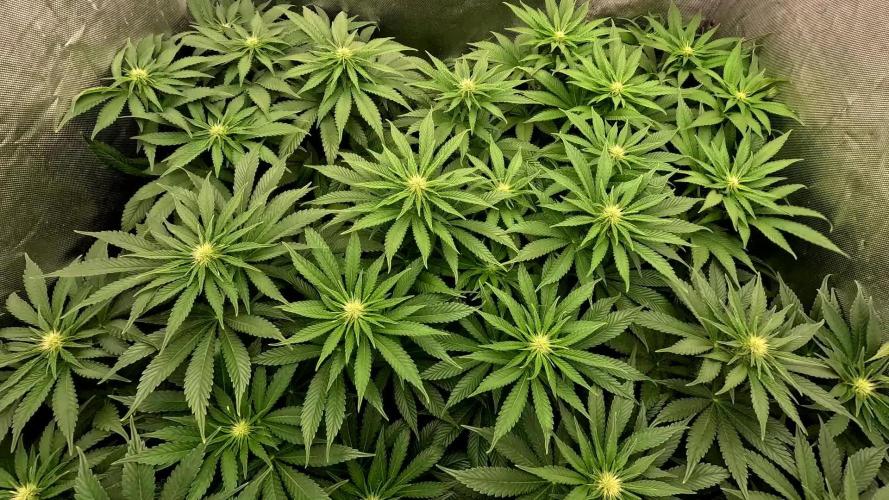
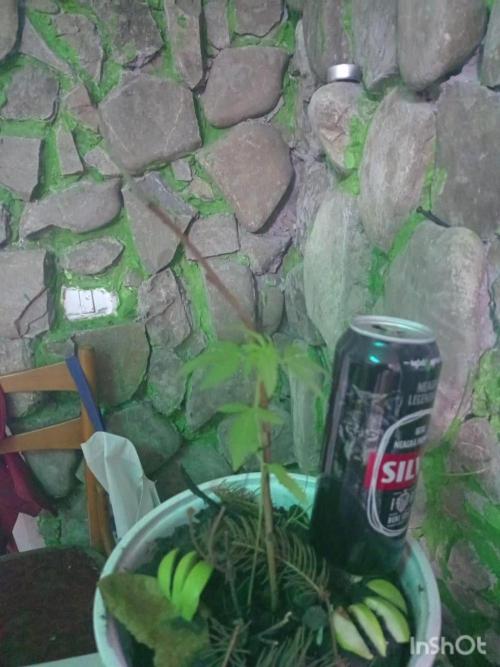
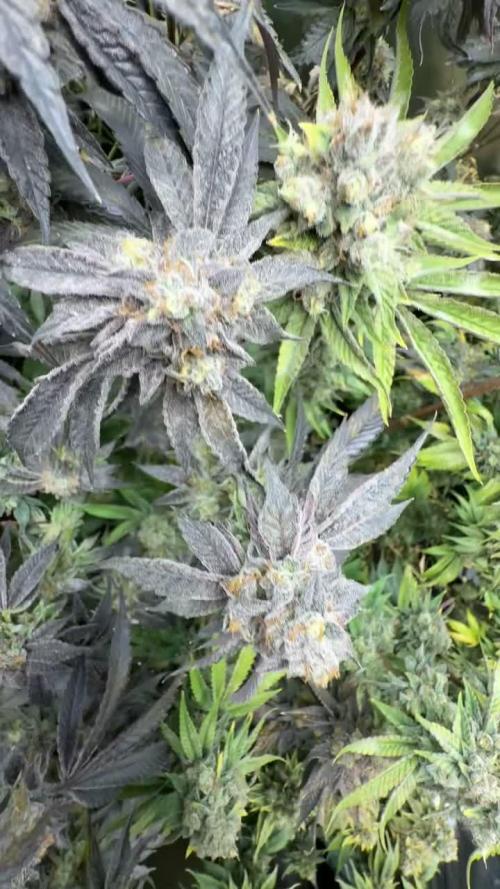
На видео 37 день от каски и 2 день с перевода 12/12 NLB очень резво растут,по несколько сантиметров в день кажется,мощные и крепкие растения. Mazar поменьше,но очень коренастый и сбитый/плотный,толстый ствол,ветки Давал уже feeding hybrid как базу,500ppm(с учётом воды с крана 245ppm) На фото им по 40 дней от каски и 5 с перевода 12/12,NLB растут очень энергично,подгибаю, переживаю что бы хватило места в тенте Mazar только подгибал и иногда срывал листики,что мешают,он самый маленький На втором видео всем по 42 дня от каски и 7 день 12/12 Слева внизу автомат,он не идёт в репорт)
Likes
6
Share
💙 Project Blue Tent – Week 8 Blue Waffle F1 – Pheno B (Folder 13B) Hello everyone, and welcome back to another chapter inside Project Blue Tent! 💙🌱 If you're joining us for the first time, welcome aboard. Project Blue Tent follows four individual Blue Waffle F1 plants from Zamnesia, each documented separately from seed all the way through harvest. All four sisters share the same environment, lighting, nutrition, irrigation and training techniques. The idea is simple: Keep as many variables identical as possible... And let the genetics tell the story. And although the four girls continue looking remarkably similar, each one still has her own little personality. Today we're checking in with Blue Waffle F1 – Plant B. And if you've been following her journey... You already know this girl. She's the one who had the little caterpillar adventure earlier in the grow. She's the one who bounced straight back. She's the one who has handled topping, SCROG training and defoliation without complaint. And now... She's officially in flower. 🌸 ──────────────────────── 🌸 Week Eight – Flower Has Arrived Well... The Blue Tent has officially changed gears. After seven weeks of vegetative growth, the lights are now running 12/12, and Plant B has entered the flowering phase. And judging by what she's done over the last week... She was definitely ready. The entire room has been growing incredibly quickly. We're talking about plants gaining close to 30 cm in roughly a week, while at the same time developing flowering sites, producing new growth and generally accelerating in every direction. Plant B is no exception. She's currently sitting at approximately 81 cm, compared with around 60 cm when we finished the vegetative phase. That's a serious jump. And the interesting part is that she's not simply stretching upward. She's continuing to develop. Branches are extending. Nodes are stacking. Flowering sites are becoming increasingly obvious. And the whole plant is moving with an incredible amount of energy. So now the game changes. We're no longer building the vegetative canopy. We're learning how to manage it. ──────────────────────── 🕸️ The Canopy – Still Beautifully Even One of the things I'm happiest about this week is how even the canopy remains. After weeks of topping, low-stress training and SCROG work, Plant B entered flowering with a beautifully distributed structure. There aren't huge dominant towers taking over everything around them. The growth is spread across the available space. And that's exactly what we wanted. The interesting challenge now is keeping it that way. Because these girls are moving fast. Very fast. The screen may have done its job during vegetation, but flowering stretch doesn't exactly ask for permission. It simply happens. So we're going to work with the plants rather than fight them. And that's where this week's additional training comes in. ──────────────────────── 💥 Super Cropping – Managing the Stretch This week I've also started using super cropping to help manage some of the more aggressive vertical growth. The idea is not to randomly damage the plants. It's a deliberate form of high-stress training where selected branches are gently bent and compressed, creating a temporary interruption in the dominant vertical growth pattern. The hope is to achieve a couple of things at the same time. First, it can help reduce the advantage of the tallest shoots and keep the canopy more manageable. Second, the plant responds by reinforcing the affected areas, which can ultimately contribute to stronger branches and more robust nodes. And these girls are giving me quite the demonstration. I'll super crop a branch... Come back later... And somehow she's already standing back up again. 😂 Sometimes it feels like I'm having a conversation with the plant. Me: "Stay down." Plant B: "No." 😂🌱 But that's actually encouraging. It tells me just how much energy these plants have right now. The growth is so vigorous that the branches are recovering incredibly quickly. So we're going to continue carefully managing the taller shoots and see how the plants respond over the coming weeks. ──────────────────────── 🌿 Plant B – Strength Under Pressure Plant B continues looking fantastic. Her structure remains strong, her foliage is healthy, and the colour is exactly where I want it. After everything we've asked from her during vegetation, she has transitioned into flower without showing any meaningful signs of stress. And that's something I really appreciate about this phenotype. She's cooperative. She responds. She recovers. And then she simply keeps growing. The super cropping we're doing now is another opportunity to observe that response. We're deliberately introducing a little controlled stress to encourage a more balanced structure while the plant is stretching. Will it completely stop her from getting taller? Honestly... I doubt it. 😂 These girls have already shown us what they're capable of. But if we can slow down the most aggressive vertical growth, strengthen those important branching points and maintain a reasonably even canopy... I'll consider that a win. ──────────────────────── 💡 Flowering Light – Starting Strong We're also entering flowering under a fairly strong light intensity. The Blue Tent is starting flower at approximately 800 PPFD. That's intentional. These plants have spent seven weeks building a large and healthy canopy, and I want to give them plenty of light from the beginning of the flowering cycle. At the same time, I'm watching carefully for how they respond. The goal is not simply maximum intensity. It's finding the point where the plants can use the available light effectively while maintaining healthy transpiration, structure and development. And because we're already dealing with significant growth and relatively warm nights, the next couple of weeks will tell us a lot. For now... Plant B is loving it. ──────────────────────── 🌡️ Blue Tent – Flowering Conditions The environment remains remarkably consistent across the room. This week's recorded conditions were: • 🌡️ Day Temperature: 27°C • 🌙 Night Temperature: 27°C • 💧 Relative Humidity: 66% • 🥥 Substrate Temperature: 24°C • 💦 Nutrient Solution Temperature: 19.2°C • ⚗️ pH: 5.81 • ⚡ EC: 2.09 mS/cm • 💨 CO₂: approximately 666 ppm • 💡 Light Schedule: 12/12 • 💧 Irrigation: approximately 1.4 L/plant/24h • ? Pot Size: 8 L • 📏 Plant Height: approximately 81 cm The temperature situation is particularly interesting. Day and night temperatures are currently almost identical. That's something I'm keeping a close eye on because warmer nights can encourage additional stretching. And we've already seen plenty of evidence that these plants don't need much encouragement to grow. 😂 So for now, we're observing closely and managing what we can. ──────────────────────── 🥥 Feeding – Flowering Has Begun The nutritional program has also moved into the flowering recipe. Current feeding: • Plagron Hydro A — 2 ml/L • Plagron Hydro B — 2 ml/L • Plagron Hydro Roots — 1 ml/L • Plagron Power Buds — 1 ml/L • pH Plus — 0.03 ml/L • pH Min — 0.03 ml/L Current EC is approximately: 2.09 mS/cm with the nutrient solution sitting around 19.2°C and pH at approximately 5.81. The change is relatively measured. We're not throwing everything at the plants simply because flowering has started. They're already growing extremely aggressively. So the objective is to support that development without unnecessarily complicating the equation. As always... The plants get the final vote. ──────────────────────── 💧 Drip Irrigation & Automatic Drainage The irrigation system continues proving its value as these plants become larger and more demanding. Plant B is currently receiving approximately 1.4 litres per 24 hours through the automatic drip irrigation system. The drippers deliver the nutrient solution directly into the coco. The solution moves through the substrate, supplying the root zone before exiting as runoff. That runoff is collected in the trays underneath the grow bags. From there, the drainage lines carry it toward the pump, which moves the collected solution back toward the reservoir. So the irrigation and drainage systems are effectively working together as a recirculating setup. Water goes in. The coco does its job. The plant gets access to the nutrients. Runoff is collected. The drainage system removes it. The pump returns it. And the cycle continues. It's a beautifully simple system once everything is working correctly. And right now... It's working wonderfully. The plants are growing aggressively, the water demand is increasing, and the system is keeping up without turning daily irrigation into a chore. That's exactly what I wanted from it. ──────────────────────── 🌿 Seven Weeks of Vegetation – Was It Too Much? This is something I've been thinking about quite a lot this week. Seven weeks of vegetation is longer than I normally keep plants in this stage. Usually, I prefer to flip earlier. But looking at these girls now... I may have left them in vegetation a little too long. 😂 The structure they developed is fantastic. The canopy is full. The branches are strong. The plants are healthy. But they have also accumulated an enormous amount of growth potential. And now that flowering has started, they're showing us exactly how much energy they have stored. Close to 30 cm of growth in roughly a week is no small thing. And they're not finished. That's why I'm particularly interested in the combination of: SCROG + super cropping + strong light + careful environmental management. We're going to see whether those tools can help keep this incredible growth somewhat under control. ──────────────────────── 🌱 Plant B – The Comeback Girl There's something particularly satisfying about looking at Plant B now. A few weeks ago, she had an unexpected little visitor. One hungry caterpillar decided that one of her leaves looked like lunch. The problem was caught quickly. The caterpillar was removed. The affected area was cleaned up. The tent was inspected. And Plant B simply carried on. Now look at her. Approximately 81 cm tall. Healthy. Strong. Flowering. Producing new growth everywhere. If anything, she looks like she's trying to make up for the leaf she lost. 😂 She's definitely earned her place in this project. And I love that this diary gives us the opportunity to follow that entire story individually. ──────────────────────── 💥 Super Cropping – Let's See What Happens The next few weeks will tell us whether this additional training strategy gives us the effect I'm hoping for. The objective isn't to stop growth. That's impossible. The objective is to manage it. If a branch is becoming significantly taller than the rest of the canopy, we can intervene. If a particularly vigorous shoot needs to be brought back into balance, we can work with it. And by creating those controlled bends and reinforced points along the branches, we're hopefully building stronger plants at the same time. The fascinating thing is how quickly Plant B recovers. I'll make an adjustment... And shortly afterward... She's standing up again. It's almost as if the plant didn't get the memo. 😂 So we'll keep watching. We'll keep training where necessary. And we'll let the plant show us whether the technique is doing what we want. ──────────────────────── 🌸 Flowering Has Officially Started There is something special about this point in the project. For seven weeks we've been preparing these plants. Topping. Training. SCROG. Defoliation. Building structure. Balancing the canopy. And now... We're finally seeing the reward for all that preparation beginning to appear. The flowering sites are developing rapidly. The branches are extending. The plants are changing. And suddenly the Blue Tent doesn't look like a vegetative garden anymore. It looks like a flowering room. Plant B has an excellent starting structure. Now we get to find out what she can do with it. ──────────────────────── 👀 Looking Ahead The next couple of weeks should be extremely interesting. The main objective is now managing the stretch while allowing the plants to flower naturally. We'll continue monitoring the canopy. We'll use super cropping where necessary to manage particularly vigorous shoots. We'll keep the irrigation consistent. We'll monitor nutrition. We'll watch the environment closely. And most importantly... We'll observe. Because right now all four sisters are showing just how similar they can be. But as flowering progresses, I expect their individual personalities to become increasingly obvious. Will Plant B remain one of the more balanced girls? Will she stretch aggressively? Will the super cropping help? Will the strong flowering light keep her compact? We'll find out. For now... She's looking absolutely fantastic. ──────────────────────── 💙 Thank You A huge thank you to Zamnesia for making Project Blue Tent possible and for giving us the opportunity to explore these beautiful Blue Waffle F1 genetics phenotype by phenotype. A massive thank you to Plagron for the Premium Growbags and Hydro nutrient line supporting these plants throughout the project, and now for helping us move into the flowering phase. A special thank you to Zamnesia for the Phytonaut LED lighting that helped us build this beautiful canopy and is now providing the strong light these girls are receiving as flowering begins. And a huge thank you to Mars Hydro for the drip irrigation and automatic drainage system. The way the drippers, drainage trays, piping, pump and reservoir work together has made maintaining these four rapidly growing plants considerably easier. Thank you as well to GrowDiaries for providing a place where growers can document these journeys, exchange knowledge and follow projects like this from beginning to end. And finally... Thank you to everyone following Project Blue Tent. Plant B has come a long way. From seed... To topping. From SCROG... To defoliation. From an unexpected caterpillar visitor... To one of the fastest-growing girls in the tent. And now... Flowering. 🌸💙 The canopy is ready. The plants are healthy. The stretch has begun. And we're doing our best to keep these energetic ladies under control. Whether they listen is another question entirely. 😂 Until next week... Growers Love, happy growing, and take care everyone! 🌱💙
Likes
23
Share
@Spliffi
Follow
Germination 27 September 2023 Heya 🤙👍🤙🌱🌱🌱 In the heart of a humble garden, a miraculous journey is about to unfold. Beneath the soil's dark, nurturing embrace, a seed lies dormant, awaiting the precise moment to burst forth into life. It is a marvel of nature, a tiny capsule of potential, encoded with the blueprints of the plant it aspires to become. As the heavens open, raindrops penetrate the earth, quenching the thirst of the soil and signaling to the seed that its time has come. The seed absorbs this life-giving moisture, swelling as it takes in water. It's as if the seed is awakening from a long slumber, stretching its embryonic limbs for the very first time. Within this subterranean realm, the seed's outer coat softens, and a tiny rootlet begins to emerge. This is the radicle, the seed's first root, and it instinctively knows to journey downward, anchoring itself into the soil. It is the plant's lifeline, seeking out water and nutrients essential for growth. Simultaneously, a delicate shoot, known as the plumule, makes its way upwards, drawn by an invisible force towards the sky. It is a daring expedition, fraught with obstacles, as it navigates through the soil. Yet, guided by an innate sense of direction, it perseveres. Finally, breaking through the soil's surface, the shoot unfurls its first leaves, miniature versions of what they will one day become. These are the cotyledons, a pair of leaves that have been stored within the seed, packed with nutrients to sustain the young plant in its earliest days. As the sun's rays touch these fledgling leaves, photosynthesis begins. It's a momentous occasion, the plant's first breath, as it converts sunlight into energy. The seedling, still fragile yet full of promise, has successfully embarked on the first chapter of its life. From here, it will face countless challenges and opportunities, but for now, it stands as a testament to the remarkable resilience and complexity of nature. Thanks for reading🤙👍🤙🌱
Likes
4
Share
Not much going on just letting them don't their thing
Likes
6
Share
@Sup3rNov4
Follow
Left her be this week as she was having issues with food
Processing
Likes
32
Share
Saludos mis amigos, Decloarando que todo este bien para ustedes y sus familias. Pues este ha sido el proceso desde nacer hasta ya casi cosecvha, creo estar dandoles esta semana y la proxima para quitarlkes el agua y darles 48 horas de oscuridad y finalmente el corte mayor para el disfrute de las cosecha. ersta vez utilice un producto que si no me equivoco es de fox farm para engordar las flores y me resulto muy bueno, este cultivo quise irme limpio lo mayor posible para observar resultados. Me agradan pero siermpre es bueno hacer uso de algunso buenos nutrientes deacuerdo a la etapa que esten, como se vean, lo que identificquemos en cada una de ellas. Es toy muy contento por que el olor es fuerte, tengo toda la casa olorosa, el olor es frutoso, como a Starburst de cherry, muchos terpenos como pueden ver, y de solo tocarlas un poco waooo! la habitacion se explota en esa fragancioa, creeanme que la experriencia es del mas halla. Con esto los dejo amigos, grascias por toooodas esas buenas vibras. una barazo fuerte hermanos, BUENOS HUMOS!
Likes
24
Share
Week 2 from flip & All is well, plants are starting to uptake more water-about to get loud&wild. Small stretch!
Likes
13
Share
Gracias al equipo de Royal Queen Seeds, en especial a @james, Marshydro y XpertNutrients y sin ellos esto no seria posible. 💐🍁 Gelato #44: Los criadores de Tyson 2.0 criaron Gelato 44 a partir de cepas finas. Al cruzar la Sunset Sherbet y la Thin Mint Girl Scout Cookies, crearon un híbrido de dominancia índica que asesta fuertes golpes en el cuerpo y la cabeza. Su contenido de THC del 22% crea sinergia con terpenos colocantes para ablandar los músculos Mantenla hidratada y con una dieta constante y pasará por la fase de floración en unas ocho semanas. Las plantas de interior alcanzan una altura máxima de 120 cm y producen 400-450 g/m², mientras que sus homólogas de exterior alcanzan los 180 cm y producen hasta 600 g por planta. 🚀 Consigue aqui tus semillas: https://www.royalqueenseeds.es/rqs-semillas-cannabis-tyson/663-gelato-44.html 💡FC6500: Eficiencia líder en el mercado: la lámpara de cultivo LED FC-E6500, que ostenta un estatus líder en el mercado, es una solución rentable con un PPE de 2,8 µmol/J y un rendimiento máximo de 2,5 g/vatio. Ofrece un PPF alto de 2026 umol/S y es adecuada para una cobertura de vegetación de 1,50 m x 1,50 m y una cobertura de flores de 1,20 m x 1,20 m. Iluminación versátil y uniforme. https://marshydro.eu/products/mars-hydro-fc-e-6500-730w-commercial-led-grow-light/?gad_source=1&gclid=Cj0KCQjw1qO0BhDwARIsANfnkv9IIrYSbmJqz8PqpJOIyWwJfp5bc3SGJgUV68USLQ4tjmXDYwoBuAsaAue3EALw_wcB 🚥 MarsHydro ADLITE UV/IR/RED: Para lograr un crecimiento óptimo de las plantas y maximizar los rendimientos es un arte simple que depende en gran medida de las condiciones ambientales adecuadas. Reconociendo las limitaciones de la iluminación natural y las soluciones de iluminación tradicionales para satisfacer estas necesidades únicas, lanzamos ADLITE. Estas luces especiales UV, IR y roja están diseñadas para llenar áreas del espectro, proporcionando las altas longitudes de onda que las plantas necesitan para un crecimiento y desarrollo óptimos. 🚀 Consigue aqui tu Adlite: https://marshydro.eu/collections/adlite-supplemental-lights/ 🏠 : Marshydro 1.50 x 1.50 x 1.80, carpa 100% estanca con ventanas laterales para llegar a todos los lugares durante el grow https://marshydro.eu/products/diy-150x150x200cm-grow-tent-kit 🌬️💨 Marshydro 6inch + filtro carbon para evitar olores indeseables. https://marshydro.eu/products/ifresh-smart-6inch-filter-kits/ 🍣🍦🌴 Xpert Nutrients es una empresa especializada en la producción y comercialización de fertilizantes líquidos y tierras, que garantizan excelentes cosechas y un crecimiento activo para sus plantas durante todas las fases de cultivo. Consigue aqui tus Nutrientes: https://xpertnutrients.com/es/shop/ 📆 Semana 5: Debido al frio 21/22 °C durante el dia la floración es algo lenta, con la ventaja de que seguramente no vea ninguna cola de zorro. Practico defoliación para una mejor penetración de la luz y bajar la humedad. Las plantas se comen todos los nutrientes y comienzan a formar unas lindas flores, mantengo una semana la dosis de nutrientes en algunas plantas hasta ver bien formados los erizos. Potencia del foco 85%.
Likes
22
Share
1/11/2024 Vegetation Week 1 Day 1- I have a root almost in the water.. Yay!! Top feeding is almost done. she is looking a little sad as I work the transition Top feeding but once the roots are fully in the water she will start to take off. Ensured my PPFD is set between 250-300 it is set to: 258 1/12/2024 Vegetation Week 1 Day 2- I have a root in the water.... NO TOP FEED TODAY SIR!!! now that a root is touching the water and she looks stable, I am not going to topfeed, I will see how she looks tomorrow and as long as everything looks good I am going to go ahead and do a change and week 1 fill on Nutes.. I know it is a couple of days in but the same Nutes go through Week 2 and get changed at Week 3 So I should be good to go.. I will just ensure I fill to root touching the water when I change tomorrow. 1/13/2024 Vegetation Week 1 Day 3- Water Change Day!! I added 36 Gallons of Water to the system: Silica= .5mil/gal= 18mil CalMag= .75mil/gal = 27mil FloraMicro=3.0mil/gal = 108mil FloraGro=2.0mil/gal = 72mil FloraBloom= 2.0mil/gal = 72mil PH DOWN= 30mil Very important thing with this system is to now wait the 24 hours for the system to adjust.. Do not make any further adjustments to your PH up or Down for 24 hours to allow time for the system to balance. 1/14/2024 Vegetation Week 1 Day 4- Today I just adjusted the PH to ensure that it was right at 6.0 1/15/2024 Vegetation Week 1 Day 5- Today I Cleaned up the lower damaged leaves from the transition from top feeding to roots in the water. She looks good today. 1/16/2024 Vegetation Week 1 Day 6- Today I just took a picture of the beautiful lady for Log. Other than that just normal day to day operations, check the pH, check the Humidifiers and fill as necessary, check level of water in the Res. Everything looks great. onto Tomorrow!! 1/17/2024 Vegetation Week 1 Day 7- Today I filled the humidifers, checked the PH and just let her grow.. Grow baby Grow.....
Likes
Comments
Share
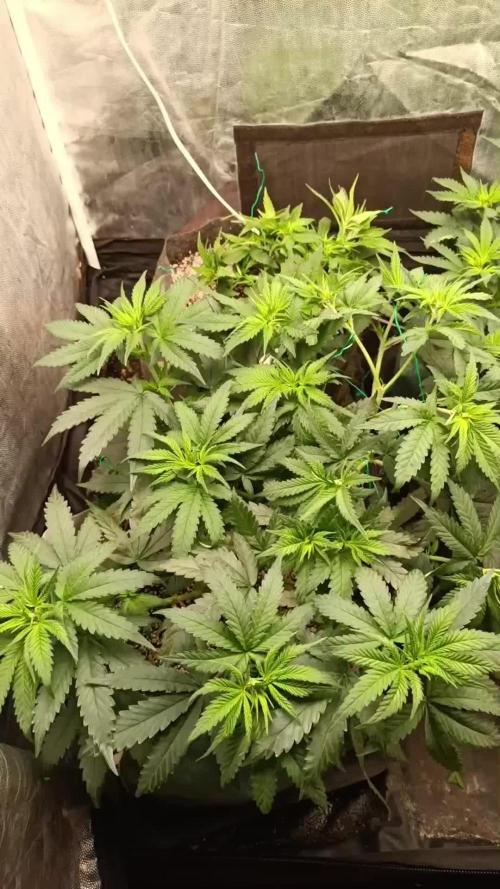
📆 Semana 5 Con el coco ya totalmente asentado, la EC se mantiene en 1.5–1.6 y el pH estable en 5.8–5.9, asegurando una absorción constante y raíces blancas y activas. La estructura queda definida y el crecimiento vertical es mínimo, confirmando la transición completa a producción floral. Los erizos comienzan a compactarse y a ganar densidad visible en todas las puntas, con aumento progresivo de resina y uniformidad en la canopia. El color se mantiene funcional, ligeramente más claro pero equilibrado para esta fase. Los aromas se intensifican y la energía se concentra claramente en el engorde inicial de los cogollos. Seguimos creciendo fuerte 💪!
Processing
Likes
37
Share
Hey! Welcome to my next grow. Decided to give autos a swerve for a while for a few reasons. I've had a bad run of germination from my last few attempts. Also some of the plants I have been growing have flowered far too early which would be a huge waste of valuable tent space. Big shoutout and thank you to the team at RQS. James contacted me and asked if I could run one of their strains in my setup. I'm a big big fan of blueberry strains so decided to give the Haze Berry a go! James sent me 5 seeds out along with a sweet box of goodies. To my delight all 5 seeds have germinated in water so all 5 are now in the tent. Seeds in soil today (11.02.19). They will undergo the full Ice Cream Parlour experience meaning topped at the 3rd node. Supplemented with 1200ppm co2. LST and Scrog under the usual Maxibright 315w laps and an extra LED to boost them along mid flower. Keep checking back for updates. I'll be giving this strain my complete attention aiming for a big yeild and quality buds. Update - I put seeds into water on 8.02.19. Moved the sprouted seeds to 20 litre pots on 11.02.19. Now 13.02.19 they have broken the surface of the coco and showing their cotyledons. I will start supplementing 1200ppm Co2 from tomorrow.
Likes
5
Share
I joined Grow diaries late in my growing career... I wish I would have found this site sooner.. Enjoy! I personally enjoy growing mephisto genetics. I was very happy with the toof decay grow and end result. I ended up letting this cure for 2 months. It is number 2 in my book so far for my adventure with Mephisto seeds. Walter white is #1. I grew this in colder conditions through the winter of 2019. Super dense buds loaded trichs, very loud smell, and great appeal! I have more of these seeds so I will do a start to finish eventually. Happy growing✌️🏽
Likes
4
Share
Definitely would’ve been better had I not moved but nonetheless it was a great run overall, super frosty and sticky with not very dense buds which made for a difficult trim but I didn’t mind.
Likes
12
Share
The plants have been on cruise control 🛳️ so far and they’re loving every second of it! Despite all of them being popped around the same time, I can see the purple lemonade finishing up much faster than the lsd-25’s. No deficiencies to my eyes, slowly plumping up day by day 🤘
Likes
14
Share
Hello friends of good taste 😊✌️...this week was relaxed. The ladies look good and the GHSC Bio line is really great I only watered with clear water ph 6.0 EC 0.4 and lollipopped the ladies. Hope they tolerate it well! One more hermaphrodite in the box and I'm dying 😅 my heart is still bleeding from the last two plants 😂 I would be be happy if you like the post and follow me😅✌️ stay tuned and stay high 💚 your Terpy Tears
Likes
6
Share
@XanHalen
Follow
Feb 8 Today marks the 13th week of these girls, it’s been an amazing 1st grow, would highly recommend this strain for first time growers, even the one that had some issues ended up surprising me late flower with new growth, and somehow basically caught up with the strong girl in size, but not density. I learned a lot about how these plants like to be treated, and I will definitely implement new methods to improve my cultivation! See you on harvest day!
Likes
1
Share
@BruWeed
Follow
11/10 - comenzó su cuarta semana de floracion. Su evolución fue muy notoria, de un dia para el otro se desarrolló mucho. No tuve problemas en ninguna etapa, hasta el momento se encuentra perfecta. Los cocos son muy resinosos y grandes.
Likes
2
Share
Plants were stunted for a few days from transplant and roots took a long time to make their way down to water line.
Likes
Comments
Share

🌸 Pink Rosay Auto by Zamnesia | Pheno B | Week 8 (Flower Week 5) 🌱 The Tiny One That Refused To Give Up If I were growing only two or three plants, I'm going to be completely honest... I probably wouldn't have kept her. Pink Rosay Pheno B is tiny. Not small. Not compact. Tiny. She's easily among the smallest plants I've ever grown. And that's exactly what makes her so interesting. Because this is the whole point of the 8×8 Adventure. I'm growing twelve different genetics side by side, and instead of selecting only the plants that immediately impress me, I'm giving every phenotype the opportunity to tell me who she is. And this little lady? She's definitely telling us. She isn't going to produce the biggest harvest in the tent. She probably won't even come close. But she's healthy. She's flowering. She's developing beautifully. And she's still here. Sometimes that's enough reason to keep watching. 🌸 Week 5 Flower – Tiny, But Still Building The stretch is essentially behind her now, and her personality couldn't be clearer. Pink Rosay Pheno B has remained incredibly compact throughout the entire grow. Her nodes are tightly packed. Her branches remain short. Her entire structure feels almost miniature compared with the plants surrounding her. But when you look closely... There are flowers everywhere. Those tiny branches are carrying developing buds, and the white pistils continue appearing across the flowering sites. She's slowly turning this miniature framework into a miniature flowering plant. And there's something strangely beautiful about that. She isn't trying to become something she's not. She's simply doing what her genetics told her to do. ✂️ Defoliation – Opening The Little Lady Up Just like her sister, Pink Rosay Pheno B also received a selective defoliation this week. Again, this wasn't because she was unhealthy. Quite the opposite. She's looking beautiful. The reason was simply that her extremely compact architecture creates a very dense little package of foliage and flowers. With so much plant compressed into such a small vertical space, selectively removing some unnecessary leaves helps open the structure. The goal isn't to strip the plant. It's not about removing healthy leaves just because we can. And it's certainly not about making the plant look pretty for a photograph. The idea is to create a little more space between foliage, flowers, light and moving air. I removed leaves that were contributing to congestion and cleaned up portions of the lower and interior structure where development was unlikely to justify keeping excessive foliage. But I didn't remove everything. There are still flowers down there. And I'm leaving some of them. Because this is an experiment. I want to see what this tiny phenotype can actually do. 💡 Let The Photons Move With a plant this compact, light management becomes particularly interesting. The Future of Grow Black Series provides the primary light from above, while the Lumiflora under-canopy system adds another source of illumination deeper in the room. But there's an important distinction here. Adding light doesn't automatically mean every flower needs to be exposed directly to it. The plant still has its own architecture. Leaves overlap. Flowers sit underneath other leaves. Some areas naturally receive less light. By selectively opening the canopy, we're simply allowing more of the available photons to travel through the structure rather than being intercepted immediately by layers of foliage. It's not about making the plant brighter. It's about making the light distribution more useful. And with a plant this tiny and dense, every little opening makes a difference to the way light and air move through her. 🌱 The Smallest Plant With A Big Lesson This is probably the part of her story I appreciate most. If you only looked at her height, you could easily conclude that something went wrong. But nothing went wrong. She simply expressed herself differently. That's one of the reasons growing multiple phenotypes is so valuable. Put two sisters next to each other and suddenly the differences become impossible to ignore. One can stretch. One can stay short. One can develop large branches. Another can produce a miniature architecture. Same genetic family. Completely different personalities. And instead of asking: "Why isn't she like her sister?" I prefer asking: "What can she show me if I let her finish?" That's the experiment. And that's why she's still here. 🌼 Flowers, Pistils & Personality Despite her size, the flowering development is genuinely beautiful. The flowers are becoming more defined, with fresh white pistils continuing to emerge from the developing calyxes. The deep green foliage provides an incredible contrast against those bright white hairs. And the more I look at her, the more I realise that her size is actually part of her charm. She's almost like a miniature version of a full-sized flowering plant. Everything is there. Just compressed. Tiny branches. Tiny leaves. Tiny flowers. Tiny structure. But the same biological process is happening. She's still capturing light. She's still producing energy. She's still moving water and nutrients. She's still building flowers. And she's still telling us what her genetics are capable of. ❄️ She's Still Getting Frostier Another thing that keeps this little plant interesting is the resin development. She's beginning to show that frosted appearance across the flowers and surrounding sugar leaves, adding another layer to what is already an incredibly attractive little plant. I don't expect her to suddenly turn into a giant producer. But I do think she could produce something interesting in terms of flower quality. And if the final amount ends up being very small? That's okay too. I've already been thinking that her eventual harvest may make more sense as a small personal extraction project rather than trying to treat her like a traditional high-yield plant. Something like an ice-water wash could give those flowers another purpose. But that's a decision for much later. For now... She's growing. And that's what matters. 💧 Consistency Is Still The Strategy The beauty of this phenotype is that she hasn't needed special treatment. She's been receiving the same general cultivation philosophy as the rest of the room while being observed individually. Hand watering gives me the opportunity to assess her every day and make sure her needs are being met without forcing her into a feeding strategy designed around a larger plant. The important thing isn't trying to make her bigger at this point. That chapter is over. Now the objective is simply to allow her to finish as strongly and naturally as possible. She's healthy. She's flowering. She's producing resin. So we keep the environment stable and let her do the rest. 🌡️ Environment The room continues providing a remarkably stable environment for all these different phenotypes. Current conditions remain around: Day temperature: 29°C Night temperature: 25°C Relative humidity: 60% Solution temperature: 21°C Root-zone temperature: 21°C CO₂: approximately 639 ppm This is one of the things I love most about this project. Twelve different plants. Twelve different personalities. One environment. And every phenotype gets to show us how she responds to the same cultivation philosophy. 👀 Looking Ahead – Let's See What She's Got At this point, I'm not expecting miracles from Pink Rosay Pheno B. And I don't mean that negatively. I mean that realistically. She's tiny. Her total flower mass will naturally be limited by the amount of plant she's carrying. But that's okay. The goal now isn't to turn her into something she's not. It's to see how beautifully she can finish as herself. The flowers should continue swelling. The pistils will eventually begin their transition toward maturity. Resin production should continue increasing. And that little compact canopy should slowly transform from a collection of tiny flowers into a finished miniature harvest. Maybe she'll surprise me. Maybe she won't. Either way... She's already taught me something. ❤️ Final Thoughts – The Little Lady That Stayed Pink Rosay Pheno B is probably never going to win a competition for plant height. She isn't going to dominate the canopy. She isn't going to produce a mountain of flowers. And honestly? That's okay. Because this project was never only about growing the biggest plant. It's about observing genetics. It's about giving different phenotypes the room to express themselves. It's about learning that sometimes the plant you would have removed from the garden is the one that ends up teaching you something you wouldn't have learned otherwise. If I had only been growing a couple of plants, I might have looked at this tiny Pink Rosay early in the grow and decided that her journey wasn't worth the space. But I didn't. I gave her a chance. And now she's standing there, covered in flowers, getting frostier every week and quietly proving that she still has a story to tell. She may be the smallest plant in the room. She may produce the smallest harvest. She may eventually become a tiny jar of flowers... Or perhaps an even tinier ice-water experiment. But before any of that happens, she deserves exactly what every other phenotype in this project receives: Time. Time to grow. Time to flower. Time to express herself. And time to show us what she can do. A huge thank you once again to Zamnesia for these wonderful genetics, Plagron for supporting the nutrition throughout this journey, Future of Grow for the incredible Black Series lighting, Lumiflora for bringing additional light beneath the canopy, TrolMaster for maintaining environmental control and everyone following this crazy 8×8 Adventure here on GrowDiaries. Every plant doesn't need to be the biggest. Every phenotype doesn't need to be a winner. Sometimes... the smallest ones simply need someone willing to let them finish their story. And this little lady isn't finished yet. 🌸 Until next week... Tiny plant. Big personality. Still here. Still shining. 🌱✨ Growers Love and happy growing! 💚