


Likes
Comments
Share

@HoneyBlunt42
Follow
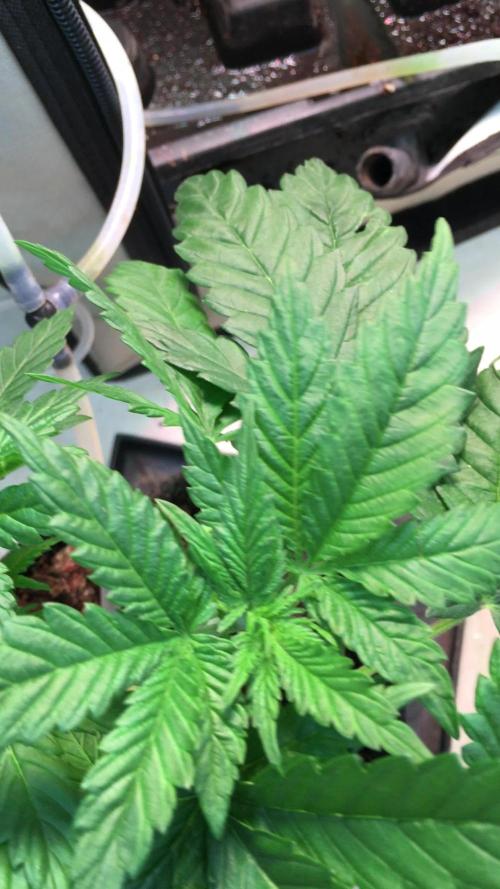
With IZI, everything is very easy. Automatic watering and conditions are close to ideal.
The only thing missing for complete control is a CO2 generator with a sensor.
I'm thinking of transplanting it to a 7-10 liter coco plant in a week or two and switching it to a 12/12 cycle.

Likes
89
Share


@BioBuds
Follow
The enormous growth and bud development this week is unbelievable. This strain keeps pushing and pushing, I can see already that these plants will be covered in bud.
Also, these plants are in size what my previous photoperiods grow in 8 weeks and some flowering.
Really amazing to see. So far my experience with autos has been meh at best. These plants are nothing like that and are resilient and forgiving.
The Mars Hydro SP-3000 is now on full blast, it gives me some white pointies and the temps go up in the tent. I'm on the threshold of heat stress and light burn.
I'm trying to push it maximally and to get to know the boundaries.
Thanks again for checking out my grow!

Likes
57
Share


@PapaBlob
Follow
13/05 Ca devient serré la dedans. 😅
14/05 Une bête de rêve.😍 je n'ose pas coupé trop de petites branches. c'est que j'aimerais battre mon record de 118g, avec cette même variété d'ailleurs. 😀 Mais aussi je voudrais de grosses tètes, donc Le beurre, l'argent du beurre et le.. tout quoi!😁
18/05 Une bonne grosse défoliation. Je suis pas sur de mon affaire, mais je tente le coup.

Likes
5
Share


@Bread_n_Buds
Follow
Our Zookies Automatic are very cute.
Remember that we are growing 1 Plant worked with the techniques and one left to grow without cutting techniques to preserve its speed.
In this diary we find the plant that is growing nice and open with a main lining that works very very well. The plant is at medium internodal distance and this has allowed us to work on the mini brunches from the beginning with more ease until creating the classic T shape from main lining. We are opening everything very well and we have arrived at the second topping or at the third internode after the first topping, the mainfolding one. I am very happy with how this one is opened but the best in this sense is the King Louis Auto that you can find in the other diaries.
The comparison is the salt of the experience so the plant of the other diary will be worked very differently go and see it to compare them.
We have started the Plagron fertilization program, we are in 100% organic configuration, the soil is recycled Promix + 1/3 fresh soil + 10% Perlite + RQS Mycorrhiza Mix (4 g in the mix, 1 g under the small fiber pot).
We are administering // 1 ml/l Power Roots - 1 ml/l Pure Zym - 1 ml/l Sugar Royal - 3 ml/l Alga Grow
We have sprayed Vita Race Foliare 3 ml/l.
https://plagron.com/en
The doubts about the compatibility between Pure Zym and mycorrhizae have been dispelled, they can get along according to Plagron experts. If someone tells you that enzymes eat mycorrhizae, which in principle may seem possible, explain to them that it is not true.
https://www.royalqueenseeds.it/growing/452-easy-roots-mix-di-micorrhize.html
Is a top strain of the last few years very high level of thc ---- https://www.zamnesia.io/it/11174-zamnesia-seeds-zookies-auto.html
Brief description of Zamnesia // The result of the cross between Animal Cookies, GG#4 and ruderalis, this compact variety produces top quality buds, maintaining all the charm of a modern US hybrid. Thanks to the hard work of the Zamnesia genetics team, Zookies Automatic is easy to grow, fast flowering and exceptionally vigorous. Regardless of whether you grow indoors, outdoors or in a greenhouse, if you are looking for a stable autoflowering strain that is quick to harvest, Zookies Automatic is definitely the one for you.
Like all Zamnesia autoflowers, Zookies Auto promises rapid harvests of top-quality bud with minimal effort. And she delivers on that promise. After germination, Zookies Automatic plants grow vigorously for around 3–4 weeks. At the end of the pre-flowering phase, plants typically reach a height of between 90–110cm, depending on the size of the pot.
The new strains are fantastic and the old ones are no exception... p.s. no hermaphrodites so far, can you growers say the same?
You can find the entire world of growing on Zamnesia and more, just take a look at the site and you will find "all the best that nature has to offer" in various shapes and colors.
--- // www.zamnesia.com

Likes
9
Share


@Hazebuster888
Follow
In der fünften Blütewoche zeigt sich der Erfolg des Scroggens deutlich. Die Pflanze hat das Netz vollständig durchwachsen, und die Blüten verteilen sich gleichmäßig über die gesamte Fläche. Um die Stabilität der immer schwerer werdenden Blüten sicherzustellen, habe ich zusätzliche Netze aufgehängt. Außerdem habe ich die Beleuchtung von 400 Watt auf 720 Watt erhöht, um den Blüten noch mehr Energie zuzuführen und das Wachstum weiter zu fördern. Die Ergebnisse sind bereits sichtbar, mit dichten und kraftvollen Blütenständen, die sich vielversprechend entwickeln.
Likes
Comments
Share


@0ldToby
Follow
The blueberry gelato was great, cured up lovely, got me nice and high.
The cannacotta was decent, not my favorite, got me very high but the flavor wasn't there.
The slurricane was kind of bland to start with but cures up lovely, wasnt my first choice of smoke though.
The blue cheese was classic blue cheese, might have let it go too long though, didn't find any herms in there but 2 plants went to seed.
The zookies was amazing, definitely my favorite from the crop, buds nice and dense and after a short cure it was a stinky one.

Likes
4
Share


@PapaTerps
Follow
Girl Scout Cookies - Kannabia
Week 3 of Bloom
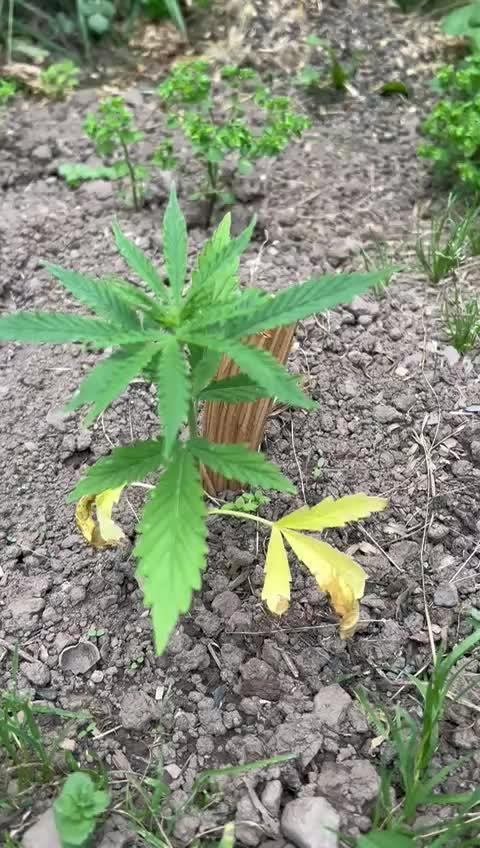
🌸 She's one of the smallest girl in the tent, so I've had to prop her up towards the light, but she looks beautiful and is working hard on developing her flower 💪🏻 From today, all the girls have been moved into a 8x4 tent, because the 5x5 has been hard to manage.
✂️ No work on her this week, I'm just letting her grow.
💧 Watered every three days with 2L of RO water, with nutrients mixed individually, in order and then finally, I pH'd the solution to 6.3. I've increased all of her nutrients, now that she is focusing on developing her flower, she'll need it.
💡 PPFD: ~850
♒ VPD: 1.32kPa
🌱 Days from seed: 87
🌸 Days in Bloom: 26


Likes
17
Share

@StonedSteve
Follow
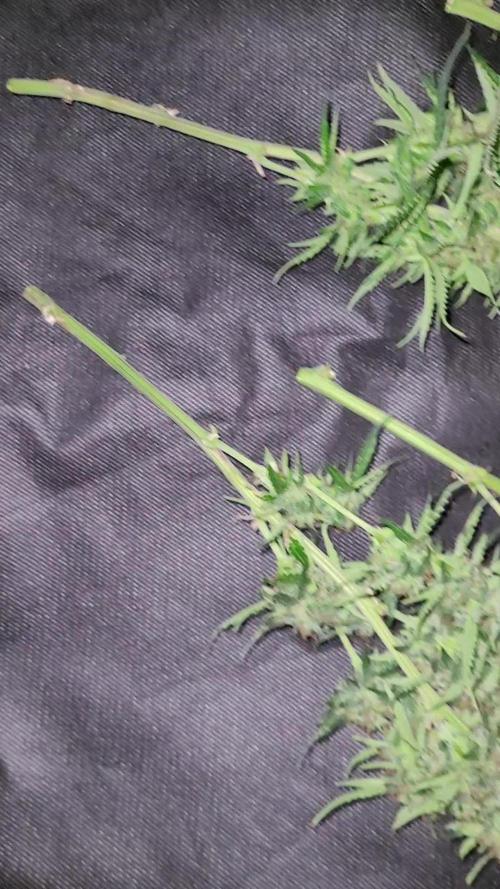
It wasn't a full week
The harvest 26.3. (91day)
The last two waterings were only 4 liters of clean water.
Here are a few photos and videos from the harvest sorry about the quality, but I'm not Saudek.
This is my second grow, and I have to say it was a success. The plant has shown great potential.
I'll add more photos after the buds has dried.

Likes
43
Share


@Sabac
Follow
Plantas sanitas 11 semanas.
Se ven bien saludables con flores recinosas
Y grandes.


Likes
14
Share


@9LittleGrow
Follow
The last day of week 7 vegetative stage and the next day I’ll change my light cycle from 18/6 to 12/12. I flushed my babies with tap water last 2 days ago and so they gonna be thirsty and tomorrow I’m gonna feed with flowering nutrients. So, I’m very excited with the flowering process of they gonna be.


Likes
13
Share


@Robeeriegenetics
Follow
Week 15 going good…not bad …switching to bloom nutrient… and did a ton of defoliating to loosen up the canopy hopefully they won’t grow too much when I flip them to 1212 in a week I’ve seen these plants three times the size. Hopefully I can stunt that growth during the initial stretch by switching to Bloom nutrients early. Defoliating a week before flipping. I may decide to top them more but I probably won Do I have to type here for it to be green this is crazy. I’ve done more than a paragraph now at this point it’s kind of weird that it’s not green be green what the hell can it still not be green
Likes
3
Share


@DrewZenRox
Follow
Into 2nd day of week 3.
Jealousy/Green Poison inside the Epic Attic Tent 1.2x1.2x1.6. Growing Under 'Karma EVO 3'
SkyWalker OG Inside unbranded 60x60x120 Tent. Growing under 'Karma Stealth 1000'


Processing
Likes
4
Share


@Cannibalgardens
Follow
This strain is one of my favourite to grow I'm addicted to the flavour and how fast she grows.. The team at @fastbuds have been very generous towards me and I'm happy to be growing out there strains ... She is healthy and will be growing a lot by next week cheers
Processing
Likes
4
Share


Likes
28
Share


@BlaKX
Follow
Nach 2 Wochen im Glas und bei vorherigen suboptimalen trocken Möglichkeiten . Schlägt mir aber Der Gorilla mit Punch ins Gesicht beim öffnen JETZT ist fast nur noch Typisch GG4 zu inhalieren mit auch Beeren bzw Grand Daddy Purple aroma vermutlich von Purple Punch der wie von FastBuds versprochen auch so riecht und schmeckt wie es soll. Da das meine ersten 2 Genetiken von ihnen war habe ich die selben Sorten nochmal bestellt nur Statt "Alter Tobi " und Mittelerde kommt jetzt "Longbottom Haze " und Hogwarts 😆
Likes
1
Share

@Chubbs
Follow
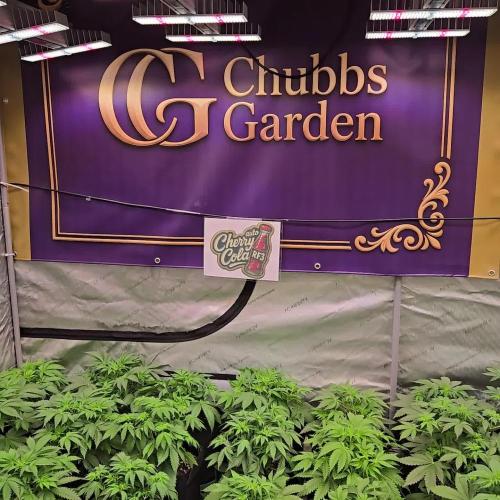
This week's been exciting, they've grown upward a few inches and started to bush out. I did do a mild defoliation taking off a few lower leaves and tucked some of the top bigger fan leaves. I started adding co2 this week and they seem to really be enjoying the added amount.
All in all Happy Growing.
Likes
8
Share


@Lazuli
Follow
April 18:
Thank you MSNL seeds for the package
i germinated as soon they got here 😄
So i start with 2 strains in my small tent, then when the 4x4 is free i will pump it full too with all of these for a few crops, cheers
April 23: they both above ground now
April 20: the seeds have roots and are now planted in 2 liter pots

Likes
16
Share


@JohnnyBlaz3
Follow
CLOSE!!!!!! she is absolutely friggin caked with trichs!!!! just need her to plump up a little so we got some weight to her but she definelty looks potent af!!!!! only issue this run really was the stretching. I have a theory about why this happened and will test it out next crop, got the next ladies germed up already. I think removing the third fan allowed it to be to calm in there and the ladies to stretch more, this is just a theory i'll test out. If i had the space, i wouldnt mind the stretch but being in my little 5.5 x 5.5 tent i cant waste any space!!! am i going to break the tent record of just under 800 grams dried? probably not lol but lets hope for 600+
Likes
1
Share


@BruWeed
Follow
11/10 - comenzó su cuarta semana de floracion.
Su evolución fue muy notoria, de un dia para el otro se desarrolló mucho.
No tuve problemas en ninguna etapa, hasta el momento se encuentra perfecta.
Los cocos son muy resinosos y grandes.

Likes
58
Share


@Mosquito_Haarlem
Follow
Week 7 is begonnen en ze wordt heerlijk verwend.
Ze groeit lekker door, de toppen worden groter en ze ruikt nu al zeer sterk.
Helaas heeft ze wat gele bladpunten gekregen, ik denk dat ik haar overvoed heb en de aptus voeding iets te veel van het goede was, dus vanaf nu geef ik haar alleen nog plagron zoals gewoonlijk.
Ik ben zeer tevreden over de spiderfarmer sf-1000, geen geluid, laag energieverbruik, weinig warmte en intense zonnestralen. Topnotch.
Laten we zien hoe ze zich in week 7 verder weet te ontwikkelen.🧐
Ik zal gedurende de week nog verse foto's updaten. 📷
✌️🏼
