


Likes
Comments
Share

@311Budz
Follow
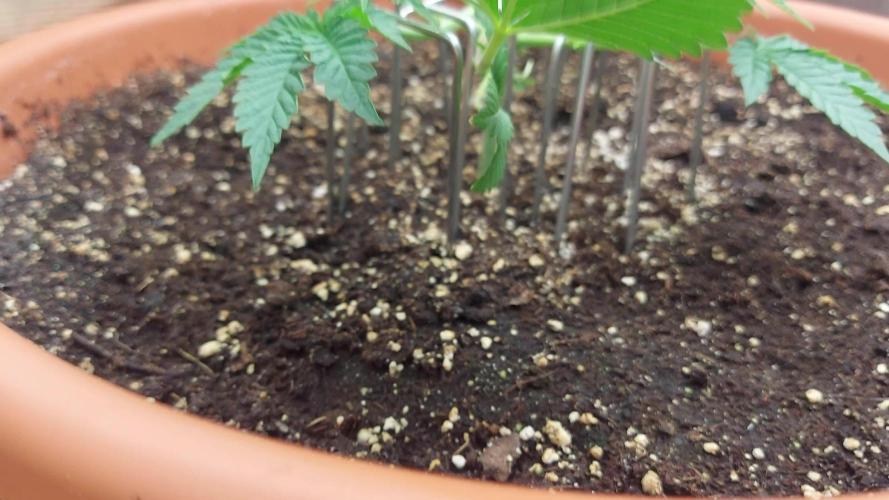
Diese Woche hab ich beide phänos stark runtergeschnitten, ich habe alles wegeschnitten außer 4 haupttriebe.
Diese habe ich dann runter gebunden.
In den nächsten Tagen werde ich alle triebe toppen um pro phäno von 4 hautrieben auf 8 zu kommen und dann wieder paar Tage später von 8 auf 16 hauptriebe.



Likes
Comments
Share

@RooftopFarmer
Follow
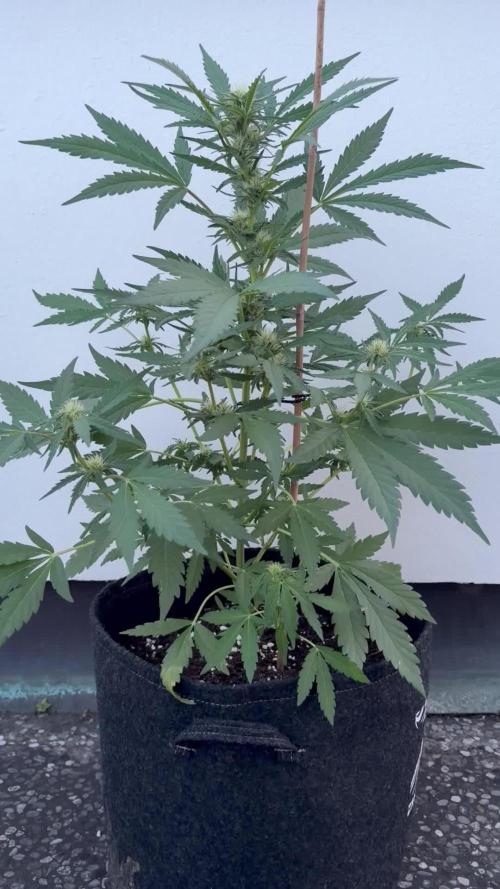
Guava Sundae – Week 7 (Fast Buds Outdoor 2026)
Great weather again this week. Guava Sundae is getting plenty of direct sunshine every day and is being fed regularly.
She is now at about 42 cm and still quite compact. She has moved properly into flowering and is already putting out a really nice fruity, strawberry like aroma. Overall she is looking healthy and strong. Nice progress!

Likes
285
Share


@Tropicannibis_Todd
Follow
👉Alrighty Then👈
So we are at DAY 49 with the Sugar Larry 👈 And she's doing fantastic 👍 hoping shes done with her stretching 👌
😀 decided to showcase pheno #2 , definitely has different traits then #1 very interesting 😀 thoe both are killing it 👈
Hedgehogs in full bloom 👈
Except for some slight watering , ive been doing some defolation as well as some LST manipulation to pull branches to the side 👌
👉I had to Top her during the middle of 4th week 👍 Happy Growing
👉Soil Provided by ProMix.ca
👉Nutrients Provided by Agrogardens
👉Lighting Provided by MarsHydro.ca
Thanks my friends for the great support over the years 🙏 Happy Growing

Likes
19
Share


@lakocinka
Follow
I'm totally happy about this run. First time trying sog and tbh till now seems all good. Any feedback will be appreciated. Thanks and Happy growing

Likes
112
Share

@Tropicannibis_Todd
Follow
Alright Then
REMINDER I DO 2 UPDATES PER WEEK 👉WEEKLYROUNDUP👈👉MIDWEEKLY UPDATE👈
We just hit week 5 and all is well , have to admit she been a little bit of the runt of the litter ,still she keeps on pushing forward 😃 .......
So this little sprout is tuff one and is doing very well , I've been doing LST and so far its paying off , I plan to do a little defolation later in the week 😏
rain water to be used entire growth
Her little sister is about 12 days behind and is playing catchup and she's doing great 👌
Lights being readjusted and chart updated .........👍
I GOT MULTIPLE DIARIES ON THE GO 😱 please check them out 😎
Likes
32
Share


@Belverde
Follow
Welcome everyone
The first seven days of flowering have just ended for this beauty AYAHUASCA PURPLE 😈
Wow , she's already purple and smel like it 🔥🔥
Shecwas pretty fast in producing flowers 🌻
The appearance is not extremely healthy because of me, I was away for a few days and my self-irrigation system did not work properly, leaving the plants in shortage of water 💦
Maintaining the correct proportions between dry and wet soil is essential
But she will recover 💪
In this week I have slightly defoliated to allow the light to penetrate more and also better ventilation ✂️🍃
About the lights cycle 💡
We are now in a 12/12 on / off..
Always under two SP3000, from Mars-Hydro, at 75% of the power..
About nutrients 👇
I still giving their always organic/veganic nutrients..
A little bit of silicium (Bionova) / Activator (Biomagno) / Crescita (Biomagno) / Activera (Biobizz) / Grow vegan (Bionova) / The Missing Link (Bionova) / X-Cell (Bionova) / Bioheaven (Biobizz) , a little bit of P-K 3-5 (Bionova) {in spray solution } and for the firsth time a little bit of Fioritura (Biomagno) and Bloom vegan (Bionova)
Like i usually do, a little bit of everything at any watering 💧
And that's pretty much everything i've done..
See you in week n°7 📆
Thanks guys for stopping by 😎👍👍
FC ✌️
🇮🇹


Likes
14
Share


@TheDankofScotland
Follow
I have bought different nutrients to use in this grow and honestly I must say terpinator , W-8 and massive as flower boosters along with coco a and b as the base nutrients is fucking class I have never seen bud growth like this in 2 weeks of flower and the smell is so much stronger and sweeter usually buds won't smell like that till the 3rd week

Likes
7
Share


@Wiffz_CBD
Follow
A real fun grow. Loving the purple color. She weighed in around 8oz with the stems attached she smells real fruity. Had a bit of leaf burn in early flower because the cored came out ever so slightly of the controller. My fault. I noticed ZERO gnats or pest.
Likes
19
Share


@GoldenWeedGrower
Follow
Legend
Timestamp: 📅
EC - pH: ⚗️
Temp - Hum: 🌡️
Water: 🌊
Food: 🍗
pH Correction: 💧
Actions: 💼
Thoughts: 🧠
Events: 🚀
Media: 🎬
D: DAY, G: GERMINATION, V: VEGETATIVE, B: BLOOMING, R: RIPENING, D: DRYING, C: CURING
________________________________
📅 D91/B29 - 14/02/24
⚗️ EC: 0.9 pH: 5.8
🌡️ T: 19-25 °C H: 50-70 %
🌊 6L
🍗 CalMag - Bloom A-B - B52 - Bud Candy - Big Bud
💧
💼 I filled up all available space in the pot, preparing all for 3 days out. I'll be back on Sunday the 18th of February
🧠
🚀 I'm preparing all for 3 days out
🎬 Added timelapse video and screenshots
________________________________
📅 D92/B30 - 15/02/24
⚗️
🌡️ T: 18-23 °C H: 50-80 %
🌊
🍗
💧
💼
🧠
🚀 First day out
🎬
________________________________
📅 D93/B31 - 16/02/24
⚗️
🌡️ T: 18-23 °C H: 50-80 %
🌊
🍗
💧
💼
🧠
🚀 Second day out
🎬
________________________________
📅 D94/B32 - 17/02/24
⚗️
🌡️ T: 19-23 °C H: 40-70 %
🌊
🍗
💧
💼
🧠
🚀 Third and last day out
🎬
________________________________
📅 D95/B33 - 18/02/24
⚗️ EC: 0.8 pH: 5.8
🌡️ T: 19-23 °C H: 40-70 %
🌊 1L
🍗 CalMag
💧
💼
🧠
🚀 I'm baaaackkkk !!! 😎😎😎
🎬 Big job on media. I edited the cumulated time lapse videos and splitted day by day. Also uploaded the screenshots from the TrolMaster App for each day out. Great!
________________________________
📅 D96/B34 - 19/02/24
⚗️ EC: 0.8 pH: 5.6
🌡️ T: 19-23 °C H: 40-70 %
🌊
🍗
💧
💼
🧠
🚀
🎬 3 pics and a video added. Added timelapse video
________________________________
📅 D97/B35 - 20/02/24
⚗️ EC: 0.8 pH: 5.3
🌡️ T: 20-24 °C H: 50-65 %
🌊 5L
🍗 CalMag - Bloom A-B - B52 - Bud Candy - Big Bud
💧
💼 Some defolation
🧠
🚀 First signs of ripening
🎬 Added timelapse and screenshjots. I also prepared a timelapse of the entire week with some music 🎵🎵🎵 and weekly rate of T-H and VPD 📈📈📈

Likes
17
Share


@EGPharouh
Follow
Week 8. They got their First flush. Look at those beauties. Better pictures by the end of the week.
Likes
Comments
Share


Likes
34
Share


@Spliffi
Follow
Week 13 20 December 2023
Once upon a time in a small town, a group of friends decided to embark on an unusual Christmas adventure. Instead of the traditional festivities, they hatched a plan to grow a special kind of Christmas tree—cannabis.
They called themselves the "Green Elves" and secretly transformed an abandoned greenhouse into their winter wonderland. As the weeks passed, they nurtured their unconventional crop with care, each day bringing new challenges and unexpected joys.
With Christmas approaching, the friends faced the dilemma of revealing their secret to the town or keeping it hidden. In the spirit of the season, they chose honesty, deciding to share their unique Christmas tale.
To their surprise, the townspeople responded with unexpected warmth and understanding. Rather than judgment, they found support and curiosity. The community embraced the unconventional holiday spirit, turning the greenhouse into a festive gathering place.
The Green Elves learned a valuable lesson about acceptance, and their cannabis Christmas tree became a symbol of breaking stereotypes and celebrating diversity. That year, the town had a Christmas unlike any other, filled with laughter, unity, and a touch of unexpected green magic.
Merry Christmas 🎅 🎄
Heya👍🤙👍🌱
Thanks for reading!!!🤙👍🤙🌱
Likes
25
Share

@Dr_Green_Thumb87
Follow
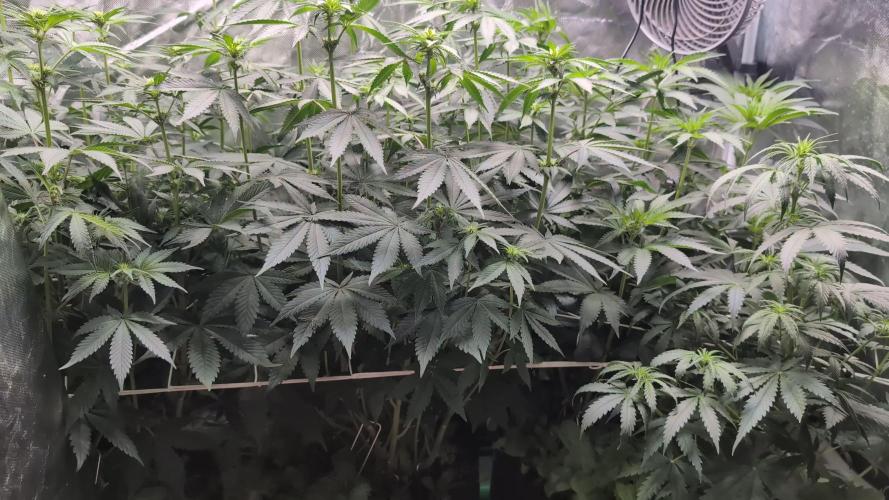
5/29 - 6/5 Flowering Week 3
🌡️28c
💧Tap water
🌀 55%
Defoliation during this week
Likes
66
Share


@LoveGrowWeed
Follow
Today is day 9 from germination.
There was one watering on the 7th day, half a liter for each plant.
4 ml/l BioBizz Root-Juice
Also on the 8th day there was spraying from a pulverizer with the composition:
1 ml/l BioBizz Fish-Mix
1 ml/l BioBizz Acti-Vera
At first it was very hot, the sheets were crumpled, the peak temperature was 31 degrees Celsius. Now everything is fine with the temperature, during the day 25-26, at night 20-21.
___
upd 11 day veg
adding water to the humidifier
I also added an organic CO2 generator to the box.
So far everything is going well. There are plants a little more, there are a little less. The largest and smallest are in the photo.
I'm not sure I'll post another post before February 14, so happy valentine's day, love your girls =)
_____
UPD 13.02
Something I have already lost in the days. Therefore, we will consider the 1st day of the veg in the diary on February 1. Go.
Today is February 13 - 13th day of veg.
I have a humidity of 20%, so the humidifier lasts less than a day to maintain a humidity of ~60.
So we had
- Humidifier WiFi xiaomi.
- Sonoff WiFi relay.
- Pump for mini fountains.
Because I am a lazy creature, I am too lazy to go to the plants every day and pour water into the humidifier.
So, when the humidifier runs out of water, it sends a signal to the phone that it has turned off.
When I see such a message, I open the ewlink, click on the pump button, the wi-fi relay turns on the pump for 4 minutes (full tank 5-6 minutes), after 4 minutes it automatically turns off (sonoff relay setting). Details in the video.
Was watering 1 liter per plant
Biobizz FishMix - 1 mll
BioBizz Acti-Vera - 1mall
__________________________
Upd
14.02 - I wanted to make a fim, it turned out to be a top. Oh well, don't worry =)

Likes
19
Share


@Comfrey
Follow
Day 78
☀️☀️🔥☀️ 16-28 degrees, humidity 45-65%. Tropicana and I start into the 12th week with intense autumn colors and an explosion of fragrances. It‘s very hot during the last days but bu the night temperatures fell more than 11 degrees last night. When I check my plants in the early morning, give them water and attention, a cloud of Tropicanas fruity and floral fragrances surrounding me.
Night 79
⚡️🌈 This will be Tropicanas last night. I found a little bud rott in the main flower. Glad that I made a video inside. I just saw a yellow leaf as a sign and remembered what I read last week about this problem connected with high humidity and very dense buds. I didn‘t follow any hygiene rules and humidity on the balcony was very high for too long period. So this could happen unfortunately.


Likes
22
Share


@RBGreenry
Follow
Start of a new week, week 12!
I was originally going to cut this morning but with using the flushing additive I am using it does contain sugar etc so just to make sure the lady uses up everything, I'll be doing an extra 3/4 days of just plain PH adjusted water to finish her off then pull her down and get her ready to dry n cure ✌️

